
Add ₹999 more to unlock FREE SHIPPING!
Your sacred cart is currently empty.
Shop Photo FramesInscription and Architectural Style
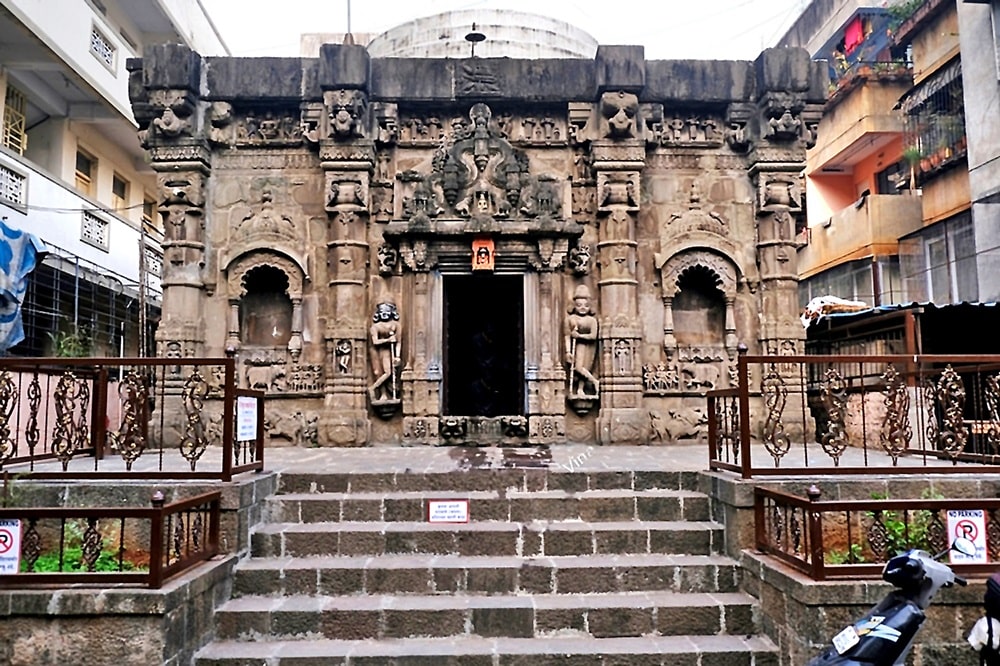
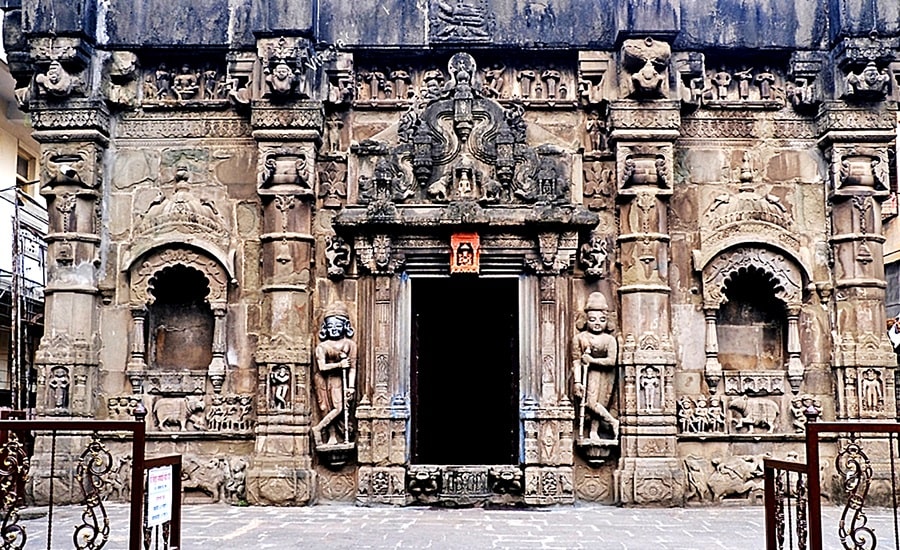
Despite the passage of centuries, the temple remains remarkably well-preserved. Over 200 years old, its sturdy architecture stands tall on a raised stone platform, of about five to six feet high, facing the east with ‘Dwarpal’ (Doorkeepers) carved on both sides of the entrance. Inside, the ‘Garbhagriha’ (a small windowless room which is the main shrine of the temple, usually with an idol or painting of principal deity) holds inscriptions in Sanskrit and Persian language, each telling a story of its origin and dedication.
The first inscription, written in Sanskrit, describes the period of construction of the temple and the second one has a verse of salutation from the beginning of the Bhagavad Gita, while the Persian inscription reads that the place belongs to Datta guru. The architectural style of the temple is an amalgamation of all three styles: Rajasthani, Malwa and Dravidian.
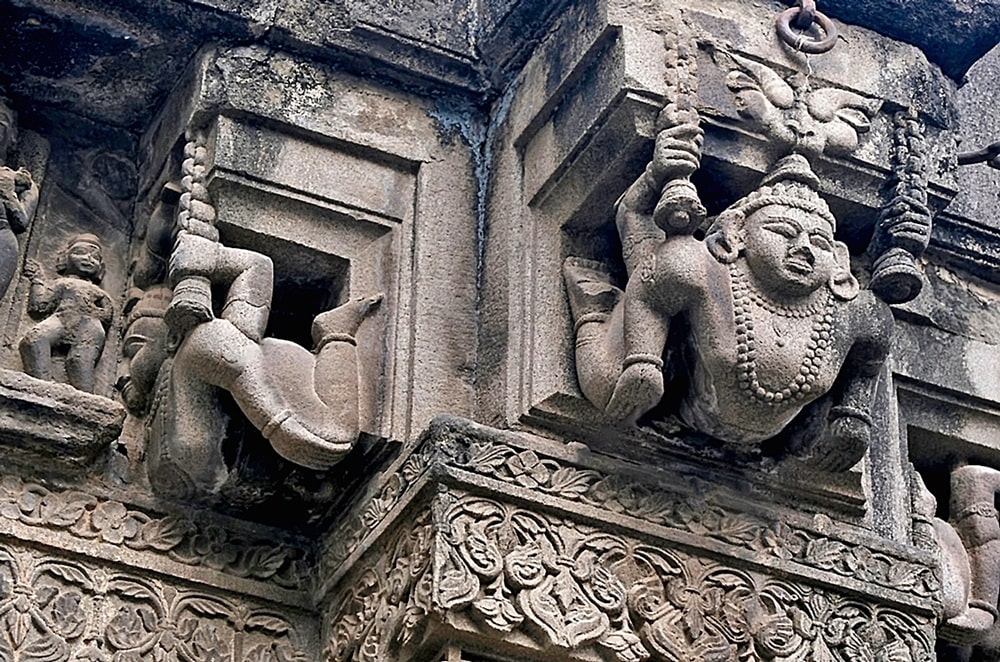
Inside the temple, there is an image depicting Lord Vishnu in his ‘Sheshashayi’ form (This artistic interpretation is a later development in the Vaishnava shrines and was popular in regions of South India as compared to North and East India.), reclining gracefully on the serpent Shesh under a pointed arch. After exploring further, carvings of ‘Yakshas’ (nature spirits connected with trees, forests, water, and fertility ), ‘Kinnars’ (half-man, half-horse, and half-bird associated with music and love), peacocks, parrots, ‘Bhairav’ (a fierce manifestation of Shiva), ‘Mangal Kalash’ (auspicious ceremonial pot), and the ‘Dashavatars’ (the ten incarnations of Lord Vishnu) can be observed.
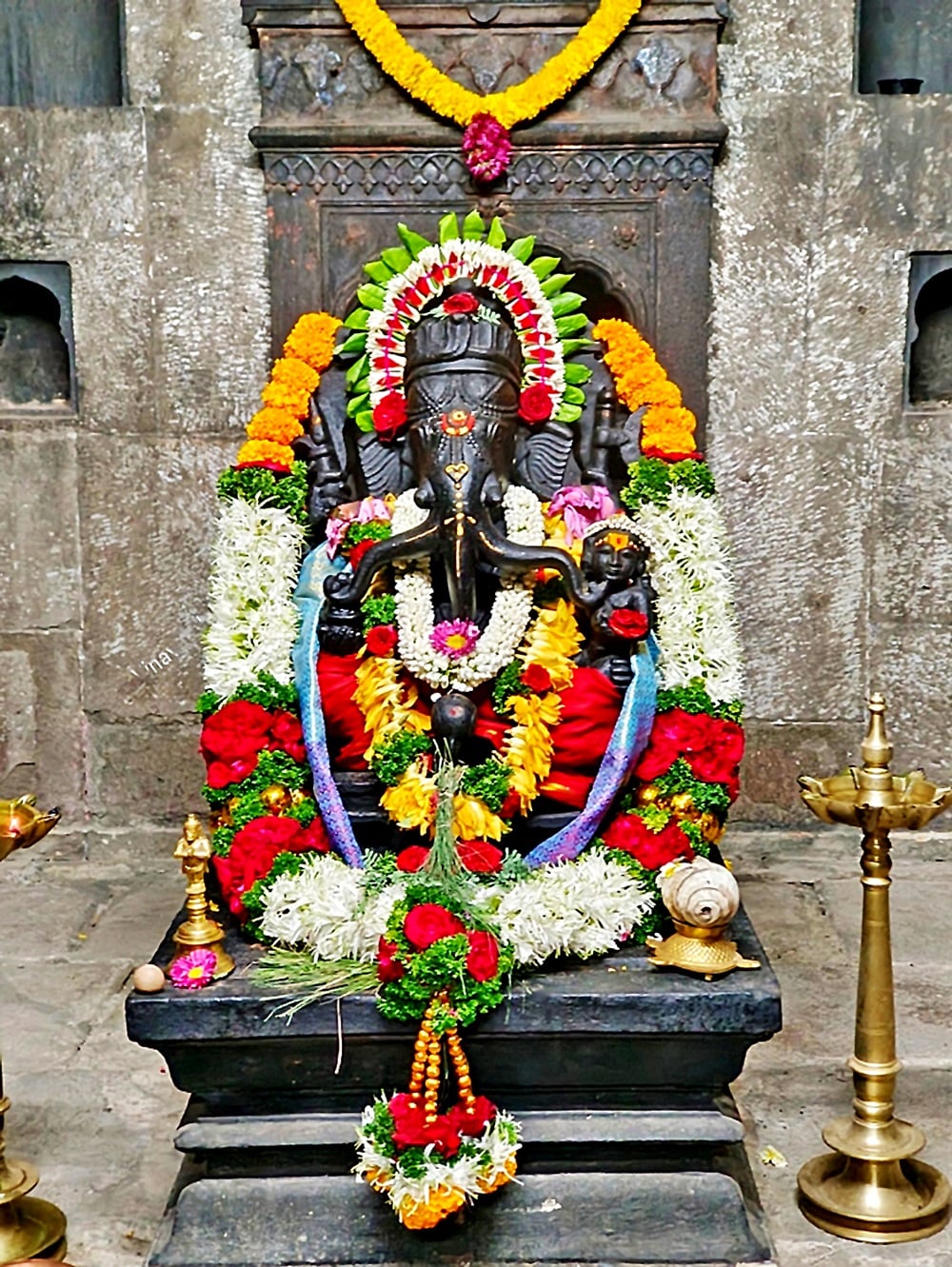
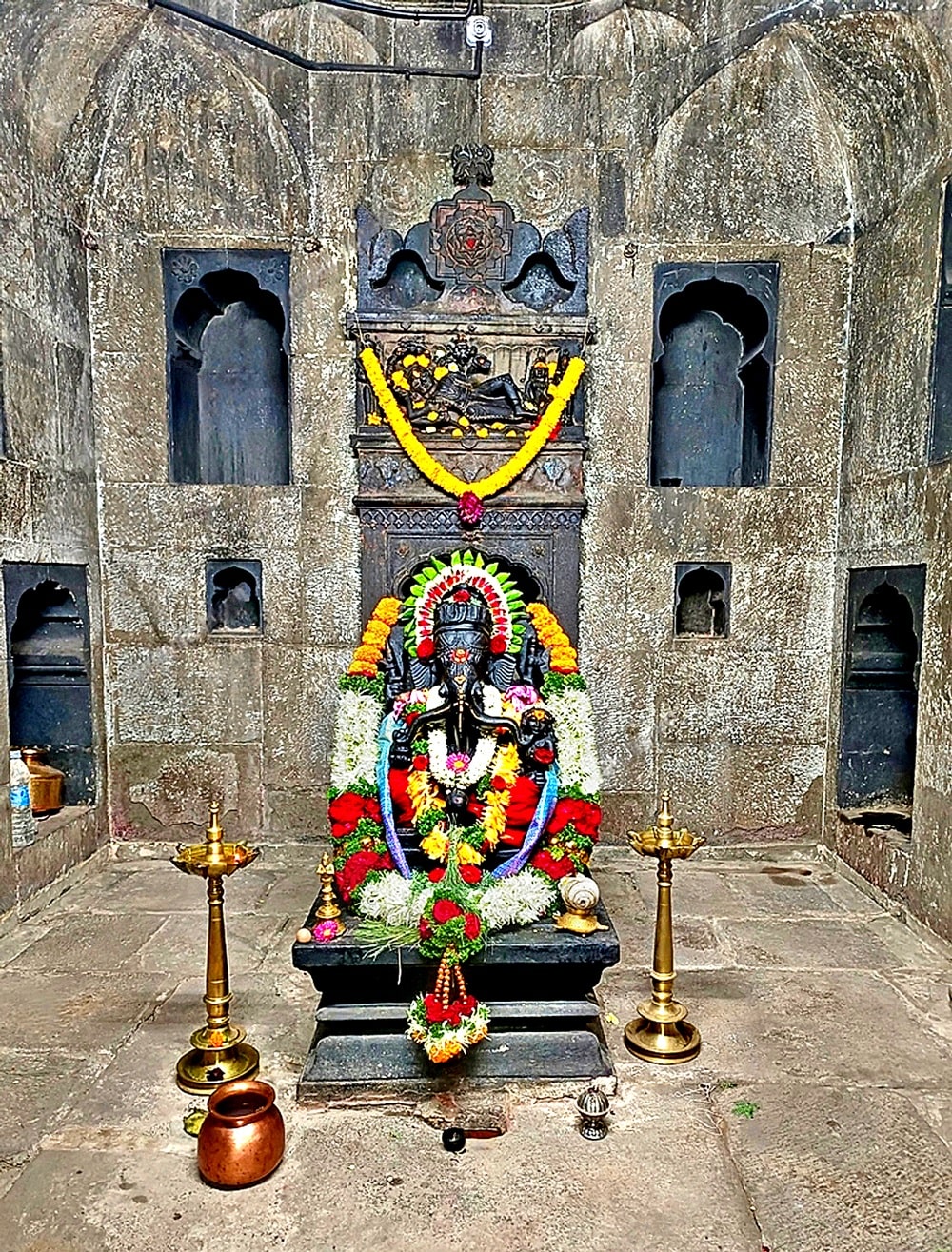
Ganesh Idol in the ‘Garbhagriha’
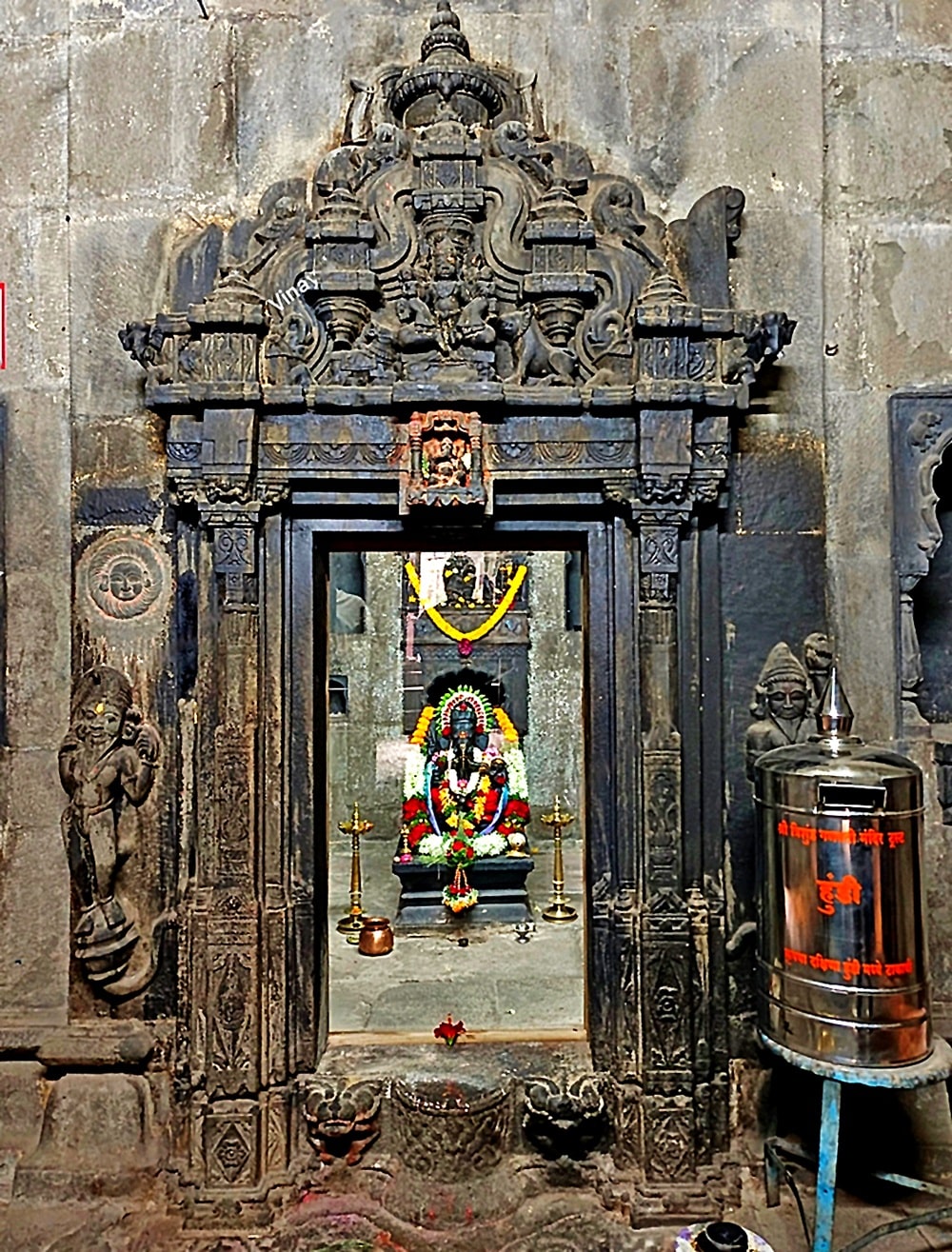
At the entrance of the ‘garbhagriha’, a carved idol of Lord Ganesha with his right tusk stands, and just below is the Ganesh chakra.
Inside, a unique idol of Lord Ganesha captivates with one face, three trunks, and six hands -seated atop a peacock. The right trunk touches the Modak Patra (Modak plate), symbolising his love for sweets. The middle trunk rests near a Mushakraj (a mouse symbolized as Lord Ganesha’s ‘vahan’ – source of transport) on the pada (base of idol), signifying his association with his ‘vahan’ (vehicle). The left trunk gently touches the chin of the Shakti deity seated on his lap, embodying his protective and nurturing nature towards divine feminine energy. Behind him, Lord Vishnu reclines on Shesh, and a Ganesh Yantra graces the wall. The idol’s exact emplacement date remains unknown.
Other Deities and Structures
In the ‘parikrama/pradakshina’ (circumambulation) area towards the south, a stone carving depicts Nataraja alongside a unique Shivalinga, which is adorned with a Shalunka (base), a swan soaring skyward, a boar touching the ground, and a serpent sheltering it with an umbrella—a rare and remarkable depiction. To the north, you’ll find exquisite idols of Lord Vishnu and Lord Kalabhairava.
Basement
In the temple’s basement, a live water spring flows, adding a serene touch to the vicinity. Here, the sacred samadhi of Morya Gosavi Maharaj rests peacefully. The architectural design is such that it allows water used to bathe the Ganpati idol above to cascade onto Gosavi Maharaj’s samadhi below. Besides this, there are many halls in this same basement, primarily used for storage. Every year on Guru Pournima, the doors of the basement are opened for the devotees.
Political Imagery
The temple also serves as a historical testament reflecting the political landscape of its time. Carved images vividly depict the British assertion of power over Bengal and Assam. One notable carving shows a British soldier chaining a rhinoceros, symbolic of these regions. Additionally, a depiction of a one-horned rhinoceros further underscores the cultural and political symbolism embedded in the temple’s artwork.
Historical Significance
According to scholars, the structure of this temple resembles that of a Shiva temple. An inscription found here identifies it as a Rameshwar Shiva temple, which is further supported by the presence of a Shivalinga image at the back of the ‘garbhagriha’. Since ages, it is believed that followers of the Shakta Panth (followers of Lord Shiva) installed the idol of Lord Ganesha within the temple premises. Renowned for its intricate carvings and sculptures, this temple holds significant heritage value. Devotees can visit and receive blessings here daily from 6 am to 12 pm and again from 4 pm to 9 pm.
Salient Features
This sacred temple stands as a testament to deep spiritual devotion, ancient architectural grandeur, and rich local cultural traditions.
The sanctum sanctorum houses the divine idol consecrated according to ancient Vedic traditions, surrounded by serene courtyards and traditional temple architecture.
Navratri, Maha Shivratri, Annual Temple Jatra & Deepotsav
Compare and book flights, secure top-rated local hotels near the temple, hire reliable guides, and rent cars instantly.
Extend your pilgrimage by visiting other highly sacred temples located nearby.


Add ₹999 more to unlock FREE SHIPPING!
Your sacred cart is currently empty.
Shop Photo FramesFill in your delivery details below to place your order.
Add comment