
Add ₹999 more to unlock FREE SHIPPING!
Your sacred cart is currently empty.
Shop Photo FramesSituated in the Somwar Peth area of Pune city, the Nageshwar Temple is considered one of the ancient Shiva temples in Pune. This temple finds mention in the ancient Sanskrit text, the Shiva Purana. The surrounding area of the present temple was formerly known as ‘Nahal Peth’. Named after Nageshwar, this peth was renamed ‘Nagesh Peth’ and later came to be known as Somwar Peth. Great saints such as Sant Dnyaneshwar, Sant Namdev, and Sant Tukaram had a close association with this temple. This structure was renovated several times during the Peshwa era. Presently, this temple has been declared as a protected monument by the Archaeological Survey of India.
According to historical information, this temple is included in an old list of temples dating from the eleventh and thirteenth centuries. The stone sanctum sanctorum of this temple bears witness to the Yadava-era architectural style of that time. A popular belief prevails that the surrounding region of Alandi village formerly extended up to this area. Many legends are famous regarding the Nageshwar Temple. Accordingly, Sant Dnyaneshwar Maharaj used to come here for the worship of Lord Shiva. It is found that Sant Namdev Maharaj mentioned ‘Nageshwar Mahadeva’ in one of his abhangas. He always referred to this temple as a holy Shiva shrine. This makes it clear that many saintly personalities must have visited this temple. Sant Tukaram Maharaj’s in-laws were at Lohegaon. Whenever he visited Lohegaon, he used to perform kirtan at the Nageshwar Temple. A large gathering of devotees would assemble for his kirtan.
To the left of the western entrance of the temple, there was formerly a large water reservoir named Nagtirtha. This reservoir, which had ४५ steps, extended up to Nagzari on the west of the temple. Devotees used to have darshan of Nageshwar before going to Kashi for a holy bath in the Ganges. There was a custom of offering the sacred water brought from the Ganges into this reservoir. Devotees believed that bathing in the water of this reservoir cured leprosy. On the banks of Nagtirtha, there were small temples of Tryambakeshwar and Mahadeva. In १८७८, Raghunathrao Aurangabadkar built water cisterns inside and outside the temple courtyard. Due to the increasing mosquito nuisance, the Pune Municipal Corporation completely filled up this reservoir a few decades ago.
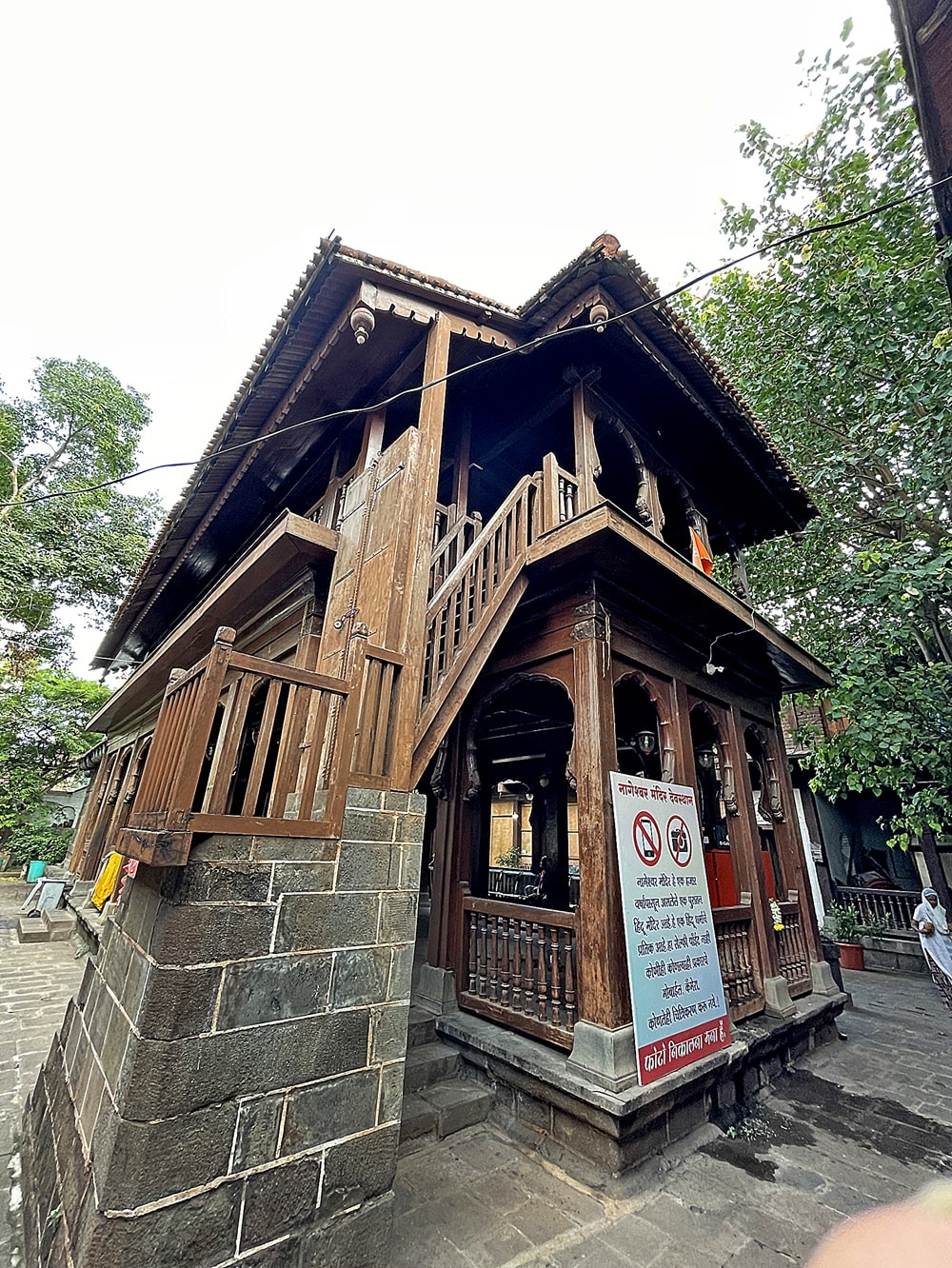
The Nageshwar Temple is surrounded by a sturdy stone-masonry fortification wall. This fortification has a double-storeyed gateway. The ground floor of the entrance is of stone construction and features stone benches (kakshasanas) on both sides. The nagarkhana (drum house) on the upper floor has a tiled roof. Scholars estimate that the nagarkhana must have been built in a later period. The grand stone archways of this main entrance have large arches. These grand gateways are constructed in the Maratha architectural style. Auspicious symbols such as elephants and lotus flowers are carved on the stone platforms on both sides of the entrance. The courtyard of this temple is approximately १२८८ square metres.
The fortification wall surrounding the temple is one metre wide. Entering through the gateway leads into the paved courtyard of the temple. There are two well-maintained stone lamp-towers (deepmalas) in the courtyard. The murtis of Hanuman and Garuda are installed under a tree in the courtyard. Right next to them is also a small Shiva linga. In the temple precincts, there is the samadhi of a sannyasi named ‘Chand’. There is an old tradition of performing circumambulation (pradakshina) around this samadhi in the ‘Somsutri’ manner. The stone water outlet through which the abhisheka water flows out from the sanctum sanctorum of the temple is called the ‘Somsutra’. According to religious belief, crossing this Somsutra during circumambulation is considered taboo. Therefore, while performing pradakshina, devotees walk up to this water channel from one side, offer their respects there, and turn back from that very spot without crossing the path. Due to this, the shape of the circumambulation resembles the English letter ‘U’.
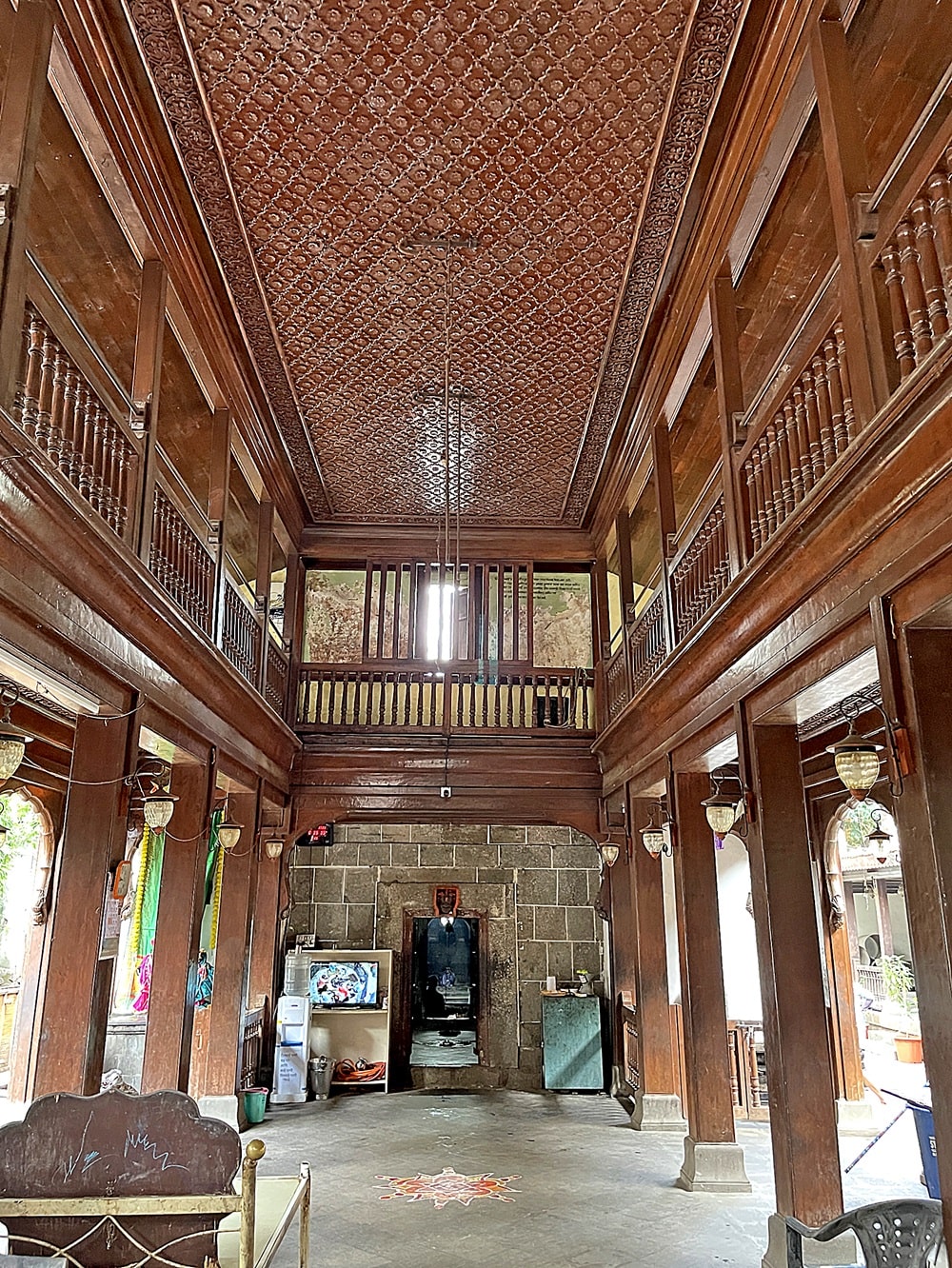
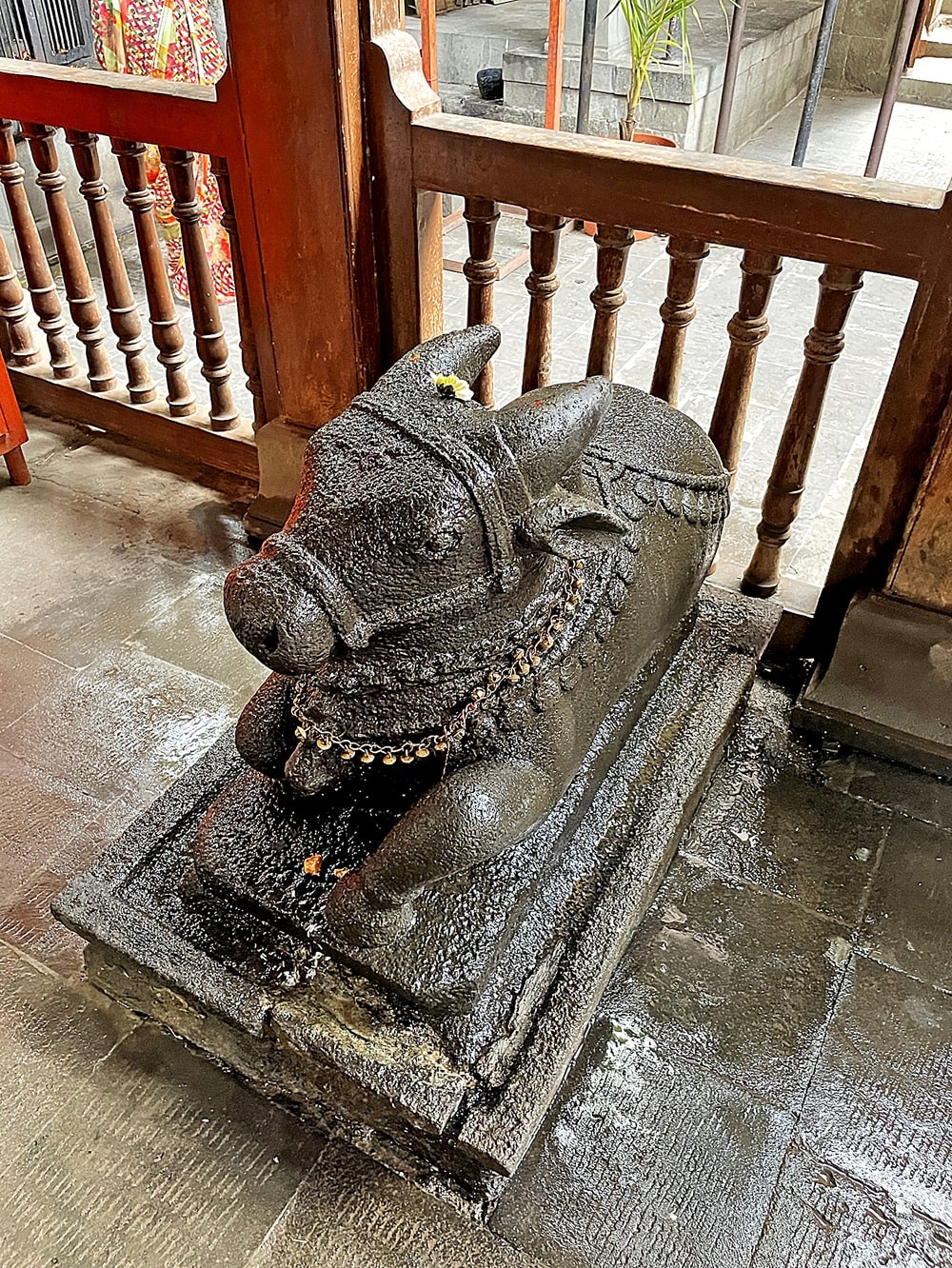
The Nageshwar Temple was renovated in १७८० during the reign of Sawai Madhavrao Peshwa. Financier Aba Shelukar completed the repairs of the temple and the construction of the nagarkhana. The sabhamandapa (assembly hall) of the temple is a fine example of seventeenth-century Maratha style. There are four rows of wooden pillars in the sabhamandapa, and the middle pillars among them stand on stone bases. They are connected to each other by ornamental cusped arches (mahirpi toranas) on the pillars. The ceiling of the sabhamandapa is made of wood and features intricate carvings on it. Rare mythological paintings created by Raja Ravi Varma are present here. In the sabhamandapa, there is a murti of Nandi made of black stone on a stone pedestal.
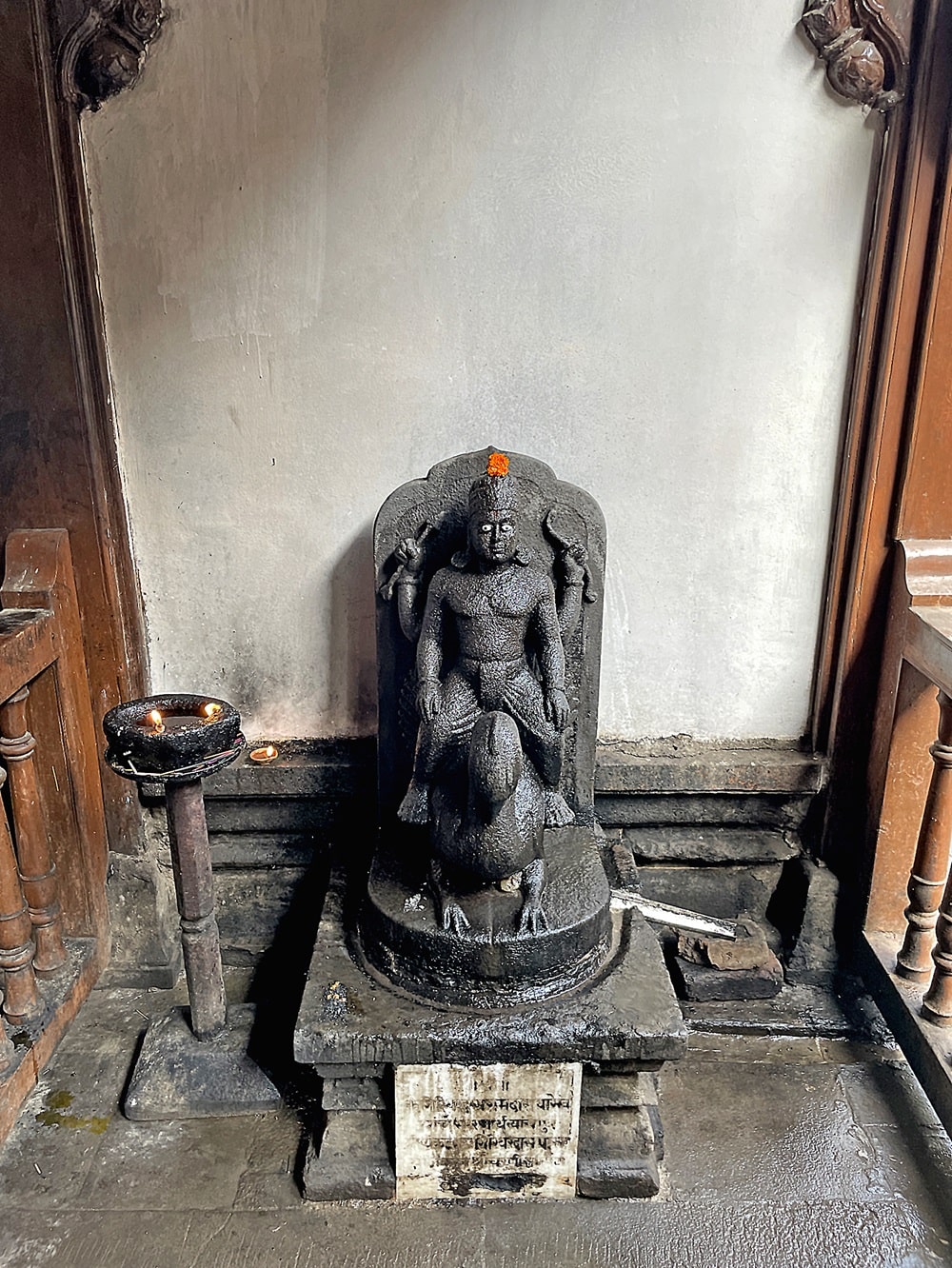
There are wooden stairs from the outside to go to the upper floor of the sabhamandapa. On the left side in the sabhamandapa are the murtis of Vitthal and Rakhumai. On the right, the murti of Shanideva is enshrined on a pedestal. Ahead of the sabhamandapa is the antarala (vestibule) of stone construction. A kirtimukha is carved on the entrance of the antarala. In the antarala, there are two niches in the front wall of the sanctum sanctorum. The murtis of Ganpati and Parvati are installed in these niches. There are stone lattice windows (vatayanas) in the enclosed antarala for ventilation and light. The ceiling of the antarala is carved with a lotus flower in the centre and foliage creepers along the sides.
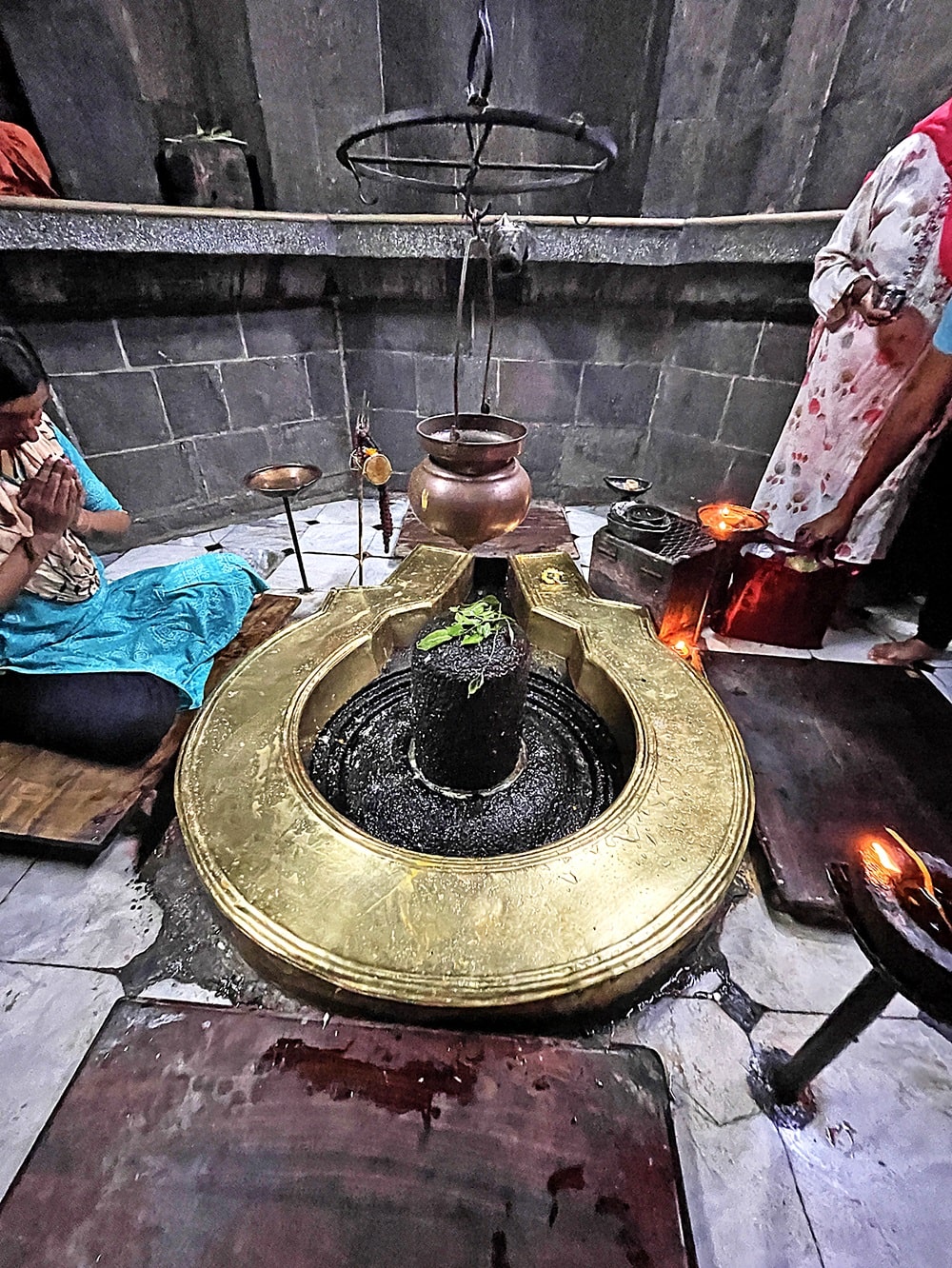
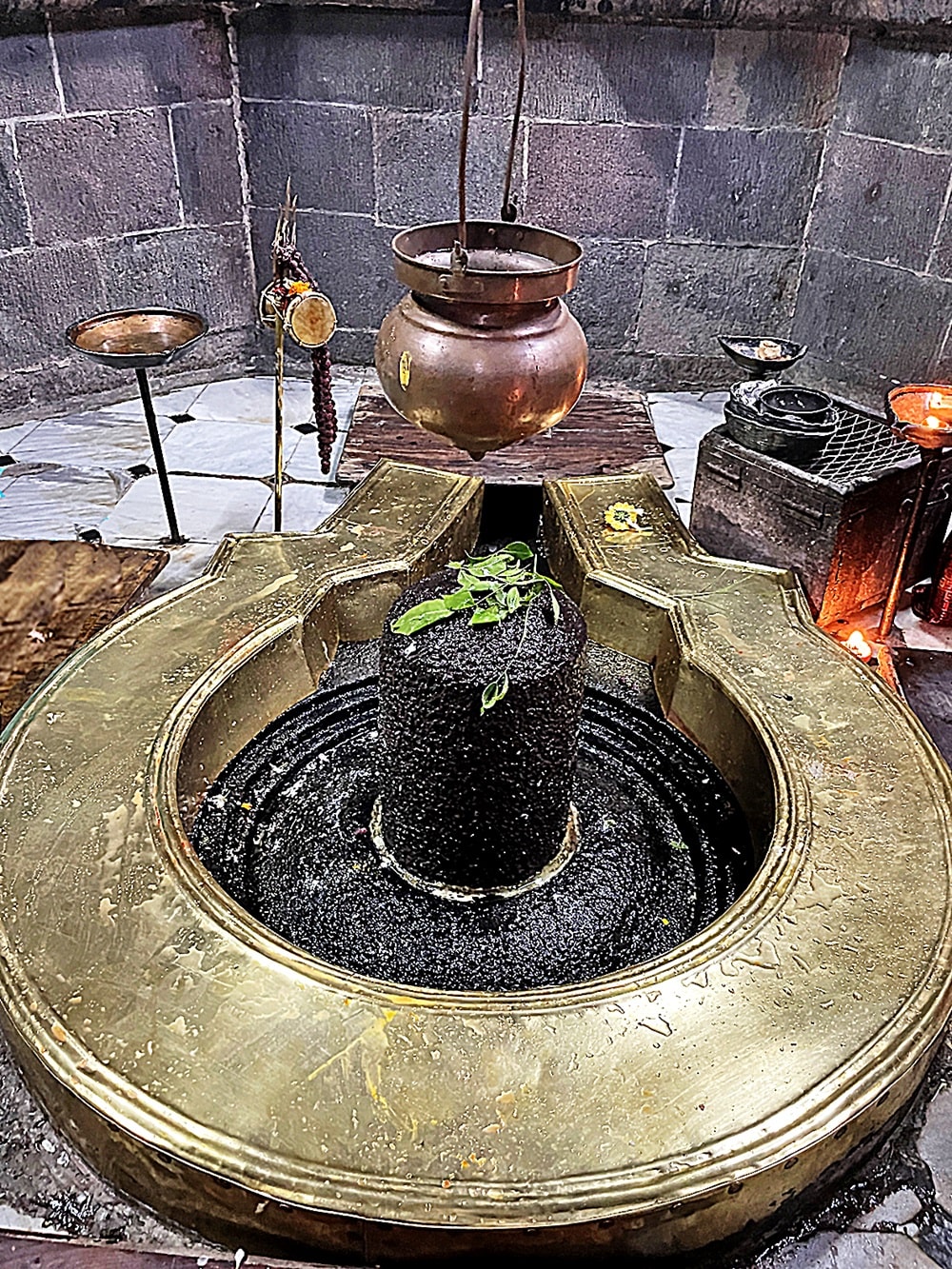
The main sanctum sanctorum of the Nageshwar Temple is of stone construction. The entrance to the sanctum is made of wood and features intricate carvings. The sanctum sanctorum is four to five feet lower than the level of the antarala. There are stone steps to descend into the sanctum sanctorum. In the centre of the floor in the sanctum is the Shiva linga, and in the niche on the back wall is the murti of Parvati. It is said that beneath this large Shiva linga lies the original swayambhu (self-manifested) linga. Sculptures of Maruti and Ganpati are carved on the exterior walls of the sanctum sanctorum. The ceiling of the sanctum sanctorum is also of stone construction. At the base of the shikhara (spire), there are many small sub-shikharas with kalashas on top of them. At the pinnacle is the amalaka, and above it is the kalash. At the four corners of the antarala ceiling are small minaret-like spires. This lime-plastered shikhara formerly had mythological paintings of the Peshwa style painted on it. In १९२१, Gopalrao Apte renovated this shikhara. This shikhara shows the influence of sixteenth-century Islamic architecture.
Various religious events are organised throughout the year at the Nageshwar Temple. A large crowd of devotees gathers here for the festival of Mahashivaratri. During the holy month of Shravana, the festival of Gokulashtami is celebrated with great enthusiasm for ten days. On this occasion, Kirtans and Discourses are organised. As an age-old tradition, the sacred palanquin of Sant Namdev, en route to Pandharpur, halts at the temple. In 1824, Haripant Motiwale built a Dattatreya Temple within the temple premises. There are also separate shrines dedicated to Vitthal-Rakhumai and Maruti within this complex. The Archaeological Survey of India has declared this structure a protected monument. Devotees can have darshan here from 6:00 AM to 10:00 PM.
Useful Information
This sacred temple stands as a testament to deep spiritual devotion, ancient architectural grandeur, and rich local cultural traditions.
The sanctum sanctorum houses the divine idol consecrated according to ancient Vedic traditions, surrounded by serene courtyards and traditional temple architecture.
Navratri, Maha Shivratri, Annual Temple Jatra & Deepotsav
Compare and book flights, secure top-rated local hotels near the temple, hire reliable guides, and rent cars instantly.
Extend your pilgrimage by visiting other highly sacred temples located nearby.


Add ₹999 more to unlock FREE SHIPPING!
Your sacred cart is currently empty.
Shop Photo FramesFill in your delivery details below to place your order.
Add comment