
Add ₹999 more to unlock FREE SHIPPING!
Your sacred cart is currently empty.
Shop Photo FramesThe Kasba Ganpati Temple in Kasba Peth, Pune, holds unique significance as the Gramadaivat (presiding deity) of the city. This temple is widely known as the first ‘Manaacha Ganpati’ (the most prestigious Ganpati) of the Sarvajanik Ganeshotsav. In the early 17th century, Rajmata Jijau established this Swayambhu (self-manifested) idol. She initiated the foundation of Swarajya at this very sacred site. Chhatrapati Shivaji Maharaj used to seek the blessings of this Ganpati before embarking on any military campaign. This ancient idol, in the form of a ‘Tandla’ (a naturally formed stone), stands as a testament to Pune’s glorious heritage. Even today, the tradition of offering the first invitation of any auspicious event in Pune at the feet of this deity is followed with great devotion.
Geographically, this temple is situated in the central part of Pune. It was from here that the original settlement of the city began in historical times. This settlement is known as ‘Kasbe Pune’. In the early 17th century, the Pune region was under the control of the Adil Shahi dynasty of Bijapur. Around 1630, Sardar Murar Jagdev invaded the city and razed the entire settlement. According to historical documents, this destruction was described as ‘plowing with donkeys,’ which was considered a sign of complete ill-omen. In such dire circumstances, Rajmata Jijau and young Shivray arrived in Pune. They began the process of reviving the city. To awaken the self-respect of the people, Jijau plowed the land with a golden plow. She re-laid the foundation of this region. During this period, the Kasba Ganpati Temple was also rebuilt.
The history of the establishment of the Kasba Ganpati Temple is linked to eight Brahmin families. These families had migrated to Pune from Indi village in Bijapur district. They included the Thakar, Dhere, Kanade, Vaidya, Shaligram, Kawalange, Nilange, and Bharait families. Vinayak Bhat Thakar possessed the Ganesha idol of his family deity. According to a divine vision, he found this Swayambhu idol while excavating at a specific spot. This important information was conveyed to the then administrator, Dadoji Konddeo, who informed Rajmata Jijau. Jijau considered this event a good omen. She had a stone temple built here between 1636 and 1639. Since then, the Thakar family has been managing the temple through hereditary succession. This family has been serving the temple since the time of Shivaji Maharaj, and this tradition continues unbroken to this day.
Chhatrapati Shivaji Maharaj spent his childhood at the Lal Mahal, which is located near the temple. Therefore, he had a very close connection with this deity. The Maharaj used to seek the blessings of Kasba Ganpati before setting out on any military campaign. As a deity who ensures victory, this Ganpati is also addressed as ‘Jayati Ganpati’. Historical evidence of this temple is found in a Modi script letter written by the Chhatrapati himself, dated March 19, 1647. In this letter, the Maharaj issued a clear order to provide half a seer of oil daily for the Nanda-deep (eternal lamp). It was decided that this oil would be supplied from a village in Tarfe Man of the Pune Pargana. An even older reference is found in a Nizam Shahi decree dated January 1, 1619. This decree is bilingual, which proves that the temple existed even before the time of Shivaji Maharaj.
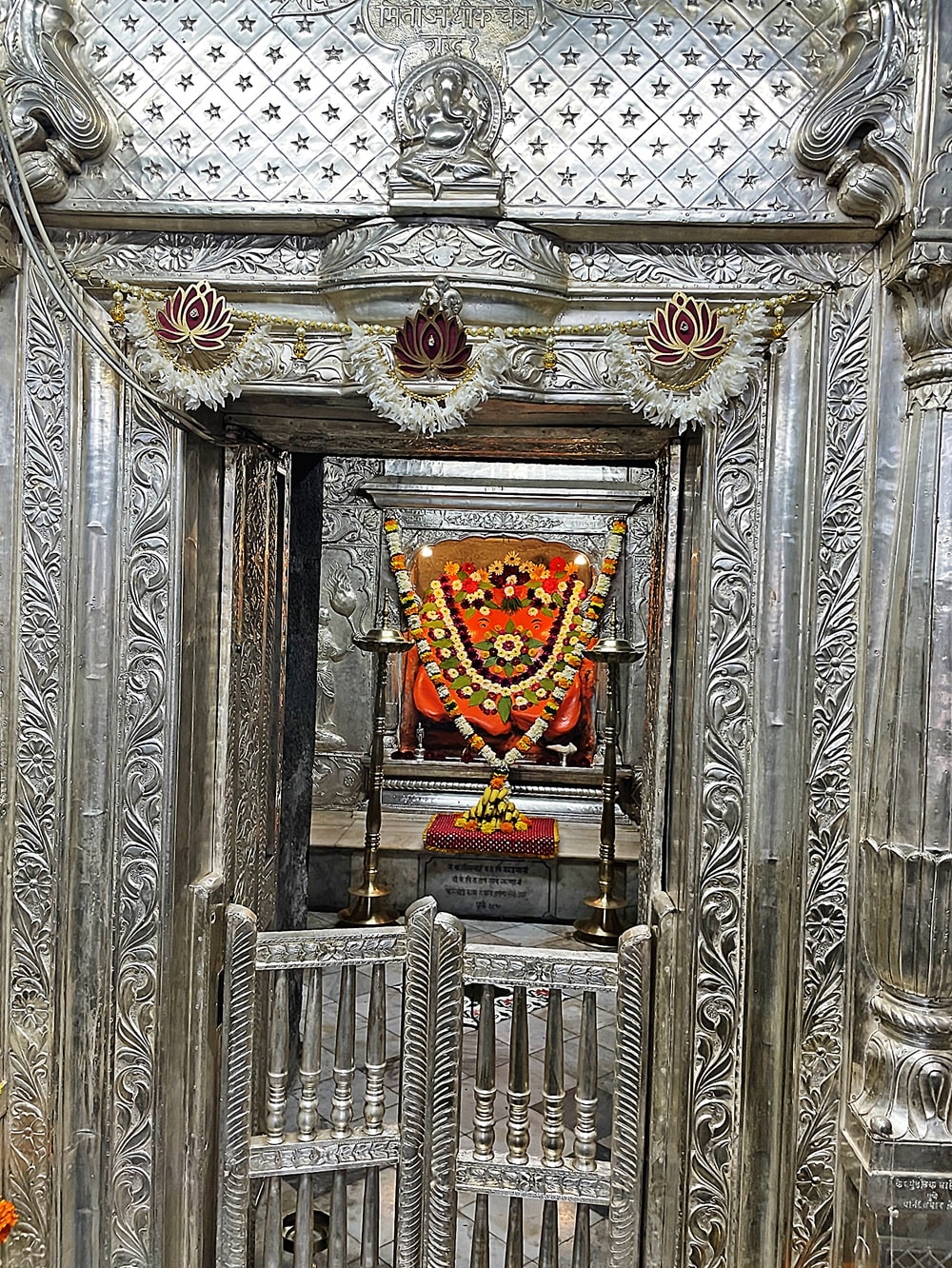
The temple architecture is an excellent blend of Maratha and Peshwa-era styles. It primarily uses stone and teak wood. The stone sanctum was built by Rajmata Jijau. During the Peshwa era, Gajananrao Sadashiv Dixit built a wooden Sabha Mandap (assembly hall) in front of it. This hall features exquisite carvings. There is a beautiful silver arch at the entrance of the sanctum sanctorum, which was offered by Rao Bahadur Ganpatrao Mahadev Kanjale. He fulfilled this vow after the difficulties faced during the construction of the ‘Lloyd Bridge’ were resolved. This bridge is known today as the Shivaji Bridge. The temple is very close to Shaniwar Wada. Even during the Peshwa period, this temple was an integral part of their administrative faith and an important center of their daily devotion.
In 1893, Lokmanya Tilak laid the foundation for the Sarvajanik Ganeshotsav. At that time, some disputes arose regarding the order of the procession. To resolve these, Tilak bestowed the honor of ‘Manaacha Pahila Ganpati’ upon Kasba Ganpati. As this temple is the Gramadaivat of Pune, Tilak made the wise decision that this mandal should lead the immersion procession. Since then, Pune’s immersion procession begins with the Kasba Ganpati procession, followed by the processions of Tambdi Jogeshwari, Guruji Talim, Tulshibaug, and Kesariwada mandals. All these prestigious palanquins are magnificent. The procession, moving with traditional attire and the sound of Dhol-Tasha, showcases the cultural splendor of Pune.
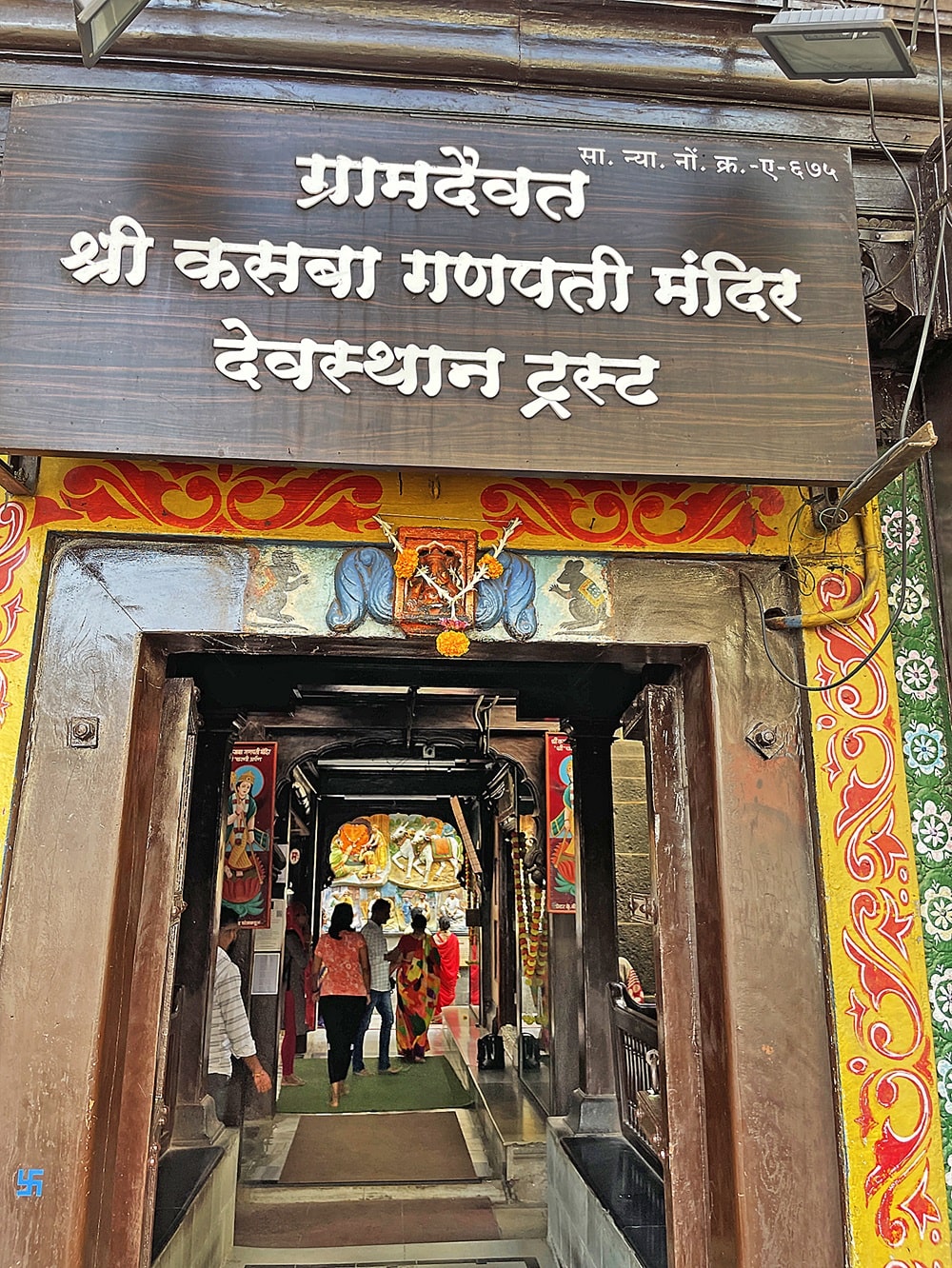
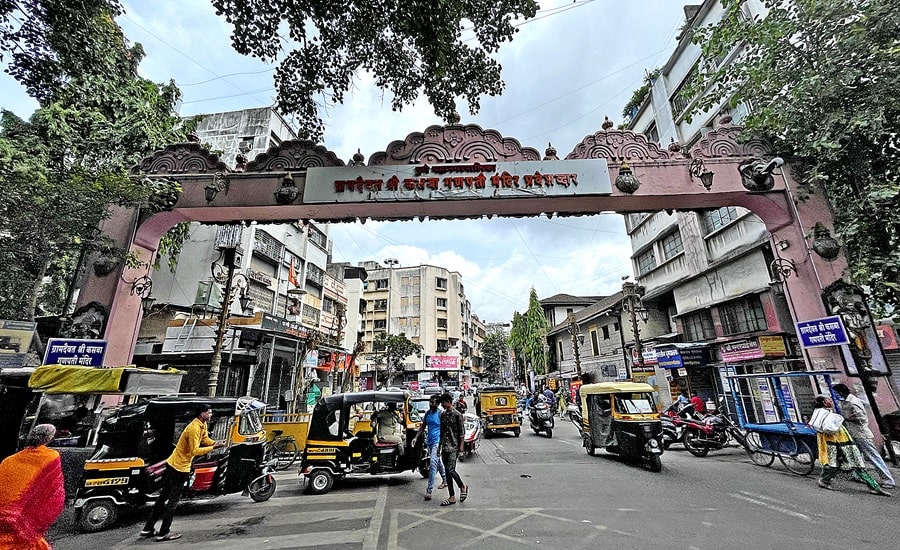
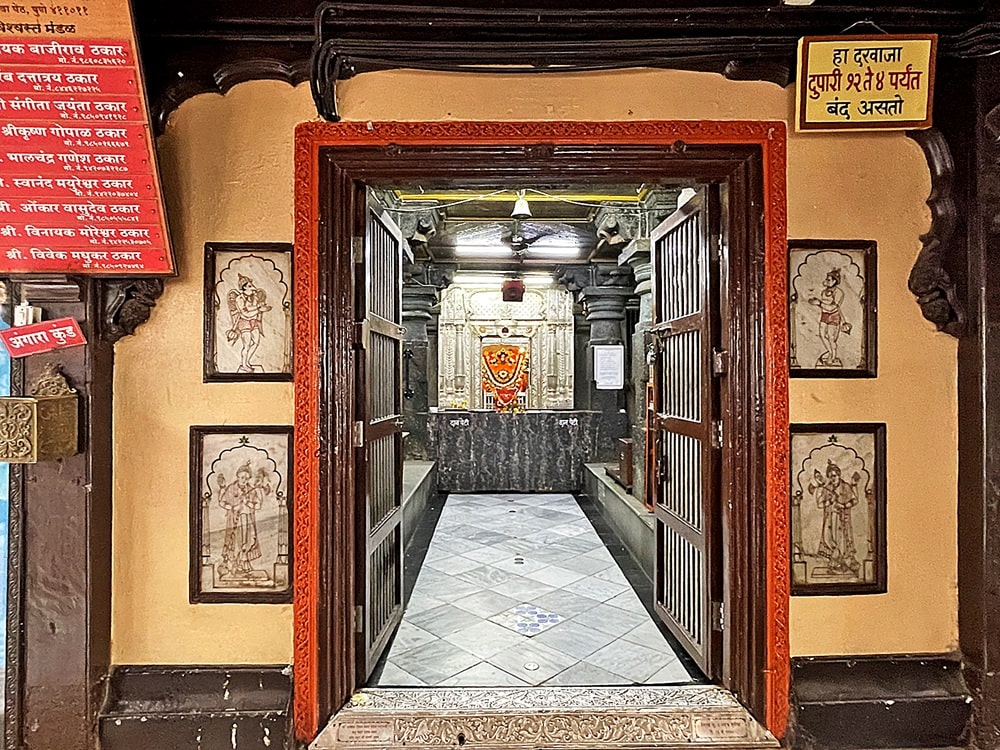
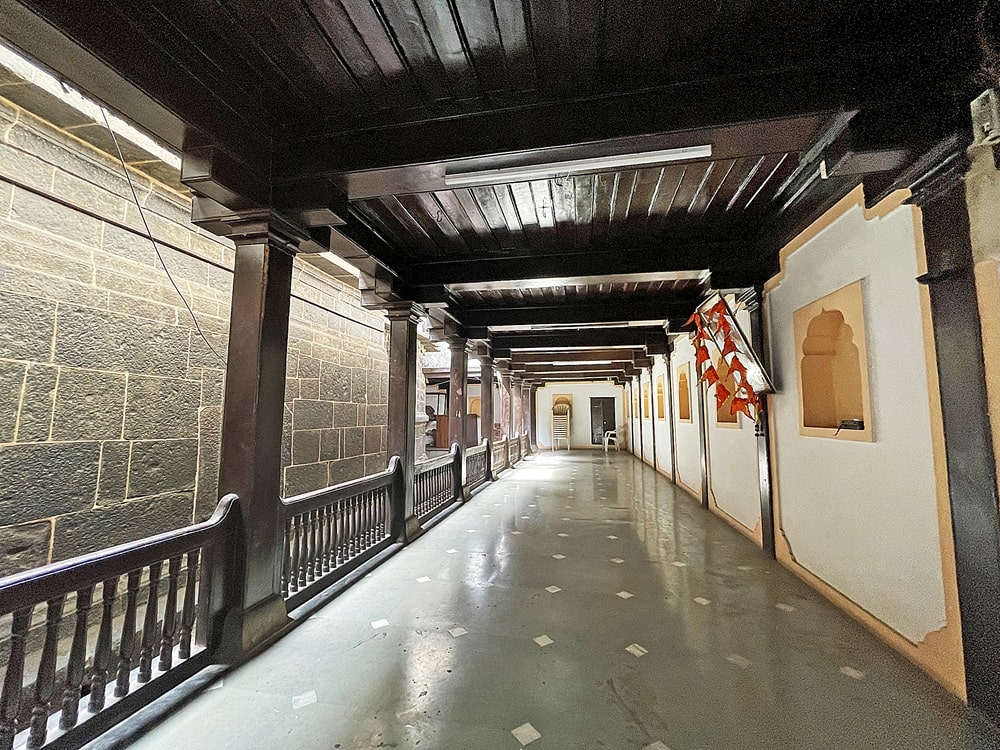
On the road leading to the temple in Kasba Peth, there is a welcome arch built in Rajasthani Dholpur stone. The balcony of this arch is carved with auspicious Kalash motifs. In front of the temple, on both sides of the entrance, there are brass pillars about 15 feet high. At the top of these pillars, brass Tulsi Vrindavans are installed. There are some shops selling worship materials near the entrance. The temple has a strong fortification wall and a three-story entrance gate. This entrance has ornate door frames. There is a sculpture of Ganpati on the lintel, and paintings of door-keepers (Dwarpalas) on the front walls on both sides of the entrance. In the courtyard, along the fortification, there are some important chambers and galleries. There are wooden stairs to reach these galleries, which have wooden pillars. The temple premises are very peaceful and serene.
The structure of the temple consists of a Sabha Mandap, Antaral (vestibule), and Garbhagriha (sanctum). The two-story Sabha Mandap has wooden pillars connected by ornate arches. There is a wooden ceiling on the beams of these pillars, above which is a beautiful balcony on the second floor. The second floor of the Sabha Mandap has a wooden roof supported by pillars. Pictures of the Ashtavinayakas are displayed in the front area here. The construction of the Antaral and Garbhagriha is in carved stone, reflecting the historical heritage of the Shivaji era. The entrance to the Antaral is carved with floral patterns. There are Naga sculptures on the upper side of the pillars here. In the niches, there are idols of Ganpati, Lakshmi, Vithoba-Rakhumai, and Panchmukhi Hanuman. A Shiva Linga and an idol of Nandi are also present on the floor here.
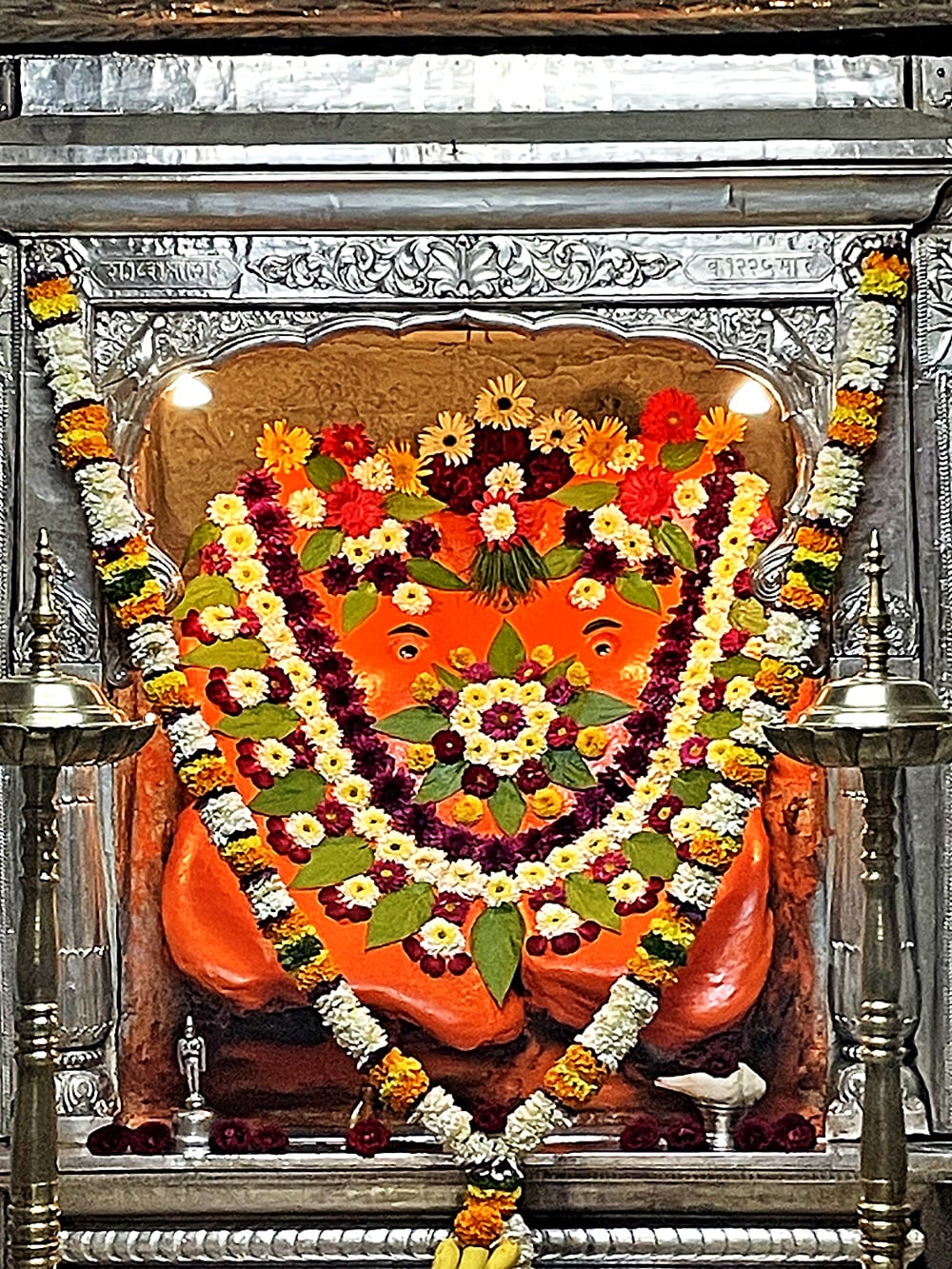
The Utsav Murti (processional idol) of Lord Ganapati is located near the entrance of the Garbhagriha (sanctum sanctorum). The entrance to the Garbhagriha is adorned with a silver-plated covering. Inside the Garbhagriha, the stone idol of Ganapati, in the form of a ‘Tandla’ (a naturally formed stone), rests on a Vajrapitha. This idol is smeared with vermilion (sindoor) and stands three and a half feet tall. Diamonds are set in the eyes of the idol, and a ruby is embedded in the navel. August 5, 2024, proved to be a very significant day in the history of the temple. On this day, a scientific process was carried out to remove the vermilion armor from the idol. Approximately 60 kilograms of vermilion were removed during this mission. Following this, the original, four-armed (Chaturbhuj) form of Ganapati was revealed. According to researchers, this form dates back to the 15th or 16th century. The walls of the Garbhagriha are covered with ornate silver plating. The first tier of the Shikhara (spire) features sculptures of the Ashtavinayaka. At the pinnacle of the Shikhara sits the Amalaka, topped with a Kalash and a flag.
The birth anniversary of the deity is celebrated here with great enthusiasm three times a year. These festivals occur in the months of Jyeshtha, Bhadrapada, and Magh. The public Ganeshotsav is celebrated in the month of Bhadrapada. During this time, a clay idol (Parthiva Ganesha) is installed in the temple. Thousands of devotees gather to witness the immersion procession of Ganesha. This public festival began in the year 1893. During examination periods, long queues of students form here to seek blessings. This temple holds an unshakable place in the lives of Punekars. It is a tradition to place the first invitation of any auspicious event at the feet of the deity. The famous playwright Ram Ganesh Gadkari used to offer his plays here.
This sacred temple stands as a testament to deep spiritual devotion, ancient architectural grandeur, and rich local cultural traditions.
The sanctum sanctorum houses the divine idol consecrated according to ancient Vedic traditions, surrounded by serene courtyards and traditional temple architecture.
Navratri, Maha Shivratri, Annual Temple Jatra & Deepotsav
Compare and book flights, secure top-rated local hotels near the temple, hire reliable guides, and rent cars instantly.
Extend your pilgrimage by visiting other highly sacred temples located nearby.


Add ₹999 more to unlock FREE SHIPPING!
Your sacred cart is currently empty.
Shop Photo FramesFill in your delivery details below to place your order.
Add comment