
Add ₹999 more to unlock FREE SHIPPING!
Your sacred cart is currently empty.
Shop Photo FramesThe Chaturshringi Devi Temple, nestled on a hillock on Senapati Bapat Road in the north-western part of Pune city, is an integral part of Pune’s cultural heritage. This hill, adorned with four peaks, is aptly known as ‘Chaturshringi’. Declared an official heritage site, this sacred place is blessed with natural beauty. To reach this temple, which is revered as a symbol of the Trishakti – Mahakali, Mahalakshmi, and Mahasaraswati – devotees must ascend over एकशे सत्तर steps. A magnificent festival is celebrated here during the Sharadiya Navratrotsav.
The temple finds mention in the ‘Bombay Presidency Gazetteer’ of एक हजार आठशे पंच्याऐंशी. According to this record, the Chaturshringi Devi Temple is situated on a hill in Bhamburda, approximately two miles north-west of Pune. This hill, with its four peaks, was known as ‘Chaturshringi’ or locally as ‘Chatarsing’ hill. The gazetteer’s legend mentions that Durlabhsheth Pitambardas Mahajan, a renowned and wealthy merchant of Pune, was a devout worshipper of Saptashringi Devi of Vani in Nashik district. He would regularly visit Vani every year for the Devi’s darshan. However, with advancing age, the arduous journey to Vani became increasingly difficult for him. Pleased with Durlabhsheth’s unwavering devotion, the Devi appeared to him in a dream, saying, “You no longer need to travel so far; I will manifest myself on this very hill in Pune.” As instructed in the dream, Durlabhsheth searched the hill and discovered a self-manifested idol of the Devi there. Subsequently, he built a temple for the Devi at that very spot.
This temple, constructed of stone and lime in those times, was a modest structure. Stone steps were built from the foot of the hill to the temple. The gazetteer also describes the fair held here alongside the Navratri festival. Thousands of devotees from Pune city and the surrounding rural areas would come for darshan during this nine-day fair in the Ashwin month. At that time, a large marketplace would spring up around the hill, and various religious rituals would be performed. This record underscores the temple’s significance in Pune’s cultural and religious history. After Durlabhsheth Mahajan’s demise, the responsibility of the temple was entrusted to a sadhu named Dastagir Gosavi and his disciple. Later, around the late eighteenth century, the temple’s management was handed over to the Angal family.
Spiritually, Chaturshringi Devi is also known as ‘Ambareshwari’. Considered the combined form of Mahakali, Mahalakshmi, and Mahasaraswati, this Devi is an aspect of Saptashringi Devi. According to local folklore, Chaturshringi Devi constantly guards the hill for the protection of Pune. Devotees believe that Vetala Maharaj resides in the vicinity of this hill and acts as the Devi’s protector.
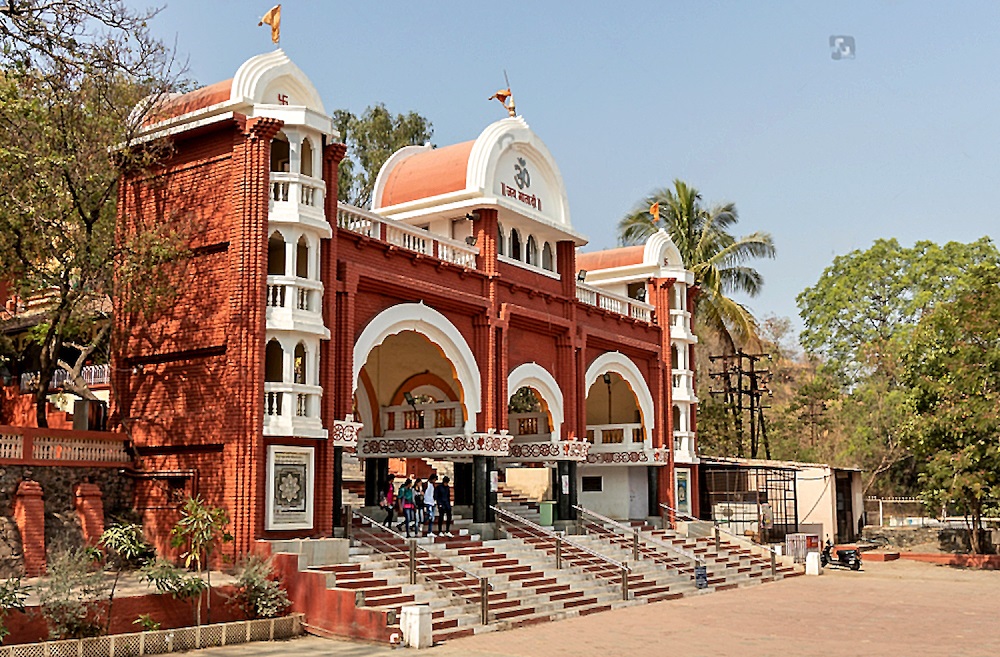
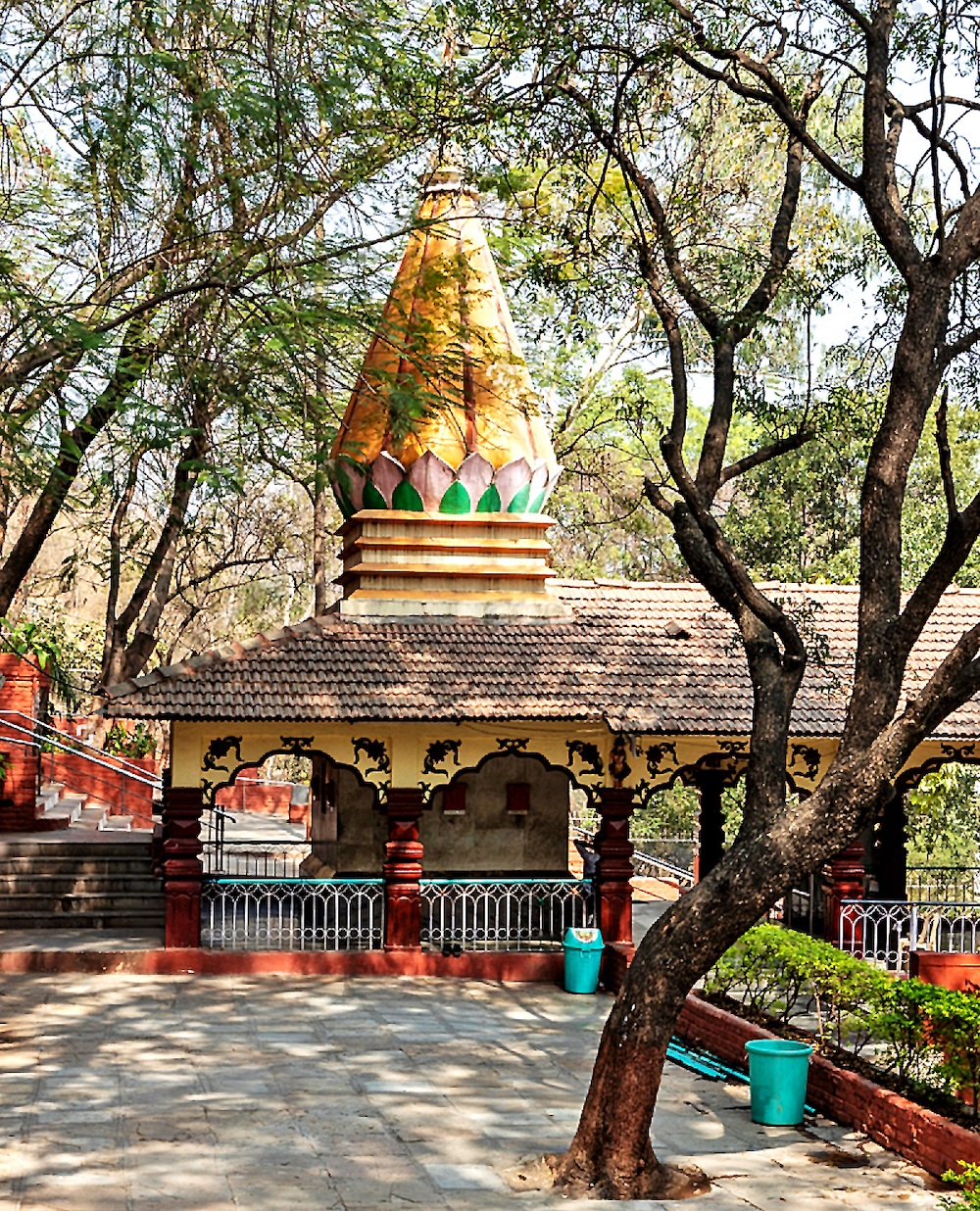
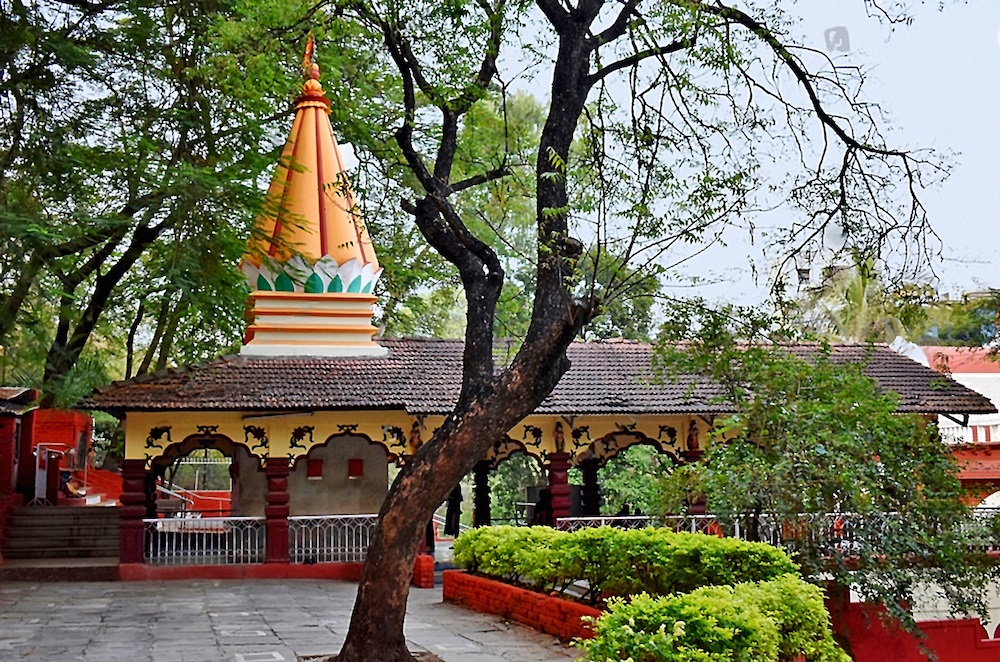
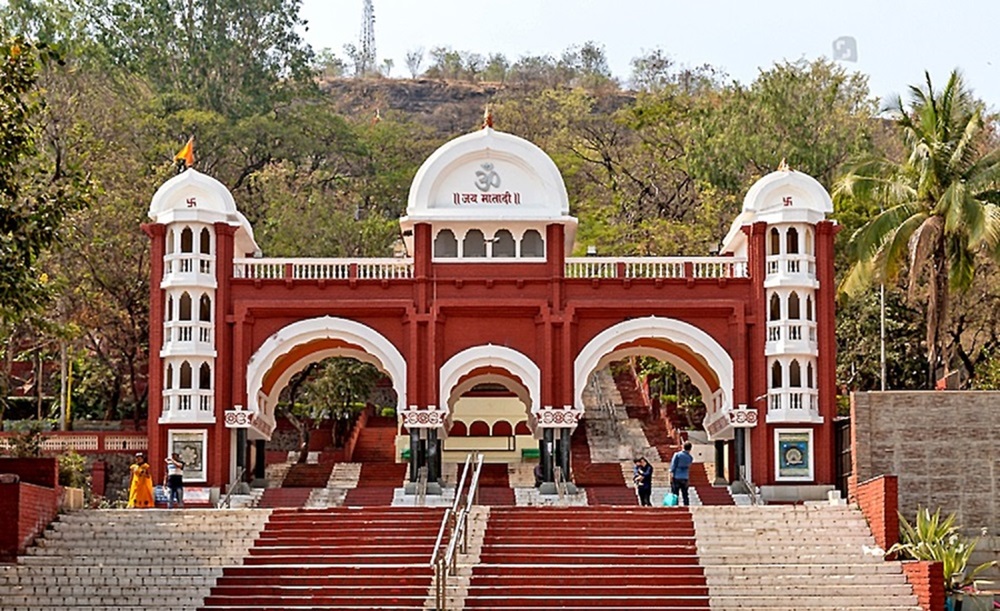
The first entrance to the temple is at the foot of the hill, adjacent to Senapati Bapat Road. This fortified entrance features a dome-shaped roof adorned with an amalaka and kalasha. Passing through this entrance, one steps into an open courtyard. After ascending a few steps from this courtyard, which houses parking and shops selling puja items, one reaches the temple’s main gateway. This grand gateway, approximately तीस feet high, has three arches and a balcony above them. A nagarkhana (drum house) is situated on the balcony, and stone deepmalas (lamp towers) line the stairway. Ascending further, one encounters a Ganesha temple. This spacious temple, known as ‘Parvatinandan Ganapati’, has stone carvings of the Ashtavinayaka along its circumambulation path. Further up, after more steps, there are also temples dedicated to Durga Devi and Lakshmi.
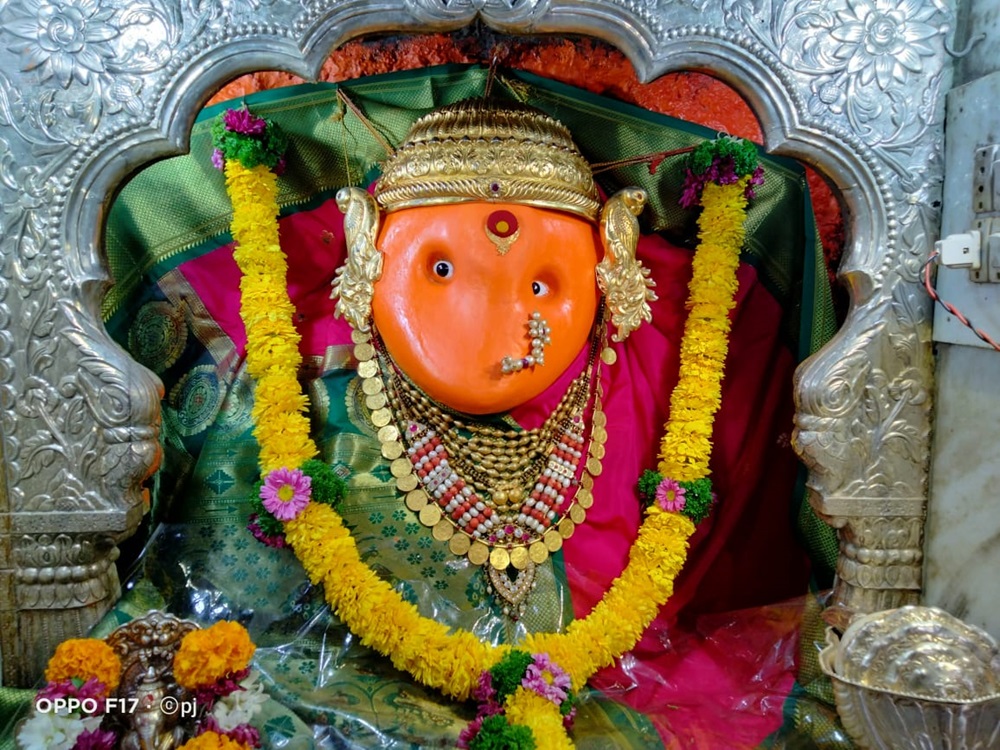
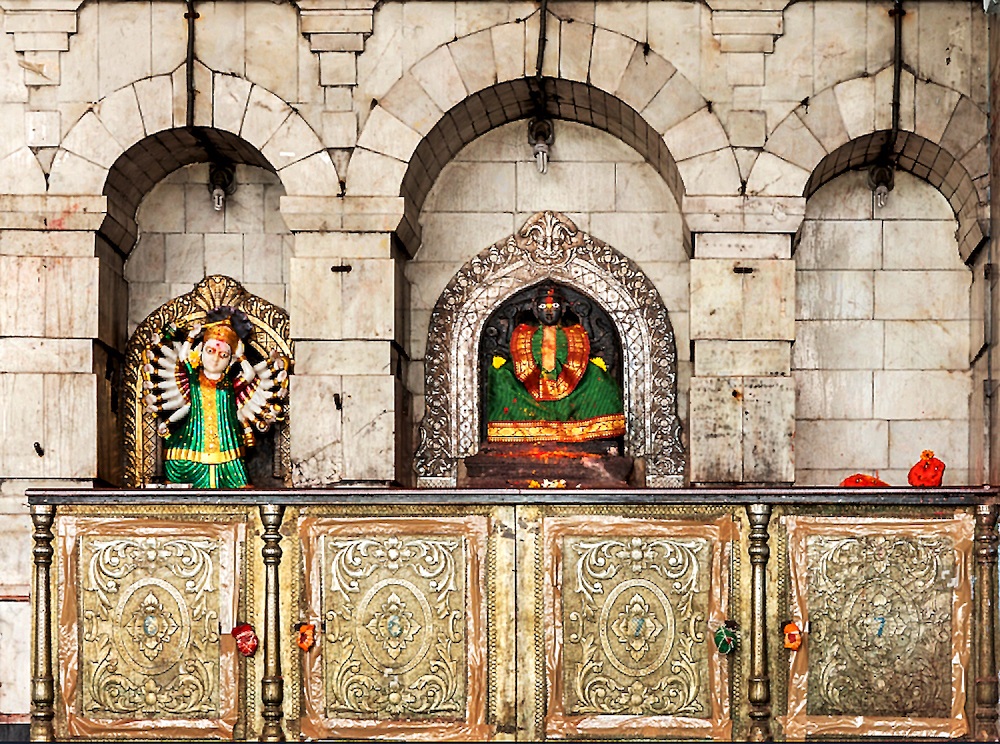
Beyond this lies the entrance to the sabhamandapa (assembly hall) of the Chaturshringi Temple. This temple boasts six arches adorned with silver decorations. Steps lead up to the sabhamandapa, which is at a higher level than the entrance. A yagnakunda (sacrificial fire pit) is situated in the center of the sabhamandapa, and the niches in the walls contain idols of various deities. Arrangements for darshan queues have been made in this sabhamandapa to manage the crowd of devotees, and seating is available for them. Approximately पंधरा steps lead to the garbhagriha (sanctum sanctorum), which is about बारा feet higher than the sabhamandapa. The entrance to the garbhagriha is simple. In the center of the garbhagriha, against the back wall, is the self-manifested stone idol of the Devi in an orange-colored ‘tandala’ form. Adorned with an intricately crafted crown, a nose ring (nath), and various golden ornaments around her neck, this form of the Devi appears exceedingly radiant. Lion sculptures are carved on both sides of the idol, which is seated on a silver vajrapeetha. Behind the Devi is a uniquely designed silver prabhaval (aura). The prabhaval features designs of the sun, swans, and various flowers and vines. A lion’s face is carved at the top of the prabhaval. On the ceiling of the garbhagriha, there are tiger sculptures at all four corners, and a five-tiered circular shikhara (spire) in the center. Each tier of the shikhara has niches for deities and kalashas above them. At the very top of the shikhara, an amalaka, kalasha, and flag flutter. According to the priests, five hundred to सातशे kilograms of silver have been used for decoration in this temple. Devotees have unwavering faith in this Devi, who is considered a ‘jagrut devasthan’ (a living shrine).
Among the festivals celebrated in this temple, the Navratri ceremony is exceptionally grand. During this period, which lasts for approximately पंधरा days from Ashwin Shuddha Pratipada to Pournima, a large fair is held at the foot of the hill. On Vijayadashami, a silver idol of the Devi is placed in a large silver chariot, and a procession is taken out. On this occasion, thousands of devotees from across the state come for the Devi’s darshan. Devotees offer sarees, blouses, and auspicious ornaments to the Devi and fulfill their vows. A Navchandi Yagna is organized in the temple at this time. Collective chanting of the Durgasaptashati path and Lalitasahasranama stotra is performed in the temple. Rituals such as Kumkumarchan and Abhisheka are carried out for the Devi. On Tripurari Pournima, one thousand lamps are lit in the temple premises, bathing the area in a flickering glow. Additionally, during festivals like Vat Pournima, Holi, and Diwali, special religious rituals and illuminations are arranged in the temple. The Devi’s aarti is performed at सकाळी १० वाजता and रात्री ८ वाजता. Devotees can have darshan of the Devi in the temple from सकाळी ६ ते रात्री ९ पर्यंत.
This sacred temple stands as a testament to deep spiritual devotion, ancient architectural grandeur, and rich local cultural traditions.
The sanctum sanctorum houses the divine idol consecrated according to ancient Vedic traditions, surrounded by serene courtyards and traditional temple architecture.
Navratri, Maha Shivratri, Annual Temple Jatra & Deepotsav
Compare and book flights, secure top-rated local hotels near the temple, hire reliable guides, and rent cars instantly.
Extend your pilgrimage by visiting other highly sacred temples located nearby.


Add ₹999 more to unlock FREE SHIPPING!
Your sacred cart is currently empty.
Shop Photo FramesFill in your delivery details below to place your order.
Add comment