
Add ₹999 more to unlock FREE SHIPPING!
Your sacred cart is currently empty.
Shop Photo FramesThe Varad Gupchup Ganpati Temple, located near the Shaniwar Wada Police Chowki in Pune city, stands as a witness to a unique and extraordinary history. It is said that many eminent personalities, including Lokmanya Tilak and N. C. Kelkar, used to visit this place regularly. Built in the 19th century, this temple is also known as Varadvinayak or Gupchup Ganpati.
This temple was built on 12 February 1892 by Ramchandra Vishnu Gupchup, a resident of Tathawade village near Chinchwad, which is why the name ‘Gupchup’ has been associated with it. There are differing opinions regarding this as well. According to some, the person who built this temple in 1894 was named Varad Gupchup. Gupchup did not have any children. He dedicated this temple to his Guru, Moreshwar Shastri Dixit. This guru-disciple duo, Moreshwar Shastri and Gupchup, had unwavering devotion to Ganaraya. Moreshwar Shastri was not only a renowned Sanskrit scholar, Kirtankar, and orator, but also an excellent sculptor. He used to create Ganesha idols by boiling vermilion (shendur) and linseed oil. It is said that he was the one who crafted the idol of Ballaleshwar at Pali. The idol of Varadvinayak Ganpati was also sculpted by him. There is a legend that after this temple was dedicated to Moreshwar Shastri, the place became famous as the ‘Gupchup Ganpati’ temple. Since the passing of Moreshwar Shastri Dixit, his family members have been overseeing the maintenance of the temple.
In the pre-independence era, Moreshwar Shastri was a respected personality for both the Hindu and Muslim communities. During his time, programs by the renowned singer Ustad Abdul Karim Khansaheb were frequently organized during temple festivals. These events would draw large crowds from Pune. That is why, during that period, this temple became a symbol of Hindu-Muslim unity. When the plague crisis struck Pune, Moreshwar Shastri performed a grand Yajna at the temple of the presiding deity, Tambdi Jogeshwari. In the procession taken out at that time, Muslim citizens participated in large numbers, just like the Hindus. It is also said that many eminent personalities, including Lokmanya Tilak and N. C. Kelkar, used to visit the temple regularly to meet Moreshwar Shastri.
This temple, situated on the banks of the Mutha River, suffered extensive damage during the Panshet Dam burst in July 1961. At that time, the sanctum sanctorum (Garbhagriha) and a portion of the wooden assembly hall (Sabha Mandapa) remained intact. The idol of Lord Ganesha was discovered after clearing three truckloads of silt and debris brought in by the floodwaters. Subsequently, the temple underwent renovation.
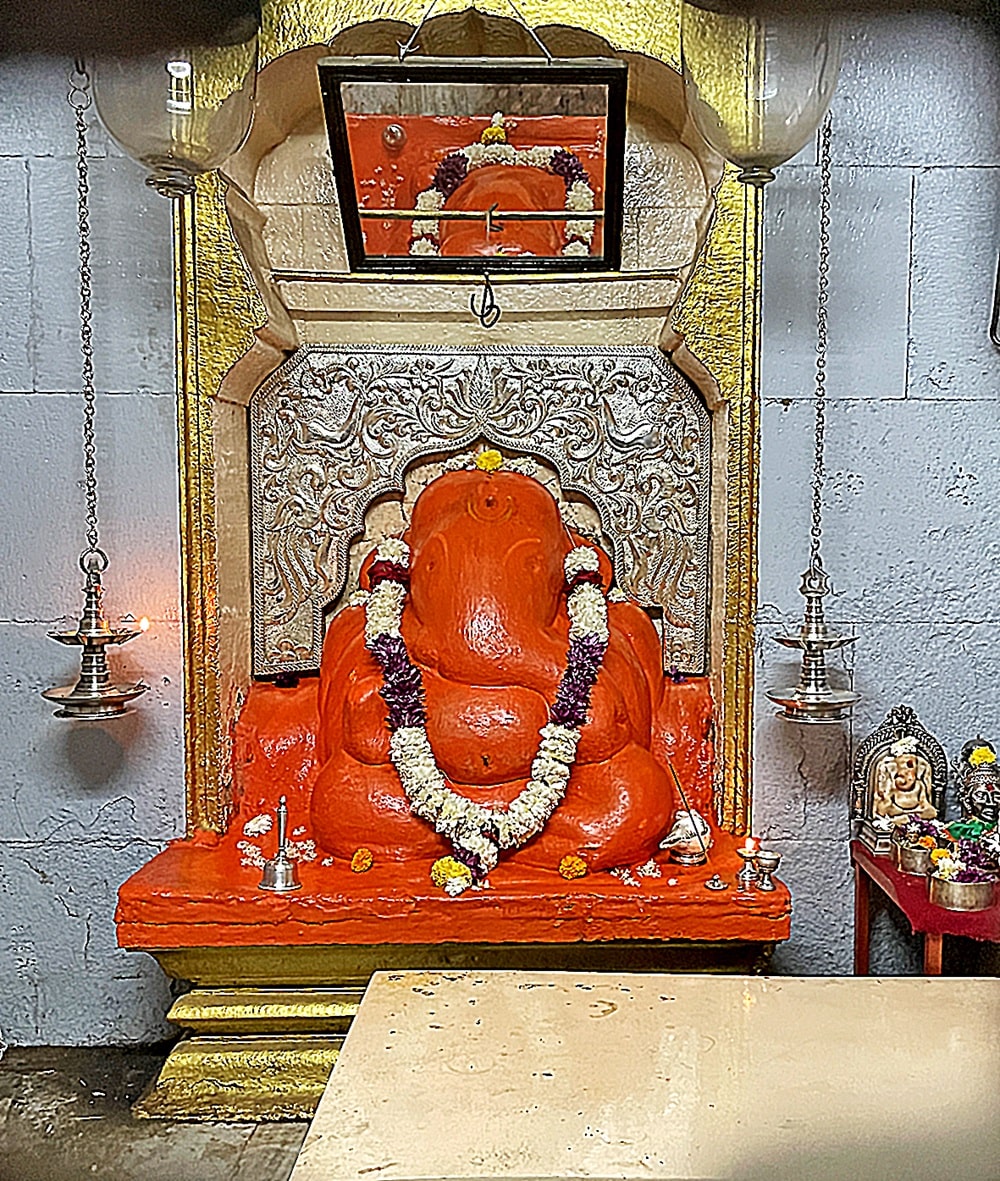
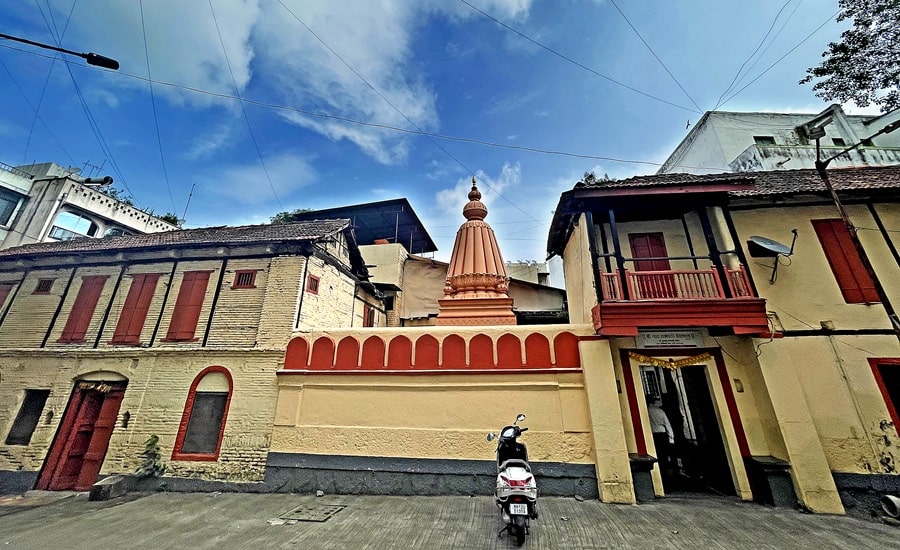
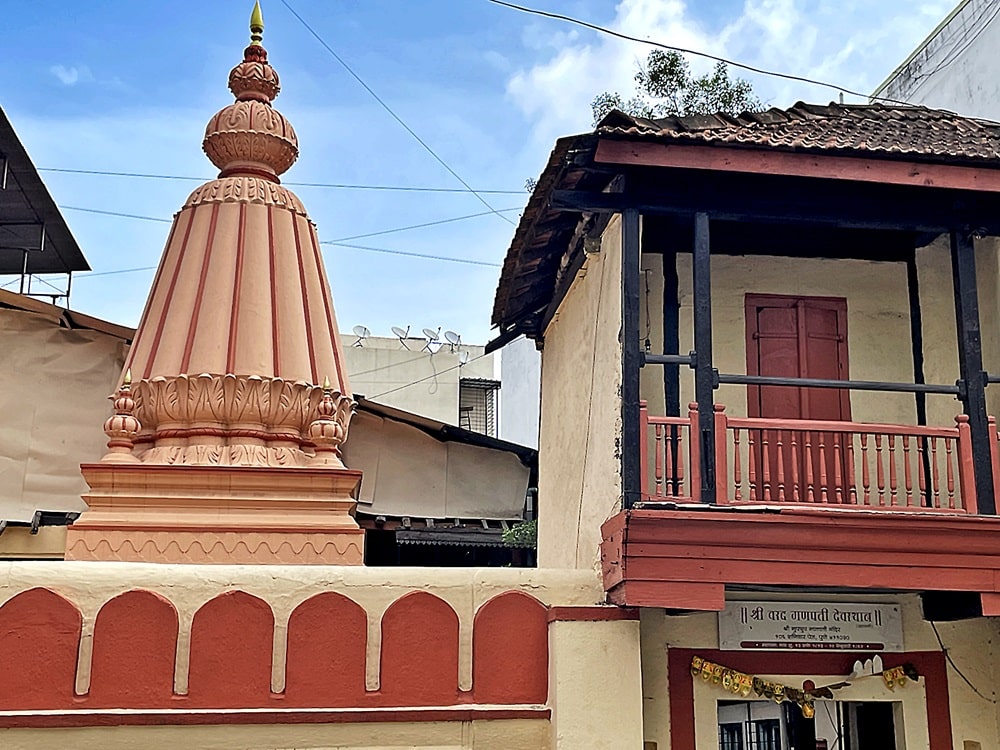
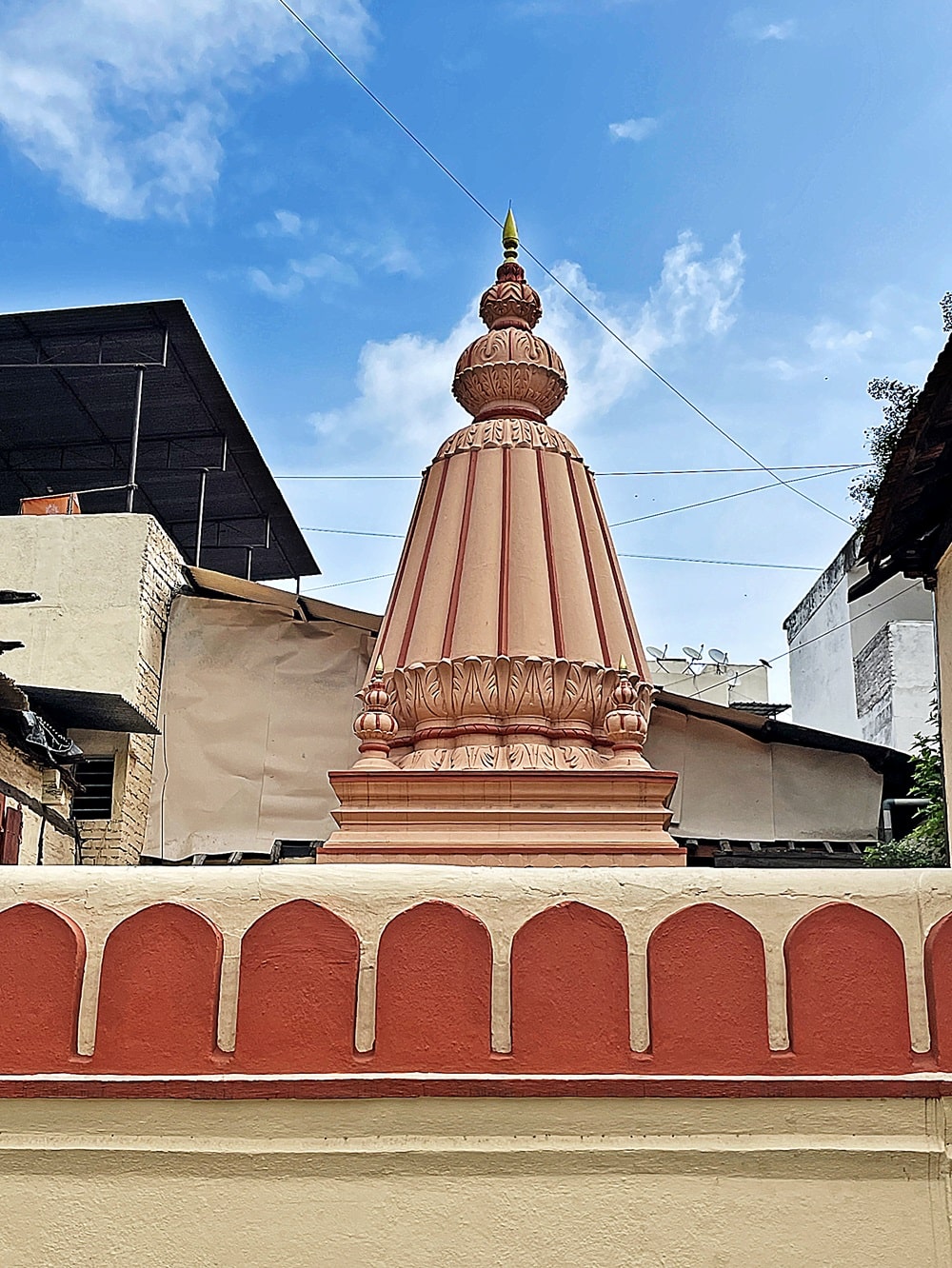
At the entrance of this temple, there is a south-facing Nagarkhana (drum house). In the spacious courtyard, there is a north-facing Sabhamandap (main hall) and Garbhagriha (sanctum sanctorum) on the left side, while on the right side, there is a large veranda adjacent to the residence of the Dikshit family. The idol of Lord Ganesha in the sanctum sanctorum is made of the original black stone. It has been given its form through the application of vermilion (sindoor). This form of Ganesha, with his trunk turned to the left, four arms, and seated in a cross-legged posture, is manifested in a three-foot-tall idol. Behind the sanctum sanctorum stands a large Shami tree, which is believed to be as old as the temple itself. The conical-shaped, 30-foot-high spire here is beautifully painted.
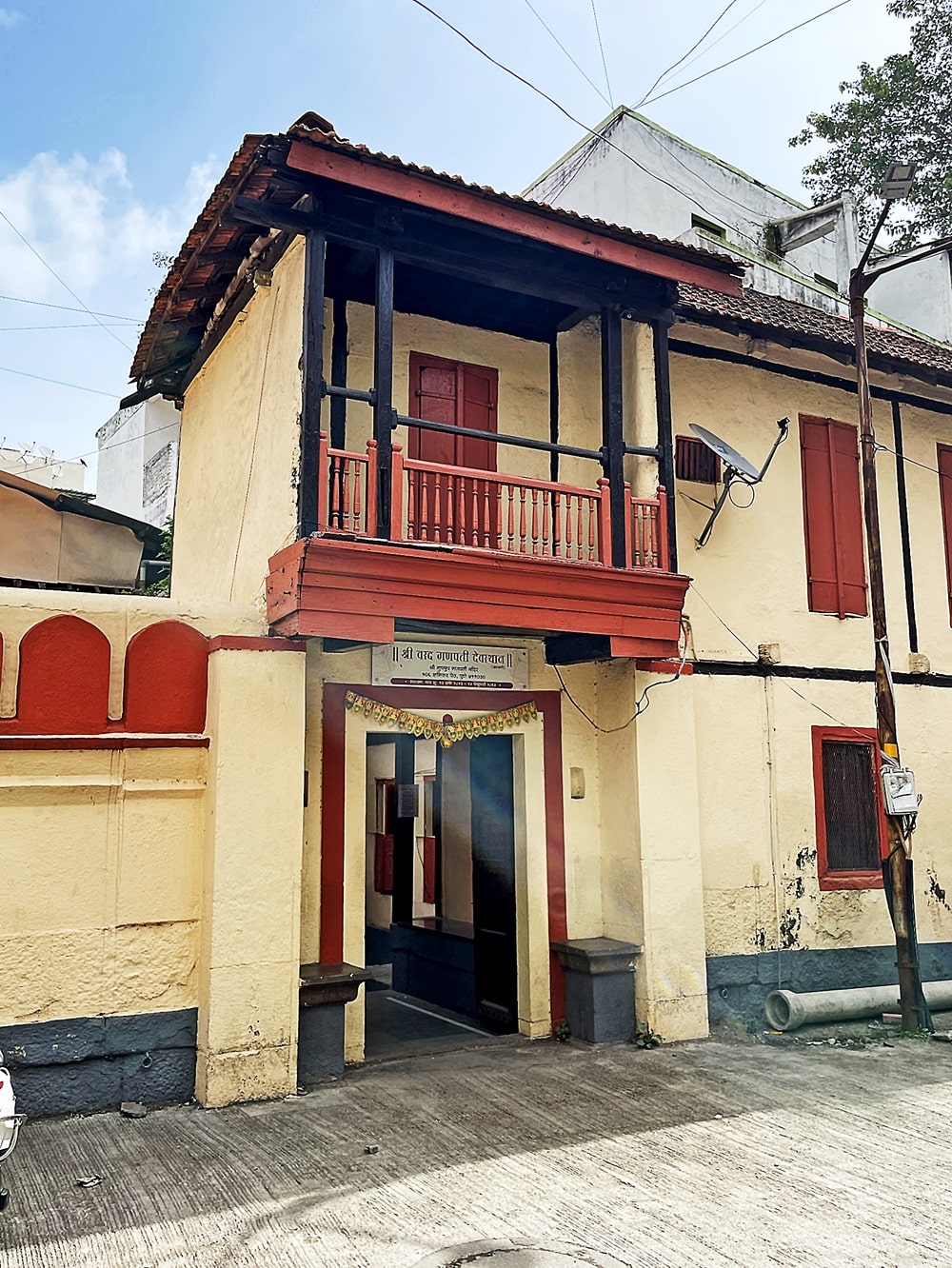
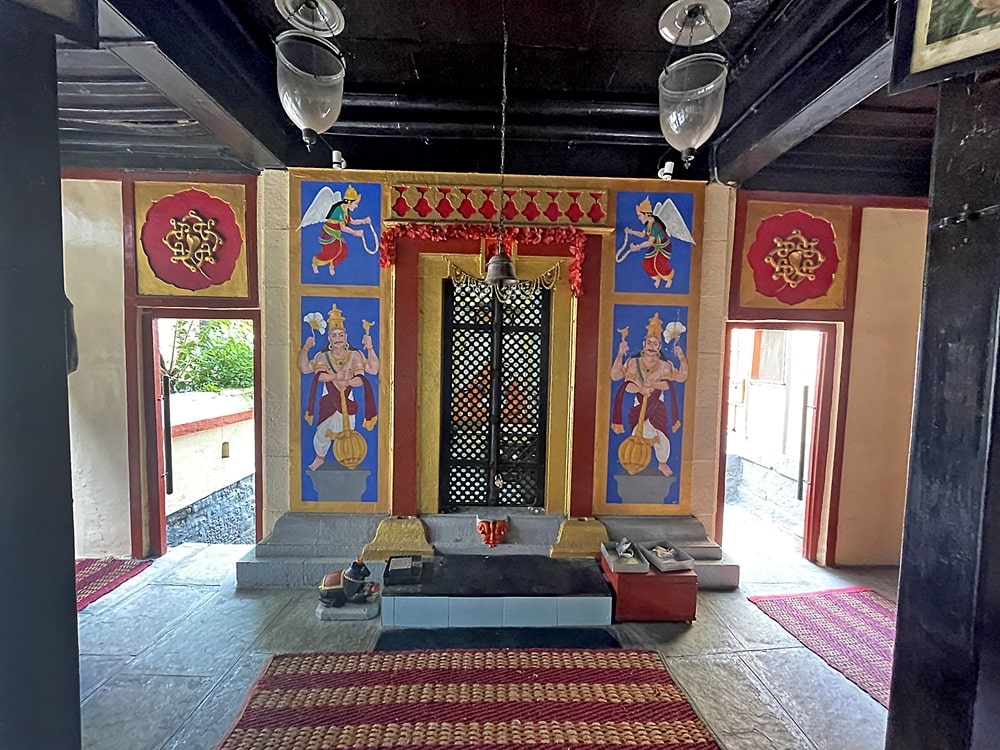
The temple’s assembly hall (sabhamandap) is now two-storied, with the central section of the teak wood ceiling raised to double the height. The second floor is supported by teak wood pillars. The wooden architectural style has enhanced the temple’s beauty. The chandeliers and lamps hanging from the ceiling further add to the temple’s splendor. Currently, iron sheets have been placed over the temple’s assembly hall. The walls here feature beautiful paintings based on mythological religious stories, which are said to have been created by the renowned painter Raja Ravi Varma. These paintings remained safe during the flood of 1961. Like other temples built in the Peshwa-era architectural style, the walls here are also constructed from mud bricks.
Every day in the temple, the Shodashopachara Panchamrita Puja is performed in the morning, followed by Panchopachara Puja at noon and night. The Shodashopachara Puja is conducted by the Dikshit brothers. Every year, the Ganesha Janmotsav is celebrated from Bhadrapada Shuddha Pratipada to Panchami, and the temple foundation day is observed on Magh Shuddha Trayodashi. It is a firm belief that offering a piece of jaggery (gula) to this Ganpati fulfills one’s heartfelt desires. Devotees can have darshan at the temple from 6:00 AM to 8:00 PM.
This sacred temple stands as a testament to deep spiritual devotion, ancient architectural grandeur, and rich local cultural traditions.
The sanctum sanctorum houses the divine idol consecrated according to ancient Vedic traditions, surrounded by serene courtyards and traditional temple architecture.
Navratri, Maha Shivratri, Annual Temple Jatra & Deepotsav
Compare and book flights, secure top-rated local hotels near the temple, hire reliable guides, and rent cars instantly.
Extend your pilgrimage by visiting other highly sacred temples located nearby.


Add ₹999 more to unlock FREE SHIPPING!
Your sacred cart is currently empty.
Shop Photo FramesFill in your delivery details below to place your order.
Add comment