
Add ₹999 more to unlock FREE SHIPPING!
Your sacred cart is currently empty.
Shop Photo FramesThe ancient Ramlingeshwar Devasthan is situated in the Kale Galli area of Latur city, which is the headquarters of Latur district. This main city of Latur taluka, nestled on the Balaghat plateau, possesses a long and ancient tradition. In ancient documents and various inscriptions, this city is found mentioned by diverse names such as Lattalur, Latnur, Satpur, Shripur, Ratnapur, Rattagiri, and Lattanir. According to history, Latur is considered the original place of origin of the Rashtrakuta dynasty, and the kings of this lineage bestowed upon themselves the honor of ‘Lattalurpurvaradhish’, meaning the sovereign of the city of Lattalur. There is immense devotion among local devotees regarding the Shivlinga in the Ramlingeshwar temple, which is established in the central part of this ancient city. It is said that this temple is approximately one thousand years old.
‘Ramlingeshwar’ means the Linga of Shiva established or worshipped by Shri Rama. From an archaeological perspective, this concept is considered an important link that harmonizes the Vaishnava and Shaiva sects. There are many temples named Ramlingeshwar in various parts of India, especially in South and Central India. The most important and ancient references to this concept are found in the Puranic scriptures. In the ‘Yuddha Kanda’ of the ‘Valmiki Ramayana’, there is a mention of Shri Rama worshipping Lord Shiva after his victory over Lanka. A detailed description of this story is given extensively in the ‘Setu Mahatmya’ section of the ‘Skanda Purana’. According to the description in the Skanda Purana, Ravana was a Brahmin by birth as he was the grandson of Sage Pulastya. Therefore, Shri Rama had incurred the sin of Brahmahatya (killing a Brahmin) by slaying Ravana. To attain liberation from this sin, as per the advice of Sage Agastya, Shri Rama decided to install a Shivlinga on the seashore. Hanuman went to bring the original Shivlinga from Mount Kailash for this installation, but as the auspicious time was passing, Mother Sita created a Linga from the sand of the sea, and Shri Rama performed its ritual installation. This very Linga later became famous as Ramlingeshwar.
In the ‘Kotirudra Samhita’ section of the ‘Shiva Purana’, the Rameshwar Jyotirlinga is mentioned in the description of the twelve Jyotirlingas. According to it, upon the prayer of Shri Rama, Lord Shiva settled there permanently in the form of a Linga, and this place is known as Ramlingeshwar. Furthermore, in the Patal Khand of the ‘Padma Purana’, there is a description of Shri Rama’s journey during his Ashwamedha Yajna. Clear references are found in this regarding Shri Rama installing and worshipping Shivlingas at various places during this journey. Regarding this temple in Latur city, the legend is that King Tamradhwaja of the Mahabharata era was a supreme devotee of Ramlingeshwar. He had established this temple during his reign. The story that the Siddheshwar temple in Latur was also built by this same king is prevalent.
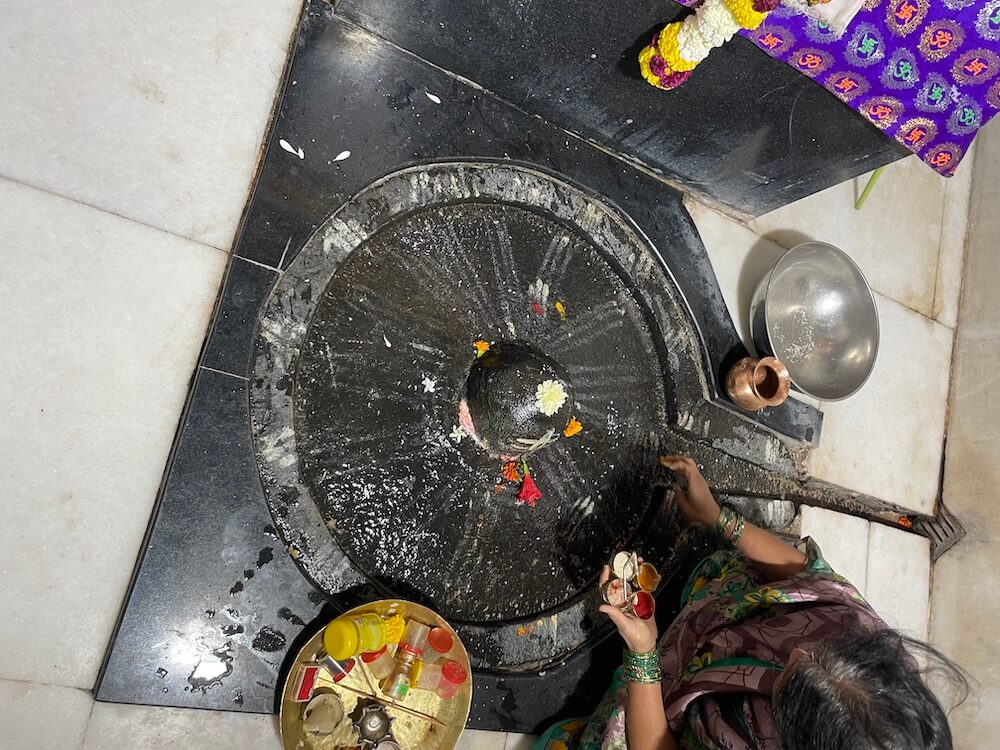
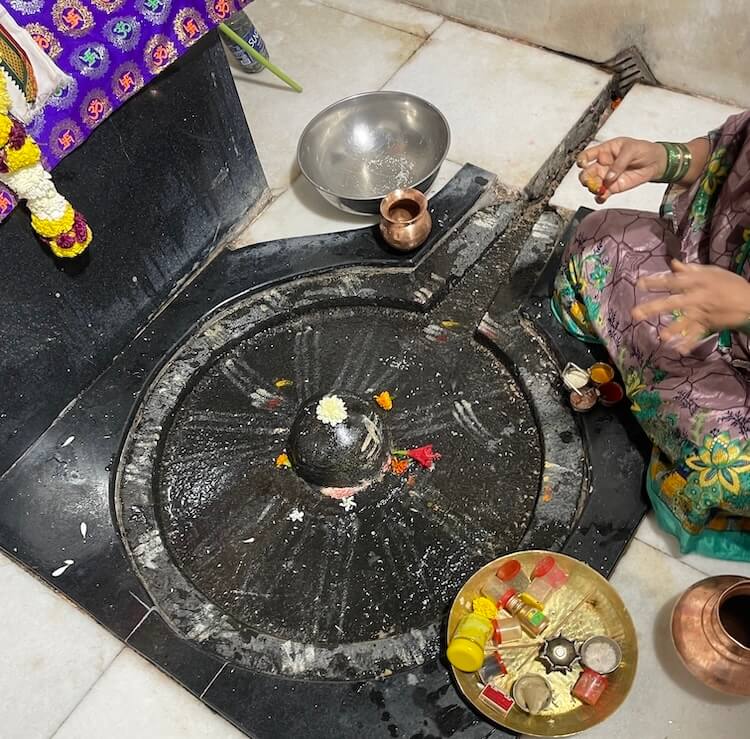
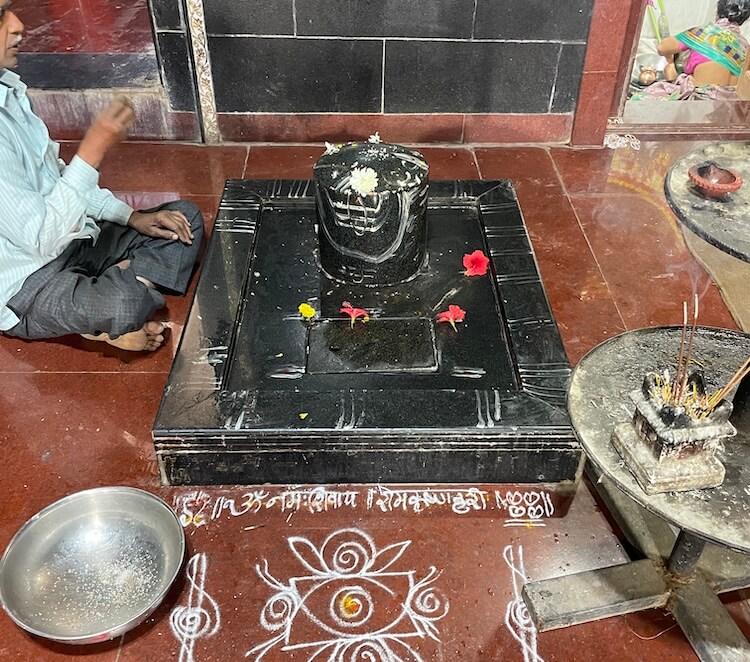
After achieving victory in the Kurukshetra war, the Pandavas, on the advice of Shri Krishna, organized an Ashwamedha Yajna for the atonement of Yudhishthira’s sins and to establish sovereignty. While the horse of this Yajna was wandering, it arrived in the kingdom of King Tamradhwaja, that is, in the area of Ratnapur, which is today’s Latur. At that time, Tamradhwaja and his father, King Mayuradhwaja, stopped the horse. They did not accept the suzerainty of the Pandavas, which led to a war between the Pandavas and King Tamradhwaja. According to the story, Tamradhwaja displayed great valor and fought intensely against Arjuna, Bhima, Nakula, Sahadeva, and Lord Krishna. During this battle, a sword blow was about to strike Tamradhwaja’s head, but Ramlingeshwar, who protects his devotees, took the blow upon himself and saved Tamradhwaja. It is said that as a witness to this event, the mark of the sword blow can still be seen on the Shivlinga in the Ramlingeshwar temple today.
Another legend about the temple is that during the Ramayana era, after Ravana abducted Sita, Shri Rama stopped in this area while searching for her. At that time, he installed a stone Shivlinga for his daily worship. As a Shivlinga installed by Rama, this Mahadeva is addressed by the name Ramlingeshwar.
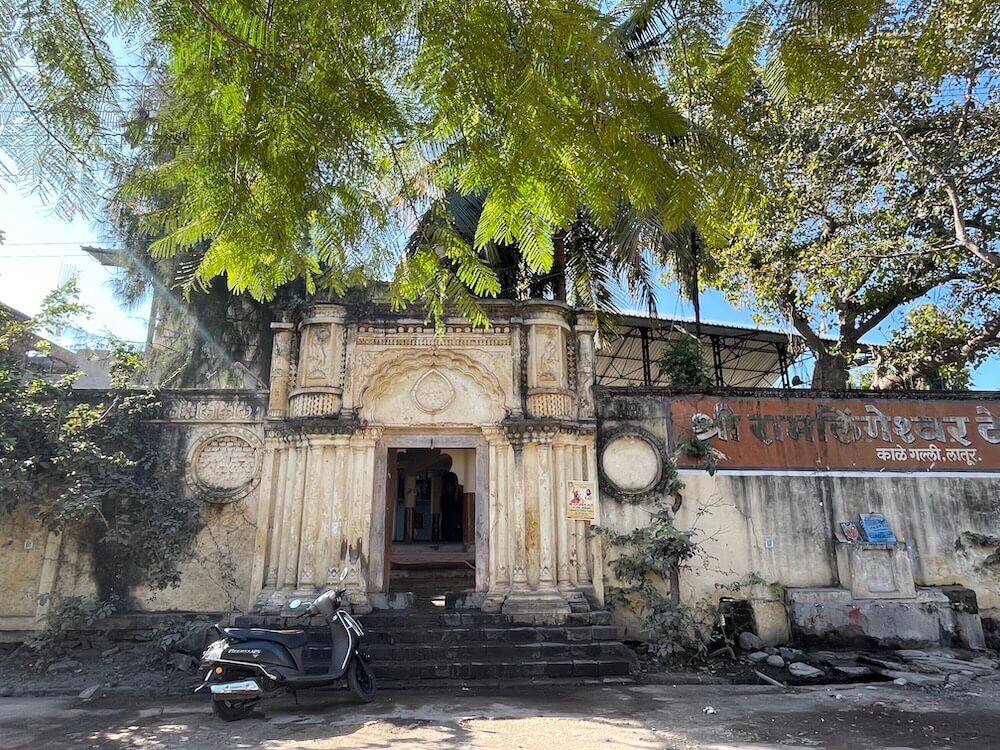
The temple is located along the road in the busy Kale Galli area of the city. The temple has a strong fortification and a two-storied entrance. This temple is situated at a slightly higher level than the road. There are pillars on both sides of the entrance with an arched torana above. Padmasundari sculptures are carved on both sides of this torana. The second entrance of the temple is in the exact opposite direction, and the design of this entrance is in the Dravidian style. At the top of the entrance, there is a Shala-style Shikhara, and finials (kalash) are placed on it in horizontal rows. In the temple courtyard, on the left side, there is a stone Nandi statue, a Tulsi Vrindavan, and a water kiosk (panpoi). There are Banyan and Pipal trees in the courtyard. On the platforms of these trees, there are Veergal (hero stone) sculptures and sculptures of other deities. Cloisters (ovaryas) are built along the fortification in the courtyard. In earlier times, these cloisters were used for the accommodation of devotees.
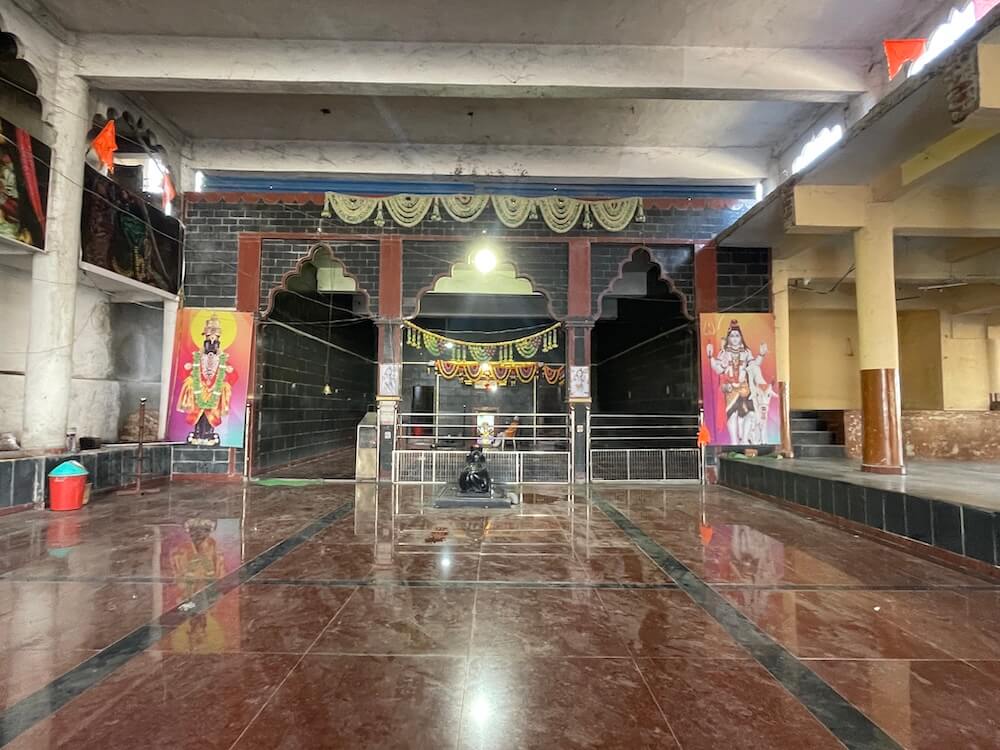
A new Darshan Mandap has been built in front of the temple. On the right side of the Darshan Mandap, there is a temple of Vitthal-Rukmini. A tortoise sculpture is placed on the ground in front of this temple. The door frames of the sanctum sanctorum have carvings of chains, foliage, and floral creepers. Also, sculptures of Garuda, Hanuman, and Vaishnava figures are carved on the lintel (lalatbimba). Inside the sanctum sanctorum, adorned idols of Vitthal-Rukmini made of black stone are installed on a Vajrapitha. There is a Shikhara on the roof of the temple, with an Amalaka and Kalash placed on it. A large-sized Shivlinga is installed in the Darshan Mandap in front of the entrance to the Sabha Mandap. During festival periods, this Shivlinga is specially decorated.
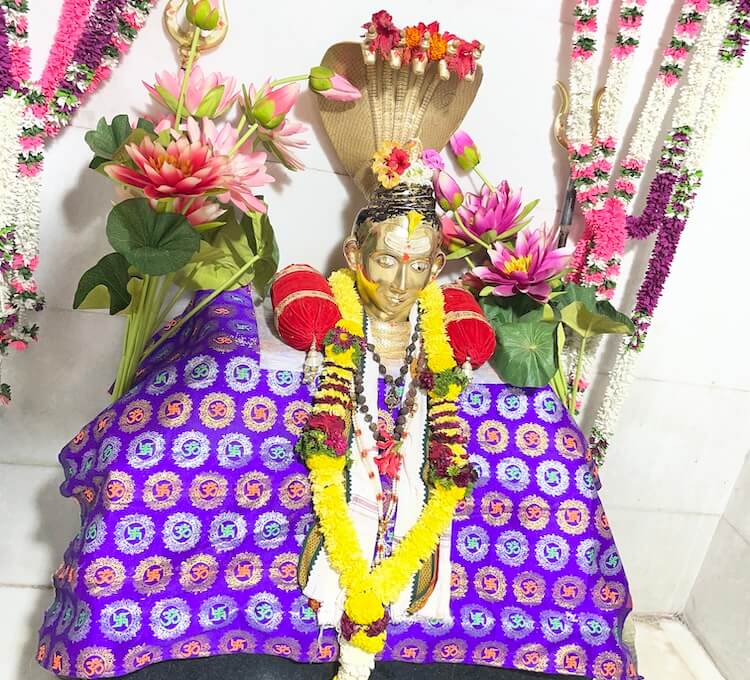
The temple architecture consists of a Sabhamandapa (assembly hall) and a Garbhagriha (sanctum sanctorum). In front of the entrance to the Sabhamandapa, there is a black stone idol of Nandi placed on a Vajrapitha (pedestal). A tortoise sculpture is situated in front of this Nandi idol. Inside the Sabhamandapa, seating platforms have been constructed on all four sides for devotees. On the Vajrapitha adjacent to the front wall of the Garbhagriha, an idol of Shri Ganesha carved in black stone is consecrated. Beside it, Mahakal and another Shivling are installed. This Garbhagriha, built in the Hemadpanti architectural style, is situated at a lower level than the entrance of the Sabhamandapa, requiring one to descend steps to reach it. Inside the Garbhagriha, a Shivling is consecrated on the floor. It is said that a mark of a sword strike is visible on this Shivling. A brass serpent canopy covers the Shivling. Furthermore, a continuous stream of water falls onto the Shivling from a brass Abhishek vessel suspended from the ceiling. Behind this Shivling, on a Vajrapitha, stands a brass idol of Ramlingeshwar Mahadeva. A five-hooded serpent canopy rests upon the head of this idol. On the left side of the Garbhagriha, there is a niche containing another Shivling. The ceiling of the Garbhagriha features a carved Shikhara (spire).
Mahashivratri is the main festival celebrated here. On this day, thousands of devotees from the surrounding areas visit the temple for Darshan. The day begins with the Laghurudra Abhishek. Throughout the day, the temple resonates with chanting of mantras, Bhajans, Kirtans, and other religious programs. On every Monday of the holy month of Shravan, a large crowd of pilgrims and devotees gathers at the temple for Darshan. Due to this influx, the temple premises take on the appearance of a fair. Festivals such as Nag Panchami, Mahakal Jayanti, Dussehra, Diwali, Ashadhi Ekadashi, and Kartiki Ekadashi are also celebrated in the temple. Devotees can have Darshan of Ramlingeshwar Mahadeva daily from 6 in the morning to 12 in the afternoon and from 4 in the evening to 9 at night.
This sacred temple stands as a testament to deep spiritual devotion, ancient architectural grandeur, and rich local cultural traditions.
The sanctum sanctorum houses the divine idol consecrated according to ancient Vedic traditions, surrounded by serene courtyards and traditional temple architecture.
Navratri, Maha Shivratri, Annual Temple Jatra & Deepotsav
Compare and book flights, secure top-rated local hotels near the temple, hire reliable guides, and rent cars instantly.
Extend your pilgrimage by visiting other highly sacred temples located nearby.


Add ₹999 more to unlock FREE SHIPPING!
Your sacred cart is currently empty.
Shop Photo FramesFill in your delivery details below to place your order.
Add comment