
Add ₹999 more to unlock FREE SHIPPING!
Your sacred cart is currently empty.
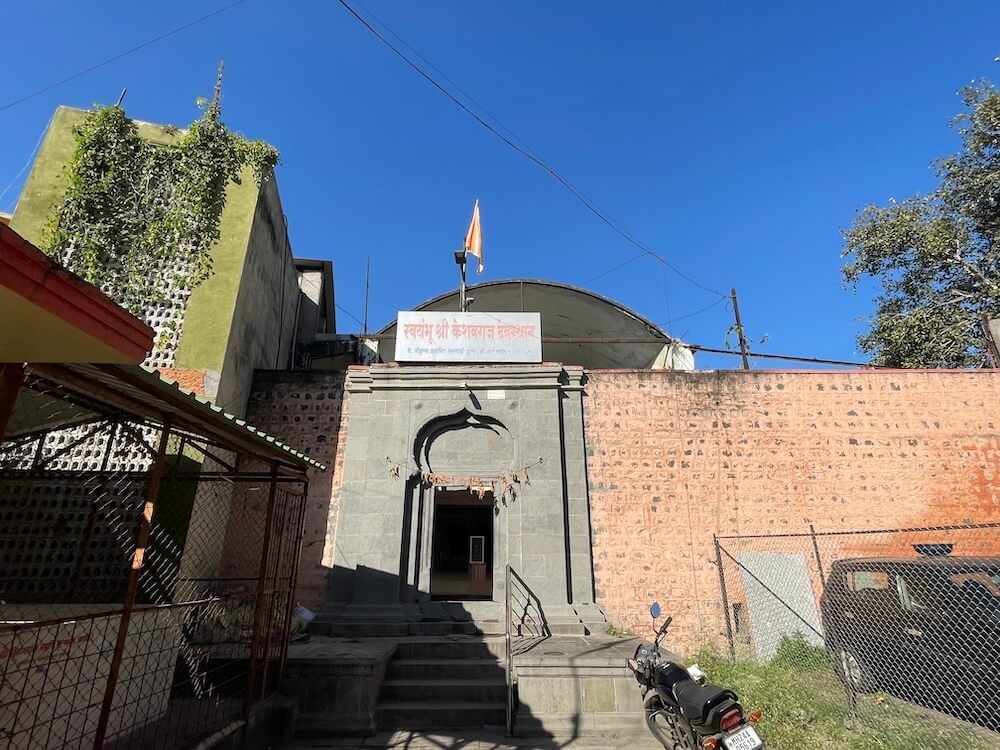
Shop Photo FramesIn Hindu Dharma, the Trinity of Brahma, Vishnu, and Mahesh holds unparalleled significance. Among them, Keshav is a popular form of Lord Vishnu, the preserver of the universe. A very ancient and famous temple of this Keshavraj, known as the ‘God with beautiful hair,’ is situated in Ram Galli in the city of Latur. Devotees have immense faith that this is a ‘Jagrut Deva’ (an awakened deity) who alleviates the physical, mental, and financial sufferings of his followers. The idol of Keshavraj in the sanctum sanctorum of this temple is believed to be over a thousand years old.
This temple, which stands as a testament to the Vaishnava tradition in Marathwada, was built in the twelfth century during the Yadava period. The structure, influenced by the Hemadpanti architectural style of that era, suffered significant damage during the devastating 1993 Killari earthquake. However, locals and devotees came together to restore the temple through public contributions. Notably, during this renovation, a conscious effort was made to preserve the historical beauty of the original structure by using the stones and materials from the old temple.
Legend has it that in the twelfth century, when this area was a dense forest, a shepherd grazing his cattle saw the tip of an idol protruding from the ground. Excavations carried out out of curiosity revealed a beautiful idol carved with the ten avatars of Vishnu. Subsequently, worship began at this very spot, and with the patronage of the Vaishnava Yadava kings, a temple was erected here. This temple has since become an inseparable part of Latur’s religious and cultural life.
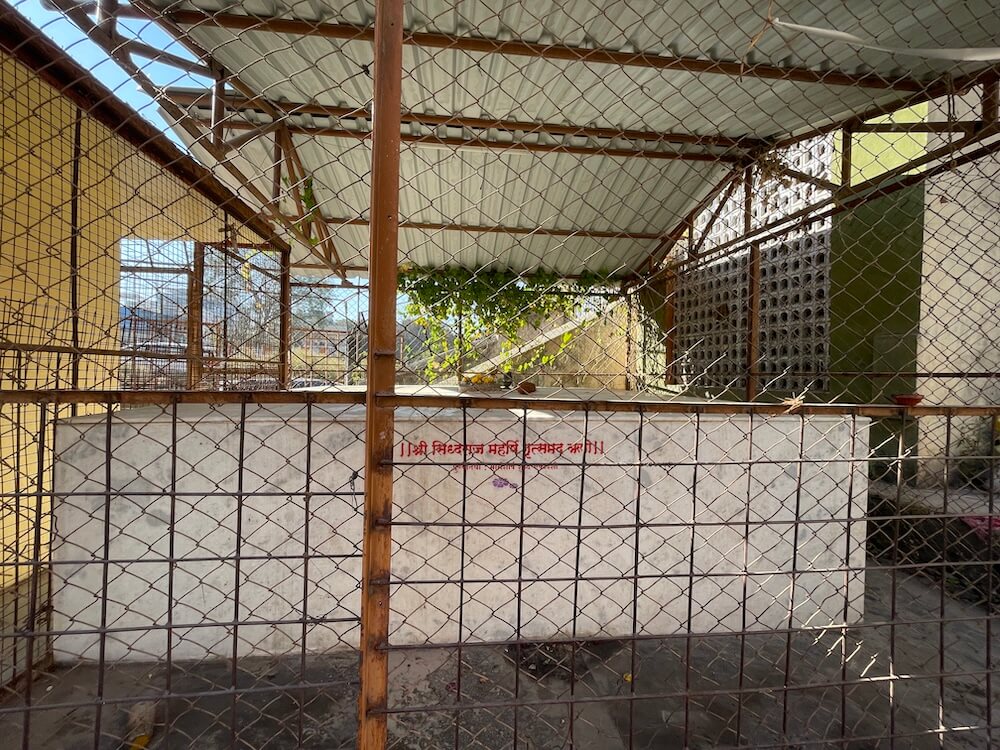
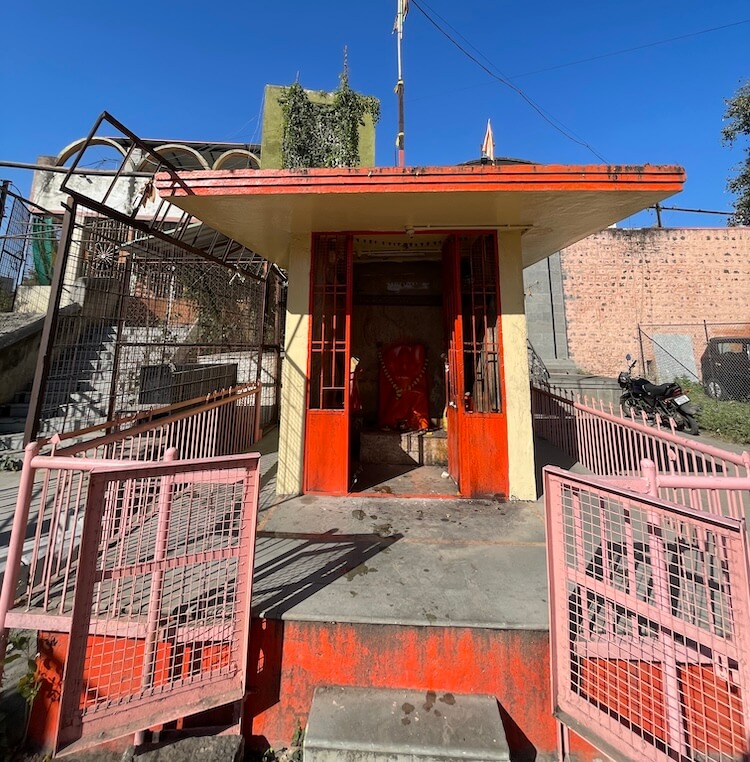
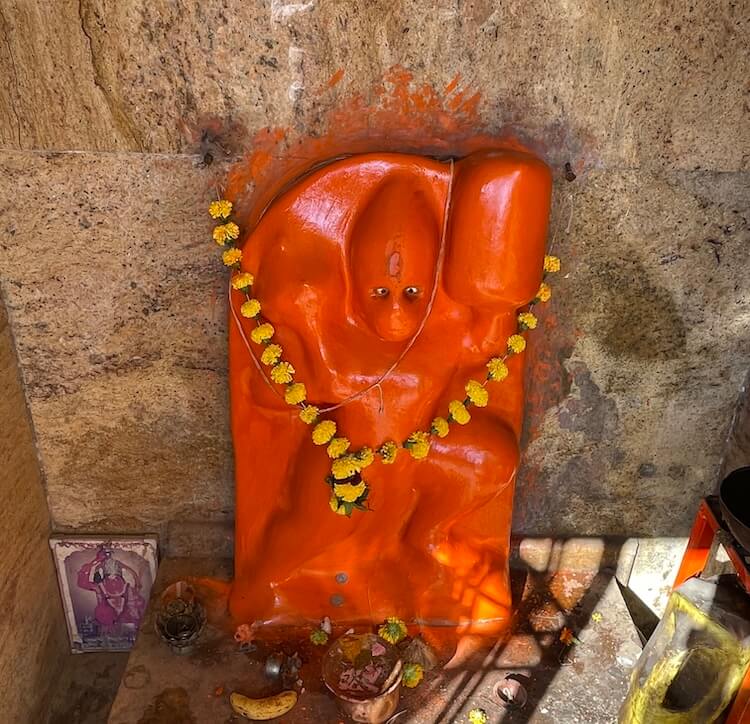
The temple is located in the Ram Galli area in the heart of Latur city. Near the main entrance of the temple is a small Hanuman temple. Behind this temple is the Samadhi temple of Siddharaj Maharshi Gritsamada Rishi. He is recognized as a prominent sage of the Vedic period. He is believed to be the seer of many hymns in the second Mandala of the Rigveda. He was the son of Shunahotra Angiras of the Angiras lineage, but he was adopted into the Bhrigu lineage, or Bhargava lineage. Thus, he came to be known as the son of Shaunaka Bhrigu. His name, Gritsamada, is interpreted as ‘one who is joyful in Samadhi.’
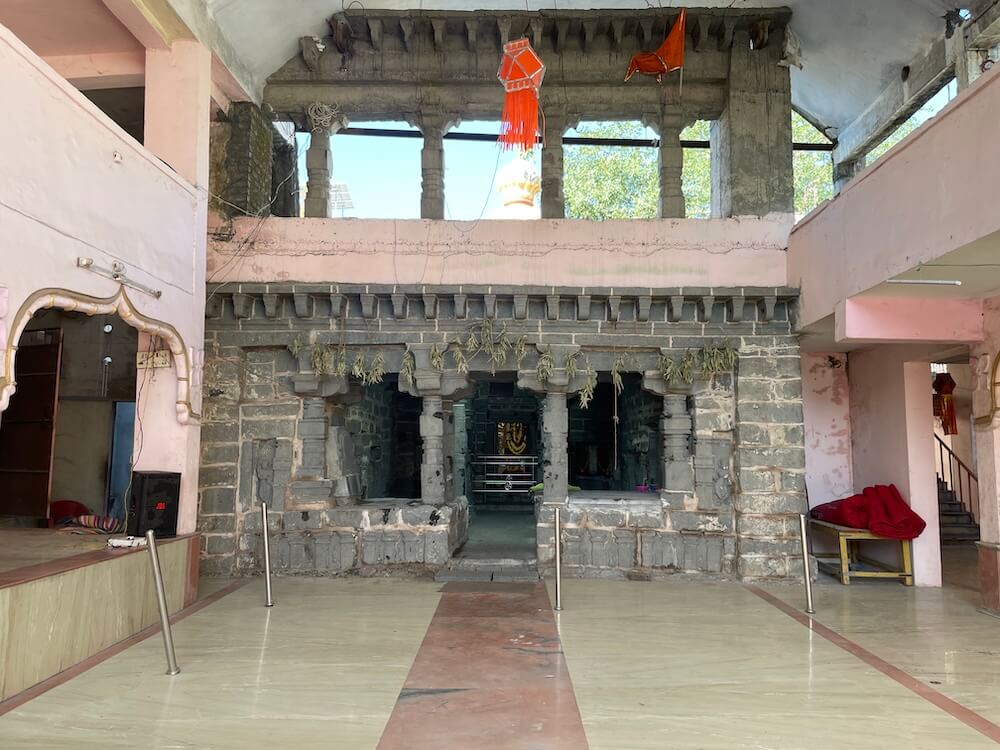
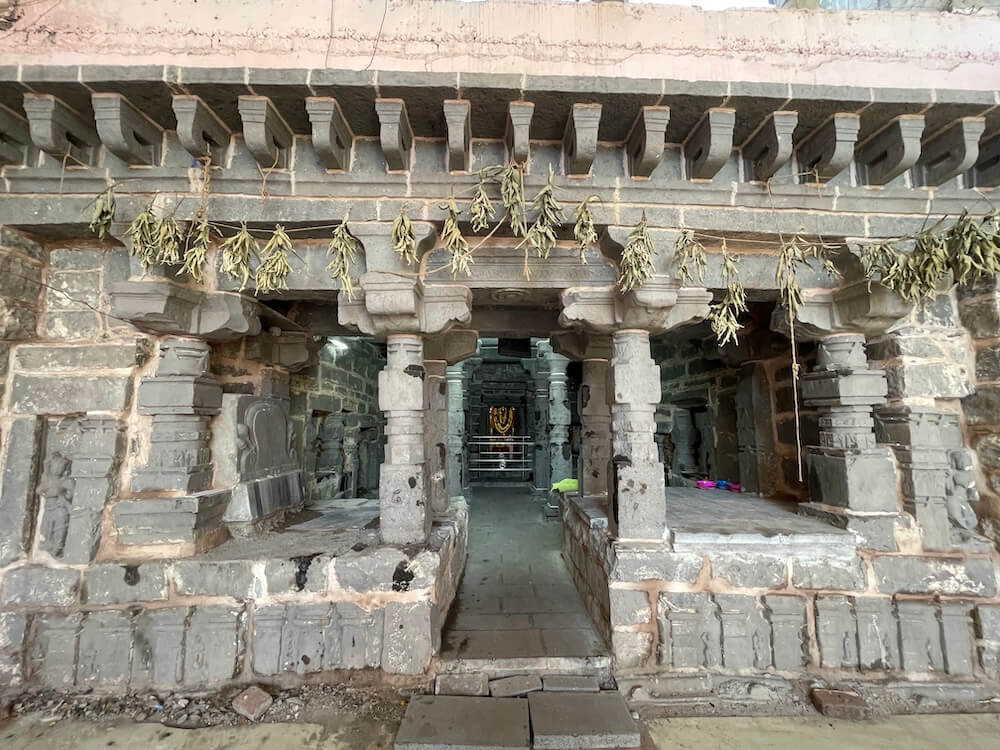
One enters the semi-open pavilion of the temple through the entrance in the boundary wall surrounding the main temple. To the left of this pavilion are cloisters, and to the right is a hall-like structure. In the center of the pavilion, on a raised platform, is an idol of Garuda. The temple is structured with a Sabha Mandapa (assembly hall) and a Garbhagriha (sanctum sanctorum). On both sides of the open entrance to the Sabha Mandapa are stone platforms resembling seats. There are four stone pillars in the center of the Sabha Mandapa. The structure suggests that there might have been a ‘Rangshila’ (performance stage) between these pillars in the past. In the niches of the walls of the Sabha Mandapa are idols of Shivshankar, Ganpati, Brahmadev, and Hanuman. Additionally, there are some other ancient idols here. In the niche to the right of the sanctum sanctorum, there are sculptures of Dwarapalas (gatekeepers).
In the sanctum sanctorum, an idol of Vishnu carved in black stone is installed on a Vajrapitha within a silver Prabhavali (arch). The Prabhavali surrounding this approximately four-foot-tall idol depicts the ten avatars: Matsya, Kurma, Varaha, Narasimha, Vamana, Parashurama, Rama, Krishna, Buddha, and Kalki. The four-armed Vishnu idol holds a conch, discus, mace, and lotus. In the vicinity of the idol are images of Lakshmi, Brihaspati, and Narada Muni. Along the circumambulation path of the temple, there is a hall-like structure. Various programs are organized here during temple festivals. On the stone wall at the back of the temple, there are small idols. In the temple premises, one can also see the Samadhi of Nijanand Saraswati Maharaj, the Jeevankala Mandir of Ramchandra Maharaj Parnerkar, and a sculpture of the Saptamatrikas.
Devotees flock to see this presiding deity of Latur every Tuesday, Friday, and on Ekadashi. Especially on Vaikuntha Chaturdashi, which follows Kartiki Ekadashi, a Deepotsav (festival of lights) is held here, and the celebration of the meeting of Harihara (Vishnu and Shiva) takes place. Festivals like Diwali and Tulsi Vivah are celebrated here with great enthusiasm. After major festivals, to relieve the deity of fatigue, a ‘Prakshal Puja’ (Mahabhishek) is performed, and Mahaprasad is distributed. For devotees, this temple is open for darshan from 6 AM to 9 PM.
This sacred temple stands as a testament to deep spiritual devotion, ancient architectural grandeur, and rich local cultural traditions.
The sanctum sanctorum houses the divine idol consecrated according to ancient Vedic traditions, surrounded by serene courtyards and traditional temple architecture.
Navratri, Maha Shivratri, Annual Temple Jatra & Deepotsav
Compare and book flights, secure top-rated local hotels near the temple, hire reliable guides, and rent cars instantly.
Extend your pilgrimage by visiting other highly sacred temples located nearby.


Add ₹999 more to unlock FREE SHIPPING!
Your sacred cart is currently empty.
Shop Photo FramesFill in your delivery details below to place your order.
Add comment