
Add ₹999 more to unlock FREE SHIPPING!
Your sacred cart is currently empty.
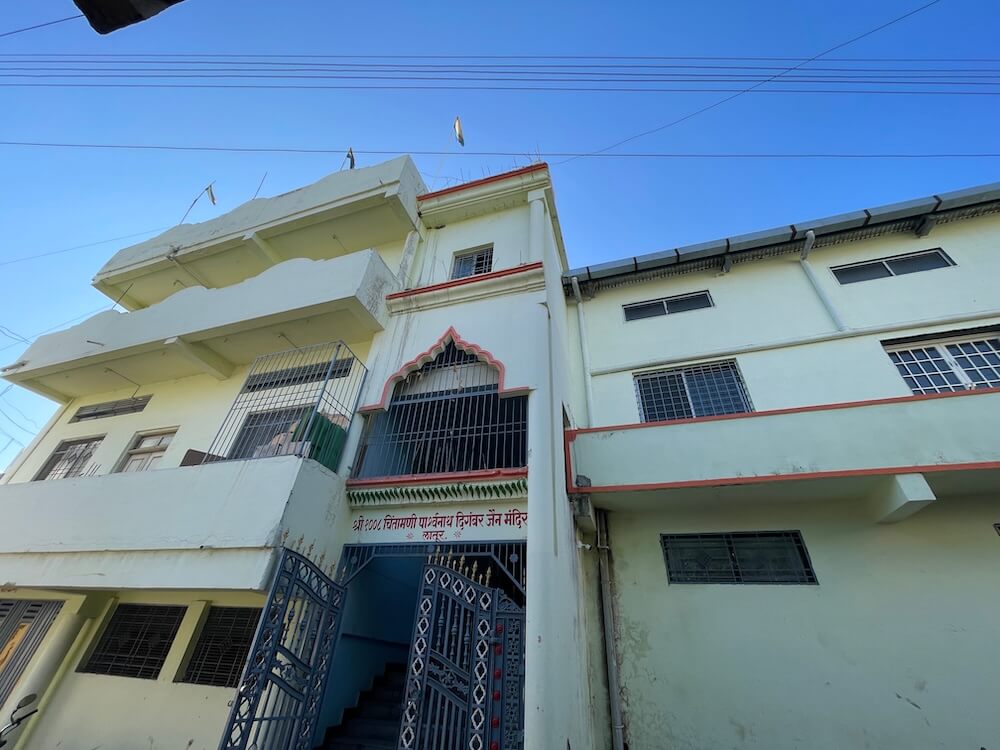
Shop Photo FramesSituated in the city of Latur in the state of Maharashtra, the Chintamani Parshvanath Jain Digambar Temple is an important center of Jain culture and religious tradition in this region. The ancient name of Latur was ‘Lattalur’. This city was the main seat of power for the Rashtrakuta kings. During the reign of the ninth-century Rashtrakuta Emperor Amoghavarsha, who was a Jain king, many Jain temples were constructed in the Latur region. This temple received great royal patronage. Preserving this legacy, this temple is considered a place of deep faith for the Digambar Jain community of Latur district. An eleventh-century Jain inscription in the Kannada script was discovered in Karla village in the Killari area of Latur. It stands as a testament to the Jain tradition of this region.
In the Jain Digambar tradition, the twenty-third Tirthankara, Lord Parshvanath, holds a significant place. He is called ‘Chintamani’ as the form who removes all the worries of devotees and bestows upon them happiness and peace. According to the study of Jain Puranas and ancient documents, the era of Lord Parshvanath is believed to be the eighth century BCE. The description of Lord Parshvanath’s previous births and his life is found in the Digambar Jain scripture ‘Uttarapurana’, composed by Acharya Gunabhadra. According to this Purana, he was born in Varanasi to King Ashvasena and Queen Vamadevi of the Ikshvaku dynasty. Before his birth, the Queen saw a serpent in her dream, from which his name ‘Parshva’ was derived and his symbol was established as a serpent. At the age of thirty, he renounced royal splendor to take initiation, performed rigorous penance to attain Kevala Jnana (omniscience), and later attained Moksha at the Parshvanath Hill on the present-day Sammed Shikharji mountain in Jharkhand. Thereafter, he propagated the four virtues of Ahimsa (non-violence), Satya (truth), Asteya (non-stealing), and Aparigraha (non-possessiveness) in society.
The structure of the Chintamani Parshvanath Digambar idols is distinct. These idols are primarily found in two postures: the meditative seated ‘Padmasana’ posture and the ‘Kayotsarga’ posture, in which the deity stands straight in penance. A unique feature of the idols of Parshvanath is the canopy of serpent hoods over his head. When Kamathasura, recalling enmity from a past life, brought a crisis upon Lord Parshvanath, the Serpent King Dharanendra and Goddess Padmavati appeared in serpent form and protected him by holding a seven-hooded canopy over his head. This event is reflected in iconography. Accordingly, a canopy of seven or eleven hoods is shown extended over the head of Lord Parshvanath. The serpent emblem, or ‘Lanchhana’, is carved on the pedestal below the idol. According to the Digambar tradition, these idols are completely devoid of clothing and ornaments, reflecting a serene, detached, and passionless expression. It is believed that the idol of Lord Parshvanath, seated in Padmasana with a seven-hooded canopy over his head, dispels the worries of devotees.
Various inscriptions and copper plates clearly mention the temples and idols of Chintamani Parshvanath. Inscriptions provide evidence that kings, emperors, and wealthy merchants have been installing these idols since ancient times. Inscriptions from the medieval period, dating back to the reigns of the Chalukya, Rashtrakuta, and Hoysala kings, mention donations made to Jain temples. These primarily include Parshvanath temples. The sixth-century Chalukyan-era Kharosa Caves, located approximately 45 kilometers from Latur, feature sculptures of meditating Jain Tirthankaras and Yaksha figures that bear witness to the antiquity of the Jain tradition in this region. During the reigns of the Rashtrakuta kings Dantidurga and Amoghavarsha, this area was known as Lattalur. It is believed that the original construction of this temple took place in the sixth century. Subsequently, it underwent renovations during various periods. As the original structure of the temple had aged, it had become dilapidated over time. Therefore, in the year 2003, the facade and the sanctum sanctorum were renovated and expanded while preserving the antiquity of the temple.
The 52-centimeter-tall, blue-colored idol of Chintamani Parshvanath, situated on the banks of the Godavari River in Nashik, is considered significant. A mention of this idol is found in the text Nasikyapurakalpa. In Jaisalmer, Rajasthan, Chintamani Parshvanath is the main Mulanayak. There is also a Jain Chintamani Parshvanath temple in the Chhatrapati Sambhajinagar district. The Shri Chintamani Parshvanath Jain Shwetambar Temple in Haridwar is also well-known. In the Digambar Jain Temple at Latur, a poet named Janardan from the Bhattarak tradition made a valuable contribution to Jain literature by writing the forty-chapter Shrenik Puran.
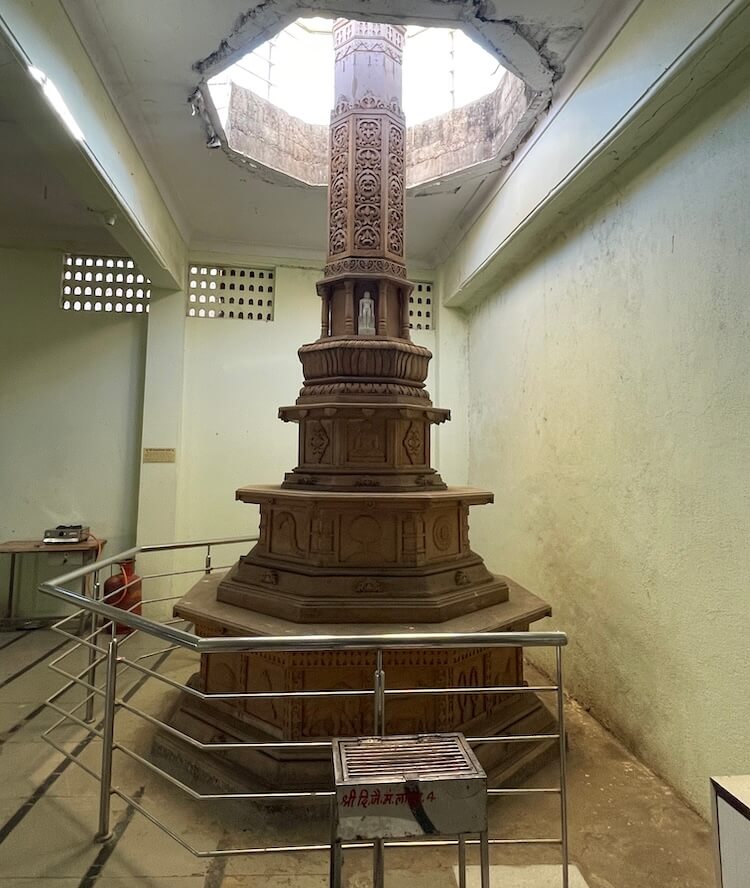
This temple in the old city of Latur features fortifications and an ancient entrance gate. The courtyard here is surrounded by cloisters, a community kitchen, a study hall, and buildings for the residence of monks. In the courtyard stands an ornate Manastambha. This pillar, which is wider at the base, passes through the roof. At the top of the pillar, which extends above the roof, is an idol of Lord Parshvanath housed in a glass pavilion. This idol is of a unique style, featuring the deity seated in the Padmasana posture with four sculptures on the four sides of a square back-slab. The pavilion is topped by a Pancharatha-style spire and a finial.
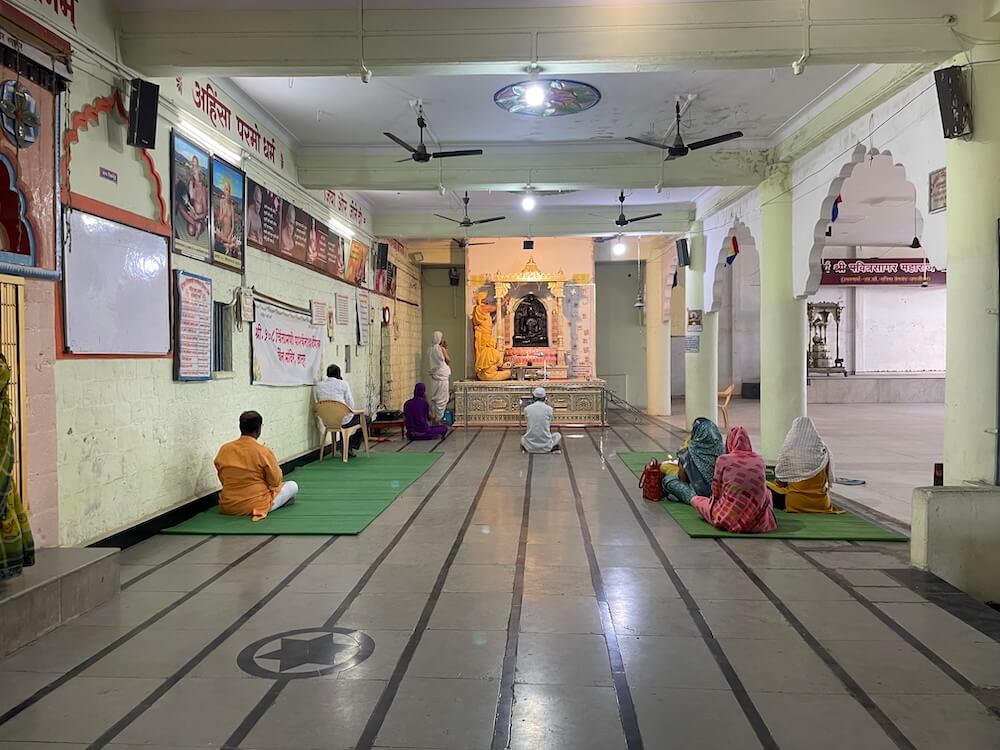
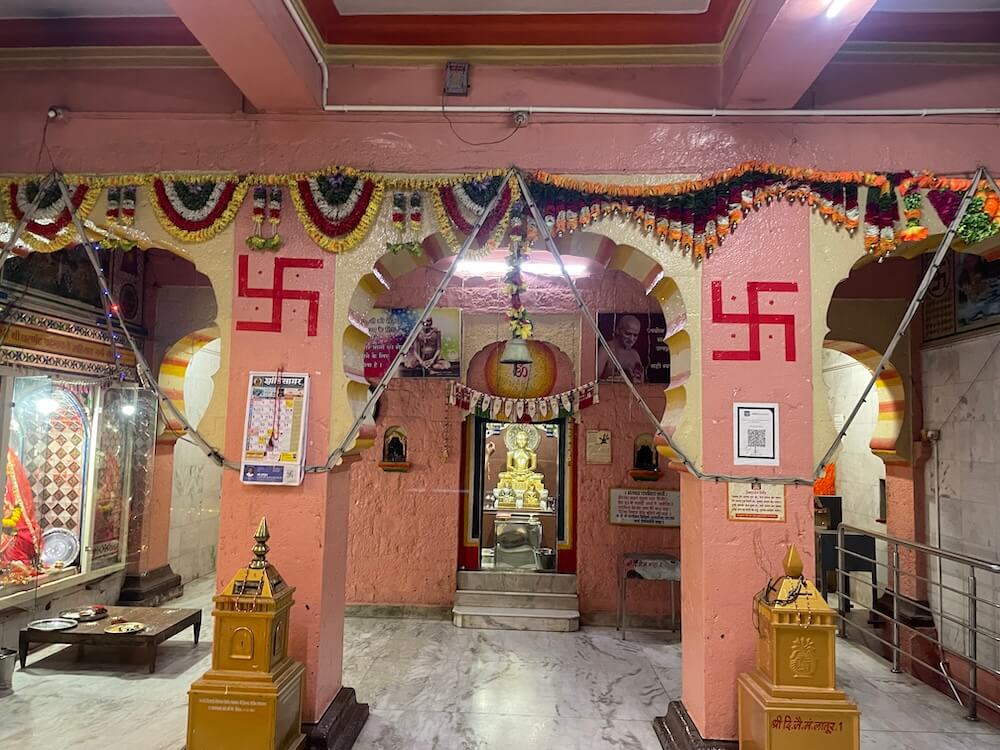
The temple is structured into a Sabhamandapa (assembly hall), Antarala (vestibule), and Garbhagriha (sanctum sanctorum). The entrance to the Sabhamandapa features wooden shutters adorned with an arched torana. Inside this hall, glass-fronted cabinets house numerous idols of Lord Mahavira made of various metals and in different sizes. The walls of the Sabhamandapa are decorated with paintings depicting various episodes from the life of Lord Mahavira. A staircase leads from the Sabhamandapa to the basement. In the basement, on a Vajrapitha (diamond throne), sits an idol of Lord Parshvanatha in a meditative Padmasana posture. Below the idol, on the Vajrapitha, are sculptures of Yakshas. In front of the Sabhamandapa is the Antarala, which is supported by four pillars. Further ahead is the independently structured Garbhagriha. The entrance to the Garbhagriha is elevated above the Antarala and is accessed by steps. On both sides of the Garbhagriha entrance, there are lamp niches embedded in the facade walls. The door frames are carved with floral and leaf motifs, and the lintel features a sculpture of a Tirthankara.
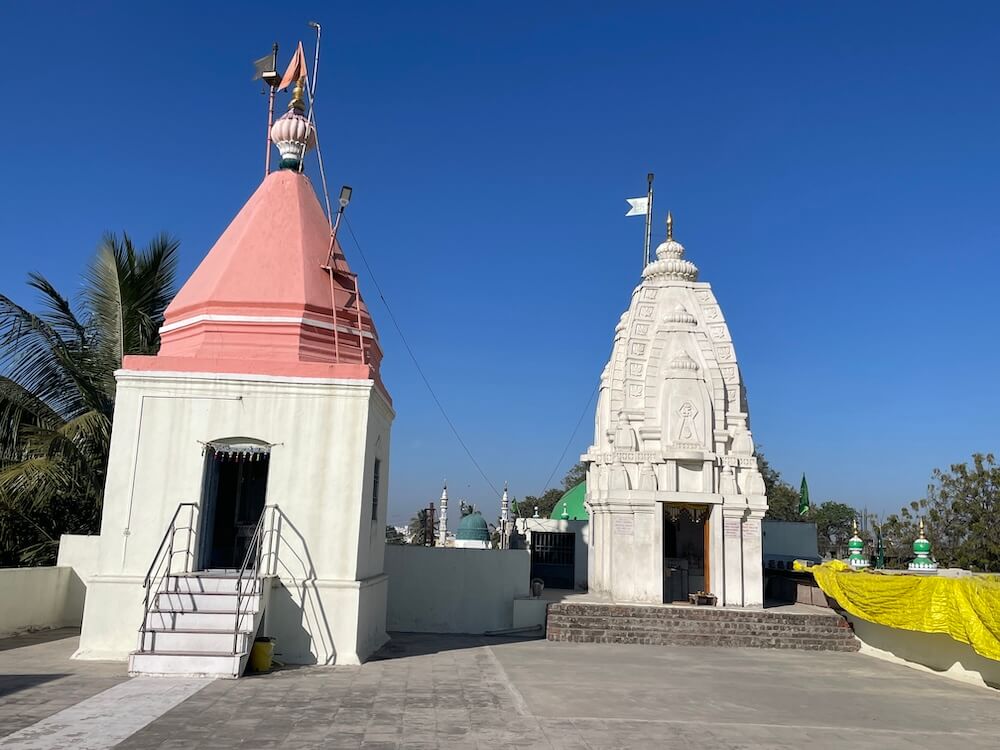
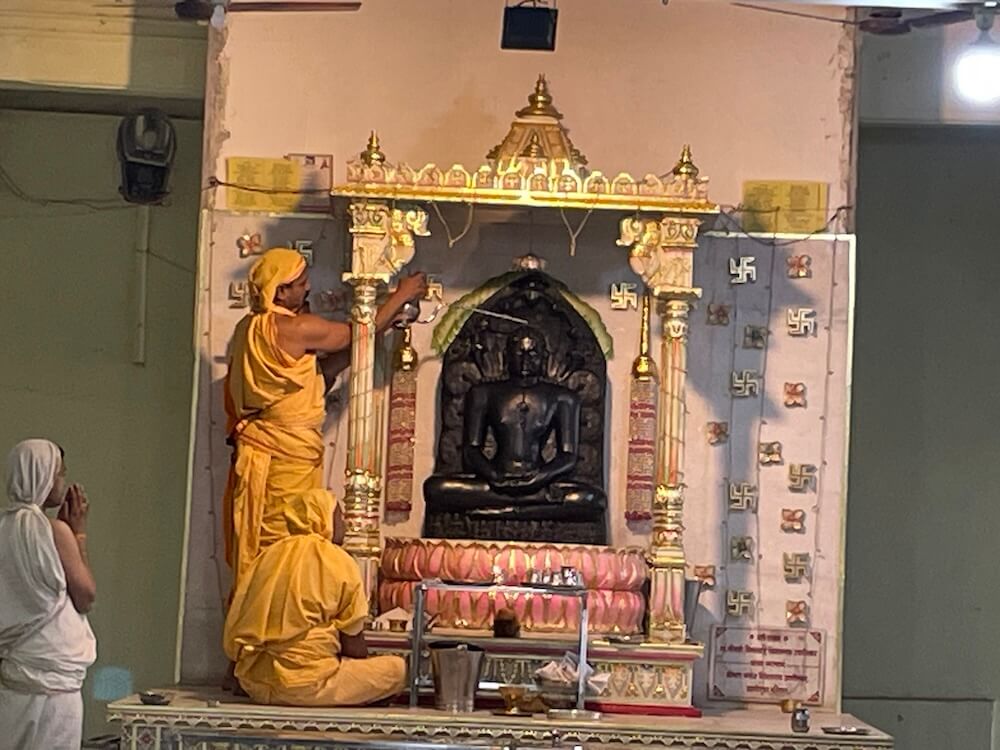
Inside the Garbhagriha, on a Vajrapitha and within a silver canopy, resides the golden idol of Chintamani Lord Parshvanatha, seated in the Padmasana posture. A seven-hooded serpent shades the head of Lord Parshvanatha. Auspicious symbols are depicted on the canopy. The walls and ceiling of the Garbhagriha are adorned with glass enamel work. There is a circumambulatory path (Pradakshina Patha) around the exterior of the Garbhagriha. The walls of this path contain niches housing idols of Dharanendra, Padmavati, Lord Parshvanatha, and other Tirthankaras. On the roof of the temple, there is a small shrine containing an idol of a Jain deity housed in a glass-enclosed canopy on a Vajrapitha. Above the roof of the Garbhagriha stands a square-shaped Shikhara.
The birth anniversary festival of Lord Parshvanath is celebrated on Paush Krishna Ekadashi. On this occasion, a procession is taken out with the idol of Lord Parshvanath placed in a chariot. A similar festival is celebrated in the temple on Chaitra Shukla Trayodashi, the birth anniversary of Lord Mahavir. The Dashlakshan Parva, which lasts for 10 days in the month of Bhadrapad, is the main festival here. During this period, ten virtues such as compassion, forgiveness, and humility are worshipped, along with prayers, fasting, and self-study. On this occasion, programs like discourses, devotional songs, and hymns are organized in the temple. Special religious rituals, grand anointing ceremonies, and worship of scriptures are performed on Shrut Panchami and Kartik Ekadashi. During the festival, the idol of Lord Parshvanath is anointed with water, milk, saffron, and other fragrant substances. Every day at 7 o’clock in the morning, the anointing of Lord Mahavir in the Shikhara temple is performed. After that, at 7:30 in the morning, the anointing of the twenty-four Tirthankara Lords takes place. At 8 o’clock in the morning, the anointing of Lord Chintamani Parshvanath in the sanctum sanctorum is performed, and at 8:30 in the morning, the anointing of Lord Chintamani Parshvanath on the assembly hall altar is performed. The evening prayer (Aarti) of the Lord is performed every day at 7 o’clock in the evening. Apart from these daily rituals, Namokar Mahamantra chanting is organized every Sunday at 9 o’clock in the morning, and a self-study class is organized every Thursday at 6 o’clock in the evening. Special religious programs like Bhaktamar Deep Vidhan are organized in the temple every Ashtami and Chaturdashi at 7 o’clock in the evening. Devotees can have the darshan of Chintamani Parshvanath in this temple every day from 7 o’clock in the morning until 9 o’clock at night.
This sacred temple stands as a testament to deep spiritual devotion, ancient architectural grandeur, and rich local cultural traditions.
The sanctum sanctorum houses the divine idol consecrated according to ancient Vedic traditions, surrounded by serene courtyards and traditional temple architecture.
Navratri, Maha Shivratri, Annual Temple Jatra & Deepotsav
Compare and book flights, secure top-rated local hotels near the temple, hire reliable guides, and rent cars instantly.
Extend your pilgrimage by visiting other highly sacred temples located nearby.


Add ₹999 more to unlock FREE SHIPPING!
Your sacred cart is currently empty.
Shop Photo FramesFill in your delivery details below to place your order.
Add comment