
Add ₹999 more to unlock FREE SHIPPING!
Your sacred cart is currently empty.
Shop Photo FramesThe historic village of Longaon is situated in the Badnapur taluka of Jalna district. The Yelumata Temple located here is recognized as the primary place of worship for the villagers of the Longaon region. This temple holds a significant place in the family lives of the farmers and common citizens of the area. The main occupation of the people in this village is agriculture. Sweet potatoes are cultivated on a large scale in the fertile soil here. Farmers seek the blessings of Goddess Yelumata before planting new crops. According to the faith of the villagers, Goddess Yelumata is the protector of the entire village and the presiding deity who resolves all hardships. An old tradition is followed where the first invitation card for every auspicious event in the village is offered at the feet of the Goddess.
Longaon is known throughout Maharashtra as the ‘Village of Sweet Potatoes’. Every farmer in the village, whether small or large, invariably cultivates sweet potatoes on land ranging from half an acre to four or five acres. Generally, the sweet potato vines are planted using the rainwater received in the month of July. In the period after the monsoon, the sweet potatoes are irrigated using water from wells and farm ponds. Harvesting begins in the month of February, fifteen days before Mahashivratri. The farmers here cultivate sweet potatoes with hard work and traditional methods. Consequently, the entire economy of the village depends on this crop. The farmers here firmly believe that it is only due to the grace of Goddess Yelumata that they receive an excellent yield of sweet potatoes every year.
The names ‘Yelu Aai’ or ‘Yelumata’ for the Goddess have primarily emerged through linguistic changes and folk traditions. The root of this name originates from the Kannada word ‘Yellamma’. In the Kannada language, the word ‘Ella’ means all or everything, and ‘Amma’ means mother. The word ‘Yellamma’, formed by combining these two words, fundamentally means the Mother of all or Jagadamba. Due to regional linguistic changes that occurred over generations in the border areas of Maharashtra, Karnataka, and Andhra Pradesh, as well as in the rural parts of Marathwada, the word ‘Yellamma’ transformed into the names ‘Yelumata’ or ‘Yelu Aai’. There are cultural, linguistic, and religious connections between the ‘Yellamma’ of Karnataka and the ‘Yelu Aai’ of the Asarkheda-Longaon area in Marathwada. This connection is primarily linked through linguistic transition, folk traditions, and mythology.
The social life in both the regions of Karnataka and Marathwada in Maharashtra has been connected at cultural, religious, and historical levels for centuries. Dynasties from ancient times such as the Chalukyas, Rashtrakutas, Yadavas, and later the Bahmani and Nizamshahi regimes ruled over various parts of both Maharashtra and Karnataka for long periods. Due to this historical integration, the languages, culinary cultures, and social customs of the border regions have blended together. Districts like Latur and Nanded in Marathwada and Solapur in Western Maharashtra are directly on the border of Karnataka. Therefore, Jalna district also has direct and indirect trade relations with Karnataka. Economic life here is interconnected due to human migration for agricultural produce, the textile industry, and employment. Furthermore, due to the ‘Roti-Beti’ (inter-family and matrimonial) relationships that have existed for many generations in the border areas, the family and social life of both regions are culturally dependent on each other. The ‘Yelu Aai’ temple in Jalna is considered a symbol of this regional cultural exchange.
According to descriptions in religious texts and Puranas, the Goddess ‘Yelu Aai’ is primarily considered a form of ‘Renuka Mata’. The story of Renuka Mata is given in detail in the ‘Sahyadri Khand’ section of the ancient text ‘Skanda Purana’ as well as in the ‘Renuka Mahatmya’. According to this mythological legend, Renuka was the wife of Sage Jamadagni and the mother of Lord Parashurama. Due to the miraculous power possessed by Mother Renuka, she would go to the river every day and create a pot made only of sand, and she would bring water for the sage’s worship in that raw pot. Due to the influence of her chastity, that sand pot would not break. However, one day while filling water at the river, she saw the form of a Gandharva, and her mind was distracted for a moment. Because of this, she could not create the sand pot that day. Seeing Renuka return to the ashram empty-handed, Sage Jamadagni became enraged and ordered his sons to behead their mother. The other sons refused this order, but Parashurama, obeying his father’s command, beheaded Mother Renuka and the brothers who did not obey. Pleased with his son’s obedience, Sage Jamadagni asked Parashurama to seek a boon. Accordingly, Parashurama requested that his mother and brothers be brought back to life. With the sage’s consent, Parashurama hastily reattached his mother’s head to her body. However, the head was mistakenly attached to the body of a woman from the Matang community. After this incident, the Goddess who came back to life appeared in a special form. In the folk traditions and oral history of South India, she became famous as ‘Yellamma’, the protector of common people and the Goddess who resolves illnesses and sorrows. Due to this process of rebirth, Renuka Mata went beyond traditional frameworks and became the protector of the common masses, the laborers, and the distressed. In Saundatti, Karnataka, she was worshipped in this form as ‘Yellamma’, and this same cultural stream flowed into Marathwada, where she was established as the village deity under the name ‘Yelu Aai’ in rural areas like Longaon-Asarkheda in Jalna.
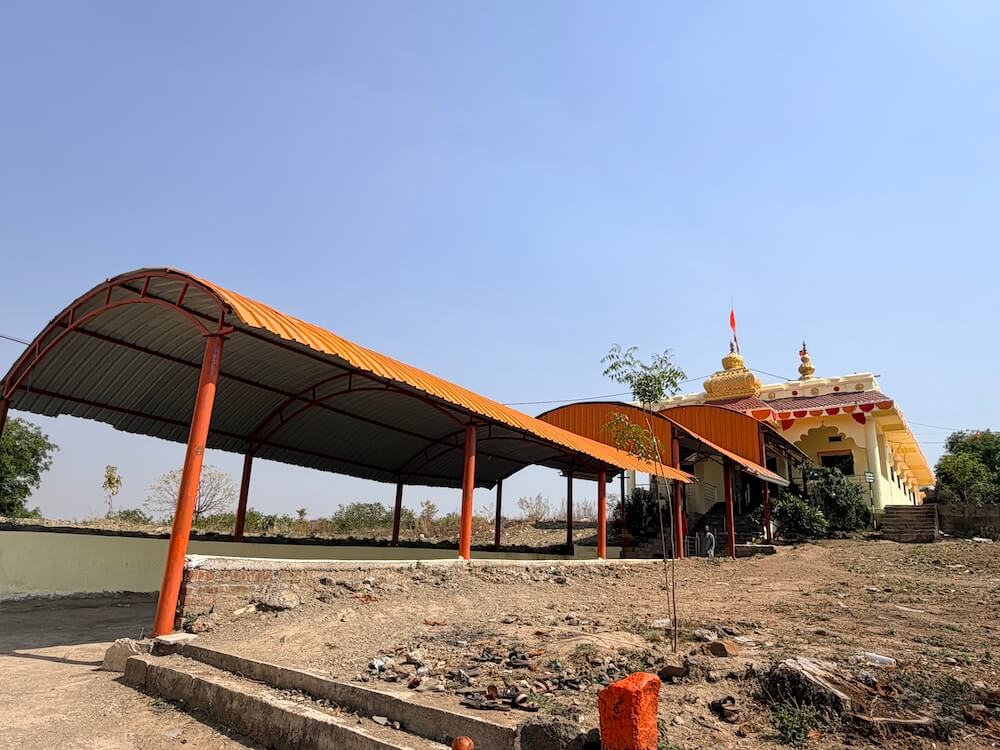
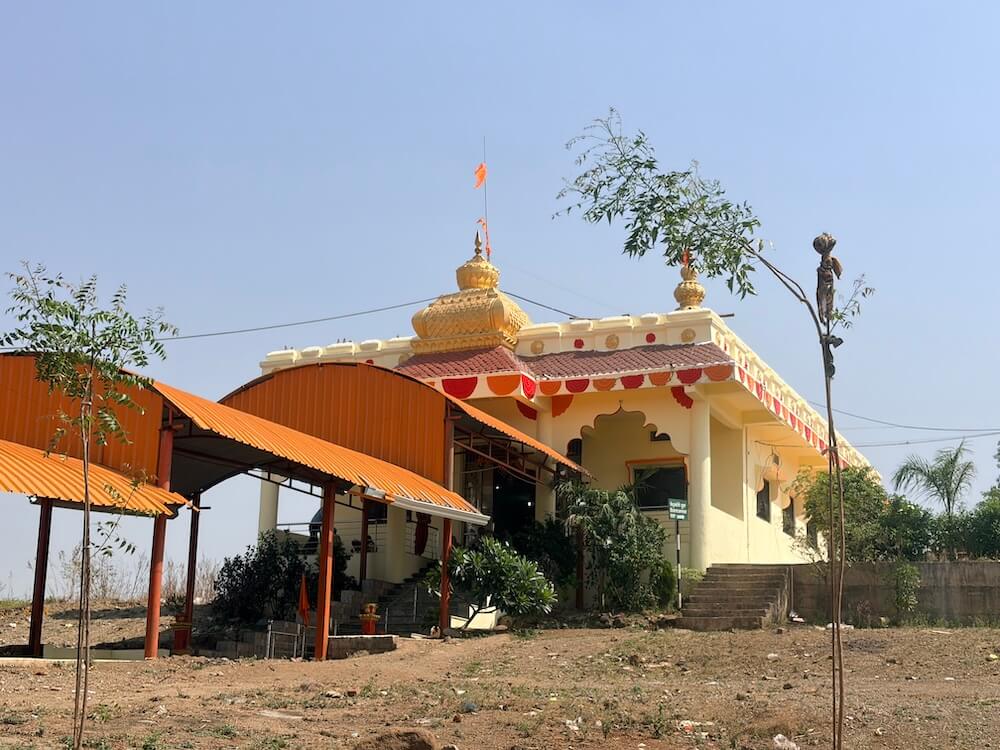
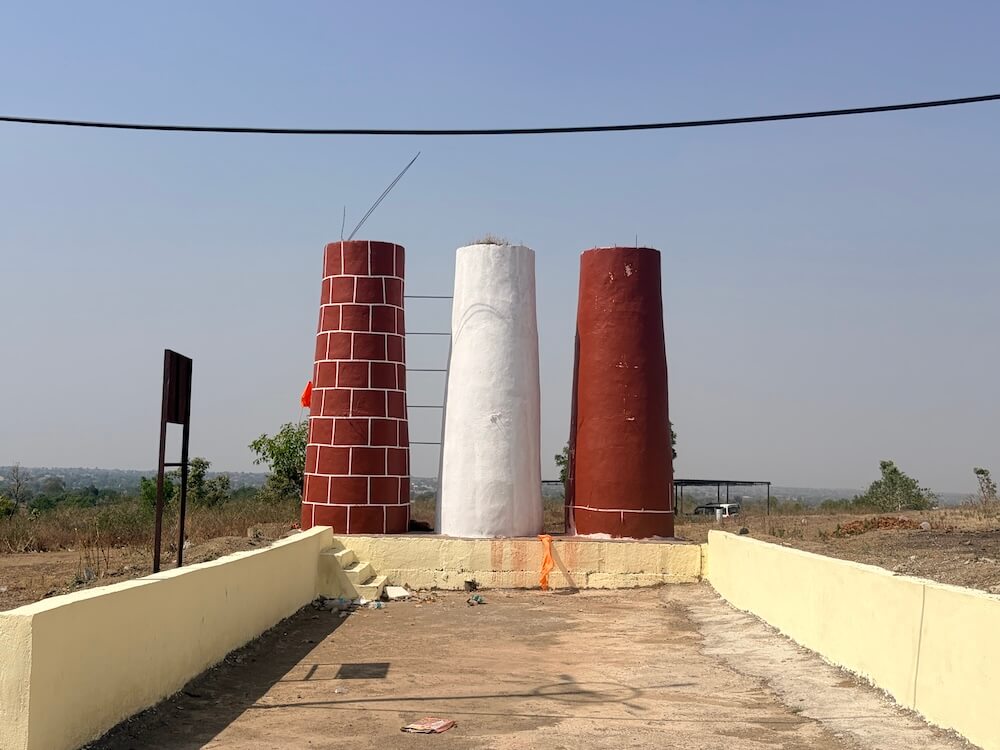
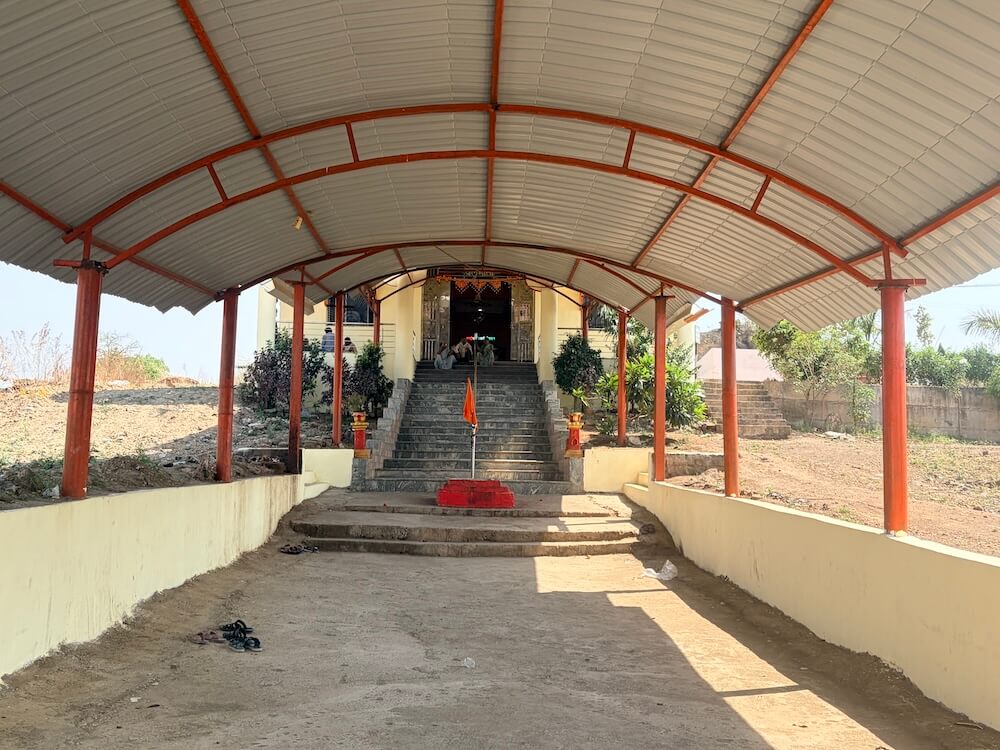
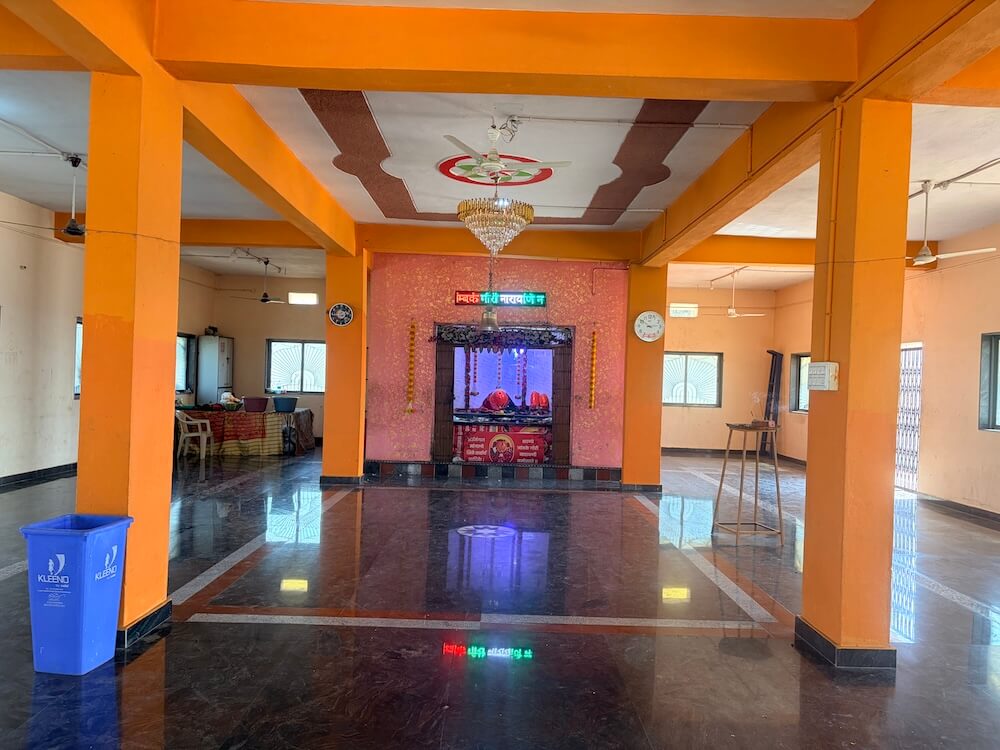
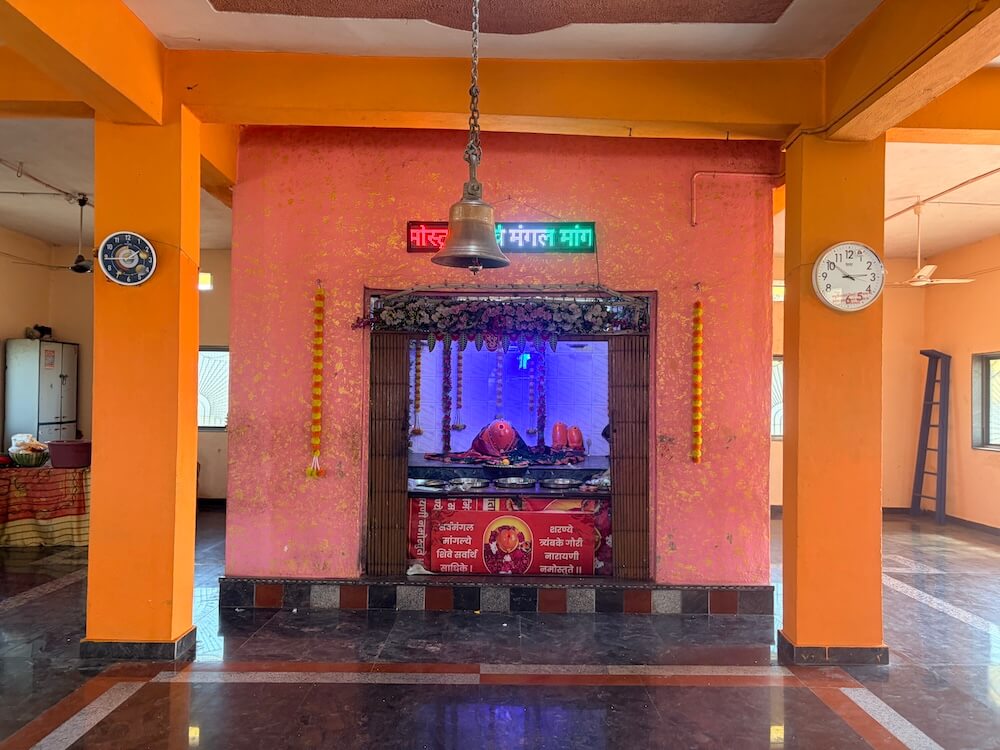
The Yelumata Temple is located on a small hill about one kilometer away from the Longaon-Asarkheda road. There are three ancient lamp pillars (Deepstambhas) in front of the temple. Tin sheds have been erected in the courtyard for the convenience of devotees on the path from these lamp pillars to the temple. There is a sacrificial fire pit (Homakund) in front of the temple in the courtyard. The structure of this temple consists of a Darshan Mandap, Sabha Mandap, and Garbhagriha. After climbing approximately 21 steps from the courtyard, one enters the Darshan Mandap of the temple, which is situated on a high plinth. From the Darshan Mandap, one enters the spacious Sabha Mandap of the modernly constructed temple. The Sabha Mandap is adorned with marble flooring. Beyond the Sabha Mandap, leaving space for the circumambulation path (Pradakshina Marg), is the sanctum sanctorum (Garbhagriha). Inside the Garbhagriha, on a high Vajrapitha, resides the vermilion-anointed idol of Yelu Aai in the form of a stone (Tandala). To the left of this idol are two other vermilion-anointed stones representing local deities. Both the main entrance hall (Mukhamandap) and the Garbhagriha are crowned with Shikhara spires. A few steps further up from the temple lies the secret abode of Yelu Mata. Many devotees make it a point to visit that place for darshan.
Throughout the year, many small and large festivals and celebrations are observed in the temple in a traditional manner. The period of Sharadiya Navaratri in the month of Ashvin is considered significant. During the nine days of Navaratri, the Goddess is worshipped in various forms every day. Special Mahapuja and Aarti of the Goddess are performed every morning and evening. During Navaratri, thousands of devotees from the surrounding areas and the taluka line up for the darshan of the Goddess. On the day of Vijayadashami, also known as Dussehra, a special Shastra Puja (weapon worship) and Simollanghan ceremony are conducted at the temple. The Navaratri festival concludes after this ceremony with a special Palkhi procession of the Goddess. The full moon day (Pournima) of every month, as well as Tuesdays and Fridays of every week, are considered important for the worship of Yelu Aai. Especially on every Tuesday and Friday in the months of Ashadh and Shravan, there is a significant crowd at the temple. On these days, women gather to offer Oti to the Goddess. During all these festivals, the awakening of the Goddess (Jagaran) is performed through traditional folk arts like Gondhal and Jogwa. The festival of Mahashivratri is also celebrated with great enthusiasm in the Loni Gaon area.
Loni Gaon is the main production center for sweet potatoes required for fasting on Mahashivratri. Therefore, a lot of activity is seen throughout the fields during this period. Farmers offer the first harvest of sweet potatoes from their fields at the feet of Goddess Yelu Mata. Only after this offering does the large-scale sale of sweet potatoes begin in the market. For devotees, this temple is open for darshan daily from six in the morning until nine at night.
This sacred temple stands as a testament to deep spiritual devotion, ancient architectural grandeur, and rich local cultural traditions.
The sanctum sanctorum houses the divine idol consecrated according to ancient Vedic traditions, surrounded by serene courtyards and traditional temple architecture.
Navratri, Maha Shivratri, Annual Temple Jatra & Deepotsav
Compare and book flights, secure top-rated local hotels near the temple, hire reliable guides, and rent cars instantly.
Extend your pilgrimage by visiting other highly sacred temples located nearby.


Add ₹999 more to unlock FREE SHIPPING!
Your sacred cart is currently empty.
Shop Photo FramesFill in your delivery details below to place your order.
Add comment