
Add ₹999 more to unlock FREE SHIPPING!
Your sacred cart is currently empty.
Shop Photo FramesThe Bholeswar Mahadev Temple, which is significant from the perspective of history and temple architecture, is situated in the Jalna district of Marathwada. Located in the village of Bardi in Jalna Taluka, this temple is considered an important historical example of the architectural style prevalent during the Holkar reign. Since the Mahakal Temple in Ujjain and this temple are situated on the same longitude, this temple has attained special astronomical significance. Agricultural guidance workshops are regularly organized in the premises of this temple. This unique initiative is implemented with the objective of studying the relationship of reproduction in nature.
Lord Mahadev has received the name ‘Bholeswar’ or ‘Bholanath’ due to his simple, innocent nature and his tendency to be easily pleased by his devotees. In the original Puranas in the Sanskrit language, the word ‘Ashutosh’ is used for this nature. The meaning of this word is one who is satisfied quickly or even with a little worship. In regional languages, especially in the public consciousness and literature of Hindi and Marathi, this same concept has been referred to as ‘Bhola’ or ‘Bholeswar’. The direct reference to this name and the stories behind it can be seen in detail primarily in the Shiva Purana, Shrimad Bhagavata Purana, Skanda Purana, and the Shivlilamrut of Maharashtra. The stories in these scriptures shed light on the specific form of Lord Mahadev. Without discerning the devotee’s intent, he grants boons solely upon witnessing their immediate devotion.
In the ‘Rudra Samhita’ and ‘Shatarudra Samhita’ sections of the ‘Shiva Purana’, there are many instances of this simple nature of Mahadeva. One such story in this context is that of Bhasmasura. Bhasmasura performed penance to please Mahadeva. When Mahadeva appeared, he asked for the boon that ‘whosoever’s head I place my hand upon should turn to ashes’. Without questioning his intent, Mahadeva simply granted him the boon. Later, when the same demon ran to place his hand on Mahadeva, Lord Vishnu had to take the form of Mohini to protect Mahadeva. This story reveals the guileless and innocent mind of Mahadeva. For this reason, He has been called ‘Bholanath’ or ‘Bholeswar’.
In the ‘Kashi Khanda’ and ‘Avantya Khanda’ of the ‘Skanda Purana’, information about the Linga form of Mahadeva and His names is provided. According to this, while other deities require yajnas, complex mantras, and adherence to specific rules to be pleased, Mahadeva is satisfied even if just a Bel leaf is offered to Him. He makes no distinction between king and pauper, god and demon. Demons like Ravana and Banasura pleased Mahadeva through the strength of their devotion. Mahadeva had bestowed His Atma-Linga upon them. Because of this characteristic of respecting a devotee’s faith without considering their social or moral status, He has been called ‘Bholeswar’ in the scriptures.
When considering the religious and historical literature of Maharashtra, the text ‘Shivalilamrut’, written by Saint Shridhar Swami Nazrekar in the eighteenth century, holds great significance. The story of a hunter found in the eleventh chapter of this text is an excellent example of Lord Mahadev being ‘Bholeshwar’ (the innocent Lord). A hunter, who had gone into the forest to hunt, sat on a tree waiting for his prey. During this time, leaves from the tree inadvertently fell upon a Shivalinga located below. That day was Mahashivratri, and through the hunter’s unintentional actions, the worship of Mahadev was being performed. Even though he had no religious intent, Mahadev was pleased by that simple act and granted him salvation. In his text, Shridhar Swami has referred to Mahadev as ‘Bhola Bhavik’, ‘Ashutosh’, and ‘Bholanath’.
The Bholeshwar Mahadev Temple at Bardy was built in the latter half of the eighteenth century during the reign of King Yashwantrao Holkar. Maharaja Yashwantrao Holkar was born in Wafgaon, located in the Khed taluka of Pune. He is known in history as the Napoleon of India. At the age of nineteen, alongside his father Tukojirao, he defeated the Nizam in the Battle of Kharda. Due to differences with the Peshwas, he held his coronation at Maheshwar in Madhya Pradesh and established the Holkar Empire. Because he made efforts to rescue the Mughal Emperor Shah Alam II from the clutches of the British, the Mughal Emperor bestowed upon him the title of ‘Maharajadhiraj Raj Rajeshwar Alijah Bahadur’. In the Battle of Bharatpur, he defeated the British and shattered the image of British power. He forced the British military officers General Lake and Lord Wellesley to retreat. With his foresight, he established a cannon manufacturing factory at Bhanpura in Madhya Pradesh. He fought a total of eighteen wars against the British. Due to constant battles and exertion, he passed away on 28 October 1811 at Bhanpura. During his tenure, he commissioned the construction of many religious sites. The Bholeshwar Mahadev Temple is one of those constructions. The army of Yashwantrao Holkar had a presence in this region, and therefore, this temple was built under the influence of the Maratha architectural style from both a defensive and religious perspective.
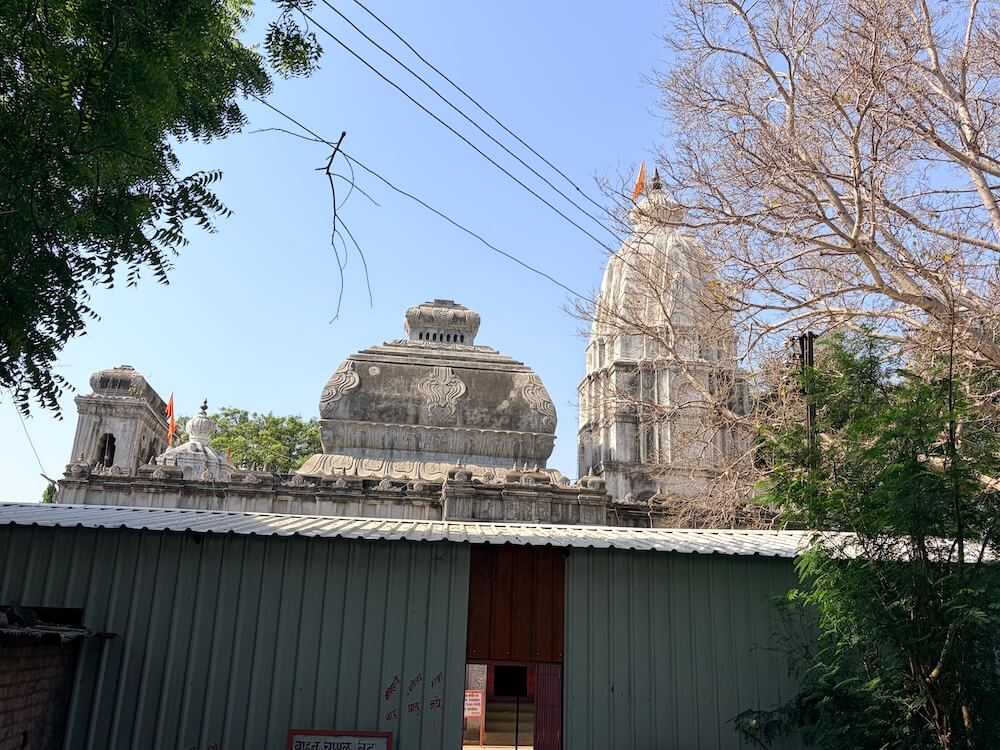
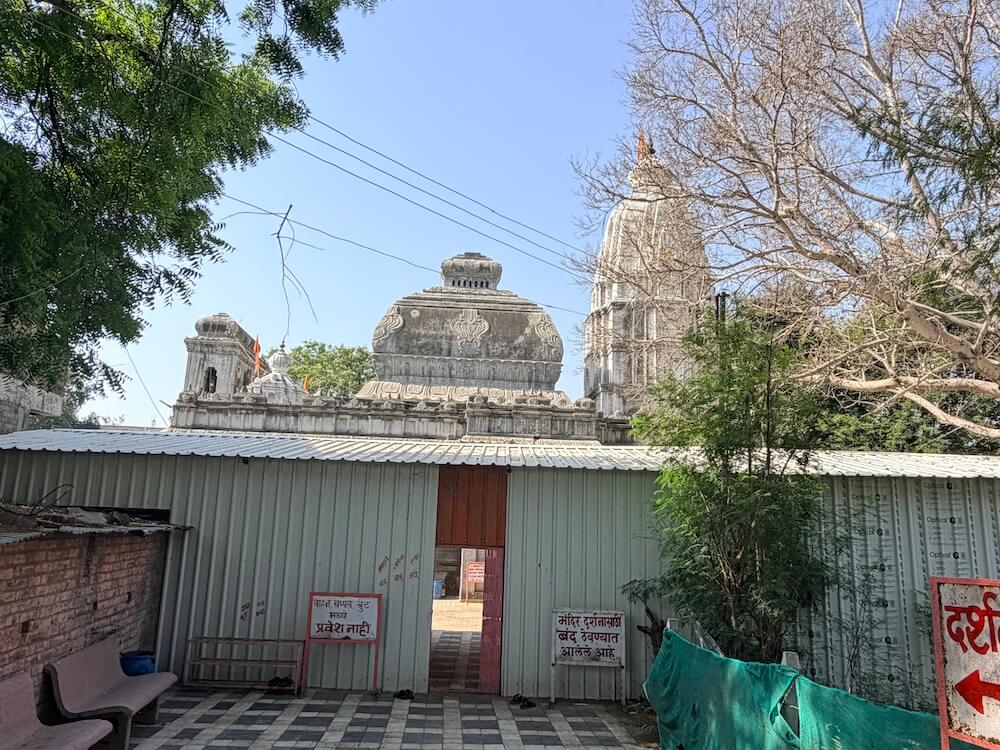
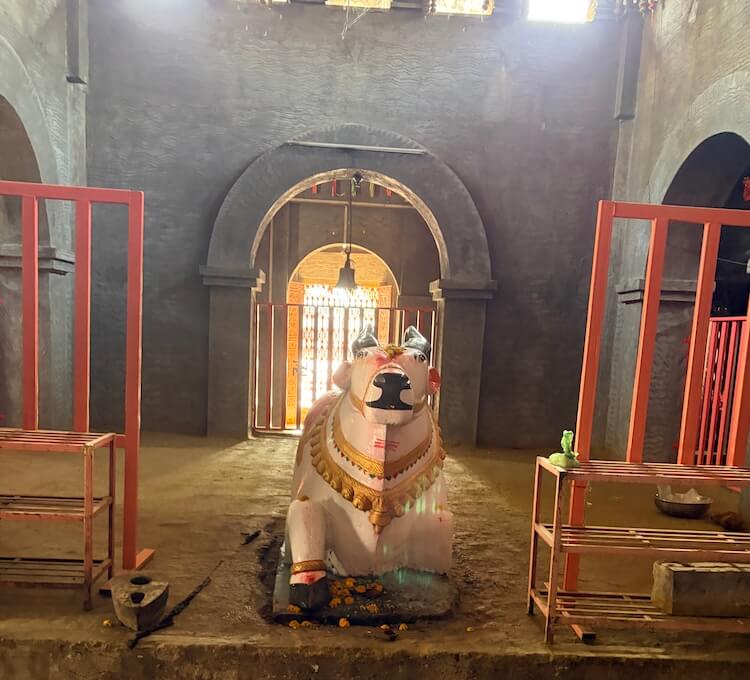
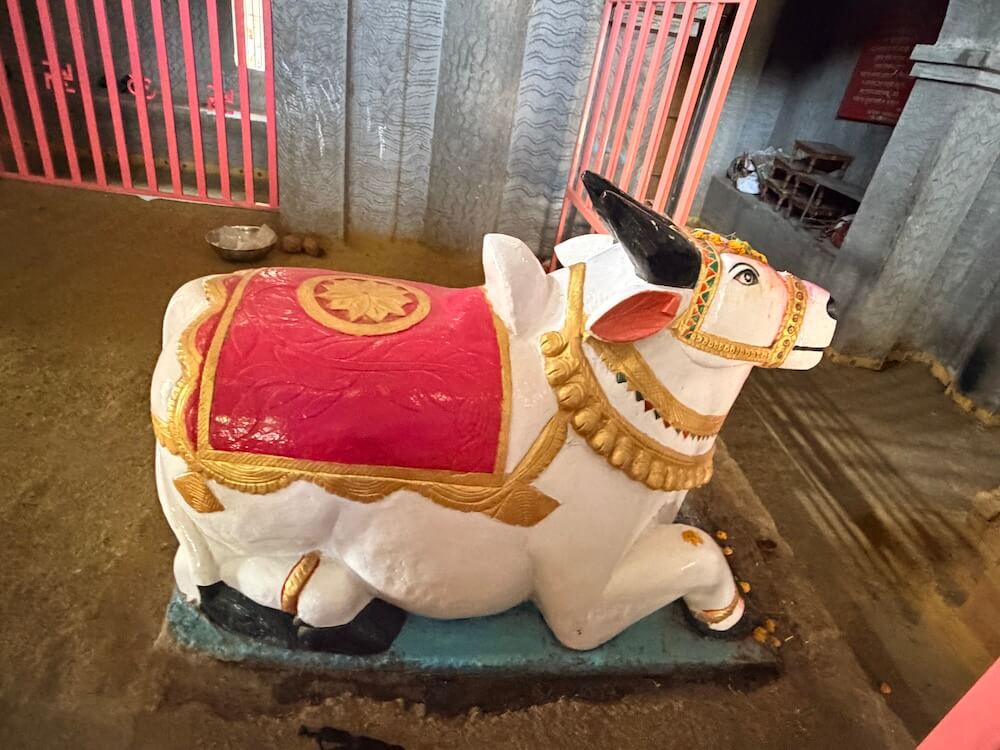
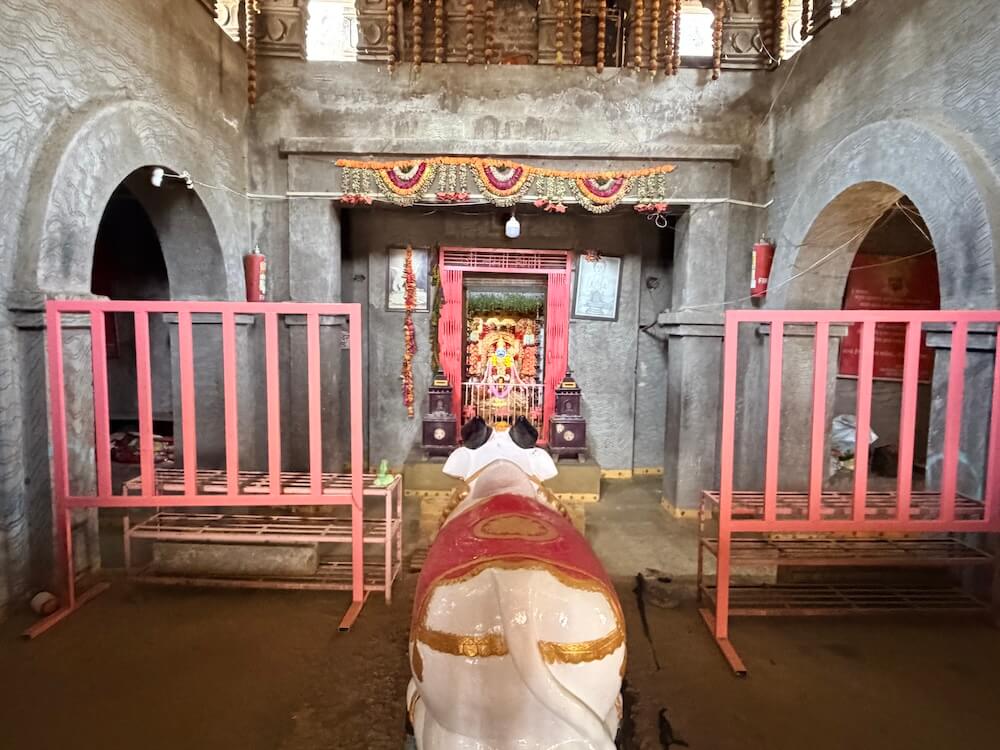
There is a road leading up to this temple located near the village. There is a parking area and a courtyard in front of the temple. The temple has been renovated in the recent past. In the courtyard in front of the temple, there are stone-carved lamp pillars (Deepmalas). The temple structure consists of a two-story viewing pavilion (Darshan Mandap), a main assembly hall (Sabha Mandap), an intermediate chamber (Antarala), and the sanctum sanctorum (Garbhagriha). The entrance to the semi-pavilion (Ardha Mandap) is at a higher level than the courtyard and has five steps. There are safety railings on both sides of the steps. The entrance to the semi-pavilion has ornate wooden doors. There is a drum house (Nagarkhana) on the floor above the semi-pavilion. In the assembly hall, there is an idol of Nandi on a pedestal (Vajrapitha). There are two additional sanctums on the right and left sides of the assembly hall. In the right-side sanctum, there is an idol of Parvati on a pedestal, and in the left-side sanctum, there is a vermilion-anointed stone idol of Ganapati.
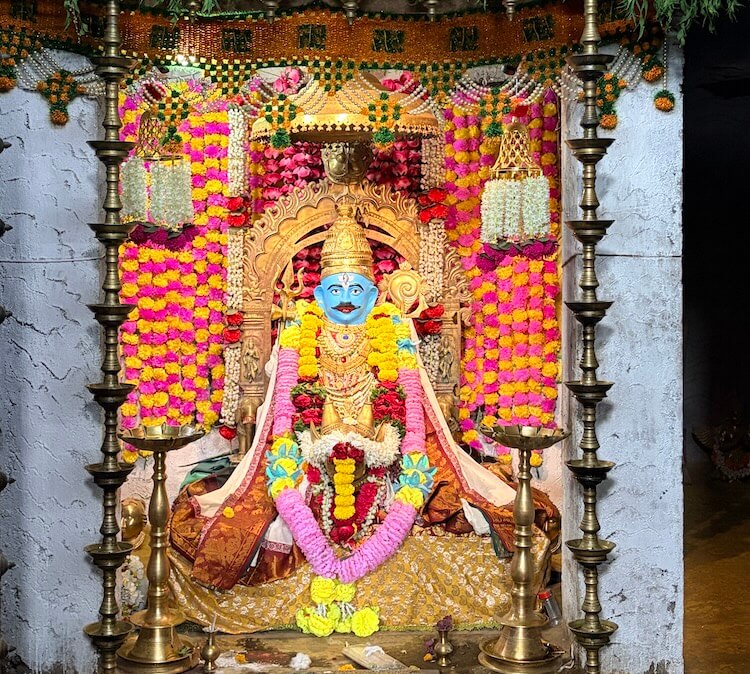
In front of the assembly hall, there is an intermediate chamber about two feet deep. Beyond the intermediate chamber is the entrance to the sanctum sanctorum. The door frames of the sanctum have vertical carvings, and there is a sculpture of Ganapati on the lintel. The entrance has ornate door jambs. Inside the sanctum, there is a Shiva Linga and an idol of Mahadeva. The Shiva Linga is smeared with sacred ash (Bhasma) and is adorned with clothes and ornaments. There are stairs leading from the intermediate chamber to the basement. In this basement, there is another Shiva Linga on the floor. On the roof of the assembly hall, there is a square dome-shaped spire (Shikhara). At the top of the spire, there is a row of smaller horizontal spires topped with finials (Kalash). Above the sanctums of Ganapati and Parvati on the left and right sides of the assembly hall, there are square dome-shaped spires. Above the roof of the main sanctum, there is a square, tall, and tapering spire. On the walls of all four sides of the spire, there is a design of three-tiered sub-spires. In the courtyard in front of the temple, there is a pilgrim accommodation building (Bhakt Niwas) and a free food distribution center (Annachhatra). Additionally, there are residences for the priests and temple attendants in the courtyard.
Mahashivratri is the annual festival celebrated here. On this occasion, a Harinam Saptah is organized. During this time, programs such as Bhajans, Kirtans, singing, scripture reading, Parayan, Mahayajna, and Mahaprasad are held in the temple for seven consecutive days. A Shiva Yajna is organized on Mahashivratri. For this, twenty-one separate fire pits are prepared to ignite the sacred fire. During the month of Shravan, Ganga-Kavad is brought from various surrounding villages to perform the Abhishekam of the Shiva Linga. Festivals and celebrations such as Nag Panchami, Shravan Purnima, Dussehra, Diwali, Kojagiri Purnima, Navratri, and Ganesh Jayanti are celebrated in the temple. Devotees can have Darshan here daily from 7 in the morning to 8 at night.
This sacred temple stands as a testament to deep spiritual devotion, ancient architectural grandeur, and rich local cultural traditions.
The sanctum sanctorum houses the divine idol consecrated according to ancient Vedic traditions, surrounded by serene courtyards and traditional temple architecture.
Navratri, Maha Shivratri, Annual Temple Jatra & Deepotsav
Compare and book flights, secure top-rated local hotels near the temple, hire reliable guides, and rent cars instantly.
Extend your pilgrimage by visiting other highly sacred temples located nearby.

Add ₹999 more to unlock FREE SHIPPING!
Your sacred cart is currently empty.
Shop Photo FramesFill in your delivery details below to place your order.
Add comment