
Add ₹999 more to unlock FREE SHIPPING!
Your sacred cart is currently empty.
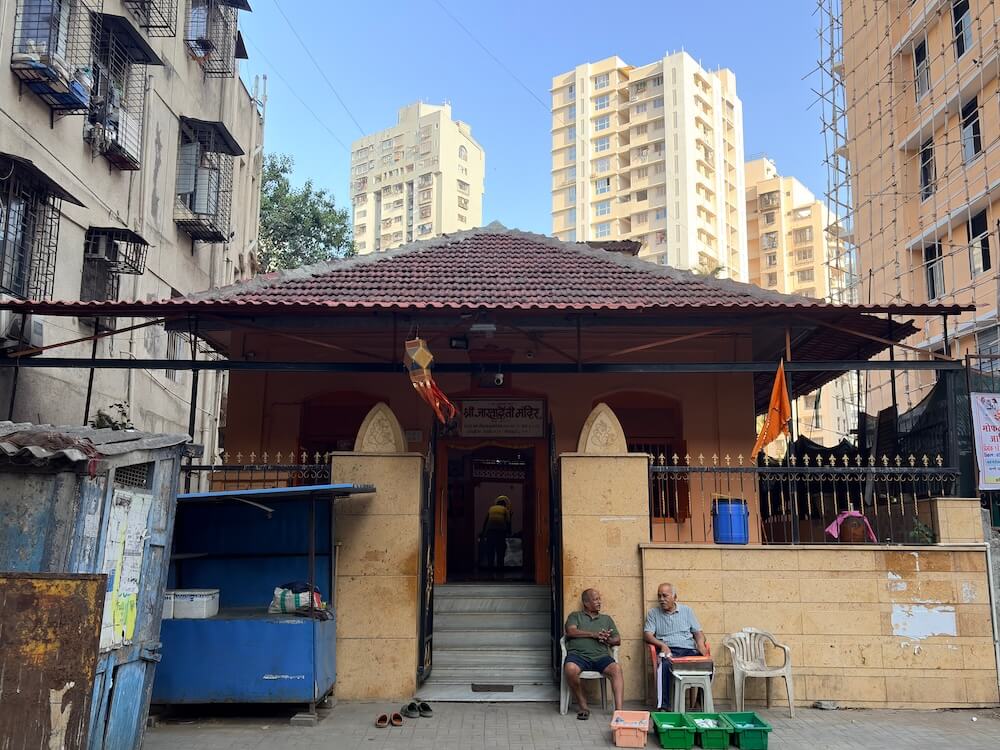
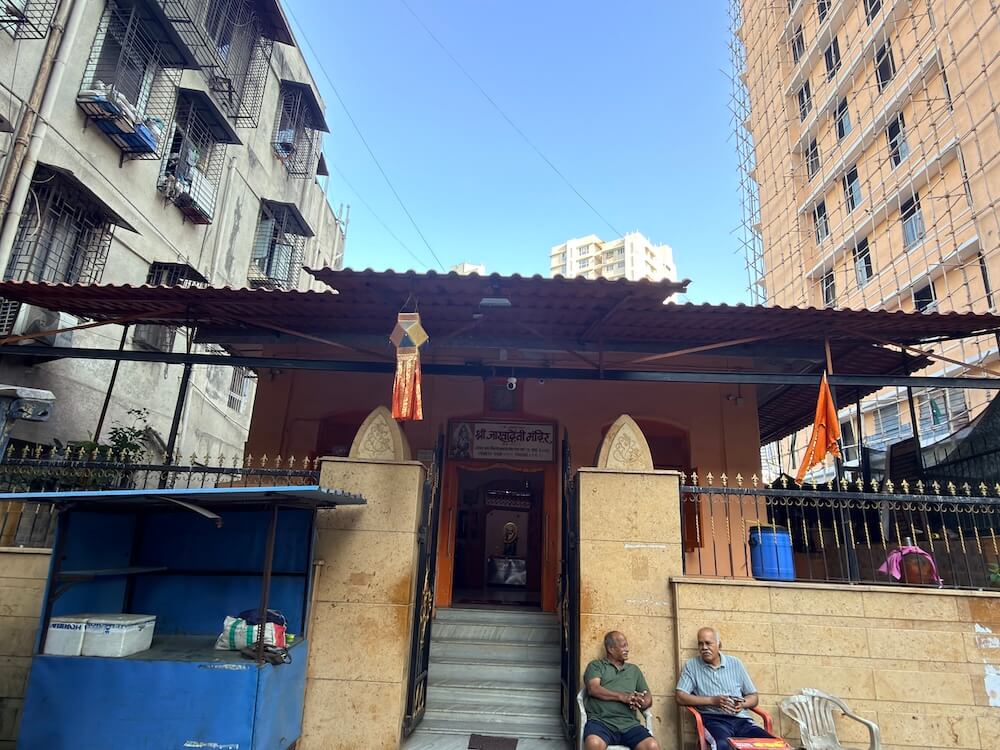
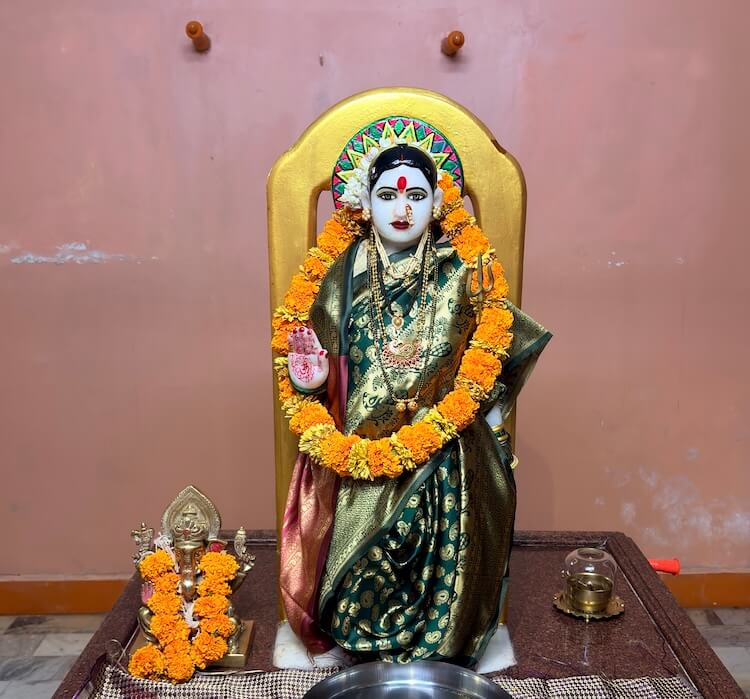
Shop Photo FramesThe temple of Jakhadevi, the presiding deity of the Bhandari community—a hardworking, artistic, and martial society that is among the original inhabitants of Mumbai—is situated in the Sayantan Chowki (Saitan Chowki) area of Dadar. Jakhadevi is also known as ‘Jakadevi’ in the Konkan region. This temple, dedicated to a deity who was originally a folk goddess, has stood here for over a hundred years. Devotees believe that the Goddess is ‘Jagrut’ (awakened/manifest) and fulfills their heartfelt wishes. A grand festival is celebrated here during Navratri, in which, along with the Bhandari community, local Christian and Muslim brethren also participate in large numbers.
The origin of the Bhandari community is described in the book ‘Bhandari Samajacha Itihas’ (History of the Bhandari Community) by journalist and researcher Prof. Dr. Bhalchandra Aklekar. This story appears in fragmented form in the texts ‘Brahmottar Khand’ and ‘Katha Kalpataru’. According to the legend, once a demon named Tilakasur became very arrogant. Lord Shiva placed him in an oil mill and asked Nandi to rotate it. Seeing Nandi’s labor, beads of sweat formed on Shiva’s forehead. As one of these drops fell to the ground, a man was born from it. He is the progenitor of the Bhandaris. Since he was praising Shiva, Shiva named him ‘Bhavguna’. At that time, Shiva asked him for a cool drink. Bhavguna replied, “From where shall I bring it?” Shiva, through his divine play, created a Surataru (coconut) tree there. Shiva was pleased when Bhavguna extracted sweet nectar from that tree. He appointed him as the guardian of the treasury of Alakavati, and since then, his descendants have been called ‘Bhandari’.
According to texts like ‘Mahikavatichi Bakhar’ and ‘Sashtichi Bakhar’, the nine clans of the Sheshavanshi Bhandaris were among the 66 clans of Kshatriyas who migrated from Paithan to North Konkan. The Bhandari community has inhabited these islands since the time of King Bimba. Known for their resilience and martial spirit, a large number of youths from this community served in Chhatrapati Shivaji Maharaj’s navy. Gerald Aungier, who served as the Governor of Mumbai from 1670 to 1677, raised a protective force for the city’s security. Observing the loyalty of the Bhandari community, they were recruited into this force in large numbers. This force was known as the ‘Bhandari Militia’. A family with the surname ‘Kavali’ from this community, which contributed significantly to the development of Mumbai, established the Jakhadevi temple here a century ago. The legend of this temple is that the family had decided to build a house in this area. While excavating for the foundation of the house, they found the idol of Jakhadevi. According to some, this idol was discovered during excavations for a road during the British era. It is said that at that time, the idol was coiled around by snakes. They retrieved the idol and ceremoniously installed it at this very spot. Later, Anant Kavali built a temple for the Goddess here. Over time, a beautiful marble idol of the Goddess was crafted and installed. The original idol is kept on a pedestal beneath this new idol.
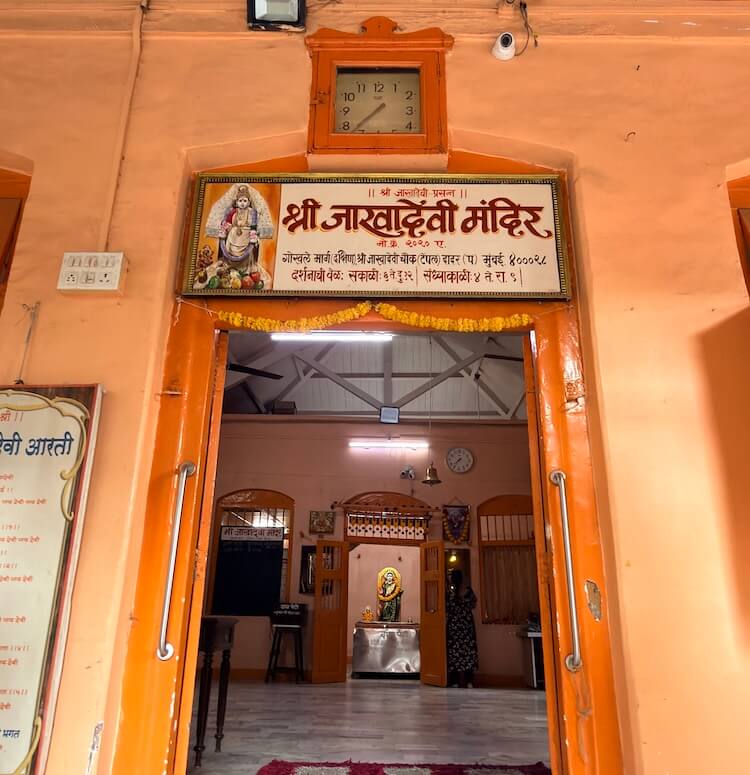
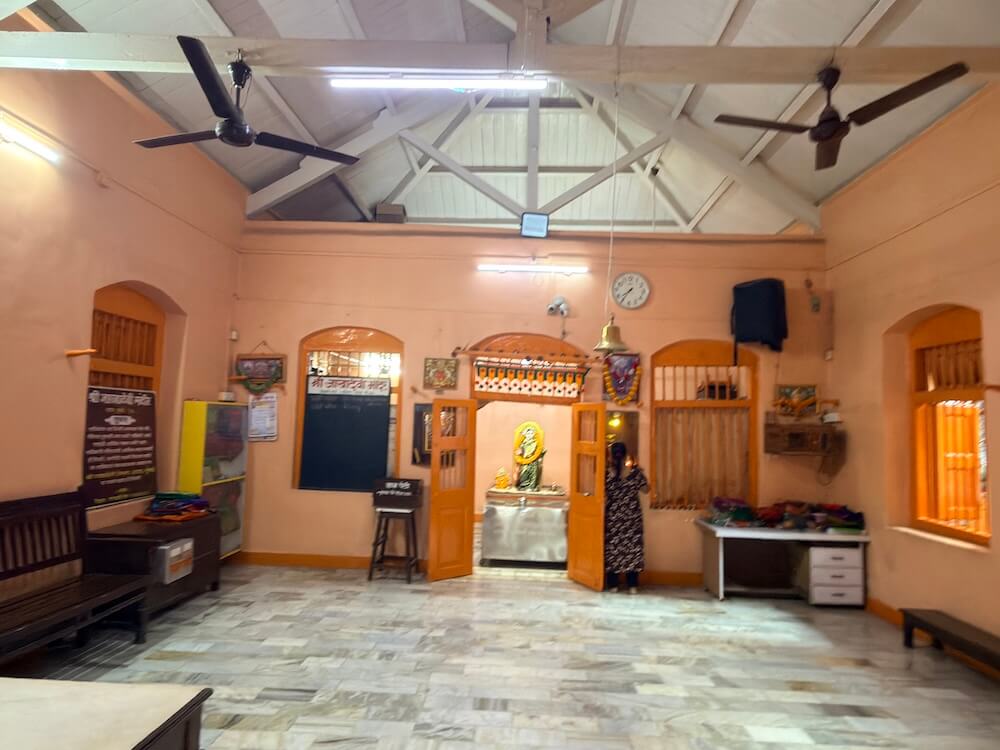
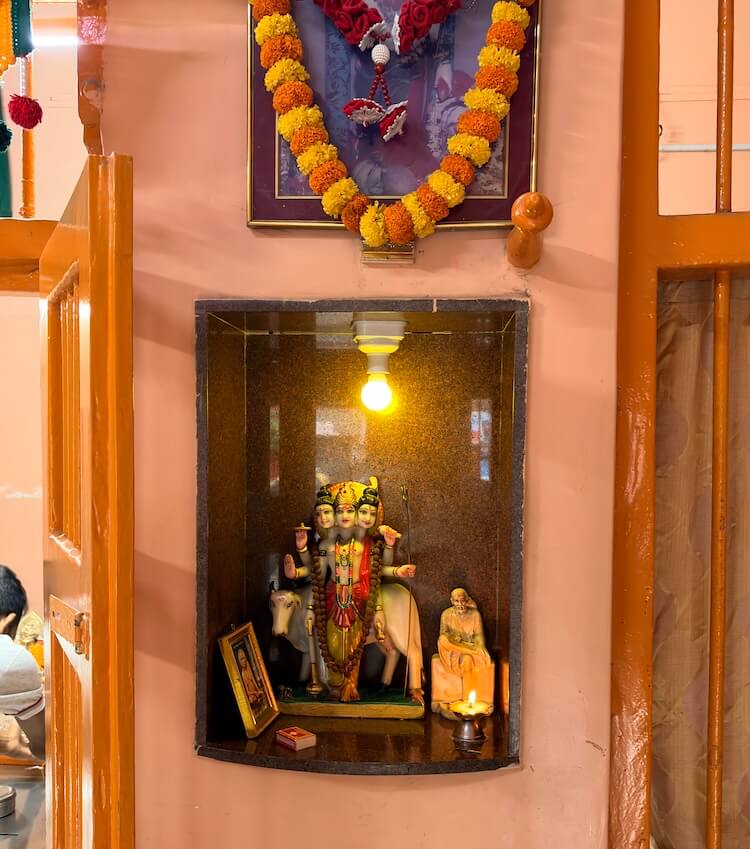
The temple resembles a large, traditional Konkan house. One enters the temple by climbing seven steps. The structure consists of a Sabhamandap (assembly hall) and a Garbhagriha (sanctum sanctorum). The Sabhamandap is paved with marble. On the front wall, beside the entrance to the sanctum, there are two niches. The niche on the right houses an idol of Trimukhi Dattatreya, while the one on the left contains an image of Adimaya Bhagwati Jagadamba. Large images of Ganesha and Jakhadevi are placed on this wall. In the center of the Garbhagriha, the marble idol of Jakhadevi is seated on a high altar. The Goddess is depicted with two arms; she holds a trident in one hand, while her other hand is in the Abhaya Mudra (gesture of fearlessness). The Goddess is adorned daily with clothes and ornaments. A brass idol of Ganesha is seated next to the idol of the Goddess.
Devotees can seek the blessings of the Goddess in this temple from 6:00 AM to 12:00 PM and from 4:00 PM to 9:00 PM. Navratri is the biggest festival celebrated at this temple. There is a large influx of devotees during the Navratri period. Many women come here during this time to perform the ‘Oti Bharne’ ritual. Devotees believe that the Goddess is quick to grant wishes. Consequently, the devotees of the Goddess include women from the Muslim and Christian communities as well.
This sacred temple stands as a testament to deep spiritual devotion, ancient architectural grandeur, and rich local cultural traditions.
The sanctum sanctorum houses the divine idol consecrated according to ancient Vedic traditions, surrounded by serene courtyards and traditional temple architecture.
Navratri, Maha Shivratri, Annual Temple Jatra & Deepotsav
Compare and book flights, secure top-rated local hotels near the temple, hire reliable guides, and rent cars instantly.
Extend your pilgrimage by visiting other highly sacred temples located nearby.


Add ₹999 more to unlock FREE SHIPPING!
Your sacred cart is currently empty.
Shop Photo FramesFill in your delivery details below to place your order.
Add comment