
Add ₹999 more to unlock FREE SHIPPING!
Your sacred cart is currently empty.
Shop Photo FramesThe Mudgaleshwar Temple, located in Mudgal—a place sanctified by the residence of Sage Mudgal, an incarnation of Lord Ganesha—is one of the ancient temples of Maharashtra. This pilgrimage site, situated on the banks of the Godavari River and of great mythological significance, was formerly known as ‘Devbhumi’. According to legend, Lord Shiva, having arrived here with Goddess Parvati to seek the boon of a son, was blessed with the birth of Lord Ganesha through the grace of Sage Mudgal. It is believed that Sage Mudgal composed the ‘Ganesha Purana’ at this very place. Along the banks of the Godavari, besides the Hemadpanti-style Mudgaleshwar Temple, one can also visit the Mudgal Ganesha and Narasimha temples, which were consecrated by Sage Mudgal within the riverbed. This region holds the significance of ‘Uttara Kashi’. Like in Kashi and Trimbakeshwar, countless devotees come here to perform various religious rites.
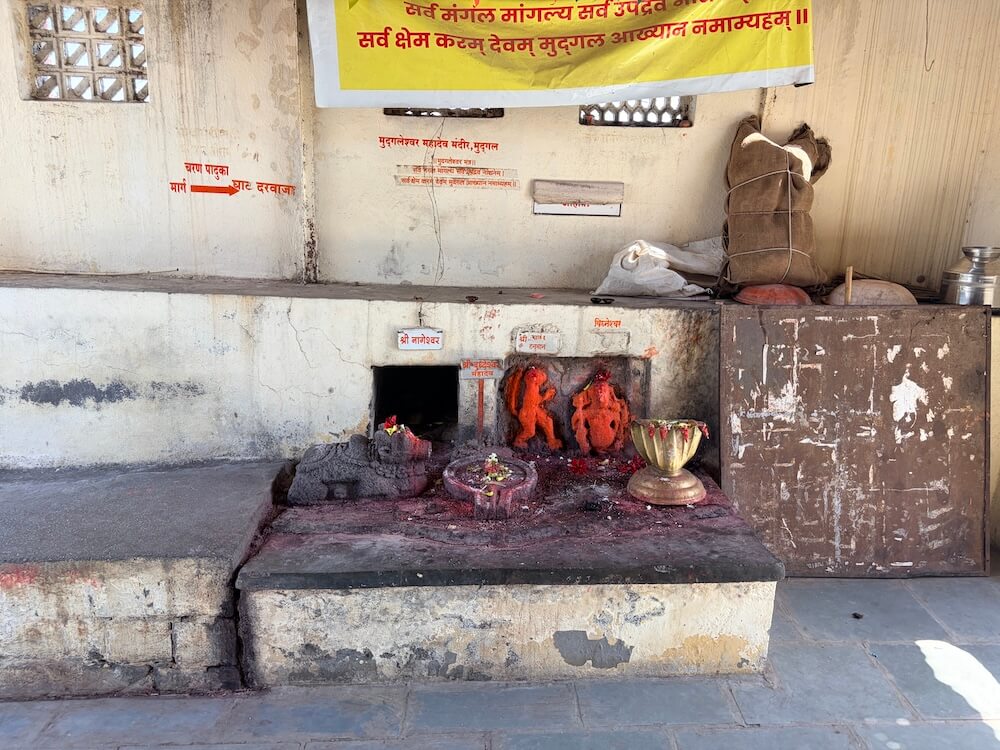
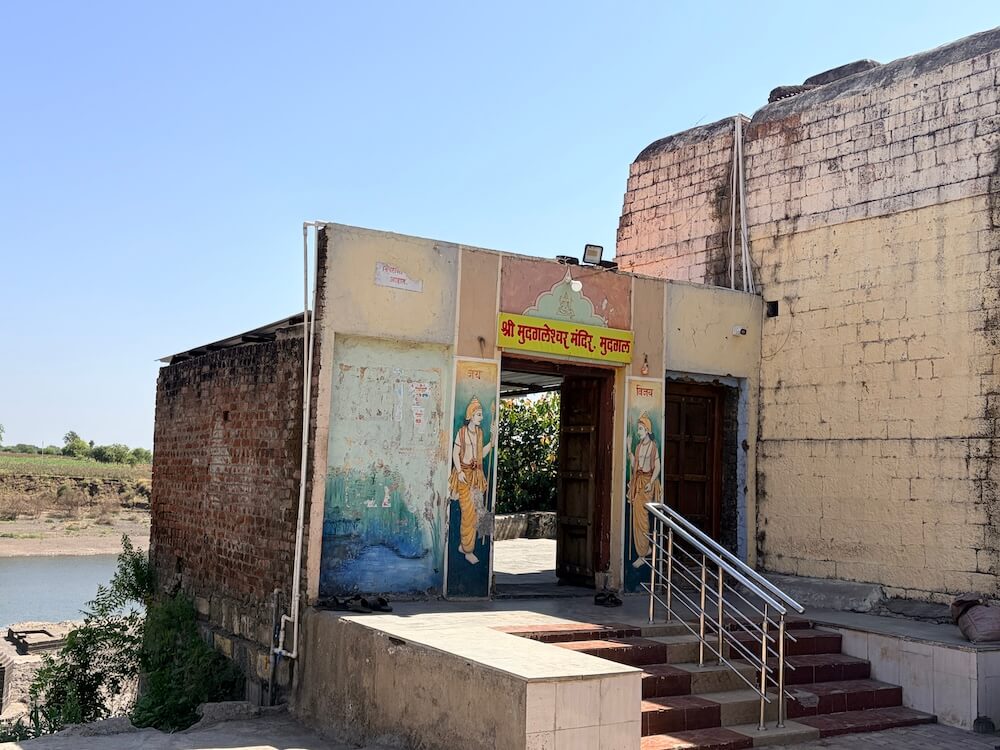
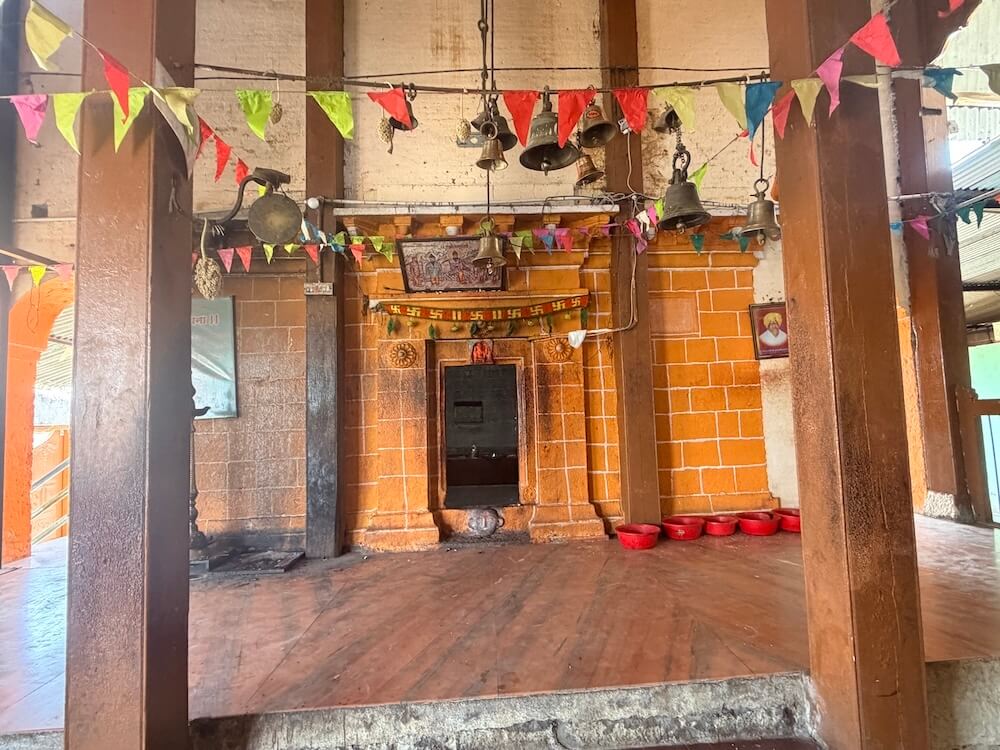
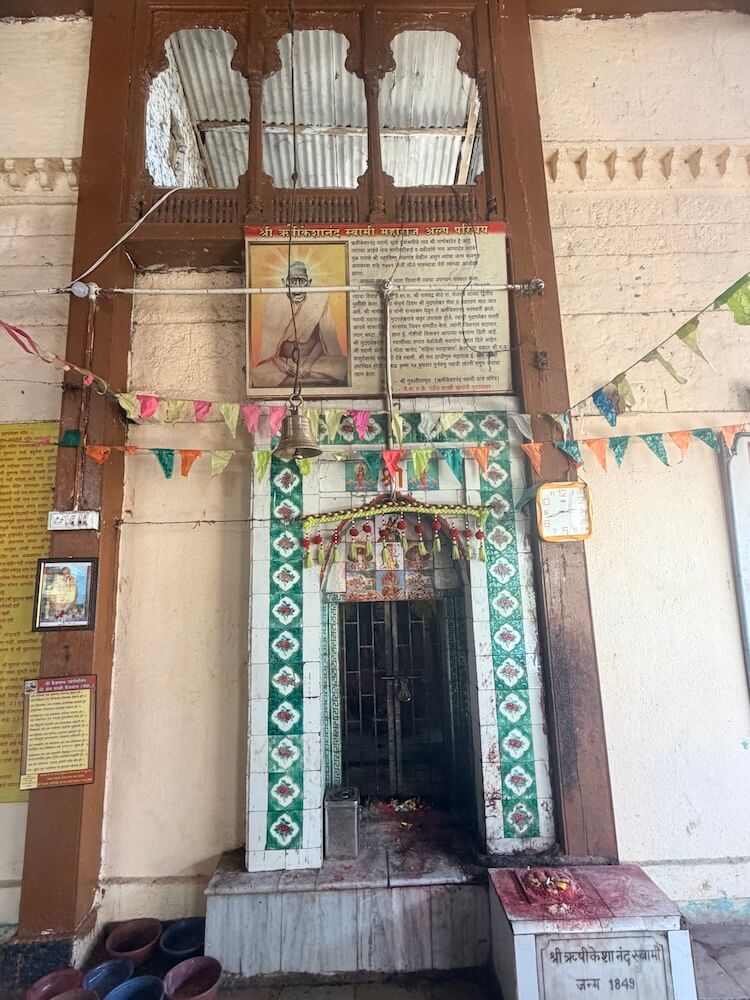
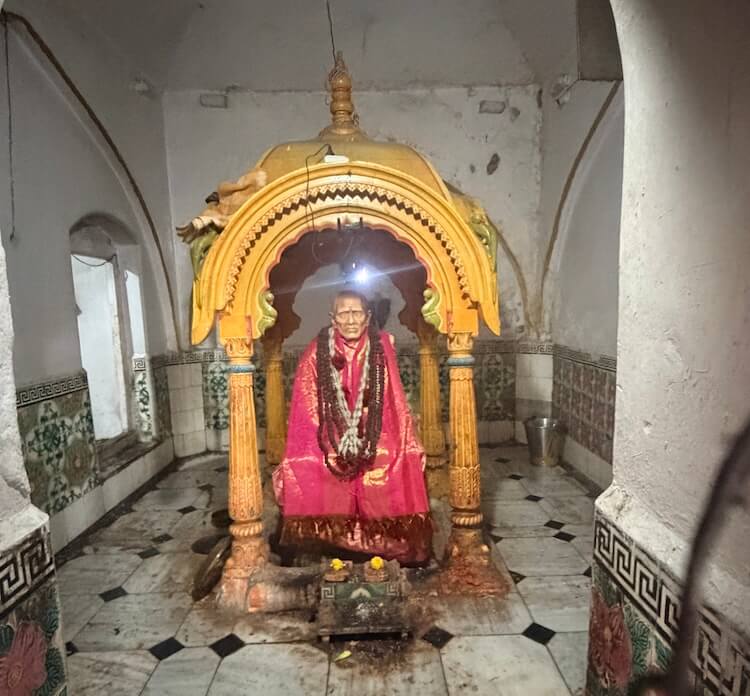
The story of the incarnation of Sage Mudgal is found in the ‘Maricha Purana’. One day, Sage Angiras found a child in the form of Mudgal on his path. He brought the child to his ashram, and his wife, Shruti, raised the boy as her own son. Once, Lord Ganesha spoke through a divine voice to Sage Angiras, saying, “A great devotee of Ganesha, who is a part of my own essence, has taken birth in your home. You shall name him Mudgal.” Following the command of Ganesha, Sage Angiras raised the child with all the prescribed Vedic rites and rituals. Later, Sage Mudgal married Bhagirathi, the daughter of Sage Atri and Sati Anasuya, and the sister of Lord Dattatreya. Thereafter, Sage Mudgal began performing penance to attain the Divine. During his penance, he survived by gathering grains that had fallen on the ground after the harvest. Every fifteen days, when breaking his fast on the Dwadashi, he would collect only as much food as could fit in a leaf cup, and in a state of fasting, he would perform the five great sacrifices (Pancha Mahayajnas) with that meager offering. To disrupt this penance, Indra sent Sage Durvasa to the residence of Sage Mudgal. Sage Mudgal did not allow Sage Durvasa to disturb his penance for three months. Pleased by this, Sage Durvasa returned to his own abode. Later, a celestial chariot arrived to take him to heaven, but Sage Mudgal expressed his reluctance to go, stating that there is no peace of mind there and that a sense of duality still exists in that realm. Consequently, the chariot returned without him. Some time later, a son was born to Sage Mudgal and his wife Bhagirathi, who was named ‘Maudgalya’. Leaving his wife and son at the ashram in Mudgal, Sage Mudgal departed to perform further penance. Pleased with his devotion, Lord Ganesha appeared before him. Telling him, “I am appointing you to propagate the path of devotion,” Lord Ganesha asked him to compose the ‘Mudgal Purana’. This text later became famous as the ‘Ganesha Purana’. Over time, Sage Mudgal narrated this Purana to Daksha Prajapati. Lord Ganesha himself would come here to listen to it. Thereafter, Lord Ganesha resided here. This place holds great importance due to the belief that the ‘Ganesha Purana’ was composed here. The village of Mudgal is situated on the northern bank of the Godavari River. The original name of this village was ‘Vadgaon’. Some believe that the village came to be known as ‘Mudgal’ due to the residence of Sage Mudgal. This place is of special significance for those seeking the birth of a son. It is said that Lord Mahadeva also came here with Parvati to seek a son, and through the grace of Sage Mudgal, they were blessed with Ganesha. There are holy bathing spots here named ‘Ganesha Tirtha’, ‘Tara Tirtha’, ‘Patra Tirtha’, and ‘Mudgal Tirtha’. While returning to Ayodhya after slaying Ravana in Lanka, Lord Ram specifically visited the Mudgal region. He offered libations (Tarpana) to Ravana at the Ganesha Tirtha here and prayed, “May Ravana attain eternal peace.” It is also said that Lord Krishna visited this place. The Narasimha Temple and the Mudgal Ganesha Temple are located in the riverbed. Due to the water, the temple in the riverbed was inaccessible for eight to ten months of the year. Therefore, a devotee of Shiva named Shambhu Teli built a new temple on the high ground near the riverbank in Shaka 1776 (1854 AD), which is known as the ‘Mudgaleshwar Temple’. Shambhu Teli used to perform penance in the Narasimha Temple located in the riverbed. Once, while he was in deep meditation, the river flooded. The flood lasted for three days. People thought that Shambhu Teli had perished in the flood, but it is said that after the waters receded, people saw that he was still alive. The premises of the Mudgaleshwar Temple have been paved with paver blocks. Paintings of gatekeepers (Dwarapalas) are depicted on both sides of the temple entrance. After entering through the wooden door, one reaches a small courtyard. A stone wall has been built along the side of the riverbed. A few steps from the courtyard, near the wall in front of the temple, is a statue of Nandi. A few steps further, on a platform near the wall, are Shiva Lingas named Nageshwar and Buddheshwar, as well as a statue of Maharudra Hanuman. The temple structure in front consists of a Sabha Mandap (assembly hall) with eight tall wooden pillars and a Garbhagriha (sanctum sanctorum). There are gatekeeper sculptures on both sides of the entrance, and a Ganesha idol is carved on the lintel of the door frame. In the center of the sanctum is a Shiva Linga. The Samadhi of Rishikeshanand Maharaj is located within the temple premises.
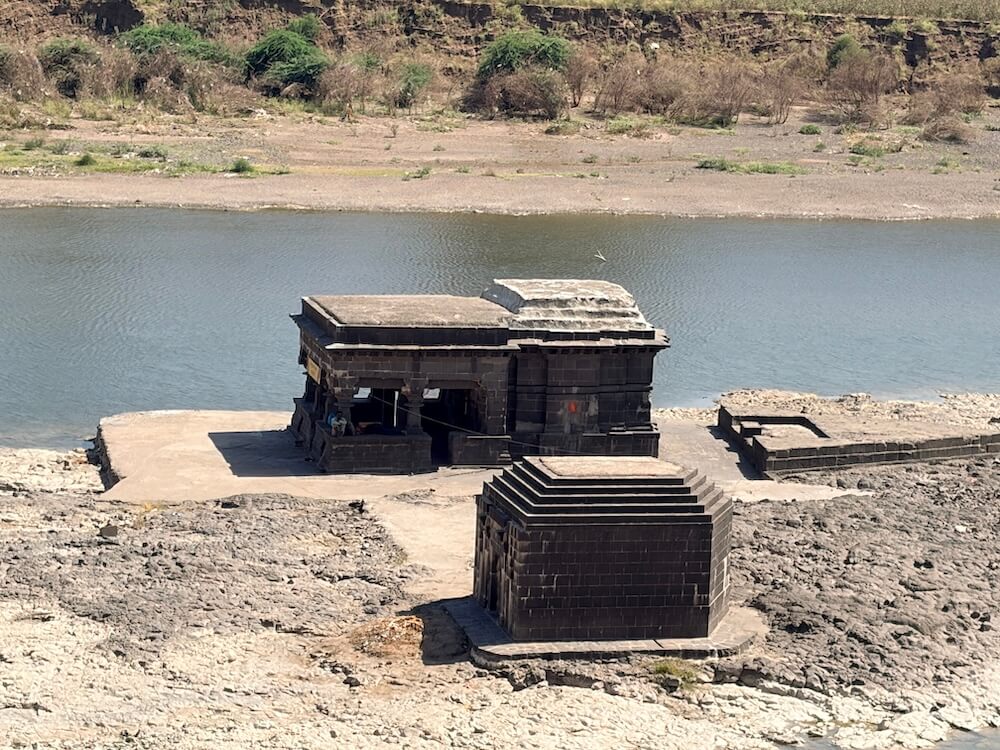
One must descend several steps to reach the Mudgal Ganesha and Narasimha temples located in the riverbed. At the beginning of the riverbed, one sees the Mudgal Ganesha Temple, which was consecrated by Sage Mudgal. This temple is also in the Hemadpanti architectural style. It was built by the Kothekar family, the landlords of Jintur. The temple consists of a Sabha Mandap and a Garbhagriha. In the sanctum, there is a vermilion-smeared idol of Ganesha in a niche carved into the wall. Beside this idol are Riddhi and Siddhi. In the niches on the left are idols of Vishnu-Narayan and Surya-Narayan. In the first niche on the right, the idol of Lord Shiva has the river Ganga in his matted hair, with Goddess Parvati beside him. In another nearby niche is the seat of Goddess Mahalakshmi.
Upon exiting this temple after seeking darshan, the Nrusimha Temple is located just a few steps ahead. It is said that this temple, built in the Hemadpanti architectural style, is over one thousand one hundred years old. Punyashlok Ahilyabai Holkar undertook the renovation of this temple. The structure of the temple consists of a sabhamandapa (assembly hall) and a garbhagriha (sanctum sanctorum). There is an inscription near the entrance on the right side of this east-facing stone temple. In other Shiva temples, the idol of Nandi, the vahana (vehicle) of Lord Shiva, is found in front of the garbhagriha; however, here, Nandi is seated right at the entrance of the temple. The pillars in the sabhamandapa stand on stone bases and are carved with various shapes. A tortoise (kurma) figure is carved on the floor of the sabhamandapa in the space facing the garbhagriha. At the base of the entrance to the garbhagriha, a Kirtimukha is carved in the center. On the lalata-bimba (lintel) in the center of the doorframe, there is a sculpture of Lord Ganesha. Inside the garbhagriha, there is a Shiva Linga set within a large shalunka. Here, Nrusimha and Lord Shiva are worshipped together. This garbhagriha also houses ancient idols of Sage Mudgal, his wife Bhagirathi, their son Maudgalya, and daughter-in-law Jabala. The shikhara (spires) of both the Nrusimha and Mudgal Ganesha temples have been lost over time.
Behind the Nrusimha Temple, there is a triangular stone platform. No matter how strong the water current in the riverbed is, this platform divides the flow of water, which is why the temple remains in good condition even after hundreds of years. Fifteen years ago, the Godavari River used to have abundant water, and as a result, a large part of this temple would remain submerged until the beginning of summer.
Countless devotees visit this place to seek the blessings of the three ancient temples located here. After bathing in the Godavari River, devotees offer prayers at these temples. A large fair is held here on Mahashivratri. On this day, many devotees stand in long queues to have darshan of Mudgaleshwar. Various religious programs are also organized here on this occasion. During this yatra, a palanquin procession is also taken out, in which the masks of both Mudgaleshwar and Nrusimha are placed. Many people also come to the banks of the Godavari River here to perform Tripindi Vidhi and Dashakriya Vidhi. The Nagbali ritual for the blessing of progeny is also performed here.
This sacred temple stands as a testament to deep spiritual devotion, ancient architectural grandeur, and rich local cultural traditions.
The sanctum sanctorum houses the divine idol consecrated according to ancient Vedic traditions, surrounded by serene courtyards and traditional temple architecture.
Navratri, Maha Shivratri, Annual Temple Jatra & Deepotsav
Compare and book flights, secure top-rated local hotels near the temple, hire reliable guides, and rent cars instantly.
Extend your pilgrimage by visiting other highly sacred temples located nearby.


Add ₹999 more to unlock FREE SHIPPING!
Your sacred cart is currently empty.
Shop Photo FramesFill in your delivery details below to place your order.
Add comment