
Add ₹999 more to unlock FREE SHIPPING!
Your sacred cart is currently empty.
Shop Photo FramesIn Hindu Dharma, Shaiva, Vaishnava, and Shakta are the primary sects, and Goddess Parvati is the principal deity of the Shakta sect. There are temples dedicated to the various forms of Goddess Parvati, the consort of Mahadeva. The three and a half Shakti Peethas of Maharashtra and the fifty-one Shakti Peethas of India are considered forms of Goddess Parvati. The Goddess is known by various names such as Ambabai, Tulja Bhavani, Saptashrungi, Yamai, Jogai, Durga, and Kali. However, in the village of Ramkund in Bhum Taluka, there is a famous temple of Goddess Parvati known as Ramai, meaning the mother of Lord Rama. Devotees believe that the Goddess here fulfills their vows.
The construction of this temple in the Hemadpanti architectural style dates back approximately eight hundred to one thousand years. The legend of the temple states that when Ravana abducted Sita, Lord Rama, distraught by the separation from Sita, wandered through the forests calling out, “Sita, Sita…” Seeing this, Parvati doubted whether Rama was truly an incarnation of Vishnu. To test Rama, Parvati assumed the form of Sita and appeared before him. Rama immediately recognized Parvati and asked, “Mother, why are you wandering in the form of Sita?” Because Rama addressed her as Mother, Goddess Parvati became established here, bearing the name Ramai, meaning the mother of Rama.
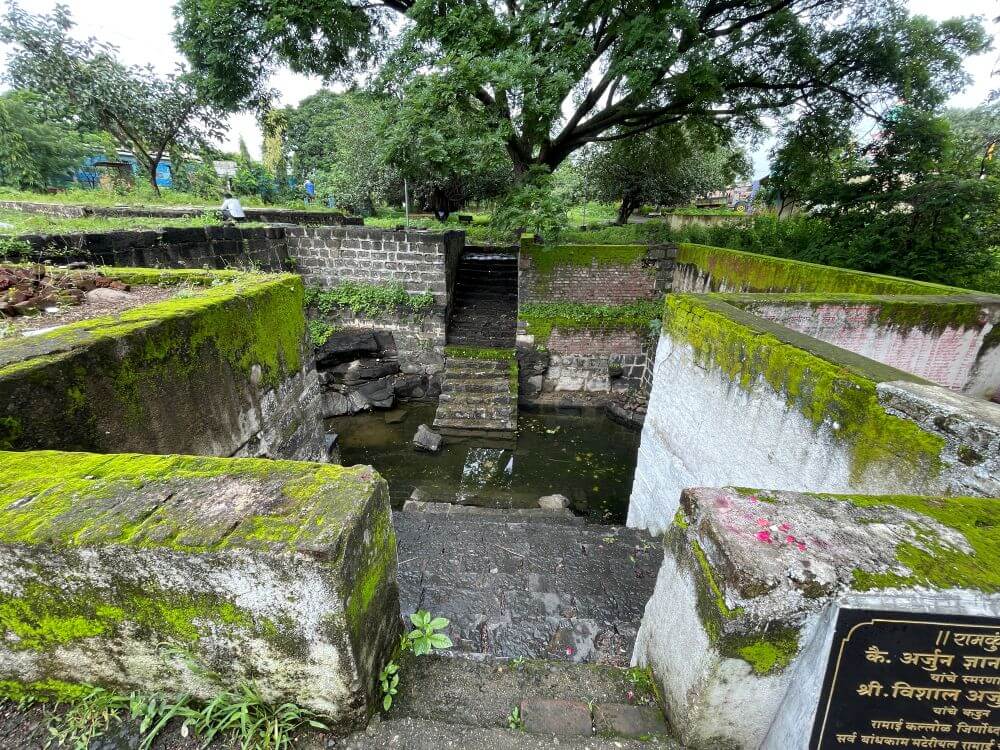
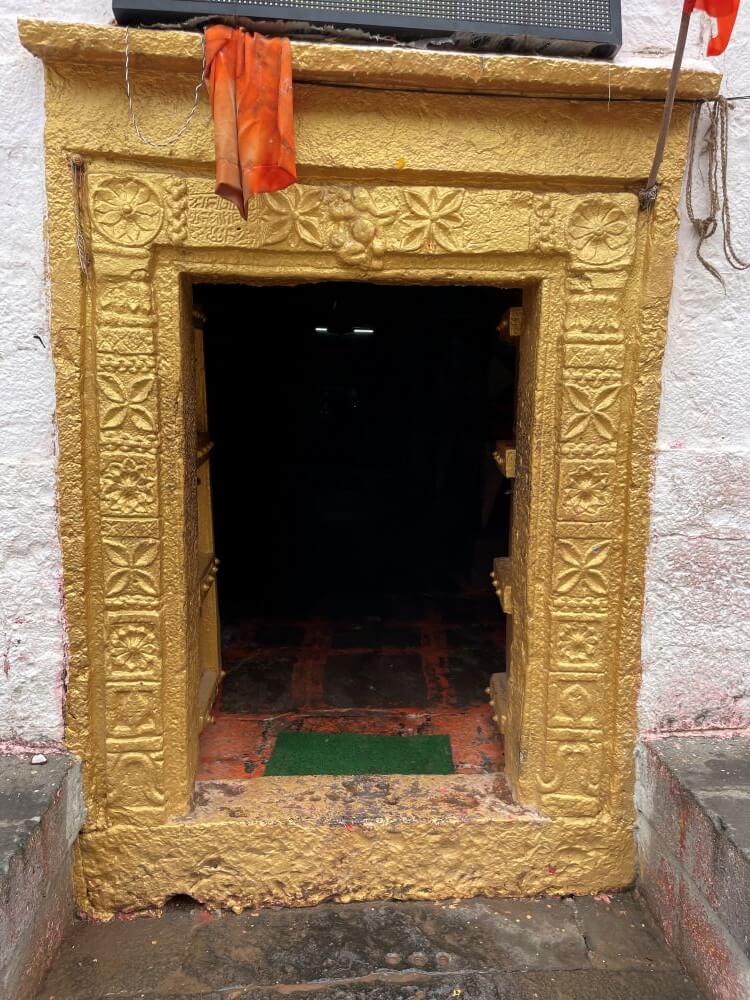
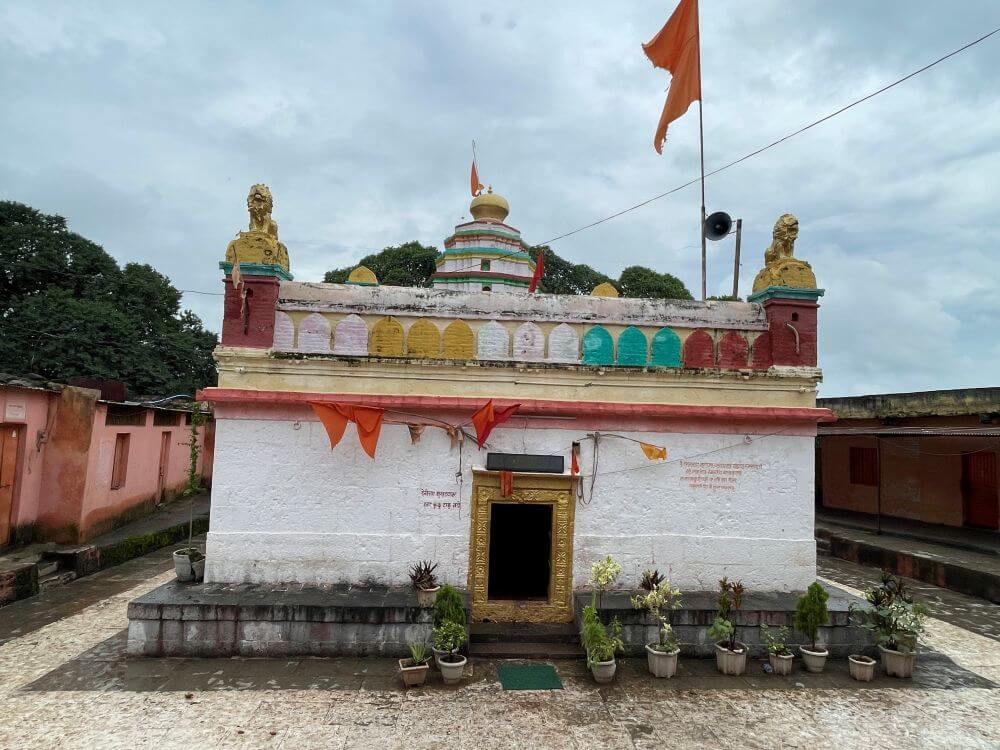
A similar legend is told regarding the name of the village, Ramkund. It is said that while Lord Rama was wandering in search of Sita, he became thirsty, but there was no water available nearby. Lord Rama then struck the ground with an arrow and created a water reservoir. Because of this reservoir, the village was named Ramkund. There is a welcome arch for the temple on the road leading from the village to the temple. The entrance to the temple is within the sturdy fortification wall surrounding it. On both sides of the entrance are images of gatekeepers, and there is an idol of Ganapati on the lintel. There are five steps inside in front of the entrance to descend into the courtyard, which is lower than the road level. The temple of the Goddess is situated in front of the courtyard. The temple structure consists of a Sabhamandapa (assembly hall), Antarala (vestibule), and Garbhagriha (sanctum sanctorum). There are seats for devotees along the outer periphery of the temple. On the seats to the left of the entrance, baskets of flour and salt are kept. Devotees visiting here offer items such as flour, salt, oil, spices, and grains. The entrance to the Sabhamandapa is somewhat narrow. There are floral carvings on the door frames and the lintel of the entrance. In the enclosed Sabhamandapa, there are four rows of three ornate square pillars each. The outermost pillars are embedded in the walls. The floor between the pillars in the middle rows is a few inches lower. At the top of the pillars standing on the bases, there are brackets, and above them are beams. All the pillars feature distinctive shapes such as squares, circles, and hexagons.
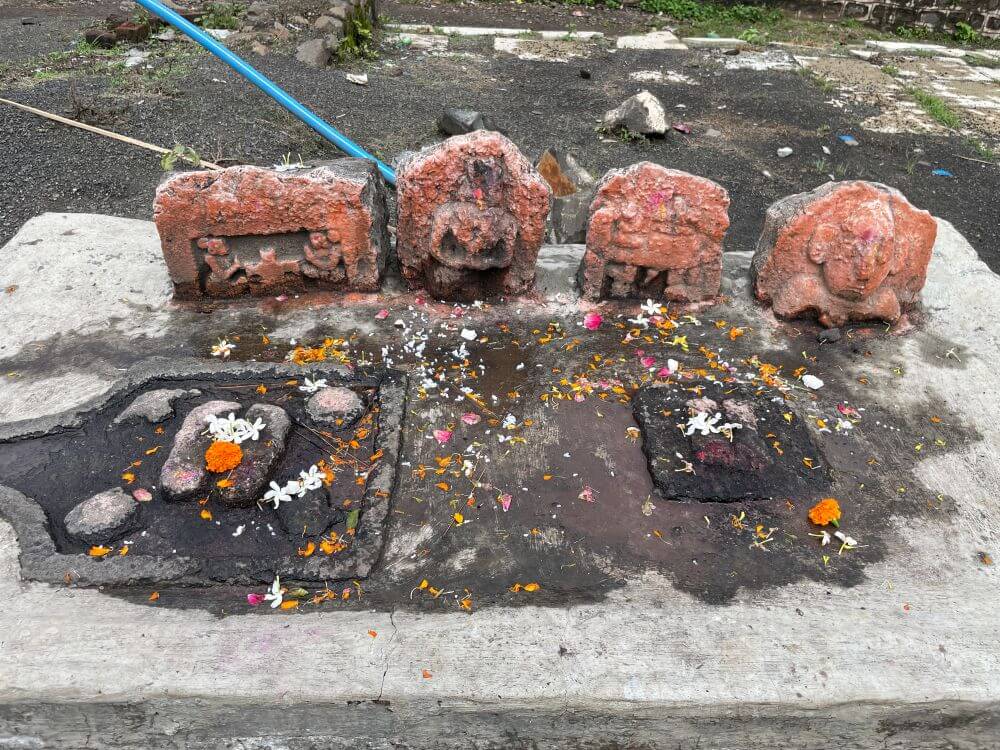
In the Sabhamandapa, on the right side, is the palanquin of the Goddess used during festivals. Various paintings are depicted on the walls of the Sabhamandapa. Further ahead is the entrance to the Antarala. To the left of the entrance is an ancient stone idol of a local deity smeared with vermilion. In the Antarala, on the left side, is the bed of the Goddess, and on the right side, in a niche, is an ancient stone idol. In the Antarala, to the right of the entrance to the Garbhagriha, is a drum (Nagara). On both sides of the entrance to the Garbhagriha, images of Deepasundaris (lamp-bearing maidens) are painted. The door frames are smeared with vermilion, and there is an idol of Ganapati on the lintel. In the Garbhagriha, the Goddess is present in the form of a Tandala (a naturally formed stone) placed in a shrine on a Vajrapitha. The Goddess wears a silver crown on her head and various garments and ornaments. The eyes, lips, and nose ring of the idol are made of silver, and a silver canopy hangs from the ceiling. Additionally, there are silver footprints (Padukas) in front of the idol. On the back wall of the Garbhagriha, there is a relief carving of lotus flowers.
There is a safety railing around the roof of the temple. On the roof of the Sabhamandapa, there are two lion sculptures at the front corners. The roof of the Garbhagriha features a four-layered square Shikhara (spire) with vertical edge carvings. In the lower three layers of the Shikhara, there are niches on all four sides. At the top of the Shikhara is an Amalaka, followed by a Kalasha.
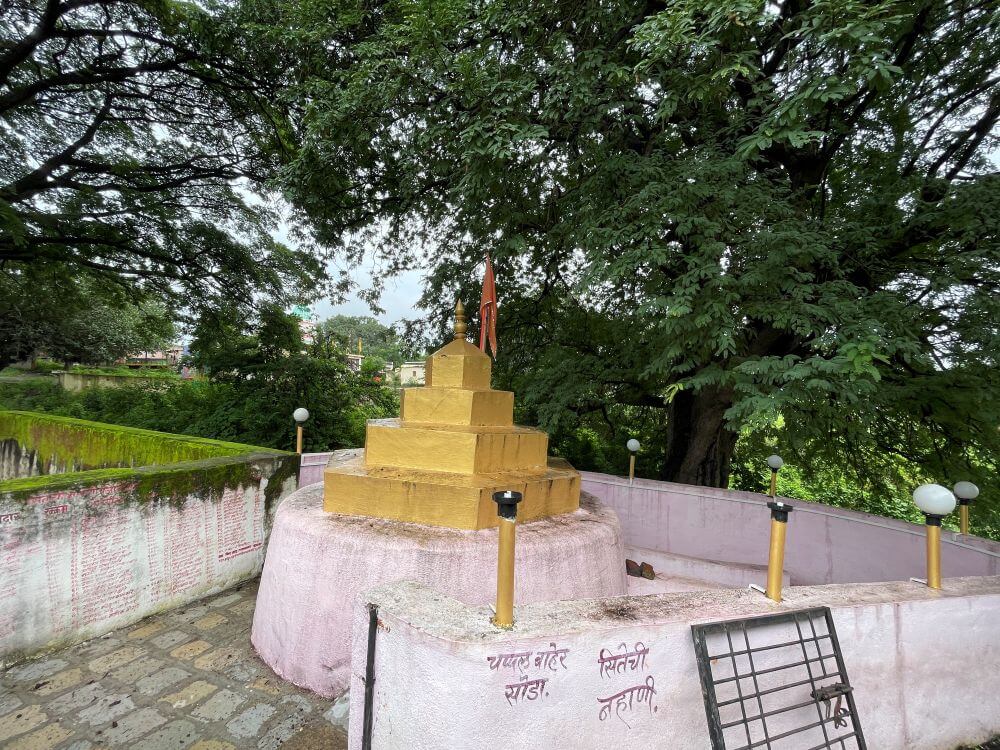
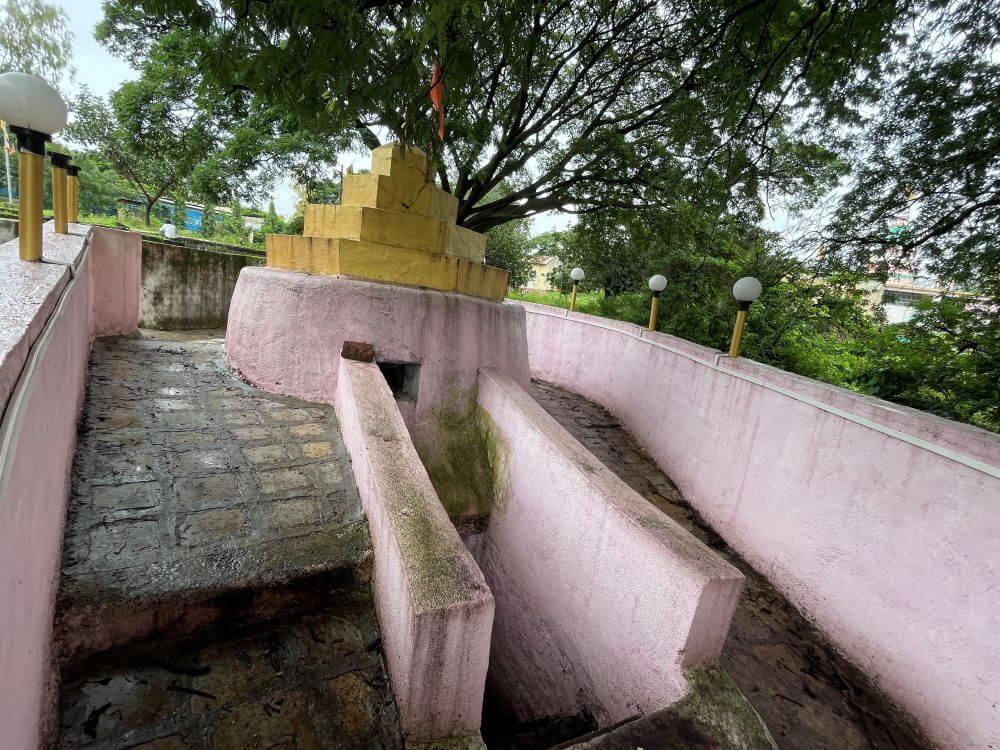
Beside the Ramai temple is an ancient Shiva temple. In front of this temple, there is a Nandi on a platform. Next to the Nandi is a lime mill wheel. It is said that this wheel might have been used to prepare lime during the construction of the temple. An ancient Shiva Linga can be seen in the temple. There is a small door in the fortification wall in front of the temple. Upon exiting through it, one finds the Ramkund created by Lord Rama by striking an arrow. There is a stone safety railing around the reservoir, and there are steps to descend into it. In the temple courtyard, there is a spacious hall where cultural programs are organized. This hall is also used as a community center. Various buildings in the courtyard are used for purposes such as a pilgrim residence, free food distribution center (Annachhatra), and a storehouse. There are hero stones (Veergal), Sati stones, and some samadhis in the courtyard.
The annual fair of the Goddess is celebrated for three days starting from Chaitra Krishna Ashtami. During this time, the palanquin procession of the Goddess is taken out around the village. Various religious programs and a Mahaprasada are organized in the temple for three days. On all three nights, the devotees perform the ‘Pot Khel’ ritual. The devotees of the Goddess dance while carrying burning torches (Sumbh) on their bodies. During the fair, thousands of devotees come to seek the blessings of the Goddess and to fulfill their vows.
This sacred temple stands as a testament to deep spiritual devotion, ancient architectural grandeur, and rich local cultural traditions.
The sanctum sanctorum houses the divine idol consecrated according to ancient Vedic traditions, surrounded by serene courtyards and traditional temple architecture.
Navratri, Maha Shivratri, Annual Temple Jatra & Deepotsav
Compare and book flights, secure top-rated local hotels near the temple, hire reliable guides, and rent cars instantly.
Extend your pilgrimage by visiting other highly sacred temples located nearby.


Add ₹999 more to unlock FREE SHIPPING!
Your sacred cart is currently empty.
Shop Photo FramesFill in your delivery details below to place your order.
Add comment