
Add ₹999 more to unlock FREE SHIPPING!
Your sacred cart is currently empty.
Shop Photo FramesSituated near the banks of the Godavari River, the village of Gunj (Khurd) is the field of action (karmabhoomi) of Yogananda Saraswati Maharaj (Ganda Maharaj), the chief disciple of Vasudevananda Saraswati (Tembe Swami), who is considered an incarnation of Dattatreya. Yogananda Maharaj, a prominent figure among devotees of Dattatreya, wrote the ‘Gurumurti Charitra’ in Marathi here, detailing the life of Tembe Swami. Devotees can have the darshan of the Dattatreya idol, consecrated at his behest, and the Samadhi of Ganda Maharaj. Many followers of the Datta tradition from Marathwada visit this place. A large fair is held at Gunj on the occasion of Ganda Maharaj’s punyatithi (death anniversary) on the day of Phalguna Vadya Dwadashi.
Yogananda Saraswati Maharaj was born in the year Shake 1790 (1868 CE) on the day of Dattajayanti in Talangpur village, Surat district, Gujarat. His father’s name was Dahyabhai and his mother’s name was Kashibai. Ganda Maharaj’s original name was ‘Kalyan’. To protect their child, born after a vow, from the evil eye, his parents began calling him ‘Ganda’ (mad/eccentric), and this name eventually became popular. A devotee of Shiva since childhood, Ganda Maharaj had no interest in employment or trade. His parents arranged his marriage, but he found no joy in worldly life. Driven by a sense of renunciation, he left home and arrived at Panchavati near Nashik. During his stay there, he had the opportunity to be in the company of saints.
After performing penance for some time in the forests of Omkareshwar, he undertook the Narmada Parikrama. A few days later, he met Tembe Swami at the Markandeshwar temple in Sinor. Seeing his devotion, Tembe Swami initiated him and sent him back home to serve his parents. He soon returned to Tembe Swami to serve his Guru. Due to his dedication, faith, and conduct, Ganda Maharaj became known as the chief disciple of Tembe Swami. Before attaining Samadhi at Garudeshwar, Tembe Swami commanded him to take Sannyasa and go to the southern region of Marathwada. After the passing of his parents, the detached Ganda Maharaj took Sannyasa initiation in Shake 1841, receiving the Danda initiation from Krishnananda Saraswati Swami Maharaj at Dakor, and assumed the name ‘Yogananda Saraswati Swami Maharaj’. Thereafter, Ganda Maharaj traveled to various places, delivering discourses and spreading spirituality among the people.
He eventually arrived in Marathwada. He traveled through places such as Chhatrapati Sambhajinagar (formerly Aurangabad), Selu, Manwath, Morgaon, Jintur, Balivasa, Sendhe Gogalgaon, Kurunda, Purna, Parbhani, Pathri, and Aundha. He built Datta temples and maths in many places. He met Panditrao Chaudhary at Pathri. The village of Gunj was under his supervision. Chaudhary requested him to stay at Gunj. The serene surroundings of Gunj provided a perfect foundation for the contemplative personality of Yogananda Saraswati. Here, he established a math and commenced the worship of Datta. He resided in a stone chamber near the Siddheshwar Mahadeva temple. He bestowed grace upon countless people at Gunj. It was here that he wrote the ‘Gurumurti Charitra’. This biography contains 135 chapters, 14,883 verses (ovya), and 477 Sanskrit shlokas. In addition to the ‘Gurumurti Charitra’, he also authored books such as ‘Ajnan Timir Deepak’, ‘Stree Dharma Nirupan’, and ‘Guru Dharma Nirupan’.
During his stay at Gunj, his circle of disciples continued to grow. Devotees believe that Ganda Maharaj possessed divine powers. His life story includes many miracles. It is said that he cured many people of incurable diseases. The book ‘Datta Panchpadi’ mentions that he brought rain during the famine of 1924. At the age of sixty, in the year Shake 1850 (1928 CE), on the day of Phalguna Vadya Dwadashi, he departed from his mortal body. His mortal remains were given Jala Samadhi in the deep pool named Kamalja in the Godavari riverbed. There were two stone chambers adjacent to the Siddheshwar temple at that time. A Vastra Samadhi was built in the chamber where Ganda Maharaj resided. It was at Ganda Maharaj’s instruction that the Datta temple was built here. The idol of Datta was consecrated in this temple in the year Shake 1858. After Ganda Maharaj, the management of the Sansthan passed into the hands of his disciple, Chintamani Maharaj. The Sansthan flourished during his time. The current magnificent temple was built through the efforts of Chintamani Maharaj and Ganda Maharaj’s nephew, Chhannubhai Maharaj.
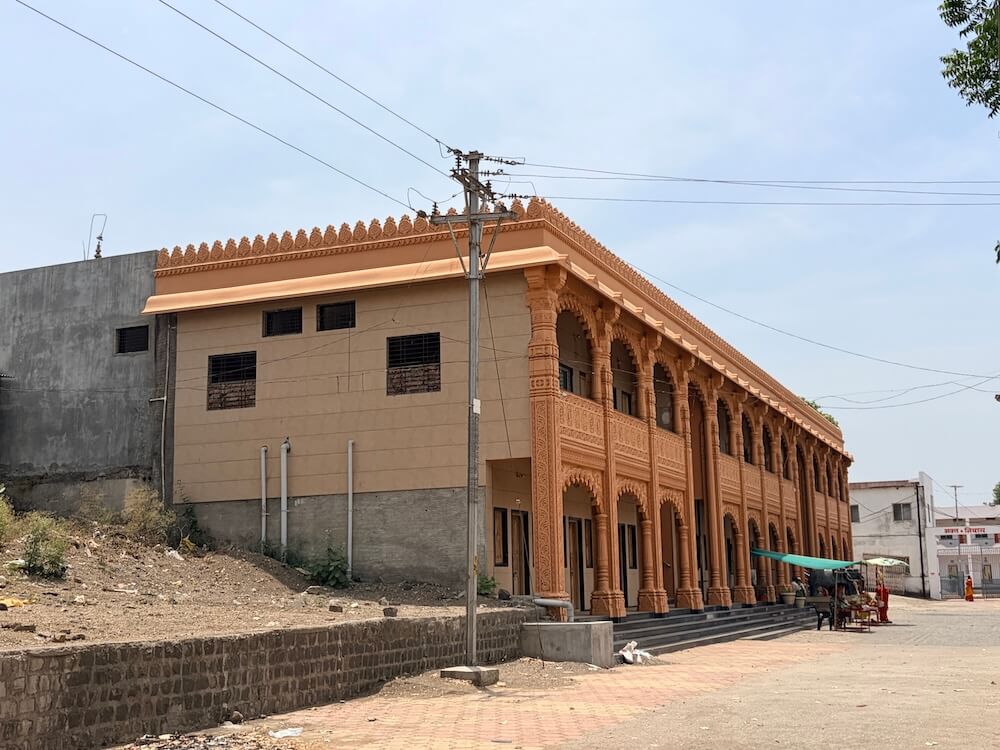
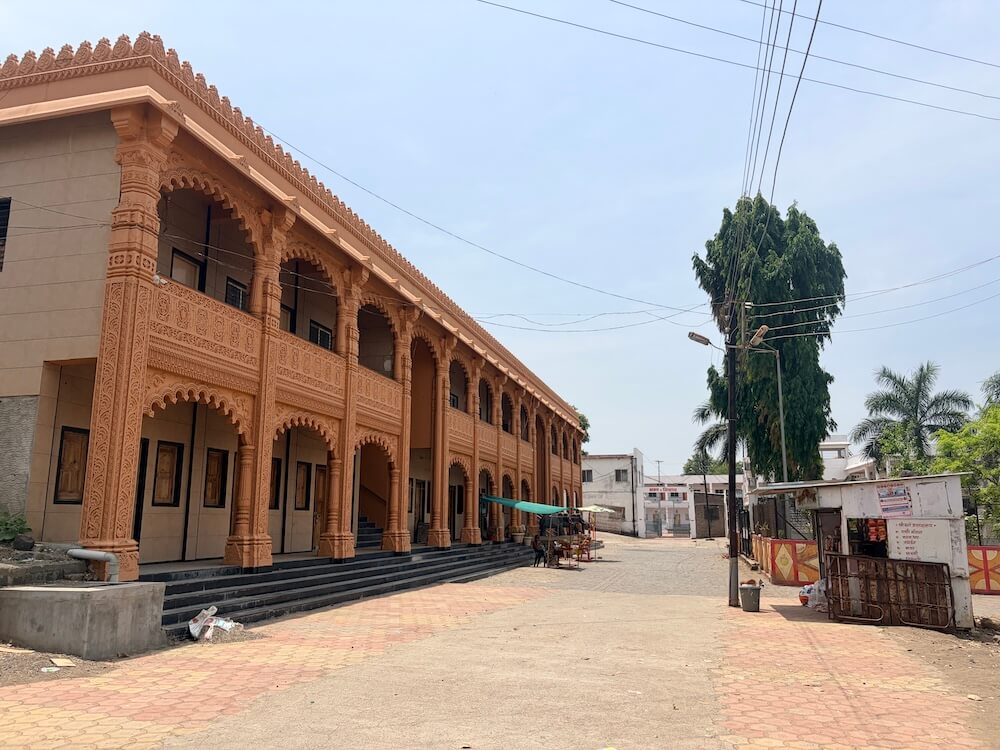
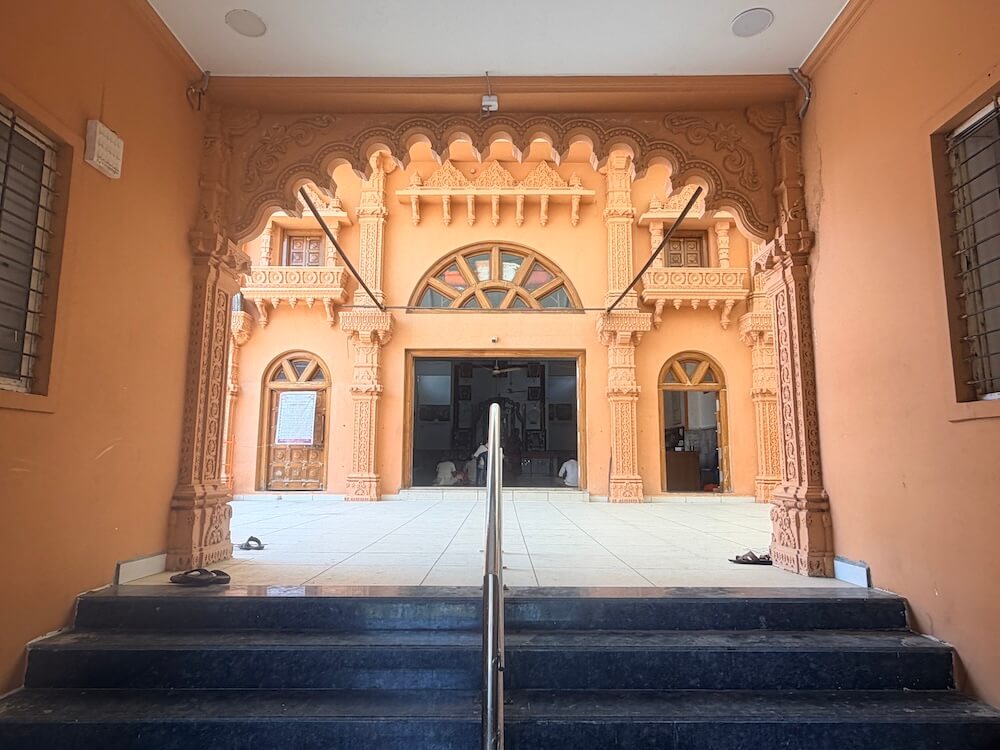
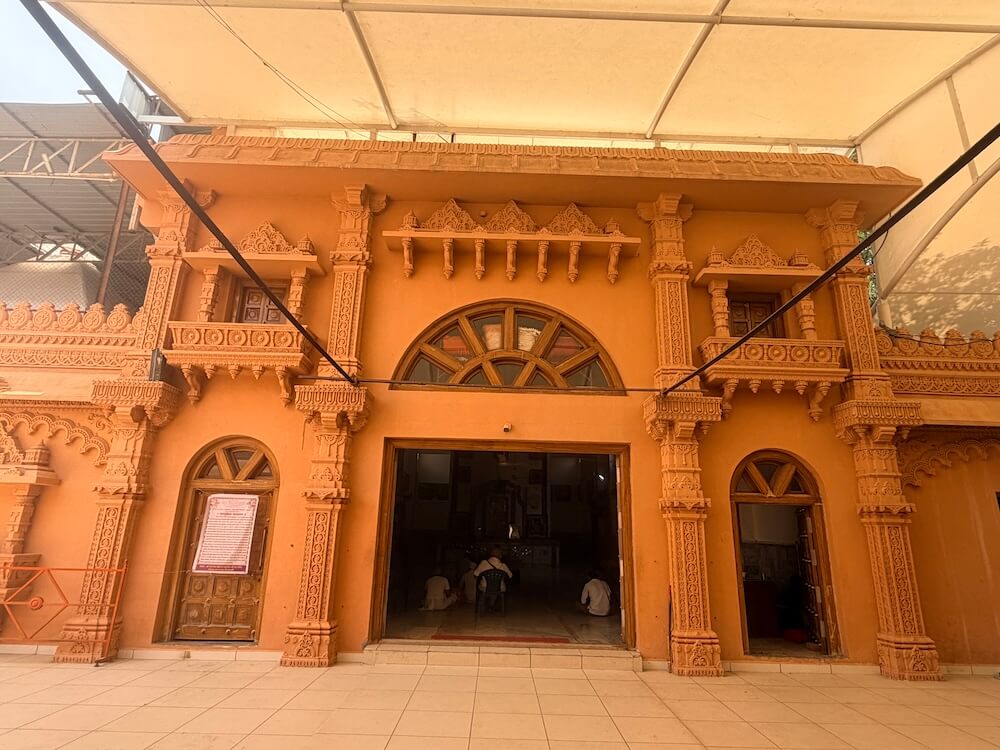
The village of Gunj is situated southwest of Pathri, on the eastern bank of the Godavari River. The temple has a vast campus. The main temple of Dattatreya has a large assembly hall (sabhamandap). This hall was renovated in 1992. The idol of Dattatreya is seated in the sanctum sanctorum located in the center of the assembly hall. In the lower hands of the idol, which stands leaning against a cow, are a rosary and a water pot (kamandalu). The middle two hands hold a damaru and a trident. The upper two hands hold a conch and a discus. Surrounding the idol are four dogs representing the four Vedas. To the right of the idol is a silver mask of Tembe Swami, and to the left is an image of Ganda Maharaj. In the assembly hall, there are images of Tembe Swami, Ganda Maharaj, Chintamani Maharaj, and Chhannubhai Maharaj. The walls are also adorned with beautiful paintings throughout.
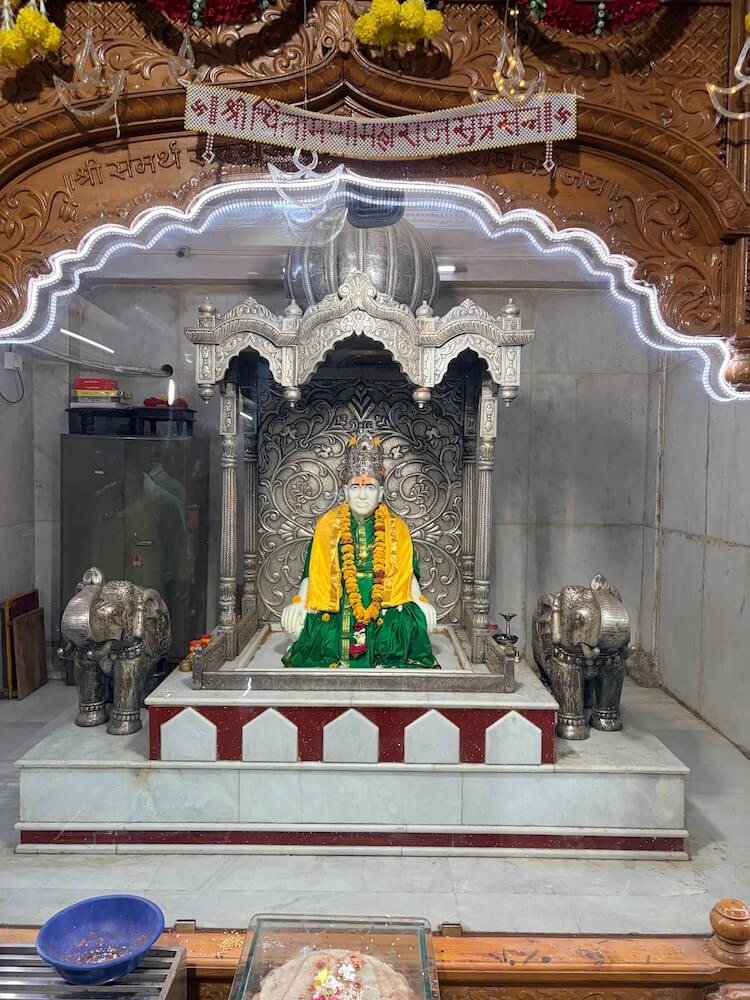
Ganda Maharaj used to rest in the gallery (dalan) located on the southern side of the assembly hall (sabhamandapa). His Vastra-Samadhi (a memorial site established by placing the clothes, coverings, or items used by the saint instead of the physical body) is located here, and a silver mask has been placed upon it. His idol is situated behind the Vastra-Samadhi. This idol was consecrated in the year 1918 of the Shaka era. The idols of Chintamani Maharaj and Chhannubhai Maharaj are located in the northern part of the assembly hall. One must climb stairs to reach the Siddheshwar Temple, which is situated on an elevated mound. Devotees arriving at Gunj first take the darshan of Dattatreya. Thereafter, after taking the darshan of Yoganand Maharaj’s Vastra-Samadhi and idol in the gallery, they proceed to the Siddheshwar Temple. There are a total of five Shiva temples in the village of Gunj, and it is said that this Siddheshwar Temple was built by Abai Chaudhary, a devout woman from the Chaudhary family, who were the old landlords of the village. All construction of the Sansthan is based on this temple. Ganda Maharaj had first resided in this very temple. He also began the writing of the text ‘Gurumurticharitra’ here. A Somsutri [U-shaped, semi-circular] circumambulation is performed here.
Some of the items used by Chintamani Maharaj have been preserved in a museum located on the premises. The office of the Sansthan is located while descending after taking the darshan of the Siddheshwar Temple. It is referred to here as the ‘Gadi’. Lakshmi Pujan is performed here every year during Diwali. Lamps are lit here every morning and evening. During festivals, there is a tradition of stopping the palanquin in front of the office and reciting specific verses. The path to the gallery located on the north side leads from here. There is a grain storage pit (peva) in the open space in front of the office. In the northern gallery, there are silver-plated padukas (footwear) of Chintamani Maharaj and Chhannubhai Maharaj. Chintamani Maharaj used to rest here. In later times, Chhannubhai Maharaj used to perform his personal worship here. The Gadi of Yoganand Maharaj located here is worshipped in the form of Goddess Lakshmi on the day of Lakshmi Pujan during Diwali. The resting place of Chhannubhai Maharaj is also in the vicinity. The Sansthan has also built a Bhakta Niwas (pilgrim lodging) for the convenience of devotees coming from afar. A ghat has been built further along the riverbank.
This temple is a place of faith for Dattatreya devotees in Marathwada. Therefore, there is always a bustle of devotees here. Every day in the early morning, after a holy bath in the Ganga, Bhupalya, Kakada Aarti, and Tripadi Bhajan are performed. After sunrise, Rudrabhishek is performed, and after offering refreshments and Naivedya to Dattatreya, Aarti is conducted. Between 9 AM and 12 PM, Abhishek and Puja are performed everywhere in the temple. At 12 PM, after the Maha-Naivedya is offered, Aarti is performed amidst the sound of auspicious musical instruments. Thereafter, the temple remains closed until 4 PM. Between 4 PM and 5 PM, devotees chant the mantra “Digambara Digambara Shripad Vallabh Digambara”. Following this, Pradosh Puja, Abhishek, and Shantipath are performed. After the Shantipath, the ‘Dattabavani’ composed by Rangavadhuta Maharaj is recited in the assembly hall. Then, Panchpadi is performed, followed by Shejarti. Every Thursday, the palanquin circumambulates the temple.
Various religious programs are held here throughout the year. On the night of Mahashivratri, Abhishek is performed on the Shiva Linga in the Siddheshwar Temple and the idol of Dattatreya. The next day, the Parane (breaking of the fast) is observed. Phalguna Vadya Dwadashi and Trayodashi are the main days of Yoganand Maharaj’s Punyatithi festival. For seven days prior to this, a Nama-Saptah is organized here. During this week, a procession is taken out around the temple in a palanquin every day. On the day of Phalguna Vadya Trayodashi, the palanquin is taken to the ‘Ganda Paduka’ and ‘Nishan’ on the banks of the Ganga, one kilometer away from the temple, where Panchpadi is performed. On the day of the main ceremony, Prasad is distributed to the devotees during the Maha-Pankti (community feast) held in the riverbed. On the day of Gudi Padwa, after the Prakshal Puja, a palanquin procession is taken out in the temple premises. On the day of Ashadha Shuddha Pratipada, various religious rituals are performed here on the occasion of Tembe Swami’s Punyatithi. From the next day, for the occasion of Chaturmas, Atirudra Abhishek is performed on the idol of Dattatreya for two and a quarter months. The birth anniversary of Tembe Swami is celebrated on Shravana Vadya Panchami, and that of Chintamani Maharaj on Gokulashtami. Programs are held here on the occasion of Chhannubhai Maharaj’s Punyatithi on Kartika Shuddha Ekadashi and Chintamani Maharaj’s Punyatithi on Magha Vadya Chaturthi. A seven-day Nama-Saptah is organized here for Datta Jayanti. Yoganand Maharaj’s birth anniversary also falls on the day of Datta Jayanti. On that day, the birth anniversary is celebrated by showering gulal on the idols of Dattatreya and Yoganand Maharaj. The next day, after performing the Parane, a palanquin procession is taken out in the temple premises.
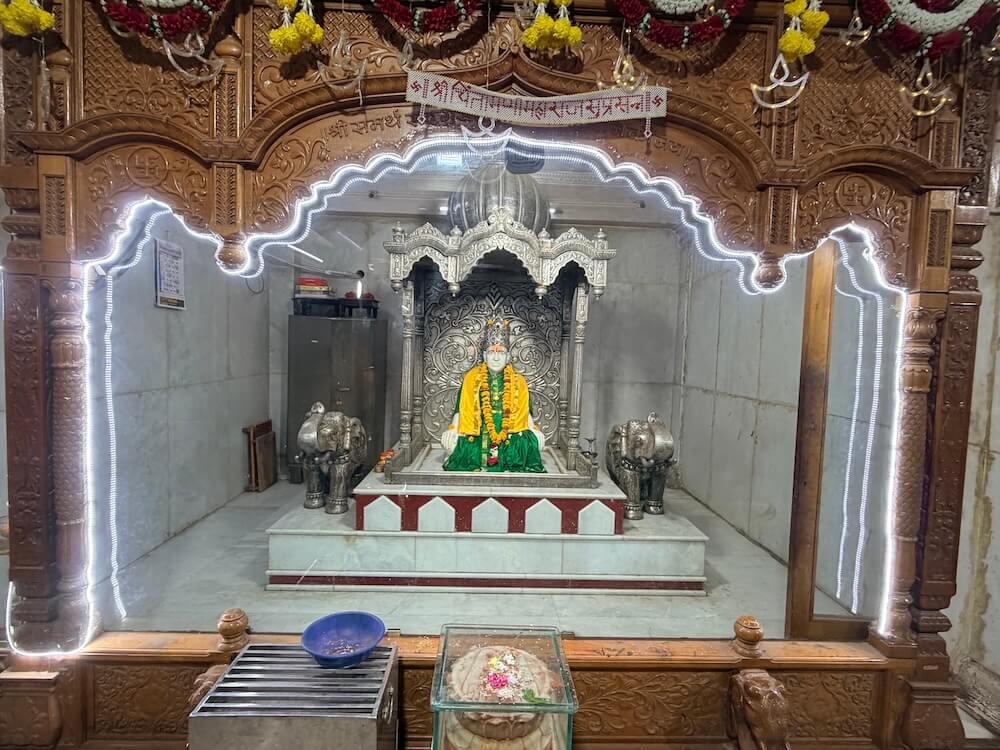
This sacred temple stands as a testament to deep spiritual devotion, ancient architectural grandeur, and rich local cultural traditions.
The sanctum sanctorum houses the divine idol consecrated according to ancient Vedic traditions, surrounded by serene courtyards and traditional temple architecture.
Navratri, Maha Shivratri, Annual Temple Jatra & Deepotsav
Compare and book flights, secure top-rated local hotels near the temple, hire reliable guides, and rent cars instantly.
Extend your pilgrimage by visiting other highly sacred temples located nearby.


Add ₹999 more to unlock FREE SHIPPING!
Your sacred cart is currently empty.
Shop Photo FramesFill in your delivery details below to place your order.
Add comment