
Add ₹999 more to unlock FREE SHIPPING!
Your sacred cart is currently empty.
Shop Photo FramesThe Ratneshwar Mahadev Temple is situated at the confluence of three rivers—the Godavari, Khadki (Yakshini), and Sindphana—in the village of Rampuri (Khurd), located in the Pathri taluka of Parbhani district. It is said that this Shivalinga was discovered by Lord Ramachandra. He had the priests perform an abhishek (consecration) on this Linga using nine types of precious gems (Navaratnas). Because of this, the Linga came to be known as ‘Ratneshwar Mahadev’. Water flows continuously from the throat of this Swayambhu (self-manifested) Shivalinga located in Rampuri (Khurd), Pathri. Devotees firmly believe that this Shivalinga is ‘Jagrut’ (spiritually awakened). For this reason, many devotees from far and wide come here for darshan. During Mahashivratri, the entire area takes on the appearance of a pilgrimage fair.
Several legends are told about the Shivalinga here. According to one legend, Lord Ramachandra visited this place with his family during the Treta Yuga. At that time, the area was covered in dense forest. Lord Ramachandra stayed here for three days. He would sit near a tree beneath a hill in the vicinity. A cow named Kapila would always release her milk at the spot where the current Shivalinga is located. She would release her milk at this location in the forest. Astonished by this sight, Lord Ramachandra shot an arrow from his quiver toward the hill. The arrow returned and fell at his feet. He then went up to the hill and saw the Shivalinga. He performed the ritualistic worship of the Linga. Later, he called the priests and performed the abhishek with nine precious gems. Due to the stay of Lord Ramachandra, the village was named ‘Rampuri’, and because he performed the abhishek with Navaratnas, the Linga is called ‘Ratneshwar Mahadev’.
This temple is on the banks of the Godavari River. A small river named Khadki flows behind the temple. In the past, this river was known as ‘Yakshini’. A story is told regarding this as well. In the Puranic era, a Yaksha named Vishwavasu had a sister named Pippala. She would often mock the sages. Angered by her behavior, the sages cursed her one day. Due to that curse, she began to flow as a river named Yakshini. At that time, Vishwavasu performed penance here. Pleased with his penance, Lord Shiva asked him to seek a boon. At that time, Vishwavasu requested that his sister be freed from the curse. Lord Shiva replied, “When this river joins the Godavari River, your sister will return to her original form.” As per his words, the Yakshini River joined the Godavari River here. Thereafter, Pippala Yakshini was freed from the curse.
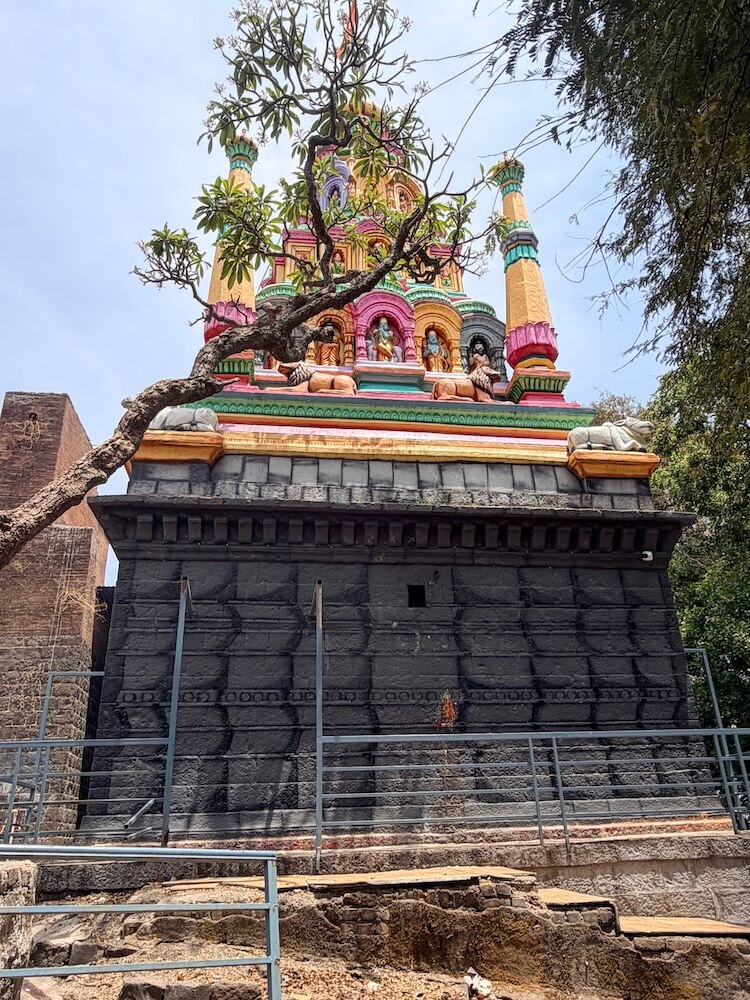
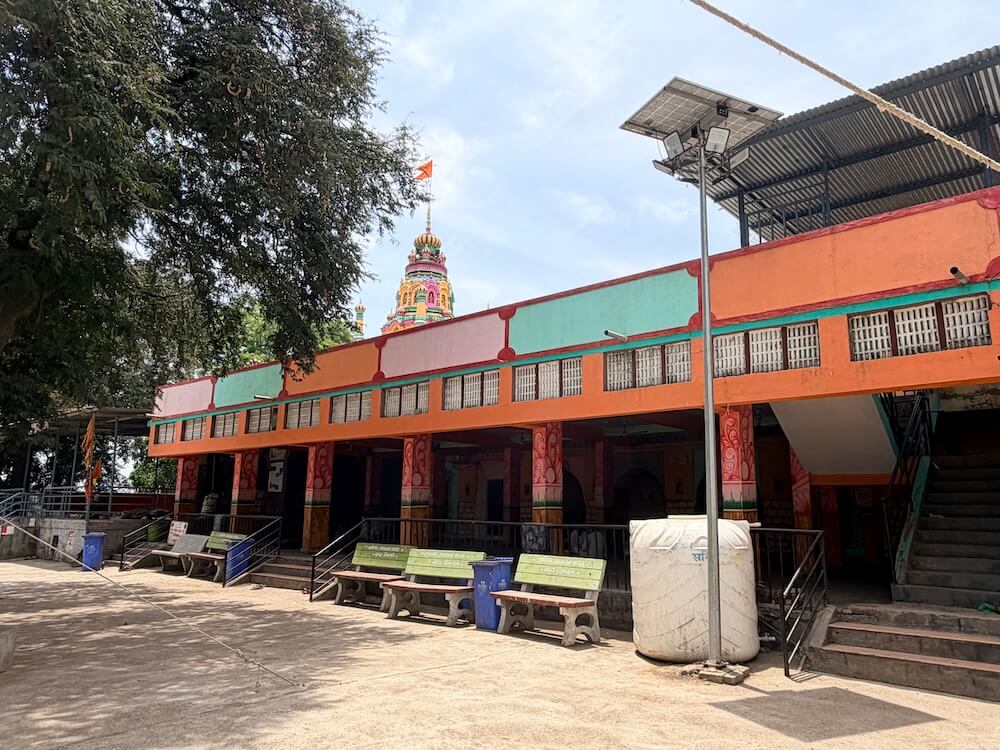
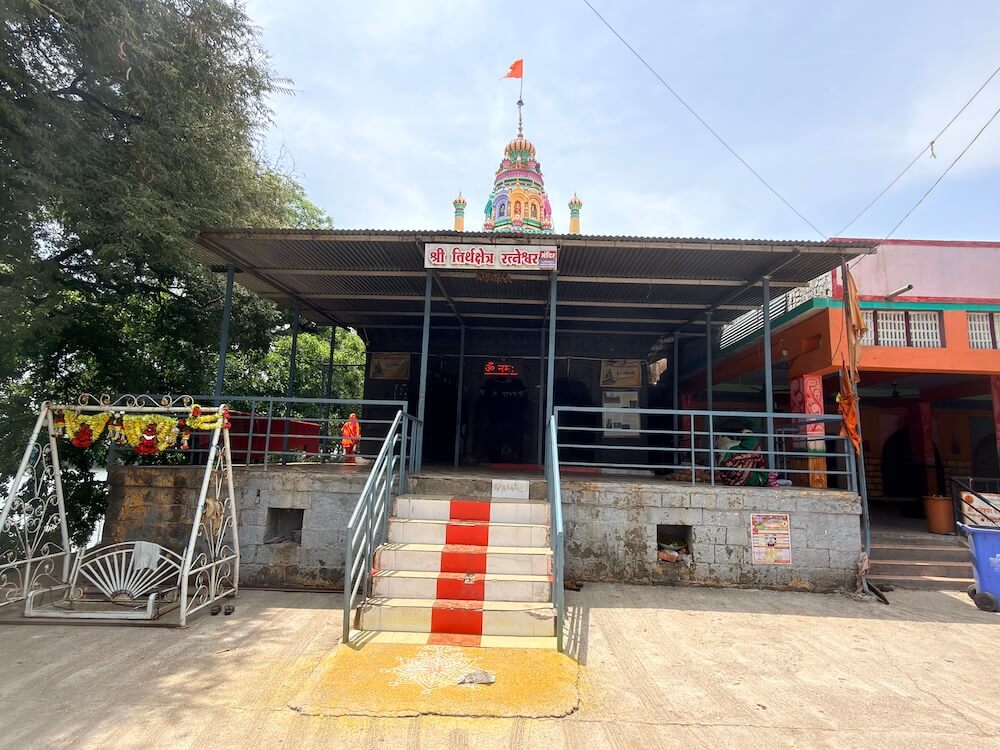
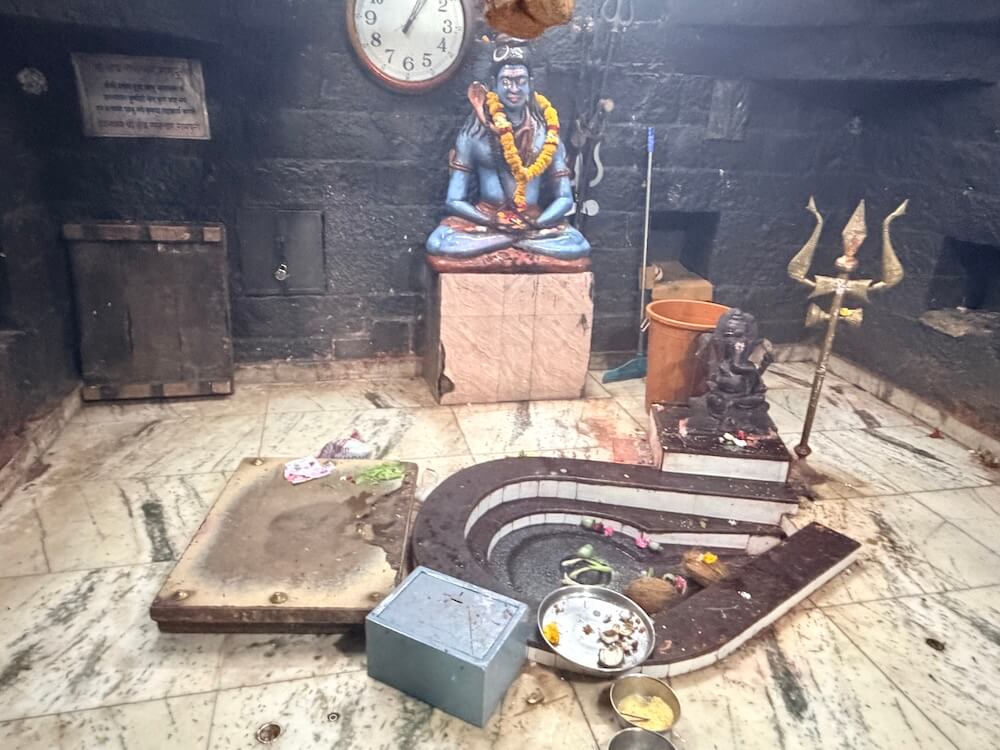
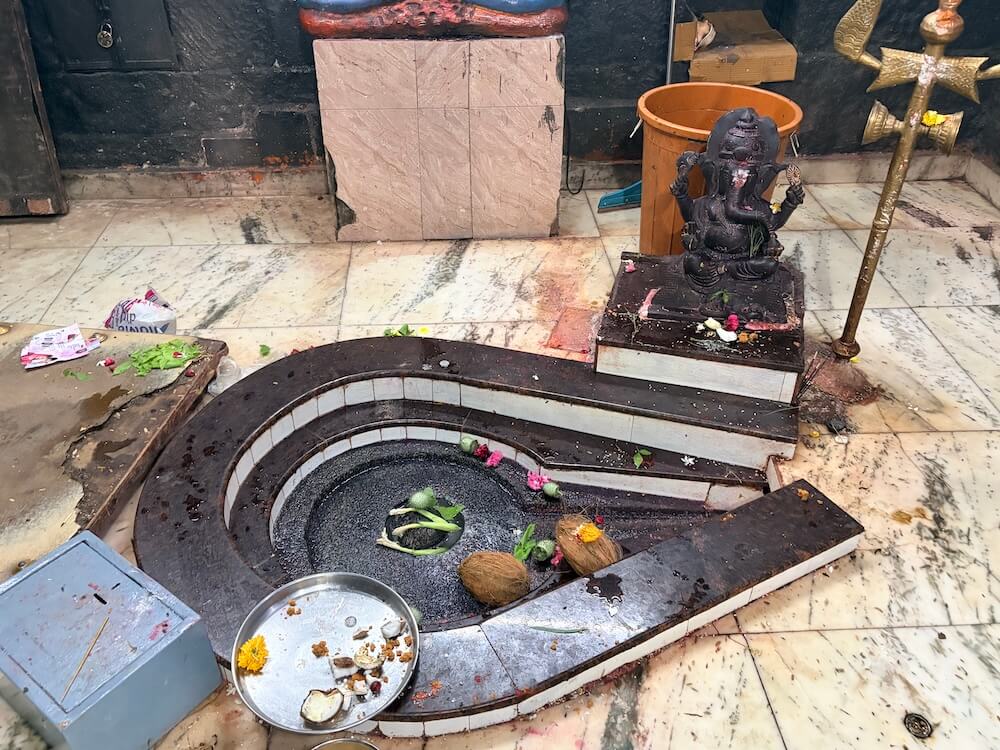
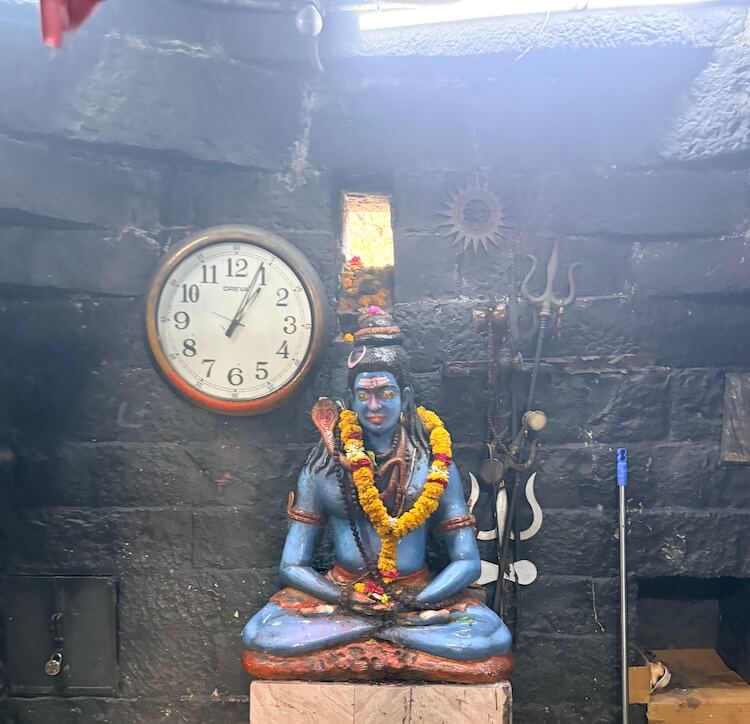
This temple at Rampuri is in a serene location. The waters of the Godavari River flow in front of the temple. There are many large trees in the area. It is said that this temple was built during the Peshwa era. There is a large courtyard in front of the temple. The temple is constructed in the Hemadpanti architectural style on a plinth about four feet high. The temple was renovated a few years ago. Devotees must climb a few steps to enter the temple. The newly built mandap in front of the temple has a corrugated metal roof. The original structure of the temple consists of a sabhamandap with three stone arches and a garbhagriha (sanctum sanctorum). In the middle of the four pillars of the sabhamandap, facing the garbhagriha, is the idol of Nandi. The pillars in the sabhamandap stand on stone bases. Various shapes and beautiful carvings are etched onto these pillars. Sculptures of Mahishasuramardini and Krishna Leela are also carved here. In the garbhagriha, the Shivalinga is placed within a large shalunka. There is a small hollow space beneath this Swayambhu Shivalinga where water is always present. Even though the temple is at a higher elevation than the Godavari riverbed, water continues to seep from beneath the Linga. It is believed that if any crisis is about to befall the village, this water dries up. In such times, the villagers perform a milk abhishek on the Linga. The people believe that this remedy averts the crisis. On a platform behind the Shivalinga, there is a meditative idol of Lord Shiva. To the right, below this idol, is a stone idol of Lord Ganesha. The garbhagriha has marble flooring and a stone ceiling above. A view of the Godavari riverbed can be seen through a small door in the temple.
There is a shikhara (spire) above the garbhagriha. On all four sides of the shikhara, there are minaret-like structures, and lion sculptures are carved near these minarets. In the center, there are four square-shaped levels. In the niches (devkoshtakas) between these levels are idols of various deities. Above this are the amalaka and the kalasha. Near the shikhara is a sculpture of Sheshashayi Vishnu and Shri Lakshmi. Adjacent to this temple is a large mandap. Various religious programs are organized in this mandap. There are independent Shivalingas under a tree in the temple premises and in the open space near the riverbed.
Due to the belief that the Shivalinga of Ratneshwar Mahadev is awakened, many devotees come here for darshan. The number of devotees visiting for darshan is large every Monday. Many families also perform the ‘Dohale Jevan’ (baby shower) rituals for pregnant women here. Most Shiva temples near water sources have the ‘Dashakriya’ (funeral rites) performed in their vicinity. However, these rituals are not performed here. Mahashivratri is the main festival here. On this day, hundreds of devotees come to offer Bel leaves and perform abhishek on the Shivalinga of Ratneshwar Mahadev. Various religious programs are organized here for three days on the occasion of Mahashivratri. During this time, Mahaprasad is distributed to the devotees. On Somvati Amavasya and other auspicious occasions, many devotees bathe in the Godavari riverbed here and seek the darshan of Mahadeva. There is also a large crowd of devotees here during the month of Shravan. Devotees can come here for darshan every day from six in the morning until eight at night.
This sacred temple stands as a testament to deep spiritual devotion, ancient architectural grandeur, and rich local cultural traditions.
The sanctum sanctorum houses the divine idol consecrated according to ancient Vedic traditions, surrounded by serene courtyards and traditional temple architecture.
Navratri, Maha Shivratri, Annual Temple Jatra & Deepotsav
Compare and book flights, secure top-rated local hotels near the temple, hire reliable guides, and rent cars instantly.
Extend your pilgrimage by visiting other highly sacred temples located nearby.


Add ₹999 more to unlock FREE SHIPPING!
Your sacred cart is currently empty.
Shop Photo FramesFill in your delivery details below to place your order.
Add comment