
Add ₹999 more to unlock FREE SHIPPING!
Your sacred cart is currently empty.
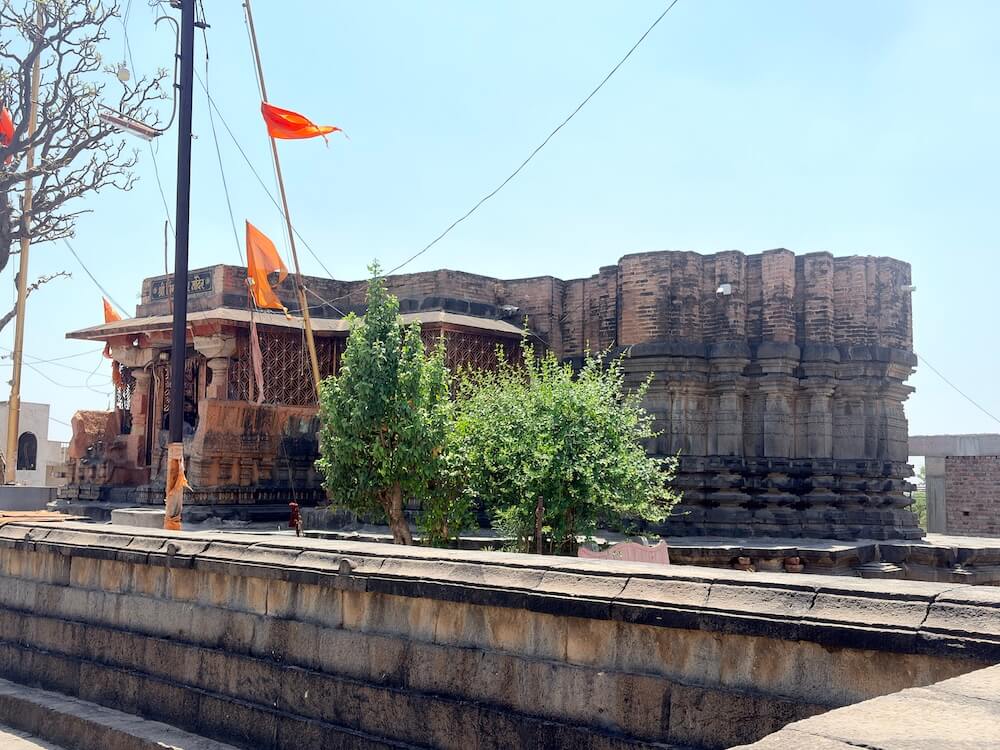
Shop Photo FramesSituated on the banks of the Pingalgada River in Parbhani district, the Pingaleshwar Temple is a protected monument of immense historical and architectural significance. This ancient temple was constructed roughly between the twelfth and thirteenth centuries during the era of the Yadava kings. Built in the Hemadpanti architectural style, this temple follows the Tridal (three-shrine) pattern. The temple structure comprises a Sabha Mandapa (assembly hall) with sixteen stone pillars, an Antarala (vestibule), and three independent Garbhagrihas (sanctum sanctorum). Its sturdy pillars are adorned with carvings of various deities, mythological tales, and exquisite sculptures. Directly in front of the temple stands a square-shaped stepwell, sixty feet deep with one hundred and sixty-eight steps, which bears witness to the advanced water management systems of that era. This entire structure is considered a magnificent example of the ancient architecture and rich historical heritage of Marathwada.
Detailed information regarding the various Lingas of Lord Mahadeva and their naming conventions can be found in the ‘Shiva Mahapurana’ and especially the ‘Skanda Purana’. According to a reference in the ‘Avanti Khanda’ of the ‘Skanda Purana’, Pingaleshwar Mahadeva is prominently included in the list of eighty-four ancient Mahadeva temples in the Ujjain region. According to mythology, in ancient times, a sage named Pingala performed rigorous penance to Lord Shiva. Pleased by his devotion and austerity, Shiva granted him a vision. At the sage’s request, Lord Shiva established Himself there in the form of a Linga. Religious texts suggest that this form came to be known as Pingaleshwar or Pingaleshvara, named after the sage. Another significant reference to this name is linked to the technical and spiritual nature of the Shiva Tattva. According to Sanskrit lexicons and various historical texts, the word ‘Pingala’ denotes a reddish-brown, yellowish, or golden hue. This form is considered a symbol of Mahadeva’s fierce, radiant, and fire-like nature. The term ‘Pingala’ is used to describe this radiant form of Shiva in the ‘Linga Purana’ and ‘Shiva Sahasranama’.
This east-facing Pingaleshwar temple is built on a five-foot-high plinth. The overall structure of the temple and the craftsmanship upon it reflect its antiquity. The entire structure, from the base to the upper Shikhara (spire), has been carved from a single monolithic stone. The temple is divided into a Sabha Mandapa, an Antarala, and three Garbhagrihas. A single horizontal band of intricate carvings is visible on the outer walls on all three sides of the temple. In the past, other temples in the Hemadpanti style existed in this village, a fact evidenced by the remnants of temples scattered in the vicinity. A few years ago, during excavation in this area, a sculpture of Harihara in the North Chalukyan style, carved from black stone, was discovered. This idol is currently kept near a tree outside the temple. Although the idol is now in a damaged state, its foot placement and overall ornamentation clearly indicate that the original sculpture was highly artistic.
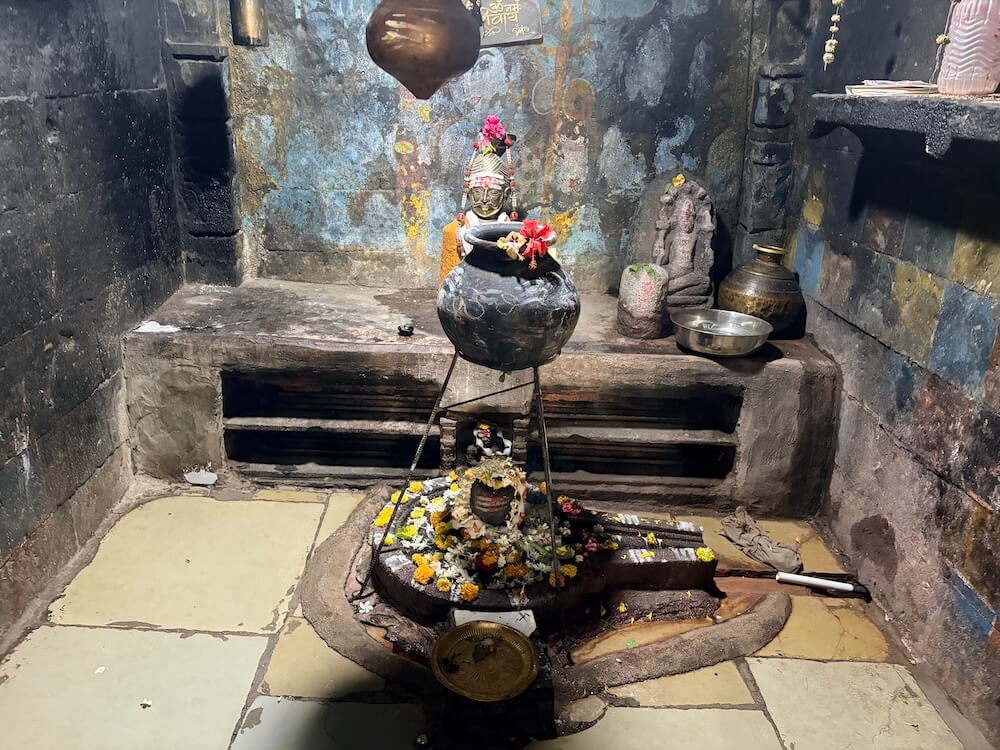
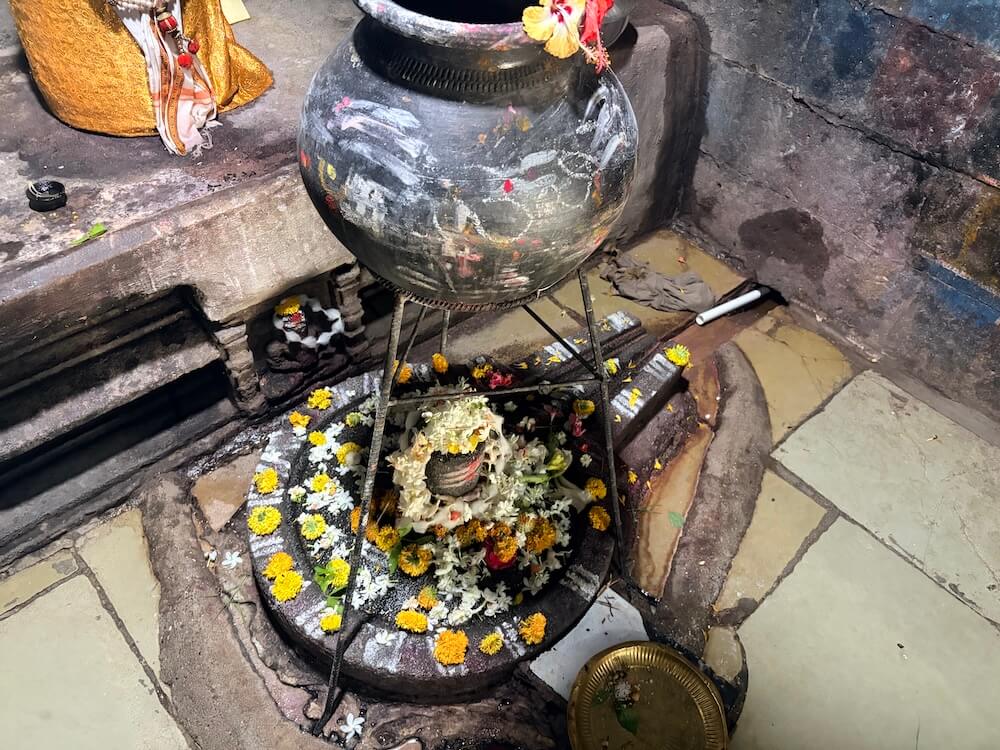
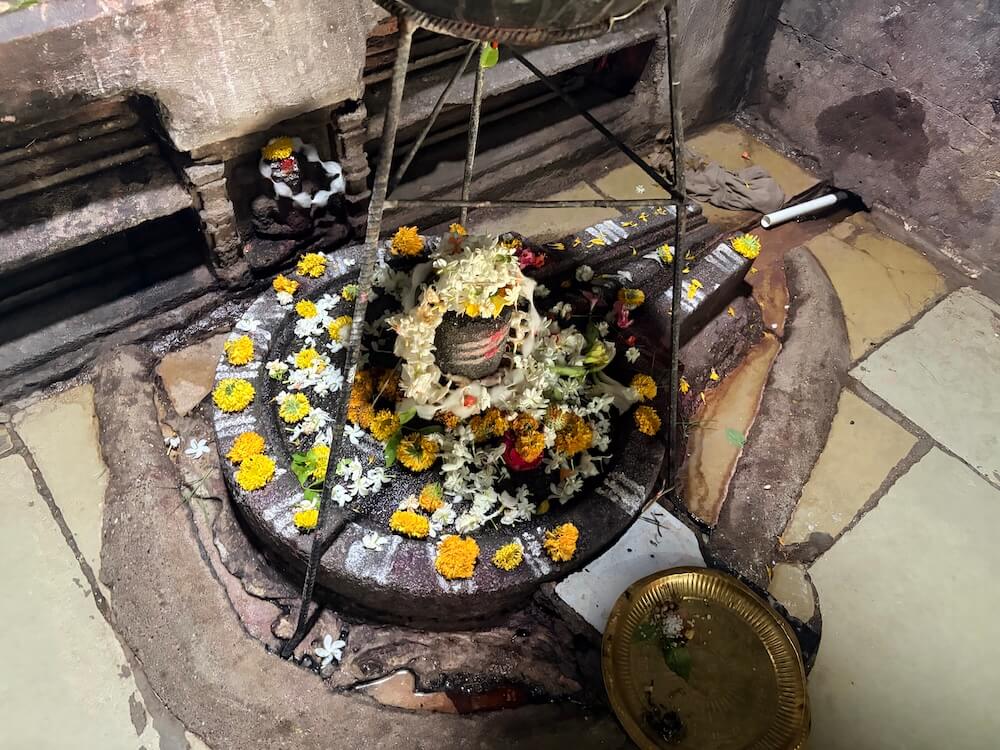
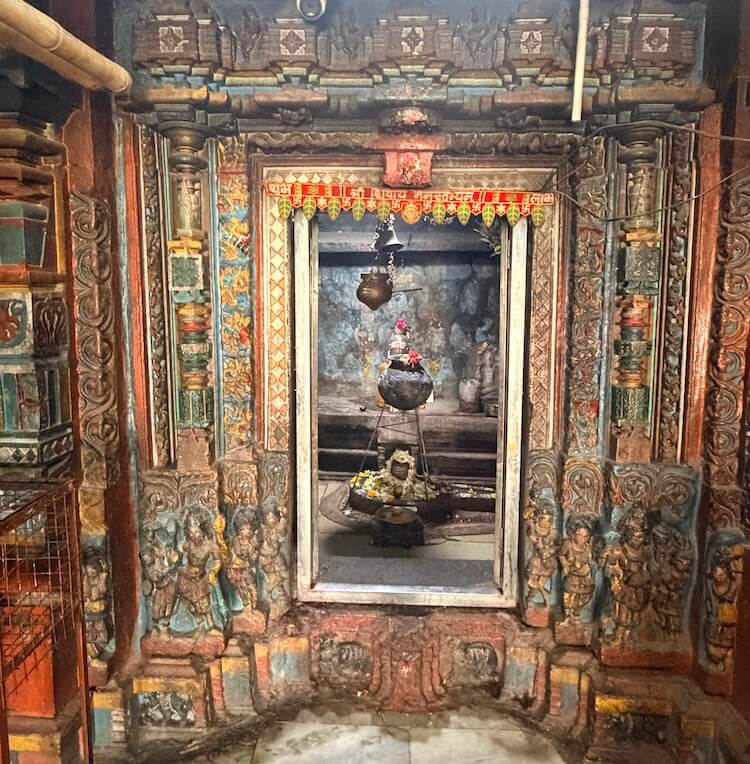
Along the small walls of the Sabha Mandapa, there are stone seats (Kakshasanas) for devotees to sit. In the center of the Mandapa, a small platform with four pillars is erected on the Rangashila (central floor stone). The sixteen stone pillars of the Sabha Mandapa stand on sturdy bases. Various beautiful shapes are carved onto all these pillars. On the middle sections of the pillars, one can see excellent sculptures of Vyala (mythical creatures), elephants, Krishna Leela, the Varaha avatar of Lord Vishnu, various geometric patterns, dancing Apsaras, peacocks, and swans. Sculptures of Nagas (serpents) are carved on the corners of these pillars. A stone idol of Nandi is installed in the front of the Sabha Mandapa. There are three independent Garbhagrihas to the west, south, and north of the Sabha Mandapa. The Antarala contains two Devakoshthakas (niches for deities). The main Garbhagriha of the temple is to the west of the Sabha Mandapa. The door frames of this main sanctum feature extremely fine carvings, displaying sculptures of Apsaras and Yakshas. On the Lalatabimba (central lintel) of the door frame, a sculpture of Shri Ganesha is carved. Inside the Garbhagriha, the Shiva Linga of Pingaleshwar Mahadeva is installed within a large Shalunka (base). Based on the pedestal behind this Shiva Linga, it is estimated that an idol of a primary deity was likely installed here in ancient times. A sculpture of Garuda is carved on the Ganesha-patti (lintel) of the main Garbhagriha. The door frame features door guardians of the Vaishnava tradition. Based on this, historians estimate that an idol of Lord Vishnu was likely installed in this main Garbhagriha in the past. In the southern Garbhagriha, villagers have currently installed an idol of Ganapati. The northern Garbhagriha is currently empty. The door frame of the southern Garbhagriha features Vaishnava door guardians, while the door frame of the northern Garbhagriha features Shaiva door guardians. Based on this layout, it is speculated that the southern Garbhagriha likely housed an idol of Shri Lakshmi, and the northern Garbhagriha housed a Shaiva deity. An ancient inscription reading ‘Makaradhwaja Jogi 700’ is found carved on the wall along the path leading to the southern Garbhagriha. According to historical studies, this mention is believed to be related to the travels of the famous medieval ‘Nath Sampradaya’ Yogi Makaradhwaja and his seven hundred disciples across India. Similar inscriptions are found in many other medieval temples in Madhya Pradesh and Maharashtra.
In front of this east-facing temple lies a vast and well-preserved ancient stepwell. This square-shaped stepwell measures 25.60 square meters. It is considered a masterpiece of ancient artistic stepwell architecture and is ranked among the top five ancient and famous stepwells in Marathwada. The design of this stepwell stands as a testament to the excellent water management of the ancient era. It is estimated that this massive stepwell was built to provide water to travelers, as this area was located on a major trade route in ancient times. This stepwell is approximately 60 feet deep. A total of 168 steps have been constructed to descend safely to the base of the well. This stepwell is fashioned in the shape of a large reservoir that tapers inwards from all four sides. There are provisions for steps on all four sides to descend into the well. Additionally, five resting places, or platforms, have been built at regular intervals for devotees to pause. As one descends from the first resting place to the second, small niches can be seen carved into the walls. There are a total of eight such niches, with two in each corner. Ancient idols of Ganesha, Narasimha, Naga, Chamunda, Durga, Lakshmi-Narayana, Vishnu, and Ganesha are consecrated in these niches. A separate space has also been dedicated to Mahadeva, that is, Shiva, inside this stepwell. A beautiful sculpture of a serpent is carved onto one of the steps at the very bottom of the well. Notably, this well contains an abundant supply of water in all seasons. During the monsoon days, this well fills to the brim. Currently, the southern side of this historical stepwell has subsided slightly. Also, the construction on the northern ground is tilting somewhat to one side.
Local villagers and devotees regularly come to have darshan of this Shiva Linga at the Pingaleshwar temple. During Mahashivratri, Kojagiri Purnima, and other special religious festivals, the entire area of this stepwell in front of the temple is illuminated by the local villagers with thousands of lamps. This ceremony of lighting lamps and the scene at that time is a sight to behold. Devotees can have darshan here every day from 6 o’clock in the morning until 9 o’clock at night.
This sacred temple stands as a testament to deep spiritual devotion, ancient architectural grandeur, and rich local cultural traditions.
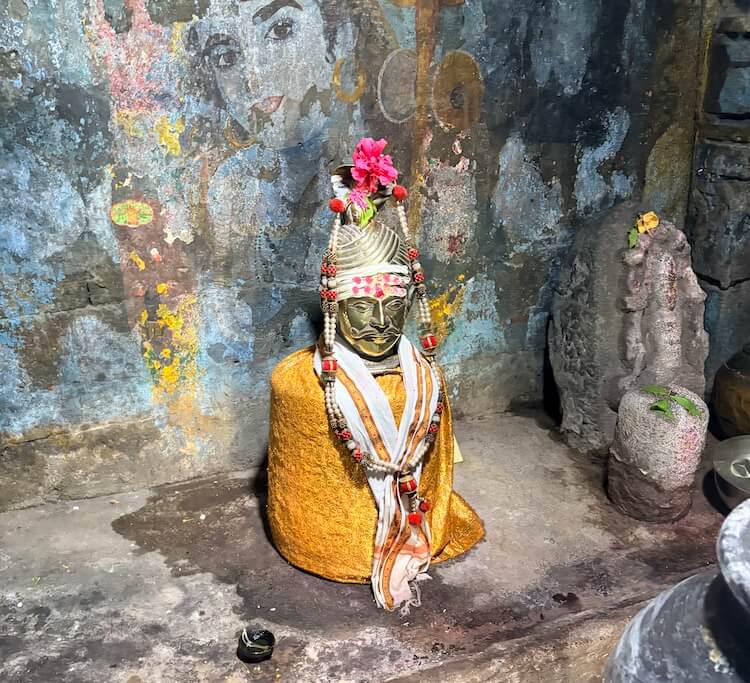
The sanctum sanctorum houses the divine idol consecrated according to ancient Vedic traditions, surrounded by serene courtyards and traditional temple architecture.
Navratri, Maha Shivratri, Annual Temple Jatra & Deepotsav
Compare and book flights, secure top-rated local hotels near the temple, hire reliable guides, and rent cars instantly.
Extend your pilgrimage by visiting other highly sacred temples located nearby.


Add ₹999 more to unlock FREE SHIPPING!
Your sacred cart is currently empty.
Shop Photo FramesFill in your delivery details below to place your order.
Add comment