
Add ₹999 more to unlock FREE SHIPPING!
Your sacred cart is currently empty.
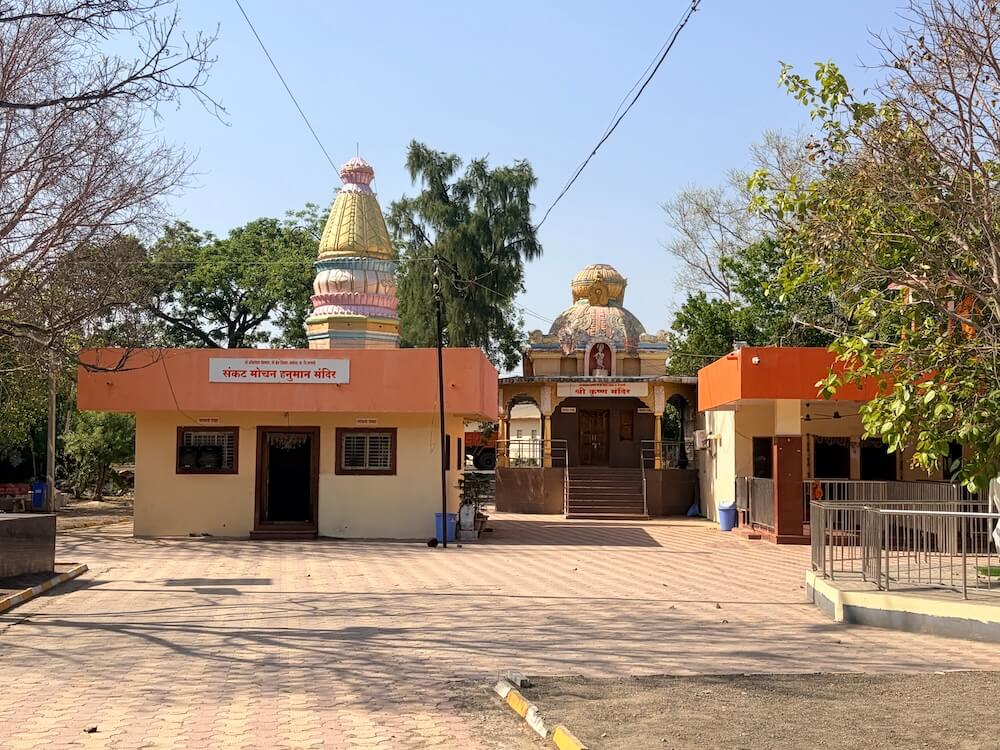
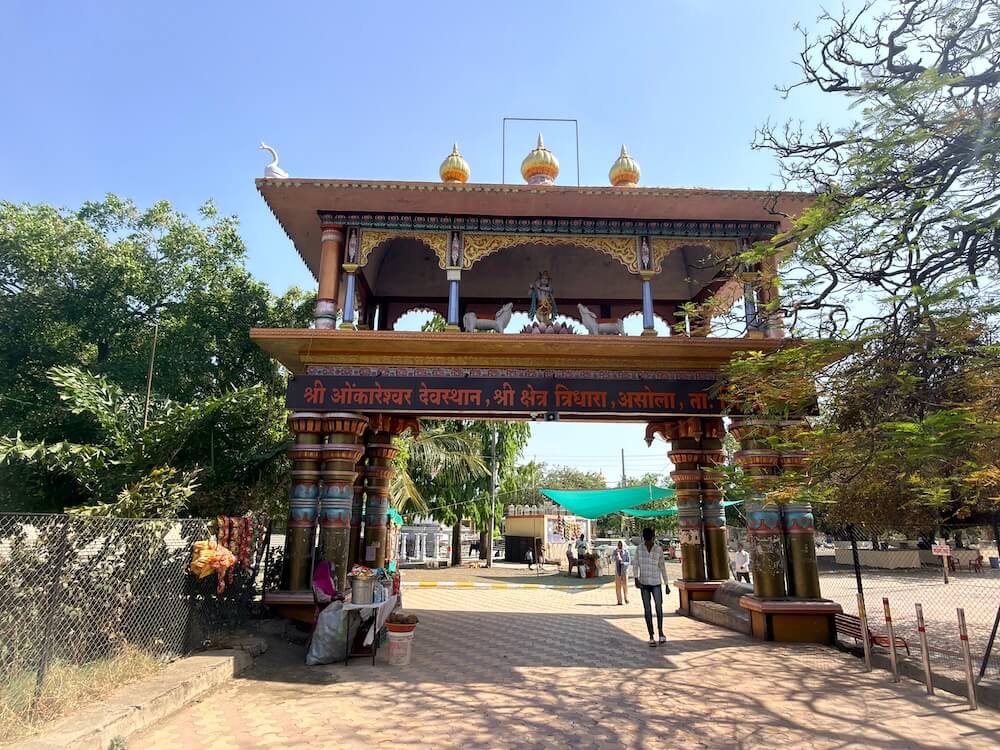
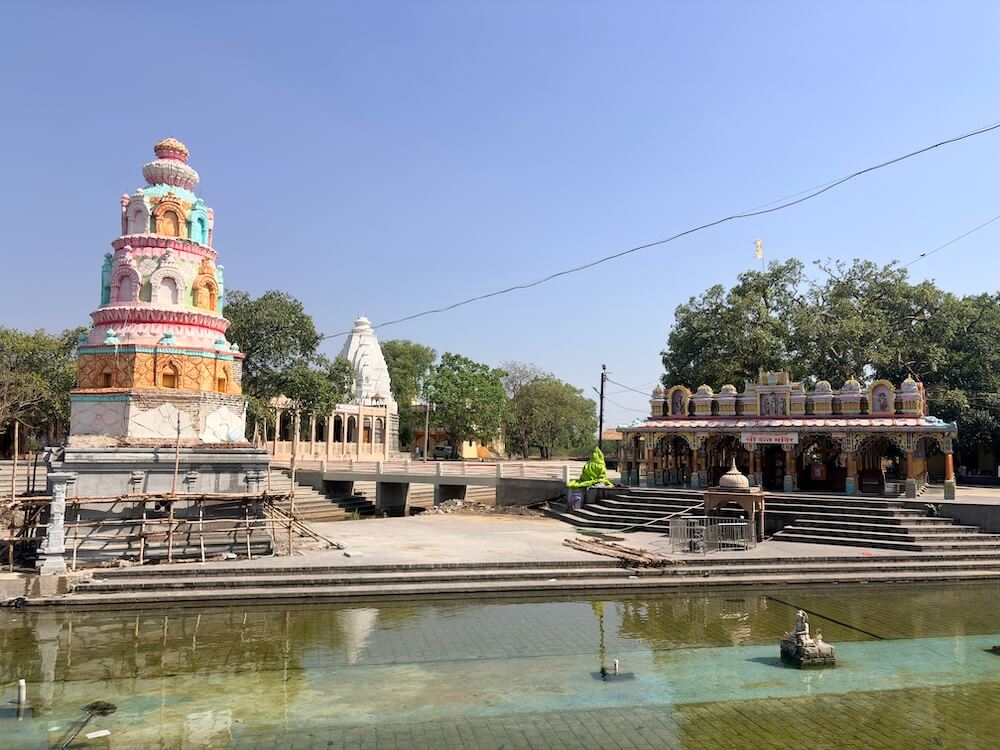
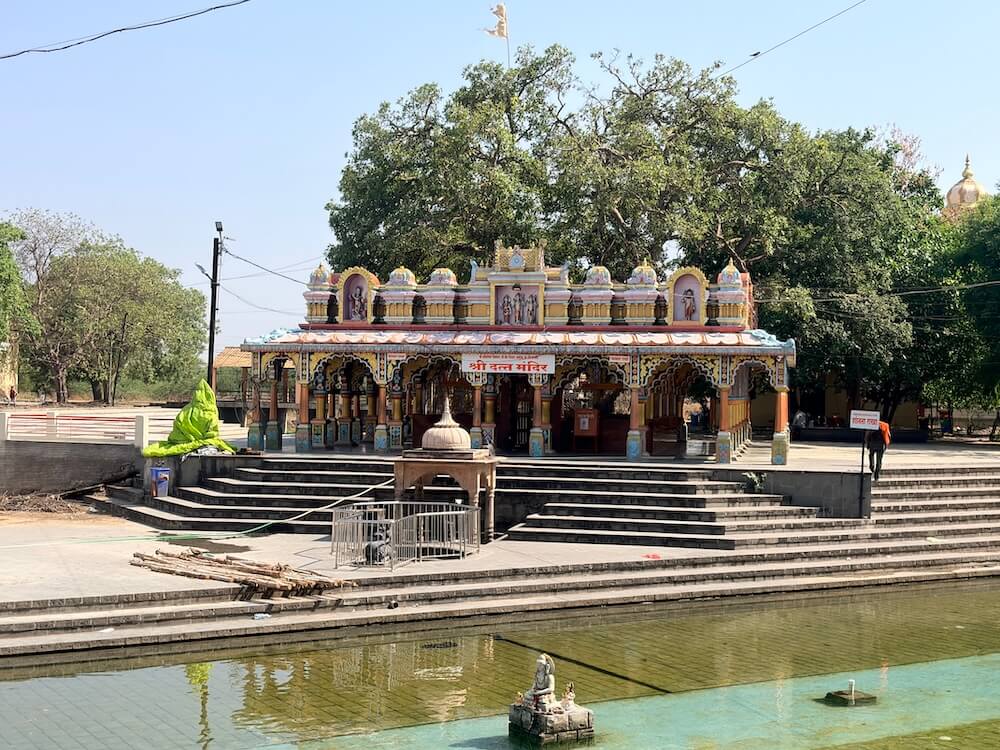
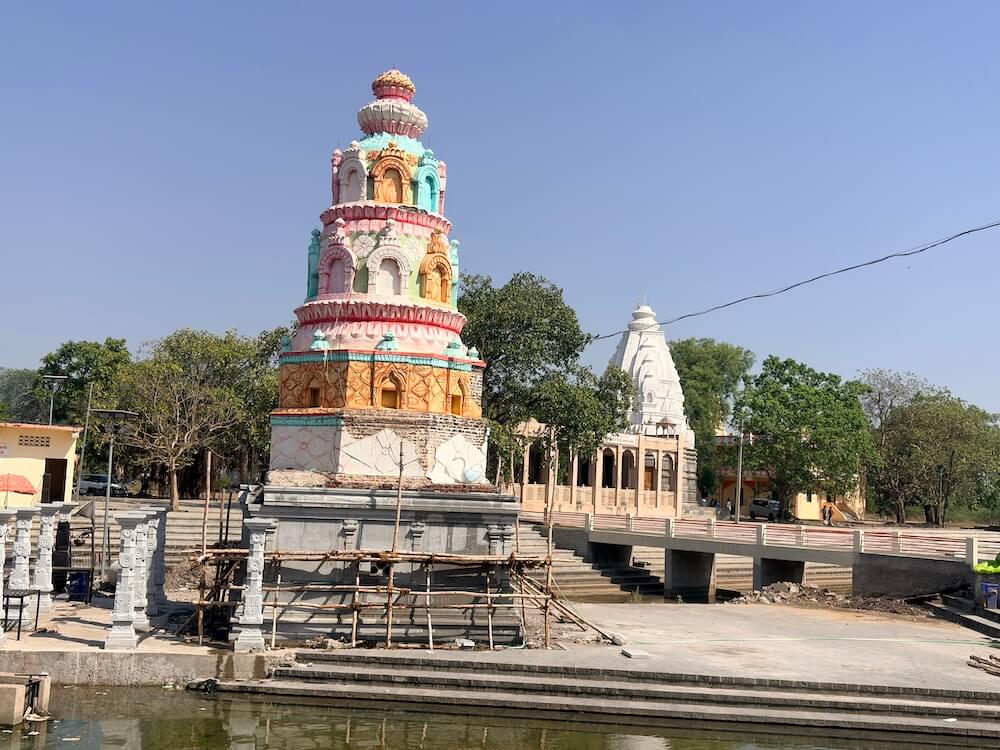
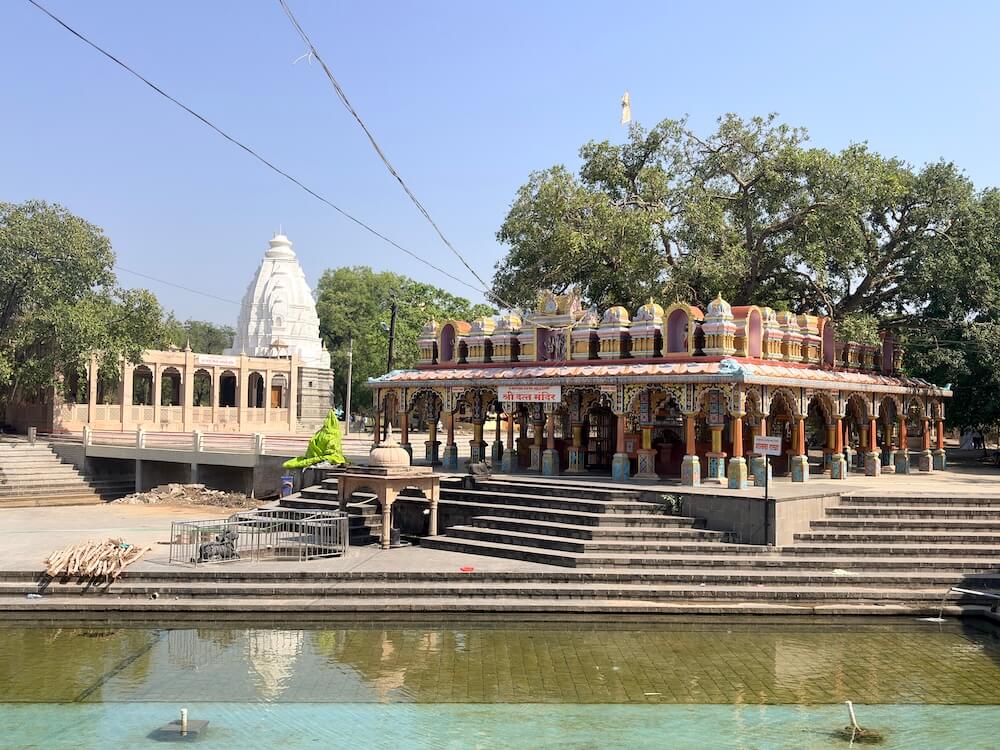
Shop Photo FramesTridhara Kshetra, a place of deep faith for millions of devotees from both the Marathwada and Vidarbha regions, is situated in the village of Asola in Parbhani Taluka. This site is also known as the Omkareshwar Devasthan. It is a religious belief that the two rivers, Ida and Pingala, have a direct confluence here, while the third river, Sushumna, flows invisibly. It is due to the meeting of these three rivers that this holy place is named Tridhara Kshetra. This pilgrimage site is renowned as a ‘Jagrut Devasthan’ (an awakened divine abode). Devotees hold a firm belief that bathing at this Triveni Sangam cures various physical ailments and diseases. Furthermore, it is believed that bathing malnourished children in the waters of this confluence helps them overcome their condition. Within this holy area, the Omkareshwar Temple and the Mahadev Temple are the two primary Shiva shrines. Additionally, one can seek the blessings of deities such as Dattatreya, Ganesha, Renukadevi, Shanidev, and Vitthal-Rukmai. The temples here are more than one hundred years old. The history of the establishment and development of this area is quite unique. About one hundred years ago, an ancient broken Shiva Linga was discovered at Asola. Around the same time, a Siddha Mahapurusha named Shri Maharaj arrived in this region. He formally consecrated the Linga in the Omkareshwar Temple on the twelfth day of the bright fortnight of Phalguna in the year Shake १८८७. Following this, in the same year, Shake १८८७, on the sixth day of the bright fortnight of Vaishakha, he performed the consecration of the idol in the Hanuman Temple here. Anant Maharaj Taklikar was also present during this ceremony. Subsequently, on the ninth day of the bright fortnight of Bhadrapada in Shake १८८९, which was a Tuesday, the idol of the Goddess was consecrated in the Durga Bhagwati Temple located on the opposite bank of the river. Later, between the years १९६२ and १९६५, another great soul named Omkareshwar Maharaj arrived here. At that time, the entire area was covered with dense vegetation. Omkareshwar Maharaj, with the help of local villagers, transformed the area. He systematically developed the site by renovating the old temples, the Dharmashala (pilgrims’ rest house), and the wells. Omkareshwar Maharaj passed away in the year १९९०. A beautiful temple dedicated to Omkareshwar Maharaj, who developed this region, has also been built within the premises. The entire area is adorned with scenic greenery. In the area near the main entrance of the temple, there are many small and large shops selling worship materials and Prasad. The main entrance of the site features extremely attractive carvings, with an idol of Shri Krishna in the center of the upper portion and beautiful sculptures of cows on both sides. Upon entering through this gate, one gets a view of the vast and spacious premises of Tridhara Kshetra. This area is lush with ancient trees such as Banyan, Pipal, Audumbar, and Tamarind. Special bathing tanks have been created for devotees in the riverbeds. Beautiful ghats have been constructed around these tanks. Upon entering this vast area, one first sees the Gadi-sthan (seat) of Omkareshwar Maharaj. Here, there is a very beautiful idol of Omkareshwar Maharaj made of Panchadhatu (five metals). In this same area stands the temple of Omkareshwar Maharaj, built of white marble. The temple has a simple structure consisting of a semi-open Sabha Mandap (assembly hall) and an inner Garbhagriha (sanctum sanctorum). Inside the sanctum, the marble idol of Omkareshwar Maharaj is enshrined. The main Omkareshwar Shiva Temple stands within the same premises. This temple also features a Sabha Mandap and a Garbhagriha. In the sanctum, one can have the darshan of the holy Shiva Linga. Moving forward from here, one reaches the Maruti Temple. Walking a few steps further, the Vitthal-Rukmai Temple is situated. A bridge has been built to cross to the other side of the river. After crossing this bridge, the Dattatreya Temple comes into view. The construction of this Dattatreya Temple clearly shows the influence of Southern Indian temple architecture. The original seat of Dattatreya here is under an ancient Audumbar tree. This Audumbar tree currently has three large branches. A small shrine was originally built around the idol of Dattatreya under this tree. Now, a temple has been erected around the entire tree. The temple consists of a semi-open Sabha Mandap and a central Garbhagriha. The pillars in the Sabha Mandap feature beautiful artistry and carvings. In the Garbhagriha and the Sabha Mandap of this temple, many wooden cradles of various sizes, offered by devotees, can be seen hanging. Many childless couples from Marathwada and Vidarbha make vows here for the boon of parenthood. Once their vows are fulfilled, they return to hang these wooden cradles as a gesture of gratitude. Stone idols of Nandi are installed at two places: near the temple entrance and at a short distance in front of the temple. A small tank is built in front of them. A Shiva Linga is installed in an open space near this tank.
At a short distance from here, the Renukadevi Temple is located. This temple, also structured with a Sabha Mandap and a Garbhagriha, features beautifully carved pillars in its assembly hall. The entrance of the temple is painted in an attractive golden color and is adorned with beautiful designs. The idol of the Goddess is enshrined in a beautiful Makhar (ornamental frame) in the sanctum. Near this temple is another Mahadev temple. This temple also has a Sabha Mandap and a Garbhagriha. Its assembly hall also features carved pillars. In the sanctum of this Mahadev temple, an idol of Renukamata is placed in a niche on the left wall, and an idol of Ganesha is placed in a niche on the right wall. In the large Shalu-nka (base) in the center of the sanctum, one can have the darshan of the Shiva Linga. There are also separate temples for Vitthal-Rukmai and Ganesha in this area. Near the entrance of the Shanidev temple here, a large oval-shaped Shiva Linga is installed. The main sanctum of the temple houses a stone idol of Shanidev. It is said here that the invisible river originates from beneath this idol. A stone slab dedicated to Shanidev is also present in the temple premises.
A Bhakta Niwas (pilgrim residence) has been constructed within the temple premises for the accommodation of devotees arriving from far and wide to seek the blessings of the Tridhara Kshetra. A well-equipped kitchen is also operational here. Throughout the year, bhajans, kirtans, and various religious and cultural programs are organized in this region. A large hall has been built on the premises to host these grand celebrations. Many bhajan troupes, kirtankars, singers, and musicians from Parbhani district visit this place to offer their services. A Goshala (cow shelter) is also maintained within the vicinity of this area. At the Omkareshwar Maharaj temple here, a Maha-Abhishek with Panchamrit is performed daily at 4 AM during the Brahma Muhurta. Following this, after the Aarti at 5 AM, a milk offering (Naivedya) is presented to the Deity. At 12 PM, after the completion of the Madhyanha Aarti, the afternoon Naivedya is offered to the Deity. At 5 PM, devotees gather to recite the Haripath. Thereafter, at 7 PM, the Hanuman Chalisa is recited, followed by the evening Aarti.
On the day of Amavasya (new moon) every month, thousands of devotees arrive at the Tridhara Kshetra for a holy dip at the Triveni Sangam and for Darshan of the Deity. Consequently, on every Amavasya, the area takes on the appearance of a grand fair. On this day, many devotees devoutly offer Kanda-Bhakri (onion and flatbread) as Naivedya to the deities. In the afternoon, Hari-Kirtan and bhajan programs are held in the main hall. Many renowned bhajan troupes from the district perform their art here. Thereafter, rows are arranged in the temple courtyard, and Mahaprasad is distributed to all devotees. The number of devotees visiting here is particularly high on Shani Amavasya and Somvati Amavasya. On the auspicious occasion of Mahashivratri, a long queue of devotees can be seen waiting for Darshan at the Omkareshwar and Mahadeva temples.
Festivals such as Gudi Padwa, Narasimha Jayanti, Gokulashtami, Guru Purnima, and Datta Jayanti are also celebrated on a grand scale in this region. Throughout the holy month of Shravan, a large gathering of Shiva devotees can be witnessed here.
On the day of Dussehra, many farmers from the surrounding five-village radius offer a portion of the new harvest from their fields to the deities here. It is an ancient tradition here that they take their farm produce to the market for sale only after offering this Naivedya.
A fair is held here throughout the entire month of Margashirsha. This fair is celebrated everywhere as the fair of the Deity. Throughout this month, continuous Abhishek is performed on the Deity.
During this period, daily sessions of bhajans and kirtans are held, and Mahaprasad is distributed to the devotees every day. In earlier times, during major festivals, announcements were made by beating drums in various villages such as Asola and the surrounding hamlets of Wadi, Samba, Marumba, and Nandgaon to proclaim the festival.
Through these announcements, an appeal was made for every family to bring ‘Roth’ (flatbreads) prepared in their own homes for the festival. Responding to this appeal, many devotees would bring flatbreads from their homes.
Thereafter, food items like rice, dal, and shira were cooked on the holy banks of the Tridhara, and large-scale food donation (Annadan) was carried out for the pilgrims. Devotees can have Darshan here daily from 6 AM to 9 PM.
This sacred temple stands as a testament to deep spiritual devotion, ancient architectural grandeur, and rich local cultural traditions.
The sanctum sanctorum houses the divine idol consecrated according to ancient Vedic traditions, surrounded by serene courtyards and traditional temple architecture.
Navratri, Maha Shivratri, Annual Temple Jatra & Deepotsav
Compare and book flights, secure top-rated local hotels near the temple, hire reliable guides, and rent cars instantly.
Extend your pilgrimage by visiting other highly sacred temples located nearby.


Add ₹999 more to unlock FREE SHIPPING!
Your sacred cart is currently empty.
Shop Photo FramesFill in your delivery details below to place your order.
Add comment