
Add ₹999 more to unlock FREE SHIPPING!
Your sacred cart is currently empty.
Shop Photo FramesThe village of Navagadh Ukhlad is situated on the banks of the Purna River, a tributary of the Godavari, in the Parbhani taluka of Parbhani district. The Neminath Bhagwan Digambar Jain Temple here holds a place of great significance among followers of the Jain faith. In this temple, one can behold the ancient and magnificent idol of Bhagwan Neminath, the twenty-second Tirthankara of the Jain tradition, seated in the Padmasana posture. Formerly, this temple was located right by the Purna River, on its very bank. According to historical records, this place was known in ancient times as Osavud. The modern name of this location is Ukhlad.
It is said that in ancient times, the Chakravarti King Kharavela of the Kalinga kingdom was a great devotee of Jainism. The exact period of King Kharavela is not definitively established. Some historians place his era at the beginning of the second century BCE, while others suggest it was at the end of the first century BCE. In this temple, his period is recorded as 400 years BCE. While on a pilgrimage, King Kharavela arrived in this region of Osavud, the present-day Ukhlad. An elderly sculptor here had carved an exceptionally beautiful idol of Bhagwan Neminath out of black stone. The sculptor requested Emperor Kharavela to consecrate this idol. Emperor Kharavela accepted this request. He consecrated the idol in a magnificent temple. At that same time, Emperor Kharavela embedded a priceless philosopher’s stone (Parasmani) into the left big toe of the idol. A very famous legend is associated with the idol in this temple. The temple priest knew that there was a philosopher’s stone in the left foot of the idol. This priest was very poor, yet he was extremely honest and noble. For his livelihood, he would touch an iron needle to this philosopher’s stone, turning it into gold. After the priest’s death, greed grew in his son’s heart. He began using the stone to create large quantities of gold. News of this transformation of iron into gold gradually reached the Nizam of Hyderabad. Driven by the desire to obtain that precious philosopher’s stone, the Nizam sent his soldiers to Ukhlad. As the Nizam’s soldiers attempted to touch the idol to extract the stone, a massive sound echoed there. At that moment, the philosopher’s stone slipped from the idol, fell into the deep channel of the nearby flowing Purna River, and vanished. To search for that philosopher’s stone, the Nizam sent elephants into the riverbed. A search operation was launched with heavy iron chains tied to their feet. Despite many attempts, the Nizam did not find the philosopher’s stone. However, it was observed that some links of those iron chains had turned into gold. It is said that even today, the mark of this philosopher’s stone can be seen on the left big toe of Bhagwan Neminath’s idol.
This old temple, situated very close to the Purna River, was magnificent. Over time, and due to the severe floods that occur in the river every year, the temple suffered extensive damage. About one hundred and fifty years ago, a major flood caused a large part of the temple to be washed away. Consequently, there arose a fear that this ancient idol of Bhagwan Neminath might sink into the water or be swept away. During that period, the region was under the rule of the Nizam. It was absolutely essential to relocate the idol to a safer place to protect it. For this, obtaining official permission from the Nizam’s government was necessary. In such a situation, Annasaheb Sanghai, a devout Jain and a prominent member of the Sanghai family from the village of Pimpri Deshmukh, took the initiative. He traveled directly to Hyderabad and, after many efforts, secured permission from the Nizam’s government to relocate the idol. After receiving this permission, a new temple was built on a high hill about one and a half kilometers away from the original village of Ukhlad. In the year 1931, this sacred idol of Bhagwan Neminath was re-consecrated in this new temple amidst a deeply religious atmosphere. Currently, this religious site is named ‘Jainendra Navagadh Ukhlad’ in the government gazetteer.
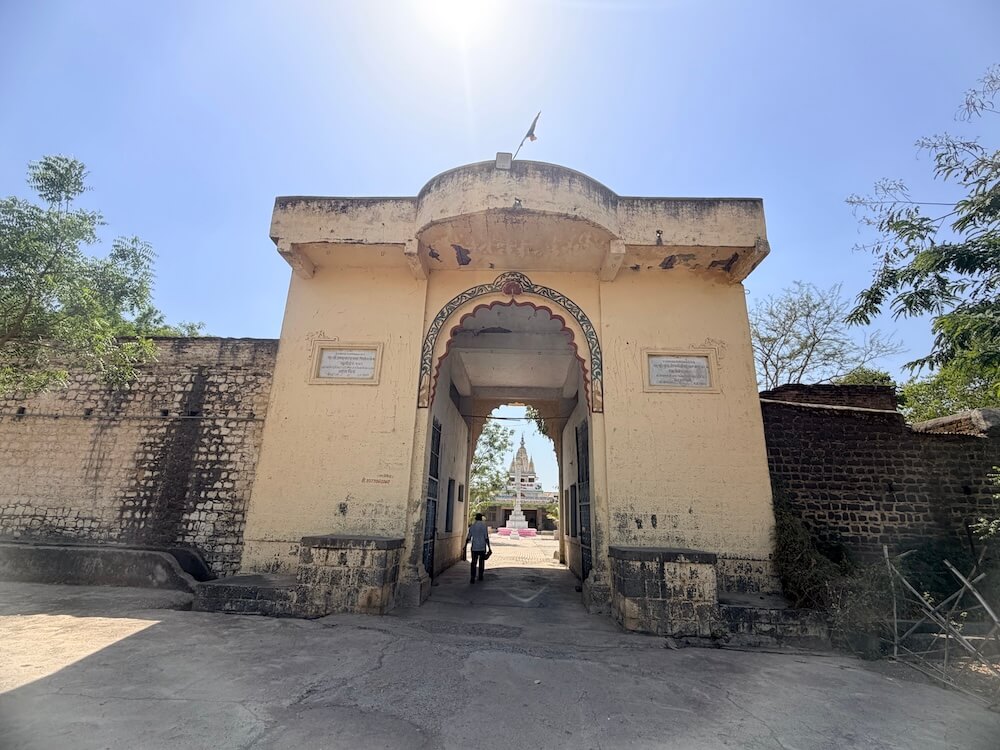
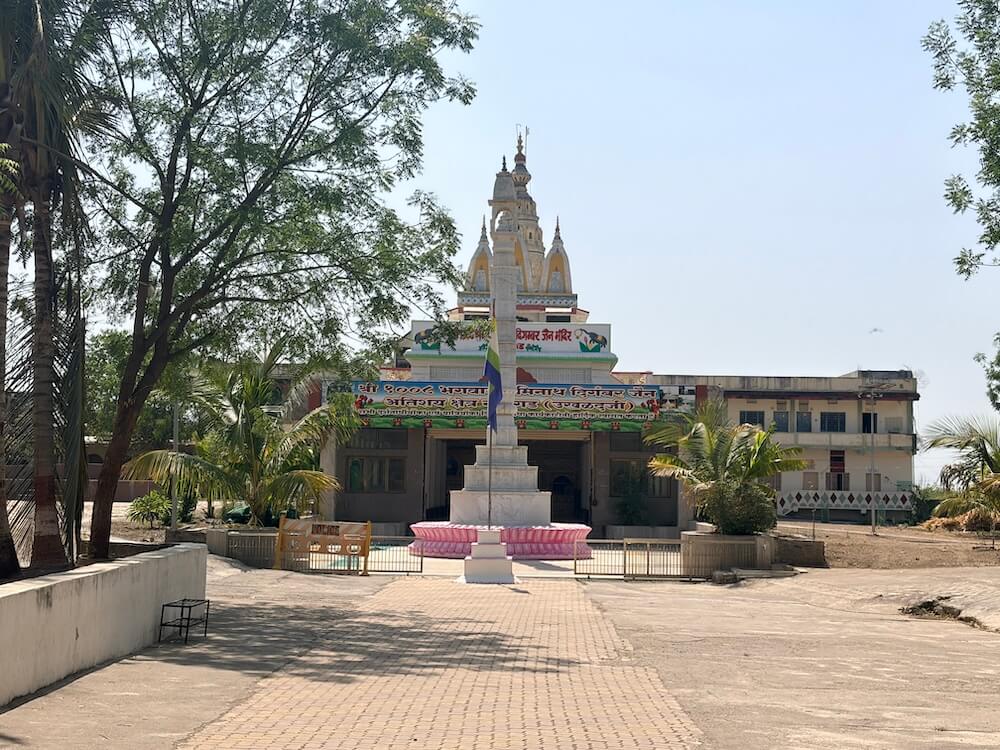
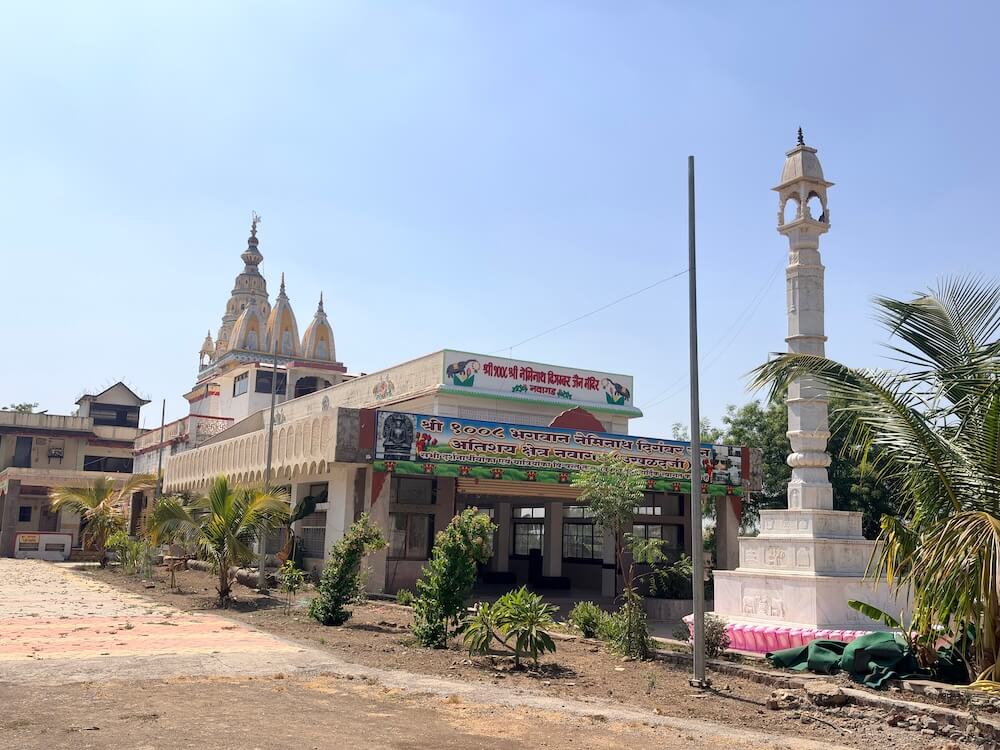
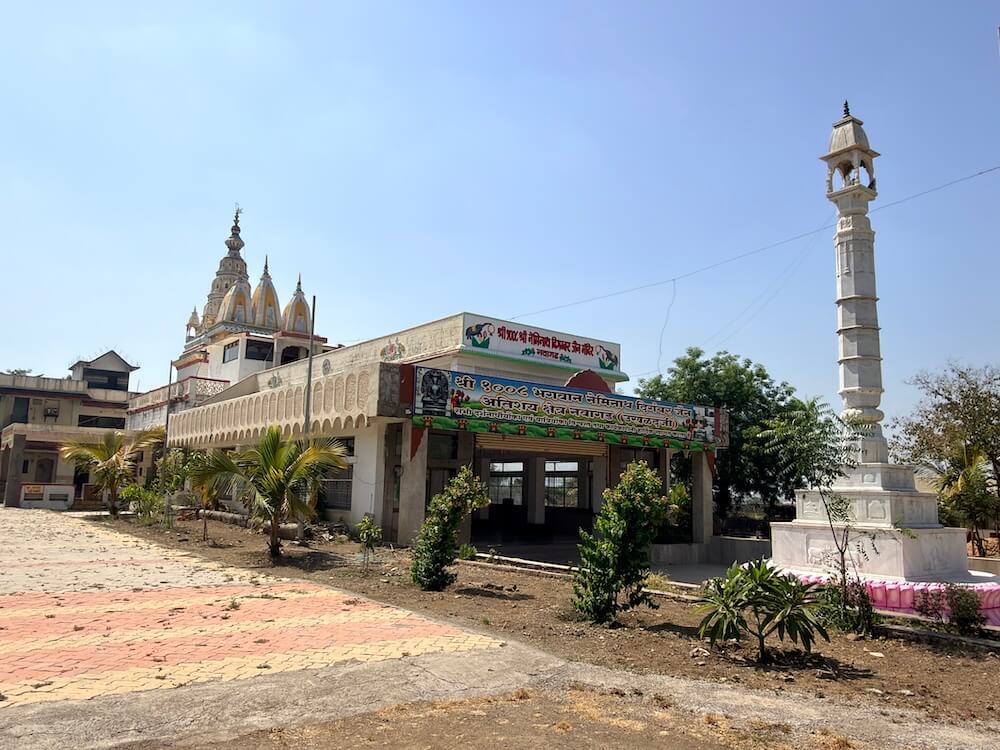
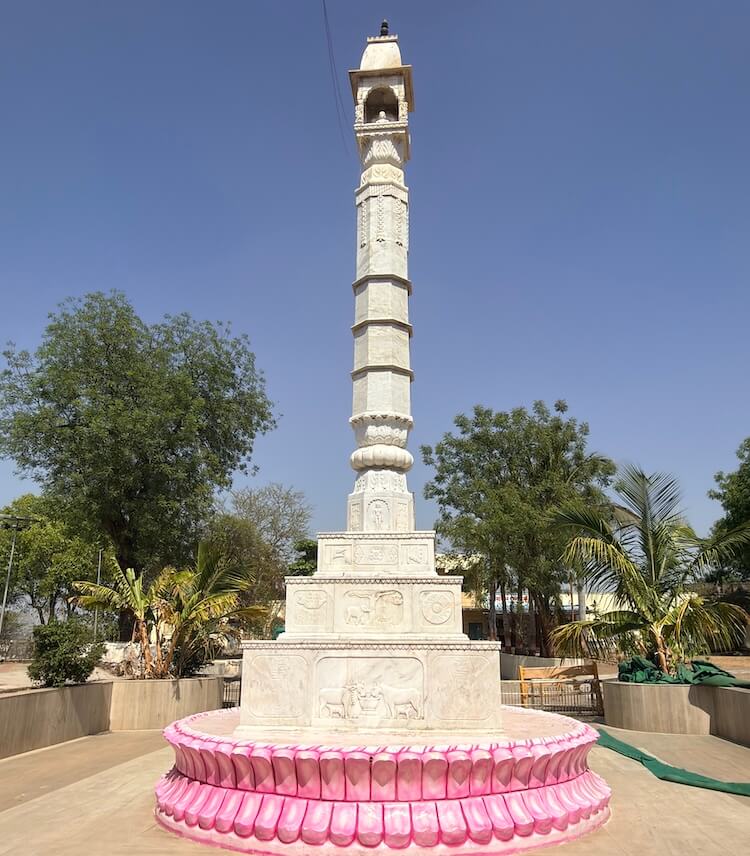
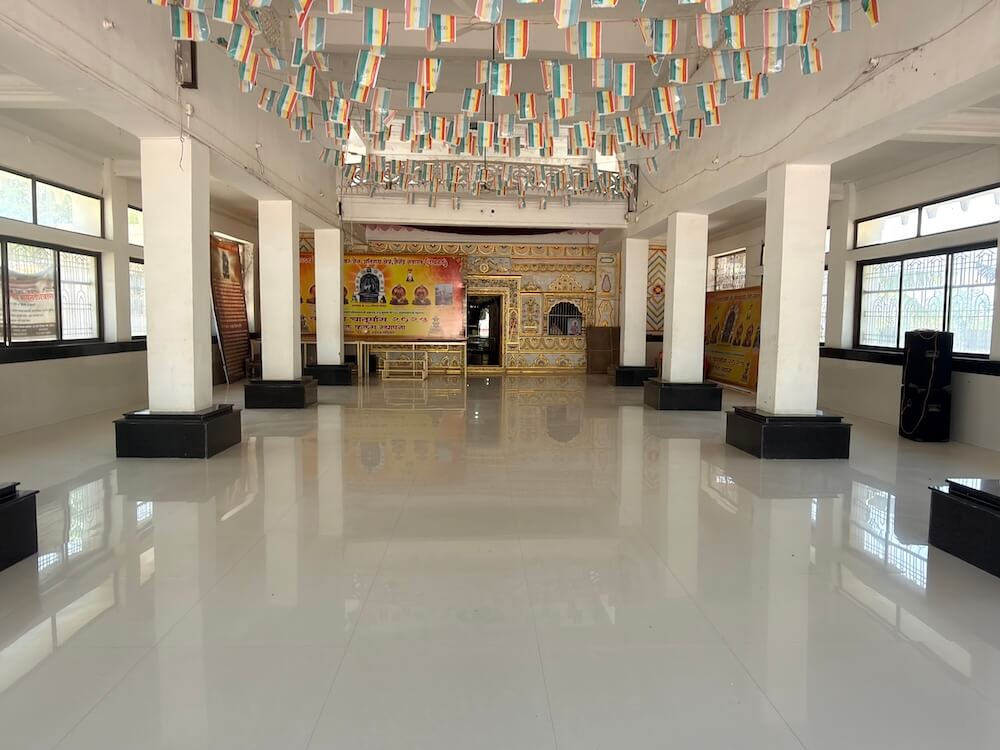
One enters the spacious courtyard through the gateway in the fortification of this temple, which is located on the outskirts of Ukhlad village. The main temple stands at a short distance from the entrance. In accordance with Jain tradition, a magnificent Manastambha (column of pride) has been erected in front of the temple. The structure of this temple is primarily divided into two assembly halls (Sabhamandapas) and one sanctum sanctorum (Garbhagriha). The first assembly hall at the front of the temple was newly constructed in modern times. From this hall, one proceeds to the entrance of the second assembly hall. On both sides of this entrance are statues of gatekeepers (Dwarapalas). The stone pillars in this second assembly hall are connected to each other by beautiful arch-shaped designs. Some images are also installed in this hall.
The entrance to the main sanctum sanctorum features intricate craftsmanship. On both sides of it are beautiful statues of gatekeepers. Upon entering the sanctum, one gets the darshan of the approximately three-and-a-half-foot-tall idol of Bhagwan Neminath in the Padmasana posture. This entire sanctum is decorated with colorful glasswork. Inside the main temple, at a specific location, ancient idols of other Jain Tirthankaras are also kept for darshan. This temple has an upper floor. In the second sanctum there, one can see three Jain idols.
Close to this main temple is the Samadhi temple of the great ascetic of the Jain tradition, Param Pujya Acharya Shri Aryanandiji Maharaj. Navagadh Ukhlad is known as the primary center of work for Acharya Aryanandiji. Acharya Shri passed away here on 7 February 2000. When viewed from the outside, the architecture of this Samadhi temple resembles a blooming lotus. On the ground floor of this unique structure, one can have the darshan of Acharya Aryanandiji’s Samadhi and his sacred footprints (Charan Padukas). On the upper floor of this structure, a beautiful idol of Acharya Shri, carved in white marble, is enshrined. Very close to this marble idol, a small and exquisite idol of Bhagwan Neminath is installed.
For the accommodation of Jain devotees and pilgrims arriving from far-off regions, a large Bhaktaniwas (pilgrim guest house) equipped with all amenities and a Bhojanashala (dining hall) have been constructed within the temple premises. Additionally, there is an official office for the Board of Trustees to manage the temple affairs, as well as a library containing a collection of religious scriptures. Countless devotees of the Jain faith visit this sacred site throughout the year for Darshan. Every year, a three-day annual fair is held at this temple during the period from Magh Shuddha Panchami to Magh Shuddha Saptami. The Rathotsav (chariot procession) of Lord Neminath, taken out during this pilgrimage, is the main attraction of the entire region. Thousands of devotees participate in this chariot procession with great enthusiasm. Apart from this, the birth anniversary of Lord Neminath is celebrated here with immense devotion every year on the day of Shravan Shukla Shashthi. Devotees can have Darshan here daily from six o’clock in the morning until eight o’clock at night.
This sacred temple stands as a testament to deep spiritual devotion, ancient architectural grandeur, and rich local cultural traditions.
The sanctum sanctorum houses the divine idol consecrated according to ancient Vedic traditions, surrounded by serene courtyards and traditional temple architecture.
Navratri, Maha Shivratri, Annual Temple Jatra & Deepotsav
Compare and book flights, secure top-rated local hotels near the temple, hire reliable guides, and rent cars instantly.
Extend your pilgrimage by visiting other highly sacred temples located nearby.


Add ₹999 more to unlock FREE SHIPPING!
Your sacred cart is currently empty.
Shop Photo FramesFill in your delivery details below to place your order.
Add comment