
Add ₹999 more to unlock FREE SHIPPING!
Your sacred cart is currently empty.
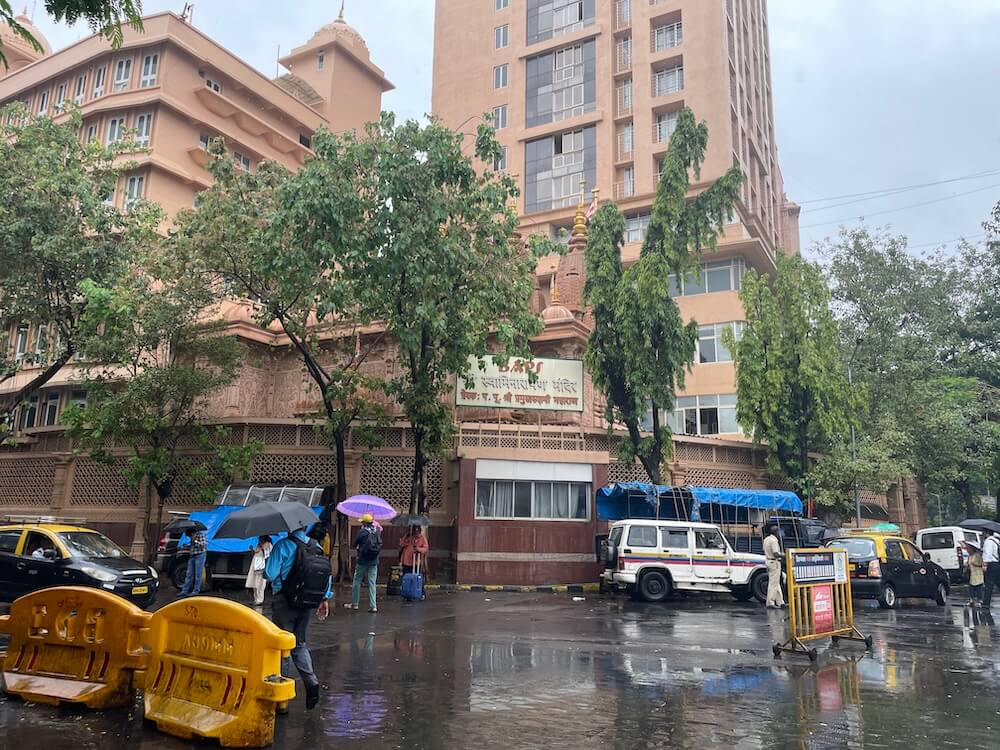
Shop Photo FramesThe Swaminarayan temples built across India and abroad by the ‘Bochasanwasi Akshar Purushottam Swaminarayan Sanstha’ (BAPS), a renowned religious sect in India, are considered a beautiful blend of architecture, aesthetics, and spirituality. There are five Shikharbandh temples of the BAPS Swaminarayan organization in Greater Mumbai. The grand and beautiful Swaminarayan temple standing opposite Dadar railway station is one of them. Consecrated by ‘Pramukh Swami Maharaj’, this temple is a center of faith for countless Swaminarayan devotees in the Mumbai Metropolitan Region.
‘Swami Sahajanand’ founded the Swaminarayan sect. His original name was Ghanshyam Pande. He was born into a Samavedi Brahmin family on the day of Ram Navami, April 3, 1781, in the village of ‘Chhapaiya’ near Ayodhya in Uttar Pradesh. He renounced his home at the age of twelve. Thereafter, he traveled across India for seven years and performed penance in the Himalayas. During this period, he was known as ‘Neelkanth Varni’. After receiving initiation from ‘Swami Muktanand’ in ‘Mangrol’, Saurashtra, in 1800 CE, and later from his guru ‘Ramanand’ in ‘Piplana’, he chose Gujarat as his field of religious and social reform work. The name ‘Sahajanand’ was given to ‘Neelkanth Varni’ by ‘Guru Ramanand’.
In 1801 CE, ‘Sahajanand’ became the head of the ‘Ramanandi Sampradaya’. Drawing upon the philosophies of ‘Vishishtadvaita’ by ‘Ramanujacharya’ and ‘Shuddhadvaita’ by ‘Vallabhacharya’, ‘Swaminarayan’ propagated a harmonizing religion. He taught people to renounce social evils prevalent at the time, such as the practice of Sati and female foeticide, and advocated against the consumption of alcohol and meat, violence, animal sacrifice, theft, gambling, adultery, superstition, and the obscenity and vulgarity associated with festivals like Holi. Like the followers of Jainism, they also emphasized non-violence and vegetarianism. Swaminarayan is none other than Lord Shri Krishna. His teaching was that people should seek refuge in Him. Devotees believe that Sahajanand, also known as ‘Shriji’ or ‘Neelkanth Varni’, is Swaminarayan, an incarnation of the Divine. In November 1820, Sahajanand Himself explained to Gopalanand Swami the six reasons behind His incarnation.
On 1 June 1830, Sahajanand, also known as Swaminarayan, attained Nirvana. Prior to this, in 1825, He established two seats (Gadis) within His fellowship. The first of these is in Ahmedabad and is known as the ‘Nar-Narayan Dev Gadi’, while the second seat in Vadtal is known as the ‘Lakshmi-Narayan Dev Gadi’. He had ordained that the position of Acharya in this sect should be hereditary. Accordingly, He appointed ‘Ayodhyaprasad’, the son of His elder brother Rampratap Pande, to the ‘Nar-Narayan Dev Gadi’ in Ahmedabad, and ‘Raghuvir’, the son of His younger brother Ichharam, to the ‘Lakshmi-Narayan Dev Gadi’ in Vadtal.
Following this issue regarding the position of Acharya, in the year 1905, Shastri Yagnapurushdas, also known as Shastriji Maharaj, established a separate organization in Bochasan. It is known as the Bochasanwasi Akshar Purushottam Swaminarayan Sanstha, or BAPS. The organization believes that Swaminarayan remains present on Earth through the gurus of the tradition. In the year 1950, Narayanswarupdas Swami, also known as Pramukh Swami, was appointed as the administrative head of BAPS, and in 1971, he became the head of the organization. Under his leadership, BAPS expanded significantly. Today, there are 150 shikharbaddha temples and over 1700 temples of BAPS across the world. The Akshardham temple in New Delhi is considered one of the largest temples in the world. Situated on 100 acres of land on the banks of the Yamuna, this temple has also been recorded in the Guinness Book of World Records. Most of these temples were built under the guidance of Pramukh Swami. The Swaminarayan temple in Dadar was also built under the guidance of Pramukh Swami.
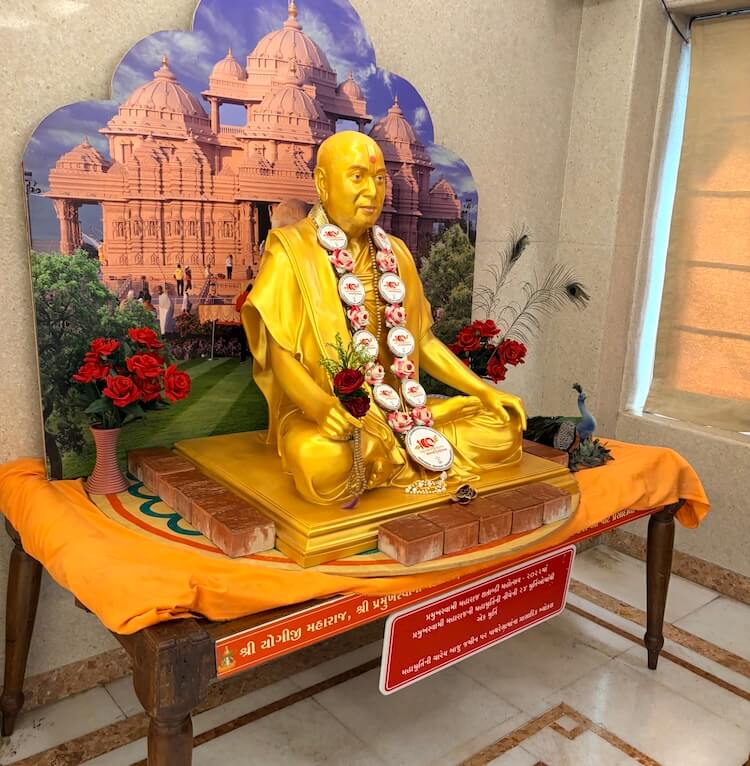
It was the wish of Shastriji Maharaj, also known as Swami Yagnapurushdas, the third spiritual successor of Swaminarayan, that there should be a temple of the Bochasanwasi Akshar Purushottam Swaminarayan Sanstha in Mumbai. Once, when he visited the Dadar area, he had expressed his desire for a temple to be located in this central part of Mumbai. He passed away in the year 1951. Following his passing, the successor to this seat, ‘Yogiji Maharaj’, also known as ‘Swami Gnanjivandas’, established the ‘Akshar Bhavan – Hari Mandir’ in a building in Dadar on 15 December 1961, in accordance with his Guru’s wishes. In the Swaminarayan Sampradaya, there are two types of temples. One is the Shikharbandh Mandir, which is large and features tall spires. The second type is the Hari Mandir. These are smaller temples where programs such as Satsang are conducted. During the consecration ceremony of this Hari Mandir, Yogiji Maharaj prophesied, “In the future, a large Shikharbandh Mandir will stand here.” After the passing of Yogiji Maharaj during an illness in 1971, Pramukh Swami was appointed as the head of the organization. During his tenure, the ground-breaking ceremony for this grand temple took place in Dadar on 27 November 1979. In December 1983, coinciding with the occasion of Pramukh Swami’s 62nd birthday, the Kalasharohan ceremony of this temple was performed in a grand celebration.
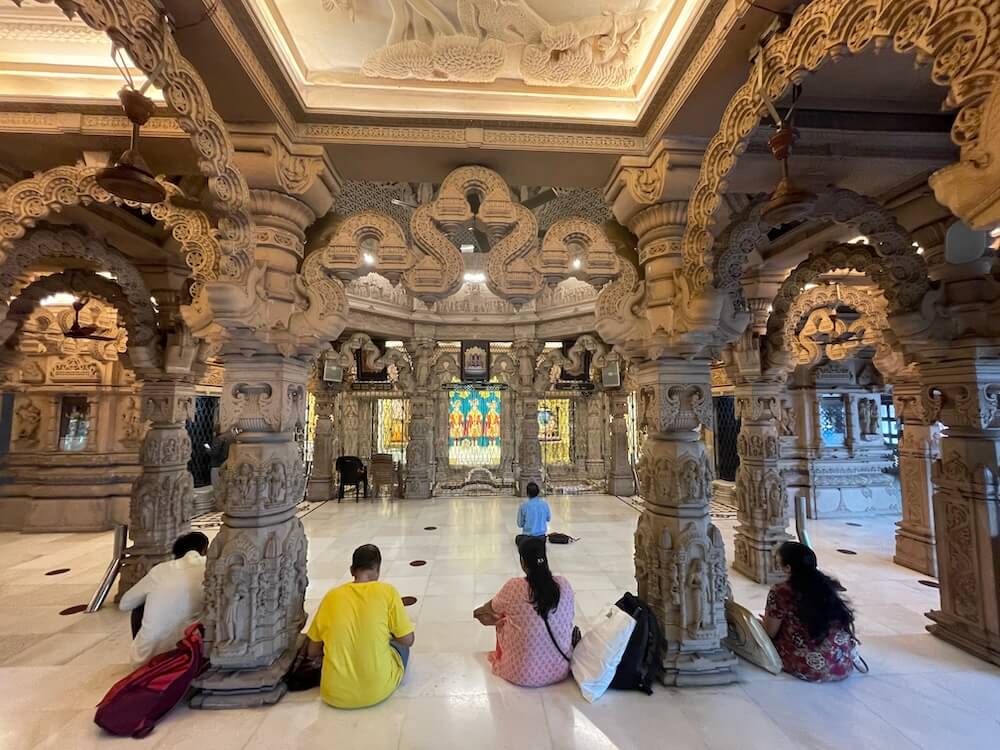
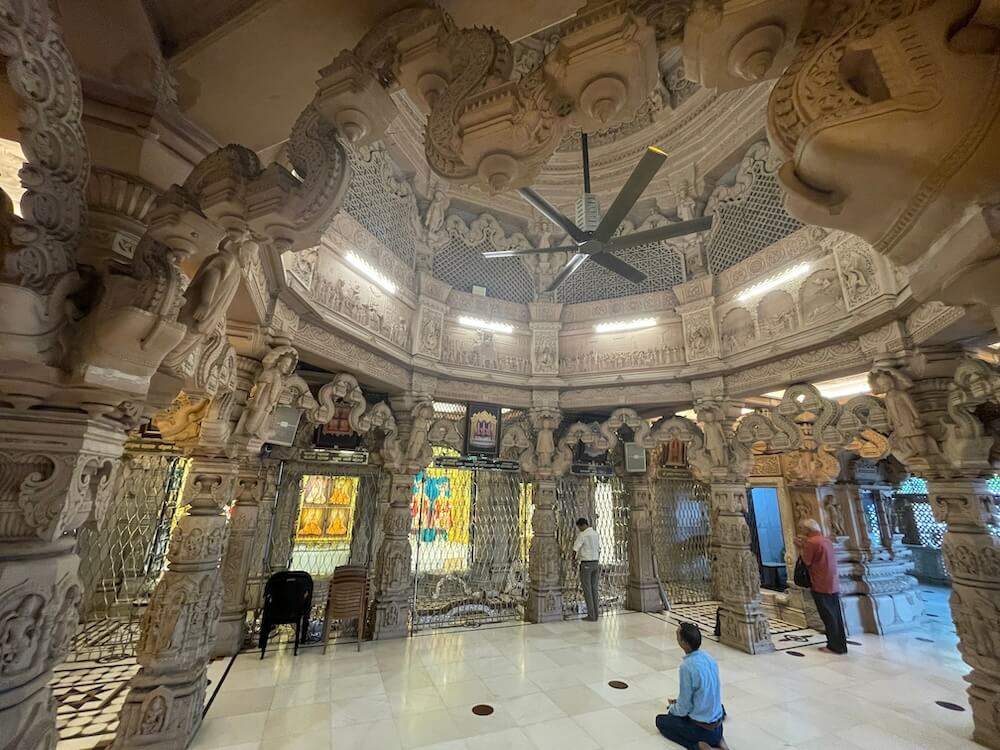
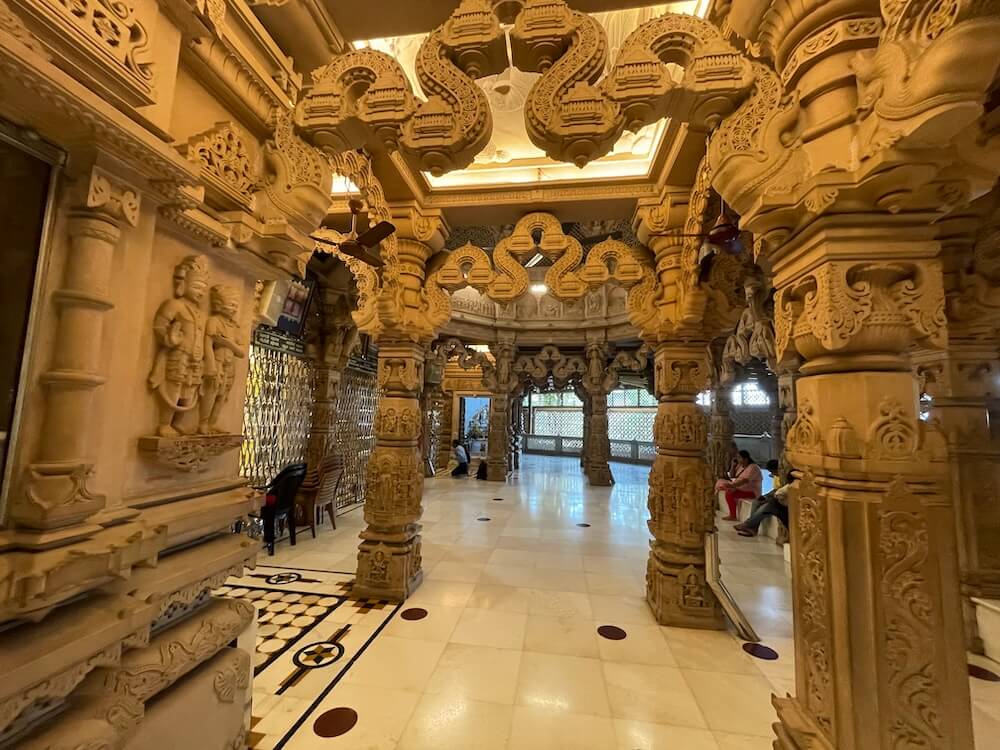
Situated in Dadar, known as the heart of Greater Mumbai, this magnificent temple and its adjacent seven-story building stand on a large plot of land near the railway station. BAPS possesses its own unique style of temple architecture. Influenced by the traditional Nagara style, this architectural form is also known as the Akshar-Purushottam Maharaj style. The Darshan Mandap, the Sabha Mandap, the pillars adorned with intricate carvings within these halls, the Makartoranas (arched gateways) between the pillars, as well as the grand Shikhars and sub-Shikhars, are the distinctive features of this Swaminarayan temple design. One can witness a confluence of grandeur and delicate craftsmanship in these structures. The temple at Dadar also offers a testament to this magnificence and beauty. The temple is enclosed by a high perimeter wall. Entering through the main gateway and ascending a few steps leads one into the temple courtyard. The main temple is situated within this clean and luminous courtyard, which is paved entirely with marble. The Sabha Mandap of the temple is spacious. The pillars here are embellished with fine carvings of deities, celestial maidens, and floral vines. Makartoranas are placed between two of the pillars. A unique feature of one of the pillars in this temple is that it can be rotated. Devout pilgrims often attempt to rotate this pillar while holding a wish in their hearts. It is the firm belief of the devotees that if the pillar rotates, their wishes will be fulfilled. In accordance with the traditions of the Swaminarayan temple, the capitals of the central pillars in the assembly hall feature statues of the saints of the fellowship. The ceiling of the assembly hall is carved with a chandelier-like design featuring circular and lotus-petal layers. In the main sanctum sanctorum of the temple, the idol of Bhagwan Swaminarayan is enshrined within a golden throne placed upon a marble altar. To the left of this idol are the statues of Gunatitanand Swami, and to the right are the statues of Gopalanand Swami. In the sub-sanctum to the right, the idol of Ghanshyam Maharaj is enshrined in a golden throne, while the sub-sanctum to the left houses the enchanting idols of Harikrishna Maharaj and Radha-Krishna. All these idols are adorned with garments, ornaments, and floral garlands. The outer walls of the sanctum sanctorum are carved with the Dashavatara of Vishnu, as well as figures of musicians. During that era, the hands of approximately one hundred and fifty skilled sculptors and artists were engaged in this intricate carving work.
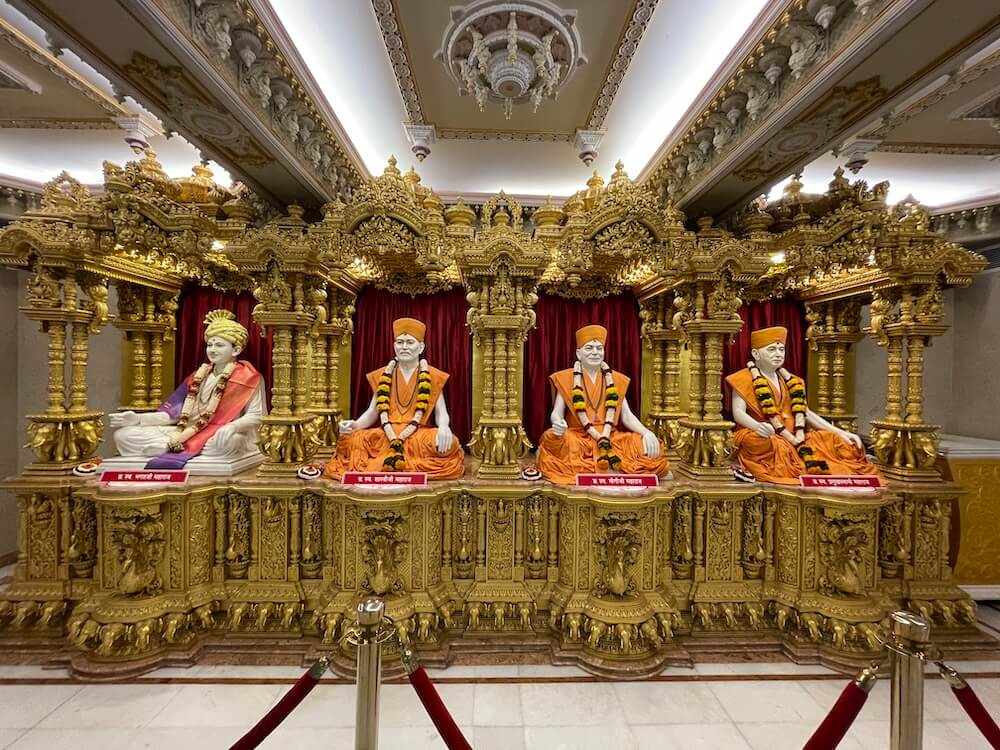
Adjacent to the assembly hall of the temple is the ‘Neelkanth Varni Abhishek Mandapam’. In this spacious and beautifully decorated pavilion, a golden idol of Neelkanth Varni is enshrined in the center upon a lotus-shaped pedestal. Behind the idol, on a high platform within four thrones, are the marble statues of Bhagatji Maharaj, Shastriji Maharaj, Yogiji Maharaj, and Pramukh Swami Maharaj, arranged from left to right. Likewise, the silver seat of Shastriji Maharaj, a grand portrait of Mahant Swami, and a large statue of Pramukh Swami placed at his discourse site are also present here. Idols of Hanuman and Ganesha are also consecrated within the temple premises. There are a total of seven dome-shaped spires atop the assembly hall of the temple. Above the sanctum sanctorum, there are five spires carved in the traditional sectarian style, of which three are primary. These spires are topped with golden finials.
Devotees can have Darshan of the deity in this temple from 7:15 AM, 12:00 PM, and from 4:00 PM to 8:45 PM. Rituals in the temple are performed strictly according to Vedic traditions and the guidelines laid down by the Acharyas of the Sampradaya. The Mangala Aarti takes place here at 6:00 AM. This is followed by the Shringar Aarti at 7:30 AM, Rajbhog Aarti at 11:15 AM, Sandhya Aarti at 6:30 PM, and Shayan Aarti at 8:30 PM. Swaminarayan, also known as Ghanshyam Pande or Swami Sahajanand, was born on the day of Ram Navami. This festival is celebrated here with great enthusiasm and various religious programs. Apart from this, Janmashtami, Deepavali, and the Annakut festival are celebrated on a grand scale in the temple. On the day of the Annakut festival, hundreds of vegetarian dishes, sweets, and fruits are offered to Swaminarayan as Naivedya. These items are arranged in a highly artistic manner. Thousands of devotees visit to witness this. The Chopda Pujan held here during Diwali is also a major celebration. Many entrepreneurs, businessmen, and traders from across Mumbai participate in this ceremony. The temple conducts several social welfare activities. Similarly, a dining hall is also operated here.
This sacred temple stands as a testament to deep spiritual devotion, ancient architectural grandeur, and rich local cultural traditions.
The sanctum sanctorum houses the divine idol consecrated according to ancient Vedic traditions, surrounded by serene courtyards and traditional temple architecture.
Navratri, Maha Shivratri, Annual Temple Jatra & Deepotsav
Compare and book flights, secure top-rated local hotels near the temple, hire reliable guides, and rent cars instantly.
Extend your pilgrimage by visiting other highly sacred temples located nearby.


Add ₹999 more to unlock FREE SHIPPING!
Your sacred cart is currently empty.
Shop Photo FramesFill in your delivery details below to place your order.
Add comment