
Add ₹999 more to unlock FREE SHIPPING!
Your sacred cart is currently empty.
Shop Photo FramesThe Ambad taluka in Jalna district holds a place of immense historical and religious significance. Since ancient times, this region has been situated on a major trade route. In Ambad taluka, one can still find many ancient wells (baravs) and temples built or renovated by the pious Ahilyadevi Holkar. It is in the village of Patharwala, located in this historically rich taluka on the banks of the Godavari River, that the Kholeshwar Mahadev Temple stands. This ancient temple, built in the Hemadpanti architectural style, is a major center of faith for devotees in the region.
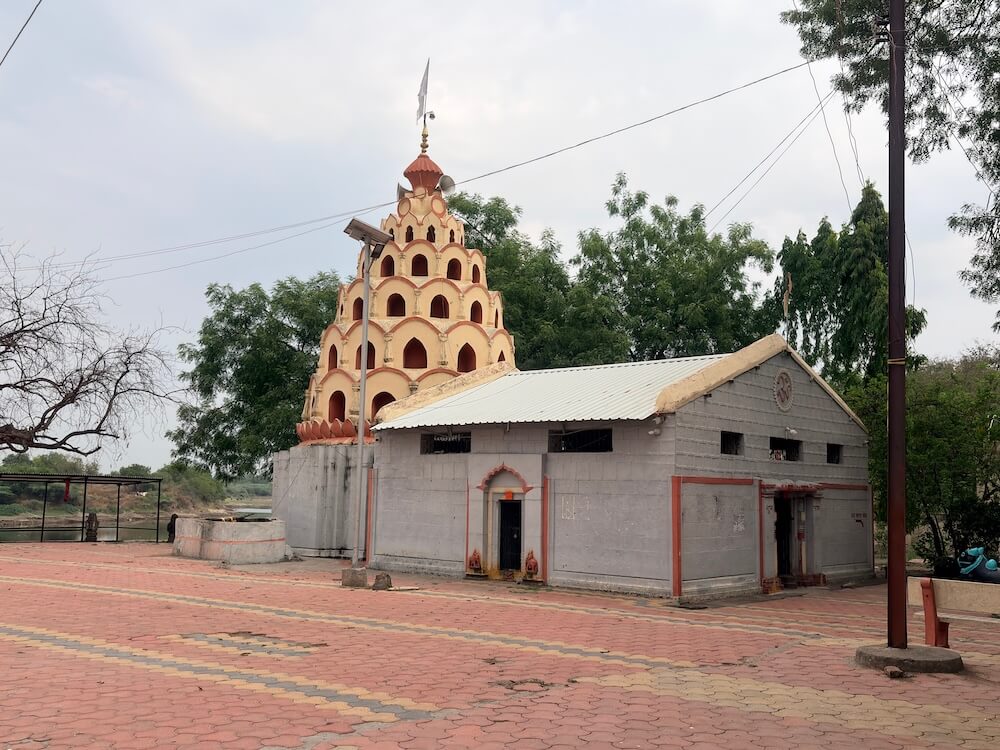
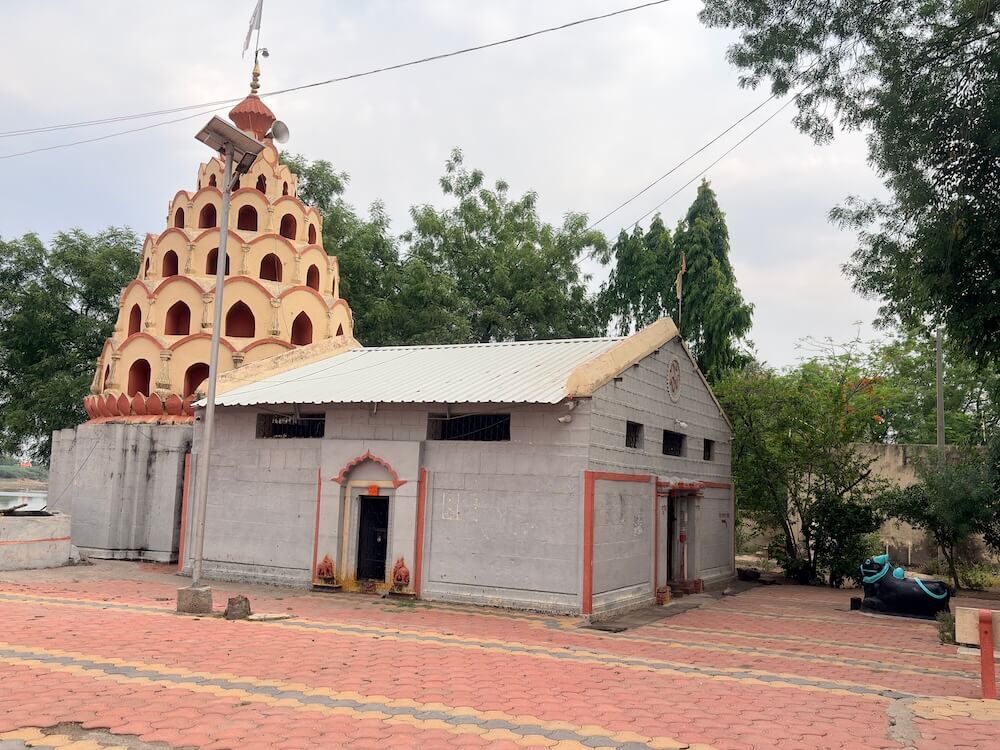
Regarding the history of the temple’s construction, historians and scholars believe it dates back to approximately the 12th to 13th century. Initially, the temple’s original structure consisted only of the main foundation and the walls without a roof. The modern roof and shikhara (spire) seen on the temple today are not part of the original construction; local villagers inform that this work was carried out by the community in recent times.
A legend is told in the area regarding the establishment of the Kholeshwar Mahadev Temple. It is said that a Swayambhu (self-manifested) Shiva Linga existed here about ten feet underground. In the area surrounding this open-air temple, a Siddha Yogi and his disciples once resided. The disciples expressed a desire to build a grand stone temple here to their Guru. The Guru granted permission on the condition that they complete the temple construction and build a strong fortification wall around the village within a single night. Accepting the Guru’s condition, the disciples immediately began their work. Some started building the temple, while others engaged in constructing the fortification. As the disciples worked through the night, the Guru, seeing their exhausted state from carrying heavy stones and intense labor, used his yogic powers to create a rooster, which crowed at midnight. By then, the temple construction had reached the walls, and the stones required for the fortification had been transported. However, believing they had failed to fulfill the Guru’s promise to complete the work by dawn, the disciples left the task unfinished.
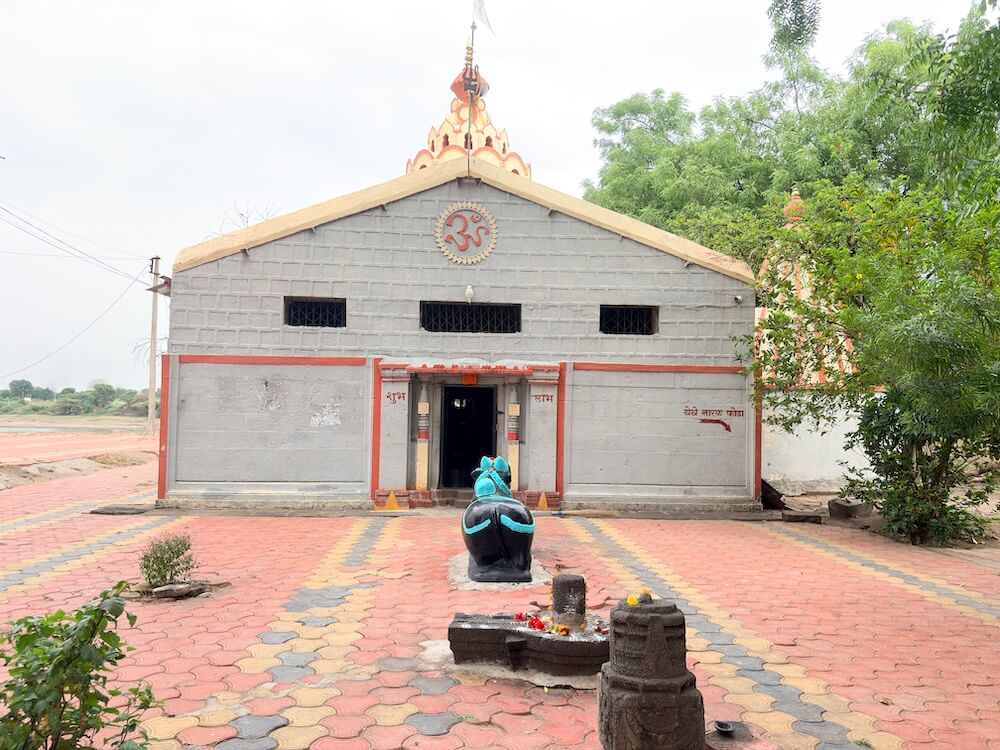
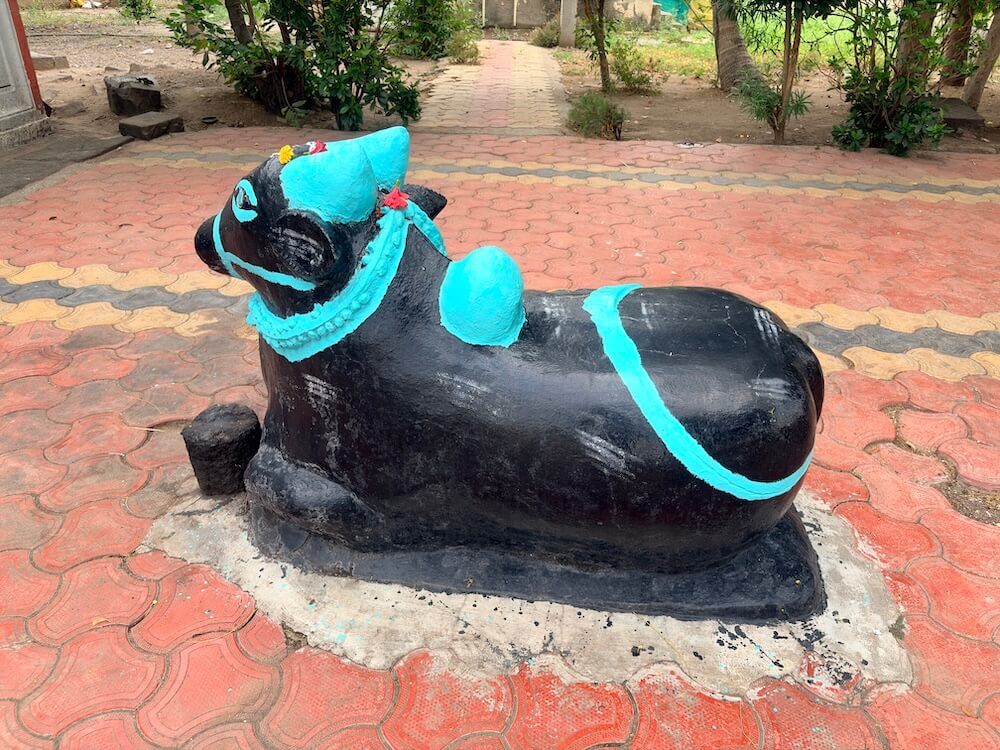
This main temple is situated on the banks of the Godavari River, a short distance from Patharwala village. In recent times, a strong fortification wall has been built for the temple’s security, which includes an entrance gate. There are several old trees in the temple courtyard. Remains of pillars from an ancient temple can be seen in the eight directions of the courtyard; it is said that these pillars mark the locations of the Ashta Bhairavas (the eight Bhairavas). To the left of the main temple in the courtyard, there is a square, ancient sacred water tank (tirtha-kunda). In the past, water from this tank was used for the Abhisheka of Lord Mahadeva. In front of the main temple, there is a black stone Shiva Linga and a Nandi statue. A Tulsi Vrindavan is also built in front of the temple.
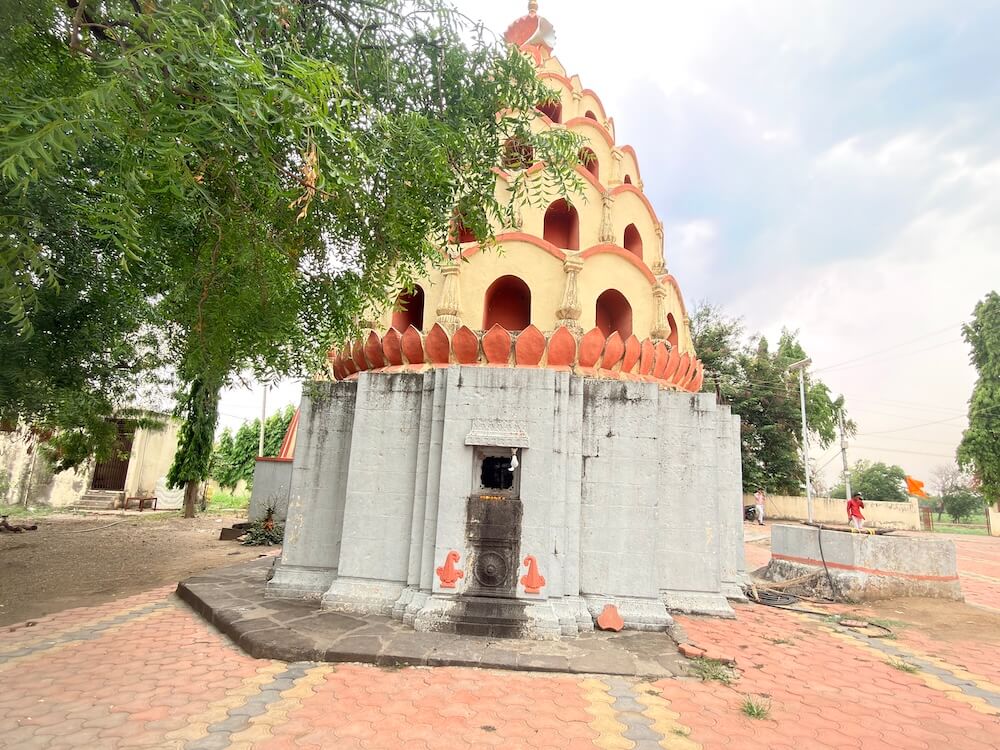
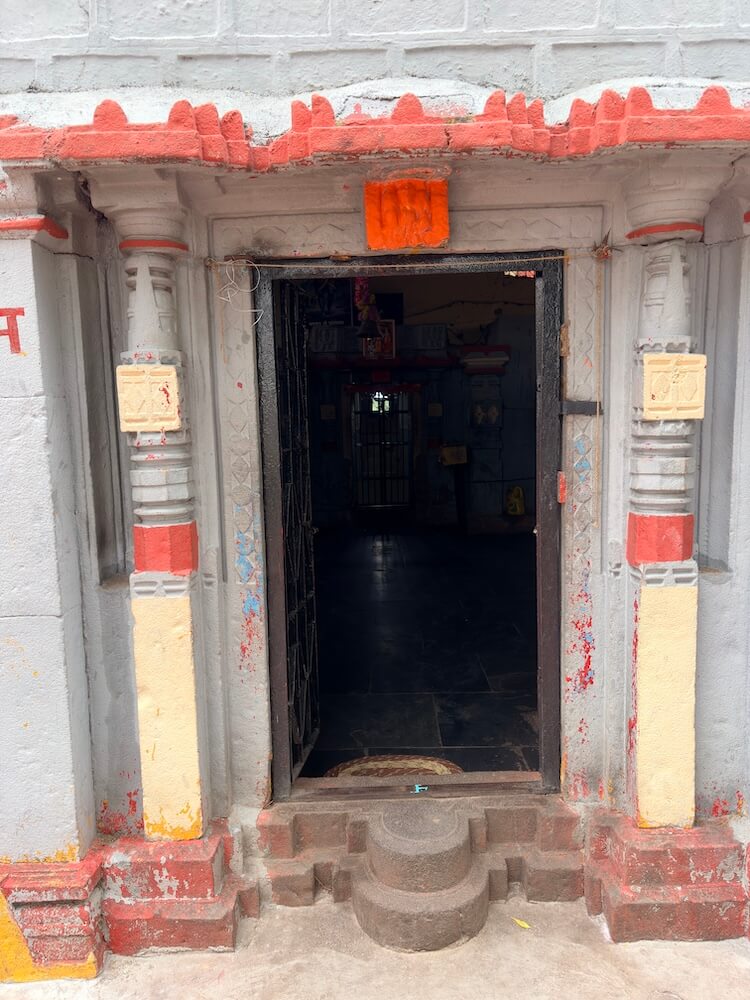
The structure of the main temple consists of a Sabha Mandapa (assembly hall), an Antarala (vestibule), and a Garbhagriha (sanctum sanctorum). The lower construction up to the walls is ancient, while the upper roof and shikhara are modern. The main entrance of the Sabha Mandapa features intricate vertical carvings on its door frames. On the lintel (lalat-bimba) is a sculpture of Lord Ganesha, and at the threshold (mandarka) lies a moonstone (chandrashila). On both sides of this entrance are two ornate stone pillars. In addition to the main entrance, the Sabha Mandapa has two smaller doors for entry from the right and left sides.
The main Sabha Mandapa here is enclosed. There are twelve pillars embedded in the walls on all four sides. During the renovation, the original stone walls of the Sabha Mandapa were raised by about four feet, and a metal sheet roof was installed. To ensure sufficient light and ventilation in the Sabha Mandapa, windows were created in these raised walls. Additionally, original stone niches (deep-koshtakas) for lamps can be seen in the ancient walls.
In the Sabha Mandapa, to the right of the Antarala, there is a separate storage room. On both sides of the entrance to the Garbhagriha, sculptures of Ganga, Yamuna, and gatekeepers (dwarapalas and dwarapalikas) are carved. The door frames are adorned with floral carvings, and the lintel features a Ganesha sculpture. The main archway (torana) displays Panchayatan sculptures, and a moonstone is visible at the threshold. Two ornate pillars stand on either side of this entrance.
The Garbhagriha of the temple is about ten feet deeper than the level of the Antarala. Because of this unique feature, this Mahadeva is known as Kholeshwar (Lord of the Depths). There are twelve steps to descend from the entrance into the main Garbhagriha. On both sides of these steps, adjacent to the walls of the Garbhagriha, are small stone platforms. On the right platform, there is a vermilion-smeared idol of Ganpati, and on the left, a black stone Nandi statue. There is a window in the back wall to allow sufficient light and air into the Garbhagriha. On certain days of the year, sun rays pass directly through this window onto the Shiva Linga. Devotees believe this process to be a divine Abhisheka of sun rays. The original Shiva Linga is installed on the floor of the Garbhagriha. The roof of the Garbhagriha features a five-tiered circular shikhara. Each tier of the shikhara contains empty niches. At the apex of the shikhara is a stone Amalaka topped with a Kalasha.
To the right of the Kholeshwar temple is a separate, smaller temple dedicated to Lord Ganesha. One can enter this Ganesha temple directly through the right-side door of the Kholeshwar temple’s main Sabha Mandapa. Inside the temple, there is a vermilion-smeared stone idol of Shri Ganesha on a Vajrapitha. The roof of this temple also features a circular shikhara. Behind the main temple in the courtyard, other ancient Shiva Lingas can be seen. A ghat has been built from the back of the temple to descend directly into the Godavari riverbed. Due to a dam built further downstream, the ancient temples located in the riverbed are now submerged. Only during the summer months, when the river water recedes, can devotees catch a glimpse of the spires of these temples.
Maha Shivratri is the main annual festival celebrated at this temple. In addition, devotees gather in large numbers on all Mondays of the holy month of Shravan for Abhishek of the Shivling and for Darshan. A special festival is also organized here on the auspicious day of Aamli Baras. During these festivals, religious programs such as Bhajans, Kirtans, and collective scripture readings are held at the temple. During the festival period, Mahaprasad is organized for devotees through Annachhatra (community kitchen). Devotees visit the temple in large numbers every Monday, and on the days of Pradosh, Purnima, and Amavasya. Devotees can visit the temple for Darshan daily from early morning until late at night.
This sacred temple stands as a testament to deep spiritual devotion, ancient architectural grandeur, and rich local cultural traditions.
The sanctum sanctorum houses the divine idol consecrated according to ancient Vedic traditions, surrounded by serene courtyards and traditional temple architecture.
Navratri, Maha Shivratri, Annual Temple Jatra & Deepotsav
Compare and book flights, secure top-rated local hotels near the temple, hire reliable guides, and rent cars instantly.
Extend your pilgrimage by visiting other highly sacred temples located nearby.


Add ₹999 more to unlock FREE SHIPPING!
Your sacred cart is currently empty.
Shop Photo FramesFill in your delivery details below to place your order.
Add comment