
Add ₹999 more to unlock FREE SHIPPING!
Your sacred cart is currently empty.
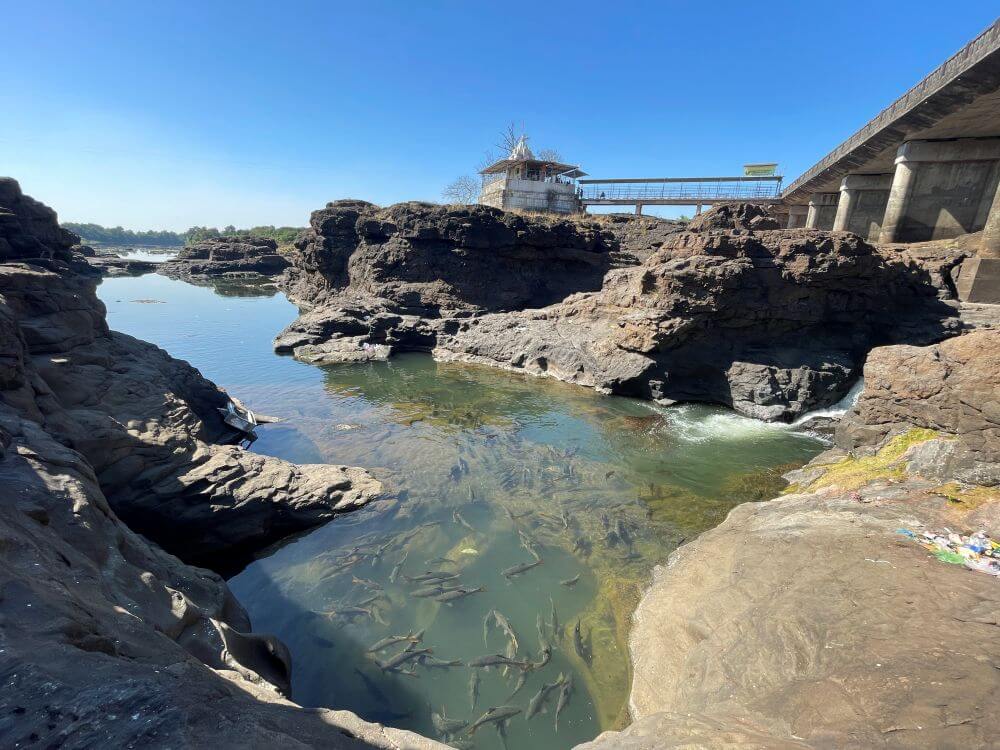
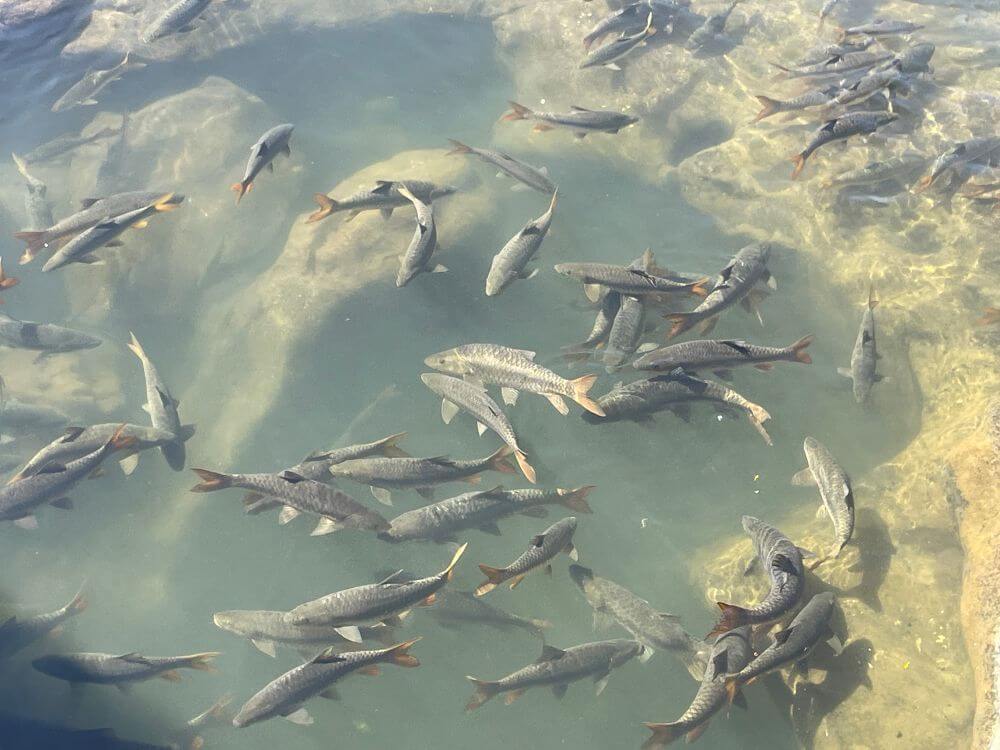
Shop Photo FramesMaharshi Vedavyasa has referred to the Vaitarna River as Papnashini (the destroyer of sins). In the Vana Parva of the Mahabharata, there is a mention: ‘Tatatstrivishtapam gacchet trishu lokeshu vishrutam. Tatra Vaitarani punya nadi papaprnashini.’ This means that ‘he…कॅशे साफ कराOne should visit the Trivashtatirtha, which is renowned across the three worlds. There flows the Vaitarani, a river that destroys sins. It is in the riverbed of this very river, upon a large rock, that the Nandikeshwar Mahadev Temple of Tilse village is situated. A unique feature of this place is the thousands of divine-natured fish, measuring one and a half to two feet in length, that reside in the riverbed near this ancient temple.
The name of the river Vaitarani is interpreted as ‘Vai’, meaning truly, and ‘Tarani’, meaning the one who saves. In the Mahabharata, Sage Vyasa has further stated regarding Vaitarani that a person who bathes in this river and worships Lord Shankara attains a pure heart and reaches the supreme state. (‘Tatra snatvarcayitva ca shulapanim vrshadhvajam. Sarvapapavishuddhatma gaccheta paramam gatim.’ – Mahabharata, Vanaparva, Tirthayatraparva, Chapter ๘๓, Verse ๘๕). Due to this, countless devotees come to the Nandikeshwar Mahadev Temple here with great reverence to offer worship. Devotees and tourists also constantly visit to see the divine fish, which are not found anywhere else in India and which never leave the deep pool near the temple, no matter how much the river floods.
The mythological legend of the Nandikeshwar Temple here states that during their exile, wherever the Pandavas beheld a Swayambhu Shivalinga, they would construct a temple in a single night and worship Lord Shiva. This temple is one among them. It is said that the chariot of the Pandavas proceeded from this temple through the Vaitarna riverbed towards Trimbakeshwar. There is a devout belief that the marks of that chariot can still be found near the riverbed. It is also said that this temple is connected to Lord Shiva at Trimbakeshwar, one of the twelve Jyotirlingas. The original name of this temple is Nandikeshwar Mahadev Temple. However, since the temple is located in Tilsa village, it is also known as Tilseshwar Mahadev Temple. According to the records in the Thane Gazetteer, there was a large temple here in the past; however, it was reduced to ashes in a fire in 1880. Only its large foundation remained. It was, however, rebuilt later. At that time, there were two sacred ponds in the riverbed known as Ramkund and Lakshmankund. The records also mention that there were large fish in a deep, spacious pond to the northeast of the temple. This temple used to receive an annual grant of 1.10 pounds and 8 shillings, and twenty-two and a quarter acres of land were gifted as an endowment for the temple. This temple has undergone renovation many times. The temple attained its current form after a renovation that took place a few years ago.
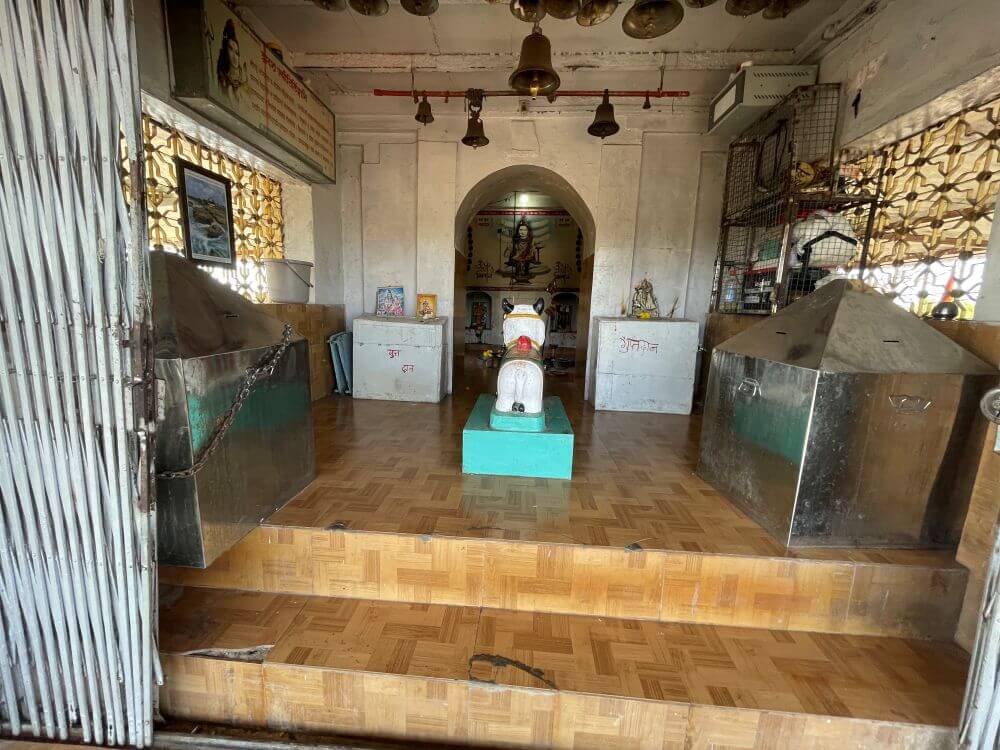
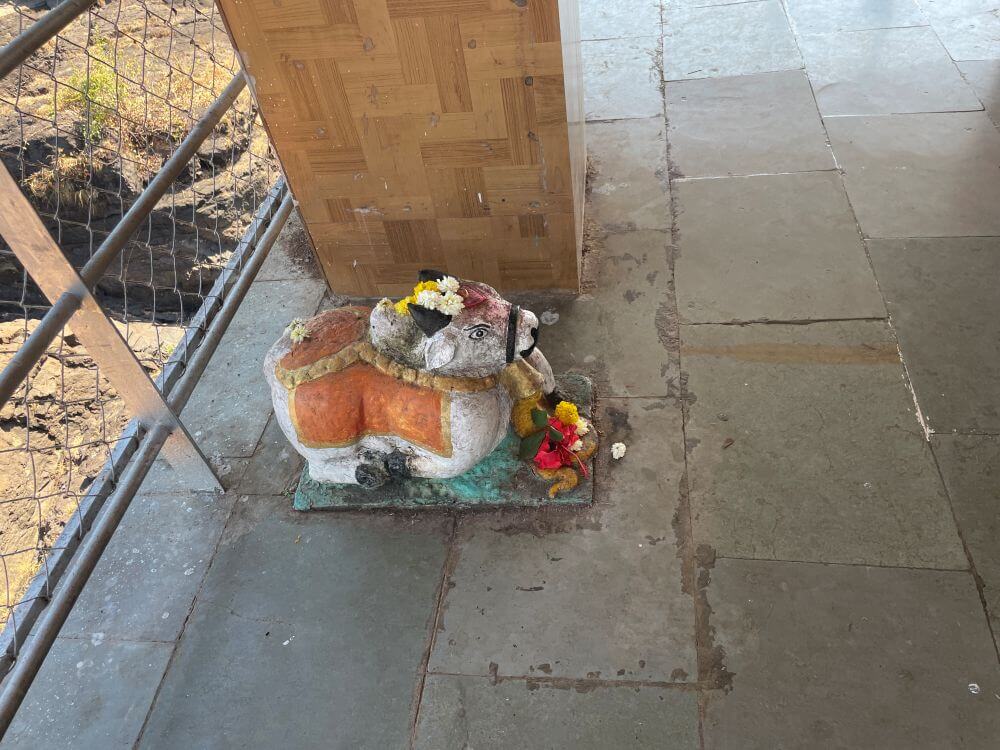
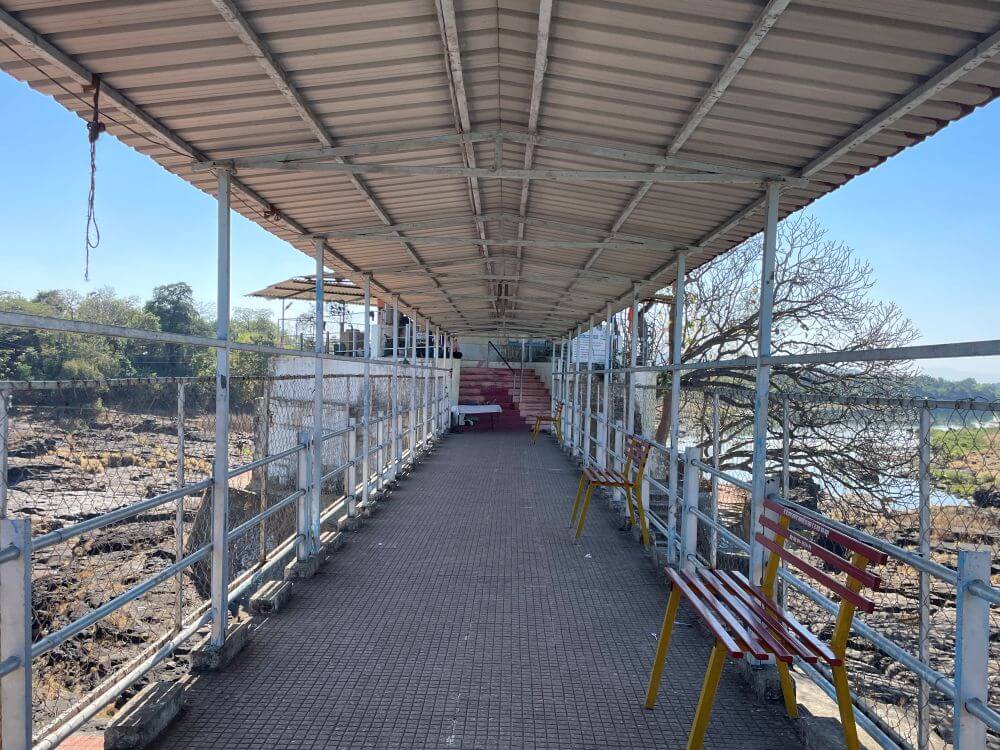
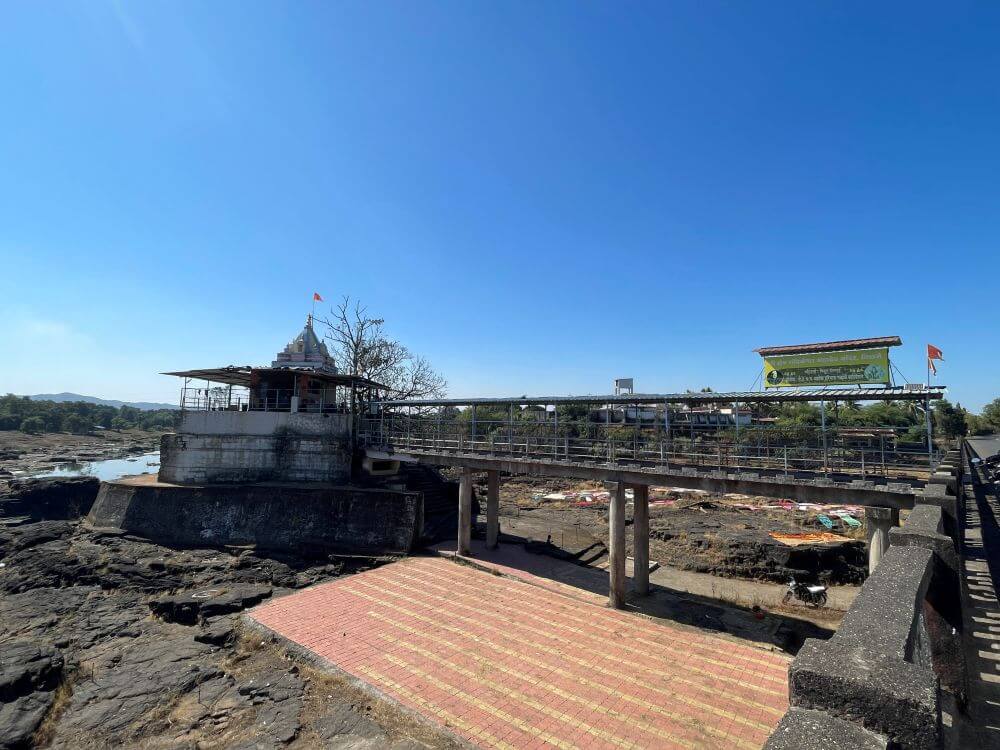
This temple is built upon a massive rock. It is said that the rock upon which the temple stands is hollow from within. Yet, it has borne the weight of the temple for years. One can reach the temple via a pedestrian path constructed from the bridge in front of the temple. A tin roof has been erected on this path for the convenience of the devotees. Outside the temple, there is a white-colored idol of Nandi. There is another idol of Nandi in the main assembly hall as well. The sanctum sanctorum has an arched entrance. In the center of the sanctum sanctorum is a Swayambhu Shivling, over which a serpent holds a canopy. From the vessel suspended above it, an Abhishekam is performed on the Pindi. Near the Shivpindi, there is a large trident. It is said that in the past, there was a hole in this Shivling. If a coin was dropped into it, the sound of it falling into water could be heard. Over time, this hole was filled. On the wall behind the Shivling, there is a large image of Lord Shiva. In the niches on the lower part of this wall, there is an idol of Lord Ganesha on the left and Goddess Parvati on the right. The water used for the Abhishekam performed on the Shivling flows directly into the riverbed through a Gomukh located at the base of the wall behind the sanctum sanctorum.
Hundreds of devotees visit this temple daily for darshan. A large fair is held here on the day of Mahashivratri. According to the records in the Gazetteer of 1882, about 200 devotees from areas like Wada, Shahapur, Bhiwandi, and Jawhar used to attend this pilgrimage at that time. However, it is now reported that the number of devotees coming for the darshan of Nandikeshwara during the pilgrimage has crossed three lakhs. Various programs are organized here on the day of Mahashivratri. An uninterrupted Harinam ceremony is held for three days. During this time, refreshments are distributed to the visiting devotees by the temple administration. Hundreds of devotees also come here for darshan on every Monday of the Shravan month.
There are steps leading down from the temple into the riverbed. Upon descending, one finds a small Shiva Linga and an idol of Nandi nearby. Devotees claim that once, Lord Mahadeva struck his matted locks against the riverbed, and the marks of this event can still be found here. According to a mythological legend, once Goddess Parvati was feeding a morsel of curd-rice to Lord Mahadeva. Some grains of rice from that morsel fell onto the rocks in the bed of the Vaitarna River. Devout people believe that the white spots visible on some of the rocks in this riverbed are the remnants of that curd-rice.
The divine fish found in the crevices of this riverbed are a unique feature of this place. The legend regarding these fish is that fishing has been the traditional occupation of the majority of the people in this region. In ancient times, a fisherman couple caught a fish from this river and took it home. However, after being cut, its pieces rejoined and it came back to life. This happened many times. Consequently, believing it to be a divine fish, the couple worshipped it and released it back into the river. Since then, due to the faith that the fish in this river belong to the Divine, no one catches them.
The fish found here belong to the Mahseer species. They are called Mahseer because they are fish with large heads. Their scientific name is ‘Tor tor’. These fish are found in water bodies across many states, including Maharashtra. In many places, they are worshipped. However, because these fish are delicious to eat, they are hunted on a large scale. Here, however, they are protected as the fish of the Divine. In fact, this area of Tilshe is known as a fish sanctuary. Three species of Mahseer are found here: the Tukdi fish, the Dev fish, and the Nathani fish. They reside in the crevices of the large rocks in the riverbed as well as in the small fissures formed within the rocks. Because of this, no matter how severe the river flood, these fish do not leave their place. Mahseer fish can grow up to five to six feet in length, and their weight can reach up to 150 to 200 pounds.
This sacred temple stands as a testament to deep spiritual devotion, ancient architectural grandeur, and rich local cultural traditions.
The sanctum sanctorum houses the divine idol consecrated according to ancient Vedic traditions, surrounded by serene courtyards and traditional temple architecture.
Navratri, Maha Shivratri, Annual Temple Jatra & Deepotsav
Compare and book flights, secure top-rated local hotels near the temple, hire reliable guides, and rent cars instantly.
Extend your pilgrimage by visiting other highly sacred temples located nearby.


Add ₹999 more to unlock FREE SHIPPING!
Your sacred cart is currently empty.
Shop Photo FramesFill in your delivery details below to place your order.
Add comment