
Add ₹999 more to unlock FREE SHIPPING!
Your sacred cart is currently empty.
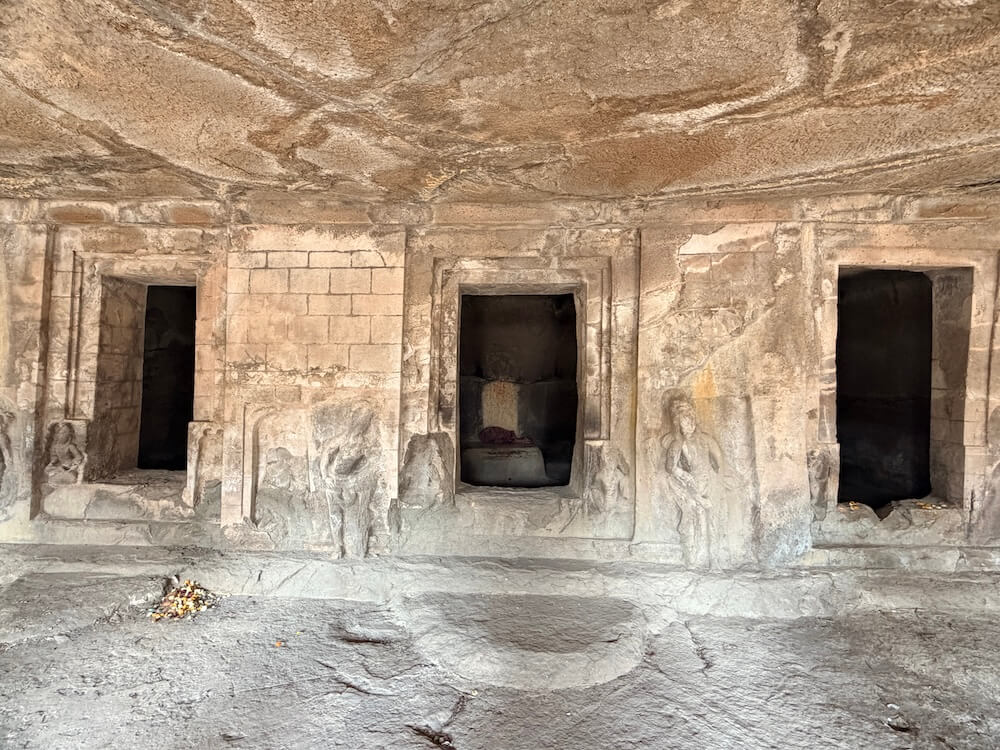
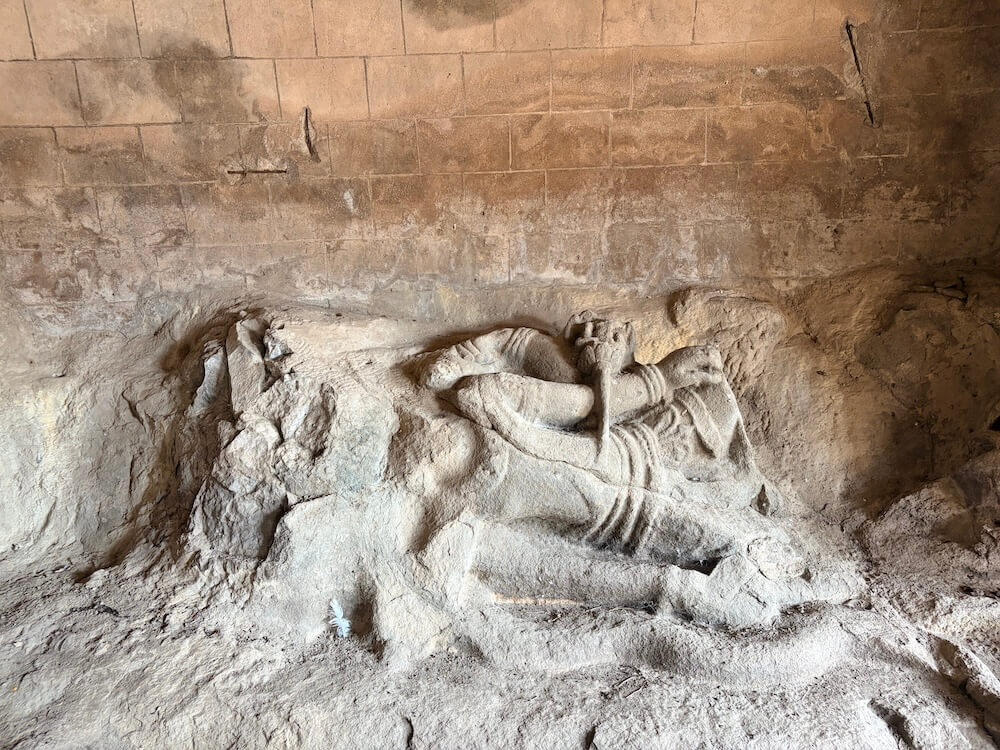
Shop Photo FramesSituated on the banks of the Kelna River in the city of Bhokardan in Jalna district, the Tukai Caves are a vital link in the journey of Indian sculpture. Carved in this city, which has been famous as ‘Bhogvardhan’ since the Satavahana era, these caves bear witness to ancient trade and the advanced architecture of the Rashtrakuta period. The significance of these caves lies in the sculptures of Mahishasuramardini and Sheshashayi Vishnu found here. Researchers believe that the origin and preliminary experiments of the sculpture seen in the world-famous Ellora Caves took place on these very stone walls of Bhokardan. These caves are locally known as ‘Tukai Caves’ because a very vivid sculpture of Mahishasuramardini is carved in a niche here. The local people worship her with devotion as Tukai Mata.
The history of Bhokardan city is extremely ancient and rich. In ancient times, this city was situated on the important trade route from Ujjain to Paithan. The city is mentioned as ‘Bhogvardhan’ in the Markandeya Purana and other ancient literature. According to local legend, this city was the capital of Bhaumasura, an enemy of Lord Shri Krishna. The city later derived the name ‘Bhokardan’ from his names, Bhogvardhan or Bhagdanath. An important piece of evidence of this city’s historical prosperity is the trade in ivory goods. During the Satavahana era, this city was so famous for ivory carving that a beautiful ivory figurine crafted by local artisans was discovered across the seven seas in the city of Pompeii, Italy. Renowned archaeologists M.N. Deshpande and Dhavalikar have proven that this ‘Pompeii Lakshmi’, found in the city of Pompeii which was buried in volcanic ash in the year 79 CE, originally came from Bhokardan.
Between the years 1973 and 1974, researchers from Marathwada University and Nagpur University conducted major excavations in the Bhokardan area. In this research, led by Dr. S. B. Deo, remnants of settlements from the pre-Satavahana, post-Satavahana, and post-Satavahana periods were found. Many types of pottery, beads, copper and gold-plated coins, as well as iron tools were found in large quantities during these excavations. This research revealed that there was a system of baked brick drains for carrying wastewater from houses in those days. Considering this historical background, it is clear that the Tukai Caves, carved into the bed of the Kelna River, were a part of the prosperity of this trading city.
The construction period of the Tukai Caves is generally considered to be the 8th century CE, i.e., the Rashtrakuta Empire. According to research published in the newspaper Mint, these caves are a key milestone in the journey of Indian sculpture. This article, based on the research of Deepanjana Pal and Arno Klein, states that before creating the magnificent caves at Ellora, groups of sculptors tested their skills at Bhokardan. According to the famous archaeologist K. V. Soundara Rajan, there is a remarkable similarity in the architecture and sculpture of the Tukai Caves at Bhokardan and the number 15 ‘Dashavatara Cave’ at Ellora. This similarity is not a coincidence, but has a solid historical reason behind it. During the Rashtrakuta period, many groups of sculptors came to Western India from Vijayawada in Andhra Pradesh and the surrounding regions. These artists first came to Bhokardan, where they put their skills to the test and carved these caves. It is historically estimated that these same artists may have later participated in the massive projects at Ellora. The strongest evidence for this connection is the sculpture of Sheshashayi Vishnu found in both caves. The way Lord Vishnu rests on Anantnaga in the Tukai Caves, the mudra of his hands, and the serene expression on his face perfectly match the Vishnu sculpture in the Dashavatara Cave at Ellora.
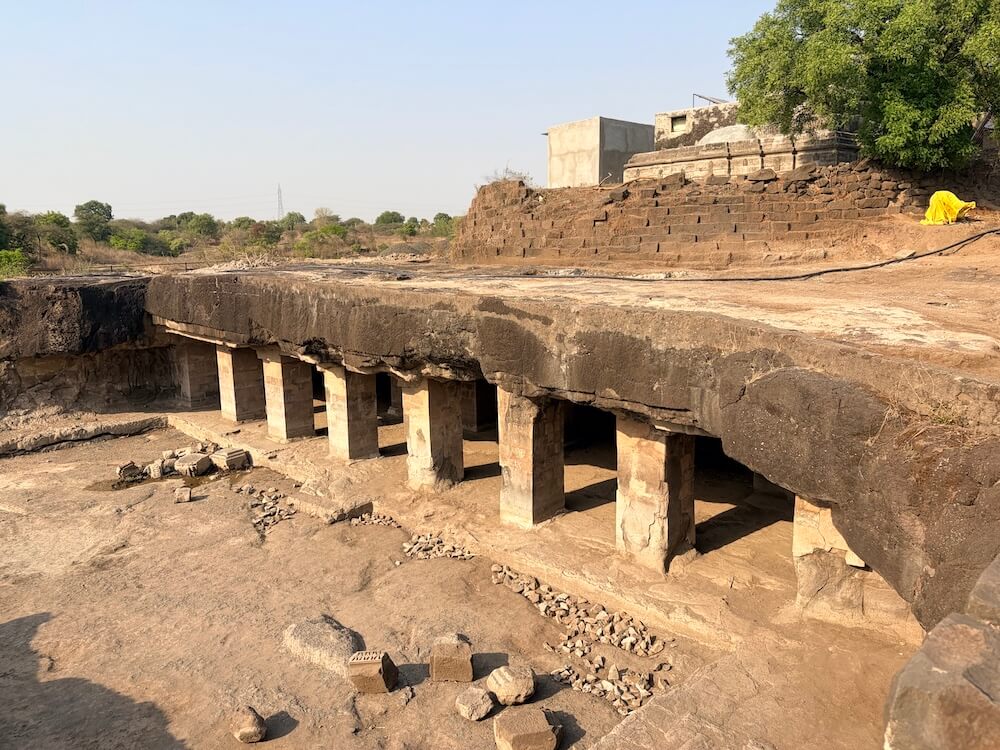
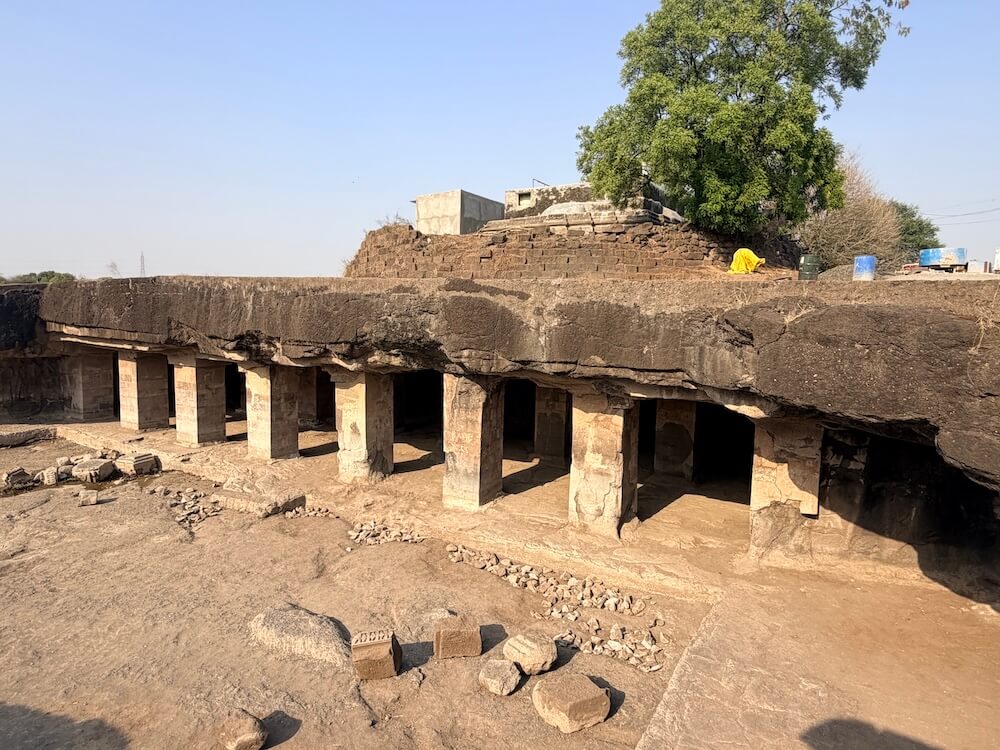
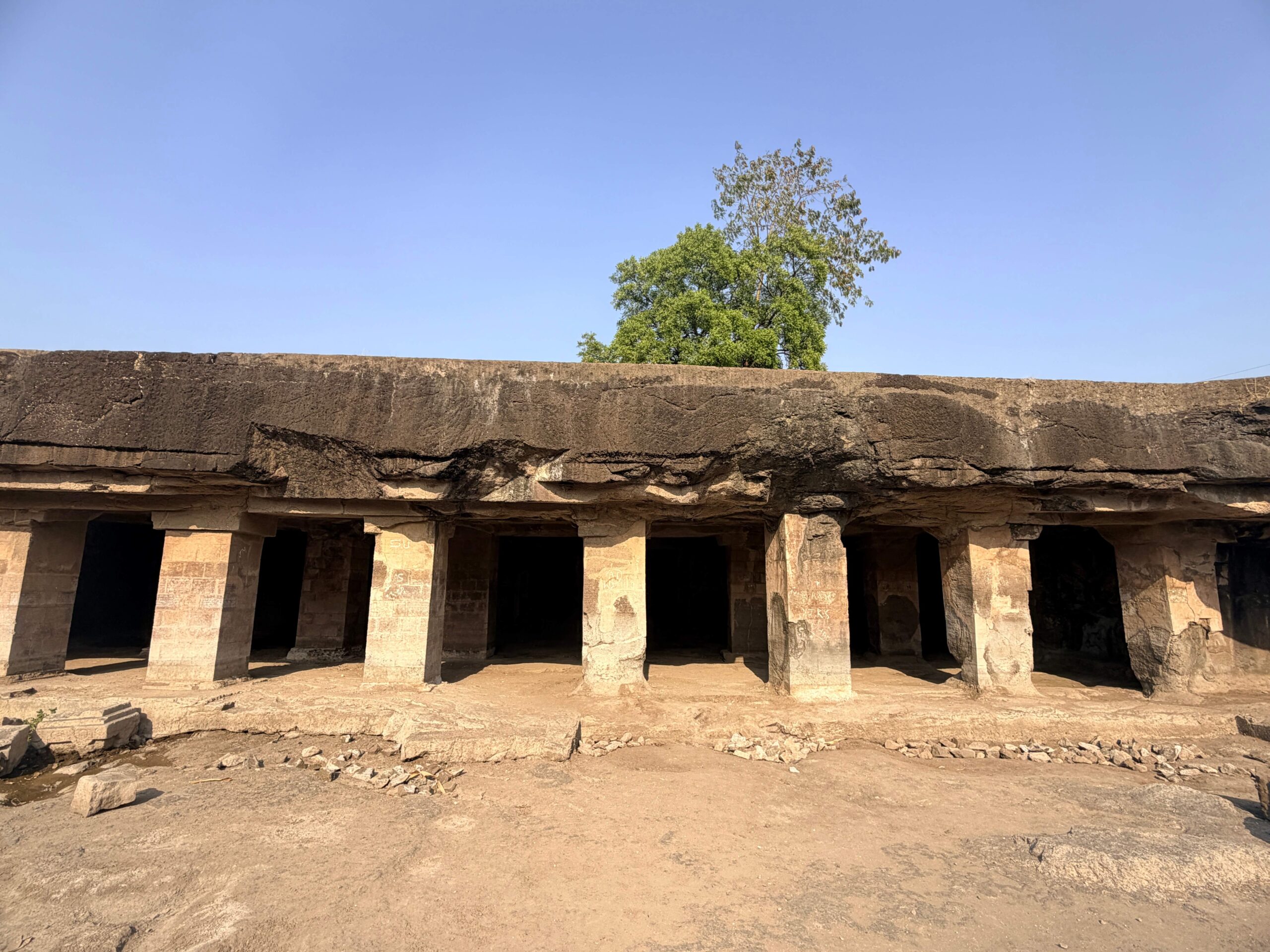
Not only the idols, but the design of the double pavilion of the cave, the carvings on the pillars, and the structure of the ceiling also reflect the same artistic style. Historian Shri P. G. Sahasrabuddhe has provided a technical analysis of this cave in his book ‘Leni’. According to him, these caves at Bhokardan also show similarities to Ellora Cave number 14, known as ‘Ravan ki Khai’. It is also believed that while returning after completing the work at Ellora and Ajanta, the sculptors might have built these small caves and the nearby Rameshwar Mahadev Temple. In terms of architecture, the Tukai Caves are carved in the form of a double pavilion. There are a total of seven rooms (chambers) in these caves. Some of these chambers might have been used by sages for living or meditation. The main part of the cave contains sculptures of Shiva and Parvati. Upon entering, one sees a large pavilion supported by pillars. These pillars are square-shaped and feature ‘ghata-pallava’ (vase and foliage) and various geometric patterns. Pramod Mande has commented specifically on the sculpture here in his book ‘Maharashtra-til Leni’. According to him, the sculptures here bear witness to the skills of the contemporary artisans. The sculptures of the avatars of Vishnu, the marriage of Shiva-Parvati, Ardhanarinateshwar, and the dancing Shiva carved on the walls are highly artistic.
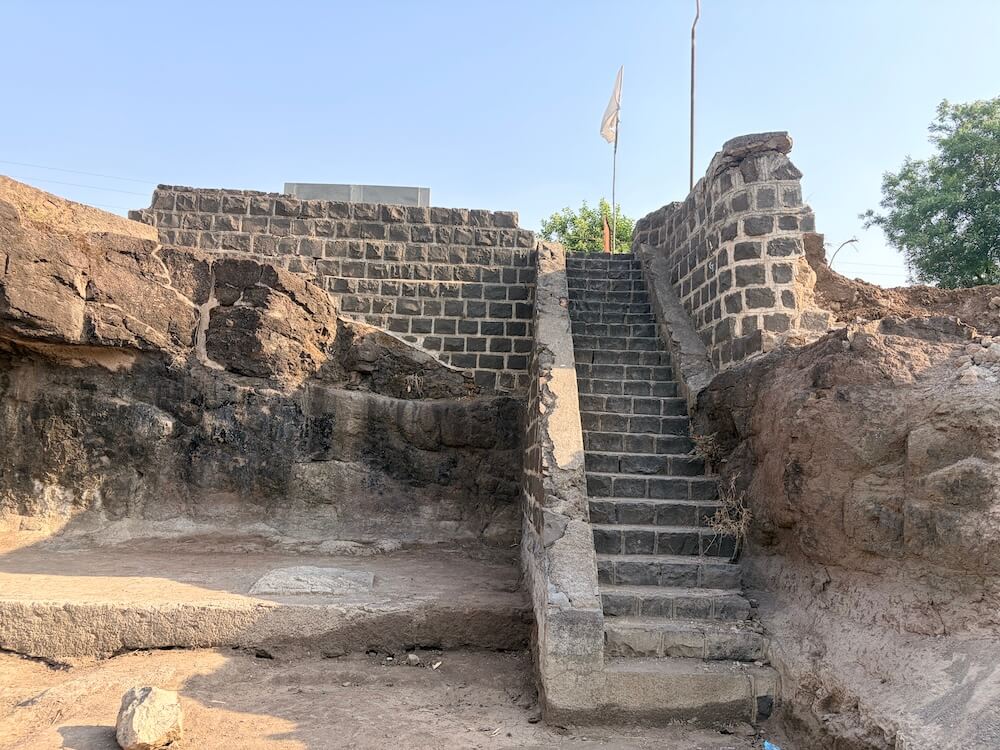
A very aggressive and impressive sculpture of Mahishasuramardini is carved on the outer wall of the cave’s sanctum sanctorum. It vividly depicts the scene of the Goddess slaying Mahishasura. Locals always come to visit this Goddess, which is why it has been named ‘Tukai Caves’. Another significant feature of these caves is the large panel of the Saptamatrikas. In this, all seven Matrikas—Brahmi, Maheshwari, Kaumari, Vaishnavi, Varahi, Indrani, and Chamunda—are elegantly carved along with their respective vehicles. Alongside these Matrika images, there are also sculptures of Virabhadra and Ganapati. Information regarding the arrangement of these Matrikas and the weapons held in their hands is provided in the Maharashtra State Gazetteer. The style of these sculptures clearly indicates a close connection between this cave and the ‘Rameshwar Cave’ (Cave Number 21) of Ellora. Along with its historical and spiritual significance, references to the Mahanubhav Panth are also associated with this cave. It is said that the founder of the Mahanubhav Panth, Chakradhar Swami, stayed in the vicinity of this cave for some time during his travels. Very close to this cave, on the banks of the Kelna River, stands an ancient temple of Rameshwar built in the Hemadpanthi style. Every year, on Mahashivratri and during the month of Shravan, there is a large crowd of devotees in this area. A grand festival is celebrated here during this time, and people also visit this historical monument with reverence. At other times, many tourists along with local devotees come to see the sculptures here. Since the caves fill with water during the rainy season, devotees and tourists can view the sculptures in the caves except during days of heavy rainfall.
This sacred temple stands as a testament to deep spiritual devotion, ancient architectural grandeur, and rich local cultural traditions.
The sanctum sanctorum houses the divine idol consecrated according to ancient Vedic traditions, surrounded by serene courtyards and traditional temple architecture.
Navratri, Maha Shivratri, Annual Temple Jatra & Deepotsav
Compare and book flights, secure top-rated local hotels near the temple, hire reliable guides, and rent cars instantly.
Extend your pilgrimage by visiting other highly sacred temples located nearby.


Add ₹999 more to unlock FREE SHIPPING!
Your sacred cart is currently empty.
Shop Photo FramesFill in your delivery details below to place your order.
Add comment