
Add ₹999 more to unlock FREE SHIPPING!
Your sacred cart is currently empty.
Shop Photo FramesLocated within the old fortifications of Bhokardan city in Jalna district, the Shri Khandoba Temple is a site of great religious and cultural significance. Among the ancient temples in this region, this temple is the largest in size. Khandoba is an integral part of the folk life and Bahujan culture of Maharashtra, Karnataka, and Andhra Pradesh, and is revered as the Kuladaivat (family deity) of the eighteen communities (Athara Pagad Jati) of the state. While Jejuri in Pune district is considered the main seat of Khandoba, the temple at Bhokardan possesses a rich historical background comparable to major pilgrimage sites like Pali, Naldurg, Mailarpur, and Mailar in Karnataka. According to local information, this temple is approximately four to five hundred years old. Devotees hold a firm belief that the deity here rushes to the aid of those in distress.
History suggests that other temples in Bhokardan city, Jalna district, are approximately one thousand to fifteen hundred years old. According to a legend, this city was once the capital of a demon named Bhaumasura. In those times, the city was known as ‘Bhogvardhan’. References to this mythological tale are found in detail in the 59th chapter of the ‘Dashama Skandha’ of the ‘Shrimad Bhagavata Purana’. In this account, Lord Shri Krishna slew Bhaumasura and liberated the 16,000 maidens he had held captive. Furthermore, references to this event are also included in ancient texts like the ‘Vishnu Purana’ and the ‘Mahabharata’. The original geographical reference to the name ‘Bhogvardhan’ appears in the ‘Markandeya Purana’ and ‘Vayu Purana’ as an important region in the Dakshinapatha (southern route) of India. Ancient inscriptions carved on Buddhist stupas at Sanchi and Bharhut in Madhya Pradesh contain records of donations made by the generous residents of Bhogvardhan. These records clarify the antiquity and historical importance of this city.
During the Satavahana period, this city was a hub on the major trade route from Ujjain to Pratishthana, i.e., Paithan. References to this ancient trade route are found in the logbook of an unknown Greek traveler, ‘The Periplus of the Erythraean Sea’, dating back to the first century CE, as well as in the documents of the Greek geographer Ptolemy. In 1973, an archaeological excavation was conducted at Bhokardan. This excavation was carried out jointly by Nagpur University and the State Department of Archaeology. The official documents of this historical research are recorded in the book ‘Excavations at Bhokardan 1973’, written by the renowned archaeologist Dr. Shantaram Bhalchandra Deo. This research clarifies the commercial importance of the city of Bhogvardhan during the Satavahana era. The excavation yielded ivory, conch shells, copper bangles, ear ornaments, ritual implements (archanakundas), and over 700 terracotta artifacts. Two female figurine sculptures were found here. One of these figures bears an exact resemblance to an Indian ivory statue discovered during the 1938 excavation at Pompeii, Italy. That statue in Pompeii was discovered by the Italian archaeologist Amedeo Maiuri. This similarity between the ivory statues of Bhokardan and Pompeii serves as evidence of the international trade between the Satavahana Empire of ancient India and the Roman Empire. This discovery proves that in ancient times, Bhokardan was a center of ivory craftsmanship on an international level.
Over time, this prosperous province came under the rule of the Nizam of Hyderabad. Administrative records from the Nizam’s era are found in the ‘Gazetteer of Hyderabad State’. Subsequently, in 1948, this region was integrated into independent India through the Marathwada Liberation Struggle led by Swami Ramanand Teerth. Along with political changes, this region also possesses a significant background of religious and cultural movements. According to the research of historians, the propagation and spread of Khandoba worship began in the eleventh century. The first references to Khandoba are found in the ‘Leelacharitra’, a text of the Mahanubhava sect from the fourteenth century, and other historical documents. According to the ‘Malhari Mahatmya’, references to Khandoba appear in the ‘Kshetrakanda’ section of the Brahmanda Purana. According to the story in this Purana, Lord Shiva incarnated as Martand Bhairava to protect the sages from the torment of the demons Mani and Malla.
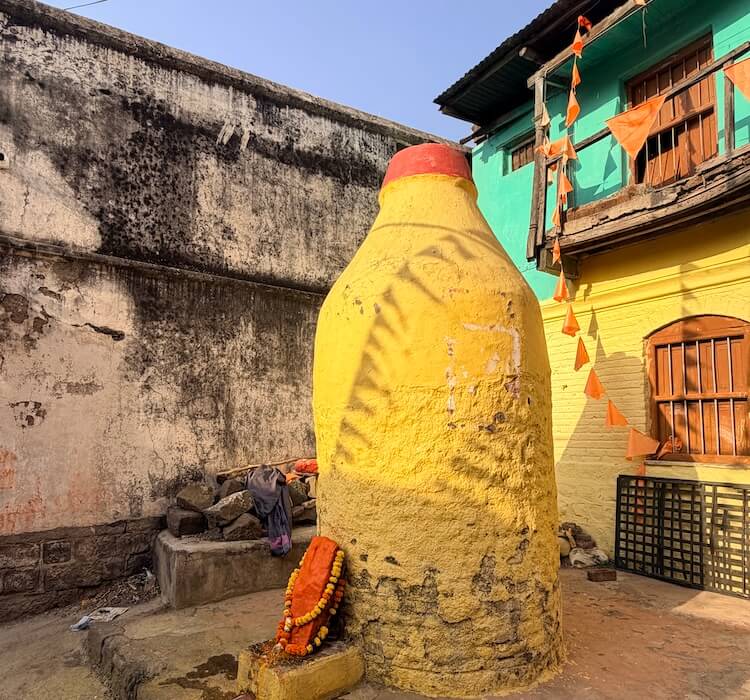
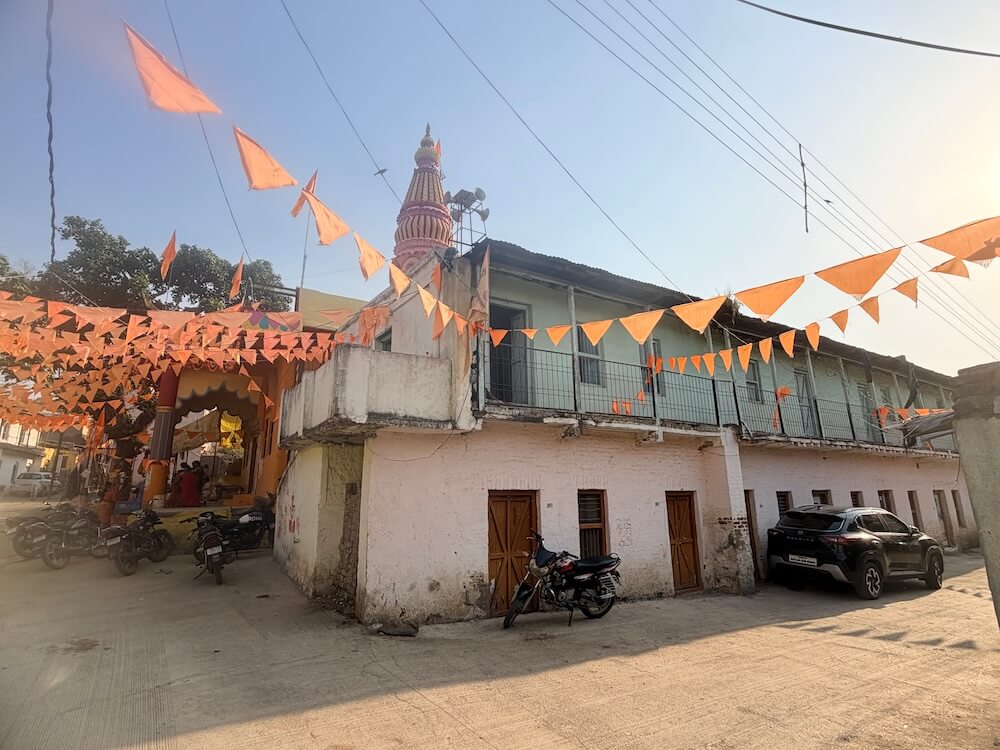
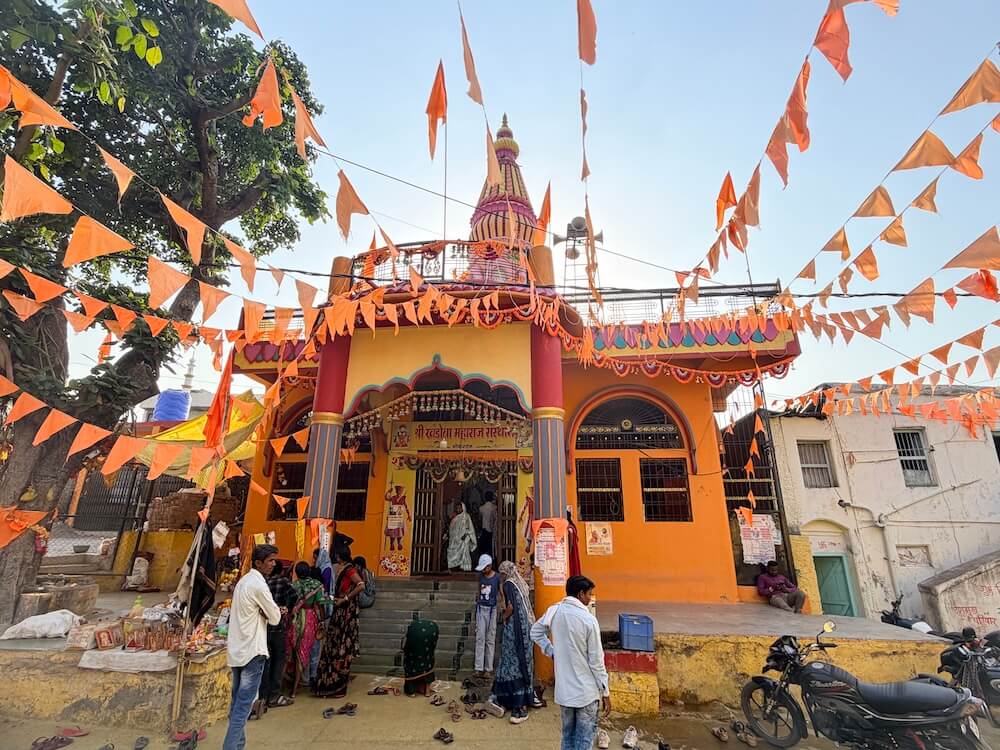
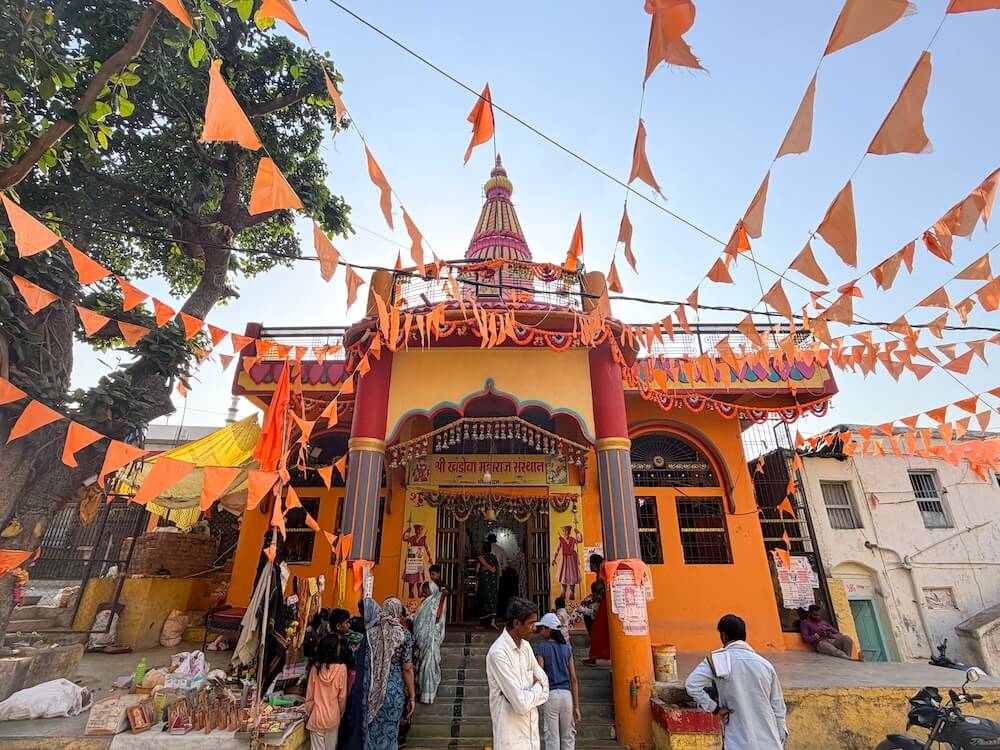
This temple is situated in a square in the village. In front of the temple stands a banyan tree with a stone platform built around it. The priests’ residence is located in front of the temple. Before it stands a ten-foot-tall stone lamp pillar (Deepmala) carved from stone. The temple is built on a plinth about six feet above the ground. Architecturally, the temple is divided into three parts: the Mukhamandapa (front porch), the Sabhamandapa (main hall), and the Garbhagriha (sanctum sanctorum). The Mukhamandapa features two circular stone pillars in the front. These pillars are connected to each other by an ornate arch (Mahirap). Beyond the Mukhamandapa is the entrance to the Sabhamandapa. On both sides of the steps leading into the Mukhamandapa, stone benches (Mrigasana) have been constructed. Paintings of door guardians (Dwarapalas) are depicted on both sides of the entrance on the front wall of the Sabhamandapa.
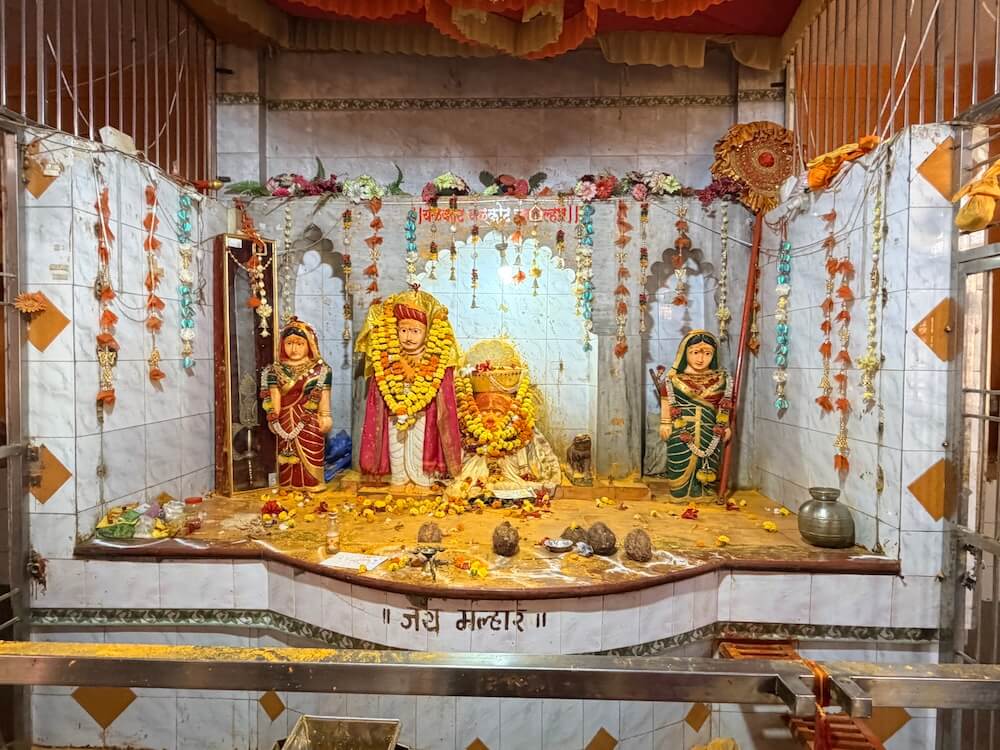
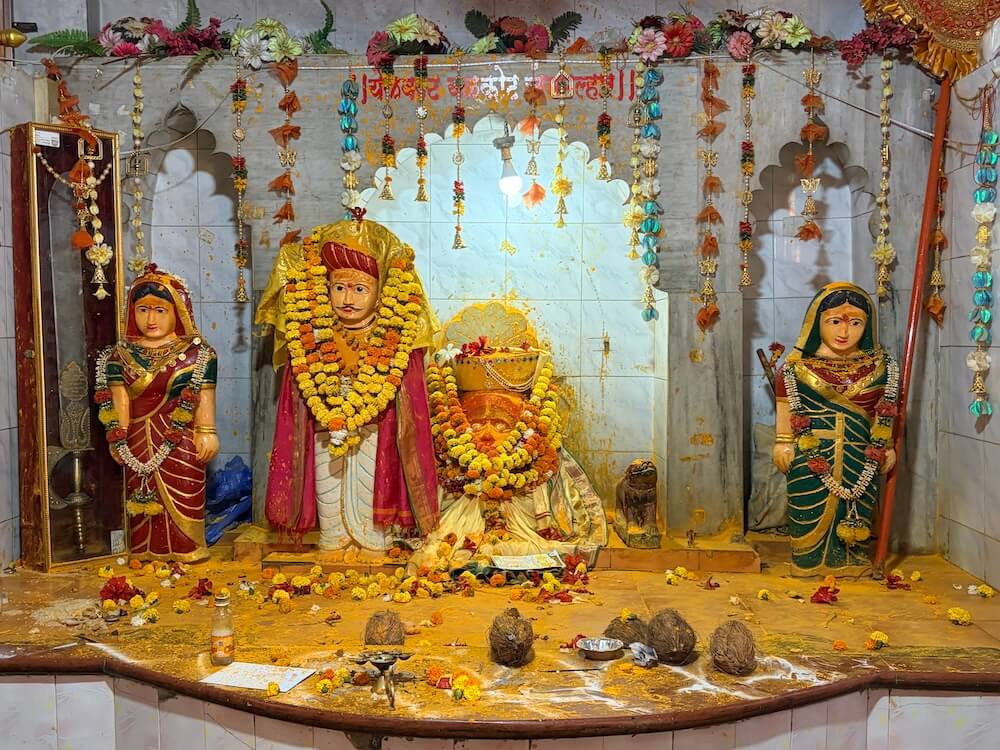
The Sabhamandapa of the temple is enclosed. It is also fitted with stone windows (Vatayana) for light and ventilation. A statue of Saint Dnyaneshwar is installed in a niche on the right wall of the Sabhamandapa. There are two stone altars (Vajrapitha) along the walls of the Sabhamandapa. On one of them is the idol of Vitthal-Rukmini, and on the other altar is a stone Shivalinga and a Nandi statue. Inside the Garbhagriha, stone idols of Shri Khandoba, Mhalsai, Banai, and Hegade Pradhan are placed within a wooden shrine (Makhar) on a platform. There is a circumambulation path (Pradakshinamarga) around the exterior of the Garbhagriha. On a platform along the wall of this path are the idols of Shri Ram, Lakshman, Sita Mata, and Hanuman.
A stone parapet has been built on the roof of the temple on all four sides for safety. A four-tiered circular Shikhara (spire) is erected over the roof of the Garbhagriha. In both the lower tiers of this Shikhara, there are eight niches each, in which idols of deities are installed. All tiers of the Shikhara are separated by lotus petal carvings. The topmost tier tapers towards the top.
Every year, a six-day festival is celebrated at the temple from Margashirsha Shuddha Pratipada to Champa Shashthi. On the fifth day of this festival, the deity’s Palkhi (palanquin) procession is organized. In this ceremony, the Utsav Murti (processional idol) of the deity, accompanied by Mhalasa and Banai, is placed in a palanquin and taken around the town in a circumambulation. Devotees participate in this procession amidst the resounding beats of drums and cymbals, showering Bhandara (turmeric powder). On the final day of the festival, devotees pull twelve carts connected to each other from the village gate to the temple. Devotees from the surrounding areas gather to witness this ceremony and participate in pulling the carts. On this same day, the ritual of breaking the Langar is performed, and the deity’s Jagran-Gondhal is celebrated. During Somvati Amavasya and every monthly Amavasya, the temple sees a large influx of devotees, giving the place the atmosphere of a pilgrimage site. Additionally, festivals such as Dussehra, Diwali, the holy month of Shravan, and other annual religious festivals are celebrated in the temple with traditional fervor. The number of devotees visiting for Darshan is particularly high on Sundays, Mondays, Purnima (full moon), and Amavasya (new moon). Devotees can visit the temple daily from 6:00 AM to 8:00 PM.
This sacred temple stands as a testament to deep spiritual devotion, ancient architectural grandeur, and rich local cultural traditions.
The sanctum sanctorum houses the divine idol consecrated according to ancient Vedic traditions, surrounded by serene courtyards and traditional temple architecture.
Navratri, Maha Shivratri, Annual Temple Jatra & Deepotsav
Compare and book flights, secure top-rated local hotels near the temple, hire reliable guides, and rent cars instantly.
Extend your pilgrimage by visiting other highly sacred temples located nearby.


Add ₹999 more to unlock FREE SHIPPING!
Your sacred cart is currently empty.
Shop Photo FramesFill in your delivery details below to place your order.
Add comment