
Add ₹999 more to unlock FREE SHIPPING!
Your sacred cart is currently empty.
Shop Photo FramesMarathwada is considered a land sanctified by the presence of saints and deities. Jalna district is an important part of this noble tradition, and the Ganpati temple located at Rajur in the northern part of this district is famous. This temple is situated on a high hill in the village. This temple is renowned as one of the three and a half Shakti Peethas of Ganpati in Maharashtra, specifically a Purna Peetha. Since Rajur is the Nabhi Sthana, or the navel region, among these Peethas of Ganpati, this site has attained special religious significance. This region is mentioned in ancient scriptures, which has bestowed upon this place a special importance on both mythological and historical levels.
Considering the ancient context of this region, it is linked to Chakradhar Swami, the founder of the Mahanubhav Panth. In the ancient text of the Mahanubhav Panth, the ‘Sthan Pothi’, there is a clear mention of Rajouri, which is today’s Rajur village. According to the records in this text, Chakradhar Swami stayed in a temple to the west of Rajur village. According to these records, Rajur has been an important religious and cultural center for many centuries. Furthermore, the present-day city of Bhokardan near Rajur is mentioned in history as ‘Bhogvardhana’, one of the sixteen prosperous cities of ancient India. In ancient times, this region was considered the gateway to South India. During the Rashtrakuta, Satavahana, and especially the Yadava dynasties, many grand temples were built in this area. Scholars estimate that this original temple was built during the Yadava period.
The story of the origin of Rajureshwar Ganpati is linked to the ‘Gajanan’ avatar in the Ganesh Purana and the legend of the slaying of Sindurasura. According to the Upasana Khanda of the Ganesh Purana, in ancient times, a king named Varenya ruled. He was very unhappy because he had no children. Following the advice of sages, he performed rigorous worship of Ganesh. Pleased with his devotion, Ganpati blessed him with a son. The king did have a son, but he was not like a human child. Ganesh himself had taken the ‘Gajanan’ avatar in the form of King Varenya’s son. Since this child had an elephant’s head and an unusual appearance, the king and queen were frightened. Fearing social ridicule and that people would not accept this form, the king took the child to the forest and left him there.
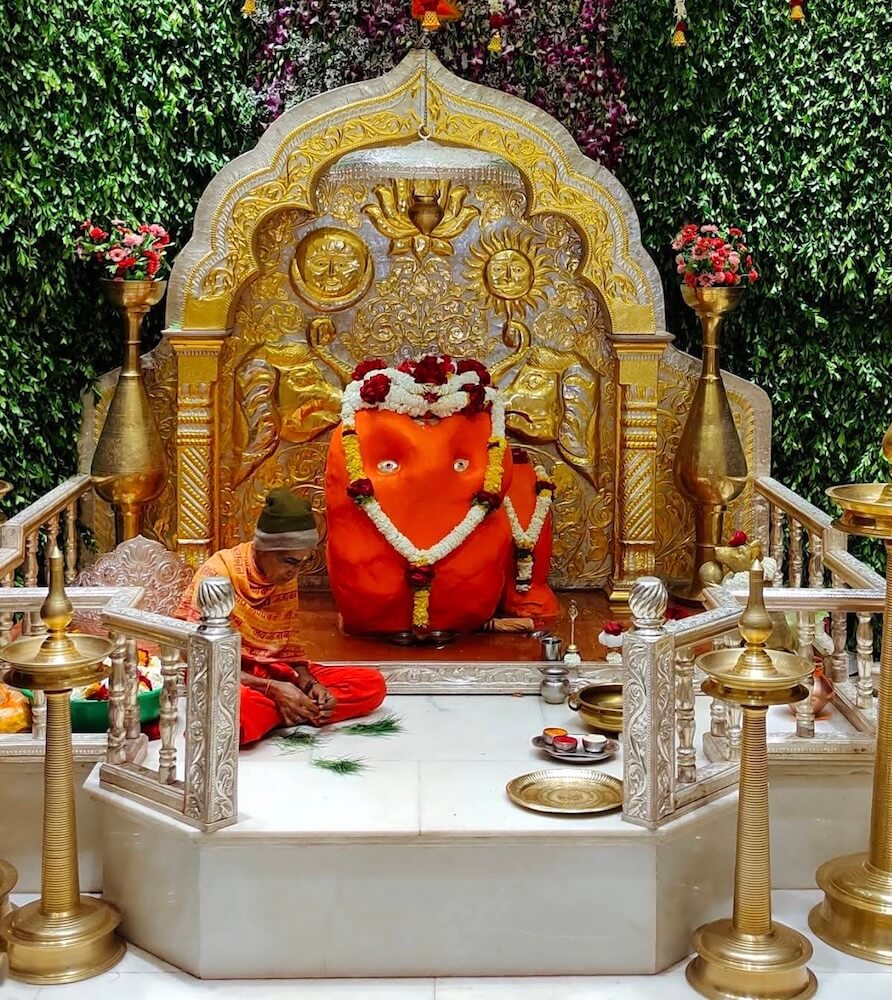
This destitute child was cared for by Sage Agastya himself. Sage Agastya recognized the divine nature of this child and made him proficient in all scriptures and sciences. During this same period, a very powerful and arrogant demon named Sindurasura had wreaked havoc on Earth and in the heavens. He had begun tormenting sages and had even defeated the gods in battle. To slay Sindurasura, Ganesh himself had taken an avatar. Later, this divine child, Gajanan, who grew up in Sage Agastya’s ashram, fought a fierce battle with Sindurasura. In this battle, Ganpati defeated and killed Sindurasura. According to the legend, after the killing, Ganpati smeared the demon’s blood on his body, which is why the idol of Ganpati appears vermilion in color. Ganpati threw the remains of Sindurasura in all four directions. Wherever these remains fell, the three and a half Shakti Peethas of Ganpati were created. Among them, Rajur became the ‘Nabhi Sthana’ of Ganpati. Of the remaining Peethas, Chinchwad in Pune district is considered the ‘Shirsha Sthana’ (head), Morgaon is the ‘Hridaya Sthana’ (heart), and Padmalaya in Jalgaon district is the ‘Pada Sthana’ (feet). After slaying Sindurasura, King Varenya realized the true divine form of his son and performed a grand coronation of his son on this high hill, which is why the village was named ‘Rajur’. The spiritual wisdom that Ganpati imparted to King Varenya before departing later became famous as the ‘Ganesh Gita’.
This temple has remained very close to the Maratha Empire, especially the Peshwa dynasty. Ganpati was the presiding deity of the Peshwas, and the importance of this temple increased significantly during the time of Thorle Bajirao Peshwa. Out of devotion to Rajureshwar Ganpati, the first Bajirao Peshwa offered a massive Panchadhatu bell weighing nine quintals to this temple in 1722. This historical bell is still kept safely in the temple today. Local people state that when this bell is rung, its sound can be heard for several kilometers. In modern times, in 1985, the then District Collector Nanasaheb Patil made great efforts for the revival of this temple and started the construction. This grand temple, built at a cost of about three crore rupees in pure white Rajasthani marble, is complete and very beautiful.
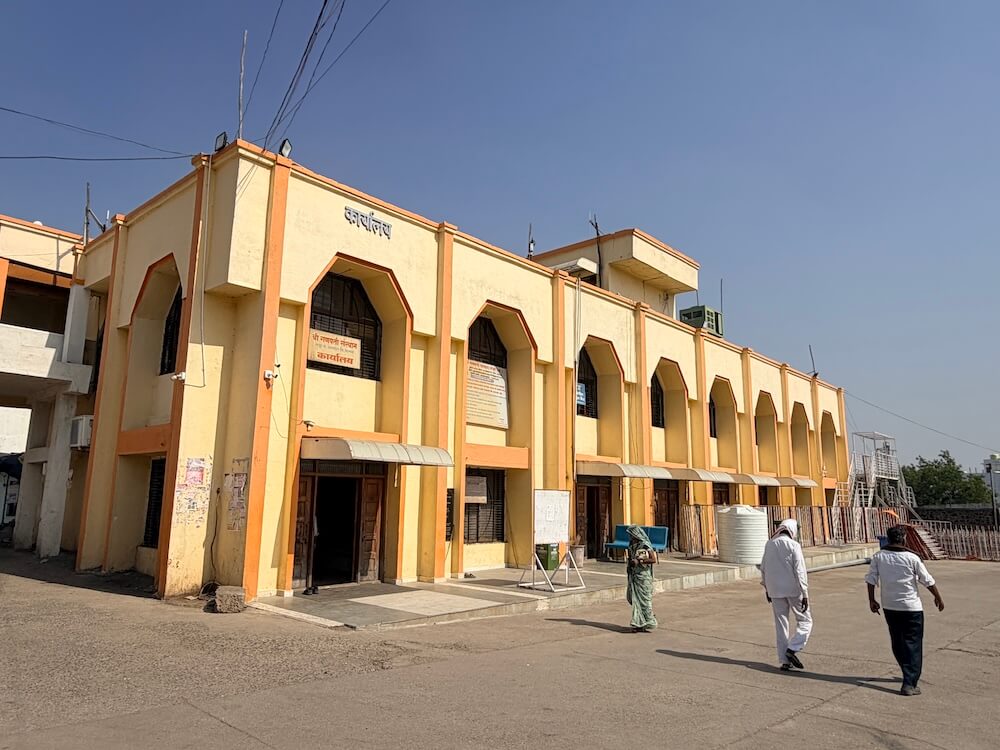
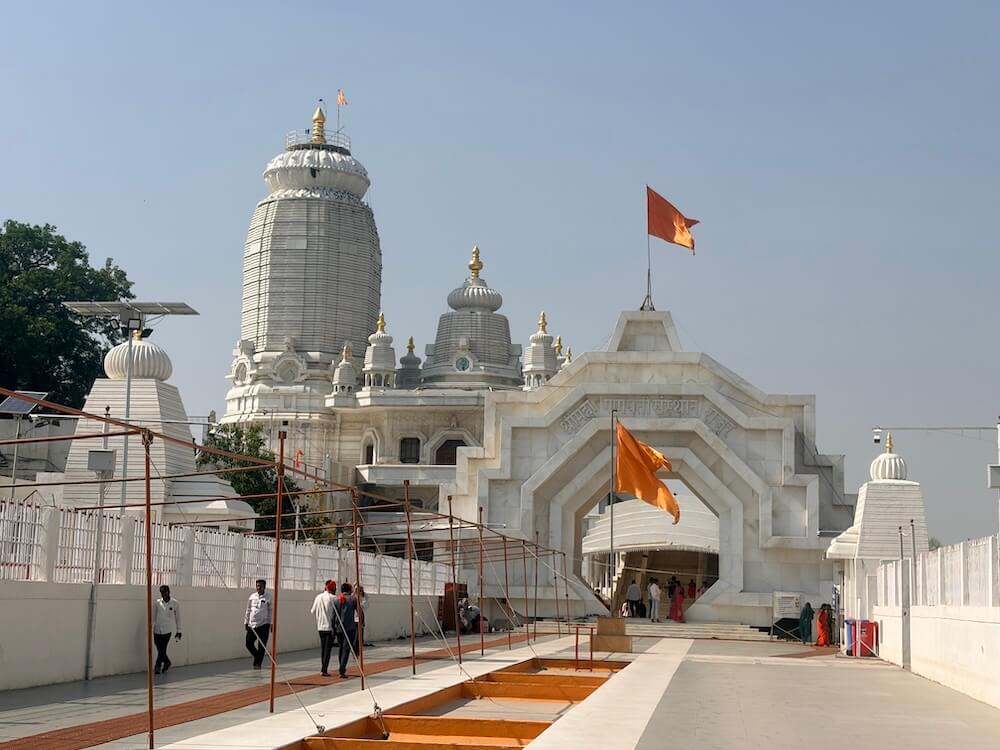
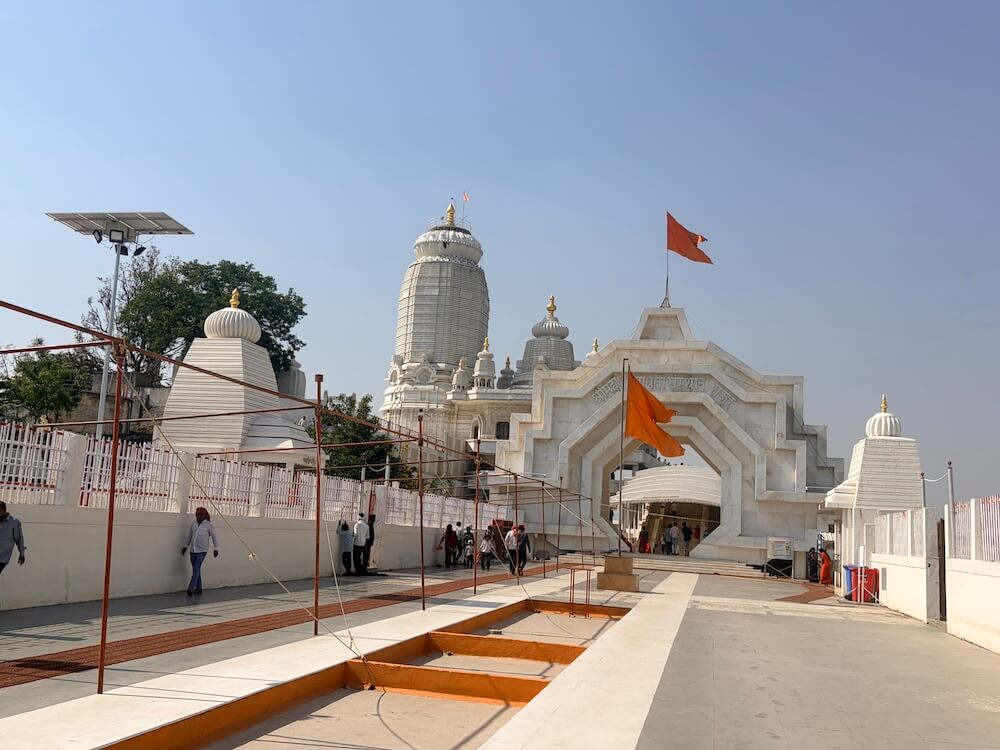
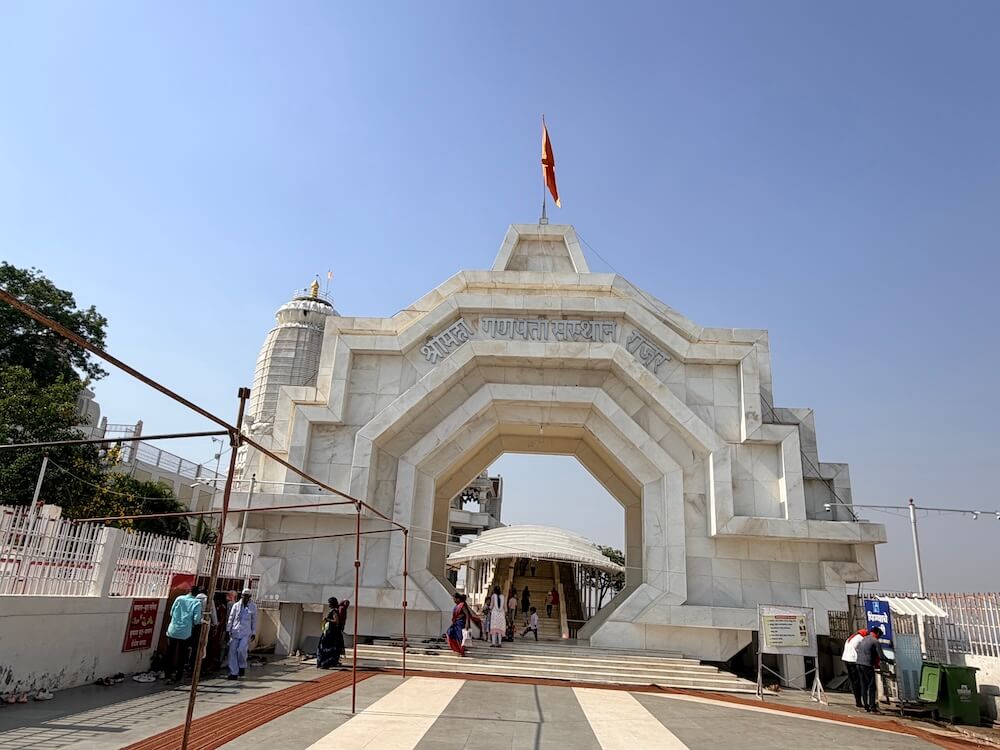
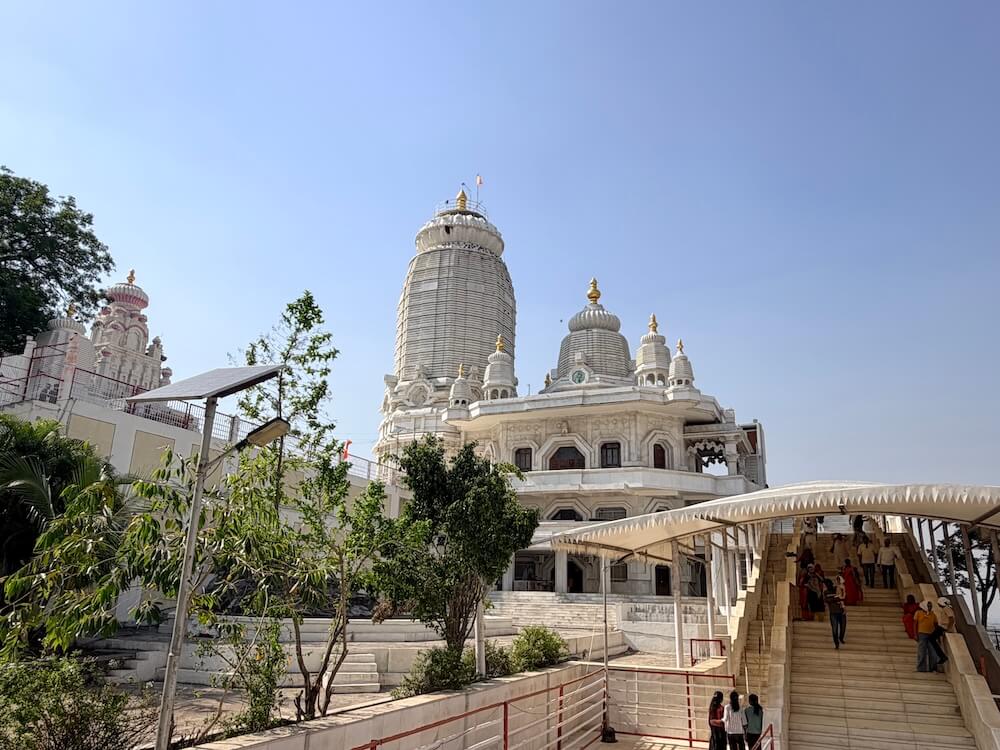
The temple premises are very spacious. On the way from the parking lot to the temple, there are hundreds of shops selling worship materials and Prasad. In this same area, there is a large building for the Bhakta Niwas and the Sansthan office. Near the main arch of the temple, there are temples of Varunraj on the right and Mahadev on the left. One enters the temple courtyard through an ornate white marble octagonal arch. From the courtyard, one climbs about 60 steps to enter the Darshan Mandap of the temple situated at a height. The pillars visible in this semi-open Darshan Mandap are connected to each other by ornate arched gateways. This Darshan Mandap has one main spire and four sub-spires. From here, one enters the spacious Sabha Mandap of the temple. The ceiling of the Sabha Mandap is high and is adorned with colorful carvings and attractive chandeliers. From here, one descends a few steps to enter the Antarala. Further ahead in the Antarala is the structure of the Garbhagriha. In the Garbhagriha, on a Vajra Peetha, is the Swayambhu and vermilion-smeared idol of Rajureshwar Mahaganpati. Behind the idol, on the Prabhavali covered with gold and silver sheets, there are embossed carvings of the sun, moon, and elephants on both sides. Ganpati has an ornate silver crown on his head. In the main temple premises, there are temples of Shiva, Vishnu, Surya, Annapurna, and Vitthal. The spire of the temple is a blend of Nagara and Dravidian styles. From the temple premises, one can see the entire village and the surrounding farmlands.
Every year, the festivals of Ganesh Chaturthi and Magh Shuddha Chaturthi, marking Ganesh Jayanti, are celebrated here with great enthusiasm. During the ten days of Ganesh Chaturthi, various religious programs are organized. A grand fair is held on the occasion of Ganesh Jayanti, featuring seven days of Ganesh Puran recitation, Dnyaneshwari Parayan, Kirtans, and discourses. This fair is considered one of the largest in the Marathwada region. Angarki Chaturthi is the most significant celebration for this temple. On this day, lakhs of devotees from Jalna, Sambhajinagar, Buldhana, and every corner of Maharashtra arrive for Darshan. Many devotees travel on foot in a Dindi procession from Jalna to seek blessings. This temple holds an important place in the social life of Jalna district, and many people seek the blessings of the Rajur Ganpati before beginning any major endeavor. The temple opens for devotees every morning at ०५:३० for the Kakad Aarti. Special Abhisheka and Puja are performed from ०७:०० to ११:०० in the morning. The Maha Aarti is conducted between १२:३० and ०१:३० in the afternoon, followed by the offering of Bhog. The evening Aarti takes place between ०६:३० and ०७:००, and the temple doors are closed after the Shej Aarti between ०९:०० and १०:०० at night. During festival periods, the temple remains open for Darshan twenty-four hours a day. The temple trust operates a free Annachhatra (food distribution center) for devotees, where hundreds of people partake in the Maha Prasad daily. Devotees hold a deep faith that since the idol of Ganpati here is Swayambhu (self-manifested), seeking its Darshan removes all obstacles.
This sacred temple stands as a testament to deep spiritual devotion, ancient architectural grandeur, and rich local cultural traditions.
The sanctum sanctorum houses the divine idol consecrated according to ancient Vedic traditions, surrounded by serene courtyards and traditional temple architecture.
Navratri, Maha Shivratri, Annual Temple Jatra & Deepotsav
Compare and book flights, secure top-rated local hotels near the temple, hire reliable guides, and rent cars instantly.
Extend your pilgrimage by visiting other highly sacred temples located nearby.


Add ₹999 more to unlock FREE SHIPPING!
Your sacred cart is currently empty.
Shop Photo FramesFill in your delivery details below to place your order.
Add comment