
Add ₹999 more to unlock FREE SHIPPING!
Your sacred cart is currently empty.
Shop Photo FramesThe Balaji Mandir in Deulgaon Raja, Buldhana district, is an ancient and vibrant pilgrimage site renowned as the ‘Tirupati of Maharashtra’. This temple was established in the seventeenth century by Raje Jagdevrao, a descendant of Rajmata Jijau. Devotees hold a strong belief that when Lord Balaji of Tirupati rests, He resides here in Deulgaon Raja. The idol of Balaji here is believed to fulfill the wishes of devotees. This temple is affectionately called ‘Dukandar Balaji’ (Shopkeeper Balaji) because it ranks third in wealth among the three prominent Balaji temples.
There are three famous Balaji temples in Vidarbha. They are given different names based on their opulence. The Balaji of Tirupati in Andhra Pradesh, being the wealthiest, is called ‘Savkar’ (Moneylender). The Balaji of Washim, who is next in wealth, is known as ‘Jahagirdar’ (Landlord). The temple in Deulgaon Raja was formerly structured like a shop, hence this Balaji is referred to as ‘Dukandar’ (Shopkeeper) and is considered the third wealthiest. The Sharangdhar Balaji in Mehkar is known as ‘Jamindar’ (Landowner). A popular belief states that the Balaji of Tirupati dines in Washim and has His shop in Deulgaon Raja. Thus, the spiritual and historical significance of these three places is interconnected, fostering great devotion for this shrine throughout Vidarbha.
Two main legends are recounted regarding the manifestation of the idol in this temple. The first legend is associated with Raje Jagdevrao, the grandson of Lakhujiraje Jadhav, father of Rajmata Jijau. He was a devout devotee of Balaji and would visit Tirupati for darshan every year. When old age made it impossible for him to travel to Tirupati, the Lord appeared to him in a dream and revealed that an idol was hidden in a sack of rice in his storeroom. Around the year १६६५, he found the idol, consecrated it, and built the temple. On the other hand, the text ‘Devalaya Grammahatmya’ mentions that a Brahmin named Deshsharma found this idol while bathing in the Amnā River and subsequently consecrated it. According to both narratives, Balaji manifested here out of devotion for His bhaktas, and this idol is believed to fulfill the wishes of devotees.
The old name of Deulgaon Raja town was Devalwadi or Devali. In the seventeenth century, Rasoji, a descendant of the Jadhav kings of Sindkhed Raja, developed this village from a commercial perspective and named it Deulgaon. The town is conch-shaped and formerly had strong fortifications with seven entrances. This town was once a major centre for cotton and silk textile trade. A tax called ‘Shahi Chavadi’ was levied on the cloth trade, and all the revenue generated from it was allocated for the annual festivities of the Balaji Mandir, as recorded in the historical Gazetteer of १९१०. Although the village has over ६३ temples and many samadhis of revered saints, Balaji remains the principal village deity. Even today, remnants of the historic fort and traces of old trade can be seen in the village.
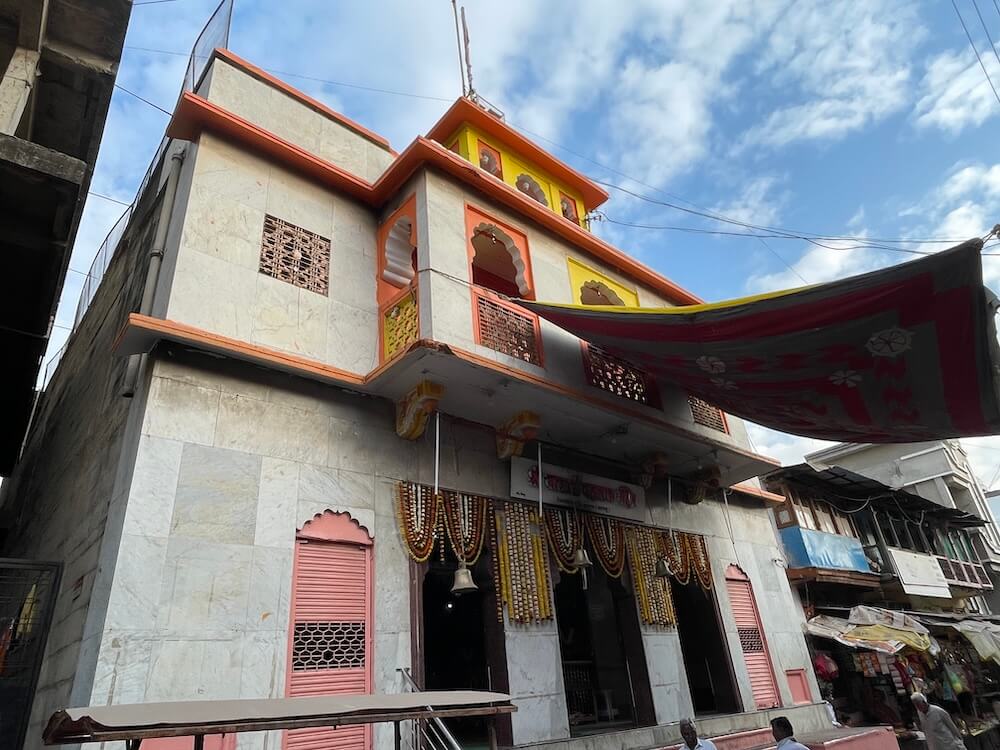
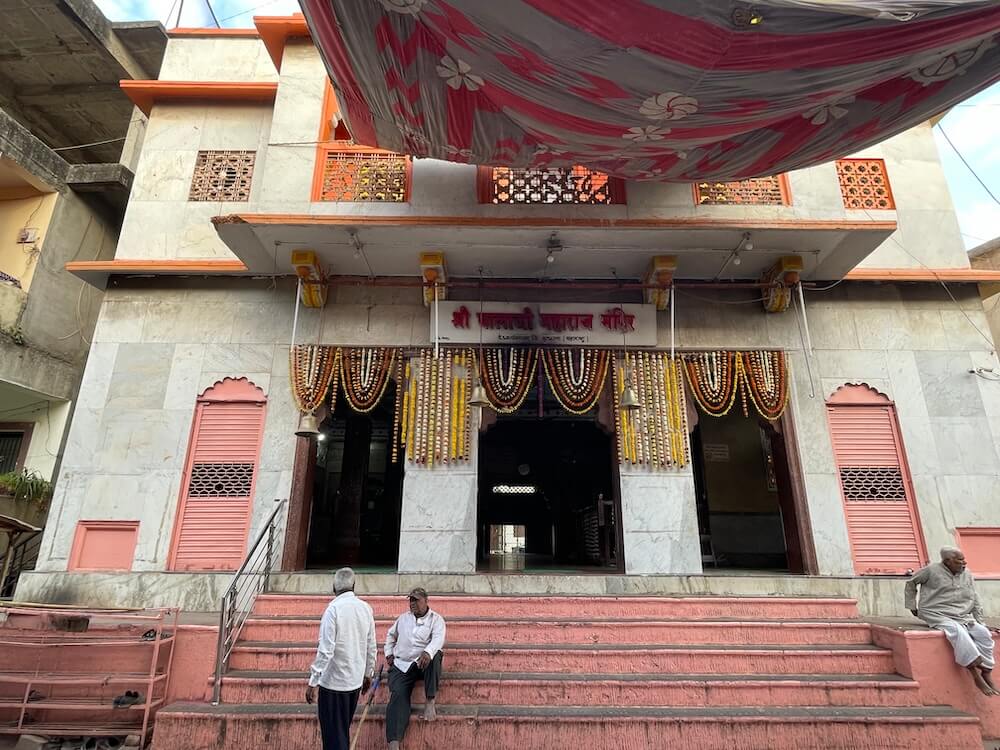
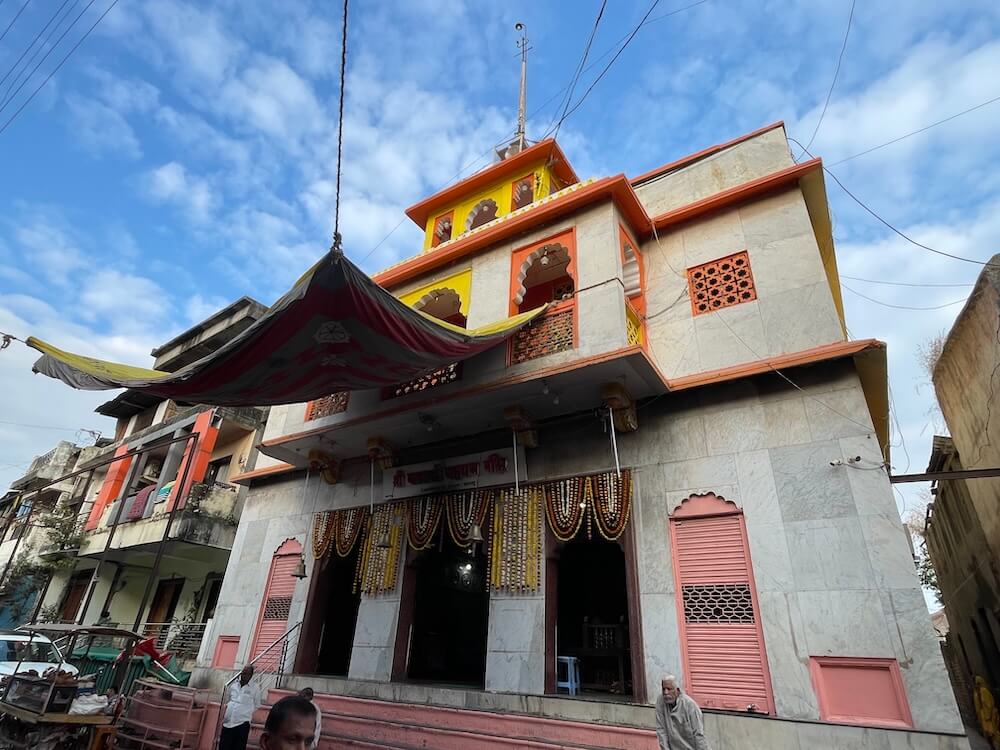
The main entrance of the temple faces north and has a nagarkhana (drum house) above it. Near the entrance, there is a five-foot-tall stone idol of Hanuman. The year शक १८४६ is carved on this idol. On the road leading to the temple, there are three temples built by Punyashlok Ahilyabai Holkar: an octagonal Mahadev temple, a Ganesh temple, and the Kholeshwar temple. Near the temple complex, there is an ancient stone stepwell about २०० feet deep underground. From its two gomukhas (cow-mouth spouts), both saline and fresh water flow. This is called Pavantirtha or Baltirtha. On the bank of this stepwell is the temple of Dhundivinayaka. The current structure of the temple is two-storied and was renovated in १९५१. The responsibility for the management of this temple has been traditionally entrusted to the Raje Jadhav lineage, the family of Rajmata Jijau.
The structure of the Balaji Mandir is two-storied. Directly in front of the temple is an idol of Garuda. In the sabhamandap (assembly hall), there are idols of Shri Vishnu, Hanuman, and Garuda. The pillars here feature exquisite sculptures of Dattatreya, Ganesh, and Ashtabhuja Devi. On the ceiling of the sabhamandap are paintings of the Dashavataras, and on the walls are silver idols of the Dashavataras offered by devotees. The Parayan Kaksha (recitation room) displays photographs of festivals and a plaque showing the genealogy of Lakhuji Raje Jadhav’s family.
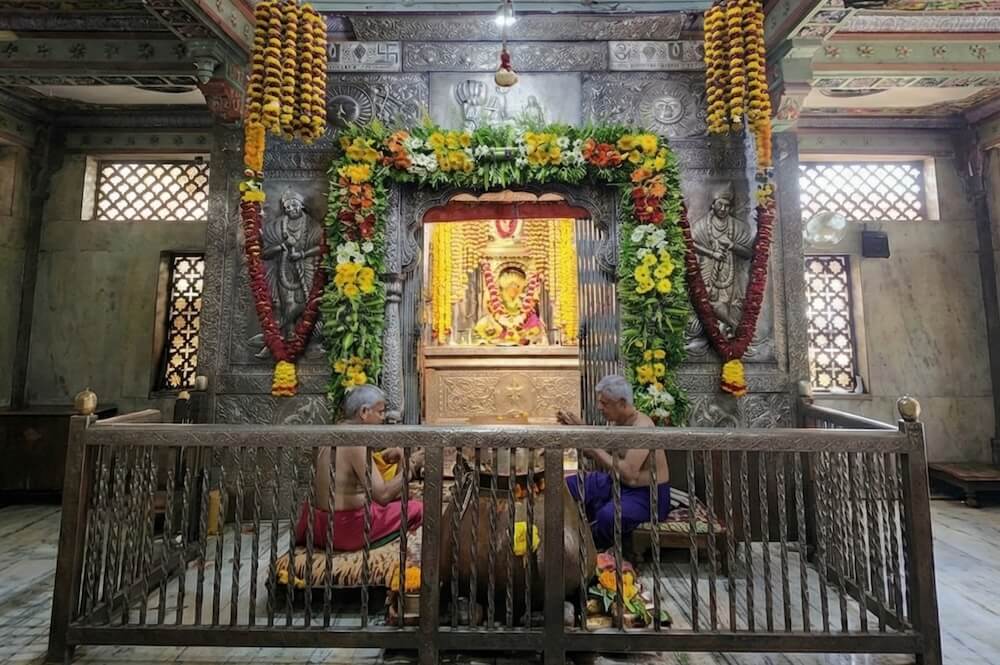
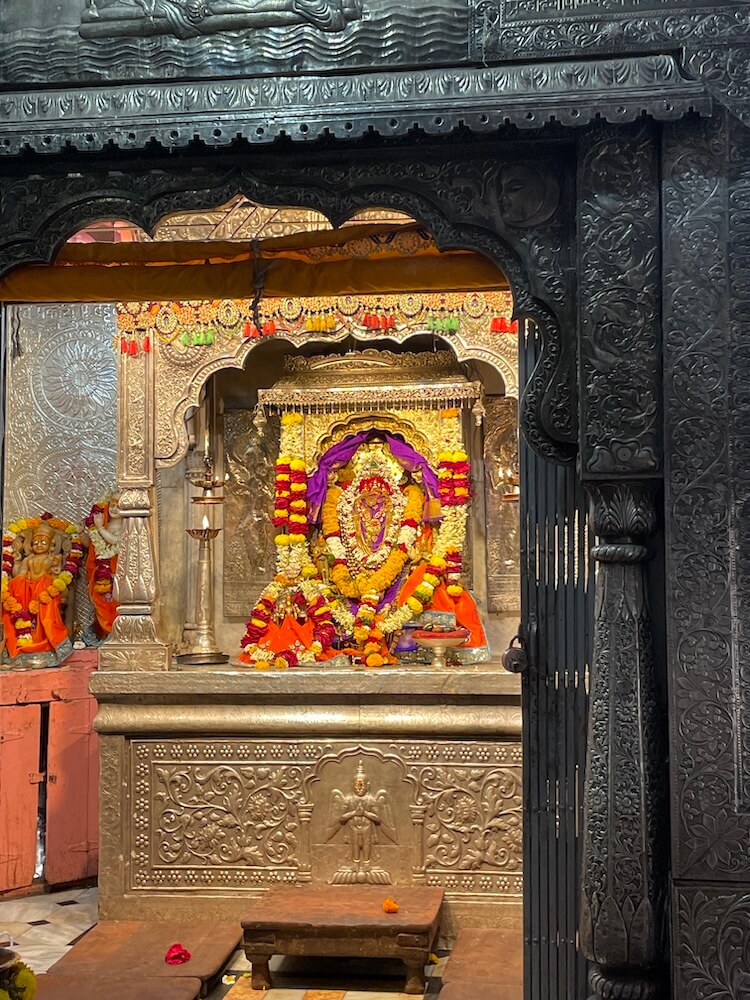
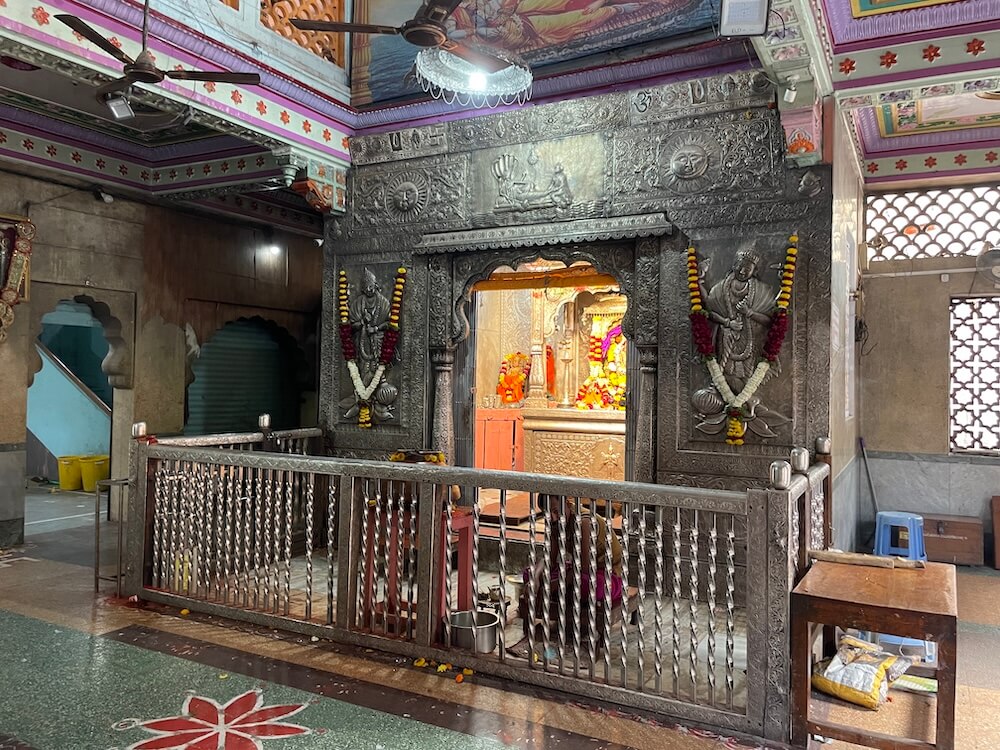
The main entrance to the garbhagriha (sanctum sanctorum) faces north. This ornate doorway is adorned with silver plating, and on both sides, sculptures of dwarapalas (gatekeepers) are carved. Above the door, on both sides, are images of the Sun, with an idol of Sheshashayi Venkatesha on the lalāṭabimba (lintel), and above that, a beautiful painting of Sheshashayi Vishnu and Shri Lakshmi. Inside the garbhagriha, a panchaloha (five-metal) idol of Balaji is seated on a silver and gold throne. To His left is Shridevi, and to His right is Bhudevi. The silk garments of these idols are changed every Friday. It is only at this time, for a mere fifteen minutes, that devotees can have darshan of the original idol. The idol is adorned with precious jewellery, including a golden crown, wristlets, and earrings. The necklace of golden mohurs and gems around the idol’s neck was offered by Thorale Bajirao Peshwe. These ornaments are worn by the idol during special ceremonies. Near the main idol are idols of Renukamata, Tandavanritya Shiva, Suryanarayana, and Gopalakrishna. In the lower part of the throne, an idol of Garudadeva is carved in the centre, and behind it is a golden prabhaval (aura).
The daily operations of the temple are conducted with great discipline. At ५:३० AM, Kakad Aarti and Mahapuja are performed, and the naivedya (food offering) is presented in the afternoon. After the evening aarti, devotees are given prasad of soaked spicy gram dal. During the month of Shravan, special religious rites and abhishekams are performed here. A nineteen-day yatra commences from Ashwin Shuddha Pratipada. During this period, communal bhajans, kirtans, and readings of Puranas are held. During Chaturmas and on specific tithis, the rules of worship are altered. Devotees visit throughout the year. Many devotees offer gold and silver jewellery and garments here to fulfill their vows. Vasant Puja is celebrated here in the month of Chaitra. The tradition of performing special abhishekams on the idol during eclipses is still preserved today.
The Laṭā Maṇḍapotsava, celebrated on Ashvin Shukla Navami, is a unique feature of this sacred place. On this auspicious day, twenty-one wooden laṭās, which are teakwood pillars, and forty-two colourful maṇḍapas are erected in the courtyard in front of the temple. Devotees from all communities, including Maratha, Māḷī, Telī, Charmakār, and Jain, participate in this festival. Thousands of devotees collectively raise these heavy wooden pillars amidst resounding chants of ‘Śrī Bālājī Mahārāj kī Jay…’. On the day of Dasara, the Bhoī and Śimpī communities undertake the sacred task of decorating the palanquin. This palanquin rests by the banks of the Āmnā River before returning to the town. On Ashvin Vadya Chaturthī, the day of Lalitā, the Dahīhaṇḍī is broken, and thereafter, the laṭās are taken down.
This sacred temple stands as a testament to deep spiritual devotion, ancient architectural grandeur, and rich local cultural traditions.
The sanctum sanctorum houses the divine idol consecrated according to ancient Vedic traditions, surrounded by serene courtyards and traditional temple architecture.
Navratri, Maha Shivratri, Annual Temple Jatra & Deepotsav
Compare and book flights, secure top-rated local hotels near the temple, hire reliable guides, and rent cars instantly.
Extend your pilgrimage by visiting other highly sacred temples located nearby.


Add ₹999 more to unlock FREE SHIPPING!
Your sacred cart is currently empty.
Shop Photo FramesFill in your delivery details below to place your order.
Add comment