
Add ₹999 more to unlock FREE SHIPPING!
Your sacred cart is currently empty.
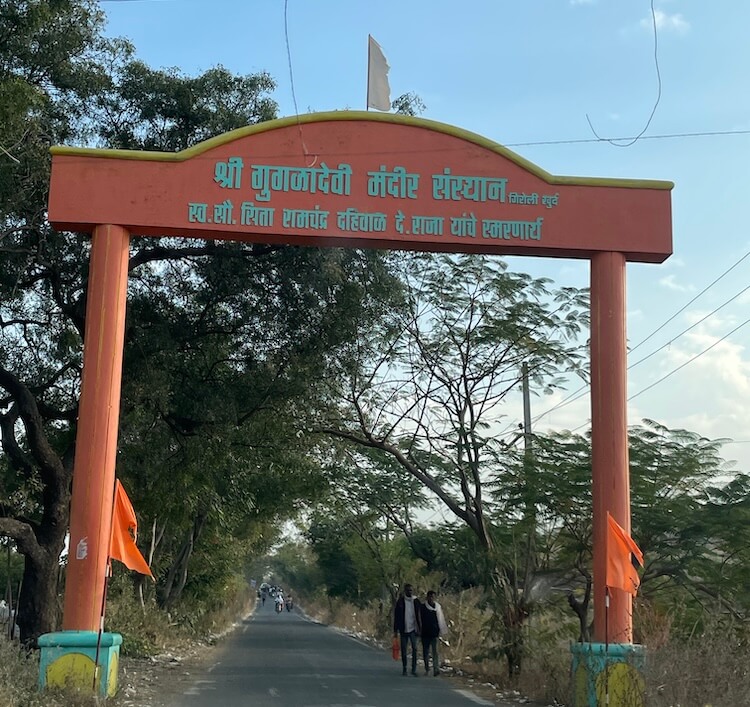
Shop Photo FramesThe ancient temple of Guguladevi is situated in Giroli (Khurd), on the outskirts of Deulgaon Raja city in Buldana district. This temple is believed to date back to the Satavahana era. The Goddess was named ‘Gugulai’ because a devotee named Vidyadhar performed penance by burning ghee and guggul (myrrh) here. To this day, the tradition of burning guggul in the temple continues daily. According to historical references, Rajmata Jijau visited this place to worship the Goddess. A grand fair is held in the temple premises on Chaitra Purnima, and during the Navratri festival, more than fifteen hundred oil lamps (Nanda Deep) are kept burning continuously. Nestled in a scenic landscape, this temple is the family deity (Kuldaivat) for many families in Vidarbha.
The legend associated with this temple states that a Brahmin named Vidyadhar once lived in Narayanpur village on the banks of the Suvarnamukhi River. Having lost his parents in childhood and being of modest intellect, he was often ridiculed by his brothers and villagers. Tired of this suffering, he renounced his home and went to the Himalayas to perform penance. Lord Venkatesha appeared before him and commanded him to worship Balaji at Deulgaon Raja in Vidarbha. Following this, when Vidyadhar arrived at Deulgaon, Balaji gave him a vision to serve the Vidya Devi located in the hills of the Giroli region. Vidyadhar came to Giroli, bathed in a stepwell named ‘Vidyatirtha’, and began worshipping the Goddess while living in a cave there. He worshipped the Goddess daily by burning guggul with incense and ghee; thus, the Goddess came to be known as ‘Gugulai’ and Vidyadhar as ‘Guguldani’. By the grace of the Goddess, he attained self-realization and returned to Deulgaon Raja to serve Balaji. Later, the word ‘Guguldani’ was corrupted to the name ‘Bugdane’. A reference to this story is also found in the Venkatesh Purana.
The 1910 District Gazetteer records that the idol of Balaji at Deulgaon Raja was found by the ancestors of the Bugdane family in the vicinity of this Gugulai temple, and they presented it to King Jagdevrao Jadhav. Although specific information regarding the construction of the temple is not available, the Satavahana-era dharmashala (rest house) in the temple premises confirms its antiquity. The descendants of Lakhujiraje Jadhav renovated this temple. Rajmata Jijau had visited this place to offer her prayers (Oti bharli) to the Goddess. An oil painting of that occasion is still preserved in the temple. Later, after the establishment of the Board of Trustees in 1996, the temple was renovated again.
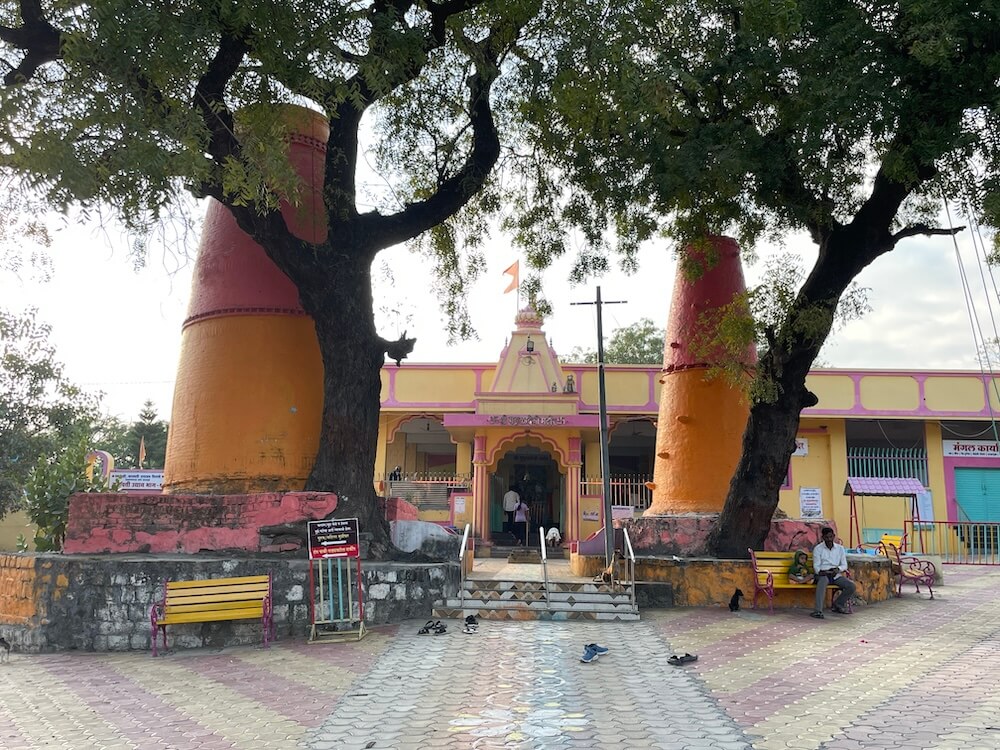
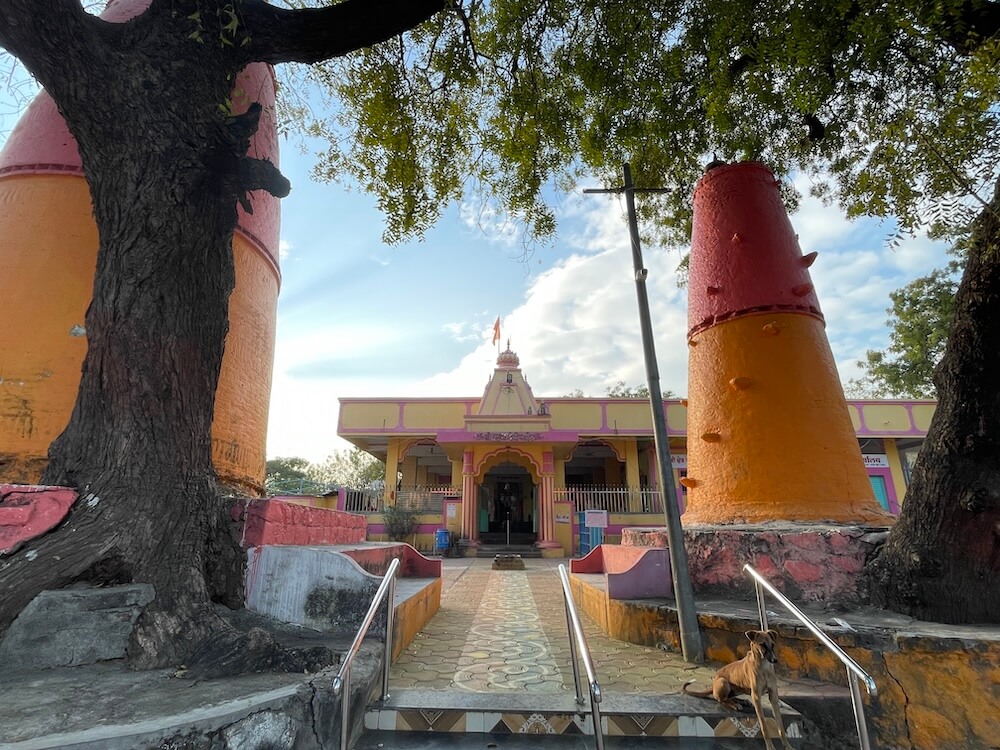
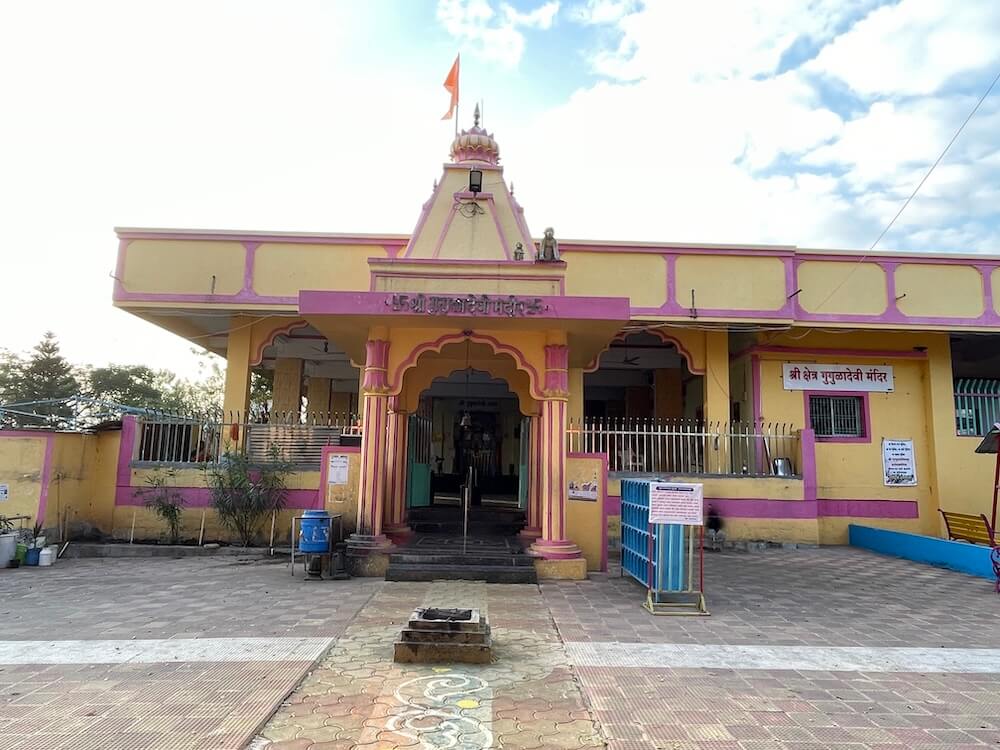
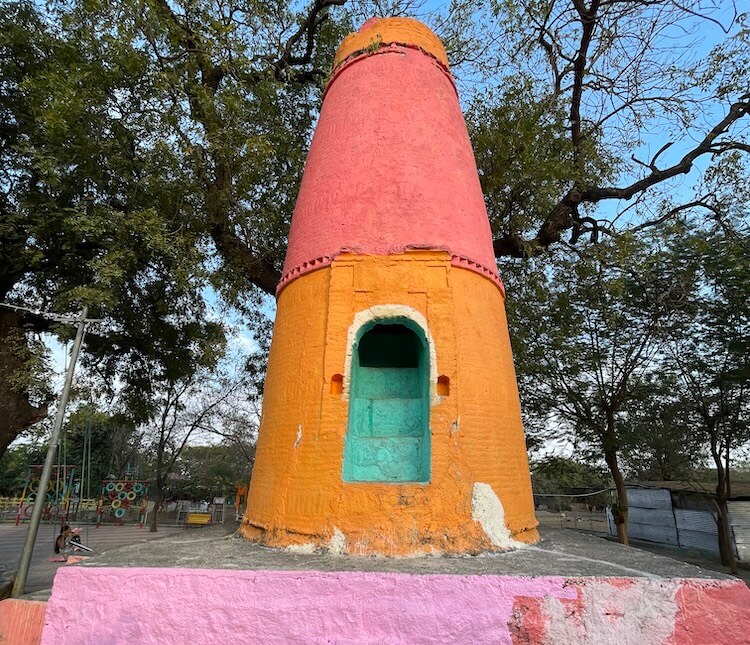
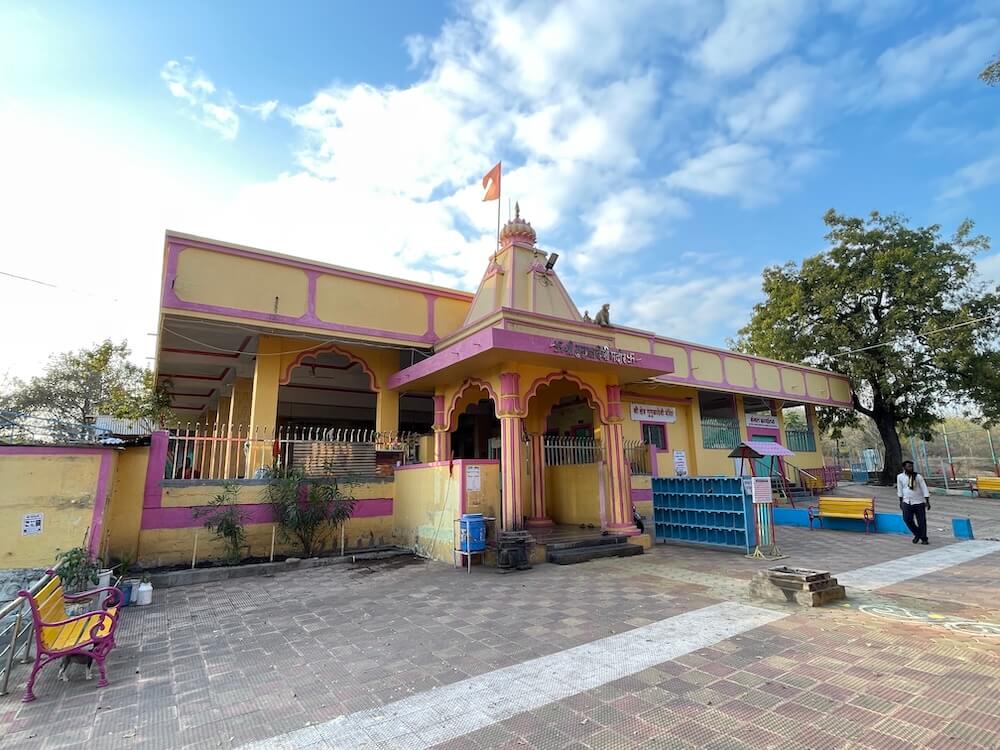
The temple is situated in a picturesque area four kilometers from Deulgaon Raja. The sprawling temple premises feature many trees and the ground is paved with paver blocks. One enters the courtyard after climbing four or five steps near the entrance. In this courtyard, there are two stone lamp pillars (Deepstambha) in front of the temple. One of these can be climbed from the outside, while the other has seven or eight steps inside, each two feet high. There is a sacrificial fire pit (Homkund) near the temple entrance in the courtyard. The temple structure consists of a Darshan Mandap, Sabha Mandap, and Garbhagriha (sanctum sanctorum). One enters the Sabha Mandap through the semi-open Darshan Mandap. The Sabha Mandap here is spacious. From the Sabha Mandap, one climbs four steps to reach the entrance of the Garbhagriha. On both sides of this stairway are Panchadhatu (five-metal) idols of lions, the vehicle of the Goddess. In the Garbhagriha, on a large pedestal, stands the vermilion-smeared idol of the Goddess within a stone arch supported by four pillars. Next to this idol are two smaller stones (Tandale), which are popularly believed to be the children of the Goddess. Many devotees worship this Goddess in the forms of Mahalakshmi, Mahakali, and Mahasaraswati.
A grand fair is held here on Chaitra Purnima. On that day, after the ritual bathing (Abhishek) and worship of the Goddess’s idol in the morning, various religious programs are organized throughout the day. In the evening, to fulfill their vows, many devotees pull twelve carts tied together without oxen in the temple premises. Some devotees climb the lamp pillars and shower sugar candies and sweets to fulfill their vows. After bhajans and kirtans at night, the Maha-Aarti of the Goddess is performed, followed by the distribution of Maha-Prasad to the devotees. As Gugulai Devi is the family deity of many families in the district, hundreds of devotees visit here daily for darshan. There is a large crowd in the temple premises during the Sharadiya Navratri festival. Many devotees from the rural parts of the district stay here for nine days, observing fasts and worshipping the Goddess. During this festival, continuous oil lamps are lit in the room to the right of the Garbhagriha. Initially numbering 101, the number of these lamps has now reached 1500. Devotees register in advance for this purpose.
To the south of the temple is an ancient Parijat tree. To the north of the temple is a dharmashala built during the Satavahana period. Its construction utilizes lightweight bricks shaped like horse heads. There is a tunnel in the cave on the hill behind the temple.
It is said that this path leads to the palace at Sindkhed Raja. There is a stone stepwell in the temple premises called Vidyatirtha. Devotees believe that bathing in its water cures skin diseases. Additionally, a meditation hall measuring 25 by 40 feet has been built in the temple premises for the meditation of devotees. In front of the temple are two gardens named Saraswati Udyan, containing about four hundred trees of various types. Along with guggul trees, many medicinal plants have been preserved here, and the branches of these trees emit a fragrance like perfume.
Five-colored lotuses have been planted in ten tanks in the garden, and there is also an artificial waterfall. The temple premises include a park with various play equipment for children and two large halls for auspicious functions. A cowshed (Goshala) has been set up here through the initiative of the local youth, where 50 cows are cared for.
This sacred temple stands as a testament to deep spiritual devotion, ancient architectural grandeur, and rich local cultural traditions.
The sanctum sanctorum houses the divine idol consecrated according to ancient Vedic traditions, surrounded by serene courtyards and traditional temple architecture.
Navratri, Maha Shivratri, Annual Temple Jatra & Deepotsav
Compare and book flights, secure top-rated local hotels near the temple, hire reliable guides, and rent cars instantly.
Extend your pilgrimage by visiting other highly sacred temples located nearby.


Add ₹999 more to unlock FREE SHIPPING!
Your sacred cart is currently empty.
Shop Photo FramesFill in your delivery details below to place your order.
Add comment