
Add ₹999 more to unlock FREE SHIPPING!
Your sacred cart is currently empty.
Shop Photo FramesIn the rich saint tradition of Vidarbha, the name of Saint Shiromani Yelhoji Maharaj is taken with great reverence. His ancient Samadhi temple is located at Jambhora in Chikhli taluka of Buldana district. A staunch devotee of Shri Krishna, Yelhoji Maharaj is considered the presiding deity of the Sutar community. Having gained significance since the Mughal era, this site has been granted ‘B’ grade pilgrimage status by the State Government. In the temple premises, along with the Maharaj’s Sanjeevan Samadhi, there are temples dedicated to the Navnath and Goddess Mahalakshmi. An historical decree (Sanad) from the year 1711 CE can also be seen here. Preserving the legacy of spiritual peace and enlightenment, this temple is a place of faith for thousands of devotees in Vidarbha.
During the Mughal rule, Yelhoji Maharaj was born into a Sutar family in the village of Andhera, in the Deulgaon Raja taluka of Buldana district. He had four brothers. From childhood, he was absorbed in the devotion of Krishna. Even in his youth, his parents were worried because he remained immersed in Krishna Bhakti without engaging in any profession. Eventually, they gave Yelhoji Maharaj the task of herding cattle. However, instead of grazing the cattle in the fields, he remained absorbed in Krishna Bhakti. As a result, the cattle would enter nearby fields and damage the crops. Angered by this, the villagers once beat Yelhoji Maharaj severely. It is said that at that time, Shri Krishna himself lovingly stroked Yelhoji Maharaj’s body and healed his wounds. Since then, Shri Krishna himself would invisibly look after Yelhoji Maharaj’s cattle, and the sound of his flute could be heard. Having attained self-realization through the grace of Shri Krishna, Yelhoji Maharaj began the work of enlightenment in the surrounding region. As his fame spread far and wide, many followers began to come for his darshan.
There was a great landlord named Bhangoji in the Jambhora area. Once, when Bhangoji refused to pay tribute to the Mughal regime, the enraged Emperor imprisoned Bhangoji’s son and issued an order to impale him. A helpless Bhangoji came to Andhera and pleaded with Yelhoji Maharaj for his son’s release. Reassuring him with the words, “Do not worry, your son will return home safely by tomorrow morning,” the Maharaj told Bhangoji to go home. Meanwhile, the Emperor began to ramble like a madman. When the worried Begum inquired with the Wazir, the Wazir explained that the Emperor had been in this state ever since he sentenced Bhangoji’s son to punishment. Hearing this, the Begum pardoned Bhangoji’s son and released him. After his son returned home the next morning, Bhangoji came back to Andhera and expressed his desire to give a large estate as Guru Dakshina. Even after Yelhoji Maharaj refused to accept it, Bhangoji offered an estate of 11 villages including Jambhora. Since then, Yelhoji Maharaj settled in Jambhora and began guiding his followers. After some years, he took Sanjeevan Samadhi near the Navnath temple in the village. Over time, his Samadhi temple was built at this very spot. The Patilship in this village had been with the Sutar community for many years. A Sanad, engraved on an iron plate and bearing the seal of the Emperor with the Fasli year 1121, which corresponds to 1711 CE, is still available with his descendants. The Samadhi temple of Yelhoji Maharaj was recently renovated.
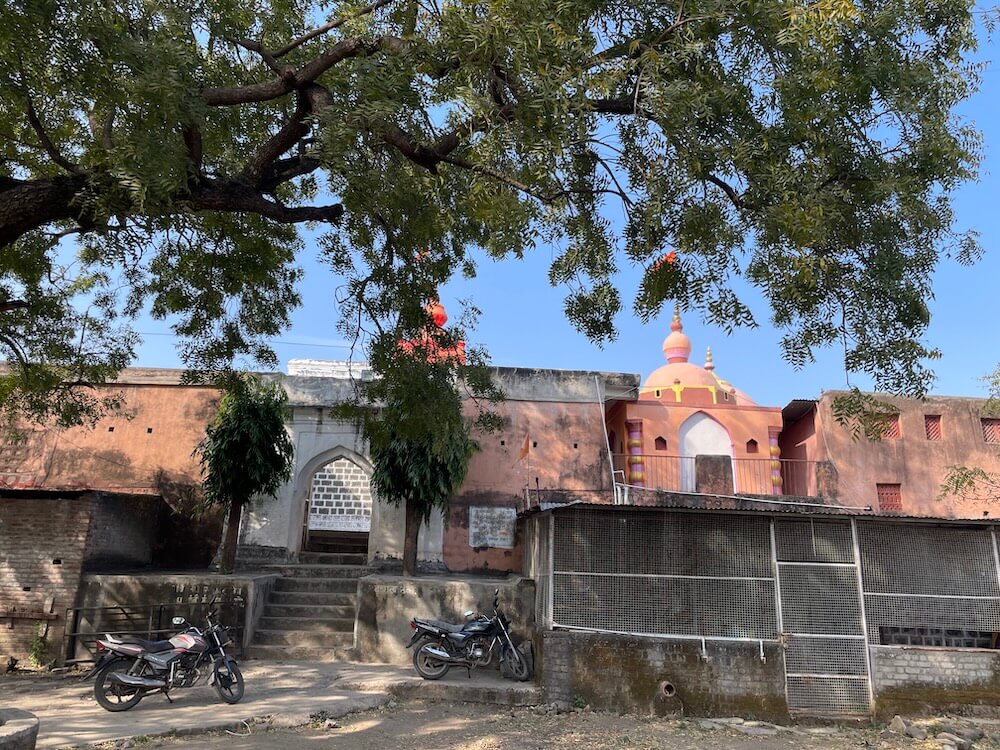
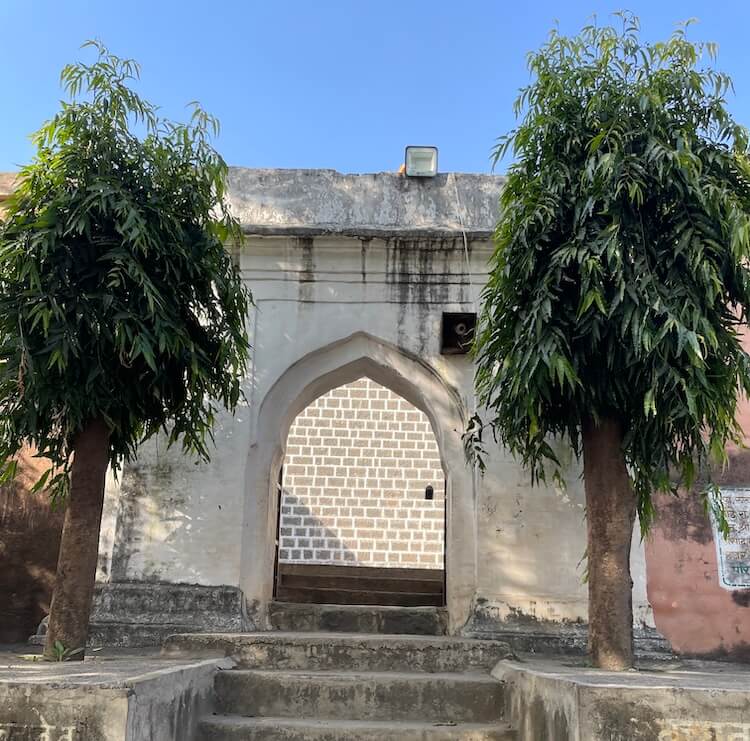
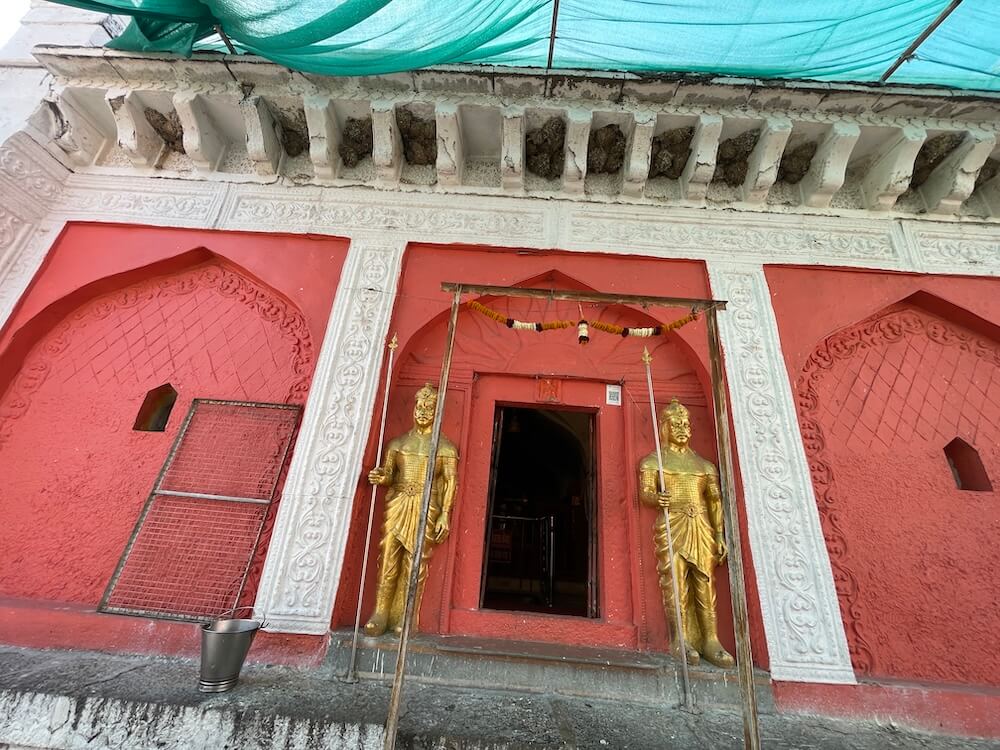
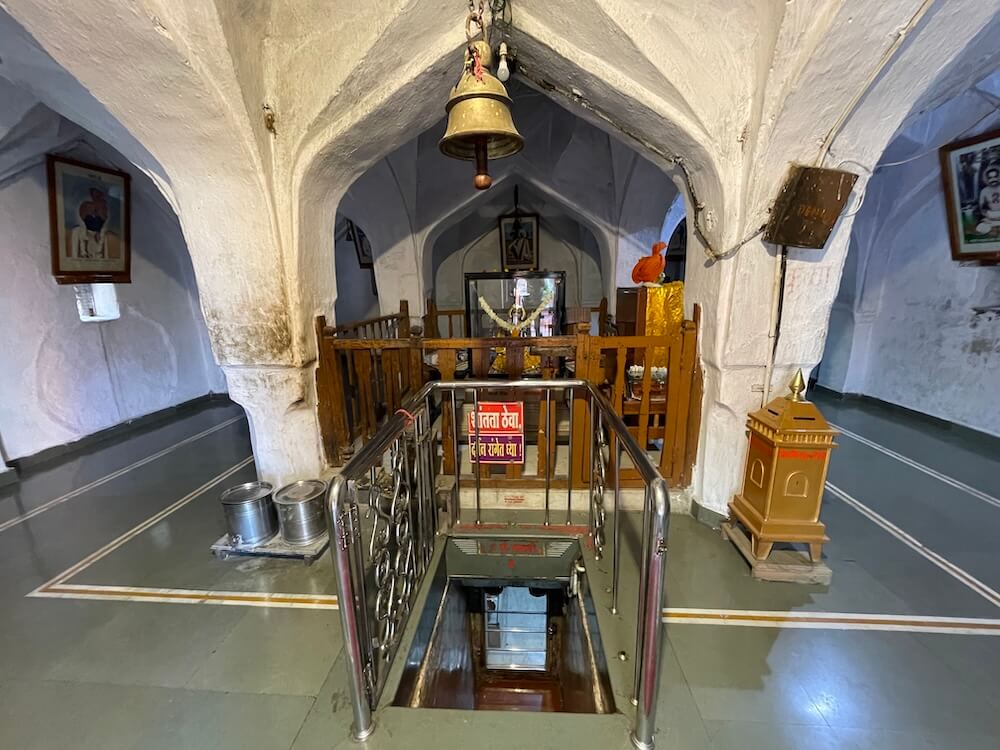
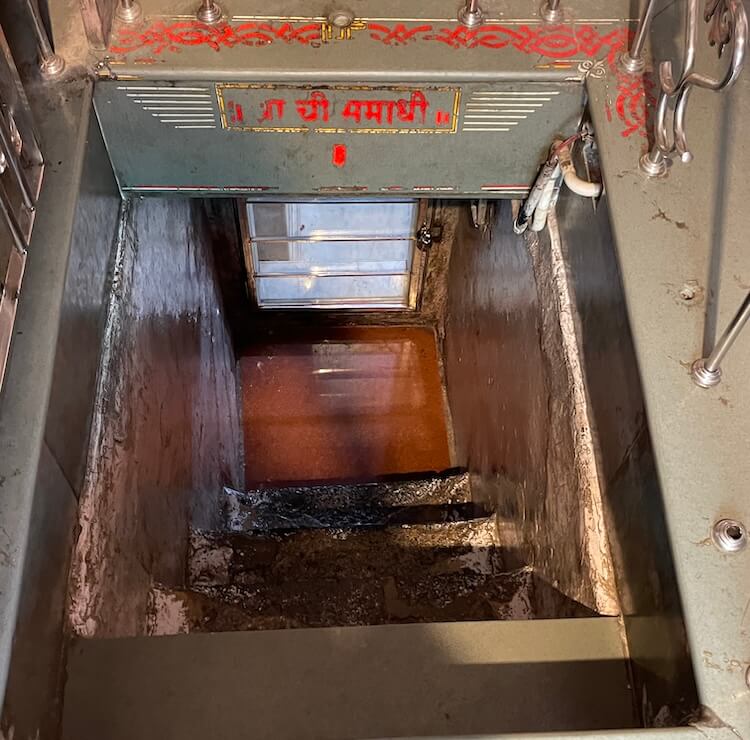
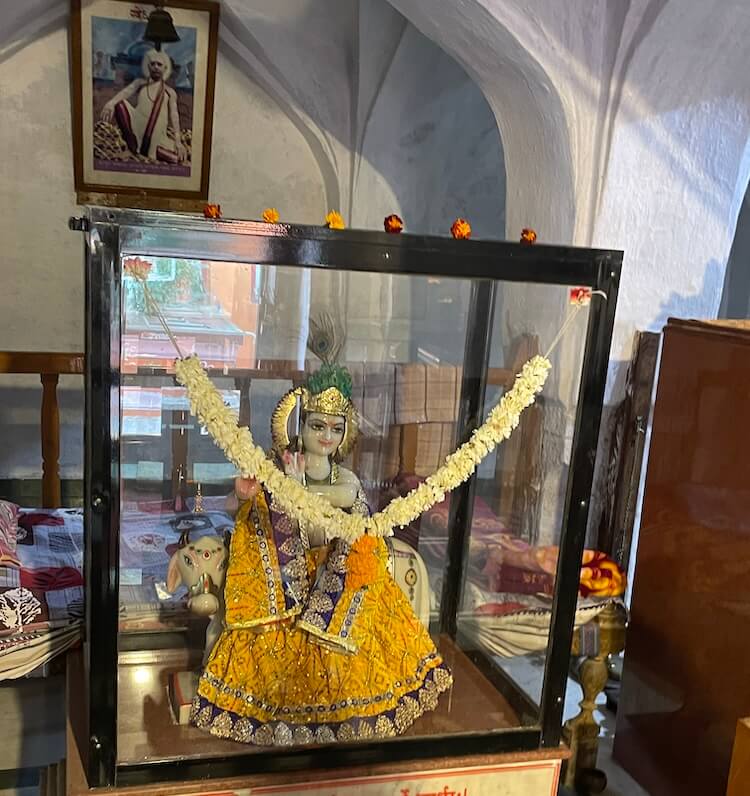
To enter this temple complex situated on a height, one has to climb some steps. On the attractive entrance of the temple, there is a Nagarkhana and a minaret-like structure above it. While entering the courtyard through this entrance, there is a sculpture of an elephant on the left. In the spacious courtyard, on the right side, is the Samadhi temple of Yelhoji Maharaj. There are sculptures of gatekeepers on both sides of the temple entrance. In the center of the entrance is an image of the Sun. There are steps from the assembly hall (Sabhamandap) to reach the Samadhi site located in the basement. Upon descending, one finds the black stone idol of Yelhoji Maharaj at the Samadhi site. Dressed in beautiful clothes and a turban, the idol wears a stole and Rudraksha beads around its neck. There is a tunnel behind this Samadhi. It is said that Yelhoji Maharaj sat in this very tunnel to take Sanjeevan Samadhi. In the upper part, in the sanctum sanctorum in front of the assembly hall, there is an idol of Shri Krishna playing the flute inside a glass case on a pedestal. Behind this idol is Mother Cow (Gomata), and a wooden railing is installed in front. Behind this idol is a Panchdhatu (five-metal) idol of Yelhoji Maharaj. As the original idol in the Samadhi temple was wearing out, this new idol was crafted a few years ago for daily worship. Nearby, Yelhoji Maharaj’s Padukas (footwear), his seat, and his bed are preserved. Above the sanctum sanctorum of this temple is a dome-shaped spire with a two-tiered Amalaka and a Kalash.
Near this temple is an approximately eight-hundred-year-old temple of the Navnath. This temple contains an image of the Navnath and nine Samadhis. In the nearby Mahalakshmi temple, there are two idols of the Goddess. The Navnath temple as well as the Mahalakshmi temple have dome-shaped spires. There is a tunnel in the temple premises. Steps have been made to descend into this tunnel, which is of solid construction. This tunnel contains an oil painting and images of the Navnath. During the week preceding the Dharmanath Beej, which falls on Magh Shuddha Dwitiya, the recitation of the Navnath is held here.
This temple is fortified on all four sides and also has an entrance at the back. There are some arched corridors inside the fortification. The kitchen here has large-sized hearths. During festivals, Mahaprasad is prepared on them. In the temple premises, there are two step-wells (Barav) contemporary to this temple. These step-wells have steps on all four sides and a small tank in the center. A few steps from here is a spring site famous as ‘Sitanhani’.
Various religious festivals are celebrated with great enthusiasm throughout the year at the temple in Jambhora. On Mahashivratri and every Monday in the month of Shravan, Bhajans, Kirtans, and Mahaprasad are organized in the temple. The most important ceremony in this religious tradition is the death anniversary (Punyatithi) of Shri Saint Yelhoji Maharaj. It is celebrated every year on the date of Magh Vadya Dashami. A fair is held at Jambhora on this occasion. During this festival period, various religious rituals such as Bhajans, Kirtans, and Mahaprasad are performed.
This sacred temple stands as a testament to deep spiritual devotion, ancient architectural grandeur, and rich local cultural traditions.
The sanctum sanctorum houses the divine idol consecrated according to ancient Vedic traditions, surrounded by serene courtyards and traditional temple architecture.
Navratri, Maha Shivratri, Annual Temple Jatra & Deepotsav
Compare and book flights, secure top-rated local hotels near the temple, hire reliable guides, and rent cars instantly.
Extend your pilgrimage by visiting other highly sacred temples located nearby.


Add ₹999 more to unlock FREE SHIPPING!
Your sacred cart is currently empty.
Shop Photo FramesFill in your delivery details below to place your order.
Add comment