
Add ₹999 more to unlock FREE SHIPPING!
Your sacred cart is currently empty.
Shop Photo FramesNestled in the lap of the Ajanta mountain ranges at Dudha in Buldana district, the Mardadi Devi Temple is a significant religious site in Vidarbha. Legend has it that this site, considered a sub-shrine (upapitha) of Renuka Devi of Mahur, was consecrated by Lord Parashurama. Built in the 12th-century Hemadpanti architectural style, this temple showcases a beautiful confluence of Shiva and Shakti. In the sanctum sanctorum of the temple lies the vermilion-anointed stone (tandala) of the Goddess, and directly in front sits a self-manifested (swayambhu) Shiva Linga. Located in a picturesque environment, the state government has declared this temple a ‘B’ grade pilgrimage site. Three major fairs are held here annually, including during the Sharadiya and Chaitri Navratri festivals.
The cultural significance of the Mardadi temple and its surrounding area is described in ancient texts such as the Skanda Purana and Padma Purana. These texts mention the sacred springs and the abodes of goddesses within these mountain ranges. The ‘Ain-i-Akbari’, written by Abul Fazl in the 16th century, also records the nature and mountain ranges of this region. The temple’s Hemadpanti architecture confirms it dates back to the 12th century. After a renovation carried out a few years ago, this ancient temple attained its current form. According to local residents and priests, this site of Mardadi Devi is approximately 3,000 years old and is believed to date back to the Treta Yuga.
The legend of this temple states that when ideological differences arose between Sage Jamadagni and Mother Renuka, Mother Renuka rested in the lap of these mountains. Because the Goddess revealed her radiant form here, this place was named ‘Mardadi’. This site is considered a sub-shrine of Mother Renuka of Mahur. According to another story, in ancient times, a wicked demon terrorized this region. Local people and sages were distressed by his torment. To destroy this villain, the Goddess assumed a fierce form and performed the ‘mardana’ (complete destruction) of the demon on this very mountain ridge. Having destroyed the demon and established righteousness, this awakened (jagrut) site and the Goddess residing here came to be known as Mardadi Devi.
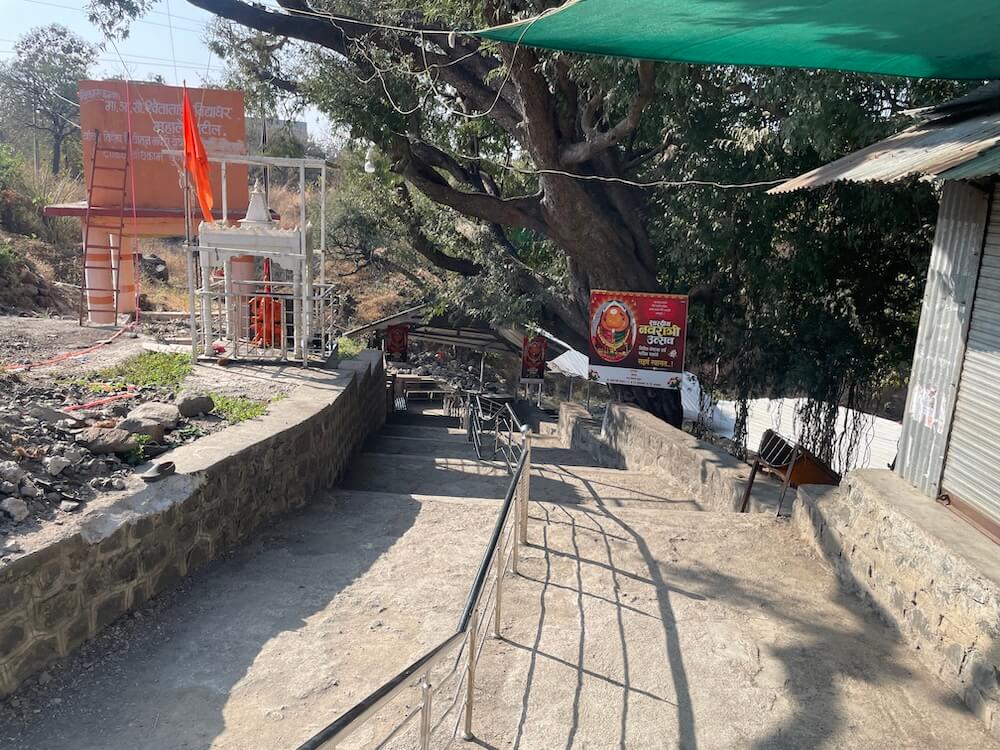
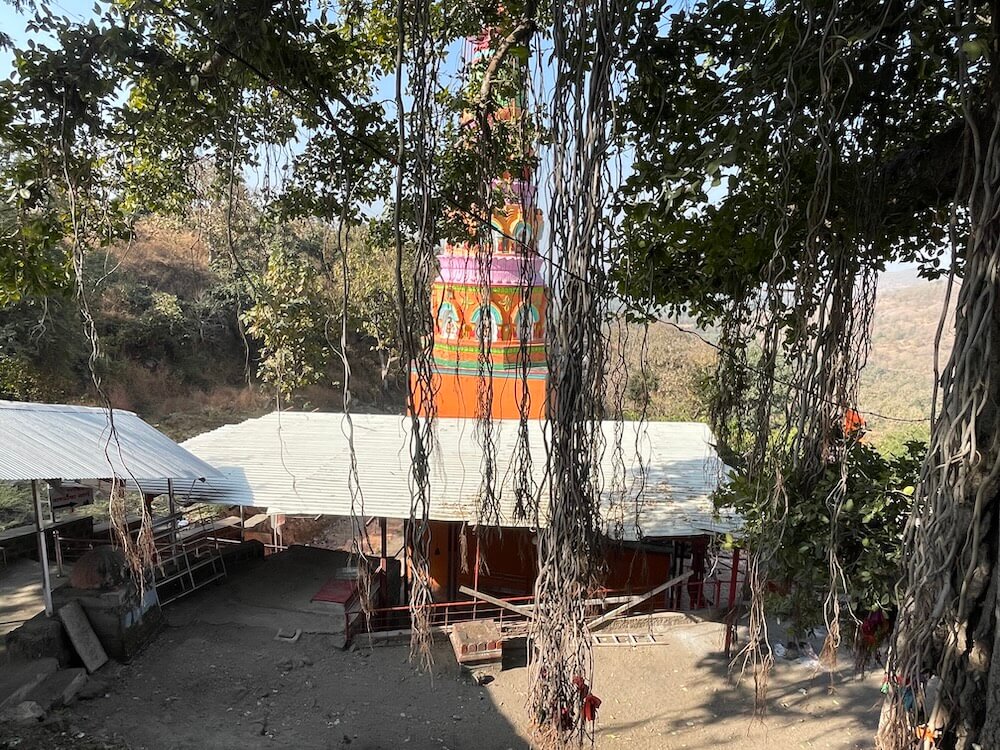
The location of this temple, nestled in the lap of the Ajanta mountain ranges, is geographically unique. The temple is situated near Dudha village, which is considered the highest point in the district. The environment around the temple feels extremely serene due to the lush green forest, the flowing water of streams, and the constant chirping of birds. The temple premises feature shops selling worship materials, prasad, and various other items. To reach this temple, one must descend 81 steps. While descending, one encounters a small temple of Bhairav Baba, from where the temple spire becomes visible.
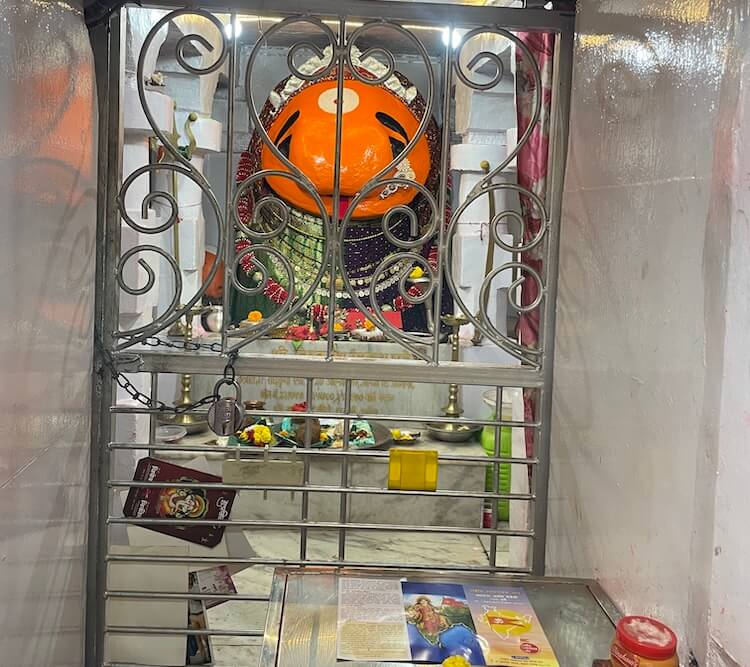
The temple structure consists of a assembly hall (sabhamandap) and three sanctum sanctorums. There is a large pavilion outside the assembly hall. The assembly hall features six carved stone pillars. These pillars, standing on pedestals, have square shapes carved into their shafts. In the sanctum, the large vermilion-anointed stone of the Goddess rests on a stone throne atop a high platform. On this stone, which faces west, eyebrows, eyes, a nose, and a tongue are carved. The Goddess wears a nose ring (nath), and rice grains are placed on the large vermilion mark on her forehead. After the ritual adornment (shringar puja), the form of the Goddess looks even more radiant. To the left of the idol is a sword, and to the right is an idol of Parashurama holding a weapon. Since Parashurama is the son of Mother Renuka, one gets the darshan of both mother and son together here.
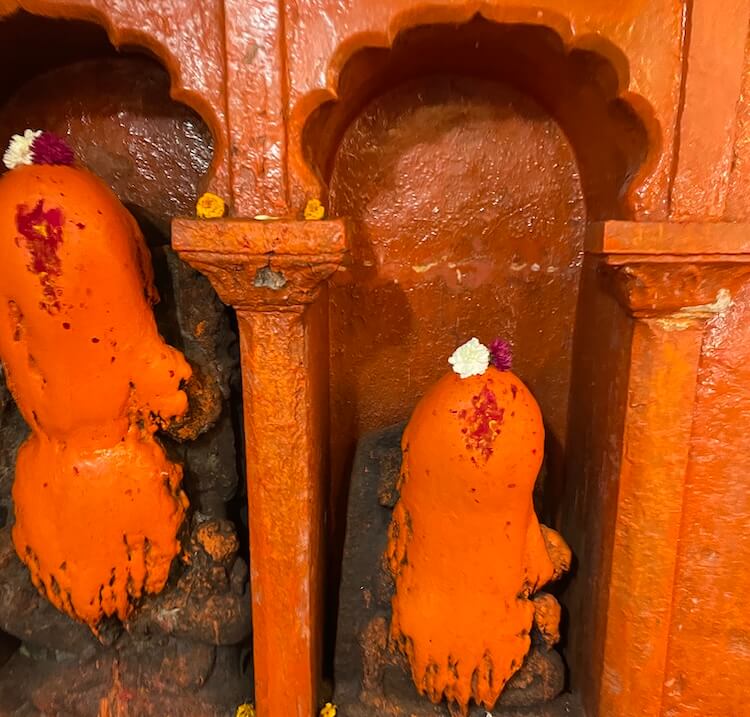
Directly in front of the Goddess’s sanctum is the sanctum of Mahadeva, which houses a self-manifested Shiva Linga in a large base (shalunka). Nearby is the cave-like sanctum of Teli Mata. Since the entrance to this sanctum is small, one must bow down to enter. Inside is a stone idol of Teli Mata. Devotees perform oil anointment (telabhishek) on the idol of this Goddess, who is also called ‘Telia Mata’. This oil collects in a small space in front of the idol. It is the belief of devotees that applying this oil to the body cures skin diseases like ringworm, scabies, and eczema. The temple also houses ancient idols of Ganesha and Goddess Saraswati. There is a small sacrificial altar (yajna kund) in the temple, and a fire ritual (havan) is performed during the Navratri festival. In a large nearby pavilion, there is a vermilion-anointed idol of the south-facing Hanuman. Auspicious ceremonies like weddings are held in this pavilion, which was built by a devotee some years ago.
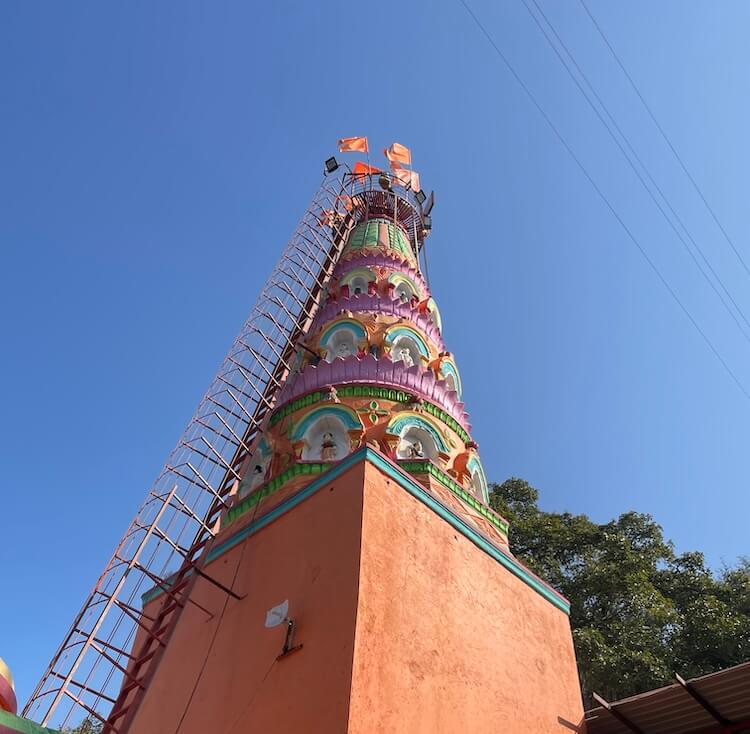
The Mardadi Devi temple has a tall spire (shikhara). On the square base at the very bottom of the spire, there are three circular levels, with a lotus flower design between each level. The niches in the circular levels contain carved idols of deities and sages. The spire, which tapers towards the top, is crowned with a two-tiered amalaka and a finial (kalash). Near the temple are two lamp pillars (deepstambha) and a small temple of Bal Ganesha.
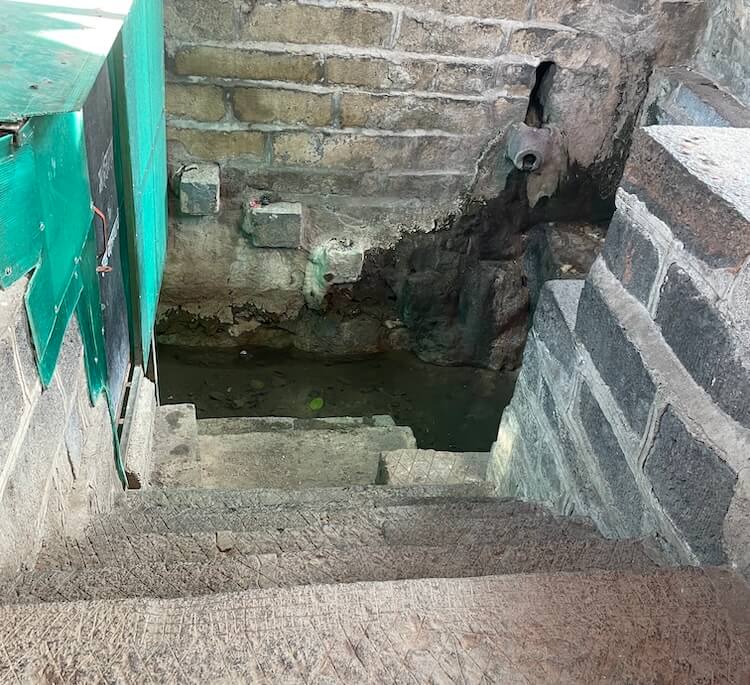
On the right side of the temple is a stone-built water tank (kund). Legend says this tank was created by Parashurama by shooting an arrow. A stream of water flows continuously from a cow-mouth (gomukh) into this tank. Even in the peak of summer, the water level does not decrease. Devotees believe that the Banganga River originates from this very spot. It is said that no matter how much water falls from the gomukh, the water level in the tank does not rise. Water flows into the gomukh from a tunnel located above it. It is believed that this water comes from the Painganga River. Many devotees come here to bathe, as there is a belief that bathing under this gomukh during the Navratri festival cures many ailments.
Countless devotees from Vidarbha, Khandesh, and Marathwada come for the darshan of Mardadi Devi, who is renowned as an awakened deity. Large fairs are held here on Chaitra Purnima and Pola Padwa. Chaitri, Paush, and Sharadiya Navratri festivals are celebrated here with great enthusiasm. Compared to the Sharadiya Navratri, the Navratri festivals in the months of Chaitra and Paush are relatively smaller in scale. Various religious programs are organized in the temple during this nine-day festival period. During this time, the entire area is bustling with the crowd of devotees coming for darshan.
This sacred temple stands as a testament to deep spiritual devotion, ancient architectural grandeur, and rich local cultural traditions.
The sanctum sanctorum houses the divine idol consecrated according to ancient Vedic traditions, surrounded by serene courtyards and traditional temple architecture.
Navratri, Maha Shivratri, Annual Temple Jatra & Deepotsav
Compare and book flights, secure top-rated local hotels near the temple, hire reliable guides, and rent cars instantly.
Extend your pilgrimage by visiting other highly sacred temples located nearby.


Add ₹999 more to unlock FREE SHIPPING!
Your sacred cart is currently empty.
Shop Photo FramesFill in your delivery details below to place your order.
Add comment