
Add ₹999 more to unlock FREE SHIPPING!
Your sacred cart is currently empty.
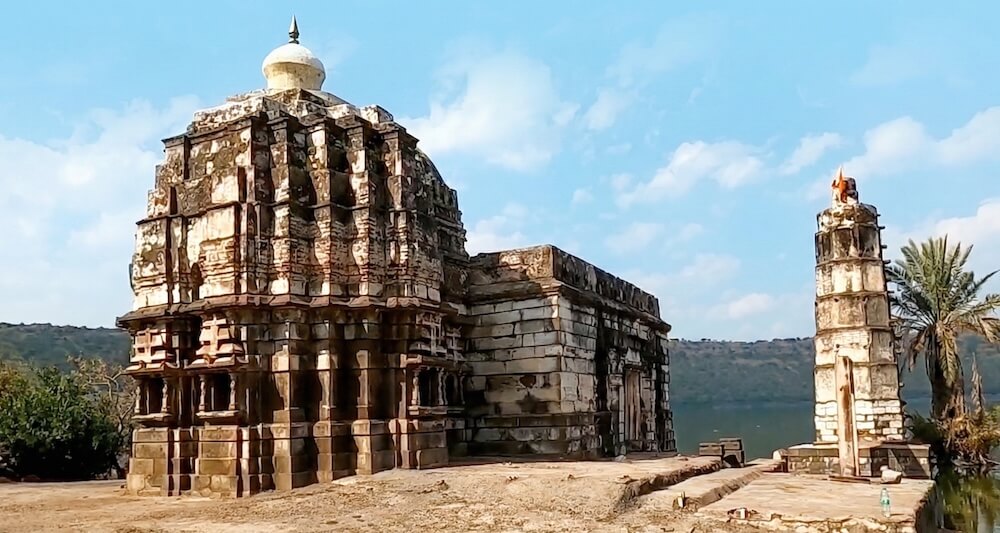
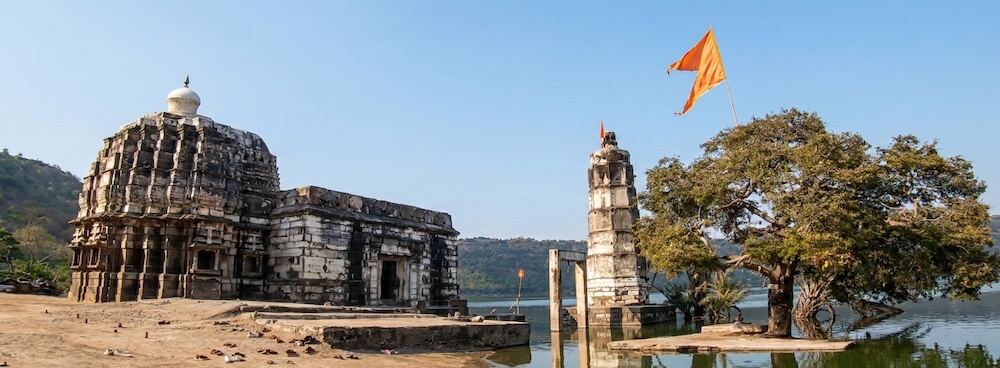
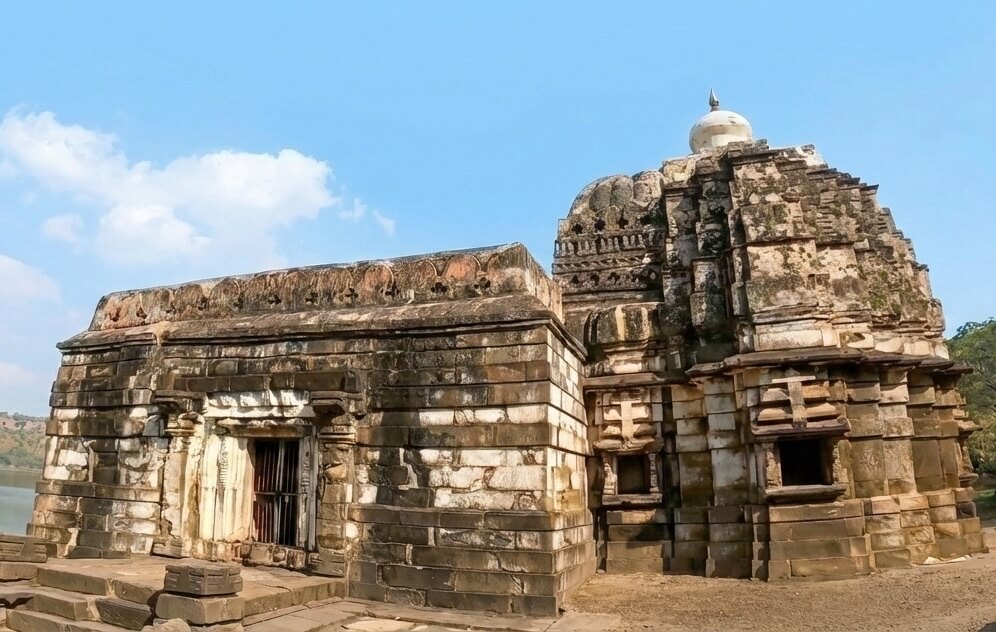
Shop Photo FramesNestled within the dense forests surrounding the world-renowned Lonar Lake in Buldhana district, the Kamalaja Devi Temple stands as a center of historical, spiritual, and geographical fascination. As the presiding deity (Gramadevata) of Lonar, the Goddess is revered as an incarnation of Goddess Lakshmi. Built during the Chalukya-Yadav period in the Hemadpanti architectural style, this octagonal temple is a magnificent specimen of ancient craftsmanship. Notable geographical wonders associated with this site include the presence of a freshwater stream in the ‘Sasu-Sun’ (Mother-in-law and Daughter-in-law) well, despite the surrounding lake water being saline, and the mysterious phenomenon where a magnetic compass needle loses its orientation within the temple premises.
Believed to be highly powerful and sentient, the Goddess shares a divine form similar to Renuka Mata of Mahur. From a historical perspective, this region has been influenced by powerful dynasties such as the Mauryas, Satavahanas, Chalukyas, and Yadavas, who recognized the significance of this site and commissioned the construction of various temples here. This grand temple of Kamalaja Devi was constructed between the 10th and 12th centuries during the Chalukya-Yadav era in the Hemadpanti style. Out of the sixteen temples located in the Lonar Lake area, this is the only one that remains completely intact and in a secure state today.
This temple and its surroundings are part of a major geographical marvel. According to scientific research, the Lonar crater was formed thousands of years ago due to the impact of a massive meteorite on basalt rock. The water within this 1.8-kilometer-wide crater is both saline and alkaline, making it a unique natural wonder of the world. Despite the temple being situated on the edge of this saline lake, unique geographical phenomena occur within its premises. It is considered a great mystery that a magnetic compass needle deviates or loses its direction in the temple veranda. Additionally, there is an ancient well in the temple complex. It is famously known as the ‘Sasu-Sun’ well. The unique feature of this well is that one part of it contains a flow of fresh water, while the part facing the lake contains saline water. During the medieval period, in the reign of the Mughal Emperor Akbar, a large-scale soap manufacturing industry flourished using the water from this lake, an official record of which is found in the ‘Ain-i-Akbari’.
According to mythology, when Lord Vishnu assumed the Daityasudan avatar to slay the demon Lavanasura, who was tormenting the Earth, Kamalaja Devi was present alongside him in her Shakti form. Devotees believe that after the destruction of the demon, the Goddess chose to reside here permanently, moved by the prayers of her devotees and the natural beauty of the region. In texts like the Skanda Purana and Padma Purana, this region is referred to as Lavanpur, and the Goddess is addressed as Padmavati. It is said that when Lord Shriram visited the Dandakaranya forest during his exile, he and Goddess Sita visited this place to worship the Goddess. It is from this name, Padmavati, that Lonar Lake was historically known as Padmatirtha.
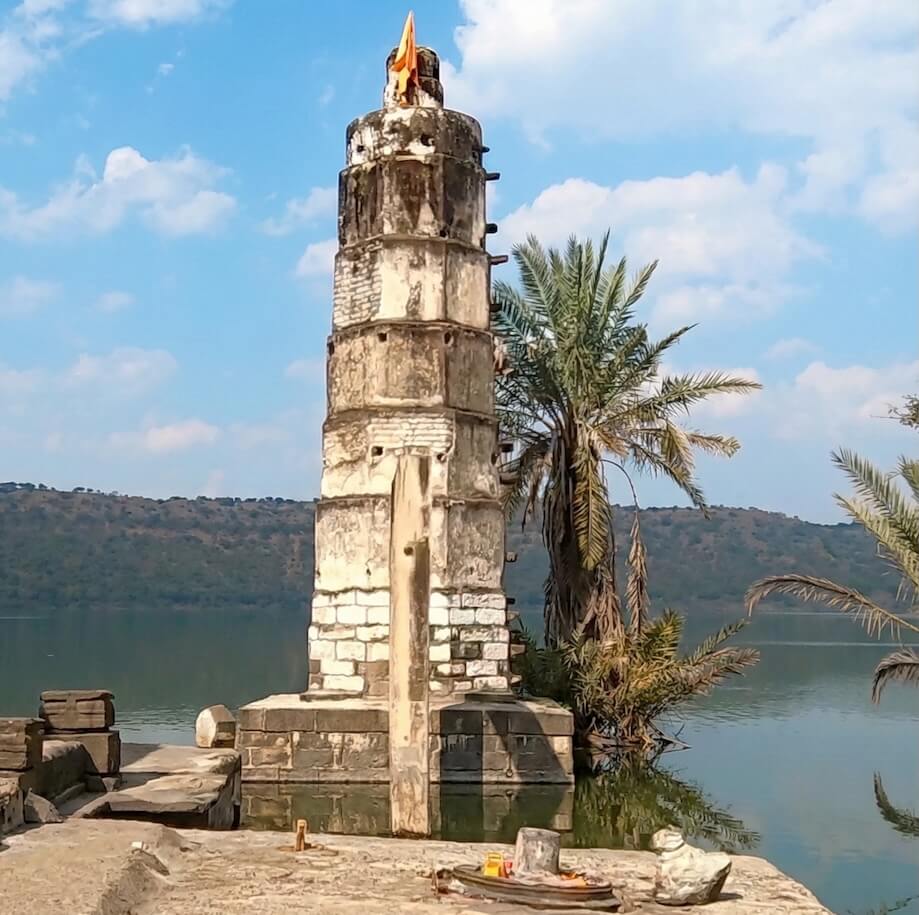
A famous legend associated with the temple is that of a courtesan named Kanchani. A resident of Mehkar, this woman held immense devotion for Kamalaja Devi. She built a seven-story palace in her village so that she could view the temple’s lamp tower (Deepmala) from there. However, it is said that she fell from the seventh floor and turned into stone. Even today, a large stone can be seen in front of that palace.
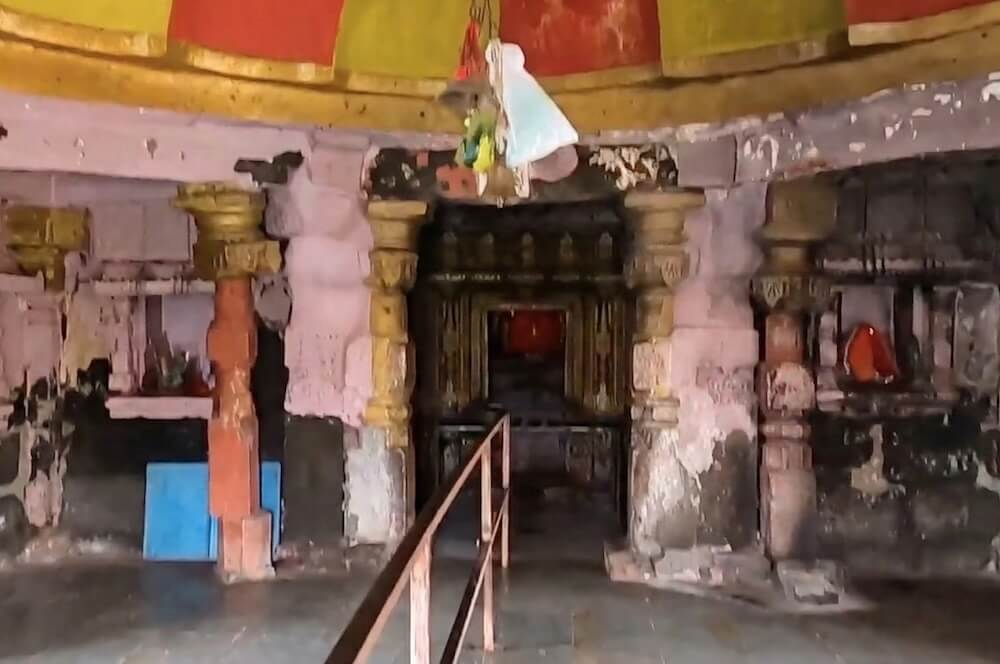
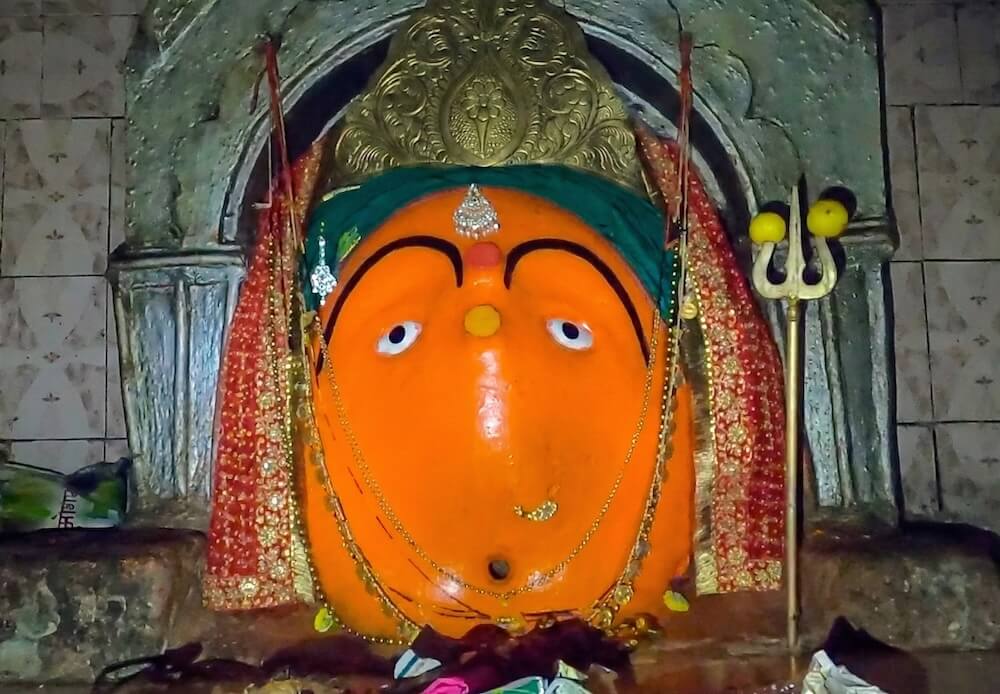
Architecturally, the temple is a sight to behold. Built of black stone and octagonal in shape, the upper part of the temple is circular. The most remarkable feature of its architecture is that the main hall (Sabhamandap) has no supporting pillars or columns, yet the temple has stood firmly for hundreds of years. The temple has three entrances. Through the northern main gate, one can view the stream of the Papnashini Gangabhogavati. Many sages and saints have bathed under this stream to worship the Goddess. This place is believed to bestow spiritual attainment (Yogasiddhi). The temple structure consists of three main parts: the Sabhamandap, the Antarala, and the Garbhagriha (sanctum sanctorum). At the base of the temple entrance, a Kirtimukha (demon face) is carved, and there are beautifully carved pillars on both sides of the doorway. In the center of the entrance, a sculpture of Lord Ganesha is carved. The outer walls of the temple feature various niches for deities; although currently empty, the carvings on them are distinctive. The walls of the Sabhamandap also contain several niches, one of which houses a vermilion-smeared idol of Ganesha, which locals call the Ashtavinayak. The entrance to the Garbhagriha has five decorative frames (Dwarshakha) featuring intricate and beautiful craftsmanship. Inside the Garbhagriha, on a high stone pedestal, stands the vermilion-smeared idol of Kamalaja Devi in the form of a ‘Tandala’ (a naturally shaped stone) made of black stone. The idol has beautiful eyes and eyebrows, and the Goddess is adorned with a nose ring (Nath) and a crown. The Garbhagriha is topped with a dome-shaped spire, and behind the temple lies a ruined temple of Lord Shiva with a Nandi idol in front of it.
The temple premises also house several unique features. In front of the temple stands an old stone arch, and on a stone platform, there is a sculpture of a tiger, the vehicle of the Goddess, facing towards the temple. Near this sculpture are an idol of Ganpati and two stone pillars. In front of the temple is an ancient sacrificial altar (Yajnakunda). A short distance away, an open-air Shiva Linga can also be seen. Within the temple complex, there is an ancient Narchincha tree. Devotees tie the hair from their children’s first tonsure ceremony in a bundle and hang it on this tree. There are also two ‘omen stones’ in the temple premises. A coin is placed on these stones, and another stone is placed on top. It is a popular belief among devotees that if the stone rotates easily, their wishes will be fulfilled.
Since this temple falls within the Lonar Wildlife Sanctuary, reaching it requires a trek through dense forest. This forest area is home to leopards, wild boars, jackals, and various types of venomous snakes. Therefore, tourists and devotees are permitted to travel only during daylight hours and must strictly follow the paths designated by the Forest Department. The temple is currently under the supervision of the Archaeological Survey of India, and for the convenience of devotees, railings and drinking water facilities are provided by the Forest Department. A large fair is held here every year during the Sharadiya Navratri festival. Many devotees from Vidarbha and Marathwada descend the steep slopes of the lake to offer ‘Oti’ to the Goddess and seek her blessings.
This sacred temple stands as a testament to deep spiritual devotion, ancient architectural grandeur, and rich local cultural traditions.
The sanctum sanctorum houses the divine idol consecrated according to ancient Vedic traditions, surrounded by serene courtyards and traditional temple architecture.
Navratri, Maha Shivratri, Annual Temple Jatra & Deepotsav
Compare and book flights, secure top-rated local hotels near the temple, hire reliable guides, and rent cars instantly.
Extend your pilgrimage by visiting other highly sacred temples located nearby.


Add ₹999 more to unlock FREE SHIPPING!
Your sacred cart is currently empty.
Shop Photo FramesFill in your delivery details below to place your order.
Add comment