
Add ₹999 more to unlock FREE SHIPPING!
Your sacred cart is currently empty.
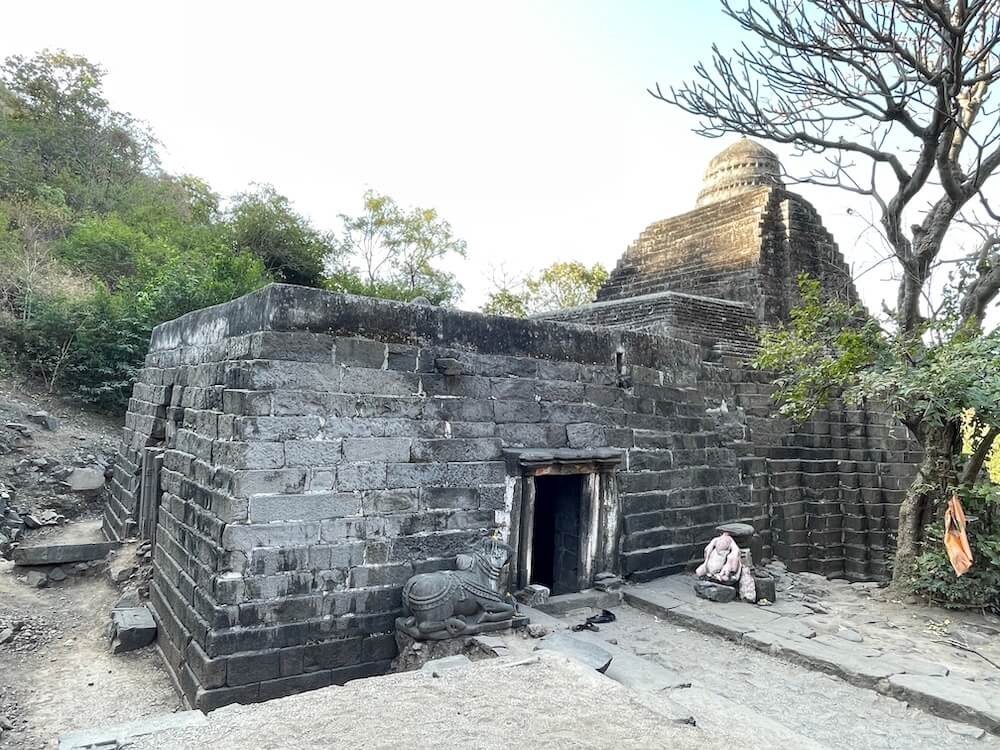
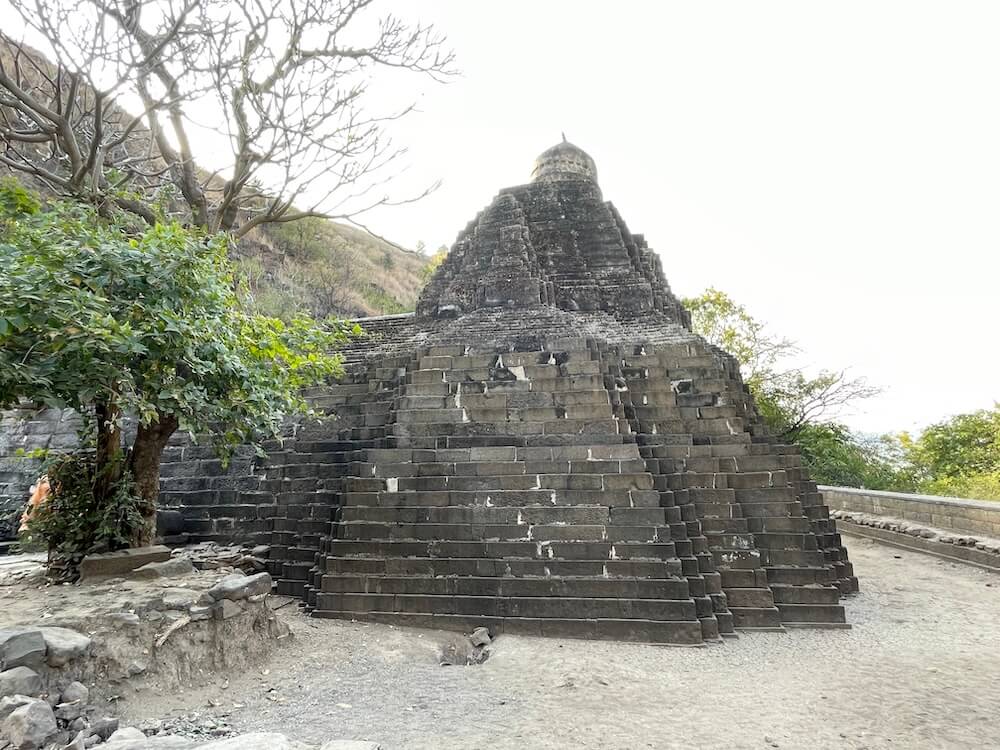
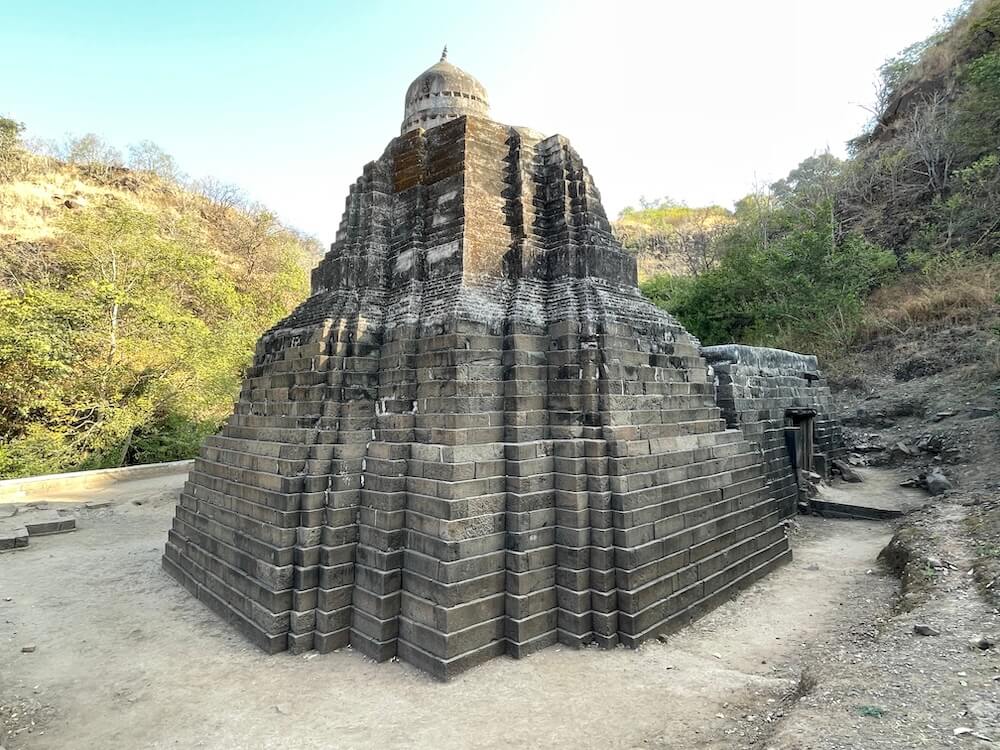
Shop Photo FramesAmong the sixteen large and small ancient temples nestled on the banks of the Lonar crater lake, which was formed by a meteorite impact, the Kumareshwar Temple is considered to be of utmost importance. It is said that during their exile, Lord Rama, Mother Sita, and Lakshmana visited this temple and had the divine darshan of Kumareshwar. Right in front of this temple is ‘Sitanhani’, where Mother Sita bathed. Built during the reign of the Rashtrakuta dynasty, this temple was later fortified by the kings of the Yadava era. A unique feature of this temple is that its exterior structure resembles a pyramid.
In the holy text ‘Umaranya Mahatmya’, written in 1882 by Sachidanand Swami of Lonar, there is a legend associated with the name Kumareshwar. According to it, Sage Agastya took up permanent residence in Umaranya to curb the height of the Vindhya mountains. At that time, two demons named Atapi and Vatapi were wreaking havoc in this region. To subdue them, Sage Agastya worshipped Lord Shiva. When Lord Shiva was pleased, the sage requested Him to wage war against these two demons. Thereupon, Lord Shiva Himself took the form of a young boy, a Kumar, and joined the battle, slaying the demons. After this war, Sage Agastya requested Lord Shiva to be permanently seated right here. Accordingly, Lord Shiva agreed to reside here in the form of a Linga. In remembrance of that event, the Shiva Linga here was named ‘Kumareshwar’.
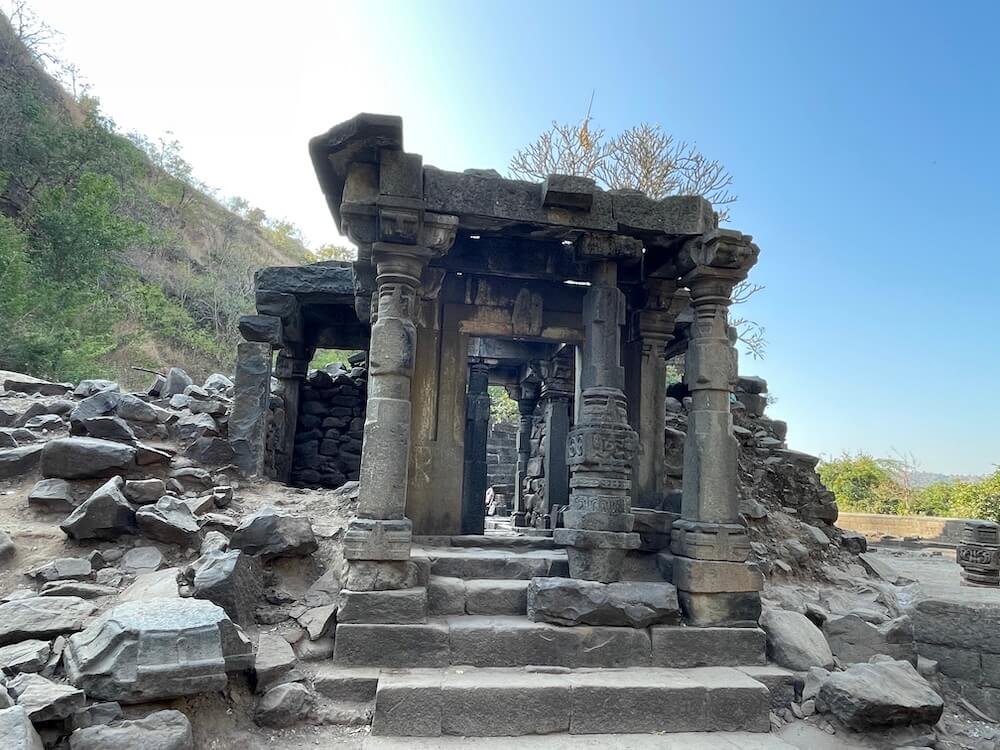
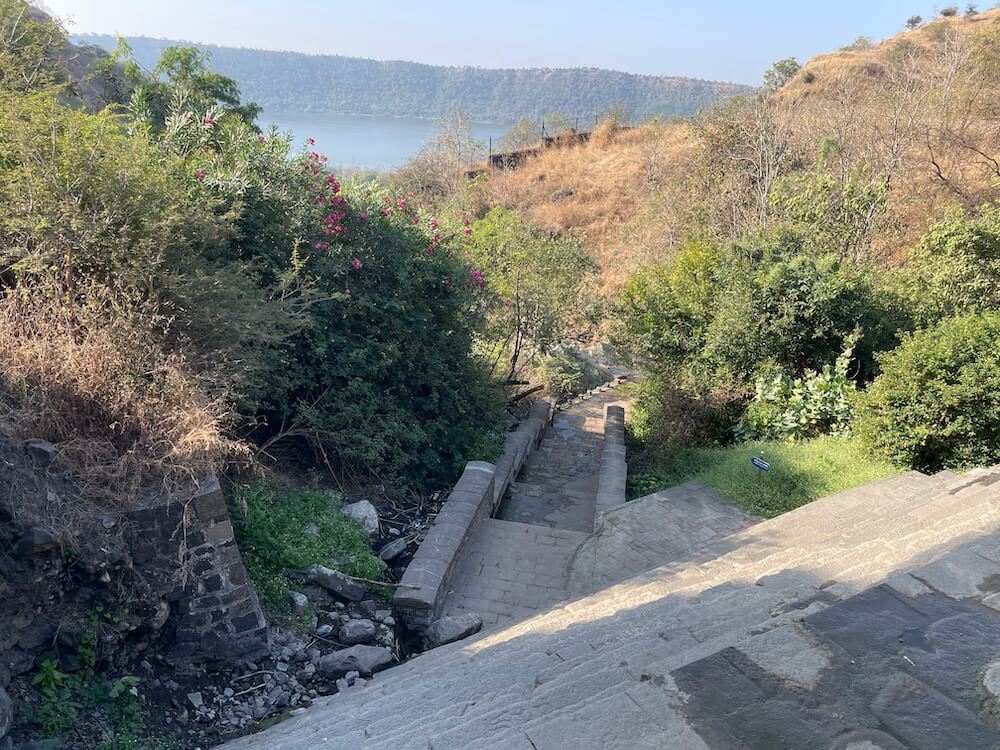
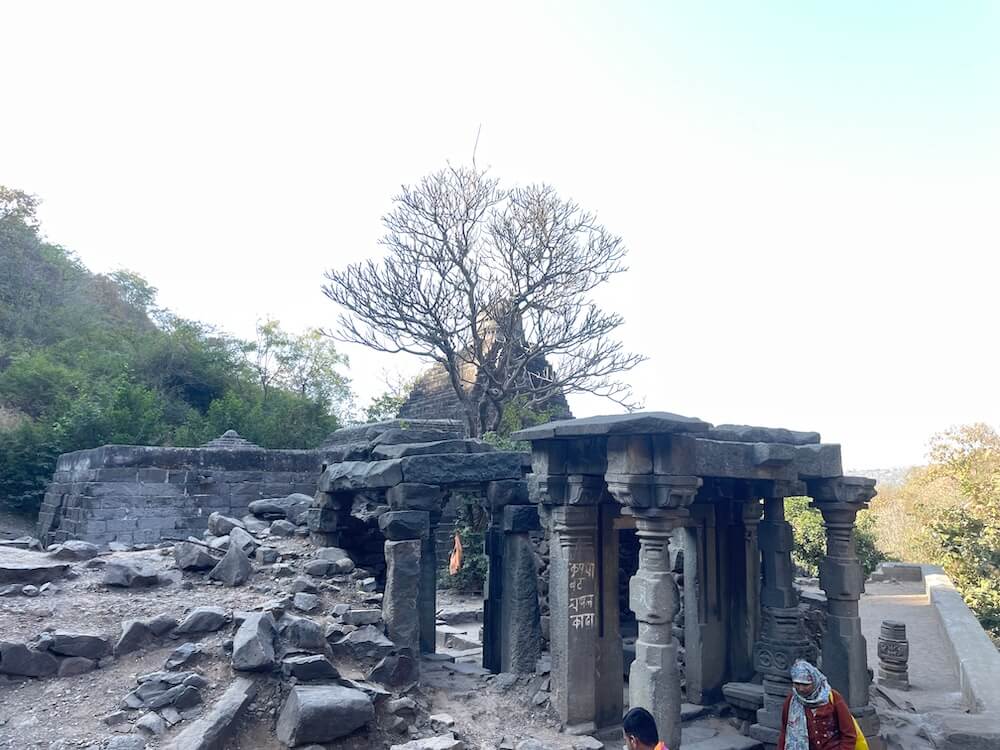
This temple is situated at a short distance from the Gomukh Dhar temple complex. One can reach this temple by descending a few steps from Dharteertha. The entrance gate in front of this temple has broken down over the course of time. One has to climb two to four stone steps to reach the entrance. The pillars here are exquisitely carved, and several sculptures are engraved upon them. Stepping through the entrance leads into a small courtyard. To the left of the temple entrance, a grand sculpture of Nandi carved in black stone comes into view. Next to this sculpture lies a damaged deity figure. To the right of the entrance is a vermilion-anointed sculpture of Ganesha. Nearby stands a fragmented sculpture of Nandi. The temple has been constructed like a pyramid by stacking large rectangular stones upon one another.
The architectural layout of this temple consists of a Sabhamandapa (assembly hall), Antarala (vestibule), and Garbhagriha (sanctum sanctorum). On the lintel of the doorway of this east-facing temple is a sculptural depiction of Ganesha. The enclosed Sabhamandapa features doors on the western, northern, and southern sides. In the center of the Sabhamandapa, amidst eight stone pillars, lies a square colored slab which was used in ancient times for dance and musical performances. All the pillars in the Sabhamandapa rest on stone bases. An ancient stone lamp stands within this Sabhamandapa. The walls of the assembly hall feature devakoshthas (wall niches) and the ceiling is adorned with intricate carvings. In the vestibule, the door jambs of the sanctum sanctorum bear sculptures of Ganga-Yamuna and Dvarapalas (gatekeepers). The lalatabimba (central lintel piece) features a carving of Ganesha. Inside the sanctum sanctorum, a large Linga of Kumareshwar rests on the floor. It is said that due to a subterranean water stream flowing through the temple premises, this Linga always remains moist.
Right in front of this temple is Sitanhani. Lord Rama, Mother Sita, and brother Lakshmana had visited this place during their exile. At a short distance from this temple stands the Yajneshwar Temple. Currently in a somewhat ruined state, the beauty of this temple was incomparable during its time. This temple was also referred to as the ‘Observatory of Daityaguru Shukracharya’. Stars and planets were studied from this location. Built systematically on stone pillars, the roof of this temple’s assembly hall featured a distinct type of dome. This dome had openings on all four sides. By observing the celestial stars and planets through the dome from the assembly hall, rainfall forecasts were made.
In ancient times, homa-havans (fire rituals) were performed in this temple. Additionally, studies in Ayurveda were conducted here. Yajneshwar was an expert in Ayurveda. He studied the local flora and discovered medicines for various ailments. It is said that this temple was built by Vikramaditya II during the Chalukya rule. The architectural layout of this temple comprises a Mukhamandapa (porch), Sabhamandapa, Antarala, and Garbhagriha. Numerous sculptures are carved onto this temple, which also include maithuna sculptures (amorous couples). There are certain stones within this temple complex that possess magnetic properties. Striking another stone against these produces a sound resembling that of iron.
On Mahashivratri and during the holy month of Shravana, hundreds of devotees chant ‘Har Har Mahadev’ and visit the Kumareshwar Temple to offer Bel leaves and perform Abhisheka to Lord Mahadeva. The principal festival celebrated at this temple is Mahashivratri. On this occasion, Abhisheka and Rudrabhisheka are performed on the Shiva Linga here. Devotional singing (bhajan-kirtan) and Aarti are also held, with numerous devotees participating. Many devotees also visit for darshan during the month of Shravana.
This sacred temple stands as a testament to deep spiritual devotion, ancient architectural grandeur, and rich local cultural traditions.
The sanctum sanctorum houses the divine idol consecrated according to ancient Vedic traditions, surrounded by serene courtyards and traditional temple architecture.
Navratri, Maha Shivratri, Annual Temple Jatra & Deepotsav
Compare and book flights, secure top-rated local hotels near the temple, hire reliable guides, and rent cars instantly.
Extend your pilgrimage by visiting other highly sacred temples located nearby.


Add ₹999 more to unlock FREE SHIPPING!
Your sacred cart is currently empty.
Shop Photo FramesFill in your delivery details below to place your order.
Add comment