
Add ₹999 more to unlock FREE SHIPPING!
Your sacred cart is currently empty.
Shop Photo FramesThe Lonar Lake in the Buldana district is the pride of Maharashtra and is also famous as a global wonder. Created thousands of years ago by a massive meteorite impact, this lake is known as ‘Viraj Tirth’. The Ganga Bhogavati Dhar (Tirth) located in this area, which is of both spiritual and scientific significance, is a place of faith for many devotees. Although the water of the lake is saline and alkaline, it is considered a miracle of nature that this stream flowing from the cliff of the lake is extremely sweet and pure. According to mythological references, it is believed that after Lord Vishnu, in his ‘Daityasudan’ avatar, slew the demon Lonasura, he summoned the Ganga from the netherworld (Patala) for his purification; this is the very ‘Bhogavati Dhar’.
Lonar is mentioned as ‘Viraj Kshetra’ or ‘Vishnugaya’ in the ‘Viraj Mahatmya’ of the Skanda Purana and the ‘Padma Purana’. According to these legends, in the Krita Yuga, a giant demon named ‘Lonasura’ (or Lonasur) lived in this area. He had wreaked havoc on Earth and in heaven. He resided in a large cave beneath the ground, and the mouth of the cave was covered by a rocky lid. At the request of the gods, Lord Vishnu incarnated in the beautiful form of ‘Daityasudan’ and, by charming Lonasura’s two sisters, learned the secret of the cave. Thereafter, Vishnu blew off the lid of the cave with his toe and, after a fierce battle, slew Lonasura.
After killing Lonasura, the body and weapons of Daityasudan Vishnu were stained with blood. Furthermore, there was a need to wash away the sin of slaying the demon. At that time, at the request of Lord Vishnu or to wash his feet, the Ganga herself descended from the netherworld to this place. She came to be known as ‘Bhogavati’. Vishnu cleansed himself with the water of this stream, which is why this flow was named ‘Ganga Bhogavati Dhar’. This story is interpreted to mean that because of the decaying blood and flesh of Lonasura, the water of the lake here became saline and alkaline; however, since the Ganga was sanctified by the touch of Vishnu, the water coming from the stream remained extremely sweet and pure.
This place is also called ‘Vishnugaya’. While being slain, Lonasura had asked Vishnu for a boon that his name be forever associated with this region and that those who come here attain liberation. At that time, Vishnu granted him the boon that whoever bathes in this stream and performs the circumambulation (Parikrama) of the lake will be liberated from all sins. Just as Gaya in Bihar is famous for the rituals of ancestors (Shraddha), this Dhar and lake in Lonar are considered important for the removal of ancestral defects (Pitru Dosh) as ‘Vishnugaya’.
Lonar Lake is situated on the Deccan Plateau and has a diameter of about 1.8 kilometers. It is the world’s only ‘hyper-velocity impact crater’ formed in basalt rock. On the northeastern cliff of this lake, where the main ascent and descent path of the crater is located, lies the ‘Dhar’ or ‘Gomukh’ Tirth. The Ganga Bhogavati Dhar originates from the edge of the crater, which is at a high altitude from sea level, and flows down towards the lake. This place is on the border of Lonar village. There is a path of steps to descend into the lake from here.
The existing temples at the Dhar were primarily built between the 12th and 14th centuries during the reign of the Yadavas. During this period, Lonar was an important commercial and religious center. In the 13th century, Chakradhar Swami, the founder of the Mahanubhava sect, visited Lonar. The ‘Leelacharitra’ text also mentions the Dhar and the pilgrimage of Lonar. For the followers of the Mahanubhava sect, this is a holy pilgrimage site. Additionally, Abul Fazl, one of the ‘Navratnas’ of Mughal Emperor Akbar, mentioned Lonar Lake in ‘Ain-i-Akbari’. He noted both the salt obtained from the lake and its religious significance. The 1870 British Gazetteer also clearly mentions the ‘Lonasura’ legend and the sanctity of the Dhar.
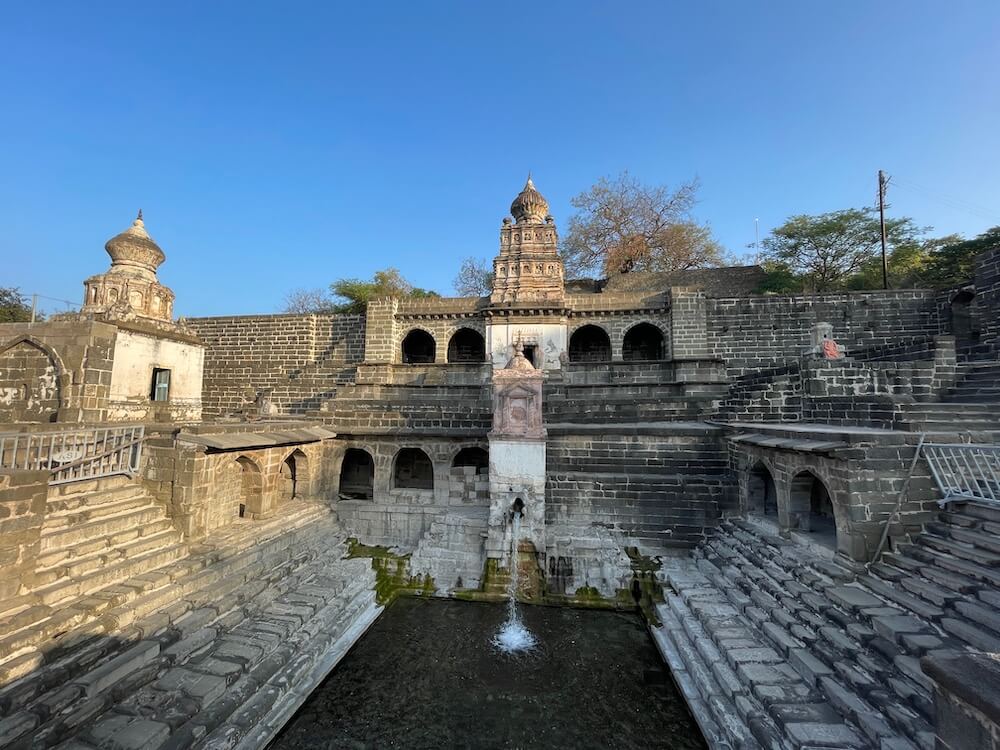
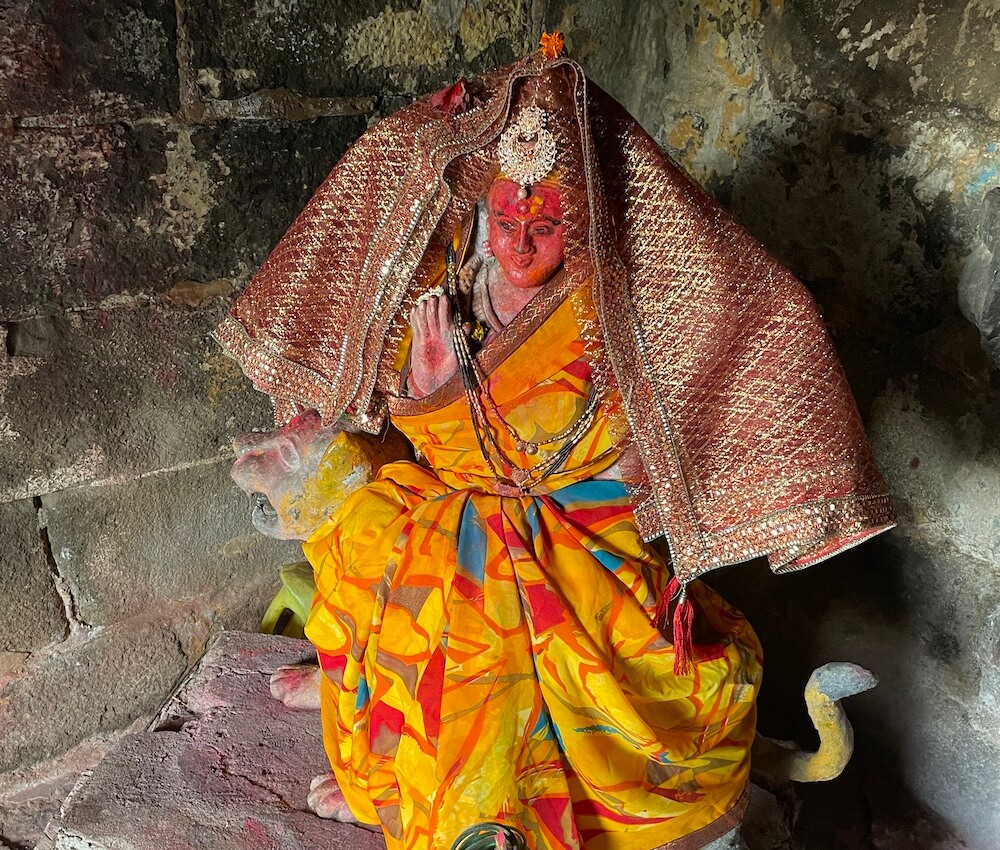
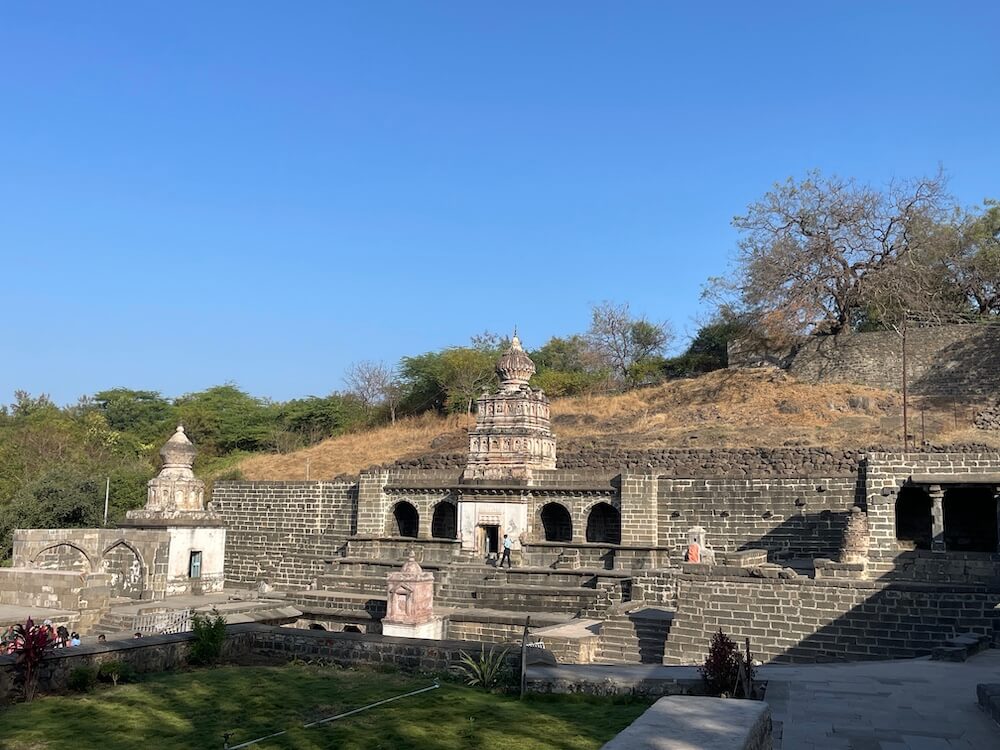
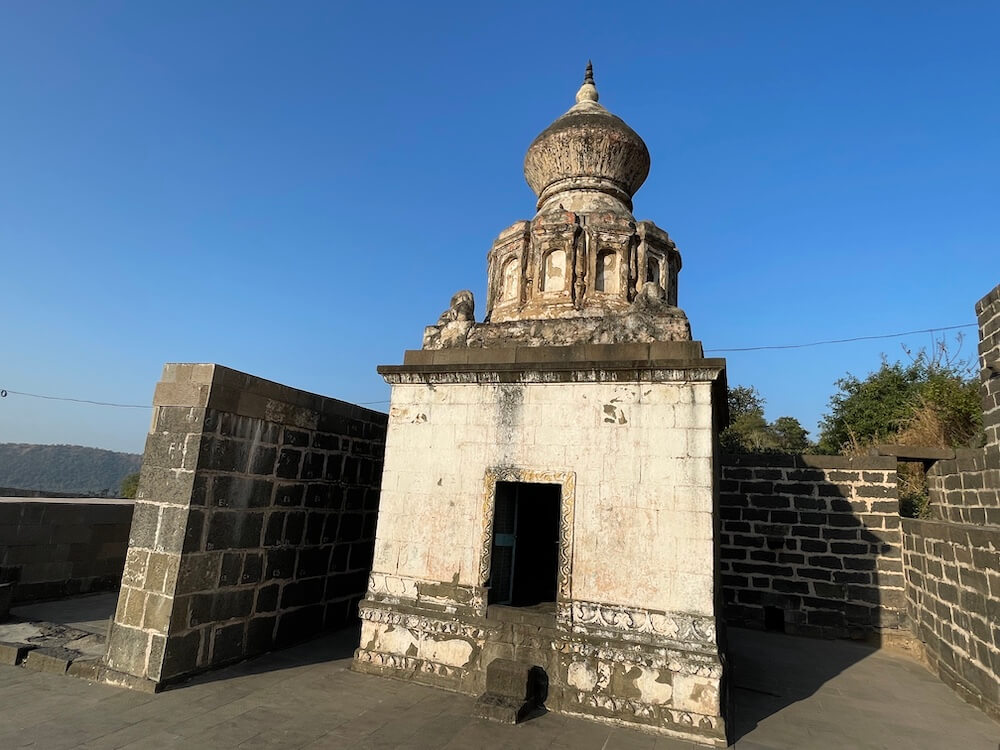
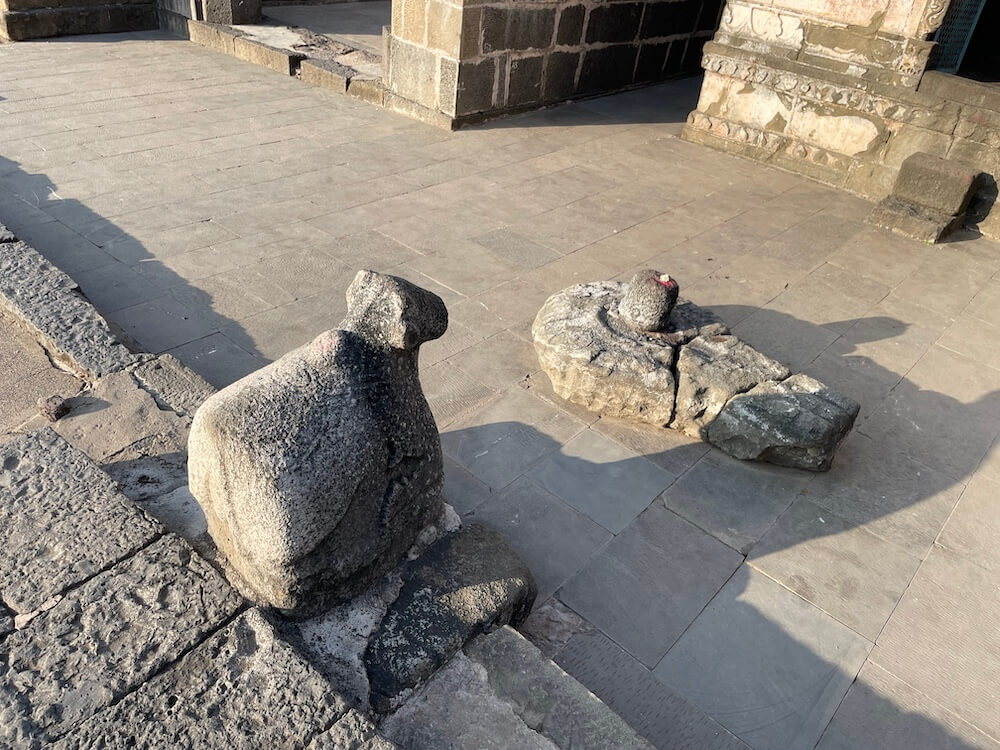
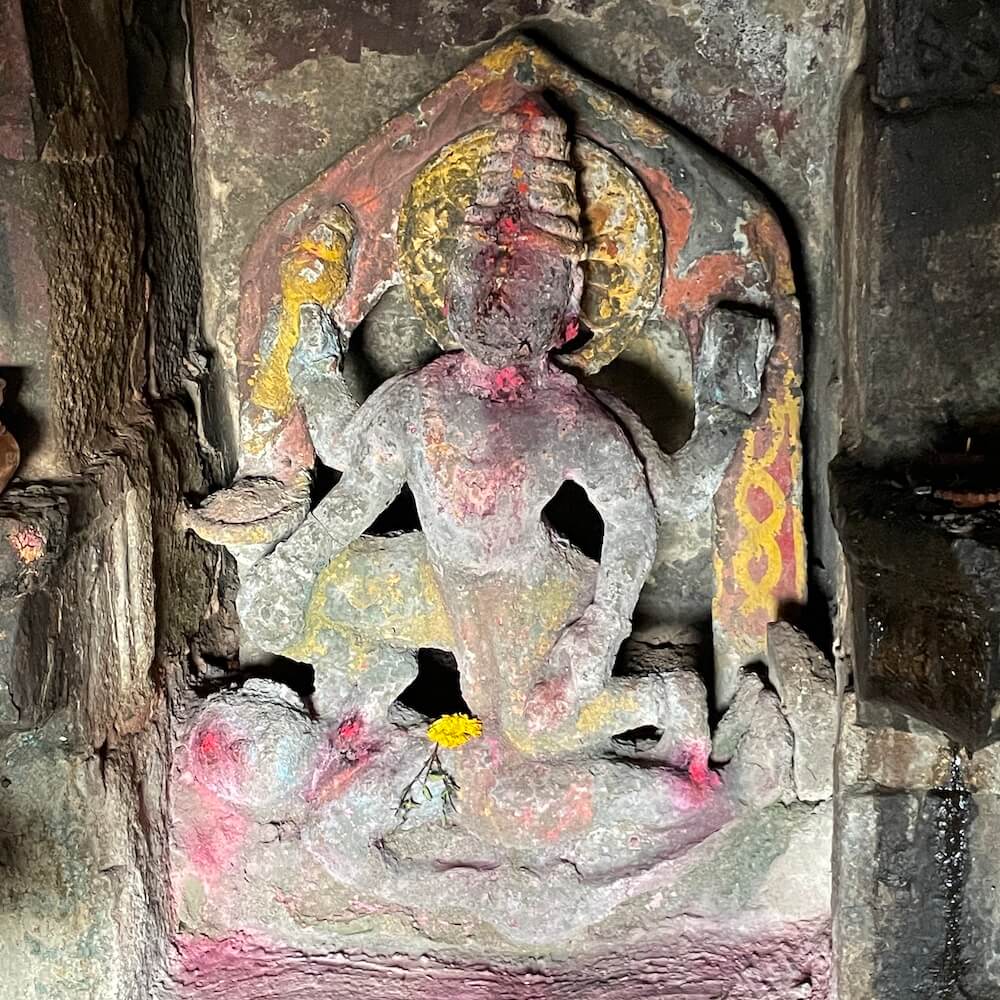
A few minutes’ walk from the Lonar bus stand is the entrance to the area leading to Lonar Lake. From this entrance, one can reach the Ganga Bhogavati Dhar Tirth by descending many steps. A beautiful garden has been developed along this path. There are many ancient temples at the site of the holy Dhar. First, one gets the darshan of the Brahmakunda. It is said that Lord Brahma kept a vessel filled with the holy water from Lord Vishnu’s feet here. One can descend into this tank using steps on all four sides. The water in this tank is crystal clear. Adjacent to this tank is a shrine-like structure. Some niches have been carved into the walls on the upper side. Beside this tank is the Dhar or Gomukh (Tirth). The natural spring of water coming from the belly of the mountain or the rocks of the cliff has been diverted here through a man-made stone structure. This is a sculpture carved in black stone resembling the mouth of a cow. In Hinduism, water falling from a cow’s mouth is considered extremely holy. An unbroken stream of water falls from this mouth. This flow is perennial, meaning it does not dry up even in the scorching summer, which is a unique feature of this structure and source. Below the Gomukh, a rectangular stone-walled tank has been built. There is a staircase to descend into this tank. It is said that at the time of the coronation of Chhatrapati Shivaji Maharaj, water from this Tirth was taken from Lonar to Raigad. During the famine of 1972, this Dhar Tirth quenched the thirst of Lonar city. In the vicinity of this Tirth, which is an excellent example of ancient architecture, there are ancient temples of deities such as Narsimha, Shivshankar, Shri Vishnu, Ganesh, and Jagadamba. On the steps in this area, human figures with folded hands in greeting are carved in various places. Shivalingas are found in many places in the area.
On Somvati Amavasya (when the new moon falls on a Monday), there is a large fair in Lonar. On this day, thousands of devotees flock to this Dhar for a bath. This is considered an auspicious place for performing ‘Pitru Tarpan’ and bringing peace to ancestors. On this day, devotees perform a ‘Parikrama’ of the lake, which is about seven to eight kilometers long. This circumambulation begins at the Dhar and ends there as well. The Dhar Tirth also holds importance in the fair of Kamalja Devi, located on the banks of the lake. Devotees bathe at the Dhar and take water from this tank for the ‘Ghatasthapana’ before proceeding to the Devi’s temple.
This sacred temple stands as a testament to deep spiritual devotion, ancient architectural grandeur, and rich local cultural traditions.
The sanctum sanctorum houses the divine idol consecrated according to ancient Vedic traditions, surrounded by serene courtyards and traditional temple architecture.
Navratri, Maha Shivratri, Annual Temple Jatra & Deepotsav
Compare and book flights, secure top-rated local hotels near the temple, hire reliable guides, and rent cars instantly.
Extend your pilgrimage by visiting other highly sacred temples located nearby.


Add ₹999 more to unlock FREE SHIPPING!
Your sacred cart is currently empty.
Shop Photo FramesFill in your delivery details below to place your order.
Add comment