
Add ₹999 more to unlock FREE SHIPPING!
Your sacred cart is currently empty.
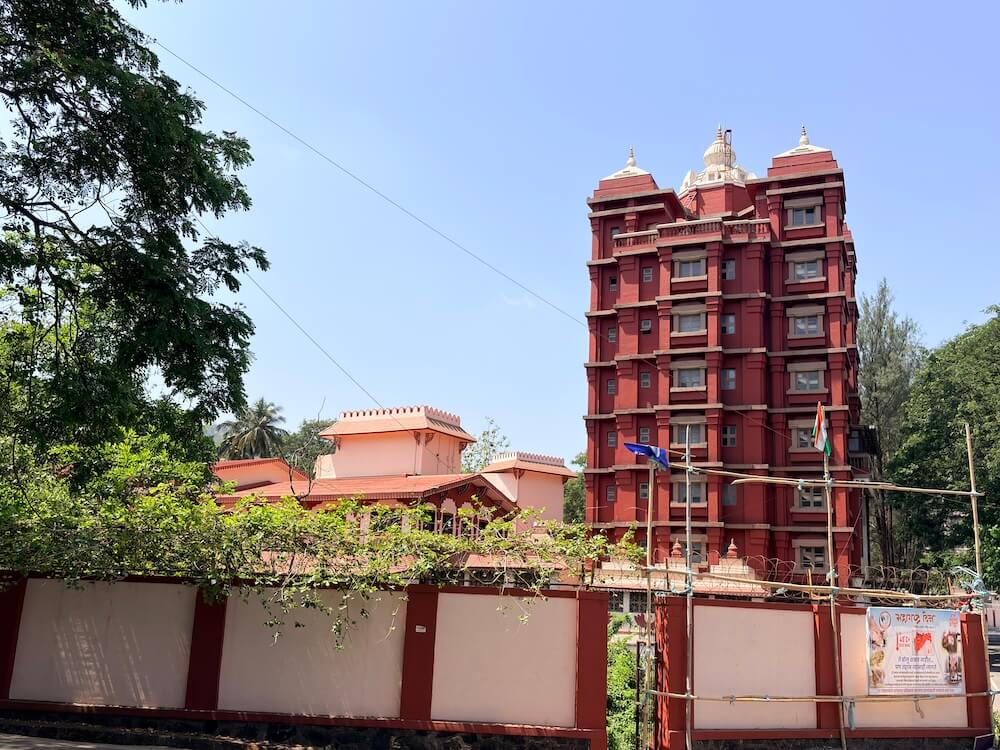
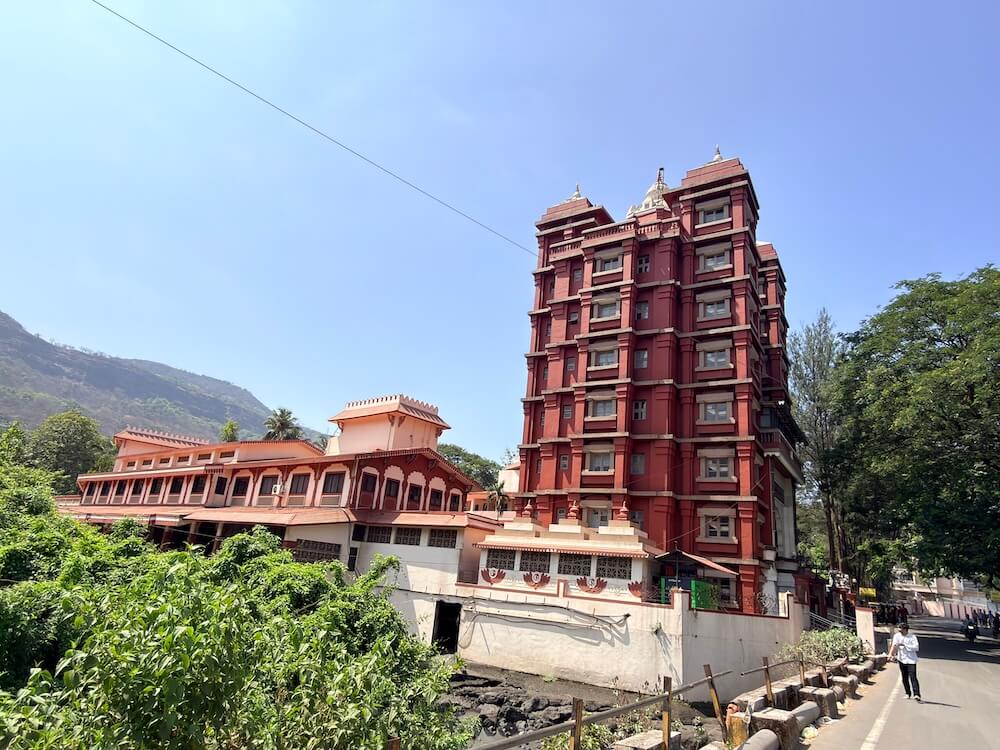
Shop Photo FramesKhopoli city, located in the Khalapur taluka of Raigad district, is a historical town nestled in the lap of the Sahyadri mountains. Being the first major center encountered while descending into the Konkan region from the Sahyadri ranges, Nana Phadnavis built the Vireshwar Mahadev Temple and a stone water reservoir here during the Peshwa era in the eighteenth century. Against such a rich historical and religious backdrop, the Math of Swami Gagangiri Maharaj was established on the banks of the Patalganga River. Surrounded by the Sahyadri hill ranges and the river basin, this temple is considered the spiritual glory of Khopoli city. A revered site of faith for lakhs of devotees, the discipline and traditions of the ancient Nath Sampradaya are strictly observed here.
Swami Gagangiri Maharaj’s original name was Shripad Ganpatrao Patankar. He was born on the auspicious day of Datta Jayanti in 1906 at Mandure in Patan taluka. The original surname of the Patankars was Salunkhe, belonging to the ancient Chalukya dynasty. As their progenitor acquired the fiefdom (Jahangir) of Patan, they earned the surname Patankar. With the expansion of this lineage, various branches emerged, such as Shikkekari Wada Patan, Bibi, Ker, Wajegaon, Rampur, Divashi Budruk and Khurd, Sawantwadi, and Satbhai Patankar. Gagangiri Maharaj belonged to the Satbhai branch. His parents belonged to the Warkari Sampradaya. It is said that Maharaj renounced worldly life in his early childhood. Embracing Sannyasa, he traveled across India, during which he attained the grace and blessings of many accomplished Siddha masters of the Nath Panth. Eventually, he returned to Maharashtra. He performed penance in the forests of Dajipur for a few years. Thereafter, he went to Gagangad in Kolhapur district and performed intense austerities there.
Gagangiri Maharaj was a Hatha Yogi of the Nath Sampradaya and had close ties with the Dashanami Sampradaya. The most significant aspect of Maharaj’s spiritual practice (Sadhana) was his Jal Tapa (water penance). He was primarily known for his intense water austerities. It is said that he would remain deeply immersed in meditation at the bottom of rivers or deep water bodies for prolonged periods. In the dense forests of Dajipur in Kolhapur district, he performed severe penance for eight years from 1932 to 1940, living inside tree hollows and wearing clothes made of tree bark. In addition, he undertook Kayakalpa Sadhana at Angale in Rajapur from 1945 to 1948, and performed spiritual practices near the Walkeshwar cremation ground in Mumbai from 1948 to 1950. Following the principle that a yogi should not reside in one place for too long, he eventually moved from Gagangad to Khopoli in Raigad district. In the 1990s, he established the Math at Khopoli and took Mahasamadhi there on February 4, 2008, at the age of 101. The influence of this Math extended from common seekers to many eminent personalities. Shiv Sena Chief Balasaheb Thackeray shared a close bond with Maharaj, and the Rudraksha rosary he wore on his wrist was gifted to him as Prasad by Maharaj himself. Apart from him, distinguished personalities such as Dhirubhai Ambani, Yashwantrao Chavan, Balasaheb Desai, Rajarambapu Patil, Patangrao Kadam, and actress Mamta Kulkarni had sought Maharaj’s spiritual guidance.
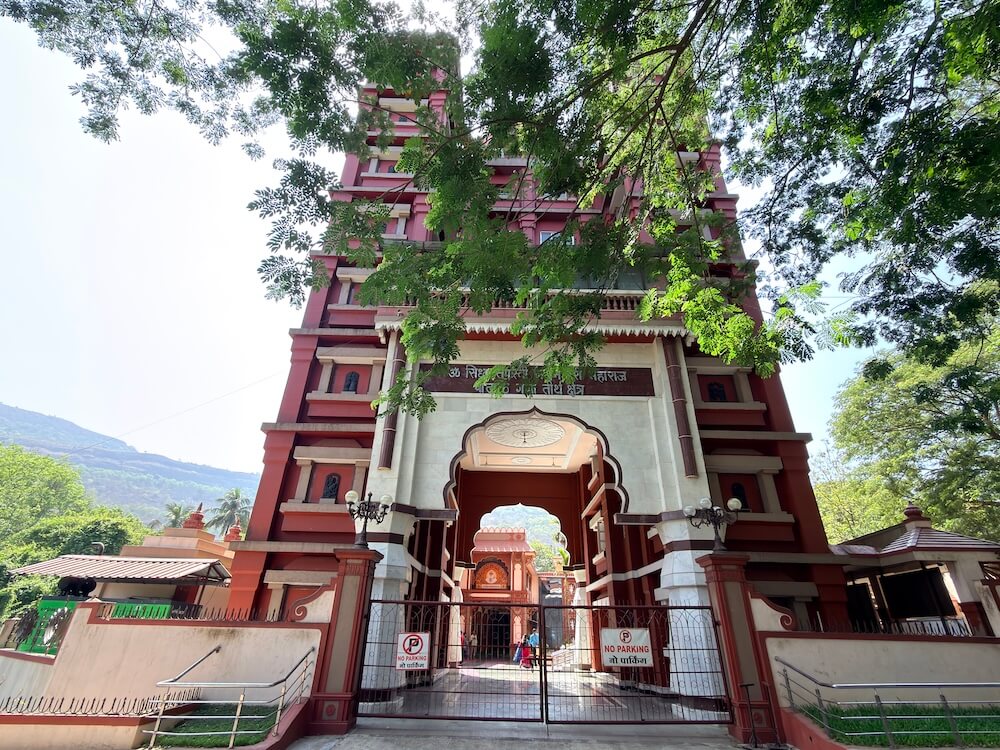
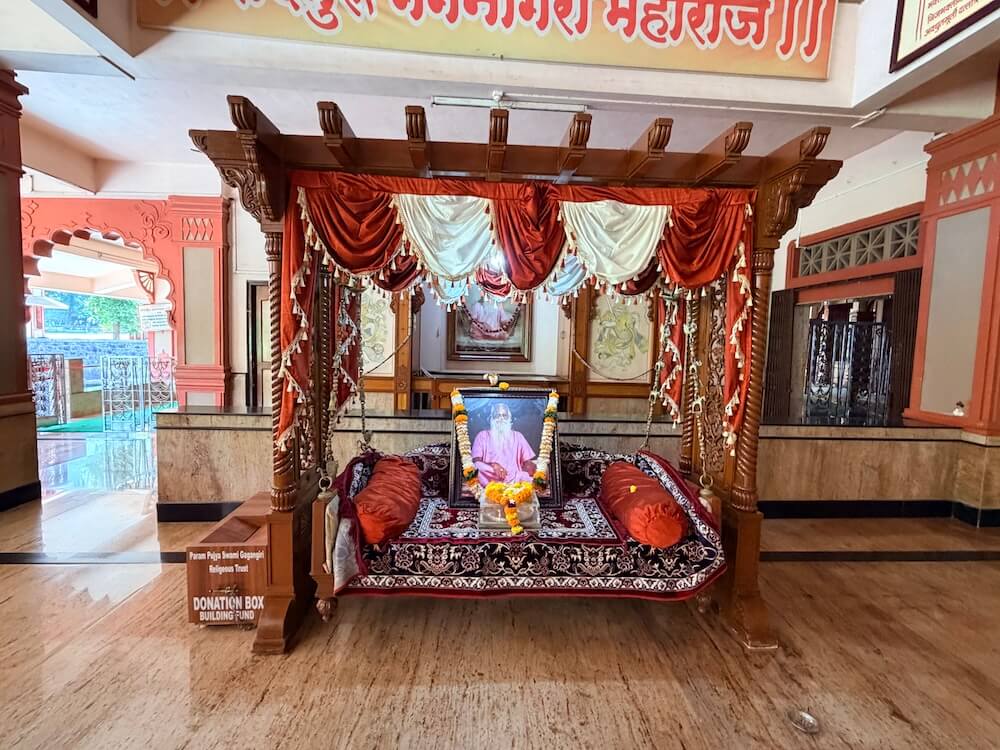
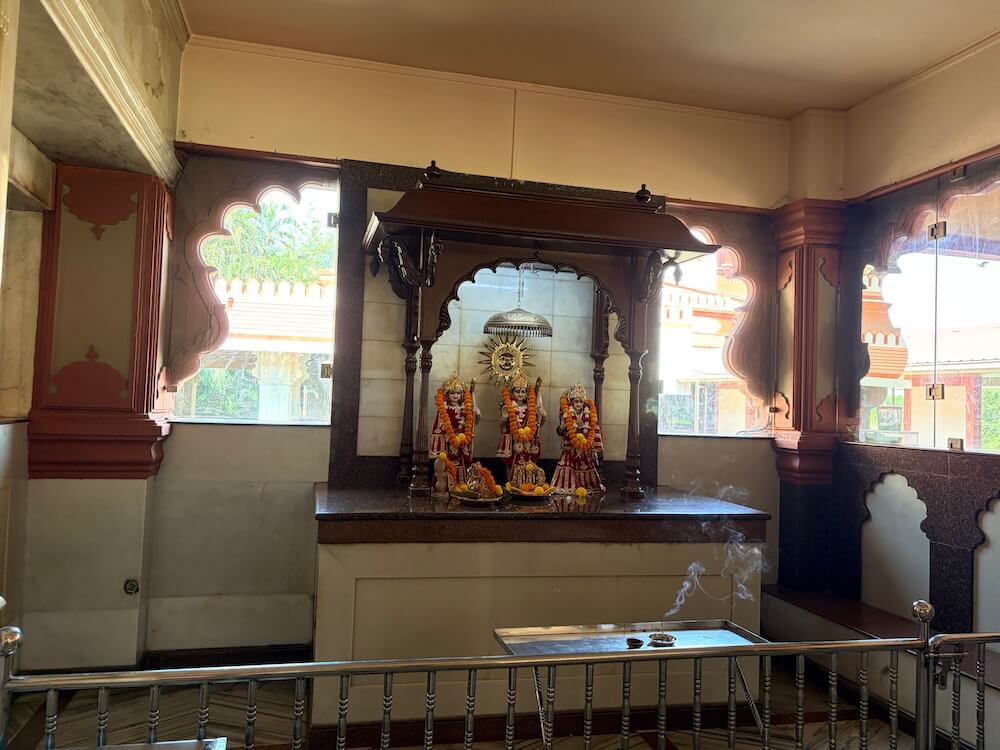
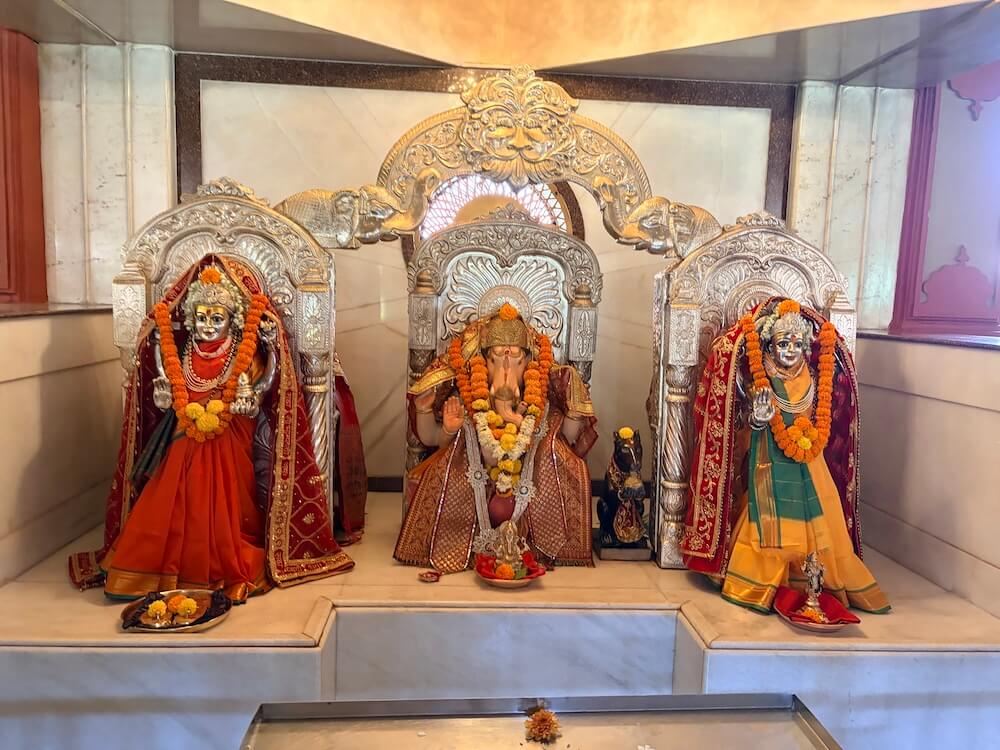
Situated on the banks of the Patalganga River, one enters the temple premises through the entrance gate of the multi-storey Math building. From this courtyard, one first enters the building that served as Maharaj’s resting quarters in the Math. This space was created in the main structure of the Math to preserve the sacred memories of Swamiji’s stay. Here, an intricately carved teakwood swing (Jhula) features Maharaj’s royal seat (Gaddi), bolsters, and cushions neatly arranged upon it. A large portrait of Swami Gagangiri Maharaj rests gracefully on this swing. Moving further, one enters the main Sabhamandap (assembly hall) of Maharaj’s Samadhi Temple. The outer pillars of this spacious semi-open hall are interconnected by delicate archways, and the ceiling features exquisite decorative carving work. In the main Garbhagriha (sanctum sanctorum) beyond the Sabhamandap, the idol of Swami Gagangiri Maharaj is seated gracefully within an intricately carved marble shrine (Makhar). Beyond the Samadhi Temple lies the Mahadev Temple, designed with a spacious Sabhamandap and Garbhagriha. In the sanctum here, a Shiva Lingam encased in silver plating is consecrated on the floor. Additionally, the temple houses idols of Lord Shri Ram, Mata Sita, and Lakshman, Lord Ganesha along with Riddhi-Siddhi, and Mata Parvati. On the hill behind the Math, there is a natural cave accessible via a flight of steps. Inside this cave, an idol of Maharaj in a meditative posture (Dhyana Mudra) is seated on a stone pedestal. It takes a 15 to 20-minute uphill climb from the main Ashram to reach this sacred cave.
Every morning at 4:50 AM, the holy bath (Mangal Snan) of the Samadhi takes place. This is followed by Kakad Aarti at 5:15 AM, and Samadhi Darshan opens to devotees at 6:25 AM. Padya Puja is performed at 11:00 AM, followed by Madhyanha Aarti at 12:00 PM, Hom-Havan at 1:00 PM, Pothi Vachan (scripture recitation) in the Samadhi Temple at 4:00 PM, Dhup Aarti at sunset, and Sanj Aarti at 8:30 PM. Following these core rituals, devotional singing and various cultural programs are organized in the Samadhi Temple. Mahaprasad is distributed between 1:00 PM and 2:00 PM. Visiting hours for the hillside cave are fixed from 8:00 AM to 5:00 PM. Guru Purnima is celebrated as the grandest festival at the Math, attracting lakhs of devotees from across the country. On Hanuman Jayanti, a 108 Karyasiddhi Mahayajna is conducted. Furthermore, Datta Jayanti and February 4th, Maharaj’s Mahasamadhi Day, are observed with deep devotion, marked by continuous chanting of the Divine Name (Akhand Namasmaran) and mass food distribution (Annadana).
This sacred temple stands as a testament to deep spiritual devotion, ancient architectural grandeur, and rich local cultural traditions.
The sanctum sanctorum houses the divine idol consecrated according to ancient Vedic traditions, surrounded by serene courtyards and traditional temple architecture.
Navratri, Maha Shivratri, Annual Temple Jatra & Deepotsav
Compare and book flights, secure top-rated local hotels near the temple, hire reliable guides, and rent cars instantly.
Extend your pilgrimage by visiting other highly sacred temples located nearby.


Add ₹999 more to unlock FREE SHIPPING!
Your sacred cart is currently empty.
Shop Photo FramesFill in your delivery details below to place your order.
Add comment