
Add ₹999 more to unlock FREE SHIPPING!
Your sacred cart is currently empty.
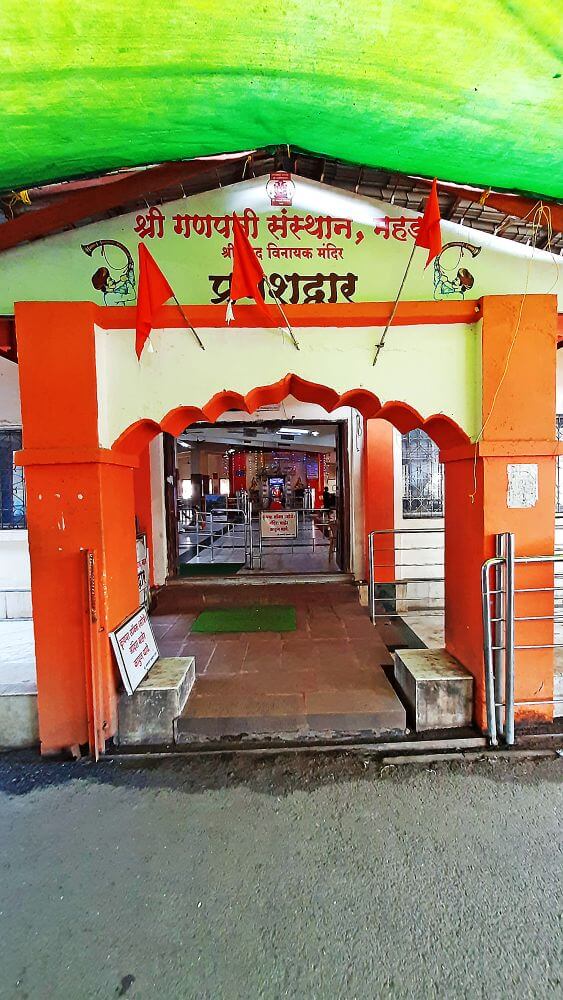
Shop Photo FramesVaradvinayak at Mahad is an important pilgrimage site among the Ashtavinayak shrines, located on the Mumbai-Pune highway. This temple is also known as the Wish-Fulfilling Ganesha. The shrine of Varadvinayak is situated five kilometers from Khopoli on the Mumbai-Pune route. It is the only temple among the Ashtavinayak that remains open for 24 hours. The sanctum sanctorum of this temple dates back to the Peshwa era. A unique feature here is the eternal lamp (Nanda Deep) that has been burning continuously in the temple since 1892.
There is a legend regarding this temple in the Ganesha Purana. The Ganesha Purana is an important scripture of the Ganapatya sect that emerged in the country during the 9th and 10th centuries. Its period of composition is between 1000 and 1100 CE. The story in the fifth chapter of the first section of this Purana states that King Bhima of Kaundinyapur was blessed with a son named Rukmangada through the grace of Ganesha. Once, while he was hunting in the forest, he saw the ashram of Sage Vachaknavi. He went to the ashram and paid his respects to the sage. Arrangements were made for his rest in a hut there. When the sage went to the lake for his bath, the sage’s wife, Mukunda, came to the hut and said, “I am infatuated with you, please satisfy me.” Rukmangada replied that he would not commit such a sinful act. Upon this, Mukunda cursed him that he would suffer from leprosy. When Indra learned of this, he came to the sage’s wife in the form of Rukmangada, and from their union, the sage’s wife gave birth to a son named Gritsamada.
Once, there was a Shraddha ceremony at a king’s palace in the Magadha country. Many sages and great scholars were invited for this, including Gritsamada. While a scholarly debate was going on among the sages and intellectuals, Gritsamada participated in it. Seeing this, one sage became angry. He said, “Do not boast in vain. In reality, you are not a sage’s son, but a Kshatriya’s son. You have no right to sit with us.” Hearing this, Gritsamada got up abruptly and went to his mother, Mukunda. He asked her, “Whose son am I?” The sage’s wife replied, “A son belongs to his father. What doubt is there in that?” Then Gritsamada became angry. He furiously demanded that his mother tell him the truth. She then told him the truth that he was the son of Rukmangada. Upon this, Gritsamada cursed his mother to become a Kantaki, a thorny tree. Devotees believe that the jujube (Bori) tree near the temple is the sage’s wife, Mukunda. After this, Gritsamada performed severe penance for 15,000 years in the Pushpak forest. Seeing this, Ganesha was pleased with him. Gritsamada bowed to him and asked for a boon that henceforth this Pushpak forest should be known as Ganeshpura and that Ganesha himself should reside here and fulfill the desires of his devotees. Here, Sage Gritsamada established the temple and named it Varadvinayak. In the 23rd hymn of the second mandala of the Rigveda, there is a verse: ‘Gananam Tva Ganapatim Havamahe Kavim Kavinamupamashravastamam. Jyeshtharajam Brahmanam Brahmanaspata A Nah Shrinnannutibhih Sida Sadanam’. In it, the deity Brahmanaspati is addressed as Ganapati in the group of Ganas. This hymn is attributed to Sage Gritsamada. However, the name of the father of Sage Gritsamada in the Rigveda is Sage Vitahavya.
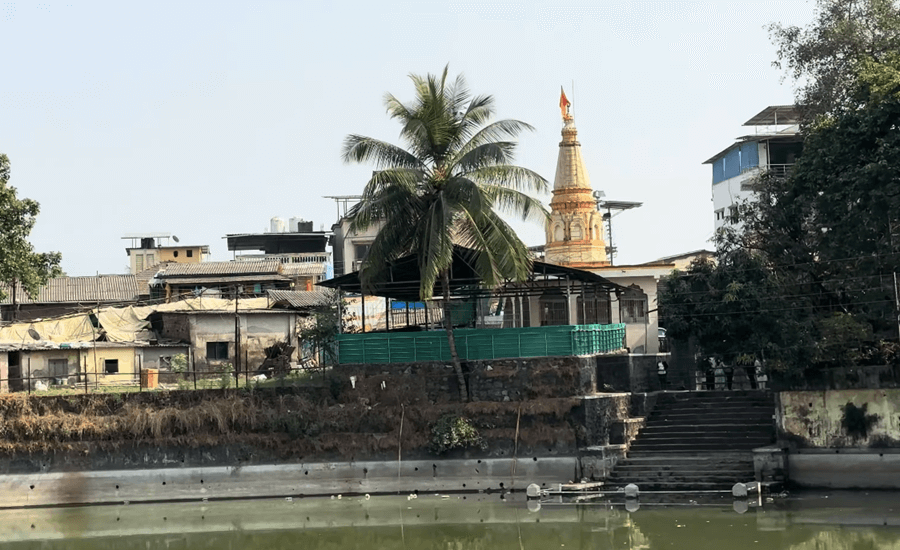
According to mythological beliefs, the idol of Varadvinayak in the temple built by Sage Gritsamada was hidden in the pond near the temple during the turmoil of war due to the fear of invaders. A story regarding this states that in 1690 CE, a Ganesha devotee named Dhondu Paudkar had a divine vision, and accordingly, he found this idol in the pond. This original idol was kept in the northern niche of the Gramdevi temple for some time. Later, around 1730 CE, after the current temple was built, a new idol of Varadvinayak was made and consecrated on the throne, while the old idol, being in a broken state, was kept in the nearby Dattatreya temple. One can go there and have the darshan of the original idol.
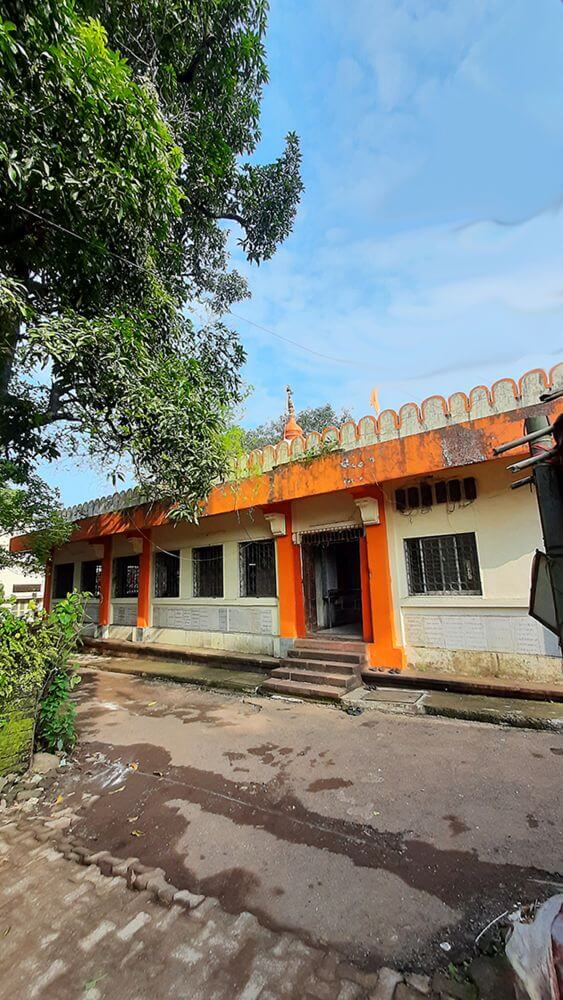
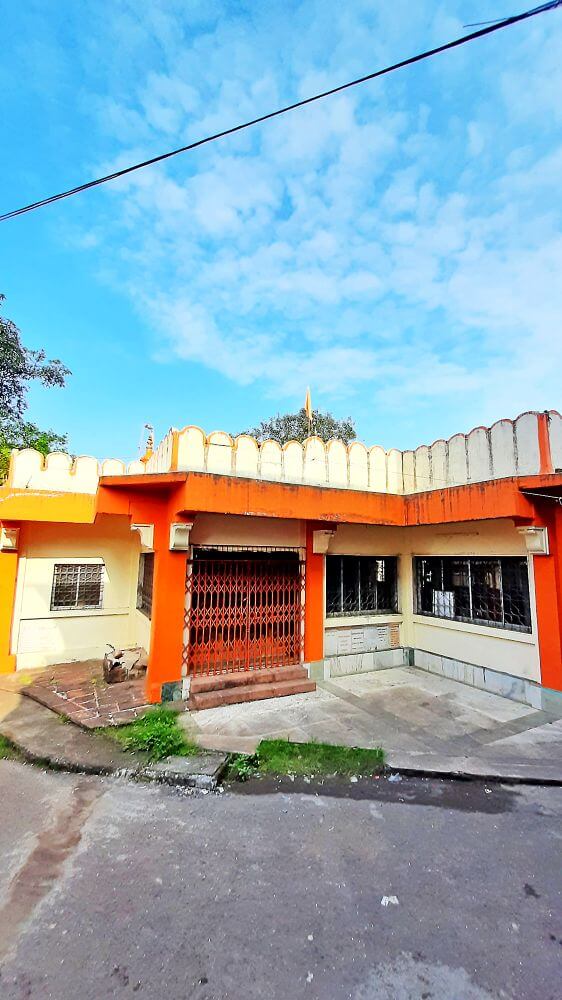
It is said that the current new temple was built by Ramaji Mahadev Biwalkar, the Sarsubhedar of Kalyan and the Senakhaskhel of the Peshwa’s navy. In the historical research book ‘Subhe Kalyan’ by Vivekanand Godbole, published in 1974, it is stated, “The installation of this deity took place in Shake 1694 (1772 CE) on Chaitra Shukla 5. The installation cost 158 Rupees and 15 Annas.” However, scholars estimate that this date must be of the temple’s renovation. The reason for this is that there is a record of Sarsubhedar Ramaji Biwalkar donating the Mahad village to the temple deity in 1757. This temple faces east. Its exterior appearance is like a tiled house. The main temple is made of carved stone, and there is a temple pond behind it. Riddhi and Siddhi are carved on the door of the sanctum. The Ganesha idol is seated on a stone throne. Elephants are carved on the throne, and the deity’s idol is between them. The idol has a trunk turned to the left and is in a seated posture. Elephant figures are carved on all four sides of the shrine. There is a golden pinnacle on the dome.
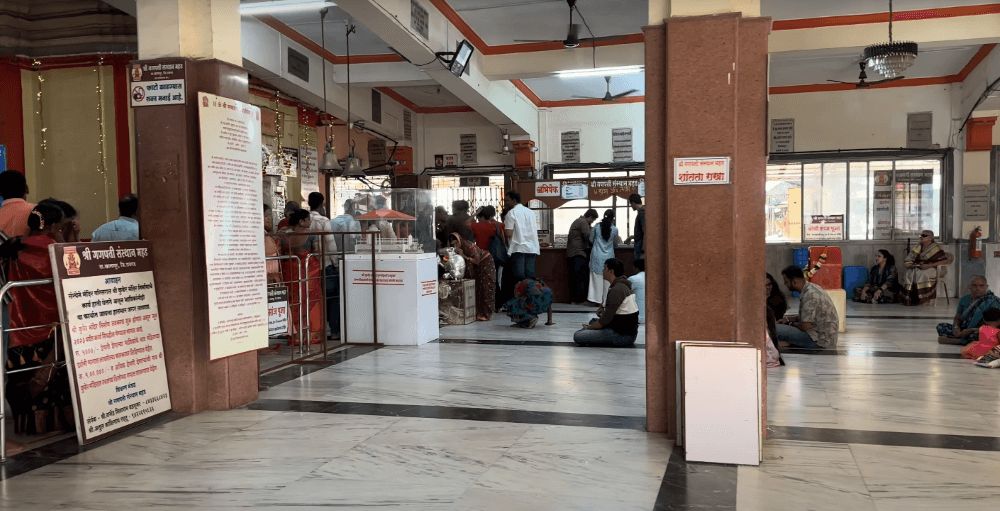
The Varadvinayak here is worshipped three times a day. There is a grand festival here on Magh Shukla Chaturthi, which is Ganesha Jayanti. At that time, the deity’s palanquin procession takes place, and after circumambulating the pond, it returns. Some devotees perform a 36 km pilgrimage on foot from Varadvinayak in Mahad to Ballal Vinayak in Pali. Two festivals are celebrated here: from Bhadrapada Shukla Pratipada to Panchami and from Magh Shukla Pratipada to Panchami. Women praying for the boon of a son have their lap-filling ceremony (Oti Bharne) performed here. There is a festival here on every Sankashti. Being an Ashtavinayak site, there is a crowd of devotees here every day. For this, a queue system for darshan has been arranged outside the temple. The temple committee has provided a facility for Prasad for devotees between 12:00 PM and 2:00 PM. Additionally, there is also accommodation available for devotees. The Varadvinayak here is renowned as a deity who grants wishes.
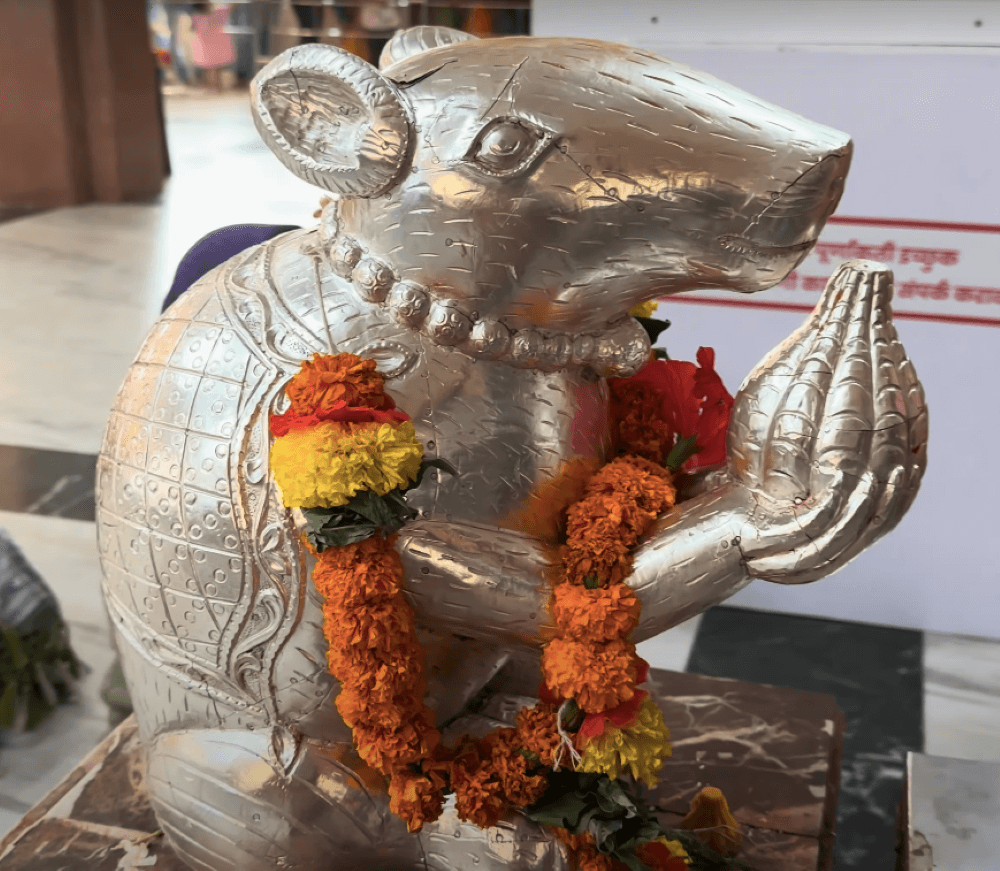
This sacred temple stands as a testament to deep spiritual devotion, ancient architectural grandeur, and rich local cultural traditions.
The sanctum sanctorum houses the divine idol consecrated according to ancient Vedic traditions, surrounded by serene courtyards and traditional temple architecture.
Navratri, Maha Shivratri, Annual Temple Jatra & Deepotsav
Compare and book flights, secure top-rated local hotels near the temple, hire reliable guides, and rent cars instantly.
Extend your pilgrimage by visiting other highly sacred temples located nearby.


Add ₹999 more to unlock FREE SHIPPING!
Your sacred cart is currently empty.
Shop Photo FramesFill in your delivery details below to place your order.
Add comment