
Add ₹999 more to unlock FREE SHIPPING!
Your sacred cart is currently empty.
Shop Photo FramesThe Nilakantheshwar Temple in Nilanga holds a most significant place in the cultural and historical heritage of Latur district. This temple is not only a place of faith for devotees from all walks of life but also an exquisite manifestation of ancient Indian architecture and intricate stone carving. Every year, tourists and history enthusiasts, along with devotees, visit the city of Nilanga in large numbers to witness this poetry carved in stone. In this ancient temple, which follows the Trikuta style—meaning it has a triple sanctum—a ‘Kiranotsav’ (festival of sun rays) occurs on specific days of the year. Devotees gather here in large numbers to witness this event.
It is believed that this temple was built between the 11th and 12th centuries. During this period, the Kalyani Chalukyas held power here. Chalukya King Vikramaditya VI and his son Someshvara III, also known as Ahavamalla, were ruling during this time. Many grand and beautiful temples were built in South India during the era of these Chalukyas. The Siddheshwar Temple, Keshavraj Temple, and Bhuteshwar Temple in Latur, the Nakuleshwar Temple in Borgaon of Ausa Taluka, and the Vitthal Temple in Pangao, which was originally dedicated to Lord Vishnu, are some examples from this region. The Nilakantheshwar Temple in Nilanga is one of them. This temple, an excellent specimen of the intricate carving found in Nilanga, offers a glimpse into the advanced architectural style of that era.
Regarding this temple, there is a legend that in ancient times, a devout Shiva devotee named Nilavanti lived in this area. She performed severe penance here to please Lord Shiva. Pleased by this, Lord Shiva appeared here. Since He came here because of Nilavanti, He became known as Nilakantheshwar. It is said that the town was named Nilanga after this temple. Some even claim that the original name of Nilanga city was Nilavanti, but there is no concrete basis for this. It is also claimed that a secret tunnel runs from beneath this temple directly to the Ausa Fort. However, there is no historical or architectural basis for this.
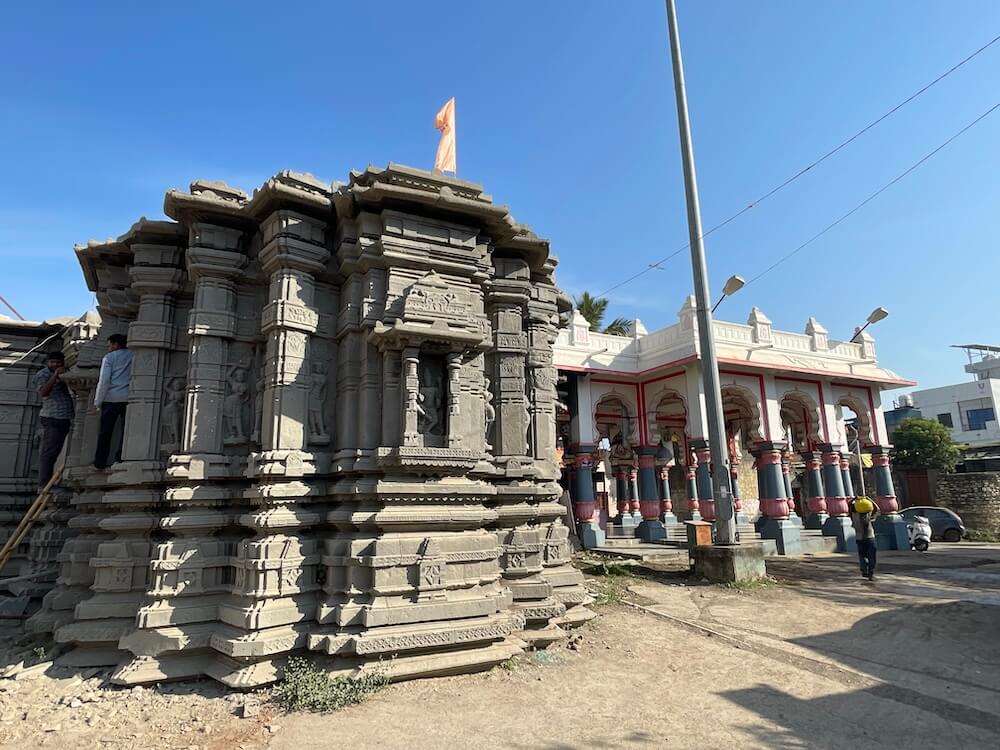
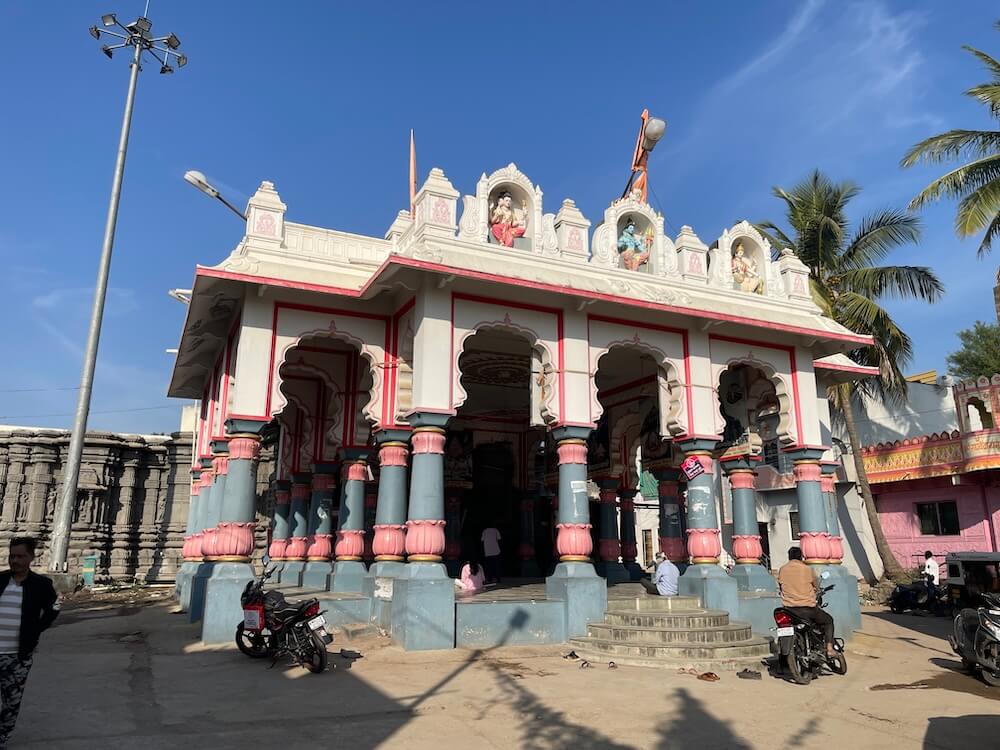
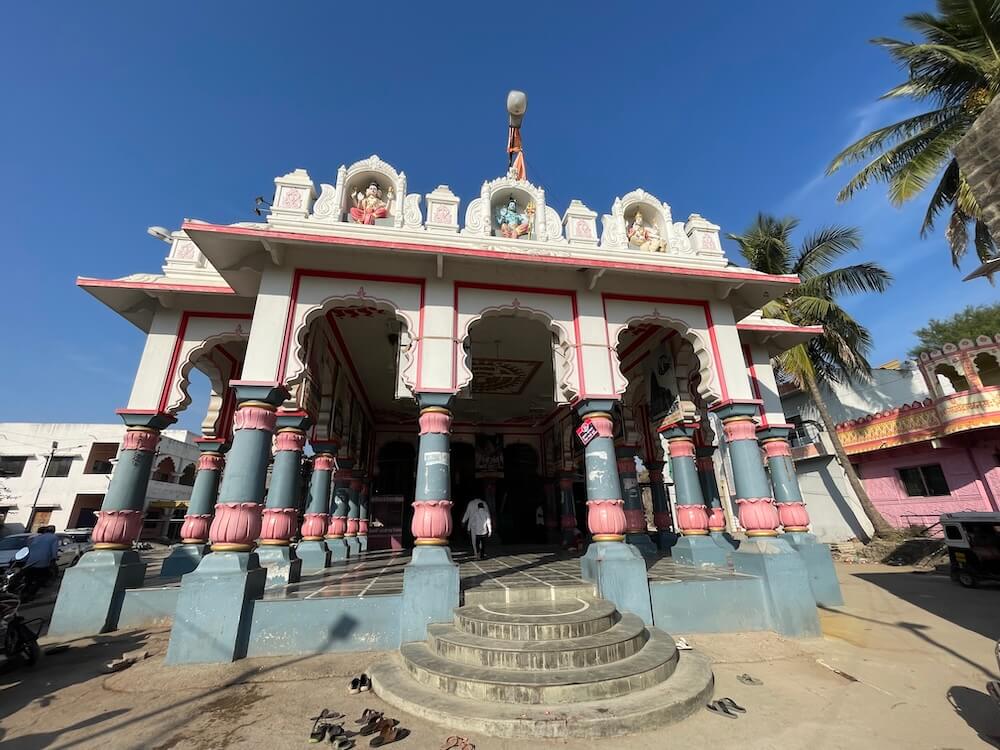
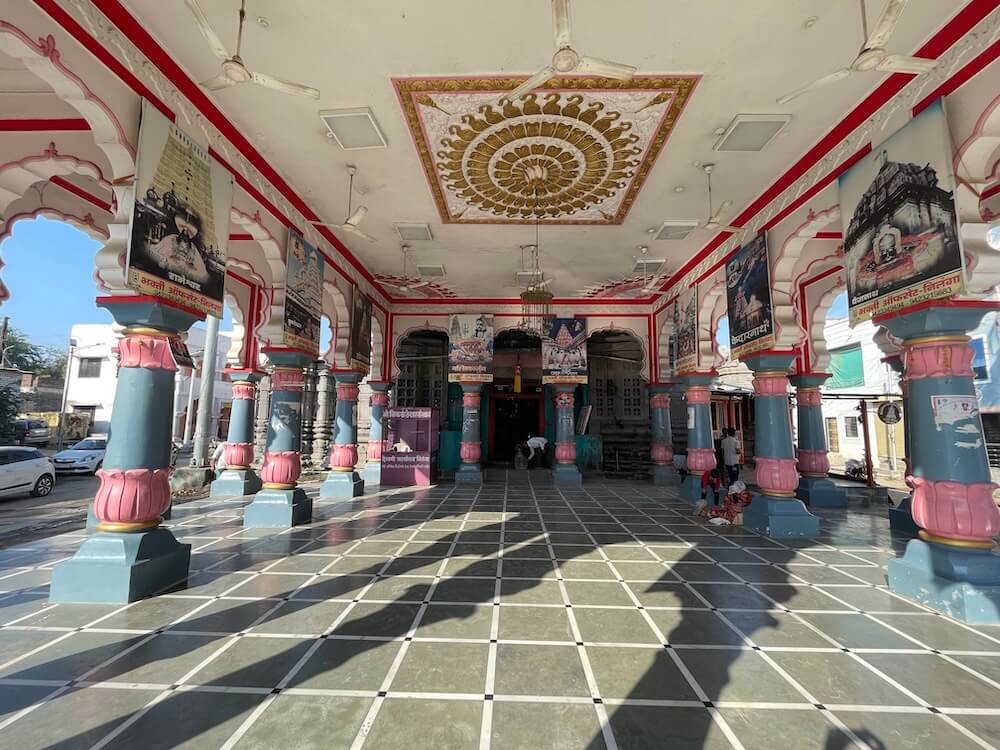
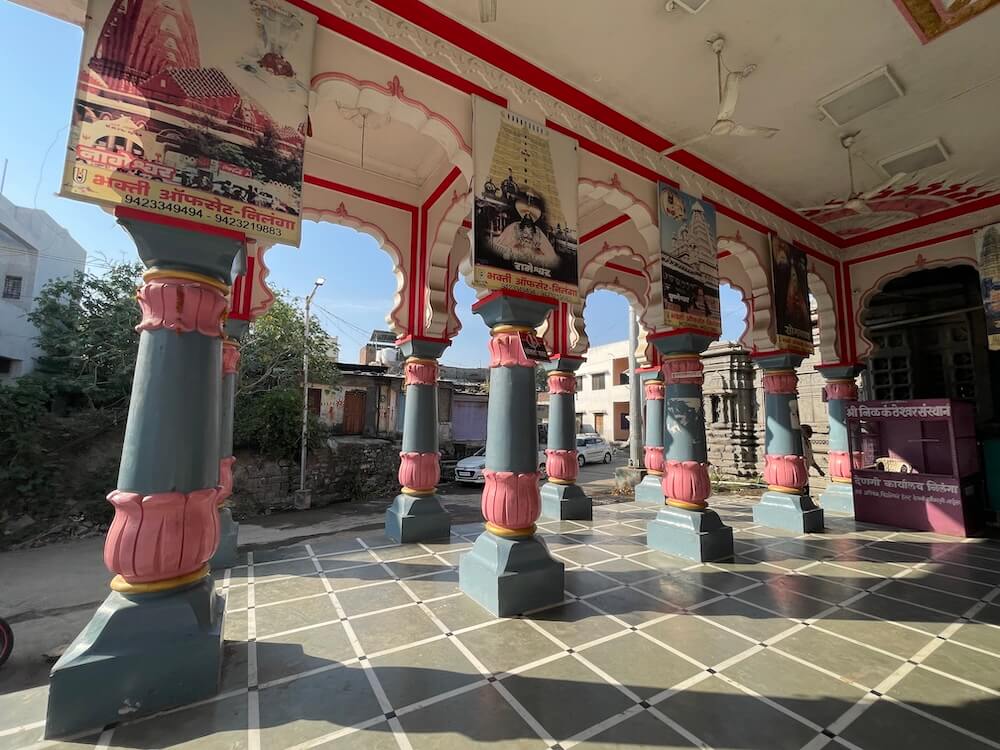
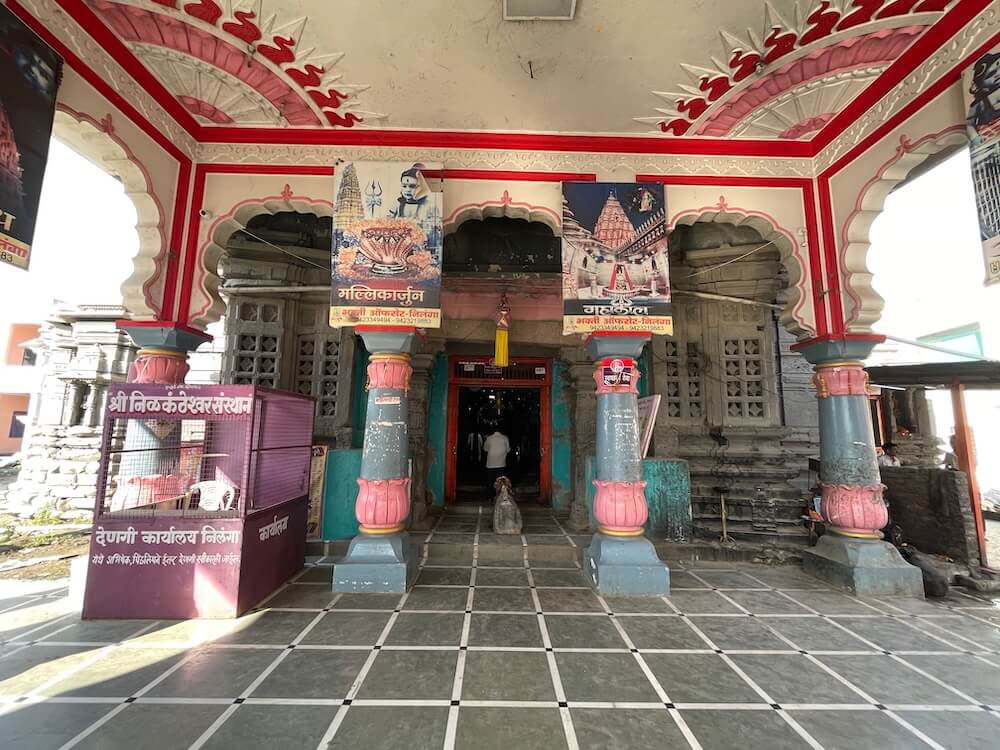
This Nilakantheshwar temple is built in the Bhumija architectural style. In front of the temple is an open assembly hall (Sabhamandapa) with lotus-shaped pillars. This structure is of modern origin. The original temple structure consists of a Gudhamandapa (enclosed assembly hall), an Antarala (vestibule), and a triple sanctum, following the Trikuta or Tridala style. In this structure, along with the Chalukyan architectural style, some features of the Yadava architectural style are also found. Temple scholars are of the opinion that because some improvements or repairs were made to the temple’s structure during the Yadava period, the imprint of Yadava architecture is visible on it. The stellate (star-shaped) plan of the temple is a characteristic feature of the Chalukyan architectural style seen here. Due to this, numerous corners and recesses have been created in the outer walls of the temple. The surface area of these walls is greater than that of plain, flat walls. This provides more space for carving sculptures. Similarly, the play of light and shadow created by this structure gives the temple a sense of vitality. It appears that not only architecture but also astronomy was considered in the construction of this Nilakantheshwar temple. This temple is built at a specific angle. Therefore, at certain times of the year, especially when the sun enters Uttarayana, the rays of the sunrise enter through the main entrance of the temple. They cross the assembly hall and the vestibule to fall directly upon the Shiva Linga in the main sanctum. This is called ‘Kiranotsav’.
One enters the enclosed stone assembly hall of the temple from the open assembly hall in front. There is an ancient Nandi statue right in front of the entrance here. There are many ornate pillars in the assembly hall. Various mythological figures are carved on each pillar. The ceiling of the assembly hall is of the ‘Navaranga’ type. When the ceiling of an assembly hall is divided into nine equal or proportional parts, it is called a ‘Navaranga Mandapa’. There are four main pillars in the center of the assembly hall. These four pillars have created nine parts of the hall. This division of the Navaranga consists of a central ‘Rangashila’ (dance floor slab) surrounded by eight sub-sections. There is extremely fine carving on the central ceiling of the temple. It features an octagonal lotus design. This is said to be a major feature of the Chalukyan style. Statues of Ganpati, Saptamatrika, and Suryanarayan are installed in the niches of the assembly hall. To the left and right of the central Rangashila are the vestibules and sanctums. There are three sanctums here: one main and two auxiliary.
The design of all three sanctums is identical. Their vestibules and the carvings therein are also mostly similar. The door frame of these sanctums is five-branched. This is called a ‘Nandini’ type door frame. In the right-side auxiliary sanctum, there is a four-armed statue of Lord Vishnu. Vishnu holds a conch, discus, mace, and lotus in his hands. On the pedestal of the statue, two female figures are carved on each side at Vishnu’s feet. It is said that they represent deities and rivers. In the Vaishnava tradition, and especially in Chalukyan sculpture, there is a practice of showing two women at the feet of Vishnu. Since Vishnu is the protector of the universe, Lakshmi and Prithvi are shown at his feet as his two powers. In some ancient temples, there is a tradition of carving images of Ganga and Yamuna at the base of the statue’s halo. Since it is believed that the Ganga originated from the feet of Vishnu, these river deities are carved there as symbols of purity. In the left-side auxiliary sanctum, the statue of Hara-Gauri is enshrined. The intricate carving on this statue’s pedestal bears a resemblance to the pedestal of the Vishnu statue. Here, the main figures are Shiva and Parvati. At the base of the statue, there are also figures of Ganesha, Kartikeya, and Nandi.
The main sanctum is square-shaped. Ornate pillars are carved at its four corners. Its ceiling is dome-shaped. A Shiva Linga carved from black stone is installed in the center of the sanctum. The Shiva Linga is slightly taller than usual. The size of the ‘Shalunka’ (base) is also large. Many small and large statues are visible on the exterior of the temple. Among them, along with statues of deities like Mahishasuramardini, Shiva, Uma, Bhairava, Chamunda, Varaha, Narasimha, Vishnu, and Harihara, the sculptures of ‘Surasundaris’ (celestial beauties) of the types Dalmalika, Ketakibharana, Padmagandha, Mardala, Shukasarika, Jaya, Karpuramanjari, and Darpana are particularly noteworthy.
Devotees can have darshan at this temple from 6 in the morning to 1.30 in the afternoon and from 4 in the evening to 8.30 at night. However, during festival periods, darshan remains open throughout the day. The Dhuparati takes place here daily at 7 in the morning and 7.30 in the evening. Mahashivratri is the grandest festival at this temple. On this day, Laghurudra and Abhishekam are performed from early dawn. Thousands of devotees from Latur district and the state of Karnataka arrive here for darshan. A large fair is held on this occasion. Annadana (offering of food) is organized for the devotees. The temple premises remain filled with devotion during the month of Shravan as well. On Shravani Mondays, Shiva devotees walk barefoot from long distances for darshan. Special puja and aarti are performed on the Pradosh Tithi of Shravan. A grand Deepotsav is celebrated at the temple on Tripurari Purnima. On this day, the entire temple premises light up with thousands of lamps. Since there is a Maruti temple within the temple complex, Hanuman Jayanti is also celebrated here with great enthusiasm.
This sacred temple stands as a testament to deep spiritual devotion, ancient architectural grandeur, and rich local cultural traditions.
The sanctum sanctorum houses the divine idol consecrated according to ancient Vedic traditions, surrounded by serene courtyards and traditional temple architecture.
Navratri, Maha Shivratri, Annual Temple Jatra & Deepotsav
Compare and book flights, secure top-rated local hotels near the temple, hire reliable guides, and rent cars instantly.
Extend your pilgrimage by visiting other highly sacred temples located nearby.


Add ₹999 more to unlock FREE SHIPPING!
Your sacred cart is currently empty.
Shop Photo FramesFill in your delivery details below to place your order.
Add comment