
Add ₹999 more to unlock FREE SHIPPING!
Your sacred cart is currently empty.
Shop Photo FramesIn Shirur Anantpal, a taluka town in Latur district, stands the temple of Anantpal, who is revered as an incarnation of Lord Vishnu. It is due to this temple that the village received the name Shirur Anantpal. This temple was constructed approximately between the eleventh and twelfth centuries, during the reign of the Kalyani Chalukya dynasty. According to references in the Latur District Gazetteer, this temple is a significant part of Marathwada’s ancient architectural heritage. A fair is held here on Anant Chaturdashi in the month of Bhadrapada. A unique feature of this place is the ‘Anant Vrat’ (vow) observed during this fair, which involves tying a sacred thread with fourteen knots.
Two different legends are famous regarding the origin of this temple. According to the first legend, Chandra Deva (the Moon God) was cursed to wane gradually. To be freed from this curse, he performed severe penance at this very spot. Witnessing his devotion, Lord Vishnu appeared before him here in His Ananta form and partially freed him from the curse. The temple was named Anantpal after this Ananta-formed Vishnu, who protects and sustains His devotees. According to another popular legend, the Vishnu idol here originally came from North India with a devotee. When the devotee arrived in the Shirur area with the Vishnu idol, he placed it on the ground to rest. After his rest, when he tried to lift the idol again, it would not move from that spot. Considering this a divine indication that the Lord preferred this location, local devotees formally consecrated the idol there.
Many local beliefs and legends are associated with this temple. Devotees believe that Sheshnaga Himself resides in the sanctum sanctorum of the temple. It is believed that some devotees and priests have seen a real serpent in the sanctum sanctorum in the early morning, and that serpent protects the idol. Another legend recounts that in ancient times, when enemies attacked, the idol itself disappeared. Whenever there is no rain and drought conditions arise in the Shirur Anantpal area, prayers are offered to Anantpal. Local residents recount experiences of immediate rainfall thereafter.
Historians express the opinion that this temple is more than a thousand years old. In those times, a Vedapathashala (Vedic school) was run in the temple. Between the eighth and tenth centuries CE, specifically from 753 to 973 CE, this region was under the dominion of the Rashtrakuta dynasty. During the Rashtrakuta period, ‘Lattalur’, now known as Latur, emerged as a center of power. Mentions in the ‘Shirur’ and ‘Nilgund’ copperplate inscriptions of Rashtrakuta Emperor Amoghavarsha I prove that Lattalur, the ancestral homeland of the Rashtrakutas, was a prosperous city. After the fall of the Rashtrakutas, this region came under the control of the Kalyani Chalukya kings. During the reigns of Chalukya Emperor Vikramaditya VI and his son Someshvara III, this area witnessed cultural and religious development. Inscriptions from the Chalukya period serve as a foundation for understanding the chain of evidence in this region.
A Sanskrit inscription found in 1099 CE at Ganeshvadi in the taluka, carved by Bhimanatha, the general of Chalukya Emperor Vikramaditya VI, mentions ancient village names in the area. A similar inscription has been found at the Papavinash Temple in Latur. This inscription, dated February 10, 1128 CE, mentions the presence of 500 scholars in Lattalur during the reign of Chalukya Emperor Someshvara III and refers to Someshvara’s administration. An inscription from the Kalyani Chalukya period found at Ganeshvadi provides evidence that this region was a principal seat and dharmashala (rest house) for the ‘Pashupata Shaiva sect’ or ‘Shivlingi Santana’. A similar twelfth-century inscription has been found near the Nandi Mandapa in the Anantpal Temple complex. This Chalukya-era inscription mentions the town as ‘Shiruri’ and the deities as ‘Ananteshvara’ and ‘Narayanadeva’.
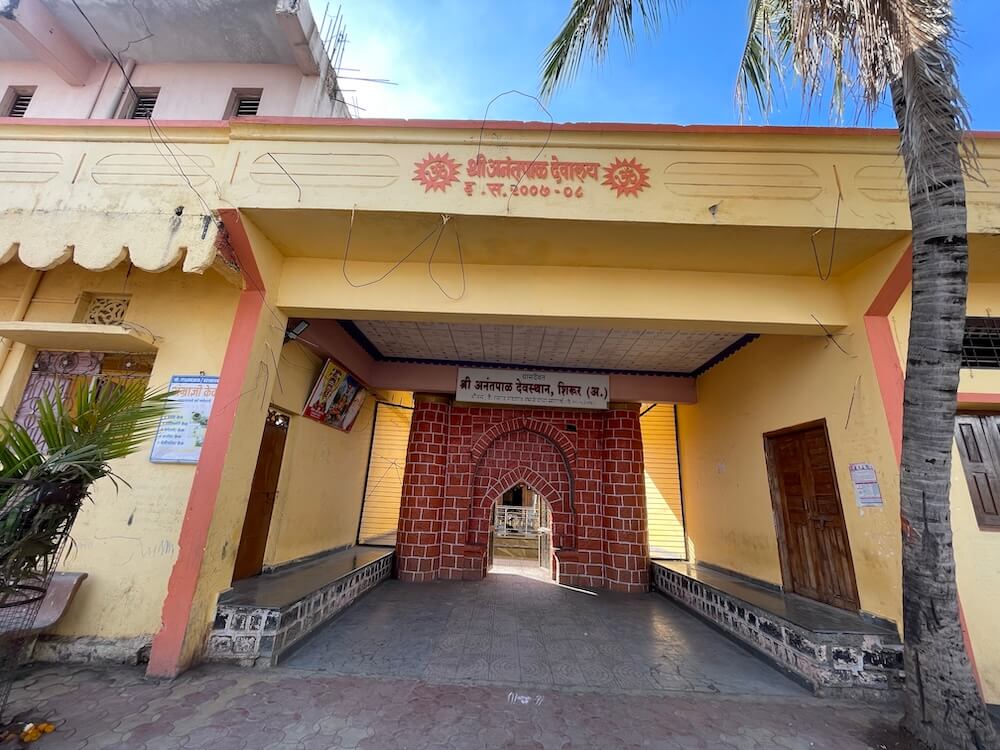
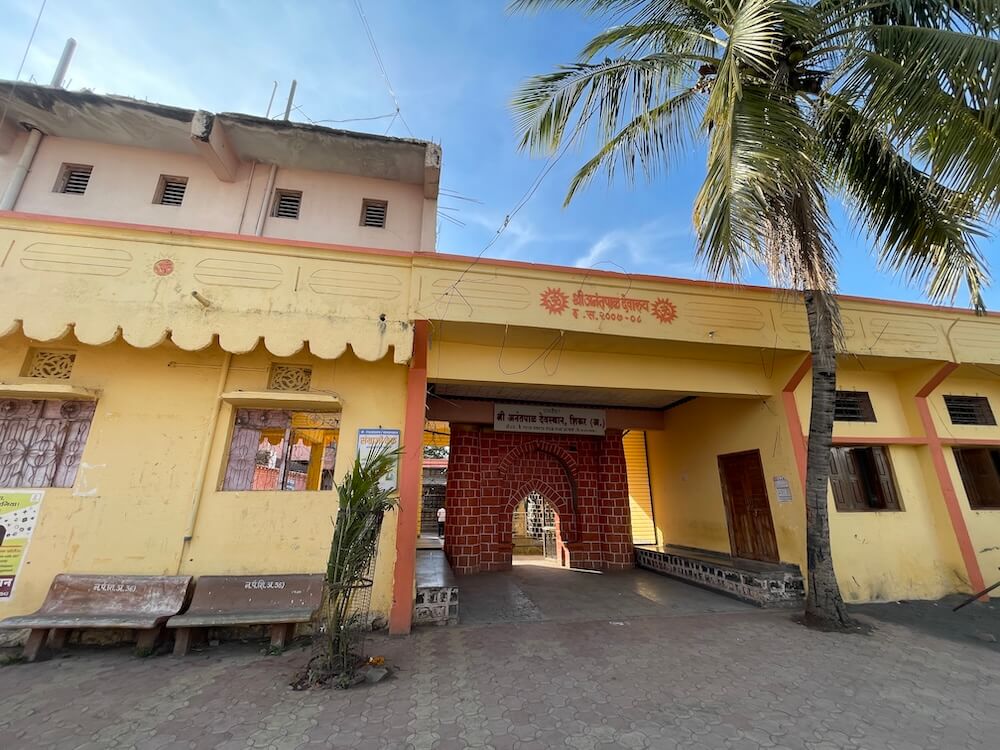
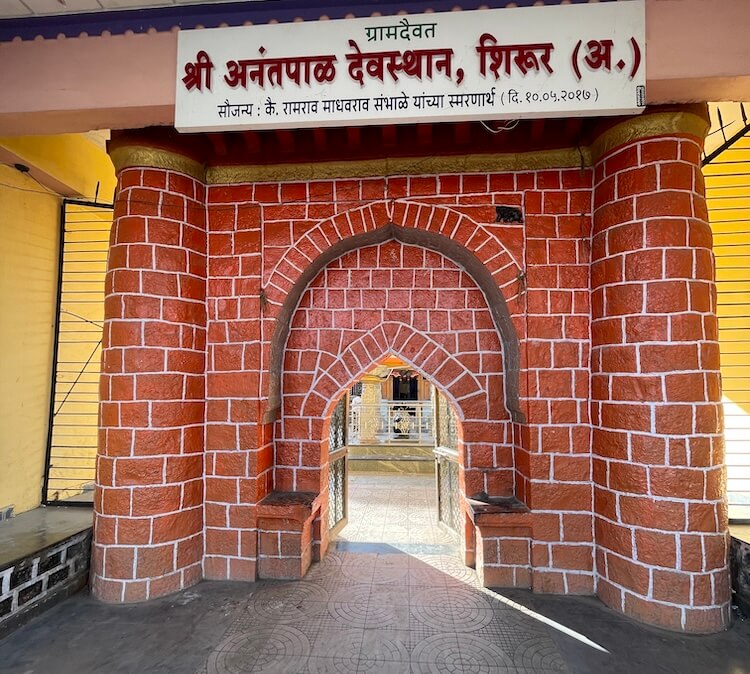
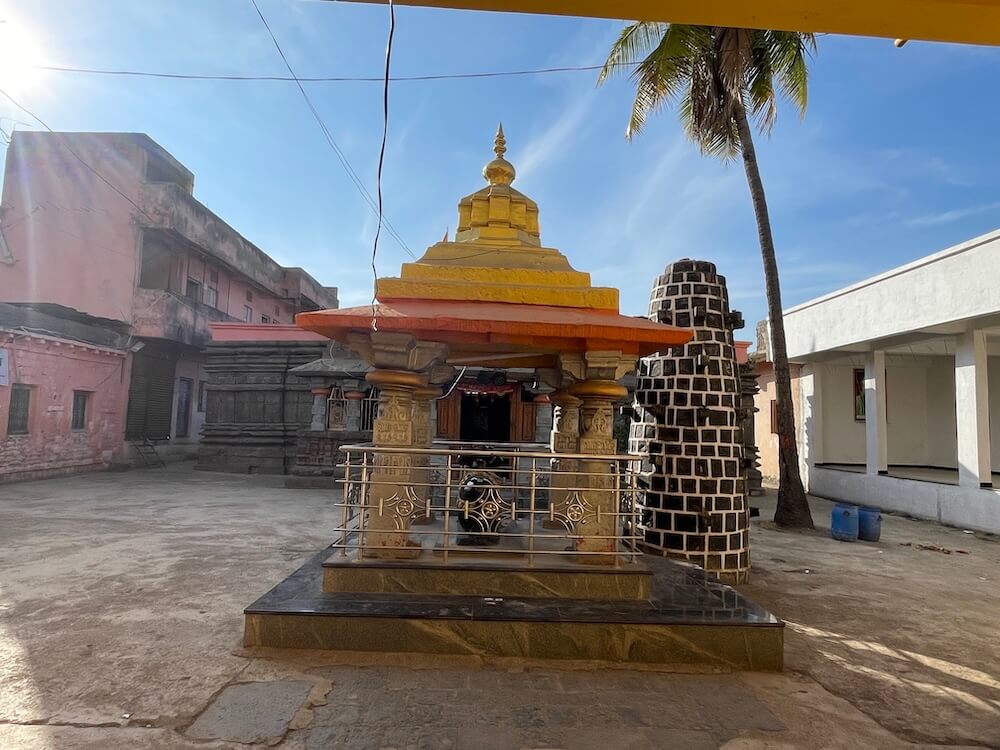
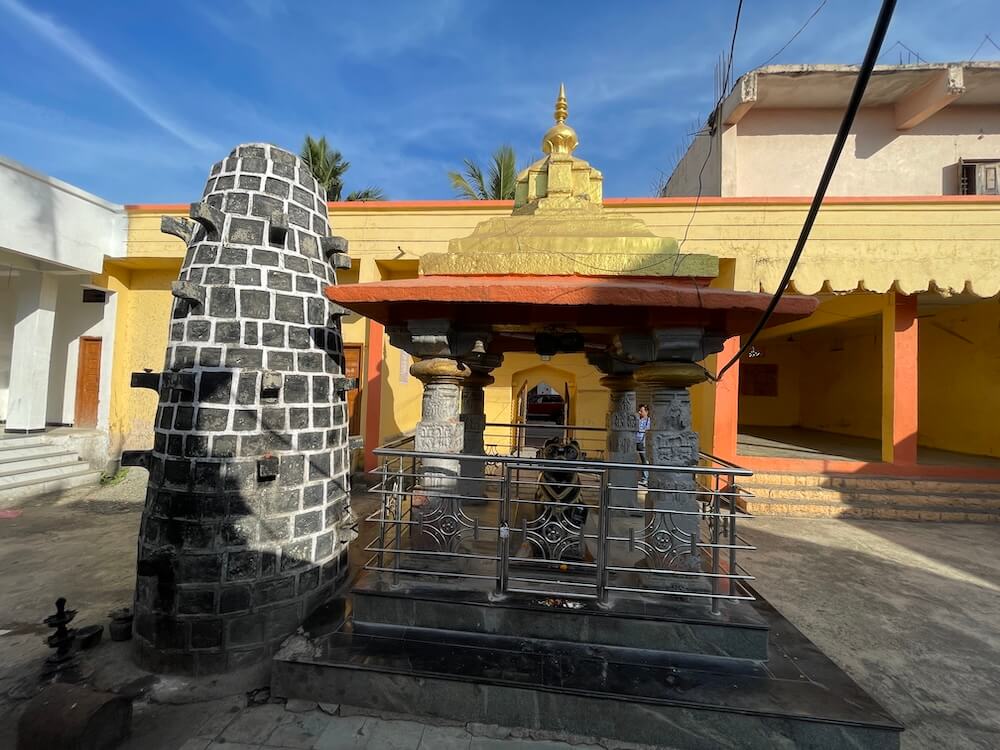
From all the inscriptions and carved records, it becomes clear that Anantpal Dandnayak, a minister and general of the Kalyani Chalukyas, might have received this village as a jagir (fiefdom) from the Chalukya kings. Anantpal Dandnayak himself constructed Shiva temples and water reservoirs in this area. During the medieval period, it was customary to name temples after their founders. By this principle, this Shiva temple acquired the name ‘Anantpal Temple’. Over time, the village’s name evolved from ‘Bhojraj Shirur’ to ‘Shirur Anantpal’. After the Kalyani Chalukyas, this region came under the dominance of the Yadavas of Devagiri. The Yadavas had provided assistance for the protection and preservation of the temples in this area. Subsequently, this region came under the Bahmani Sultanate and later under the Nizams of Hyderabad. After the integration of Marathwada in September 1948, this region was included in the Bombay Province and finally in the state of Maharashtra in 1960. After the formation of Latur district on August 15, 1982, this area was separated from Osmanabad, and on June 23, 1999, Shirur Anantpal Taluka was officially created. This temple, built in the Kalyani Chalukya architectural style, is carved from basalt stone. The temple, structured like a wada (mansion/fortified residence), has strong fortifications. An entrance gate is built within these fortifications. On both sides in front of the entrance, there are seats for devotees to sit. In the courtyard, in front of the temple, stands a Deepmala (lamp tower) constructed from carved stone. Adjacent to it is the Nandi Mandapa. The Nandi Mandapa features a two-tiered elevated plinth, with four ornate pillars at its corners, supporting a roof on beams above the pillars. This Nandi Mandapa and the idol of Nandi seated on the Vajra Pitha within the mandapa are from the Chalukya period. The roof of the Nandi Mandapa is crowned with a square, dome-shaped shikhara (spire).
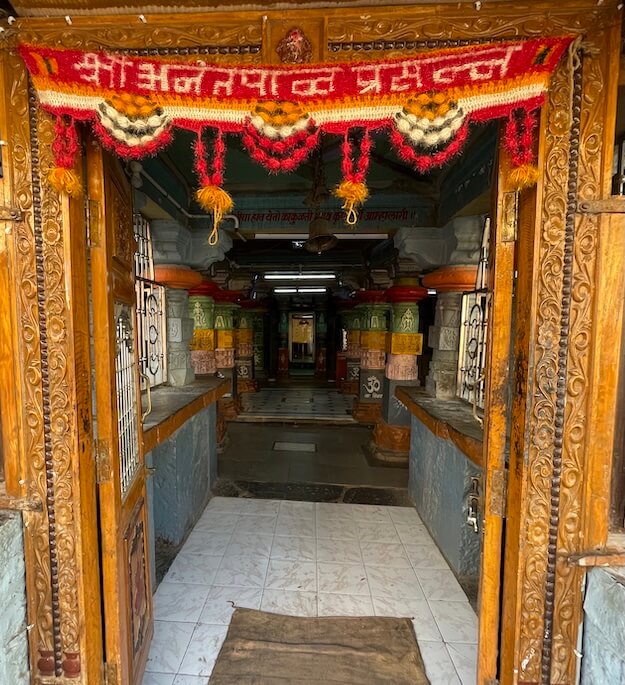
The temple stands upon a high plinth (Adhishthana). The temple’s structure comprises an Ardhamandapa, a Sabhamandapa, an Antarala, and three Garbhagrihas (sanctum sanctorums) in three directions, following the Tridala system. To reach the Ardhamandapa, which is elevated above the courtyard (Prangana), there are three steps. The entrance to the Ardhamandapa features intricately carved wooden Dwarashakhas (doorframes) and shutters. The Ardhamandapa, designed as a semi-open structure, has railings on its outer side. The railings are adorned with carved pillars. In the Sabhamandapa, a Rangashila (performance platform) is situated amidst the four central pillars. In earlier times, dance, music, drama, and other arts were performed here for the divine pleasure of the Lord (Rangabhoga). All pillars stand upon square pillar bases. The shafts of the pillars display various geometric shapes such as squares, hexagons, octagons, and circles. Diverse sculptures and carvings adorn the pillar shafts. At the top of each pillar is a Kani (capital). Upon this Kani rests a Hasta (bracket), and beams (Tulayi) are placed on the Hastas. The ceiling (Vitana) of the Sabhamandapa features a Chakra-nakshi (wheel motif) at its center. On the walls of the Sabhamandapa, there are sculptures of Saptamatrikas and Sheshashayi Vishnu. Numerous Devakoshtakas (niches for deities) are present in the Sabhamandapa and Antarala. These Devakoshtakas house idols of various deities.
In front of the Sabhamandapa, to its left and right, there are a total of three Antaralas, each leading to a Garbhagriha. At the entrance of each Garbhagriha, the Dwarashakhas are adorned with sculptures of Dwarapalas (gatekeepers) and Chamaradhari Sevikas (attendants holding whisks). The Dwarashakhas also feature intricate floral and foliage carvings. Furthermore, Ganesha sculptures are carved on the Lalatabimba (lintel). Within the Garbhagriha, a Swayambhu Shivapind (self-manifested Shiva Lingam) is enshrined on the ground.
A silver serpent (Naga) holding a canopy (Chatra) is placed upon the Shivapindi. Additionally, silver masks (mukhawatas) of the deities are present near the back wall. In the Garbhagriha on the left, an idol of Mahadev (Lord Shiva) is seated on a Vajrapitha (diamond throne), with Parvati Mata (Mother Parvati) seated on His lap. In the Garbhagriha on the right, an idol of Lord Vishnu is seated on a Vajrapitha, with Lakshmi Mata (Mother Lakshmi) seated on His lap. Further ahead, there is an idol of Sheshashayi Vishnu (Lord Vishnu reclining on the cosmic serpent Shesha). On the exterior of the temple, the Adhishthana (plinth) and walls are adorned with various types of carvings, including sculptures of Surasundaris (celestial beauties), Vadikas (musicians), and more. Within the Prangana (courtyard), there is a school building, residences for priests and sevaks (attendants), the temple office, and other structures. Within the temple premises, there is a sacred pond named Kallol Tirtha. This pond, built with carved stone, has steps leading down into it.
The Anant Chaturdashi Jatra (fair) at Shirur Anantpal is a major annual celebration in this region. The Jatra commences on this day and typically lasts for 3 to 5 days. During the Jatra, a Palkhi (palanquin) procession of Lord Ananta is taken out. Accompanied by the resounding beats of Dhol-Tashe (drums), Lezim Pathake (Lezim dance troupes), and the melodious rhythm of Tal-Mridanga (cymbals and drums), the Lord’s Palkhi is carried through the entire village.
At that time, devotees shower Gulal (red sacred powder) and flowers upon the Palkhi. On the day of the Jatra, a Mahabhishek (grand ritualistic bathing) of the deity is performed in the early morning, and the Lord is adorned with new garments and ornaments. Many devotees sincerely observe the Anant Vrat (vow) on this day. The tradition of tying a sacred thread (Anant Dora) with 14 knots on the hand is observed here, as devotees believe it brings happiness and prosperity to the family.
On the final day of the Jatra, a wrestling arena (Kustyancha Phad) comes alive here. Renowned wrestlers (Pailwans) from the border regions of Maharashtra and Karnataka participate in this arena. Throughout the Jatra, various social organizations and devotees arrange for Mahaprasad (sacred food offerings), also known as Bhandara (community feast).
Additionally, festivals and celebrations such as Mahashivaratri, Shravani Somvar, Nagpanchami, Dasara, Diwali, and others are observed here. Devotees can have Darshan (sacred viewing) of Lord Anantpal at this temple daily from 6 AM to 1:30 PM and from 4:30 PM to 9 PM.
This sacred temple stands as a testament to deep spiritual devotion, ancient architectural grandeur, and rich local cultural traditions.
The sanctum sanctorum houses the divine idol consecrated according to ancient Vedic traditions, surrounded by serene courtyards and traditional temple architecture.
Navratri, Maha Shivratri, Annual Temple Jatra & Deepotsav
Compare and book flights, secure top-rated local hotels near the temple, hire reliable guides, and rent cars instantly.
Extend your pilgrimage by visiting other highly sacred temples located nearby.


Add ₹999 more to unlock FREE SHIPPING!
Your sacred cart is currently empty.
Shop Photo FramesFill in your delivery details below to place your order.
Add comment