
Add ₹999 more to unlock FREE SHIPPING!
Your sacred cart is currently empty.
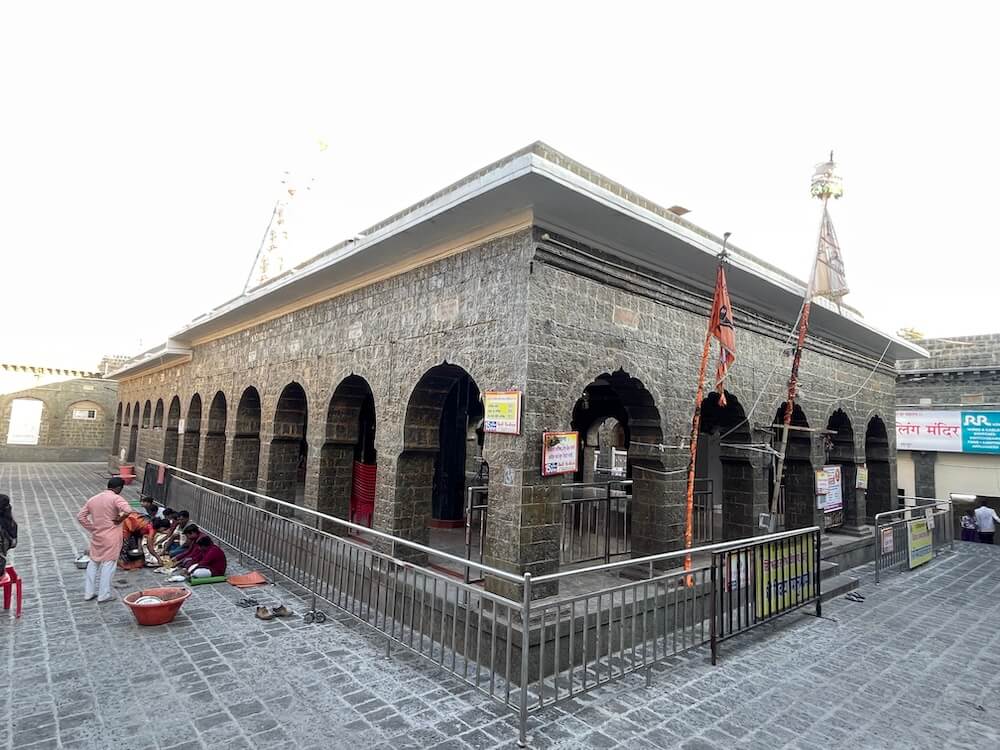
Shop Photo FramesThe Siddheshwar-Ratneshwar Temple in Latur is a historic shrine built in the 12th century by King Tamradhwaja. King Tamradhwaja of the Yadava era commissioned this temple to express his gratitude towards his Guru, Siddharameshwar Swami. Boasting magnificent and exquisite architecture, this temple and its sprawling surroundings are considered a primary center of pride and faith for the people of Latur. The temple shares a deep bond with the Veershaiva sect, which advocates for social equality. Every day, a large number of devotees and tourists gather here. Especially during the festival of Mahashivratri, the temple witnesses an overwhelming crowd of thousands of devotees.
Siddharameshwar or Siddheshwar was a great 12th-century Veershaiva saint. A multi-faceted personality—a yogi, philosopher, and Kannada poet—Siddheshwar was also a great social reformer. He consistently opposed caste discrimination, class distinctions, and ritualism. Along with Basavanna, Allamaprabhu, and Akka Mahadevi, he participated in the Veershaiva revolution. Deeply immersed in devotion to Shiva, Siddheshwar is considered one of the five Acharyas of the Lingayat sect. Emphasizing the principles of Advaita, Karmayoga, and social equality, Siddharameshwar propagated devotion to Shiva. King Tamradhwaja was his ardent devotee. This king of the Yadava lineage always provided royal patronage to the Veershaiva sect. Out of respect for his Guru, King Tamradhwaja built this Shiva temple and, upon its completion, dedicated it to the great ascetic Siddheshwar.
This temple is also viewed as the origin of the movement that transformed Shaivism from a philosophical foundation into a practical religion. This temple is revered as the Gramadaivat (deity of the village) of Latur. It is believed that the ancient name of the city was ‘Ratnapur’; hence, the Mahadev here is also addressed as ‘Ratneshwar’. A mention of this temple is found in the ancient text ‘Ratnapur Mahatmya’. Some scholars argue that the temple was originally dedicated to Goddess Parvati, citing the Shiva-Parvati idol on the right side of the sanctum sanctorum as evidence. Others believe that Siddheshwar is a form of Shiva himself and that this temple is a symbol of his divine manifestation. References to the figures carved on the temple walls are linked to various legends, though no definitive historical details are available. Experts believe this temple is associated with the rise of the Veershaiva sect. References indicate that this 12th-century temple has been renovated several times over the course of time.
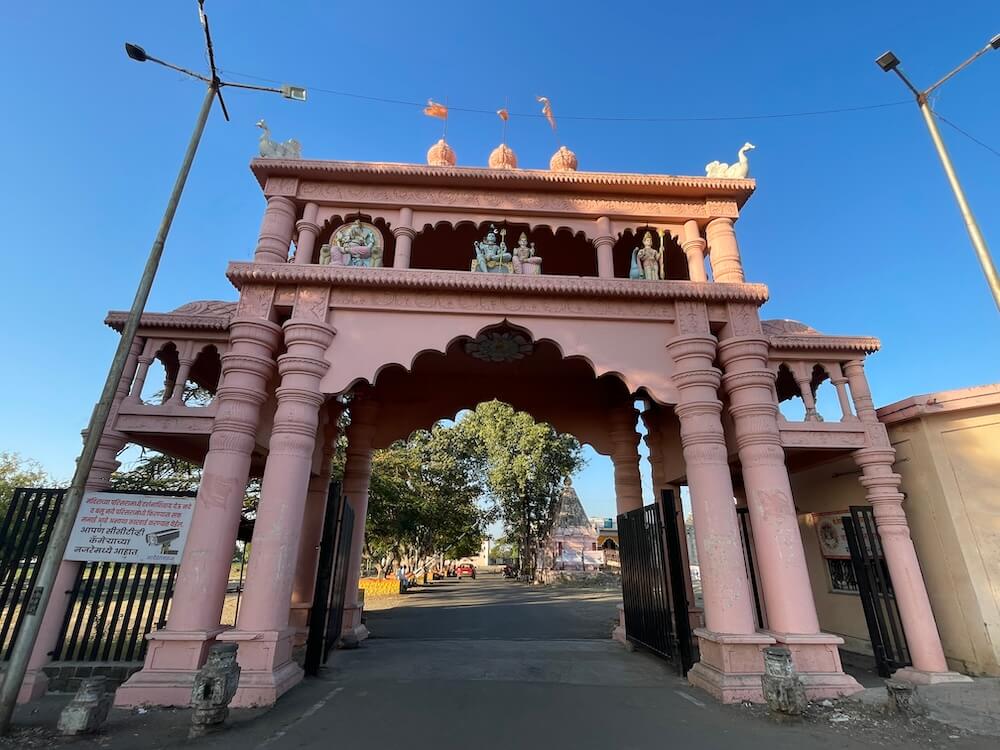
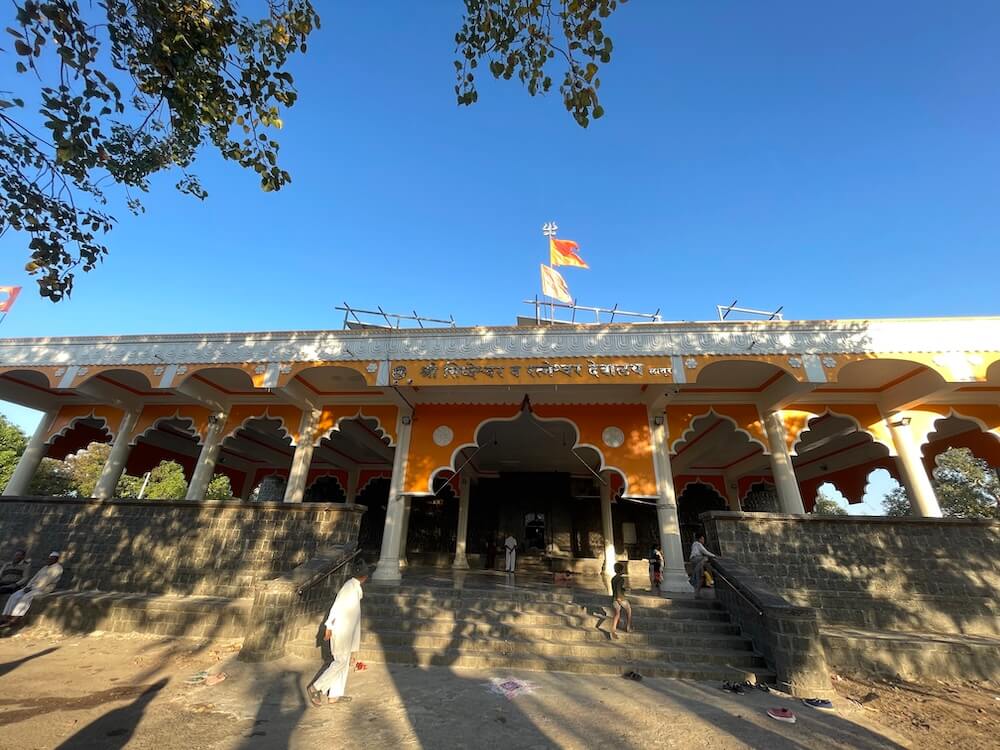
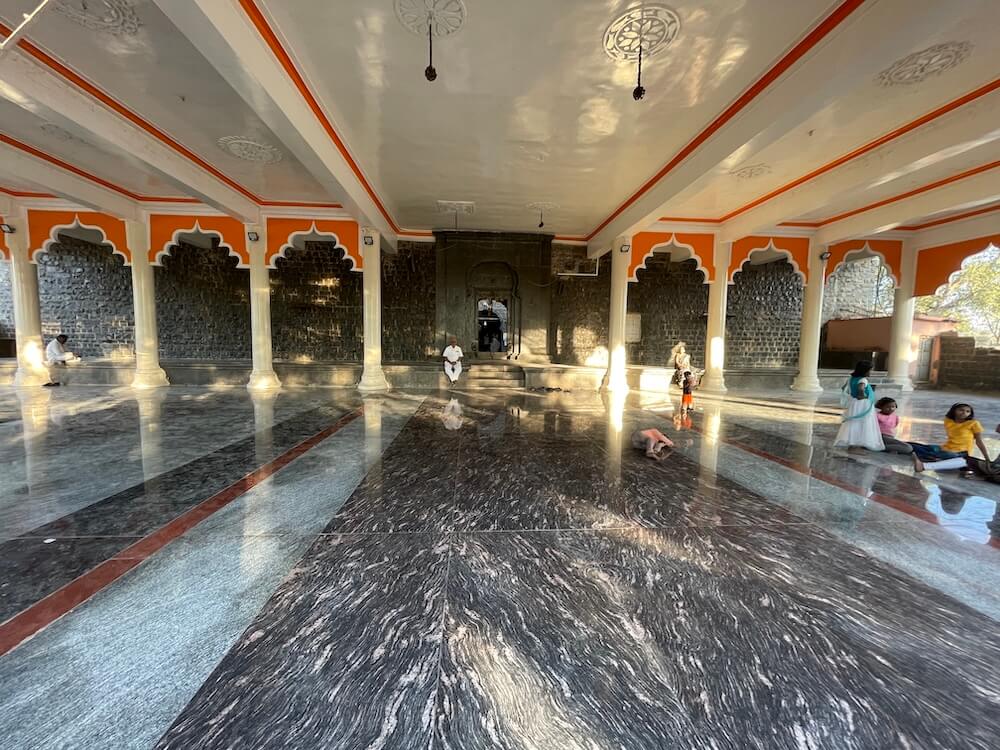
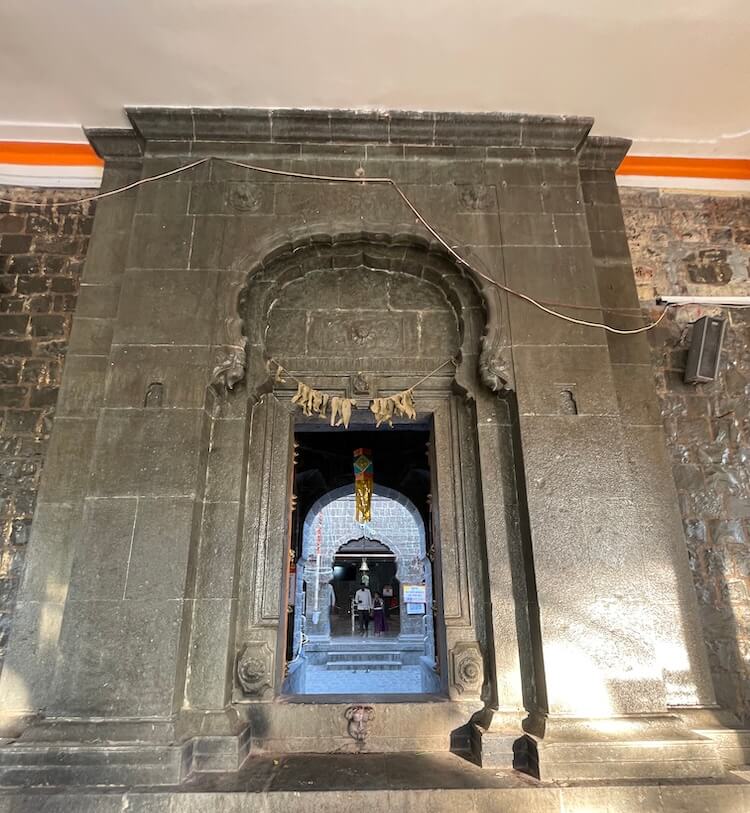
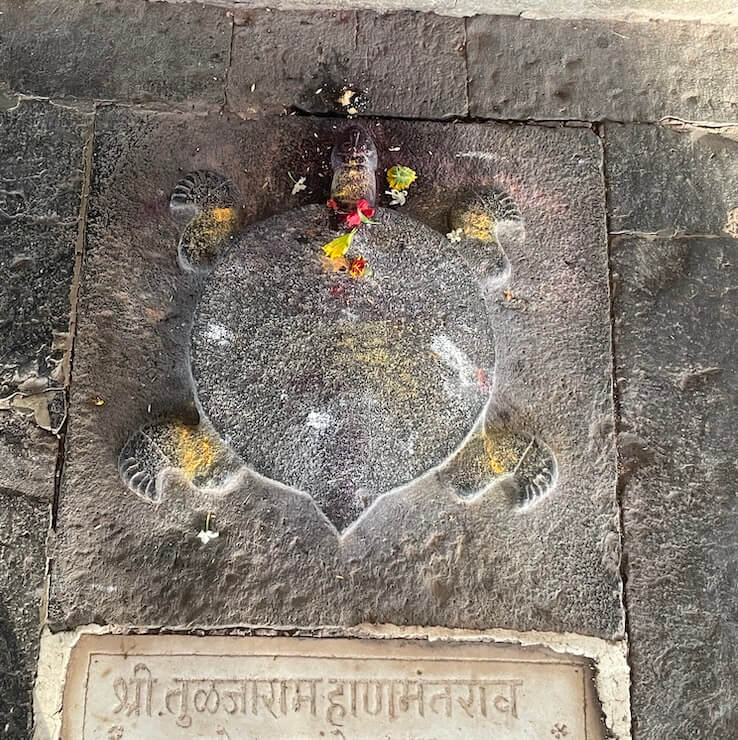
Entering through the main gate, one arrives at a newly constructed, spacious arched assembly hall (Sabhamandap). Signs of modern architecture are clearly visible in this stone-built hall. One enters this ancient structure, which features many pillars and arched gateways, by climbing eight steps. Beyond this is another stone entrance, with an image of Ganesha on its lintel. From that entrance, one enters the main assembly hall of the temple. In the assembly hall, facing the sanctum sanctorum, is an idol of Nandi. This elegant Nandi idol, crafted from black stone, is installed on a stone pedestal. The stone ornaments on the idol and the carving on the face are distinctive. In the front wall of the sanctum sanctorum, there are idols of Ganpati in niches on both sides. There is a design of descending steps on three sides to reach the entrance of the sanctum sanctorum. The entrance to the sanctum sanctorum is adorned with arched carvings, and its doorframes feature pillars as well as gatekeepers (Dwarapalas) carved at the base. There is a metal idol of Ganpati at the lintel. Inside the sanctum, there is a mask of Siddheshwar on a pedestal, with a silver arch behind it. In front of the pedestal, there is a square, hollow area surrounded by marble stones, in which the shape of a Shiva Linga is visible. Above it is an Abhisheka vessel held by a silver hooded serpent.
On the circumambulation path (Pradakshina Marg) of the sanctum, there is a niche housing the Saptamatrikas along with Ganpati. There are stairs on both sides of the sanctum to go to the roof. Next to these stairs is a unique idol of Shankar-Parvati, and on the other side, a historical inscription has been preserved. It is from this very inscription that it is confirmed that the construction of this temple took place approximately 700 years ago. Near the assembly hall of the temple, there is another place for Shankar in a hollow area with a cave-like structure. The Nandi idol there also features detailed carvings. Right next to the temple is a large stepped well (Pushkarani). There are other small temples in the temple complex as well. There are three temples right next to the main temple. Although the Ratneshwar temple among them is not very large, its Shiva Linga is massive. Its construction is also in the ancient style. Its doorframes feature pillar branches, Sursundaris, and gatekeepers. Nearby are the temples of Nageshwar and Hanuman. The structure of the Hanuman temple is also unique, and there are monkey-shaped idols on its spire in all four directions. In the complex, there are also temples of Ramlingeshwar, Bhuteshwar, Keshavraj, Shriram, and Dattatreya. There are carved sculptures in many places on the walls of the main temple. These include elephants, horses, and idols of various gods and goddesses.
The biggest festival celebrated in this temple of Shankar is Mahashivratri. The fair of the Ratneshwar temple also begins on Mahashivratri. During this ten-day fair, many religious programs are held at the Siddheshwar-Ratneshwar temple. Devotees from Dharashiv, Nanded, and even the state of Karnataka come here in large numbers to participate in this festival. On the night before Shivratri, at 12 o’clock, a milk offering (Dugdhabhishek) is made to Siddheshwar by members of the Gavli community. Only after this do the main worship and Abhisheka begin. The tradition of giving the honor of performing this first milk offering to the Gavli community has been going on for many generations. Special worship and Abhisheka are also performed in the temple during the month of Shravan. Devotees can visit this temple daily from 5:30 AM until the Aarti at 8:30 PM.
This sacred temple stands as a testament to deep spiritual devotion, ancient architectural grandeur, and rich local cultural traditions.
The sanctum sanctorum houses the divine idol consecrated according to ancient Vedic traditions, surrounded by serene courtyards and traditional temple architecture.
Navratri, Maha Shivratri, Annual Temple Jatra & Deepotsav
Compare and book flights, secure top-rated local hotels near the temple, hire reliable guides, and rent cars instantly.
Extend your pilgrimage by visiting other highly sacred temples located nearby.


Add ₹999 more to unlock FREE SHIPPING!
Your sacred cart is currently empty.
Shop Photo FramesFill in your delivery details below to place your order.
Add comment