
Add ₹999 more to unlock FREE SHIPPING!
Your sacred cart is currently empty.
Shop Photo FramesIn the culture of Maharashtra, Hanuman is revered as the protector of the village and a symbol of strength. For this reason, his presence is firmly established in every village. Preserving this tradition is a vibrant and sacred shrine situated on the banks of the Nalganga River in Gadegaon, near Malkapur in Buldhana district. The Swayambhu (self-manifested) idol, which was washed ashore during a massive flood of the Nalganga River in the 18th century, was consecrated here. Located in a scenic environment, this temple offers the darshan of Kashi Vishweshwar alongside Hanuman. This Maruti is known to fulfill the wishes of his devotees. The temple holds special significance because of the deep faith of devotees that no one who comes to his doorstep seeking blessings ever returns empty-handed.
In the villages, hamlets, and settlements across Maharashtra, there is always a temple dedicated to Hanuman. This is because Hanuman, or Maruti, is considered the primary protector of the village and a source of strength. Since ancient times, village planning prioritized security; thus, Hanuman was installed at the village boundary, or the main entrance. He is regarded as the ‘Veshivar-cha Maruti’ (the Maruti of the boundary) or the village sentinel. Villagers have long held the faith that this powerful deity stands guard at the entrance to prevent calamities, diseases, or evil forces from entering the village. Devotees also look upon him as ‘Sankatmochan’, the reliever of distress, who rushes to aid in times of crisis. Whether it is the period of Sade Sati or other life challenges, people offer vermilion (shendur) and oil on Tuesdays and Saturdays to present their prayers before Maruti.
Along with protecting the village, Maruti is considered the bestower of strength, intellect, and health. With the aim of ensuring the youth of the village remained robust, healthy, and strong, a ‘Talim’ or ‘Akhada’ (traditional wrestling arena) was historically maintained alongside the Maruti temple. Samarth Ramdas Swami established Maruti shrines in villages across Maharashtra to instill the importance of physical and spiritual strength. During times of foreign invasions, he encouraged the youth to worship strength to gain the fortitude to fight against injustice.
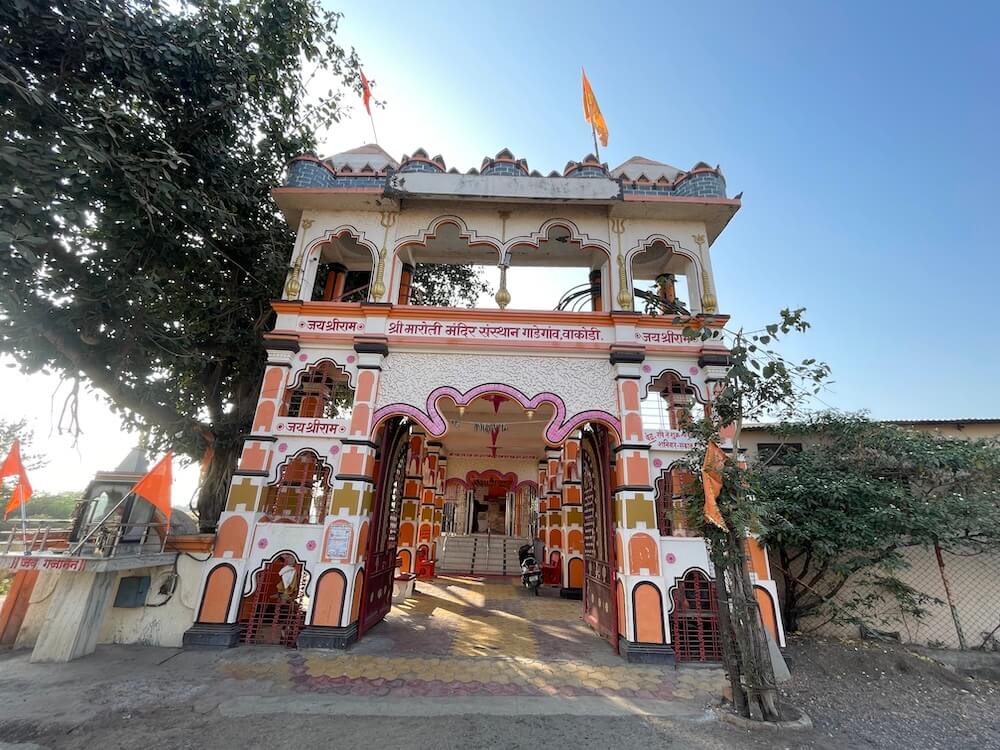
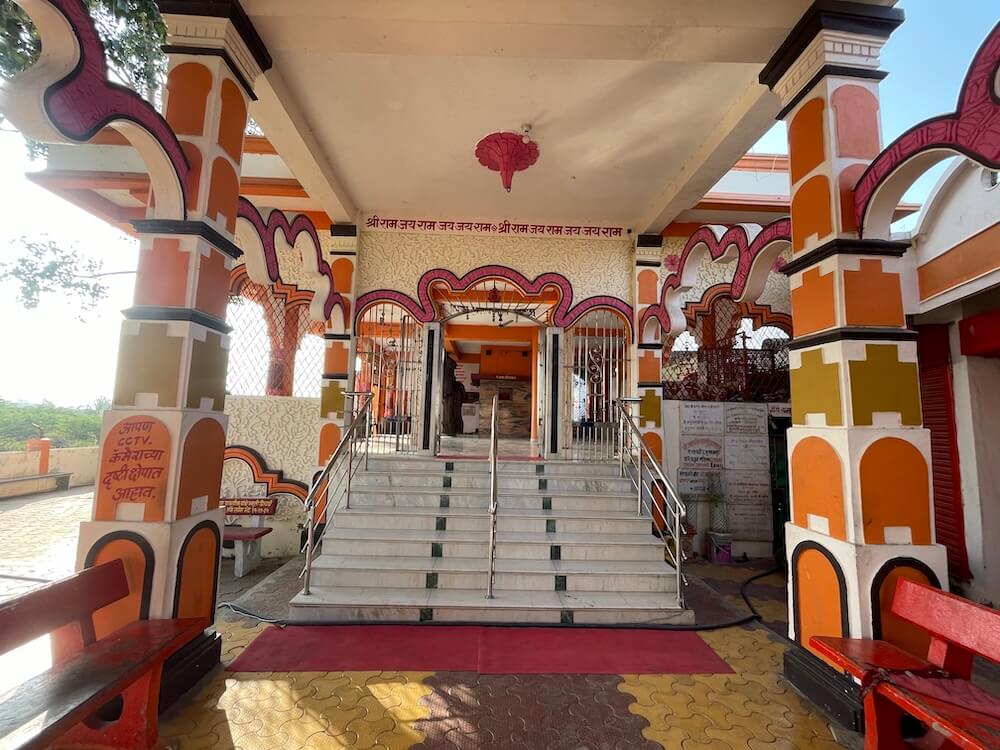
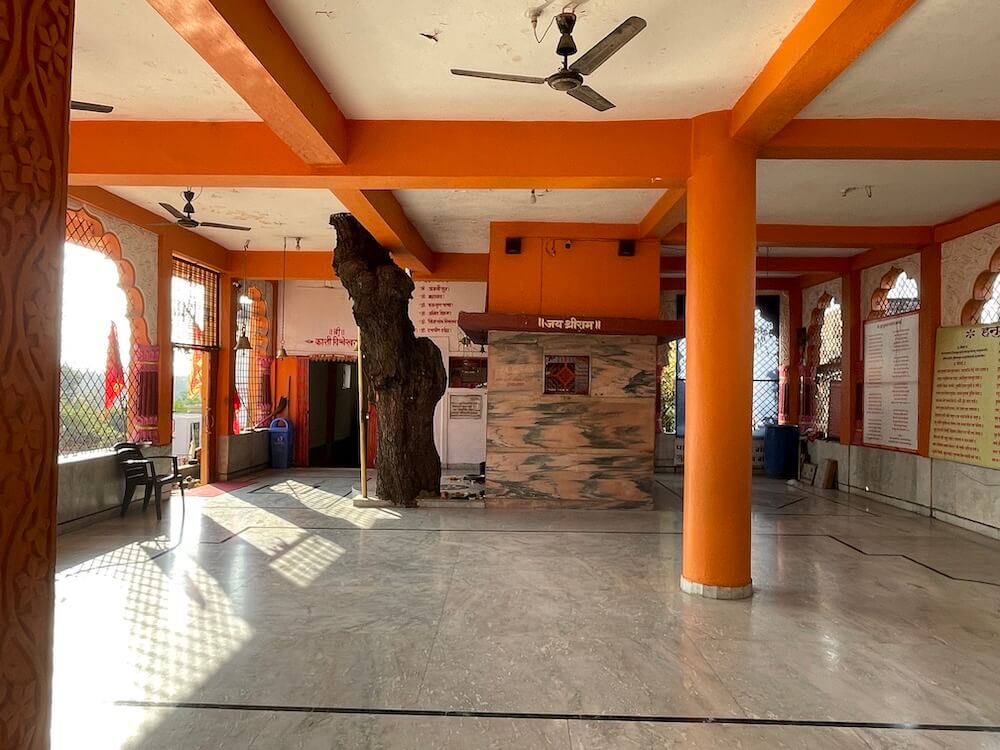
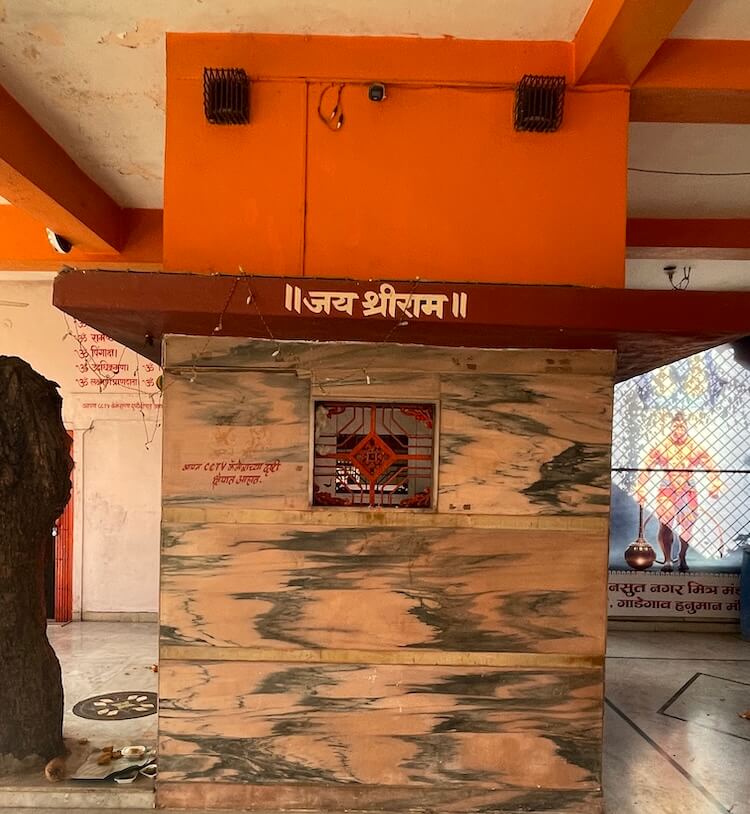
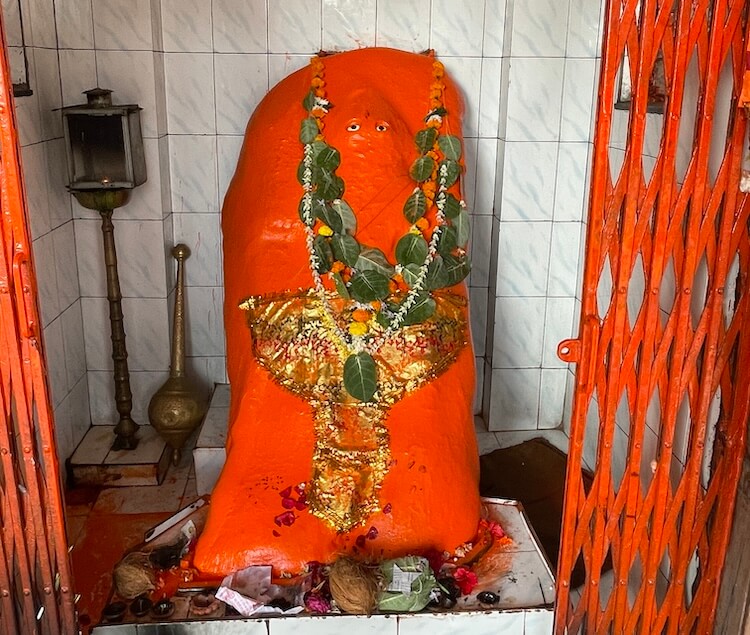
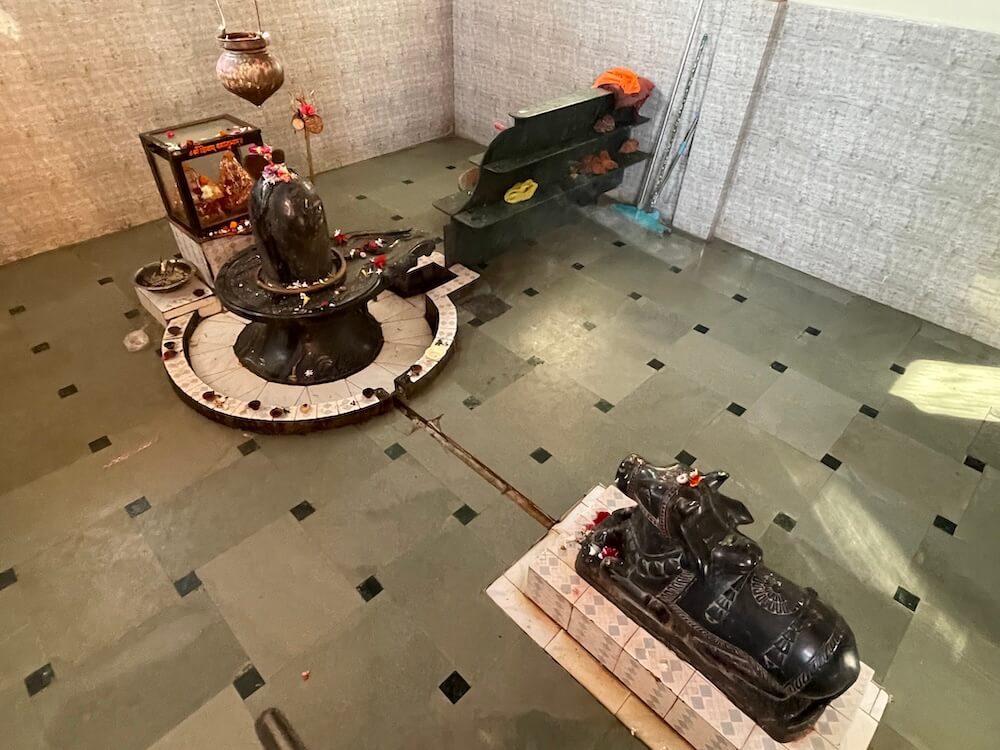
The historically rich Malkapur taluka is home to many famous and vibrant shrines. One such temple is located in Gadegaon near Malkapur, on the banks of the Nalganga River, on the Bodwad road in Pavansut Nagar. This area is also known as Old Gadegaon. In the 18th century, the Nalganga River experienced a great flood, during which three idols were washed downstream. The idol of Hanuman was ceremoniously consecrated here. The temple was built on the farmland of Rajaram Tarachand Chauhan. A few years ago, a Shiva Linga of Kashi Vishweshwar was also consecrated here. The temple was recently renovated, giving it its current form. In front of the temple stands a two-story entrance gate, with a ‘Nagarkhana’ (drum house) on the upper floor. On a small platform to the left of the entrance, there is a shrine containing an idol of Gajanan Maharaj of Shegaon. Entering through the gate leads to the temple courtyard, which features several trees, including a banyan tree. Seating arrangements for devotees are provided near the temple boundary wall. In front of the temple is a semi-open pavilion (mandap), followed by the temple structure on a high plinth. The temple is designed with a Sabha Mandap (assembly hall) and a central Garbhagriha (sanctum sanctorum). Seven steps lead from the pavilion into the Sabha Mandap. The Sabha Mandap has an arched entrance. An ancient tree stands within this hall; during the temple’s renovation, the construction was carried out around the tree, keeping it intact. In a small sanctum near this tree, there is a vermilion-anointed idol of Hanuman. The eyes are carved onto the idol, and a mace (gada) is held on the left side. It is said that the idol was originally adjacent to this tree, and after the temple was built, it was consecrated in the Garbhagriha. Another sanctum in the temple houses the Kashi Vishweshwar Linga. This oval-shaped Shiva Linga is made of black marble. A Nandi idol sits on a small platform in front of the Shiva Linga. The Garbhagriha is topped by a tall, beautiful Shikhara (spire).
Devotees believe that the Hanuman idol here is ‘Jagrut’ (awakened/living). Consequently, many devotees from the surrounding five-village radius come for darshan. Aarti is performed for Hanuman every morning and evening, attended by many villagers. On Tuesdays and Saturdays, devotees perform an oil abhishek on the Pavansut and offer garlands of Calotropis (rui) leaves. A grand festival is held on Chaitra Purnima, the day of Hanuman Jayanti. From early morning on this day, there is a long queue of devotees for darshan. Various religious programs are organized at the temple on this occasion.
This sacred temple stands as a testament to deep spiritual devotion, ancient architectural grandeur, and rich local cultural traditions.
The sanctum sanctorum houses the divine idol consecrated according to ancient Vedic traditions, surrounded by serene courtyards and traditional temple architecture.
Navratri, Maha Shivratri, Annual Temple Jatra & Deepotsav
Compare and book flights, secure top-rated local hotels near the temple, hire reliable guides, and rent cars instantly.
Extend your pilgrimage by visiting other highly sacred temples located nearby.


Add ₹999 more to unlock FREE SHIPPING!
Your sacred cart is currently empty.
Shop Photo FramesFill in your delivery details below to place your order.
Add comment