
Add ₹999 more to unlock FREE SHIPPING!
Your sacred cart is currently empty.
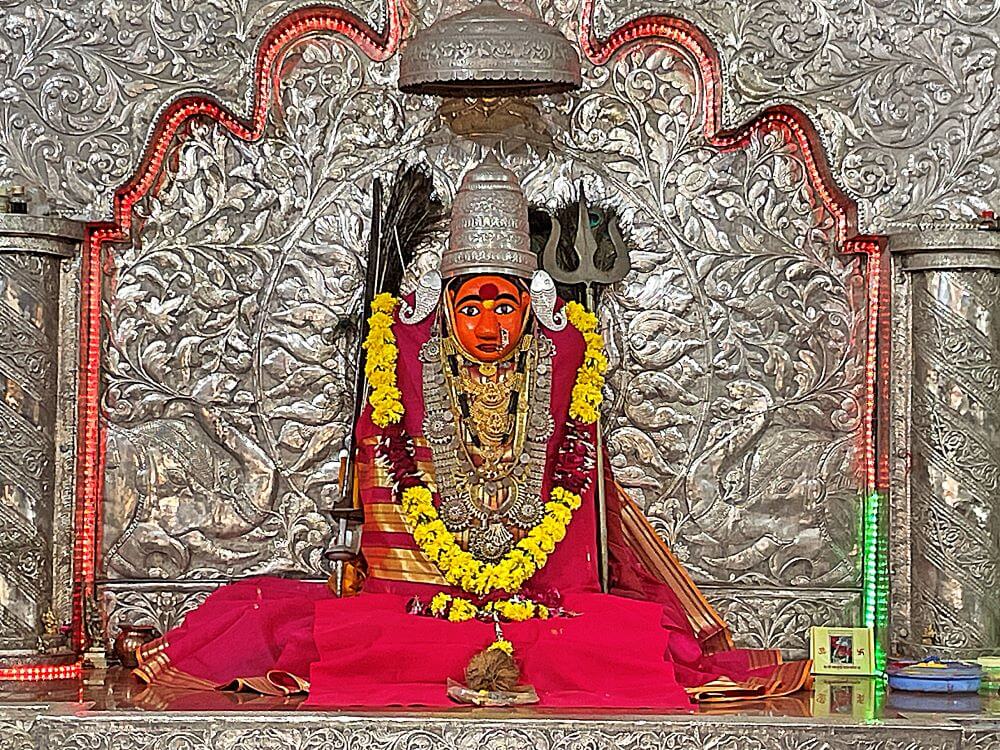
Shop Photo FramesAccording to the legend described in the Shiva Purana, Goddess Dakshayani (Sati) is the daughter of King Daksha. The only temple dedicated to this Goddess in the entire country is situated on the banks of the Shivna River in Lasurgaon. Since there is no other shrine (Peetha) of this Goddess anywhere else, devotees from all over the country come to Lasur to seek her divine darshan. This Goddess is revered as the Gramadevata (village deity) of Lasur as well as the entire Vaijapur taluka. Adorned with a silver crown on her head and traditional ornaments over her body, it is a custom here for newlywed brides to seek the Goddess’s darshan before beginning their married life.
According to mythological tales, Lasur was once Dakshanagari (the city of King Daksha). It was at this location that King Daksha once performed the Putrakameshti Yajna. Even though Dakshayani was Daksha’s daughter, he did not invite her. He held a grudge against her because she had married Lord Shiva. However, upon learning that her father was organizing a grand Yajna, Dakshayani thought that since this was a celebration at her parental home, why wait for an invitation? She went to attend the Yajna ceremony. She asked her father why such a grand ceremony was organized and all the gods were invited, yet her husband was not invited. At this, King Daksha humiliated her and mocked her husband. Infuriated by this insult, Dakshayani jumped into the sacrificial fire pit (Yajnakunda).
Upon learning that King Daksha had insulted Dakshayani and driven her to death, Lord Shiva became enraged. He unleashed his Tandava dance of retribution. Coming to Lasur, he waged war against King Daksha and severed his head. The place where his head fell is now known as Shiregaon Devali, a village located near Lasur. At that time, Lord Shiva’s sacred bull, Nandi, came to the sacrificial venue and overturned it. A hill area in Lasur is still known today as Palthe Lasur. Later, the Goddess re-manifested herself in the holy land of Lasur. Devotional songs and Gondhal performances narrating this legend are renowned here.
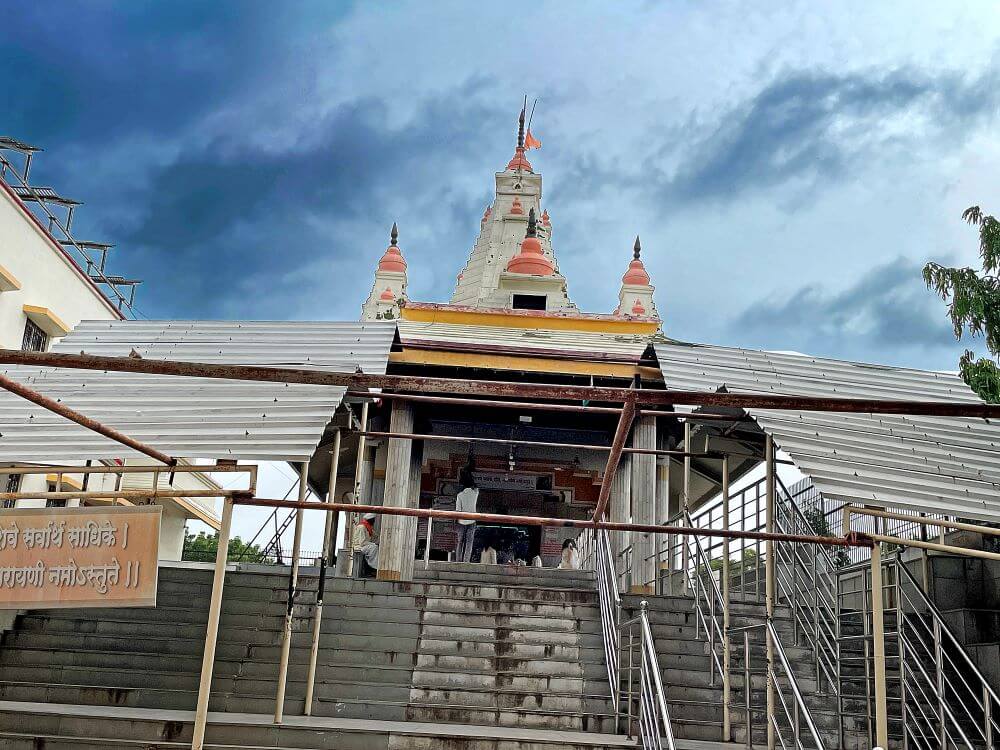
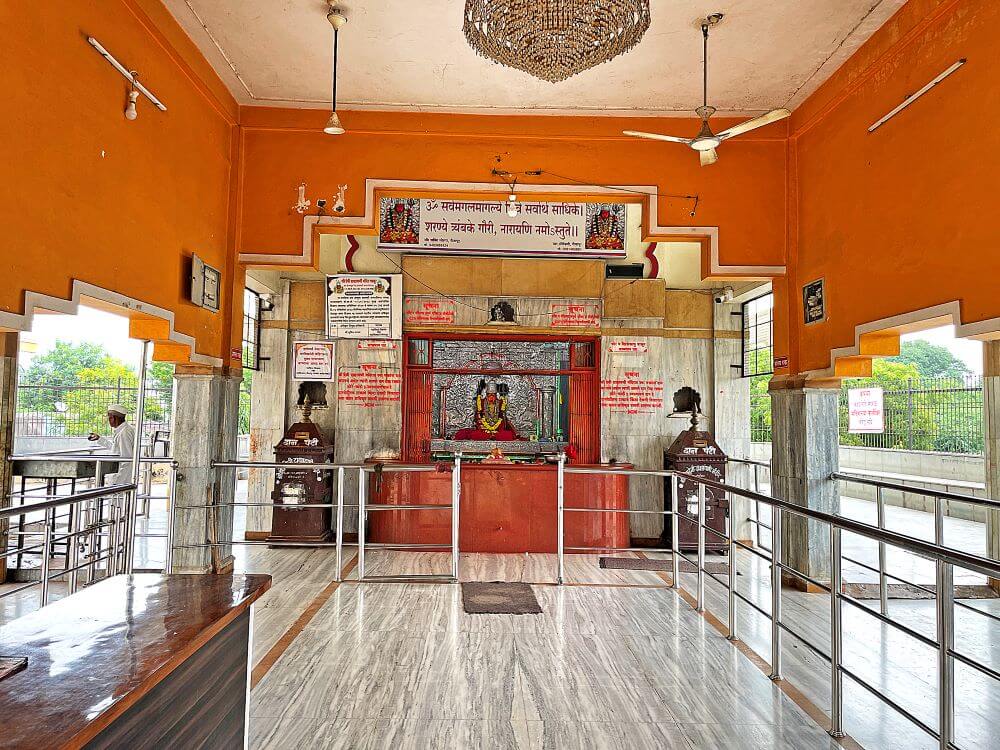
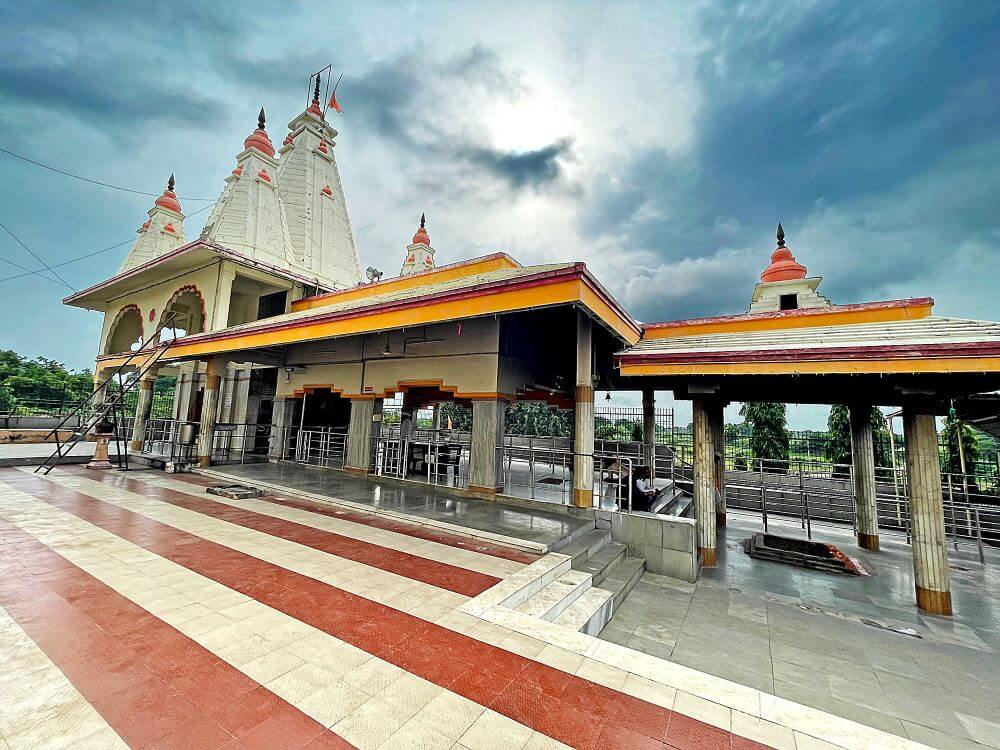
Formerly, Lasur had an ancient temple of Goddess Dakshayani built in the Hemadpanti architectural style. Today, a grand modern temple has been constructed at the site. The temple features a spacious two-storey entrance gate built in the South Indian architectural style. On the upper floor of this exquisitely carved entrance gate is a Nagarkhana (drum house), surmounted by three Kalashas (pinnacles). Passing through the entrance gate, the majestic temple of Goddess Dakshayani stands directly ahead. Built at a height of seven to eight feet above ground level, 12 to 14 steps lead up from the entrance to the temple premises. The temple complex comprises a Darshan Mandap, a Sabha Mandap (assembly hall), and the Garbhagriha (sanctum sanctorum). In the Darshan Mandap, there is a large Yajnakunda. As legend has it that the Goddess jumped into the Putrakameshti Yajna, this Yajnakunda is kept continuously ablaze. Devotees firmly believe that applying the sacred ash (Angara) from this Yajnakunda on one’s forehead fulfills all heart’s desires.
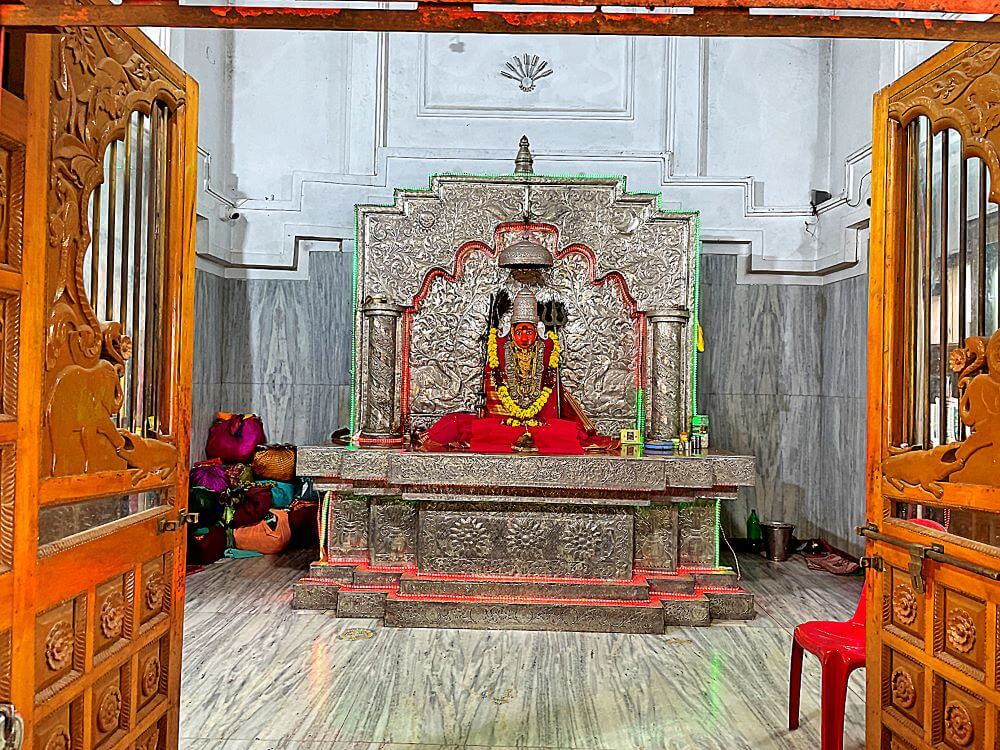
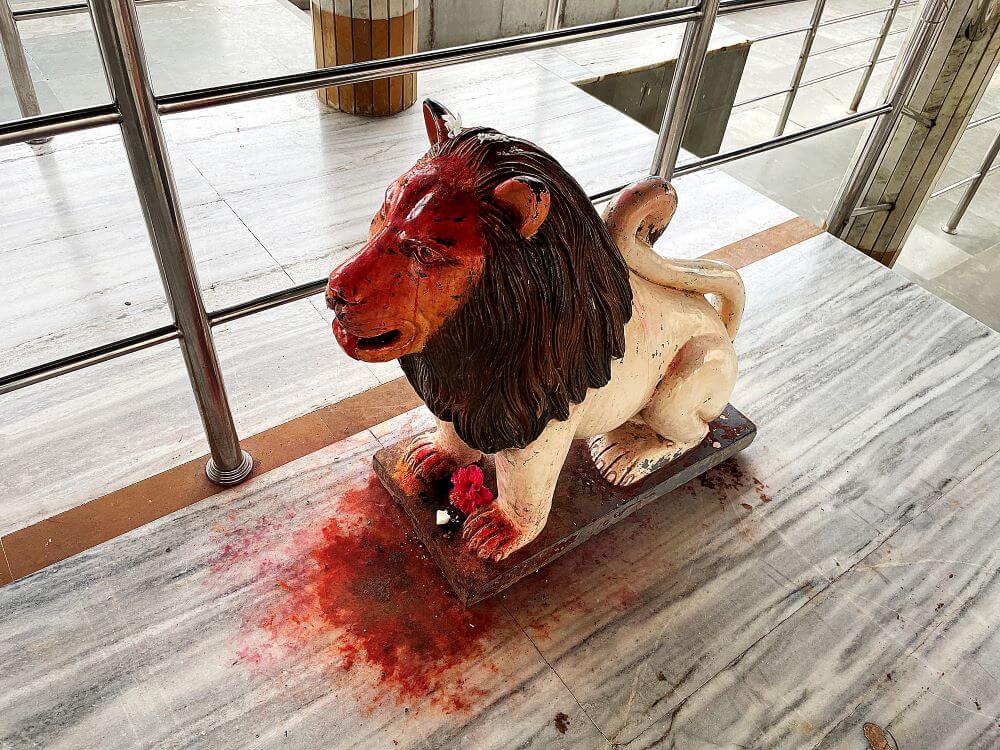
Ascending four more steps from the Darshan Mandap leads to the Sabha Mandap. The Sabha Mandap here is open-style, where every pair of pillars is interconnected by intricate arch-like craftsmanship. As immense crowds gather during festival times, an organized Darshan queue is arranged in the Sabha Mandap for the convenience of devotees. Inside the Sabha Mandap, there is an idol of a lion, the Goddess’s Vahana (mount). This idol is sculpted from a single stone slab. Right next to the lion idol, one can see the sacred tortoise (Kasav). Inside the Garbhagriha, the stone idol of the Goddess is enshrined within a silver Makhar (canopy/throne). This Makhar is decorated with Gajamukha motifs as well as floral patterns. On one side of the Goddess stands a large silver Trident (Trishula), and on the other side is a fan of peacock feathers. A Pradakshina (circumambulation) path surrounds the Garbhagriha. Above the Garbhagriha, there is one main pinnacle (Shikhara) along with four pinnacles facing the four directions, adorned with numerous carved sub-pinnacles. In the courtyard in front of the temple stands a unique, tall Deepamala (lamp tower), featuring carved lion figures from bottom to top. Adjacent to it within the temple premises is a beautiful temple dedicated to Ghateshwar Mahadev. In front of this temple sits a stone idol of Nandi. Similarly, a small temple dedicated to Lord Ganesha is also located here.
The annual Yatra festival, which begins on Chaitra Vadya Panchami, is the largest celebration here. Lasting for about 12 days until Vaishakha Shuddha Akshaya Tritiya, this fair is considered one of the major religious fairs in Chhatrapati Sambhajinagar district. During this period, lakhs of devotees visit to seek the Goddess’s blessings. A grand festival is also celebrated during Navratri. For all nine days, devotees from across the state gather here in large numbers. During this time, Shri Devi Dakshayani Mandir Sansthan organizes various religious rituals daily, including Saptashati Path, Homa-Havan, Purnahuti, and Abhisheka, along with worship thrice a day, Aarti, Naivedya, and Choghada drum performances. Ghatasthapana is performed on Ashwin Shuddha Pratipada, followed by the ritualistic adornment of the Goddess with sacred garments and jewelry. On Vijayadashami, rituals such as Pansupari, Simollanghan, and Shami Puja are performed. The temple trust also runs a Goshala (cow shelter) here.
While Lasurgaon is renowned for the divine presence of Goddess Dakshayani, it also holds a significant place in history as the site of a pivotal event that turned the tide of the Yadava dynasty and the history of Maharashtra. According to historical records, in the 13th century, during the reign of the Yadava King Ramdevaraya at Devagiri, Alauddin Khilji, the governor of the Sultan of Delhi, launched an attack on Devagiri out of greed for wealth. At that time, Kanha, a vassal chief under Ramdevaraya, along with two Maratha female warriors serving under him, intercepted Khilji’s forces at Lasur. In the fierce battle that ensued, Alauddin’s army was temporarily forced to retreat. Though Kanha was eventually defeated in this battle, leading to the fall of Devagiri Fort into Alauddin’s hands, the heroic stand at Lasur remains legendary.
This sacred temple stands as a testament to deep spiritual devotion, ancient architectural grandeur, and rich local cultural traditions.
The sanctum sanctorum houses the divine idol consecrated according to ancient Vedic traditions, surrounded by serene courtyards and traditional temple architecture.
Navratri, Maha Shivratri, Annual Temple Jatra & Deepotsav
Compare and book flights, secure top-rated local hotels near the temple, hire reliable guides, and rent cars instantly.
Extend your pilgrimage by visiting other highly sacred temples located nearby.

Add ₹999 more to unlock FREE SHIPPING!
Your sacred cart is currently empty.
Shop Photo FramesFill in your delivery details below to place your order.
Add comment