
Add ₹999 more to unlock FREE SHIPPING!
Your sacred cart is currently empty.
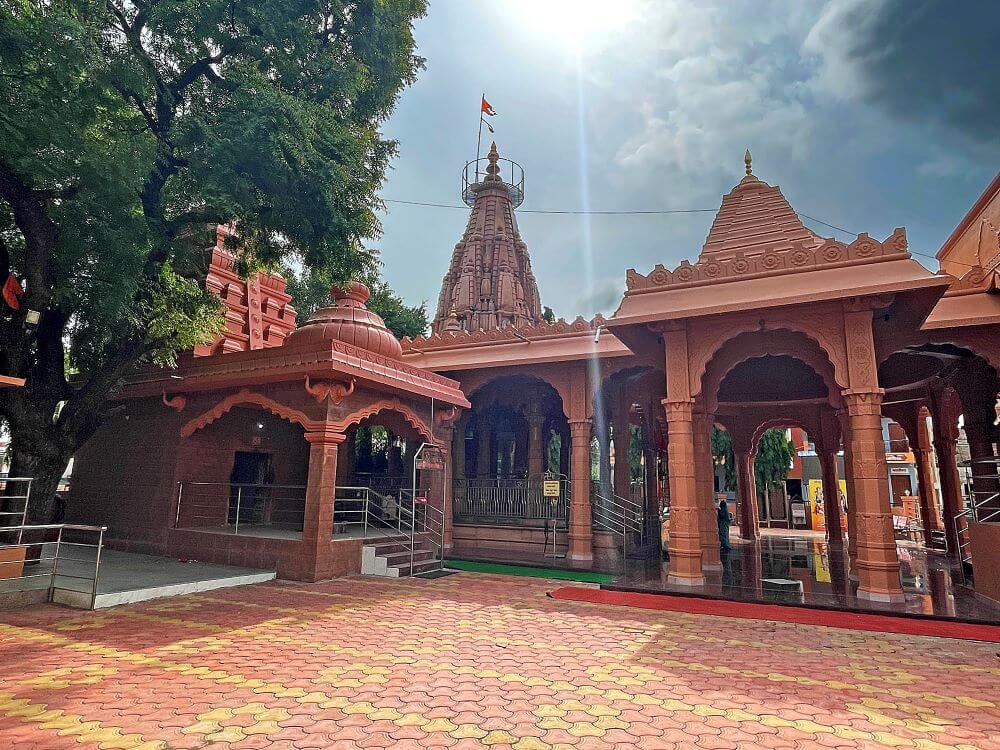
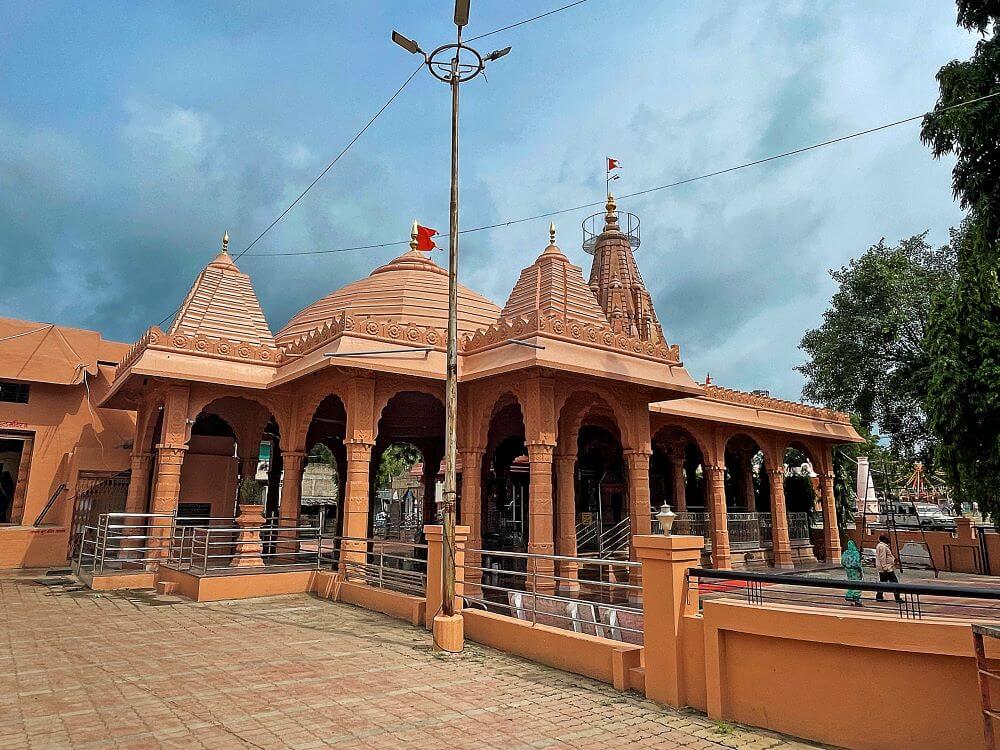
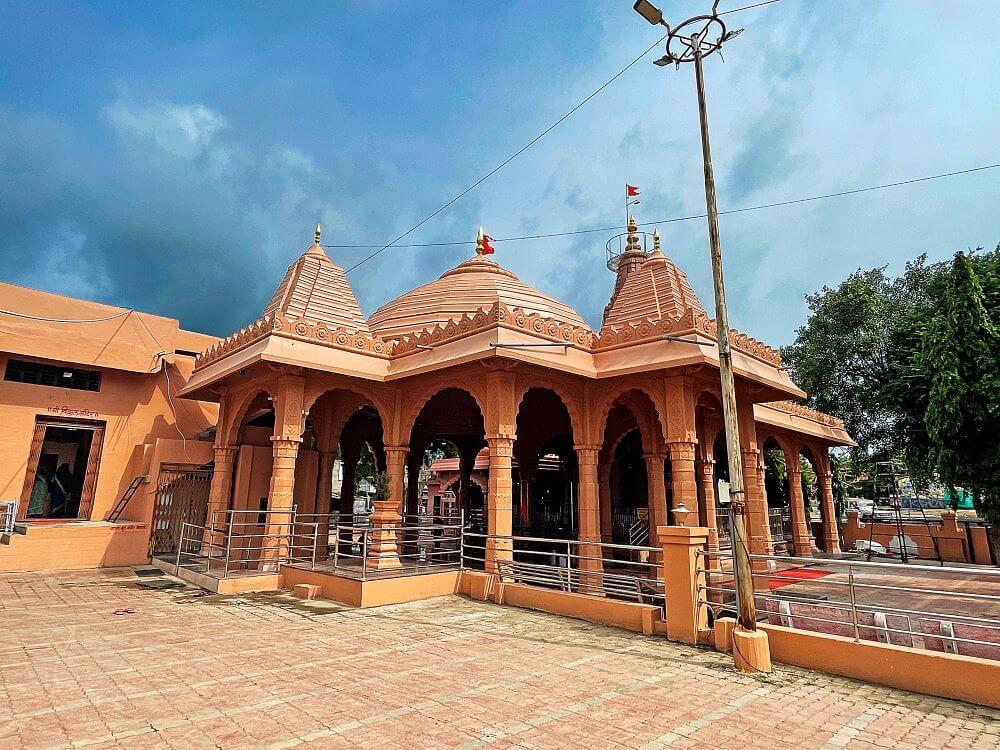
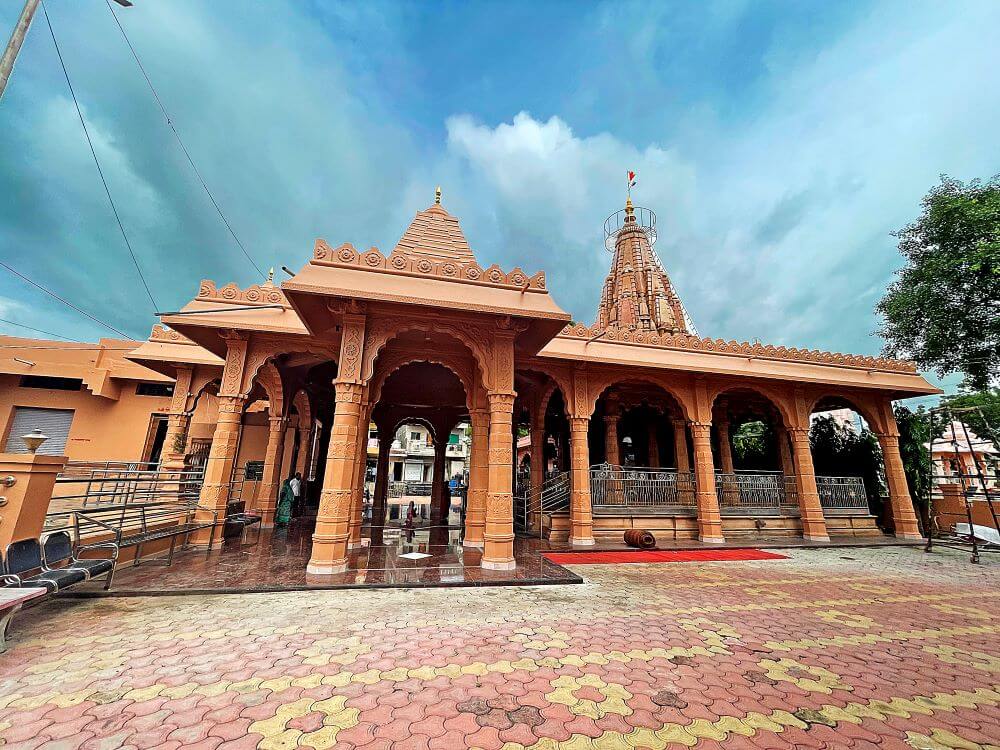
Shop Photo FramesThe Maharudra Maruti Temple, one of the famous Hanuman temples in the Chhatrapati Sambhajinagar district, is located in Gavalishivara in the Gangapur taluka. A unique feature of this temple, built in the Hemadpanti architectural style, is that it has no walls. Thousands of devotees visit daily for the darshan of the Swayambhu (self-manifested) South-facing Maruti, believing that the deity is highly awakened and grants wishes. It is the firm faith of devotees that childless couples are blessed with children upon making a vow to this Maruti Raya. Thousands of devotees also gather here to bow their heads during Hanuman Jayanti and the Panchami festival in the month of Vaishakh.
It is said that in ancient times, a Swayambhu idol of the South-facing Maruti appeared under a Peepal tree in the center of the village. Upon learning this, villagers flocked to have darshan. Over time, the deity became renowned for fulfilling vows, and the flow of devotees increased day by day. Consequently, the villagers decided to build a temple for Maruti Raya, but all attempts to do so proved futile. While wooden pillars were being erected for the temple, a pillar fell on a carpenter. Following this incident, the villagers felt that the deity did not desire a temple with wooden pillars and decided to build a temple with solid walls. However, the walls collapsed while still under construction, leading the villagers to abandon their plans at that time.
Around the year 1978, the villagers decided to rebuild the temple. Accordingly, a Board of Trustees was established. First, the platform around the Peepal tree where the idol was located was beautified. Two platforms were built in front of the idol, and railings were installed around them. After some time, in 2007, the villagers performed a Saptakundiya Mahayajna under the guidance of a Maharaja from the Annapurna Ashram in Indore. After seeking the deity’s divine consent, the old, withered Peepal tree was removed, and as per the Maharaja’s instructions, construction began on a wall-less temple in the Hemadpanti style. Bansilal Pata stone was brought from Rajasthan for this purpose, and artisans were also brought from there. The construction of the temple was completed in 2013. In 2014, after an Atirudra Mahayajna, the temple’s Kalasharohan ceremony was performed.
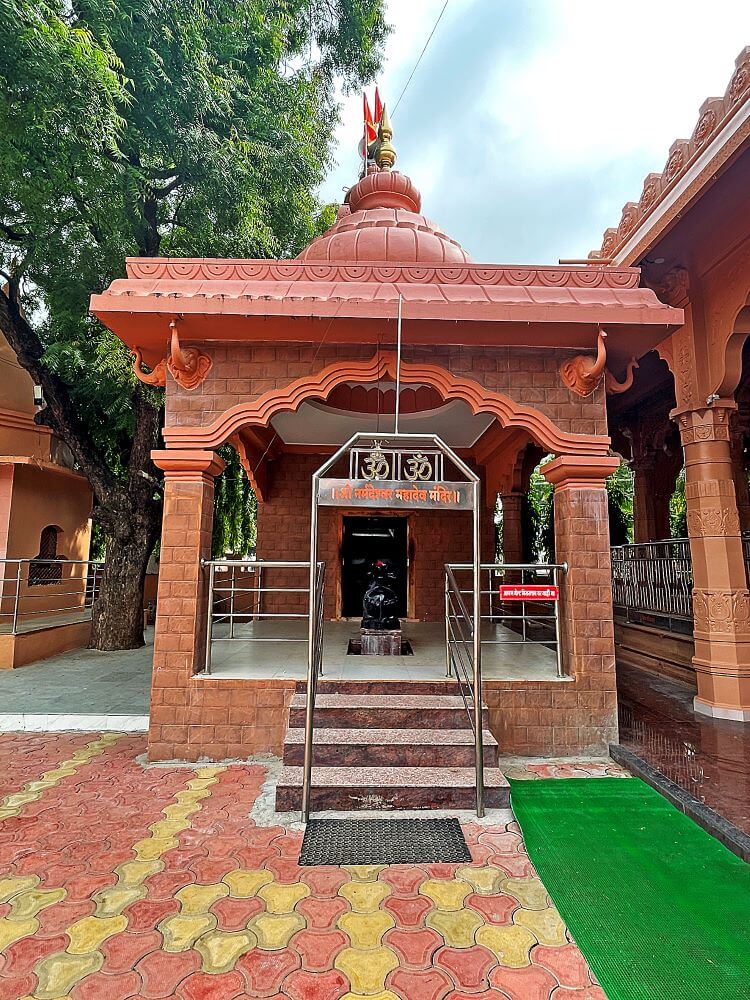
Gavalishivara village is located about 8 km from Lasur railway station. In the past, this area had a large population of Gavalas (herdsmen). The village was named Gavalishivar as it was the grazing land of the herdsmen, which later evolved into Gavalishivara. As one enters through the village arch, the temple spire is visible from afar. There are three entrances to the temple; two are at the back and one is at the front. In the courtyard, besides the main temple, there are temples dedicated to Lord Ganesha, Lord Mahadeva, and Vitthal-Rakhumai. Each temple has an intricately carved spire. There is also a Bhakta Niwas (pilgrim lodging) in the courtyard, along with stone benches for devotees to sit. Given the influx of devotees, a new assembly hall (Sabhamandap) has been constructed in front of the temple. There is also a shrine of Munjoba on the temple’s circumambulation path (Pradakshina Marg).
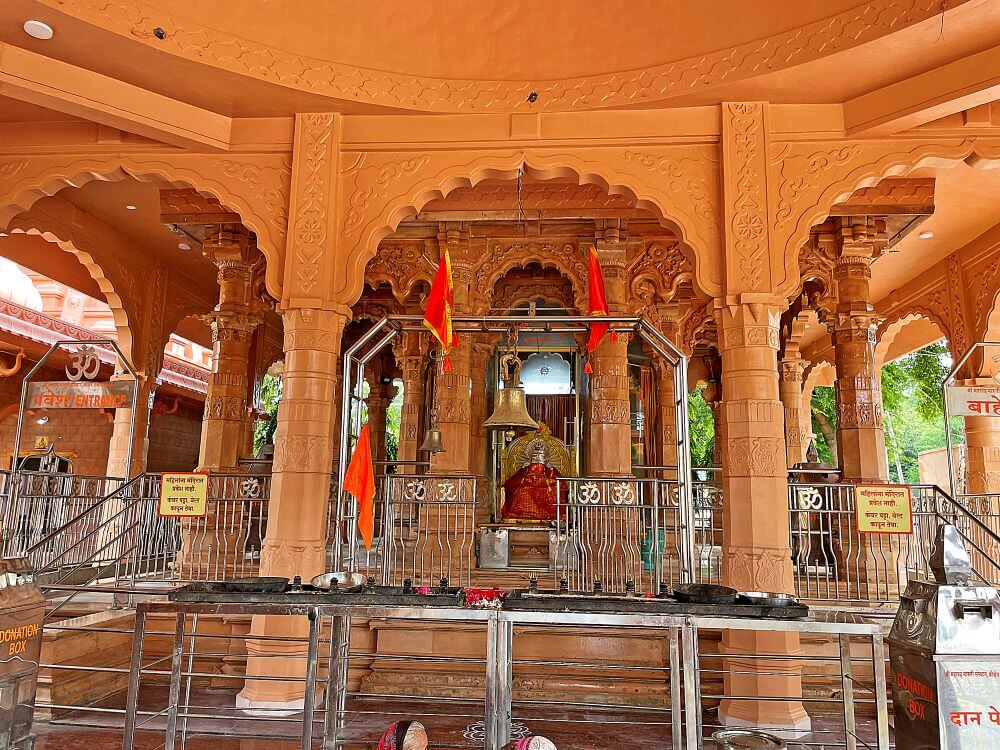
The temple consists of an open assembly hall with many pillars, a sanctum sanctorum, and a circumambulation path. Every pillar in the assembly hall features intricate carvings, and steel railings have been installed near these pillars. Large glass panels have been placed around the Hanuman idol in the sanctum, allowing devotees to view Maruti Raya from all four sides. The idol of Maharudra Maruti is adorned with vermilion (shendur) and a carved silver crown. There are fish motifs on both sides at the base of the crown. The idol of Maruti Raya is adorned with a silver umbrella and a silver mace at the base. It is said that the current throne of Maruti Raya was crafted without touching the idol. The front of the attractively carved throne features lions on both sides, while the back features elephants on both sides. During festivals, the idol is decorated with flowers, making it appear even more beautiful. Aarti is performed daily at 6:00 AM and 6:00 PM.
The Panchami festival in the month of Vaishakh is the main celebration here. Thousands of devotees come to make vows during this five-day festival. Every night during the festival, a Khandeshi Tamasha is performed here. The primary purpose of this Tamasha, presented by male artists, is to provide both entertainment and social awareness. This tradition has been ongoing since 1973. The artists performing as dancers carry the devotees’ young children on their shoulders while dancing, which is viewed as an important religious ritual. Hanuman Jayanti is also celebrated here. On this day, after the morning Maha-Aarti, the temple is opened for darshan. Subsequently, a Laghurudrabhishek is performed in the presence of dignitaries. Many Dindis (processions) from surrounding villages also arrive here. Throughout the day, programs like Bhajans and Gavlan are held. On this day, the area takes on the atmosphere of a pilgrimage. The temple is also attractively illuminated. The temple trust distributes snacks to the devotees on this occasion. After the Kala Kirtan at night, Maha-Prasad is distributed to those present. A large police force is deployed for the safety of the thousands of devotees arriving for darshan.
Thousands of devotees visit on Saturdays during the month of Shravan. On every Saturday of Shravan, Shodashopachara Puja and Abhishek are performed in the temple in the morning. Maha-Aarti is performed by the devotees. Many devotees also organize Satyanarayan Puja and Bhandara (community feast) here. On these days, some social organizations also conduct blood donation, health, and eye check-up camps in the area.
This sacred temple stands as a testament to deep spiritual devotion, ancient architectural grandeur, and rich local cultural traditions.
The sanctum sanctorum houses the divine idol consecrated according to ancient Vedic traditions, surrounded by serene courtyards and traditional temple architecture.
Navratri, Maha Shivratri, Annual Temple Jatra & Deepotsav
Compare and book flights, secure top-rated local hotels near the temple, hire reliable guides, and rent cars instantly.
Extend your pilgrimage by visiting other highly sacred temples located nearby.


Add ₹999 more to unlock FREE SHIPPING!
Your sacred cart is currently empty.
Shop Photo FramesFill in your delivery details below to place your order.
Add comment