
Add ₹999 more to unlock FREE SHIPPING!
Your sacred cart is currently empty.
Shop Photo FramesNestled in the scenic lap of the Satpura range, the village of Dhanora is considered a vibrant center of faith, sanctified by the presence of Shri Mahasiddha Maharaj, one of the 84 Siddhas. The Maharaj, who arrived here from Ujjain, is renowned as a deity who fulfills the vows of his devotees. The main attractions here are the meeting ceremony with his sister, Jagadamba Mata, held on Paush Purnima, and the fair held after the Maharaj’s return on Magh Purnima, which is the second largest in the district. This holy site is especially famous for the 300-year-old tradition of the Kathi Mahotsav, the unique ritual of ‘Aava Lutne’ in the potter’s colony, and the Govardhan Puja performed to invoke rain.
There is no official record available regarding exactly when Mahasiddha Maharaj, considered one of the 84 Siddhas, arrived at this place. However, it is said by the elders of the village that he must have come here from Ujjain. The personality of Mahasiddha Maharaj was extremely sattvic (pure). A white beard, pristine white garments, He would be dressed in a turban on his head and a Tulsi mala around his neck. He used to ride through the village on a white horse. When the Maharaj took Samadhi at this place, all the devotees were deeply saddened. It is believed that due to the prayers offered by the devotees thereafter, the Maharaj reappeared here in a specific form. This temple has been in existence for many years. About 50 years ago, this area was covered with dense forest. However, the villagers came together and cleaned this area through voluntary labor (Shramdaan), and the subsequent renovation gave the temple its present form.
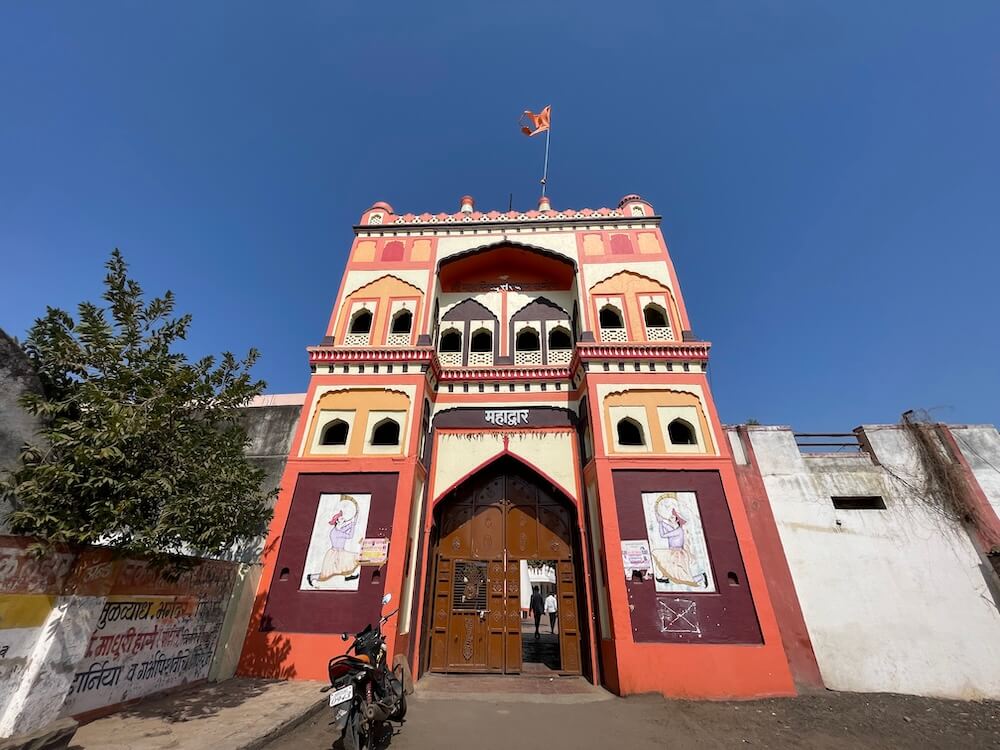
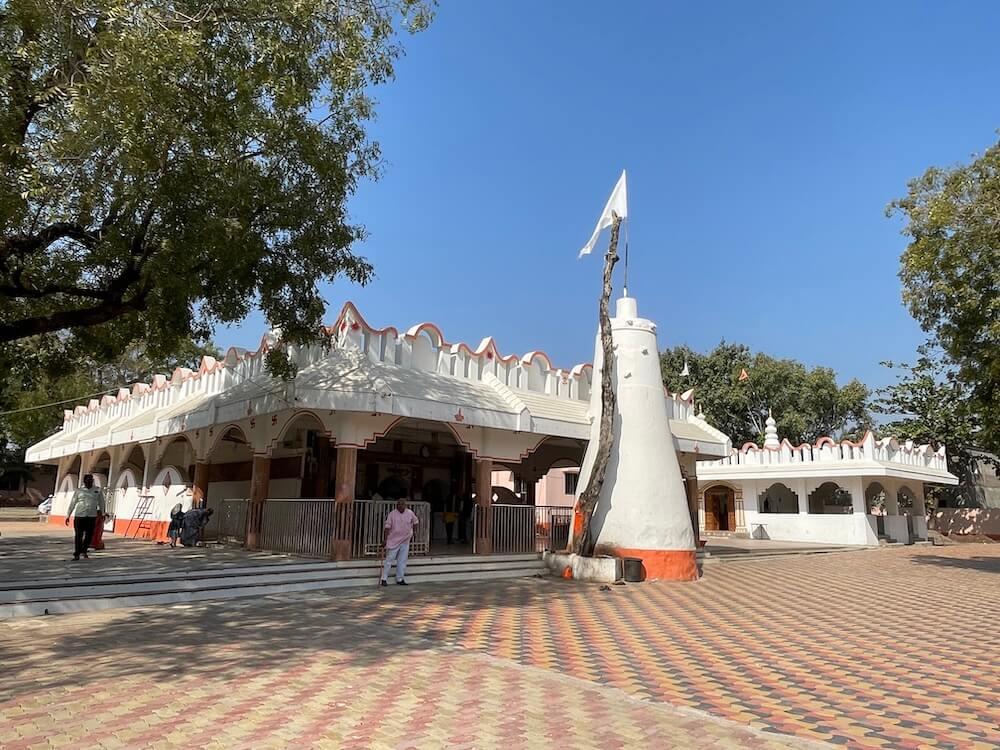
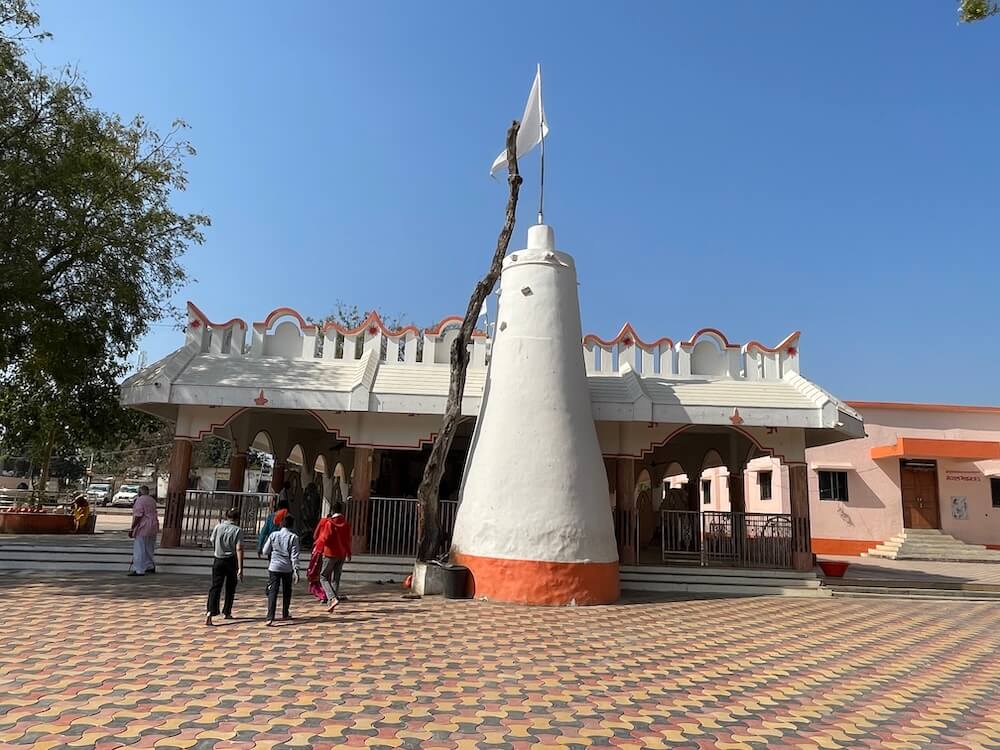
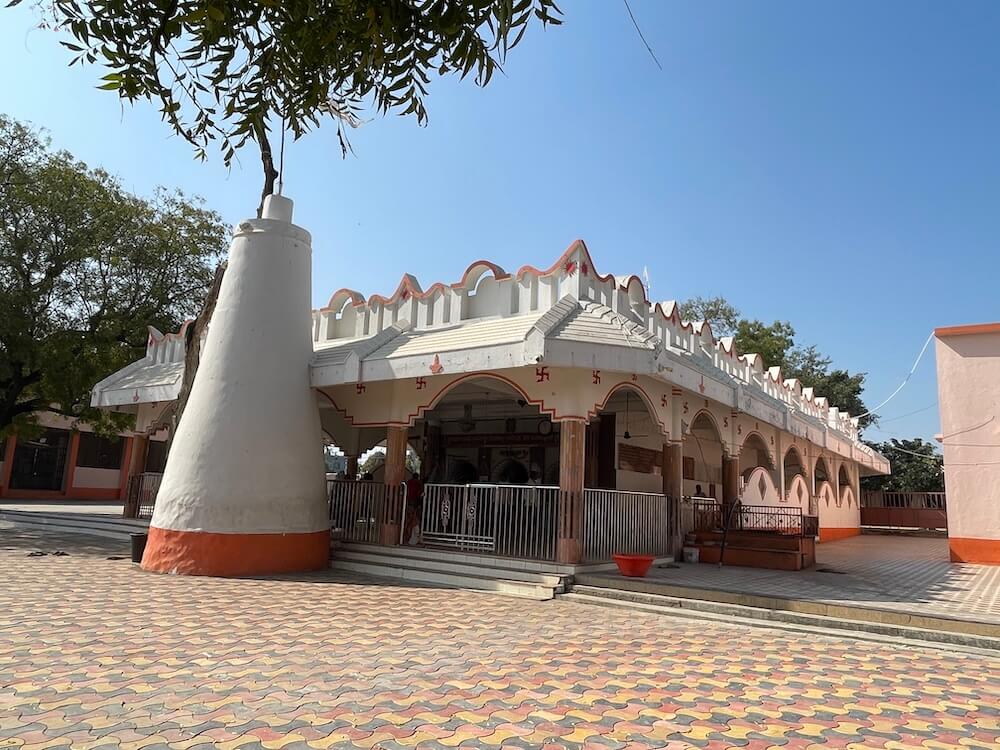
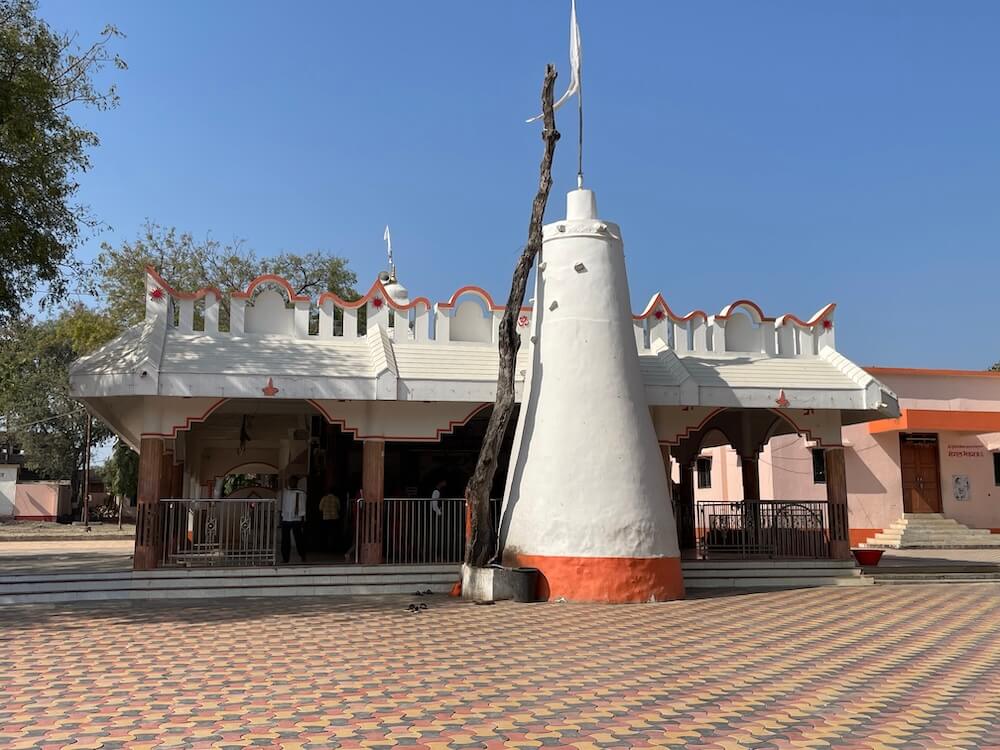
Dhanora is a village located approximately 6 kilometers from Jalgaon Jamod. On the northern side of the village stands the temple’s 40-foot-tall main gateway (Mahadwar). This gateway features depictions of gatekeepers (Dwarapalas). Above this two-story gateway is the Nagarkhana (drum house). Passing through this gate, one enters a large courtyard. In the courtyard, to the right, is the temple trust office, as well as three Bhaktaniwas (pilgrim rest houses) built to accommodate devotees arriving from afar. On the right, on a platform built around a large tree, are several ancient vermilion-smeared stones and Shiva Lingas. In front of the temple stands a Deepastambha (lamp pillar) approximately 30 feet in height. An open pavilion (Khula Mandap), The structure of this temple consists of the Sabha Mandapa (assembly hall), Antarala (vestibule), and Garbhagriha (sanctum sanctorum).
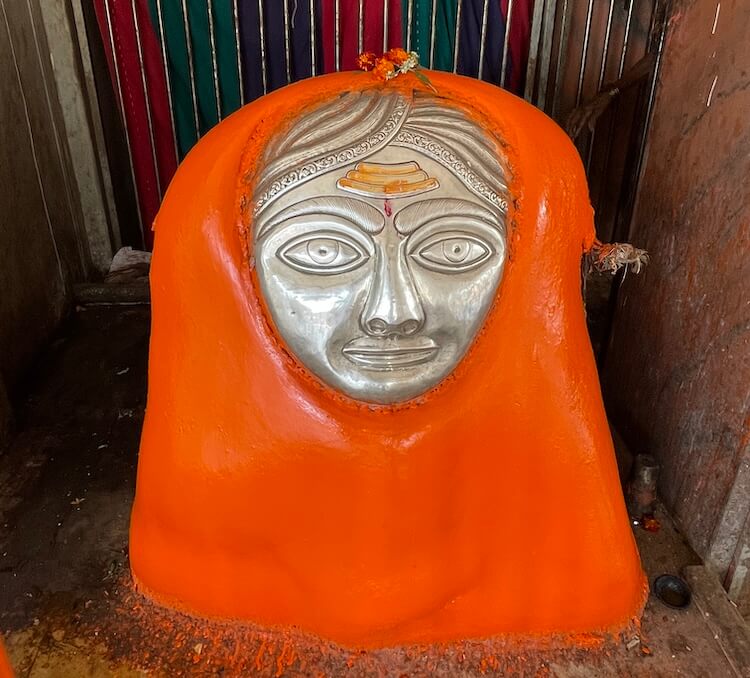
The temple is designed with a circumambulatory path (pradakshina marg) around the open pavilion (mandapa). Near the entrance of the assembly hall (sabhamandapa), there is an idol of Mahasiddha Maharaj. In the assembly hall, there are divine images placed in the niches on the wall facing the antarala (vestibule). In the sanctum sanctorum (garbhagriha), there is a large, vermilion-anointed seat of Mahasiddha Maharaj, adorned with a silver mask and a silver turban (pheta). A Shiva Linga is situated along the temple’s circumambulatory path. The walls here are inscribed with Abhangas and Ovis. Above the sanctum sanctorum, there is a dome-shaped spire (shikhara) topped with a pinnacle (kalash), with decorative canopies (meghadambaris) on all four sides of the spire. To the north of this temple lies the samadhi shrine of Mahasiddha Maharaj, where one can also have the darshan of his padukas (footprints). Within this samadhi temple, to the right, is the shrine of Lord Hanuman. In front of the Hanuman idol here, there is a small Shiva Linga and Nandi.
Daily worship and rituals are performed here starting from dawn. Hundreds of devotees from the surrounding areas come for darshan. After their vows are fulfilled, many devotees organize a bhandara (community feast) here. It is the firm belief of the devotees that by the grace of Mahasiddha Maharaj, many incurable diseases are cured. Jagadamba Mata of Pimpalgaon Devi in Motala taluka is considered to be the sister of Mahasiddha Maharaj. Due to this bond, the Maharaj goes to visit his sister every year on Paush Purnima. On that day, a special abhishek is performed on the idol of the Maharaj at dawn, and at night, after offering a naivedya of five delicacies, he departs for Pimpalgaon Devi. The Maharaj returns to the village on Magh Purnima, and during this period, a seven-day fair is held here.
During this fair, a nine-day festival of Mahasiddha Maharaj is celebrated. The ‘Kathi’ festival, which is part of this celebration, has a tradition spanning about three hundred years. For this, a forty-foot-long staff (Kathi) is used. Initially, this staff is taken to the Asara Mata well in the temple premises and washed. Thereafter, it is adorned with new colorful cloth, flags, and a crest of peacock feathers, and decorated with flower garlands. About sixty devotees carry this staff on their shoulders in a procession to the temple, stand it upright before the Deepmala (lamp tower), and perform its worship. On the occasion of the Yatra, a Dnyaneshwari Parayan Saptah (a week-long recitation of the Dnyaneshwari) is organized at the temple. On the midnight of Magh Purnima, the women of the village decorate the areas in front of their homes with Sada and Rangoli, and arrive at the temple carrying Puran Poli as an offering. Amidst the chanting of sacred mantras, the Maha-Puja of the Maharaj is performed, and in the morning, a procession of the Maharaj’s Paduka (holy sandals) is taken out to the rhythmic sounds of Taal and Mridang. In the afternoon, devotees, holding peacock feathers in their hands, dance to the beat of drums and head to the Kumbharwada (potters’ colony), from where they symbolically loot the ‘Aava’ and bring it to the temple. (‘Aava’ refers to the kiln and materials used by a potter to fire clay pots, which are symbolically looted.) This is then worshipped with due rituals.
Various religious programs are held during this seven-day pilgrimage festival, which concludes with the Kalya Kirtan. A dog market is also held here during the pilgrimage. Additionally, to ensure good rainfall for the village, the Govardhan Puja is performed every year in the month of July to propitiate Varun Raja, the Lord of Rain. On the day before this puja, an announcement is made to everyone from the temple, and the next day, wheat rotis and bajra bhakris are collected from every household in the village and brought to the temple in bullock carts amidst music and celebrations. After the puja there, all the villagers gather with their cattle at a small temple located at the foothills of the Satpuda mountain, where they perform a puja of the cattle and offer them the collected rotis and bhakris as Naivedya.
This sacred temple stands as a testament to deep spiritual devotion, ancient architectural grandeur, and rich local cultural traditions.
The sanctum sanctorum houses the divine idol consecrated according to ancient Vedic traditions, surrounded by serene courtyards and traditional temple architecture.
Navratri, Maha Shivratri, Annual Temple Jatra & Deepotsav
Compare and book flights, secure top-rated local hotels near the temple, hire reliable guides, and rent cars instantly.
Extend your pilgrimage by visiting other highly sacred temples located nearby.


Add ₹999 more to unlock FREE SHIPPING!
Your sacred cart is currently empty.
Shop Photo FramesFill in your delivery details below to place your order.
Add comment