
Add ₹999 more to unlock FREE SHIPPING!
Your sacred cart is currently empty.
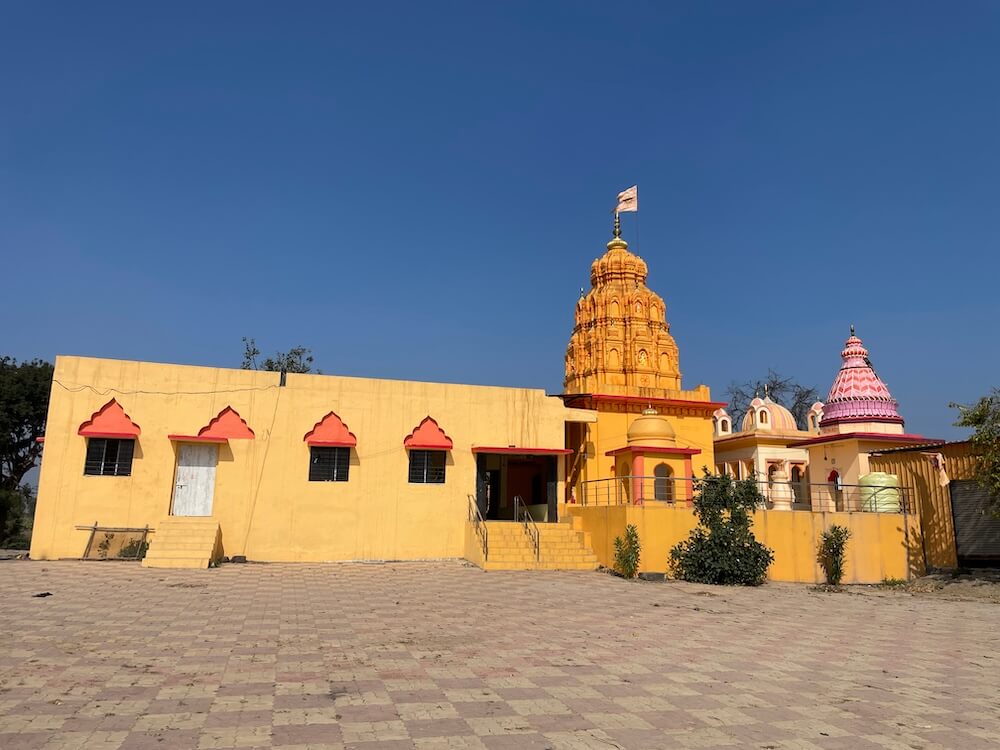
Shop Photo FramesSituated at the sacred confluence of the Payoshni and Nalganga rivers in Malkapur taluka of Buldhana district, the Koteshwar Mahadev Temple in Narvel is a renowned pilgrimage site sanctified by the presence of Lord Rama. It is at this very spot that Lord Shiva manifested, pleased by the devotion of Lord Rama. The task of enhancing the grandeur of this ancient temple was undertaken in the eighteenth century by Punyashlok Ahilyabai Holkar, who oversaw its renovation. With its distinctive Baradari, the sacred Padukas (footprints) of Lord Rama, and the penance performed by the sages of the Giri and Bharati sects of the Dashnami tradition, this place is revered as a spiritually awakened pilgrimage site.
Situated on the banks of the Nalganga River, the city of Malkapur has historically been a significant commercial and military center. The history of Malkapur is linked to the Muslim regimes of the 13th and 14th centuries. Prince Mohammad Malik Khan of the Faruqi dynasty of Khandesh founded this city around the 14th century and named it Malkapur after his daughter, Princess Mallika. Since ancient times, this city has been an important stop on the trade route connecting the Deccan Plateau to North India. The Hazira-Kolkata National Highway passes through Malkapur. It is due to this connectivity that a pilgrimage site in a rural area like Narvel has received royal and public patronage for centuries.
The legend of this temple states that during their exile in the Treta Yuga, Lord Shri Ram, Mother Sita, and Lakshman resided in this Dandakaranya region and observed the Chaturmas Vrata. In Hindu tradition, it is customary for sages and saints to reside in one place during the four months of the monsoon, a practice known as ‘Chaturmas’. This rule is followed to avoid harming microorganisms during the rainy season and to prevent travel disruptions. For this reason, Lord Shri Ram chose this place in Narvel for his Chaturmas. A devotee of Lord Shiva, Shri Ram spent his time here creating Parthiva Shivlings daily and worshipping them with deep devotion. In time, the number of these Shivlings reached one crore, and from them, Lord Shivshankar himself manifested, which is how this place came to be known as Koteshwar. Lord Shri Ram requested Mahadev to remain here in the form of a Linga for the welfare of all mankind. To ensure that devotees in the Kali Yuga know who established this Shivalinga, Lord Rama placed His padukas (footprints) here. The darshan of these padukas can still be seen today in the Baradari behind the temple. [The word ‘Baradari’ is derived from the Persian words ‘bar’ (twelve) and ‘dar’ (doors/arches). It is primarily an open pavilion structure in Mughal or Islamic architecture, featuring 12 arches for the free flow of air.]
Recognizing the significance of this ancient temple, Punyashlok Ahilyabai Holkar later undertook its renovation. In this sacred land, great saints such as Brahmagiri Maharaj, Kashigiri Maharaj, Sevagiri Maharaj, Vishnubharati Maharaj, Rameshwarbharati Maharaj, and Shukragiri Maharaj of the Juna Akhada have performed ceaseless service to Lord Shivshankar. This site, a center of faith for devotees, has been honored by the state government as a ‘B’ grade pilgrimage site. The ‘Central Provinces and Berar District Gazetteers – Akola District, Volume A’ (1910) mentions that there was once a large dharmashala (pilgrim rest house) outside this temple, which has now been completely destroyed. There was also a well in front of this temple. However, it has now been filled in. Recently, this temple has been renovated once again.
At a short distance to the north of Malkapur lies the village of Narvel. In this village, there are also other ancient temples of Lord Mahadeva, such as ‘Naleshwar’, ‘Bhupeshwar’, and ‘Mankeshwar’. In the past, high-quality tobacco was cultivated in this village. The government gazetteer also mentions that this is the birthplace of the former Vice-Chancellor of Nagpur University and renowned historical researcher, Dr. V. B. Kolte.
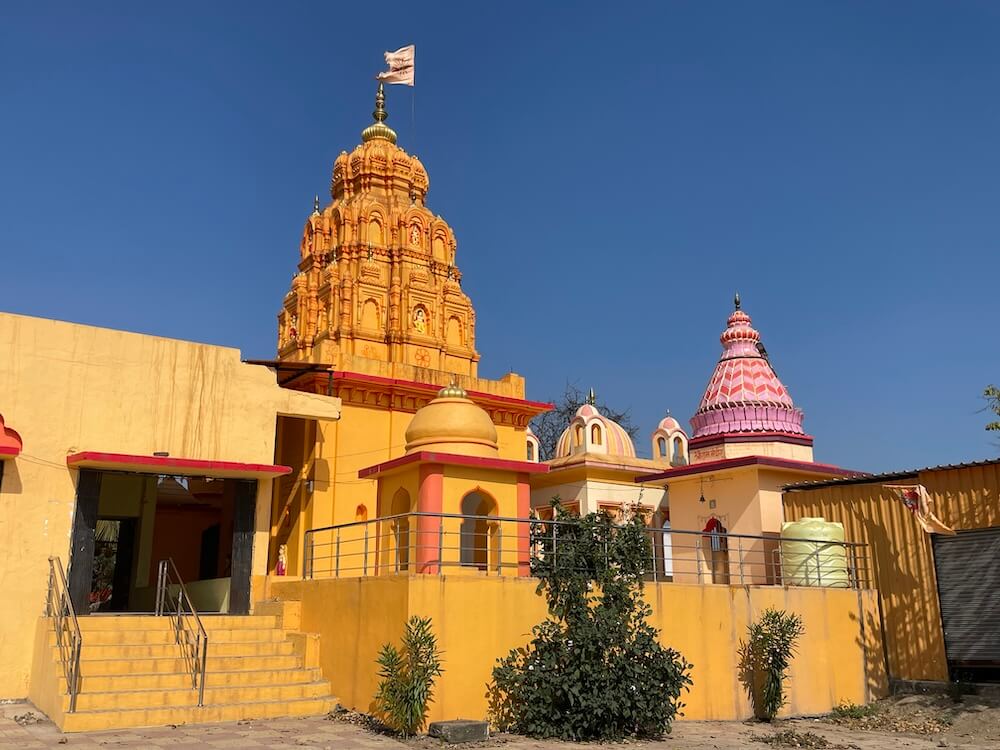
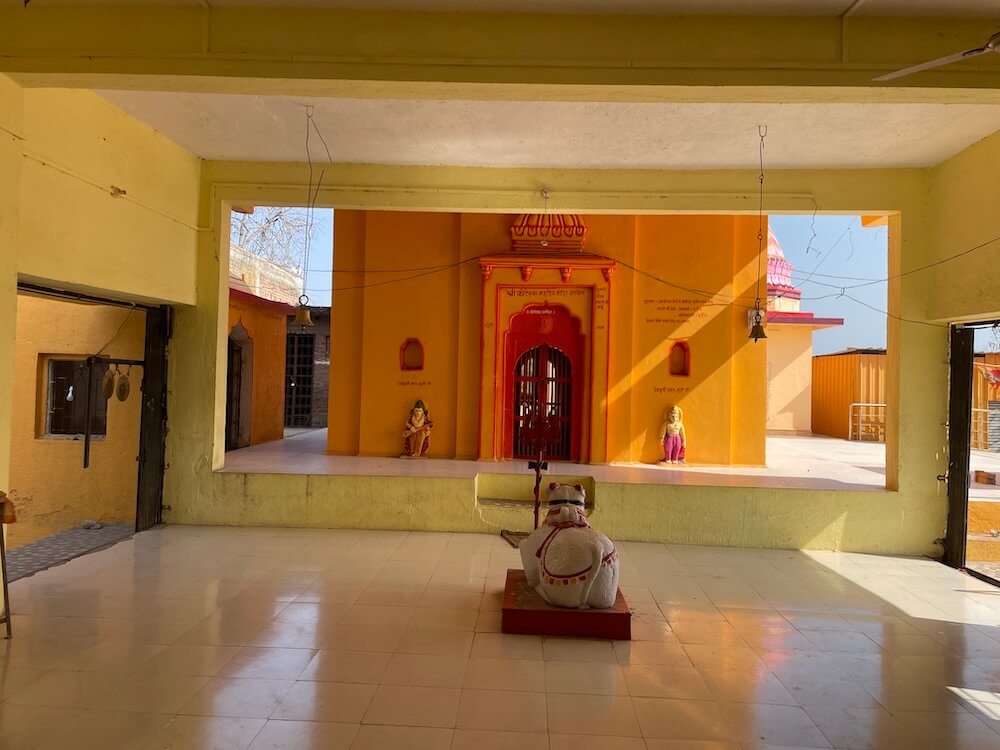
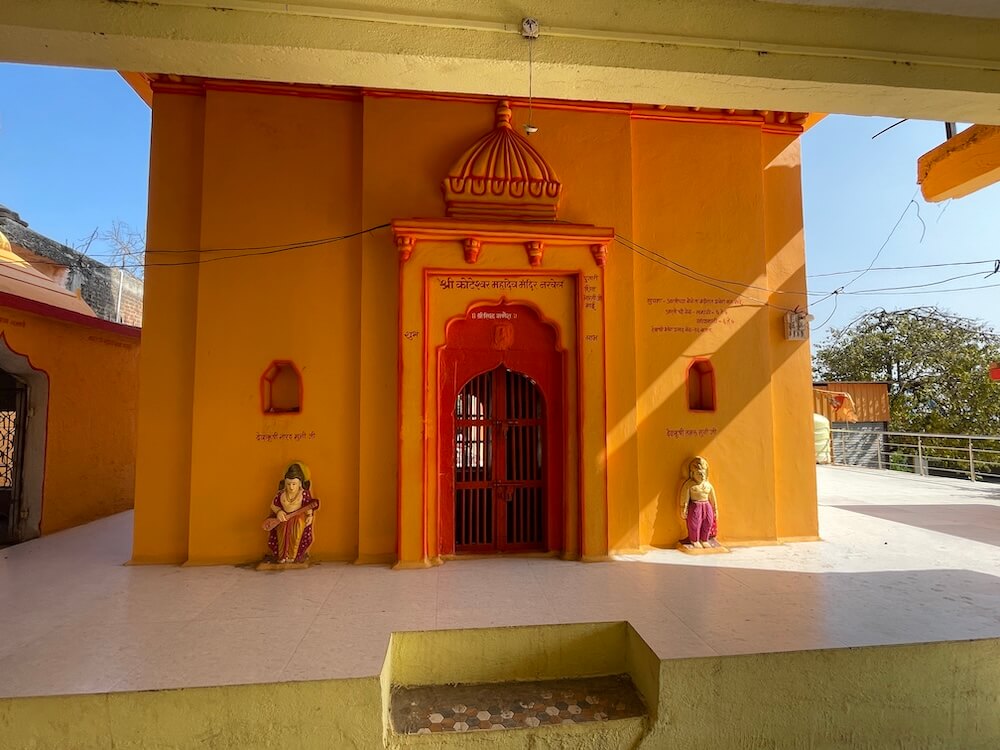
Situated on the banks of the Payoshni and Nalganga rivers, the temple premises are adorned with numerous trees. There is a large courtyard in front of the temple, and the grounds also feature Bael trees. Within this temple courtyard stands a Rudraksha tree, which is rare in Maharashtra. In front of the temple is a large mandapa. In this mandapa, facing the entrance on the eastern side of the sanctum sanctorum (garbhagriha), is a stone idol of Nandi. There is also a small idol of Nandi facing the entrance on the western side of the octagonal sanctum sanctorum. On both sides of the wall of the main entrance on the eastern side, there are small niches (devakoshthakas). On both sides of the entrance, there are Dwarapalas (gatekeepers). At the center of the arch-shaped entrance, on the Lalatabimba (lintel), resides Lord Ganesha. In the sanctum sanctorum, the Shivalinga of Koteshwar Mahadeva is enshrined within a large Shalunka, adorned with an intricately carved silver covering. In the niches of the sanctum, there are idols of Lord Ganesha and Lord Dattatreya. Some sculptures are also carved on the lower part of the ceiling. The niches within the Shikhara (spire) above the sanctum contain idols of various deities.
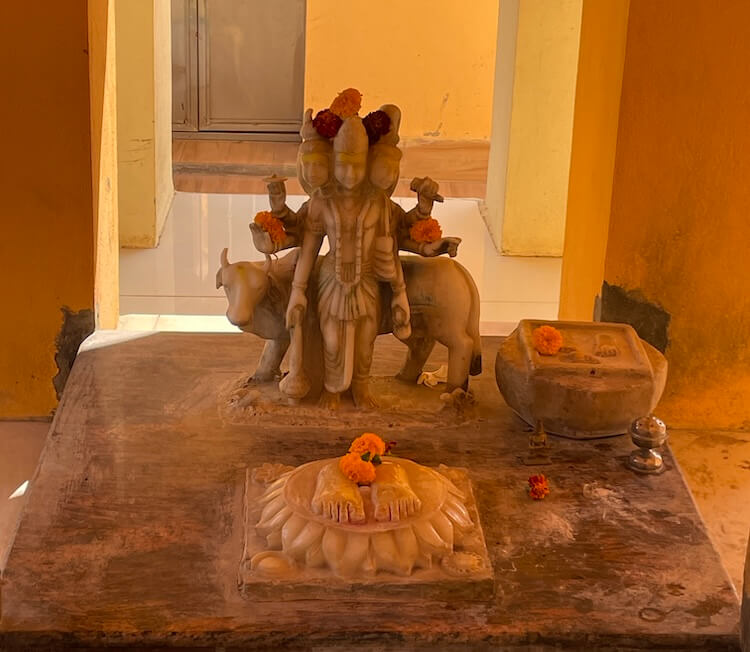
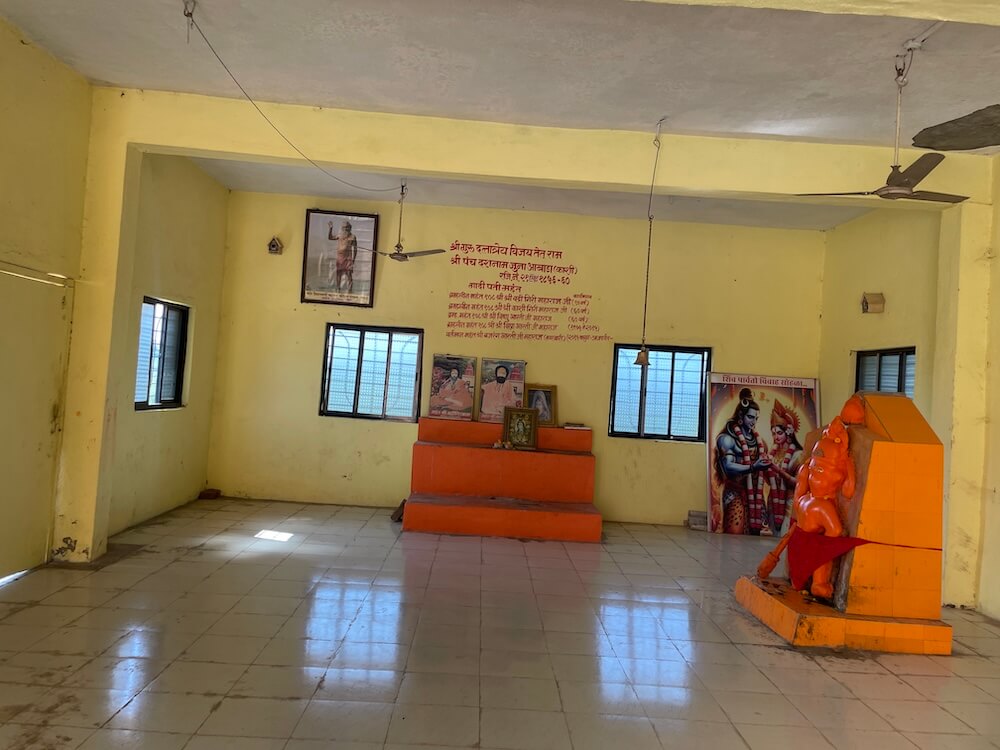
In the mandapa (hall) in front of the garbhagriha (sanctum sanctorum), there is an idol of Lord Hanuman. One can also have the darshan of the padukas (footprints) of Lord Dattatreya here. Behind the temple, there is a baradari (pavilion) with twelve pillars. Recently, this baradari has also been renovated. Here, one can have the darshan of the padukas of Lord Rama as well as the idol of Lord Dattatreya. In the temple premises, there are samadhis of the great souls who served here.
Mahashivratri is the biggest festival celebrated here. On the occasion of this festival, a Bhagwat Saptah is also organized. This Saptah concludes with a Mahaprasad. There is also a massive influx of devotees here every Monday during the holy month of Shravan. During this time, many Shiva devotees bring water from the Nalganga or Purna rivers in ‘Kavads’ to perform Abhishekam to Koteshwar Mahadev.
This sacred temple stands as a testament to deep spiritual devotion, ancient architectural grandeur, and rich local cultural traditions.
The sanctum sanctorum houses the divine idol consecrated according to ancient Vedic traditions, surrounded by serene courtyards and traditional temple architecture.
Navratri, Maha Shivratri, Annual Temple Jatra & Deepotsav
Compare and book flights, secure top-rated local hotels near the temple, hire reliable guides, and rent cars instantly.
Extend your pilgrimage by visiting other highly sacred temples located nearby.


Add ₹999 more to unlock FREE SHIPPING!
Your sacred cart is currently empty.
Shop Photo FramesFill in your delivery details below to place your order.
Add comment