
Add ₹999 more to unlock FREE SHIPPING!
Your sacred cart is currently empty.
Shop Photo FramesSituated on the banks of the world-famous Lonar Lake, the Daityasudan Temple stands as a testimony to the advanced architectural style of ancient India. According to mythological tradition, Lord Vishnu assumed the form of ‘Daityasudan’ and vanquished the demon Lavanasura. Dedicated to this unique incarnation of Lord Vishnu, this temple is known for its distinct architectural design and exquisite carvings in the Khajuraho style. The most remarkable feature of this temple is the Kiranotsav (sunbeam festival) that takes place every year between 14th and 19th May. During this period, the rays of the sun bathe the idol of Daityasudan in the sanctum sanctorum for 10 minutes, as if performing a divine ‘abhisheka’.
In the Skanda Purana and Padma Purana, Lonar is mentioned as ‘Viraj Kshetra’ or ‘Vishnu Gaya’. According to stories in these texts, during the Krita Yuga (Satya Yuga), a giant demon named Lavanasura (or Lonasura) dwelt in this region. He had caused havoc across the Earth and the Heavens. He resided in a massive subterranean cave, the mouth of which was covered by a hill-like lid. Consequently, no one could trace his whereabouts. Upon the earnest prayer of the Devas, Lord Vishnu assumed the form of an exceedingly enchanting, radiant, and handsome youth. This divine form later came to be known as ‘Daityasudan’. In this form, Lord Vishnu began wandering through the dense forest. At that time, Lonasura’s two sisters caught sight of the youth and became enamored by him. With divine intelligence, Lord Vishnu tactfully learned the location of Lonasura’s abode from them. The sisters inadvertently disclosed that their brother was hidden in an underground cave at a specific spot, its mouth covered by a massive boulder.
Upon learning the cave’s location, Lord Vishnu relinquished that enchanting form, assumed His original divine form, and proceeded to the mouth of the cave. With the toe of His foot, Lord Vishnu cast away the massive rock covering the cave. As the lid of the cave opened, Lonasura awoke and emerged from the cave. A fierce combat ensued between Lord Vishnu and Lonasura. Ultimately, Lord Vishnu slew Lavanasura and buried him within his own cave. Thus, by destroying the dreadful demon, Lord Vishnu sanctified the region, which is why this holy land is also called ‘Vishnu Gaya’. It is believed that this very cave is the famous Lonar Lake of today. Surrounded by mountain ranges on three sides, the water of this lake is considered to be Lavanasura’s blood, while the salts and salinity in the water are believed to be parts of the demon’s body. A description of this lake is found in the sacred text ‘Viraj Mahatmya’ (Chapter 14, Verses 11-19). Furthermore, in Chapter 18, Lonar is mentioned as ‘Vishnu Gaya’. This place is revered as sacred as Gaya (Bihar). It is a widely held belief that performing Shraddha rites for ancestors here grants them moksha (salvation).
Lonar, a taluka headquarters in Buldhana district, is one of the most ancient towns in Vidarbha. Legend has it that this town was established during the Krita Yuga. In ancient times, this town was known as ‘Viraj Kshetra’. During Satya Yuga, the world-famous saline Lonar Lake here was known as ‘Vairaj Tirtha’. On the banks of this lake stand 16 ancient temples of varying sizes. Among them, the Daityasudan Temple is particularly renowned for its architecture and sculptural art. Historians hold differing views regarding the exact period of the temple’s construction. According to some historians, the temple was built during the Chalukya reign under Vikramaditya II (733 to 747 AD) at the insistence of his queen, Lokamahadevi. It is said that the temple was constructed according to the design crafted by the sculptor Tribhuvanakirti. The grandeur and intricate carvings of the temple evoke memories of the Chalukya temples at Badami and Pattadakal. However, according to the famous archaeologist Henry Cousens, this temple was likely constructed during the reign of the Yadavas of Devagiri towards the end of the 13th century or the beginning of the 14th century.
There is a twenty-four-line inscription here recording grants made to this temple during the Yadava period. Foreign invaders caused extensive destruction to the temple. To protect the temple from such invasions, the local villagers concealed it under a mound of earth. A legendary account regarding this temple relates that Swami Sacchitashram Saraswati suffered from a skin ailment on his legs. He received word that the waters of Lonar Lake could cure this affliction. Consequently, he arrived at Lonar around 1878. After his skin condition was cured by the water of the lake, he decided to build an ashram near the mound concealing the temple. During the construction of this ashram, an eagle would visit daily and fly from there toward the earthen mound. As this phenomenon continued for many days, it caught Swamiji’s attention. Subsequently, upon excavating the mound, this glorious temple was discovered within. It is noted in the ‘Central Provinces and Berar District Gazetteers – Akola District, Volume A’ (1910) that the temple was excavated under the leadership of Swami Sacchitashram Saraswati in 1878. The official Gazetteer also mentions that the original temple must have suffered damage at some point, and the brickwork indicates that repairs were subsequently carried out during the medieval period.
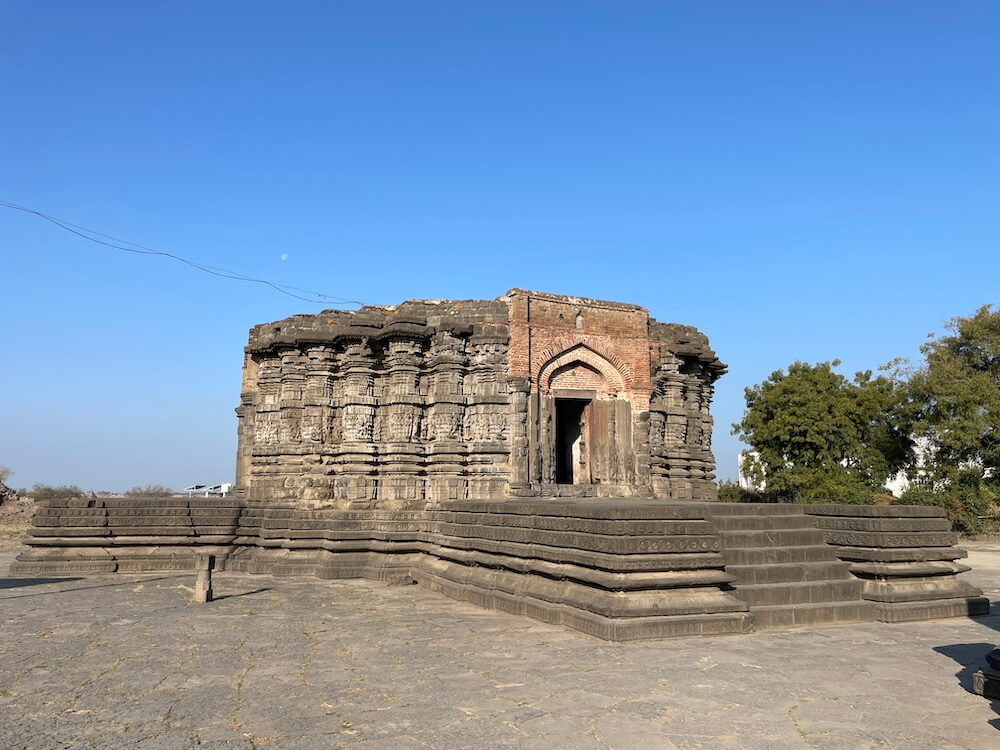
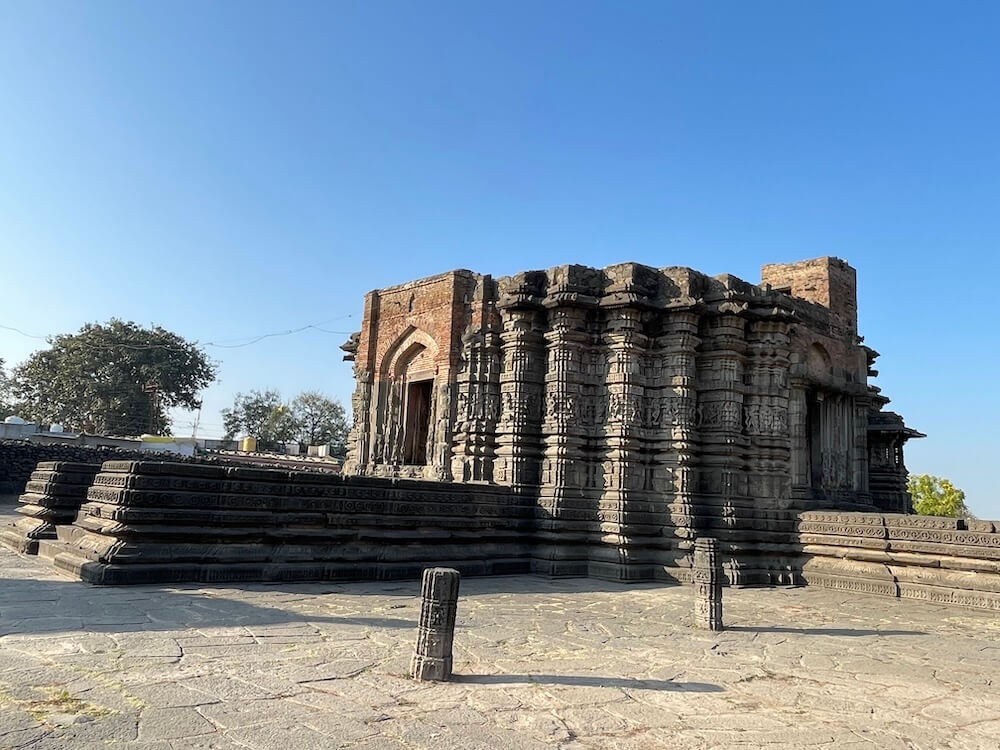
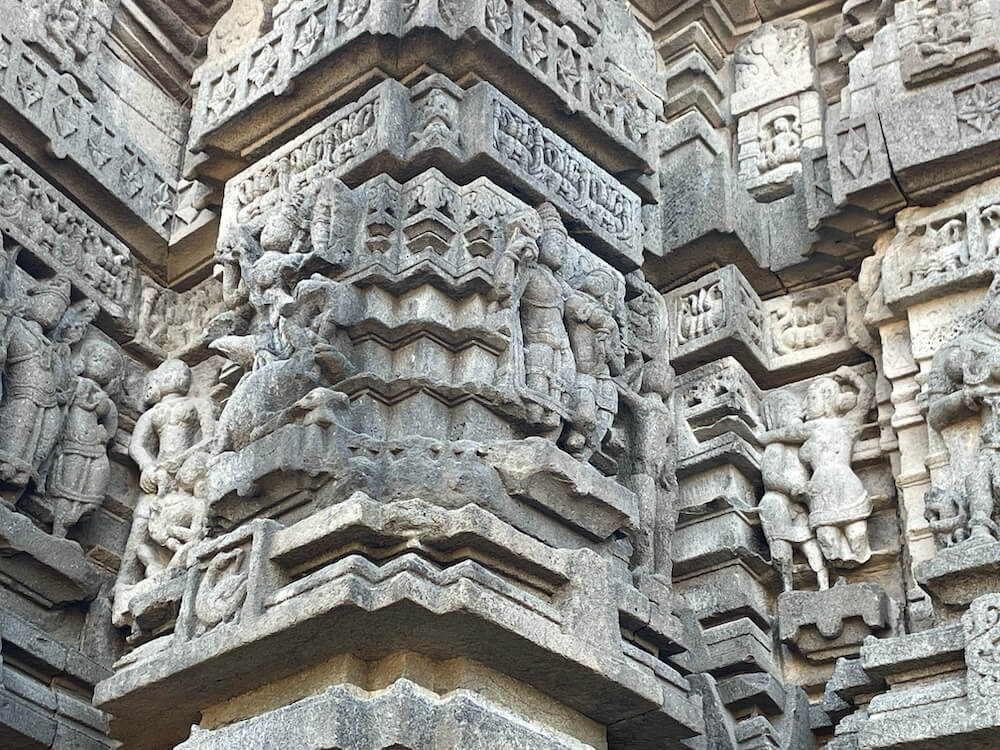
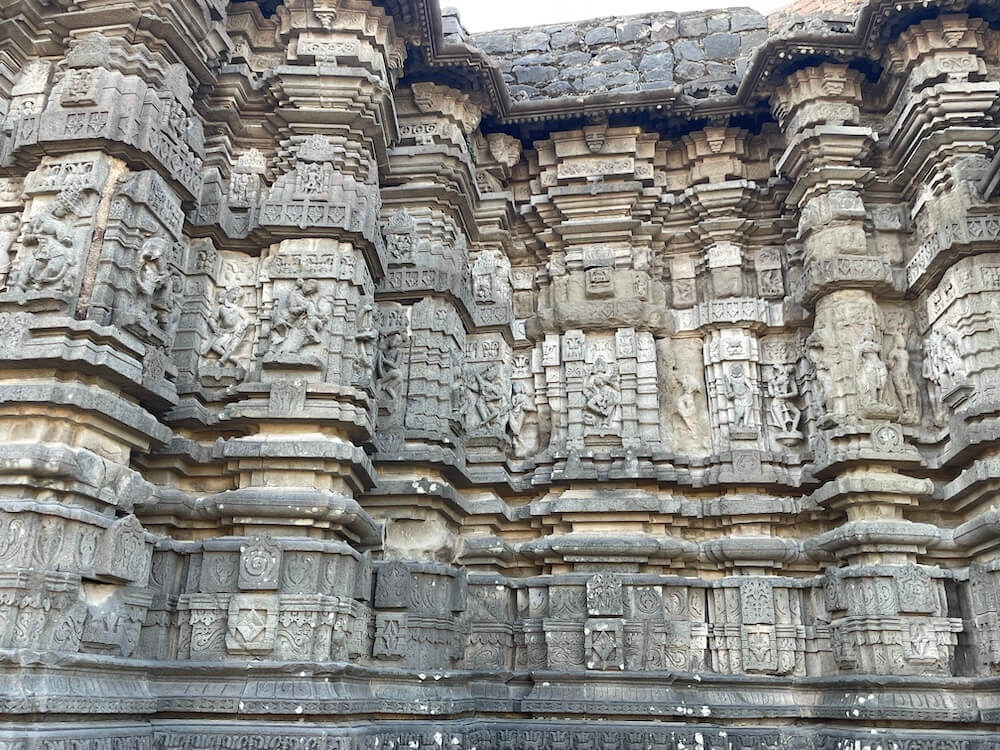
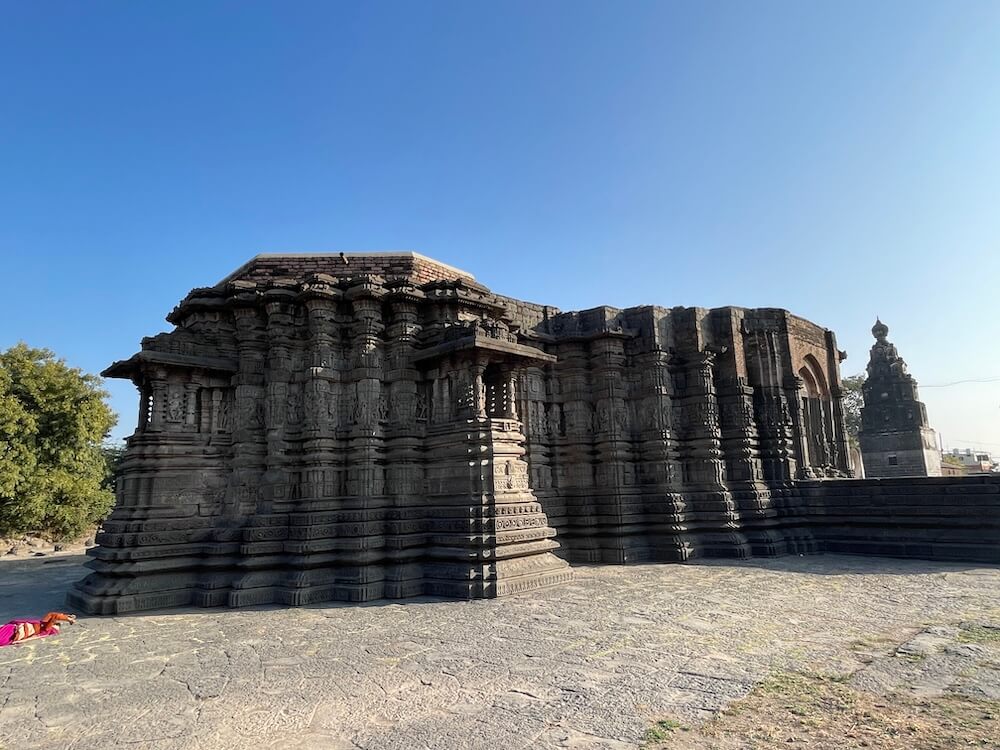
Surrounded by settlements on all four sides, the main entrance of the temple faces east. The temple stands upon a grand plinth elevated about five feet above the ground. Climbing about eight steps from the courtyard leads to this star-shaped plinth of the temple. The outer surface of the plinth is intricately carved. The star-shaped layout of this temple closely resembles the Bhumija style of Indian architecture. The structure of the temple’s foundation and walls is designed with multiple angles. Owing to these multiple angles in the wall design, the exterior surface area expands, providing sculptors greater space for detailed relief work. Due to this unique design, as light falls upon the exterior of the temple, the exquisite sculpture work stands out vividly. As the sun changes its position throughout the day, the expressions on the temple’s sculpted deities appear subtly different in the morning, afternoon, and evening.
The architectural structure of this temple comprises a Mukhamandapa (entrance porch), a north-south Ardhamandapa, a Sabhamandapa (assembly hall), an Antarala (vestibule), and a Garbhagriha (sanctum sanctorum). Among these, the Mukhamandapa no longer exists today. The doorframes of the temple’s main entrance feature intricate carvings. An idol of Lord Ganesha is adorned on the Lalatabimba (lintel) of the entrance. This entrance leads into the Sabhamandapa. Inside the Sabhamandapa, grand pillars are interconnected by elegant cusped arches. There are doors facing the north and south directions in this Sabhamandapa. Numerous sculptures are carved on the ceiling of the Sabhamandapa. On the ceiling of the Antarala, there are four sculptures in the four corners, one of which depicts the slaying of Lavanasura along with the Dhar sculpture. The second sculpture depicts the slaying of Kamsa (Kamsavadha). The third sculpture portrays Lord Narasimha, and the fourth depicts Lord Krishna with gopis and calves. The doorframes of the entrance to the Garbhagriha also feature exquisite craftsmanship. Inside the Garbhagriha, seated upon a Vajrapitha, is the sacred idol of Lord Vishnu in His ‘Daityasudan’ form. This idol stands approximately 1.5 meters tall. Lord Vishnu holds the Shankha (conch), Chakra (discus), and Gada (mace) in three of His hands, while with the fourth hand, He holds the demon by his hair tuft. Similar to Goddess ‘Asuramardini’, this form represents Lord Vishnu as ‘Asuramardaka’ (the destroyer of demons). The Dashavatara (ten incarnations) of Lord Vishnu are carved on the Prabhavali (halo) surrounding the idol. The greatest object of wonder regarding the Daityasudan idol is its magnetism. The stone from which this idol is sculpted contains a very high concentration of iron ore. In geological terms, it is known as ‘magnetite’ or ‘lodestone’, which possesses natural magnetic properties. According to local beliefs, the idol possessed such powerful magnetism that it used to float in mid-air in earlier times, or iron objects coming in contact with it would adhere to the idol. The present idol in this temple was offered by the Bhosales of Nagpur. There is a circular aperture in the Shikhara (spire) section of this temple. Its unique feature is that during the rainy season, not a single drop of water falls into the temple through this hole. However, every year for five days from May 14 to 19, the rays of the sun pass directly through this circular aperture for ten minutes from 11:10 AM to 11:20 AM to fall directly upon the idol of Lord Vishnu. Hundreds of devotees gather here to witness and experience this divine Kiranotsav.
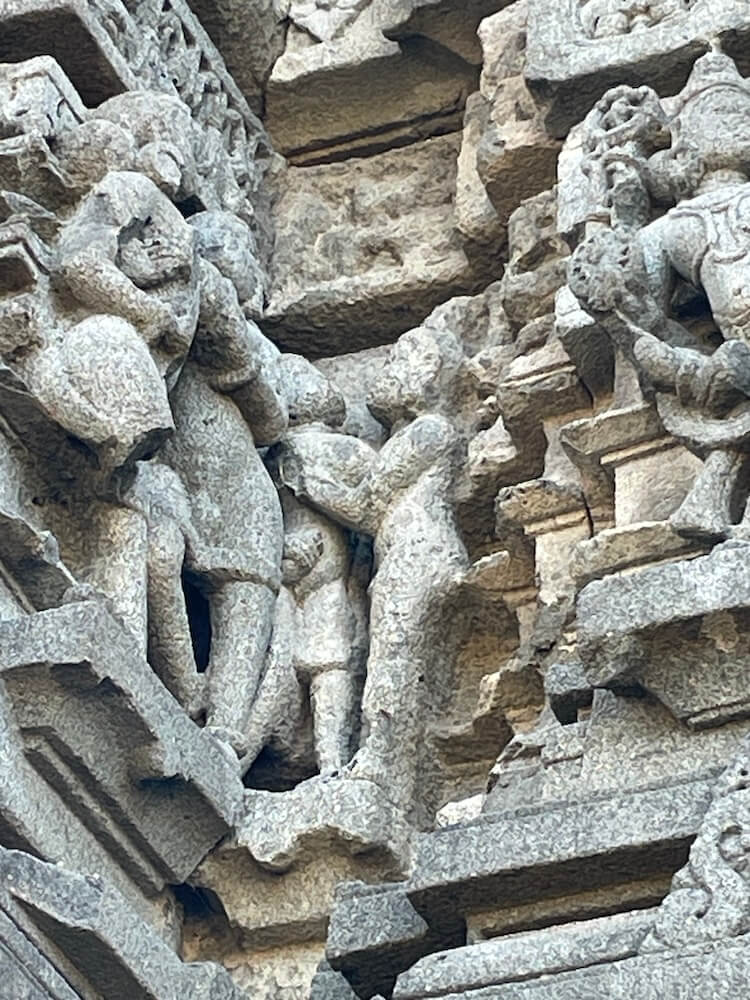
The exterior walls of this temple are referred to as an ‘epic carved in stone’, as thousands of sculptures and scenes are engraved upon them. Among these, the Varaha avatar, Narasimha avatar, and Vamana avatar of Lord Vishnu are sculpted with exquisite precision. Furthermore, depictions of Putana Vadha, Kaliya Mardana, and Kamsa Vadha from Lord Krishna’s divine Leelas are uniquely portrayed. Battle scenes and exile episodes from the Ramayana and Mahabharata are carved here in intricate detail. Similar to the temples of Khajuraho and Konark, the outer walls of this temple feature erotic and amorous sculptures in certain places. These depict couples engaged in amorous play, embracing lovers, and various romantic postures. Hence, this temple is also referred to as the ‘Khajuraho of Vidarbha’. These sculptures are considered symbols of the four Purusharthas of Indian culture: Dharma, Artha, Kama, and Moksha. In a Devakoshta (niche) at the rear side of the temple stands an idol of Surya Deva. Additionally, there are numerous sculptures of Surasundaris (celestial beauties) on these walls, portraying women in various expressive postures. Among them are sculptures depicting a maiden admiring herself in a mirror (Darpanadharini), one removing a thorn from her foot, and another dancing. The physical posture of these Surasundaris, the folds of their drapery, and the fine details of their ornaments are truly remarkable. On all eight directions of the temple, the guardians of the directions (Ashtadikhpalas) are carved along with their respective mounts.
The Daityasudan Temple is also a sacred shrine for the followers of the Mahanubhava sect. In the southeast corner of the temple premises lies the ‘Tripurusha Matha’. It is believed that Swami Chakradhar, the founder of the Mahanubhava sect, resided at this place for some time. This Matha originally housed the idols of Brahma, Vishnu, and Mahesh. Since the idol of Lord Shiva was stolen, an idol of Garuda is now placed there in place of Mahesh. Opposite the Daityasudan Temple stands the Hanuman Temple. In the precincts of the Hanuman Temple, devotees can seek blessings of Lord Ganesha, Garuda Deva, the Shivlinga, and Lord Hanuman.
At present, the Daityasudan Temple is a protected national monument under the Archaeological Survey of India. The main festival (Yatra) of this temple takes place from Chaitra Shuddha Ekadashi to Chaitra Shuddha Trayodashi. On Chaitra Shuddha Dwadashi, the deity’s Palkhi and Rathotsava are taken out through Lonar town. Apart from this, Vaikuntha Ekadashi and other Vaishnava festivals are celebrated here with great enthusiasm. A large crowd of devotees also gathers here during the holy month of Shravana.
This sacred temple stands as a testament to deep spiritual devotion, ancient architectural grandeur, and rich local cultural traditions.
The sanctum sanctorum houses the divine idol consecrated according to ancient Vedic traditions, surrounded by serene courtyards and traditional temple architecture.
Navratri, Maha Shivratri, Annual Temple Jatra & Deepotsav
Compare and book flights, secure top-rated local hotels near the temple, hire reliable guides, and rent cars instantly.
Extend your pilgrimage by visiting other highly sacred temples located nearby.


Add ₹999 more to unlock FREE SHIPPING!
Your sacred cart is currently empty.
Shop Photo FramesFill in your delivery details below to place your order.
Add comment