
Add ₹999 more to unlock FREE SHIPPING!
Your sacred cart is currently empty.
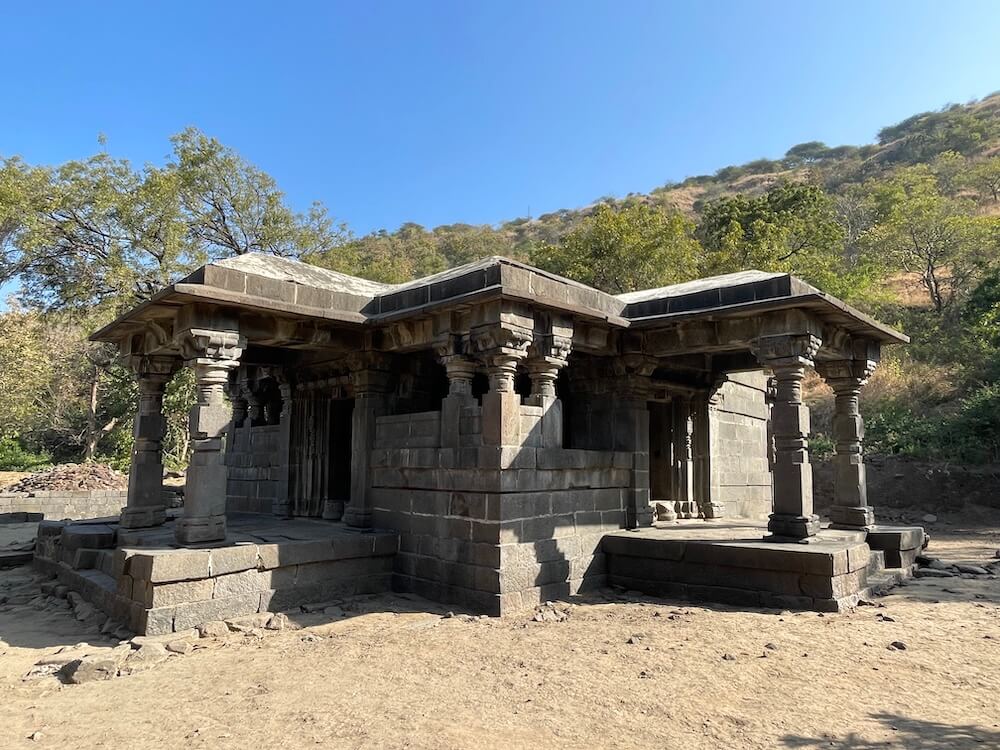
Shop Photo FramesLonar Lake in Buldana district is renowned as the pride of Maharashtra and a global wonder. The chain of ancient temples situated on the periphery of this unique meteorite impact crater in basalt rock stands as a testament to Maharashtra’s rich heritage. Among this temple chain, the Ramgaya Temple is an extremely ancient and famous shrine. Located on the circumambulation path of the lake, somewhat secluded from the main flow, nestled in picturesque and dense forest, this site is also known as the ‘Gaya of the South’. This temple, built in the Yadava-era Hemadpanti architectural style, is famous for its ‘Ekal Ram’ (Solitary Ram) idol and the optical illusion created by the arrangement of its pillars.
The legend of this temple states that when Shri Ram was in exile, he wandered from Panchavati (Nashik) and arrived in the Lonar region. During this journey, he received the news of the passing of his father, King Dasharatha. Even in the difficult circumstances of exile, to fulfill his filial duty, Shri Ram decided to perform the last rites and Pind-daan for Dasharatha. For this, he chose this quiet and sacred spot on the banks of Lonar Lake. Shri Ram performed the Pind-daan here with his own hands, which is why this pilgrimage site came to be called ‘Ramgaya’. In India, ‘Gaya’ in Bihar is considered the supreme site for ancestral salvation and funeral rites. There is a firm belief that performing Pind-daan at ‘Gaya’ grants salvation to ancestors. On these same lines, the Ramgaya Temple of Lonar is referred to as the ‘Gaya of the South’. It is believed that those who cannot travel to Gaya (Bihar) can attain the same merit and grant salvation to their ancestors by performing Pind-daan at the Ramgaya Temple in Lonar.
According to archaeological evidence and stylistic comparisons, it is believed that the Ramgaya Temple was constructed between the 12th and 13th centuries CE. Some local references trace its origin back to the 8th century. Although the carvings and pillar designs on the temple are from the Yadava era, the history of this region is even older. Pottery and brick remains from the Satavahana period (200 BCE to 200 CE) have been found on the outer periphery of Lonar Lake.
From this, it is inferred that the site of the Ramgaya Temple must have been used for human habitation and religious activities for thousands of years. The Yadava kings likely built this temple on this very ancient and sacred site.
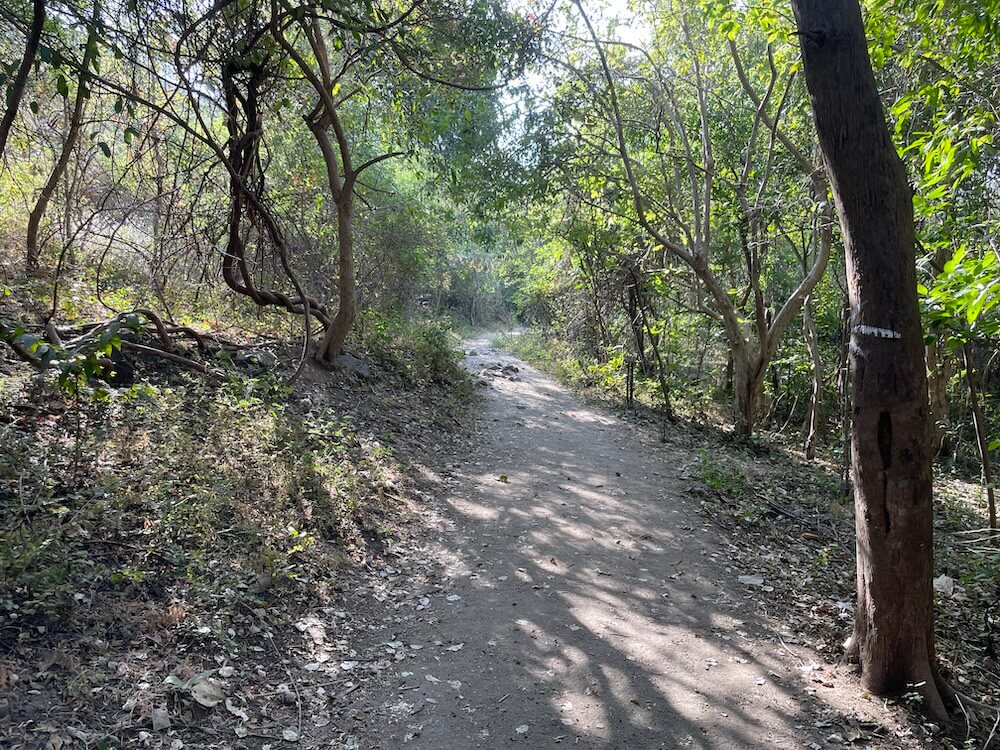
The premises of the Ramgaya Temple are part of the Lonar Wildlife Sanctuary. The path leading to the temple passes through dense thickets. According to forest department records, leopards, hyenas, foxes, and wild boars roam this area. Additionally, Brahminy ducks (Ruddy Shelducks), peacocks, and various migratory birds take shelter on the banks of the lake and the spires of this temple. In the silence of this area, only the chirping of birds and the gentle sound of the lake water can be heard. The temple is situated on a high ground amidst dense foliage. A unique feature of this temple’s location is its water source. Although the water of the massive lake nearby is saline, there are freshwater springs near this temple. The ‘Ramgaya Spring’ (Ramkund), or what is locally called ‘Dhar’, is the main source of fresh water in this area. Geological water seeping from the crater slopes emerges through this spring. Many devotees visit here specifically for a holy bath in this tank. This tank was discovered during excavations conducted by the Archaeological Department a few years ago. There are steps on all four sides to descend into this tank.
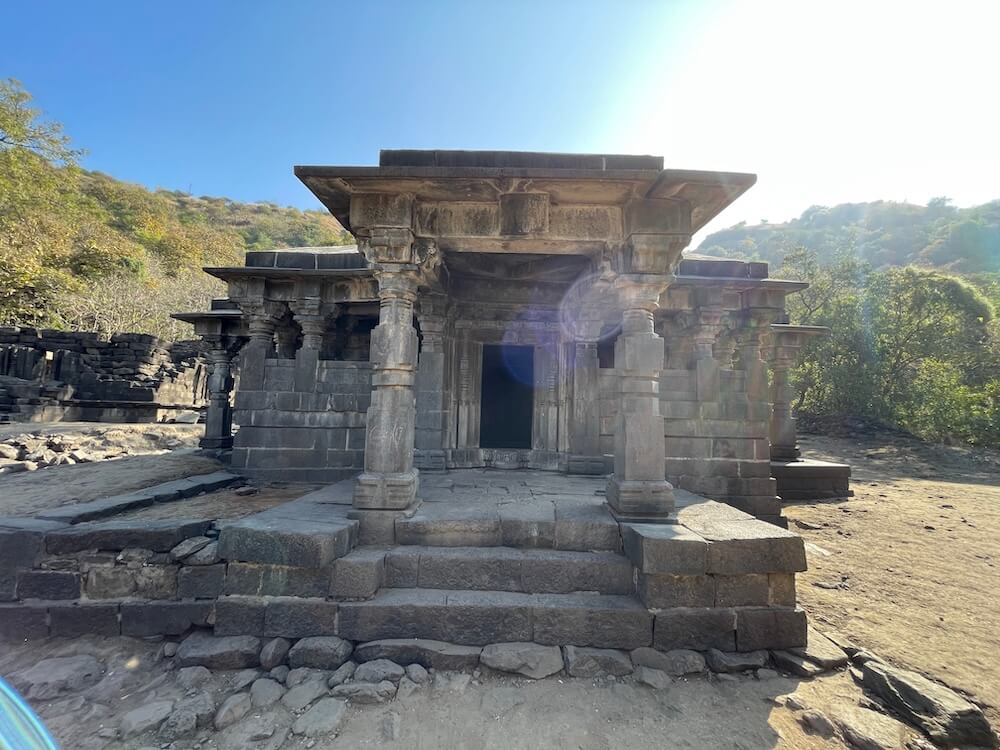
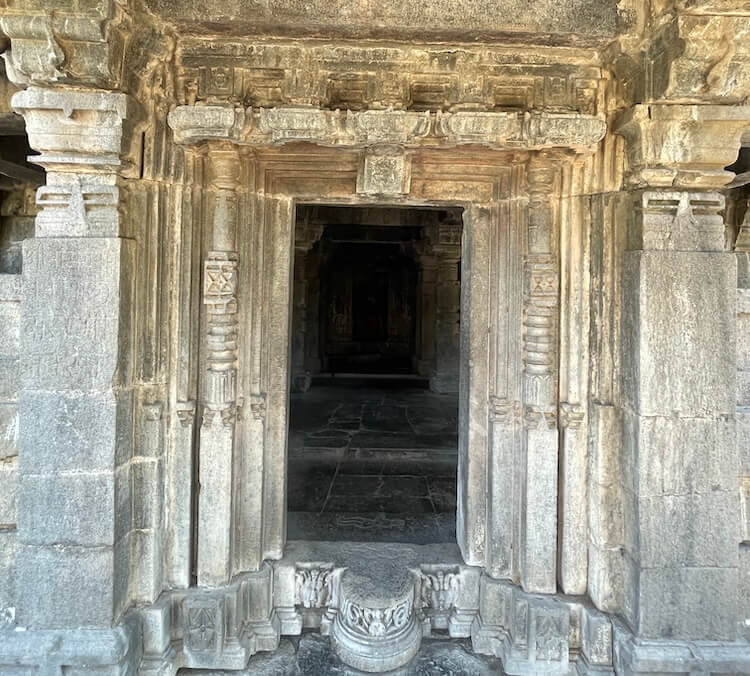
Adjacent to this tank is the Ramgaya Temple. This temple has entrance porches (Mukhamandapas) on the west, south, and north sides. The structure consists of three entrance porches, a main hall (Sabhamandapa), an intermediate chamber (Antarala), and the sanctum sanctorum (Garbhagriha). One enters the semi-open entrance porch of the temple by climbing four steps from the courtyard. The door frames of the Sabhamandapa entrance are intricately carved. An idol of Ganpati is carved on the lintel, and a decorative arch (Torana) is carved on the upper section. This entrance leads into the Sabhamandapa. There are two more doors in the Sabhamandapa. In the center of the Sabhamandapa, between four pillars, is a raised stone platform. In the past, this space was used for performing religious programs. The pillars here do not have many carvings. There is intricate work on the ceiling of the Sabhamandapa. Some niches for deities are carved into the walls of the Sabhamandapa. Beyond this is the Antarala. The entrance to the Garbhagriha has five door frames. Sculptures of door guardians (Dwarapalas) along with Ganga and Yamuna are carved on them. An idol of Ganesha is carved on the lintel here as well, with a decorative arch above. In the Garbhagriha, on a Vajra-pedestal, stands the idol of Shri Ram in a blessing posture. Generally, one sees ‘Ram Panchayatana’ in Ram temples, where the idols of Shri Ram, Sita, Lakshman, and Hanuman are together. However, in this temple, there is only the idol of Shri Ram. A story is told regarding this: Pind-daan is a ritual performed in a deeply sorrowful and solemn atmosphere. When Ram performed the Pind-daan here, he was in mourning for his father. Shri Ram performed this task alone. In memory of that occasion, only the idol of Shri Ram was installed in this temple. Here, Shri Ram is not worshipped as a king, but as a dutiful son and a forest-dwelling ascetic. The architectural design is such that the rays of the setting sun fall on this idol for a few days of the year.
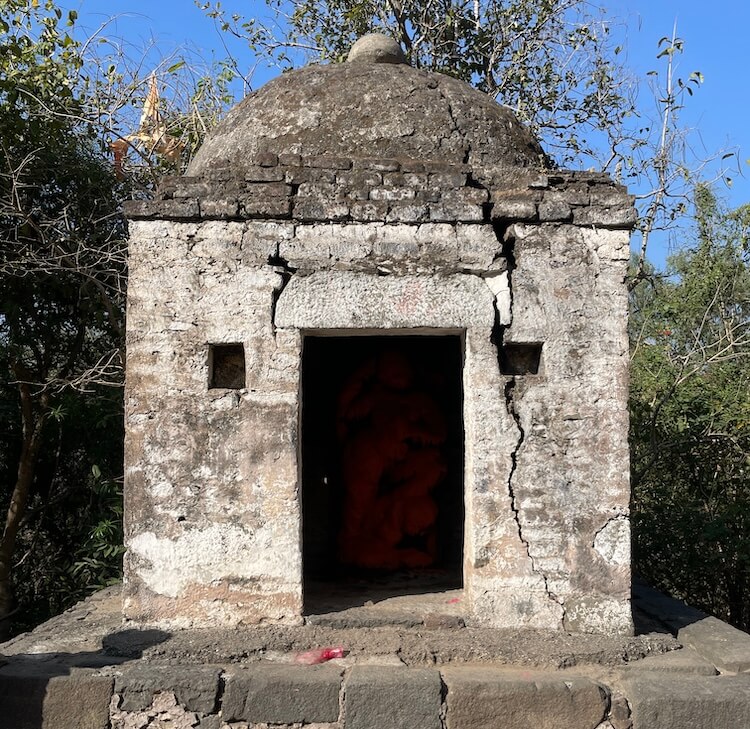
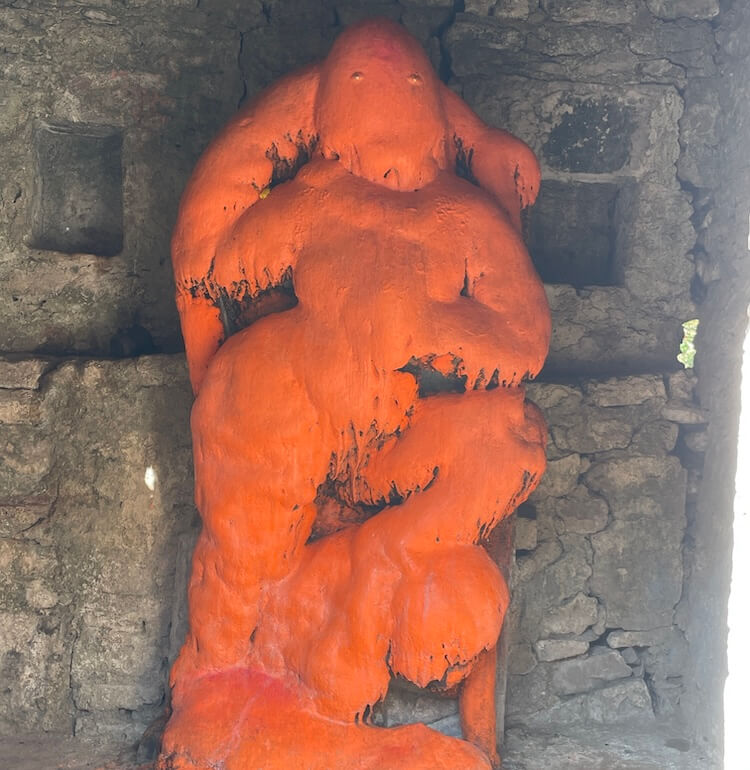
The most astonishing part of the architecture of the Ramgaya Temple is the play of light here. When a devotee stands in front of the idol of Shri Ram in the main sanctum and sunlight enters through the pillars at a specific angle, the devotee’s shadow splits. Two separate shadows fall on either side of the idol. According to the faith of the devotees, these two shadows are those of Sita and Lakshman. To ensure the devotee does not feel that Shri Ram is alone, ancient architects used the arrangement of light and pillars to create this illusion. The concept of transforming the devotee’s own shadow into the companions of their beloved deity has been realized here. Over time, the spire of the Ramgaya Temple has been destroyed. Currently, this temple is under the jurisdiction of the Archaeological Department. In front of this temple is a small Hanuman temple. A few steps away from the temple is a dilapidated Shiva-Ganesh temple.
Shraddha rituals are still performed at the Ramgaya Temple today. Devotees gather here in large numbers to perform Shraddha rites, especially during Pitru Paksha. The Kamalja Devi Temple is located one to one and a half kilometers from this temple, where a grand fair is held during Navratri. During that fair, special worship is also conducted at the Ramgaya Temple. Every year, the festival of Ram Navami is celebrated here with great devotion.
This sacred temple stands as a testament to deep spiritual devotion, ancient architectural grandeur, and rich local cultural traditions.
The sanctum sanctorum houses the divine idol consecrated according to ancient Vedic traditions, surrounded by serene courtyards and traditional temple architecture.
Navratri, Maha Shivratri, Annual Temple Jatra & Deepotsav
Compare and book flights, secure top-rated local hotels near the temple, hire reliable guides, and rent cars instantly.
Extend your pilgrimage by visiting other highly sacred temples located nearby.


Add ₹999 more to unlock FREE SHIPPING!
Your sacred cart is currently empty.
Shop Photo FramesFill in your delivery details below to place your order.
Add comment