
Add ₹999 more to unlock FREE SHIPPING!
Your sacred cart is currently empty.
Shop Photo FramesIn Hindu religion, the Trinity of Brahma, Vishnu, and Mahesh is considered supreme. Among them, Vishnu is the preserver of the universe. He has a thousand names, and Keshav is one of the most popular ones. An ancient and famous temple of this deity is located at Parbhani in Beed Taluka. The name Keshav means ‘the Lord with beautiful hair.’ Devotees believe that the deity here is ‘Jagrut’ (awakened) and grants their prayers. It is a widely held belief that Keshavraj removes the physical, mental, and financial troubles of his devotees.
According to scholars, this temple is estimated to be about eight hundred to a thousand years old. Legend has it that an elderly gentleman in the village was a supreme devotee of Vishnu. He would regularly recite the Vishnu Sahasranama. His heartfelt desire was to have a direct vision of the all-beautiful Lord Vishnu. Pleased by his devotion, Lord Vishnu appeared before him and asked him to seek a boon. The devotee requested that the Lord reside here permanently in the form of Keshav and fulfill the wishes of all devotees. Honoring the devotee’s wish, the Lord manifested in the form of an idol, and later, the villagers built a temple here.
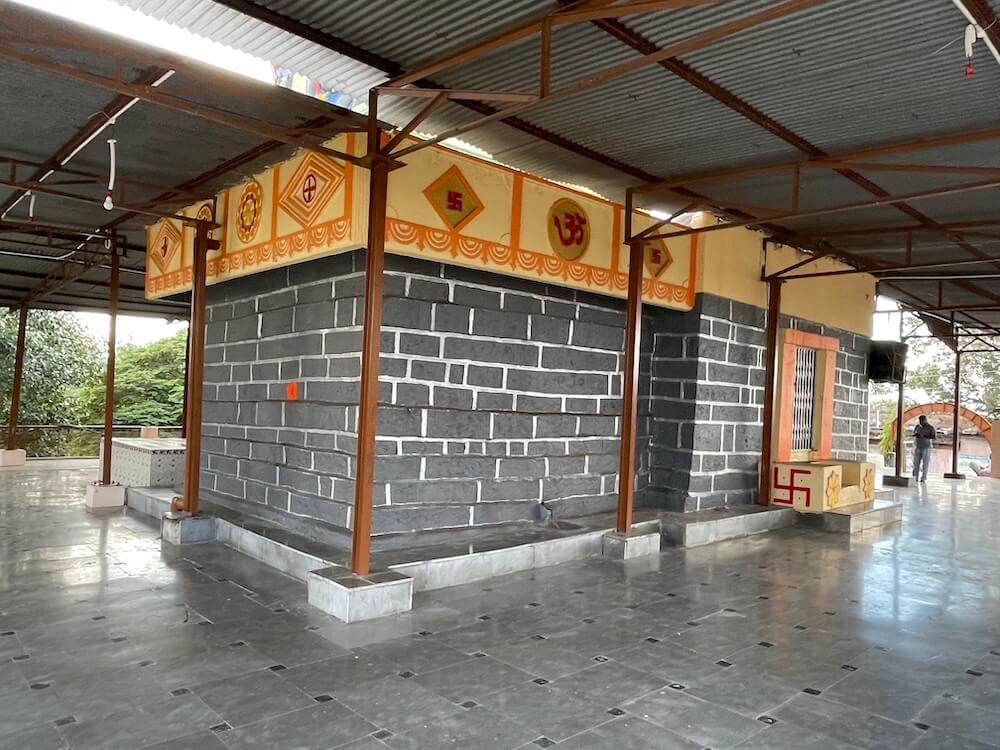
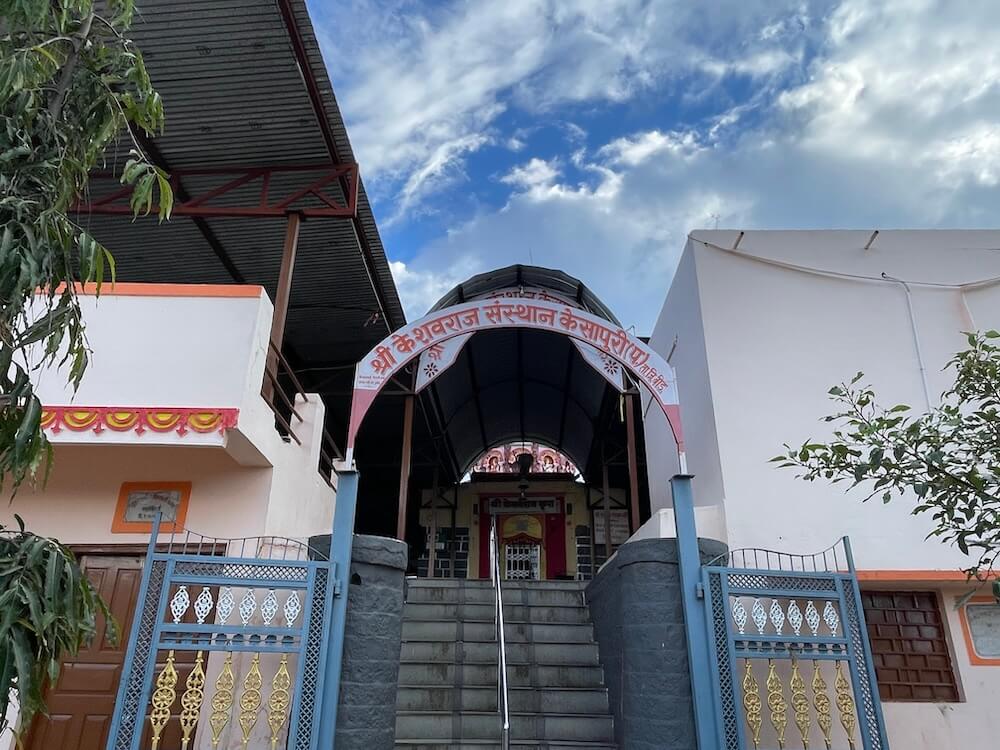
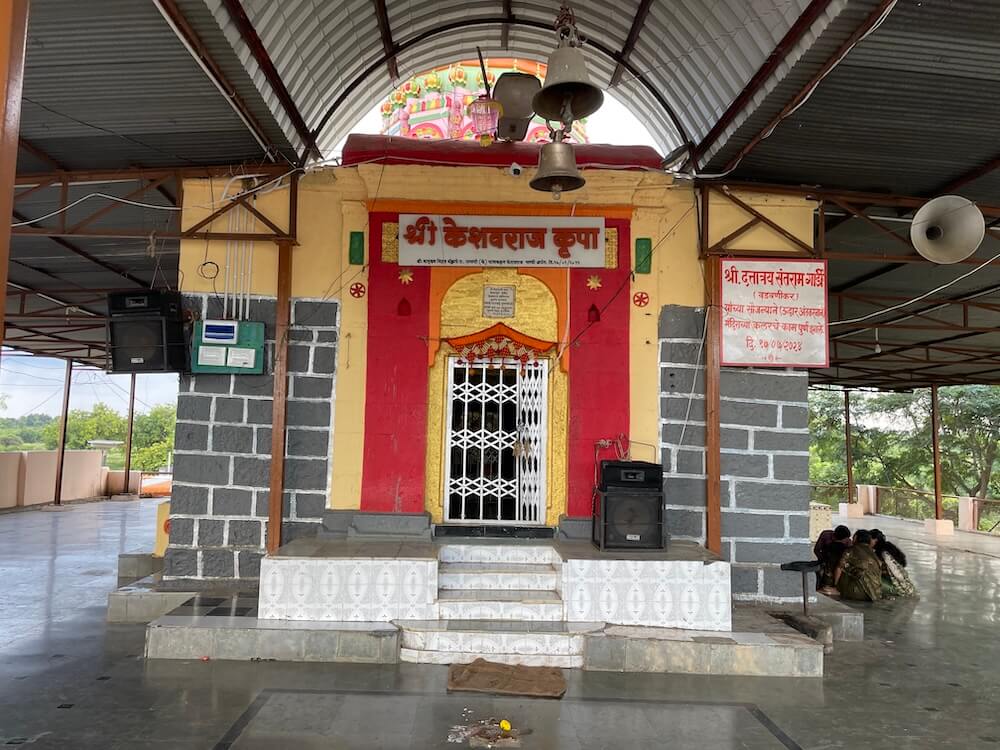
The temple is situated adjacent to the busy village road. It stands on a spacious platform about ten feet higher than the road level. This platform is accessed by about twelve steps built of carved stone. At the beginning of the steps, there is a simple welcome arch, and stainless steel railings are provided on both sides of the steps. The platform has a four-foot-high parapet wall on the outer side, adorned with paintings of various deities and saints. Iron pillars are installed within the parapet and in the center of the platform, supporting a tin roof. In one corner of the platform, a dais is built for programs like Bhajans, Kirtans, and discourses. A tortoise (Kurma) sculpture is placed in front of the temple on the platform. The temple structure consists of a Sabha Mandap (assembly hall) and a Garbhagriha (sanctum sanctorum). Since the temple entrance is higher than the platform, there are three steps leading to it, with guard pedestals on both sides. Paintings of gatekeepers (Dwarapalas) are depicted on both sides of the entrance. The door frames feature vertical carvings, and a Ganesha sculpture is carved on the lintel.
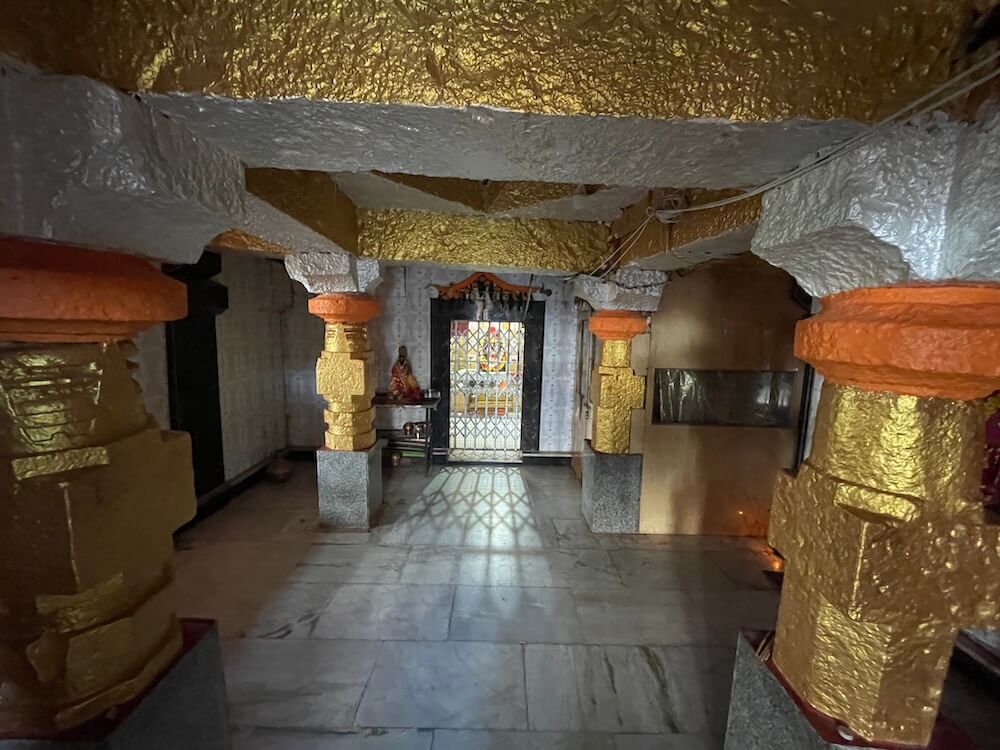
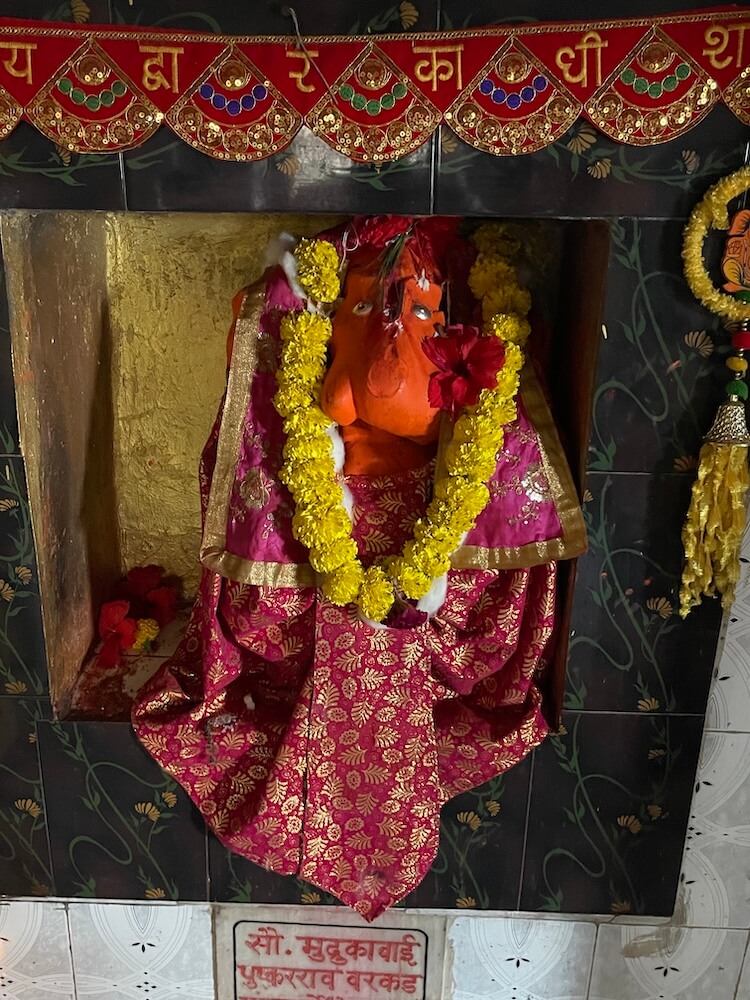
The enclosed Sabha Mandap has four rows of four ornate pillars each. The outermost pillars are embedded in the walls. The lower three feet of the pillars are square, while the upper sections feature various geometric shapes such as squares, hexagons, octagons, and circles. The octagonal ceiling features a circular design in the center. On the right side of the Sabha Mandap, there is a niche containing an idol of Ganesha. There is another door on the left side of the Sabha Mandap.
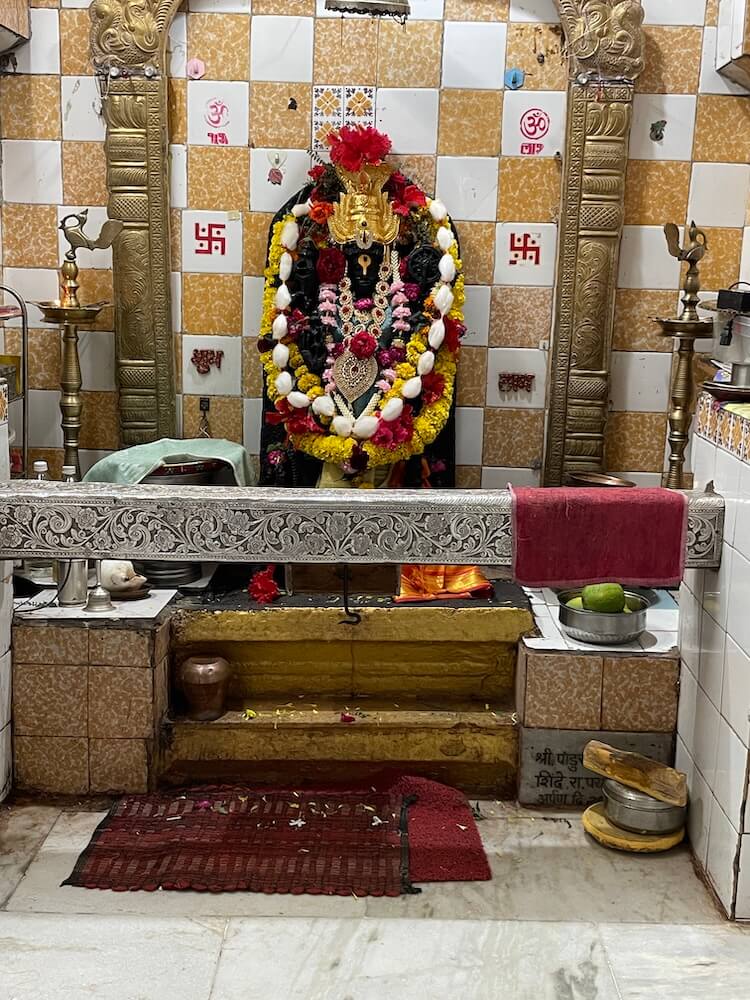
Further ahead is the entrance to the Garbhagriha. As the temple has been renovated in recent times, the interior is now tiled. In the Garbhagriha, on a Vajrapitha (throne), stands the four-armed idol of Lord Vishnu in the form of Keshavraj. The idol wears a silver crown and holds a conch, discus, mace, and lotus in its hands. Garments and ornaments are carved onto the idol, and sculptures of Lakshmi and Garuda are present near the feet. On the back slab of the idol, the Dashavatara (ten incarnations) of Vishnu are carved at the top. Behind the idol is a brass Prabhaval (arch), featuring a Kirtimukha at the top center and pillars with floral designs on both sides. A silver canopy hangs over the idol. The roof of the Garbhagriha has a circular Shikhara (spire) adorned with pillar motifs, topped with an Amalaka and a Kalash.
Opposite the Keshavraj Temple, across the road, is a parking area. On a five-foot-high pedestal in the parking area stands a bust of Chhatrapati Shivaji Maharaj. Behind the statue, on a high platform, is an ancient Mahadev temple containing a Shiva Linga on the floor. The roof of this temple features sculptures of Garuda, Maruti, and others at the four corners. The roof has a five-tiered Shikhara in the center. The first tier is octagonal and features elephant sculptures on all sides. The second, third, and fourth tiers are circular, each containing eight niches with various deity idols. The fifth tier features a ‘Bashing’ (traditional headgear) design, topped with an Amalaka and a Kalash.
A nine-day fair is celebrated with great enthusiasm in the temple from Chaitra Shuddha Pratipada to Ram Navami. During this time, a ‘Harinam Saptah’ is organized. For ten consecutive days, programs such as Bhajans, Kirtans, discourses, music, and Mahaprasad are held. On this occasion, devotees from across the state visit to seek the Lord’s blessings and fulfill their vows. All festivals, including Dussehra, Diwali, Shravan month, Ashadhi and Kartiki Ekadashi, and Mahashivratri, are celebrated in the temple. Food donations are organized on the occasion of Ashadhi and Kartiki Ekadashi.
This sacred temple stands as a testament to deep spiritual devotion, ancient architectural grandeur, and rich local cultural traditions.
The sanctum sanctorum houses the divine idol consecrated according to ancient Vedic traditions, surrounded by serene courtyards and traditional temple architecture.
Navratri, Maha Shivratri, Annual Temple Jatra & Deepotsav
Compare and book flights, secure top-rated local hotels near the temple, hire reliable guides, and rent cars instantly.
Extend your pilgrimage by visiting other highly sacred temples located nearby.


Add ₹999 more to unlock FREE SHIPPING!
Your sacred cart is currently empty.
Shop Photo FramesFill in your delivery details below to place your order.
Add comment