
Add ₹999 more to unlock FREE SHIPPING!
Your sacred cart is currently empty.
Shop Photo FramesThe roots of the Warkari tradition, which has reached every household in Maharashtra today, lie in the Nath tradition. Sant Dnyaneshwar, who laid the foundation of the Warkari tradition, was a disciple of Nivruttinath, who in turn was a disciple of Gahininath, one of the Navnaths. Gorakshanath, the guru of Gahininath and disciple of Machhindranath, traveled across the length and breadth of India to propagate and spread the Nath tradition. The monasteries and temples established by him are found everywhere in the country. There is a famous temple of Gorakshanath in Gorakhpur, Uttar Pradesh. Among the thousands of Nath-panthi temples in Maharashtra, the Gorakshanath Hill in Beed district is especially famous. The Gorakshanath Samadhi Temple here is a place of faith for many devotees.
Experts express the opinion that this temple dates back to approximately the twelfth century. It is said that Gorakshanath and Guru Machhindranath themselves resided here. A legend regarding this place states that when Gorakshanath brought Machhindranath back from the kingdom of women, Queen Mainakini had given a gold brick in Machhindranath’s alms bowl. Realizing that the presence of a gold brick in his guru’s bowl might have created a sense of attachment or fear in his mind, Gorakshanath threw the gold brick away. When Machhindranath noticed this, he became very angry with Gorakshanath. To eliminate the attachment from his guru’s mind, Gorakshanath used his yogic powers to turn the entire hill into gold and told his guru, “Take as much gold as you wish.” Upon this, the attachment in Machhindranath’s mind vanished. Later, they resided on this very hill for some time and provided food to all the Gosavis, Yogis, Sadhus, and Sannyasis. That tradition of food donation (Annadan) continues to this day.
The first welcome arch of the temple is on the road coming towards Ghatsavali village on the Beed-Parli highway. This welcome arch consists of two square pillars on both sides of the road with a beam on top adorned with a Bashinga (traditional wedding ornament). The Gorakshanath Hill is about two kilometers from here. There is a vast ground at the foot of the hill. There is a spacious assembly hall (Sabhamandap) measuring about ๔๐,००० square feet. In this very assembly hall, programs like food donation, Kirtan, and Bhajan are organized during festivals.
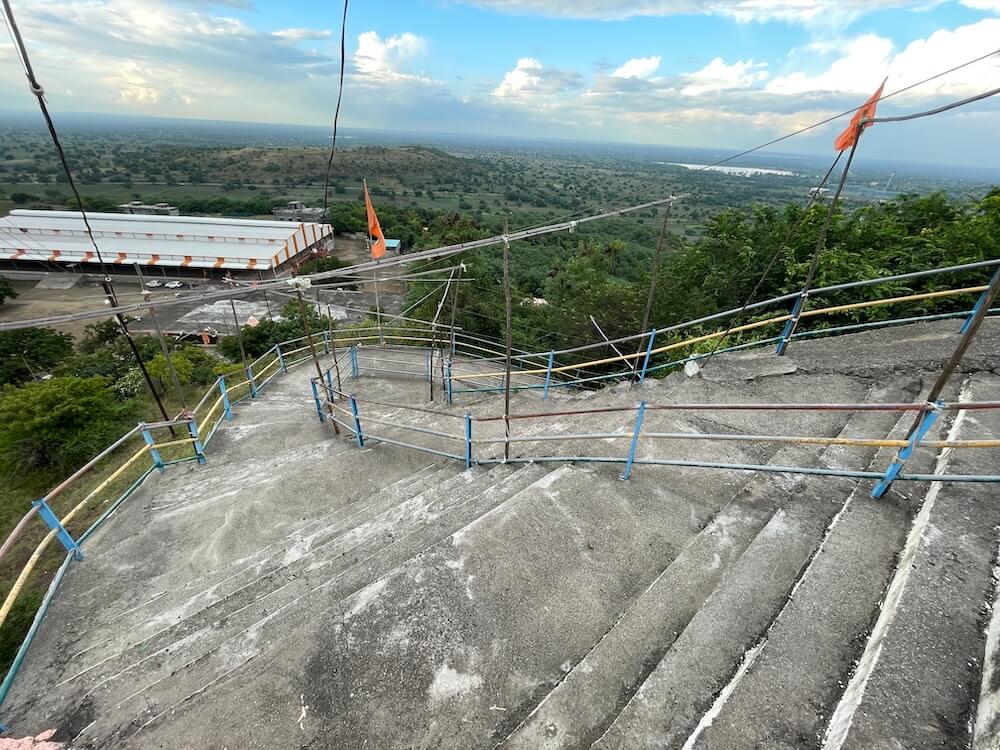
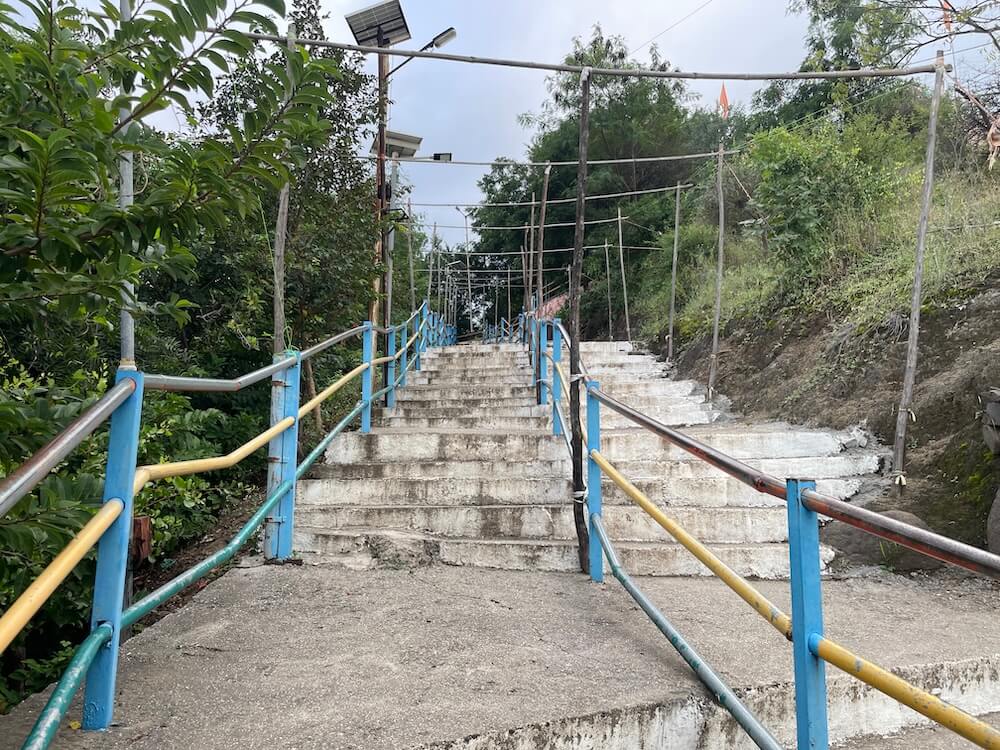
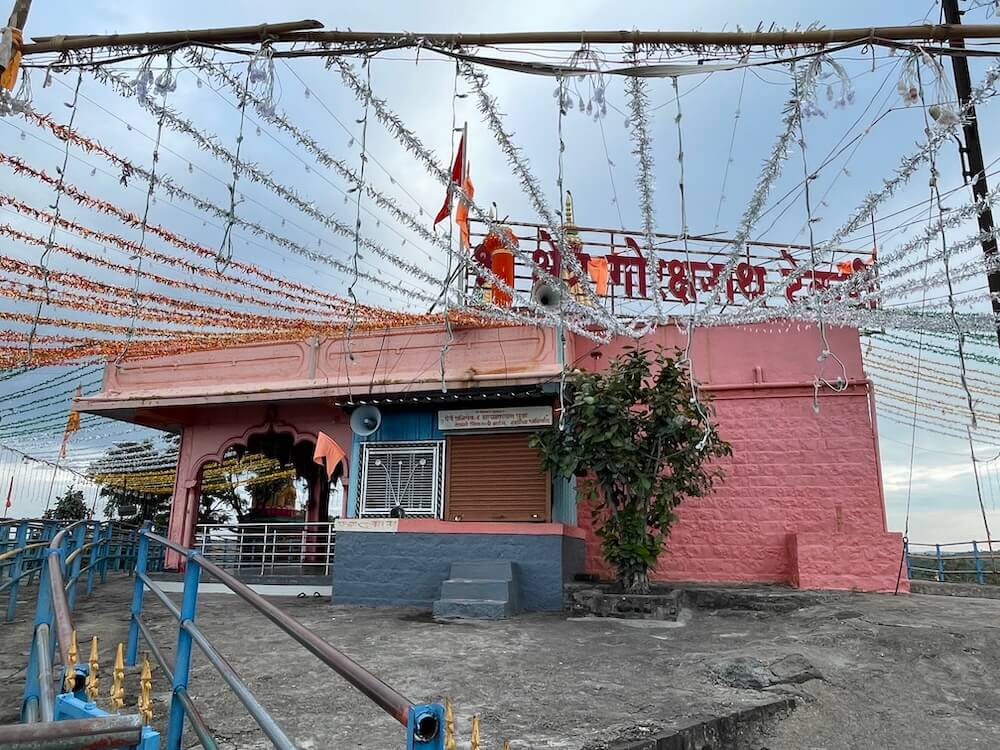
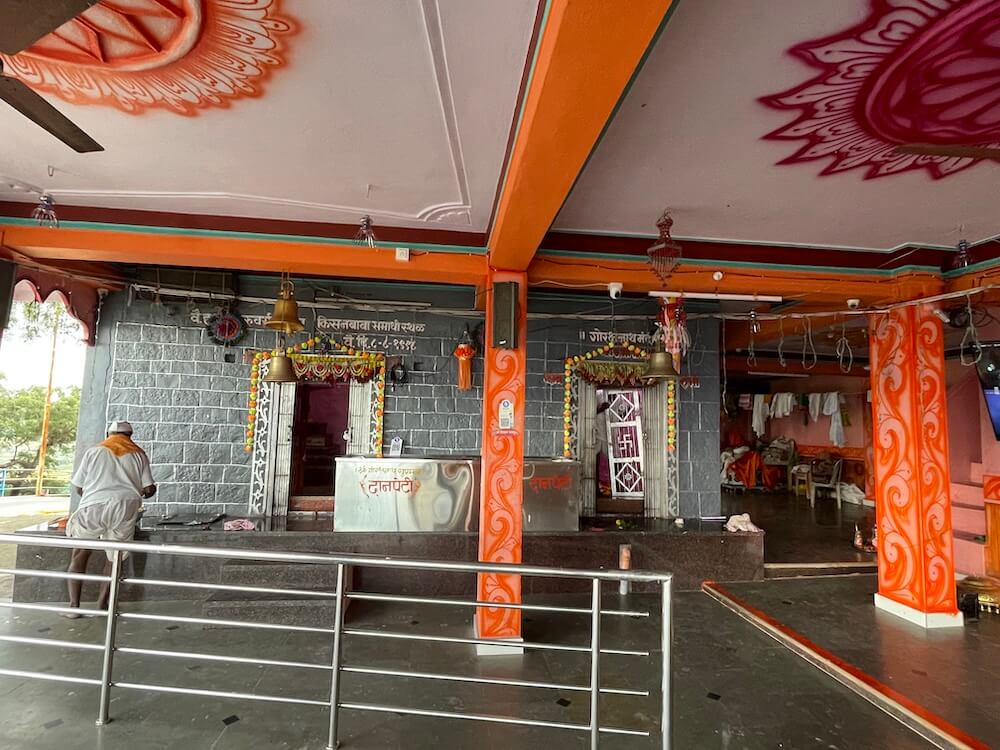
There are about ๒๐๐ steps built in carved stone to go from the foot of the hill to the temple. There are iron safety railings on both sides of these steps. At the top of the hill is the vast courtyard of the temple. The structure of the temple consists of a front hall (Mukhamandap), an assembly hall (Sabhamandap), and the sanctum sanctorum (Garbhagriha). The Mukhamandap, situated higher than the courtyard, has three steps. One can enter the Sabhamandap from here. The semi-open Sabhamandap has square pillars on the outer sides and circular ornate pillars in the center. The outer square pillars are connected to each other by arched gateways. There is a wheel design on the ceiling here. The seat (Gadi) of H.B.P. Navnath Baba is in the Sabhamandap. Further ahead is the sanctum sanctorum of the Gorakshanath Samadhi. There are floral carvings on the door frames of the sanctum, and there is a sculpture of Ganpati on the lintel. In the center of the sanctum floor, there is a Shiva Linga. Along the back wall of the sanctum, there are portraits of various deities. The twelve-sided ceiling of the sanctum rests on the walls. This ceiling is crafted from stones placed one upon another. There is a circular design on the dome-shaped ceiling. There is a five-layered spire (Shikhar) on the roof of the sanctum. The first bottom layer of this spire is hexagonal. The second, third, and fourth layers of the spire are circular and contain lotus-mandala carvings. The fifth tapering layer of the spire has pillar carvings. At its apex, there are two Amalakas placed one upon another, and a Kalash on top of the Amalaka.
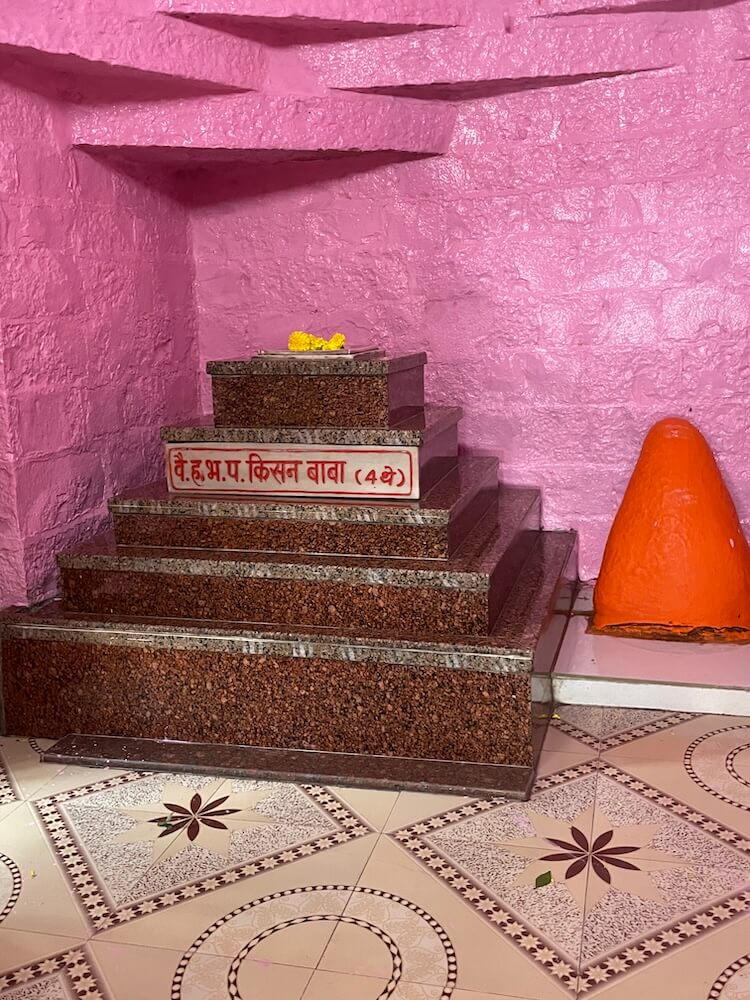
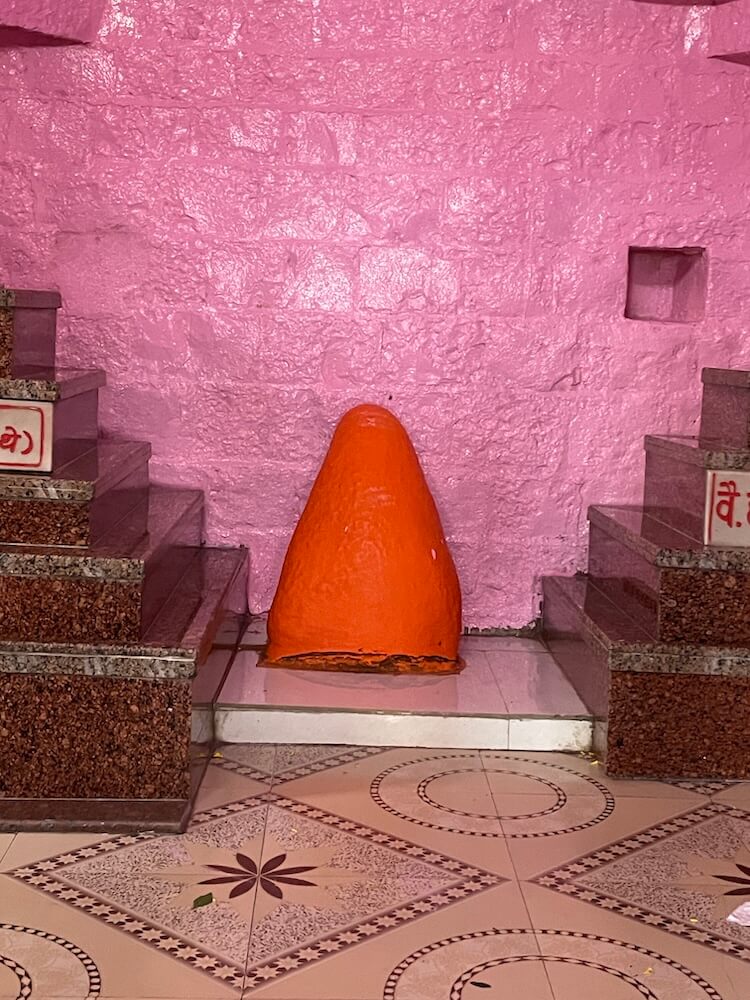
Beside the Gorakshanath Samadhi Temple is the Samadhi temple of H.B.P. Kisanbaba and H.B.P. Sadhubaba. There are vertical edge carvings on the entrance of this temple. In the sanctum, there are platforms of the Samadhis of H.B.P. Kisanbaba and H.B.P. Sadhubaba. In the middle of both Samadhis, there is a vermilion-smeared stone. The design of the five-layered spire on the roof of this temple is similar to the spire of the Gorakshanath Samadhi Temple.
In the courtyard in front of the temple, there are nine vermilion-smeared stones. It is said that this is the place of the Navnaths. There is a small temple of Tulja Bhavani in the temple courtyard. The entrance of this temple is narrow and low. Inside the temple, there is an idol of Goddess Tulja Bhavani on a Vajra-peetha. There is a two-layered circular spire on the roof of the temple. The first layer below the spire has a lotus-mandala, and there are four niches on all four sides; they contain idols of various deities. The tapering layer above the spire has pillar carvings. There is an Amalaka and a Kalash at the apex. There is also a Tulsi Vrindavan beside the Tulja Bhavani temple. The residence of Mahant Shantibramha Navnathbaba is in the temple courtyard.
In the Nath tradition, Beej (the second/third day of the month) is considered extremely auspicious. The Dharmanath Beej ceremony is celebrated with great enthusiasm at Ghatsavali. Special worship and Abhishek are performed on this day. Apart from this, an annual week-long program (Saptah) is organized in the temple on occasions like Tukaram Beej, Kisanbaba Punyatithi, and Navnathbaba Punyatithi. During this time, programs like Bhajan, Kirtan, Pravachan, music, and Mahaprasad are held in the temple for seven consecutive days. A grand festival is organized on every full moon (Pournima) of the month. During all festivals, thousands of devotees from across the state visit to seek blessings of the Samadhi. Festivals like Chaitra Padwa, Ram Navami, Hanuman Jayanti, Dussehra, Diwali, and Makar Sankranti are celebrated in the temple. There is a daily influx of devotees coming for Darshan at the temple.
This sacred temple stands as a testament to deep spiritual devotion, ancient architectural grandeur, and rich local cultural traditions.
The sanctum sanctorum houses the divine idol consecrated according to ancient Vedic traditions, surrounded by serene courtyards and traditional temple architecture.
Navratri, Maha Shivratri, Annual Temple Jatra & Deepotsav
Compare and book flights, secure top-rated local hotels near the temple, hire reliable guides, and rent cars instantly.
Extend your pilgrimage by visiting other highly sacred temples located nearby.


Add ₹999 more to unlock FREE SHIPPING!
Your sacred cart is currently empty.
Shop Photo FramesFill in your delivery details below to place your order.
Add comment