
Add ₹999 more to unlock FREE SHIPPING!
Your sacred cart is currently empty.
Shop Photo FramesBhairavnath is known everywhere as a fierce manifestation of Mahadev. Some scriptures mention Bhairav as a gana of Mahadev. Kaalbhairav is known as the chief among the Ashtabhairavas, and Mahakaal as the lord of the sixty-four Bhairavas. As the worship of Bhairav holds special significance in the Shaiva tradition, they are considered sources of tantra vidya and shakti. It is a popular belief that worshipping Bhairav destroys enemies and frees one from worries. In Maharashtra, temples of Bhairavnath are found in villages everywhere; this includes the ancient and famous temple in Jarud village in Beed district. Devotees have an unwavering faith that the awakened Bhairavnath here grants their vows.
The sacred text ‘Siddhāntabodha’ narrates the divine legend of Bhairavanātha. This revered work was penned by the Muslim saint-poet Shāhamunī, who was born in Pedgaon, Nagar district. Its composition dates back to the Peshwa era, in the year १७७८. Much like this scripture, the great author Shrīdharaswāmī Nāzarekār, who composed the ‘Shivalīlāmṛuta’, has also presented the tale of Bhairavanātha. According to his account, in ancient times, a demon named Kāḷāsura greatly tormented the sages and ascetics in the southern regions. To seek liberation from this suffering, they approached Bhagavān Shankara. Hearing their earnest prayers, Bhagwan Shankar forcefully struck His matted locks upon the earth. From this, a perfected being, a Siddha Purush, was created. His name was Bhairavnath. Following Bhagwan Shankar’s command, he partook of the sacred waters from the five kunds in Patal Lok, thereby attaining divine powers. With these powers, he vanquished the demon Kalasura.
The villagers of Jarud say that this temple dates back approximately seven hundred to eight hundred years. There is an ancient inscription in the temple courtyard, but it is unreadable as it is indistinct. Observing the temple’s Hemadpanti stone architecture, the sculptural style on the pillars, and the intricate artistry, scholars estimate that this temple must be from around the twelfth century.
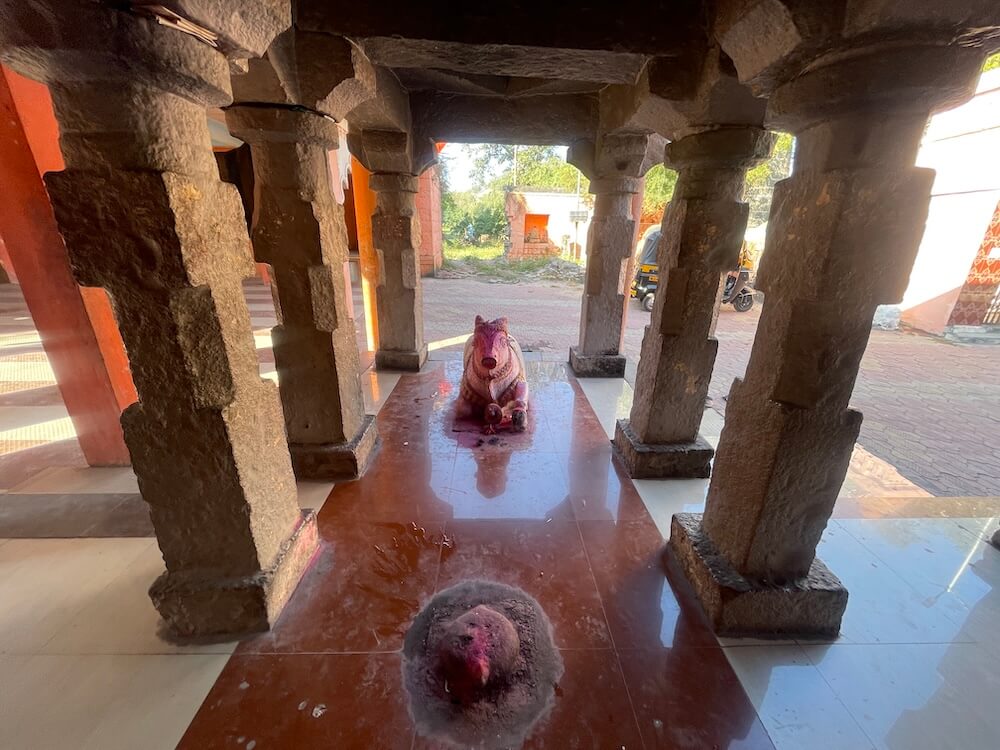
The temple’s first welcome arch stands to the right, alongside the Beed-Parli highway. From here, at a distance of approximately five kilometres, the temple of Bhairavnath is situated in Jarud village. The main entrance is within the temple’s robust fortifications. As this entrance is elevated above the road, there are three steps leading up to it. On both sides of the entrance, guards are depicted, and above, one can see horse-head sculptures and chakra designs. The doorframes of the entrance feature vertical ridge patterns, and a sculpture of Ganapati adorns the lalatabimba. Within the temple courtyard, there is a circular lamp tower, or deepamala, tapering towards the top, standing upon a platform approximately six feet high. Adjacent to the deepamala, there is a rangamandapa, an assembly hall, with eight intricately carved pillars, built upon a platform about eight feet high. In ancient times, this rangamandapa was where dance, short plays, singing, and instrumental music were offered as rangabhoga, devotional entertainment, for the Lord. Within the temple courtyard, there is an ancient water tank. It is an age-old custom here to purify oneself before proceeding for darshana, the sacred viewing, in the temple. In the Nandimandapa, the hall dedicated to Nandi, located in front of the temple, an idol of Nandi is consecrated upon a vajra-pitha, a diamond-shaped pedestal.
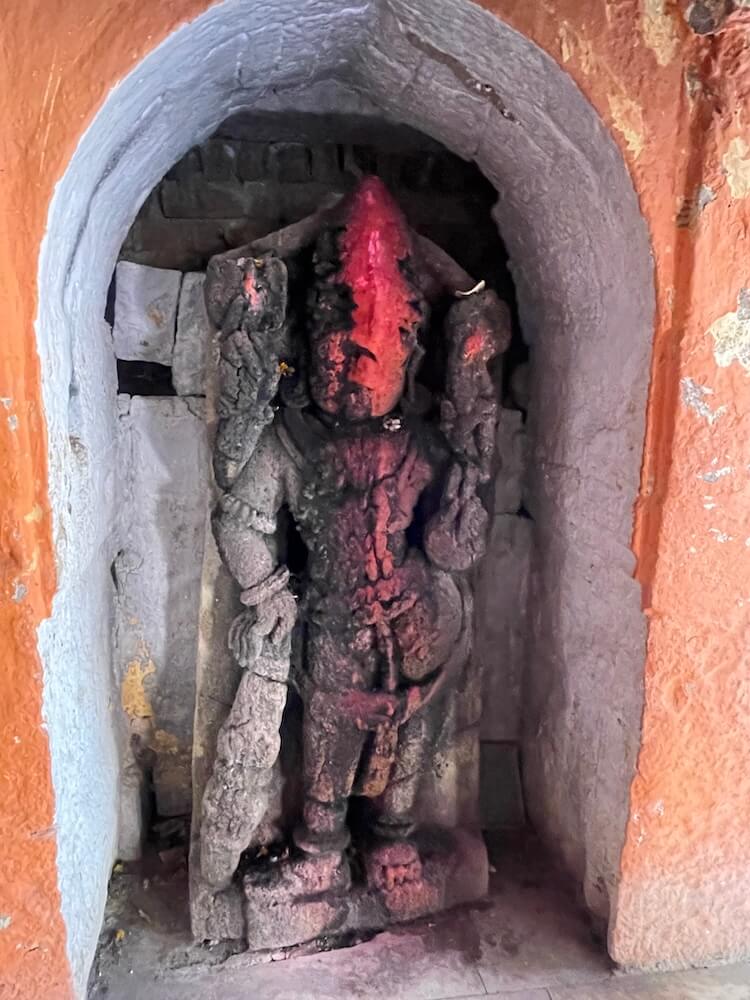
The temple’s structure comprises the sabhamandapa, the main sabhamandapa, the antarala, and the garbhagriha. Within the sabhamandapa, there are four rows, each with four intricately carved pillars. All pillars stand upon square bases. Some of these pillars bear viragals and sati sculptures, while others feature carvings of various deities and decorative motifs. Pillars adorned with viragals and sati sculptures are considered architecturally rare and unique. At the top of the pillars are cornices, surmounted by hastas. In the devakoshtas located in the left and right walls of the sabhamandapa, there are sculptures of dwarapalas.
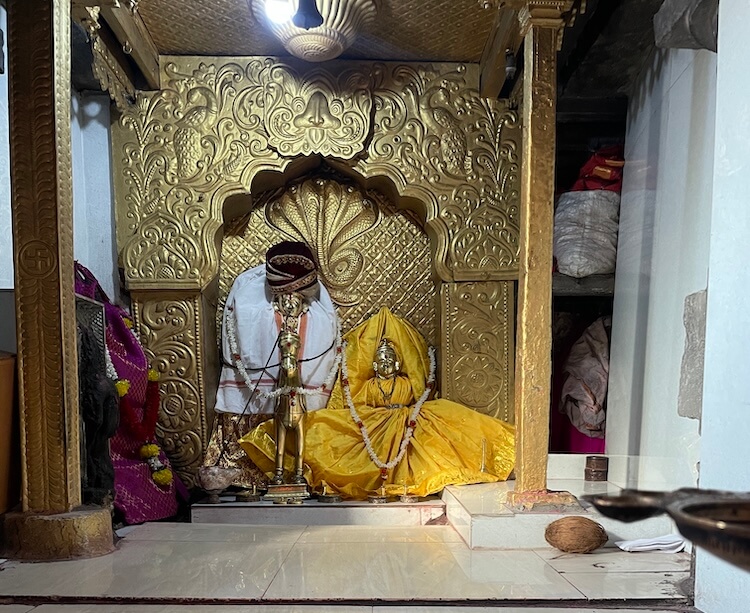
Ahead lies the entrance to the main assembly hall. The doorframes of the entrance are adorned with floral patterns, and on the lintel, there is a sculpture of Ganapati. The entrance features ornate wooden shutters. Within the main assembly hall, there are four rows, each comprising four intricately carved pillars, though it appears that the original structure of the main assembly hall has undergone some modifications. While the design of the pillars here resembles those in the assembly hall, the brackets supporting the beams are carved with Yaksha figures bearing loads. The beam above the brackets features Kīrtimukha and various other patterns, while the ceiling is adorned with a chakra design. The main assembly hall is open on the left side. In the sanctum sanctorum to the right of the main assembly hall, upon a vajrapīṭha, are enthroned murtis of Bhairavnāth and Jogeshwarī. Beside the murtis is a brass horse sculpture. The prabhāvalī behind the murtis features a five-headed Nāga, Kīrtimukha, and floral patterns. In front of the vajrapīṭha, on both sides, stand guardian murtis, approximately six feet in height.
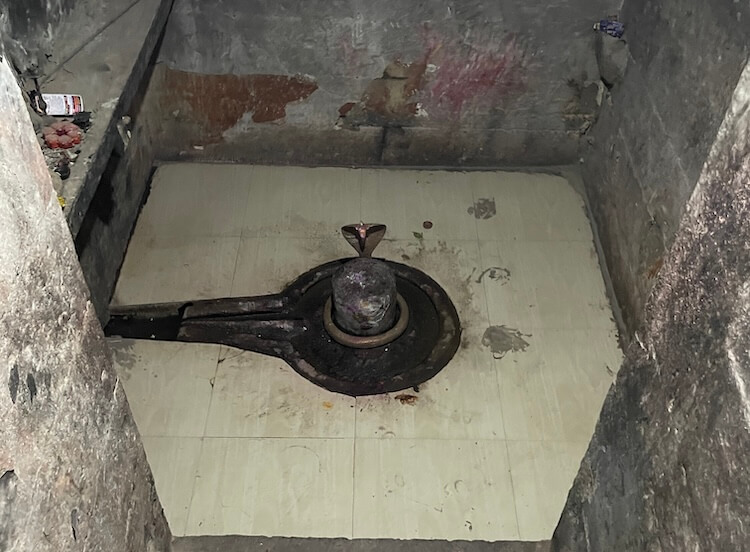
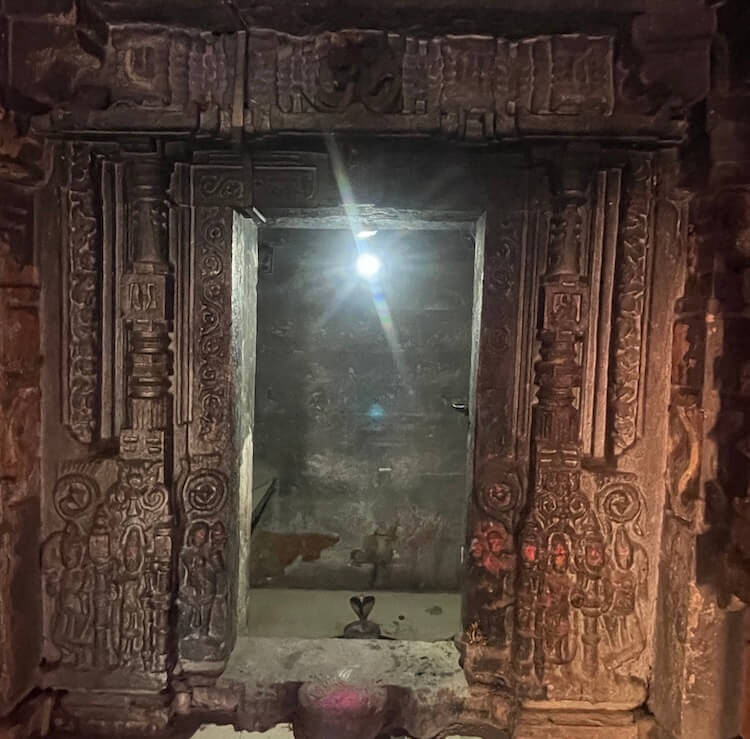
Ahead of the main sabhāmaṇḍapa is a narrow antarāḷa. Within the antarāḷa, on the left and right walls, are devakoṣṭakas. These enshrine murtis of Gaṇapati and Maruti. Further ahead is the pañcaśākhīya entrance to the garbhagṛha. On the lower parts of the dvāraśākhās are sculptures of dvārapālas, dvārapālikās, Gaṅgā, Yamunā, and other deities. On the upper parts are parṇaśākhā, puṣpaśākhā, naraśākhā, gajaśākhā, and stambhaśākhā. On the lalāṭabimba is a Gaṇapati sculpture, and on the lalāṭapaṭṭī is a design of leaves and flowers. The toraṇa features śikhara sculptures. On the mandāraka are a candraśilā and a kīrtimukha. As the garbhagṛha is deeper than the antarāḷa, there are steps leading down into it. Within the sanctum sanctorum, at the centre of the ground, there is a Shiva Lingam, and upon it rests a brass serpent holding a canopy.
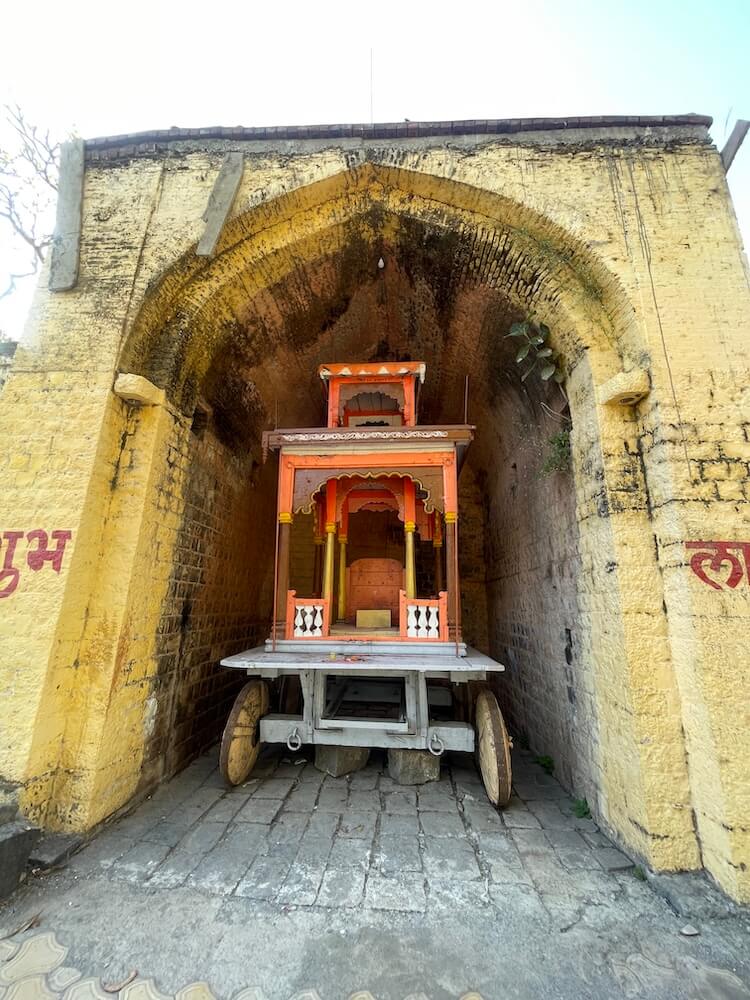
Circumambulation may be performed along the outer perimeter of the temple. Adjacent to the main shrine are smaller temples dedicated to other deities, along with some ancient sculptures and Shiva-lingams. At the top of the ancient inscription within the courtyard, the sun and moon are carved. Scholars believe this to be a deed of endowment. To the right of the entrance, within the temple’s fortified wall, is the chariot chamber, where the wooden chariot used during festivals is kept.
The auspicious occasion of Kalabhairava Jayanti is celebrated with immense devotion and enthusiasm on the eighth day of the dark fortnight of Mārgaśīrṣa. On this day, a grand procession of the Lord’s chariot takes place. The chariot is beautifully adorned with garlands and flowers, and the Utsava Mūrtis (processional deities) of the Lord are seated within it for a circumambulation of the village. Many devotees from the surrounding areas gather to have Darśana of the Lord, to fulfil their vows, and to participate in the chariot festival. During the festival period, various religious programmes are organised at the temple. Additionally, festivals such as Mahāśivarātri, Kārtika Pourṇimā, Dasara, Dīpāvalī, Śāradīya Navarātra, and Chaitra Pāḍavā are celebrated at the temple. A special throng of devotees is observed at the temple on Mondays, Aṣṭamī, Pourṇimā, and Amāvasyā.
This sacred temple stands as a testament to deep spiritual devotion, ancient architectural grandeur, and rich local cultural traditions.
The sanctum sanctorum houses the divine idol consecrated according to ancient Vedic traditions, surrounded by serene courtyards and traditional temple architecture.
Navratri, Maha Shivratri, Annual Temple Jatra & Deepotsav
Compare and book flights, secure top-rated local hotels near the temple, hire reliable guides, and rent cars instantly.
Extend your pilgrimage by visiting other highly sacred temples located nearby.


Add ₹999 more to unlock FREE SHIPPING!
Your sacred cart is currently empty.
Shop Photo FramesFill in your delivery details below to place your order.
Add comment