
Add ₹999 more to unlock FREE SHIPPING!
Your sacred cart is currently empty.
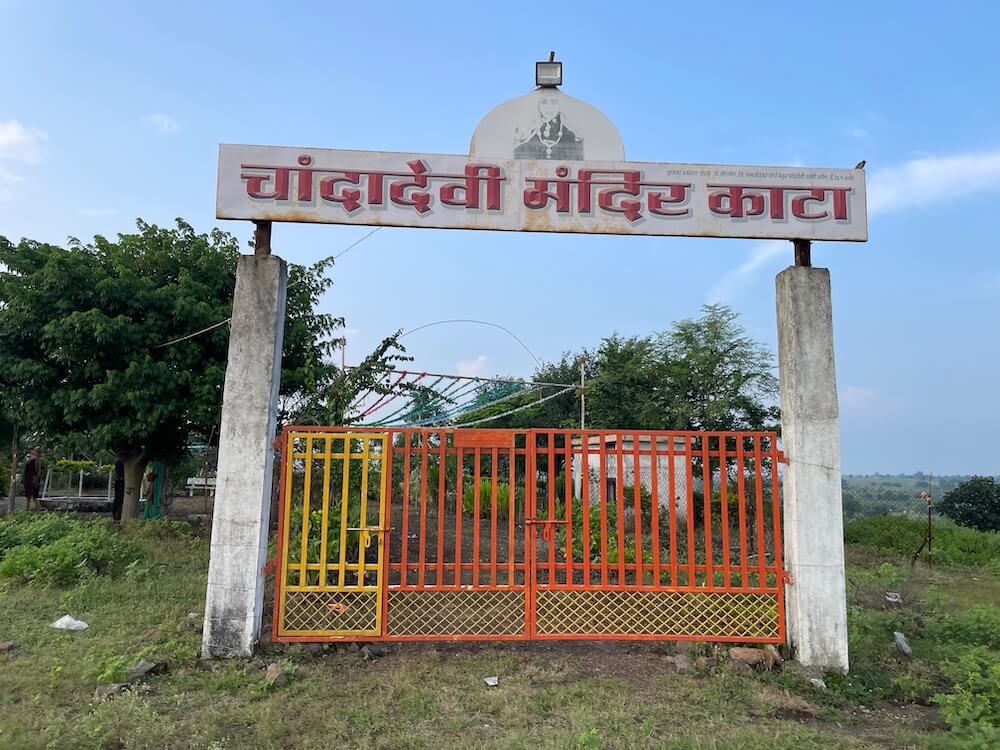
Shop Photo FramesThe village of Kata, the source of the two rivers Katepurna and Pus, was known in ancient times as Kantaktirtha. Near this village stands the beautiful temple of Chandai Devi. This Chanda Devi is considered a manifestation of Mahakali of Chandrapur. As Chandrapur is also known as Chanda, the Devi in Kata is referred to as Chandadevi or Chandai, being a form of Mahakali from that region. The idol of the Devi here is believed to be self-manifested (swayambhu). Devotees hold the faith that this Devi grants their wishes.
The history of the Mahakali Mandir in Chandrapur is connected with the Gond dynasty there. The Gonds are the largest tribal community in India by population. In the medieval period, Gond kingdoms existed in Garha-Mandla and Khandal in Madhya Pradesh, and Chandrapur (Chanda) in Maharashtra. Among these, the Gond kingdom of Chandrapur flourished the most. Bhim Ballalsingh (circa १२४७-१२७२ CE) was the progenitor of this lineage, and the seventh ruler was Khandkya Ballalshah (circa १४७२ to १४९७ CE). According to information from the research work ‘Chandrapurchya Mahakalichi Lokparampara: Mayadhurpata’ by Sanjeev Bhagwat, published by the ‘Maharashtra State Literature and Culture Board’: Khandkya Ballal Shah re-established the ruined city of Chandrapur and made it his capital. At the same time, he renovated the temples of Anchaleshwar and Mahakali.
According to a legend in the book ‘Mayadhurpata’, the king was named ‘Khandkya’ because of leprosy on his face. Initially, his capital was Ballalpur. Once, while on a hunting trip, he washed his face with water from a pond on the banks of the Zharpat (Jaripatka) river. The next day, the spots on his face diminished, and his face glowed. Seeing this, his wife Hiratani found the pond and built the Anchaleshwar Mahadev temple there. To the south of this pond, in a cave, Khandkya Ballalshah discovered an ancient stone-carved idol of Mahakali. Later, the cave was cleaned, and a temple was also built there. By constructing these two temples, Khandkya Ballalshah and Queen Hiratani laid the foundation for the new Chandrapur and shifted their capital there in १४९७ CE. Therefore, it is estimated that the Mahakali temple there was built between १४९५ and १४९७ CE.
In later times, Queen Hirai, the wife of King Birshah and a benevolent ruler, demolished the old Mahakali temple between १७०९ and १७१९ CE and erected a grand new temple in its place. This very Mahakali is enshrined in Kata in the form of Chanda Devi.
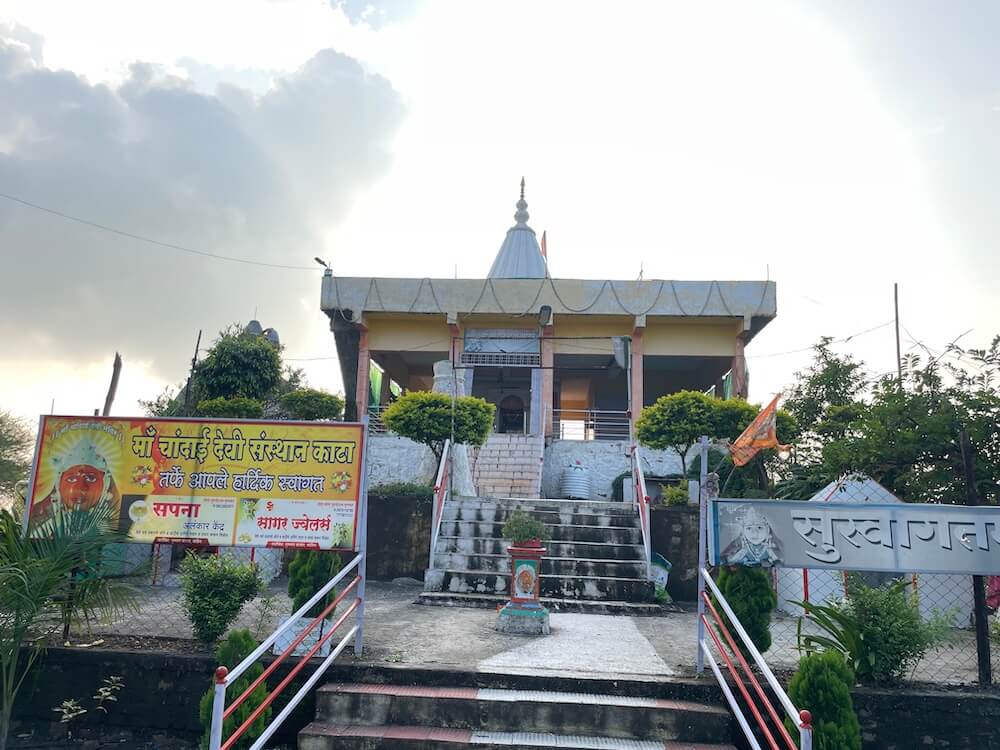
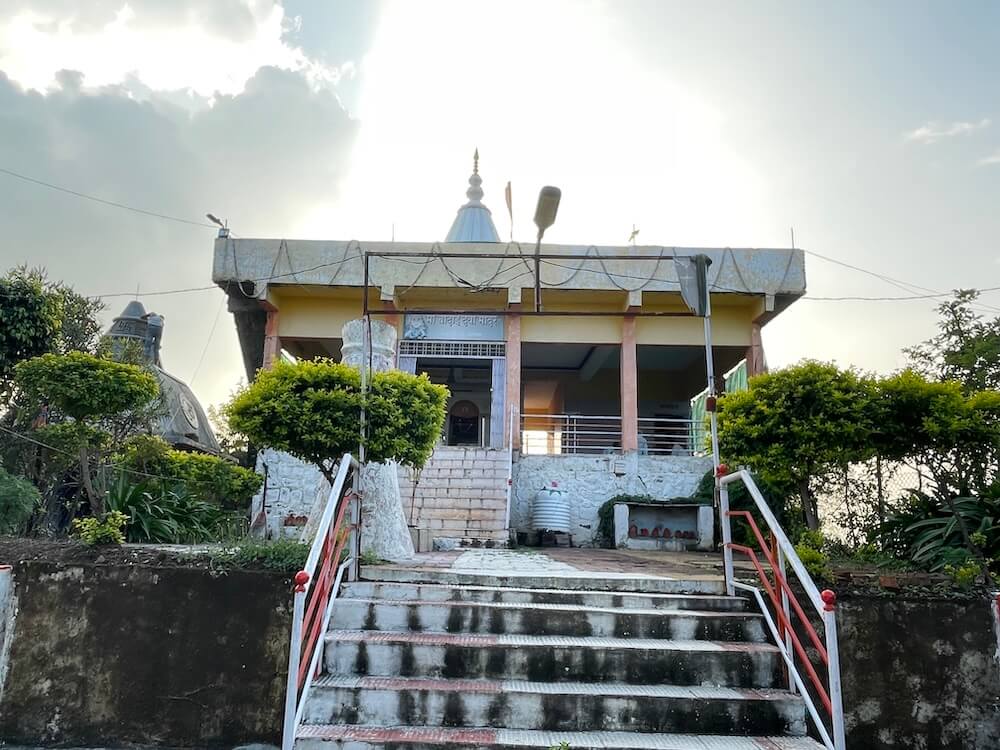
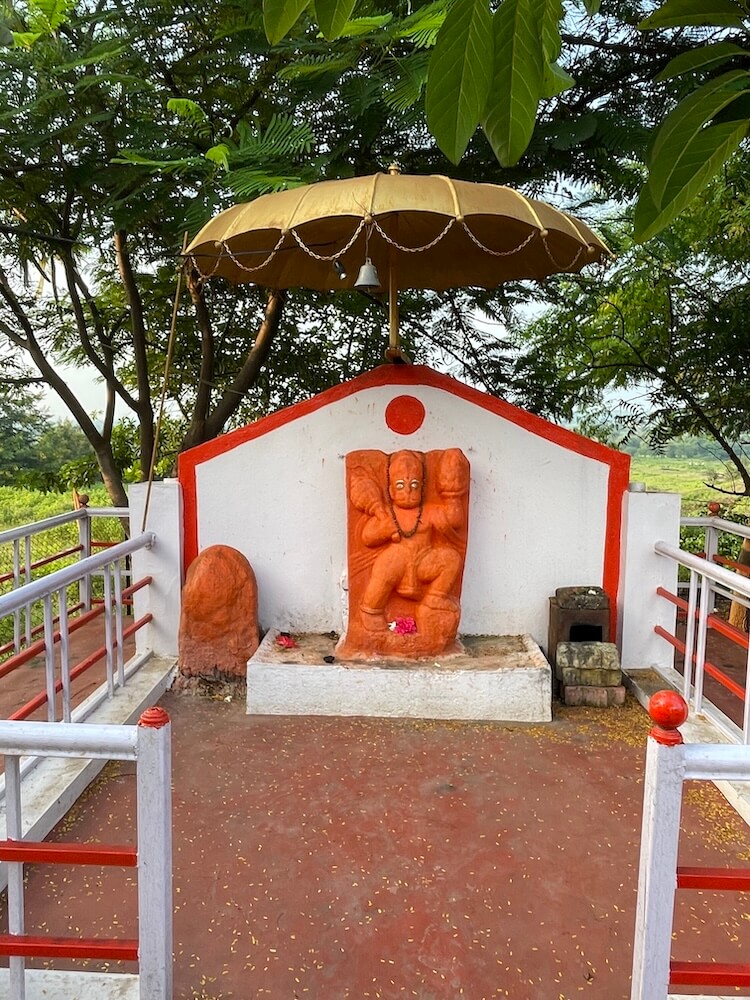
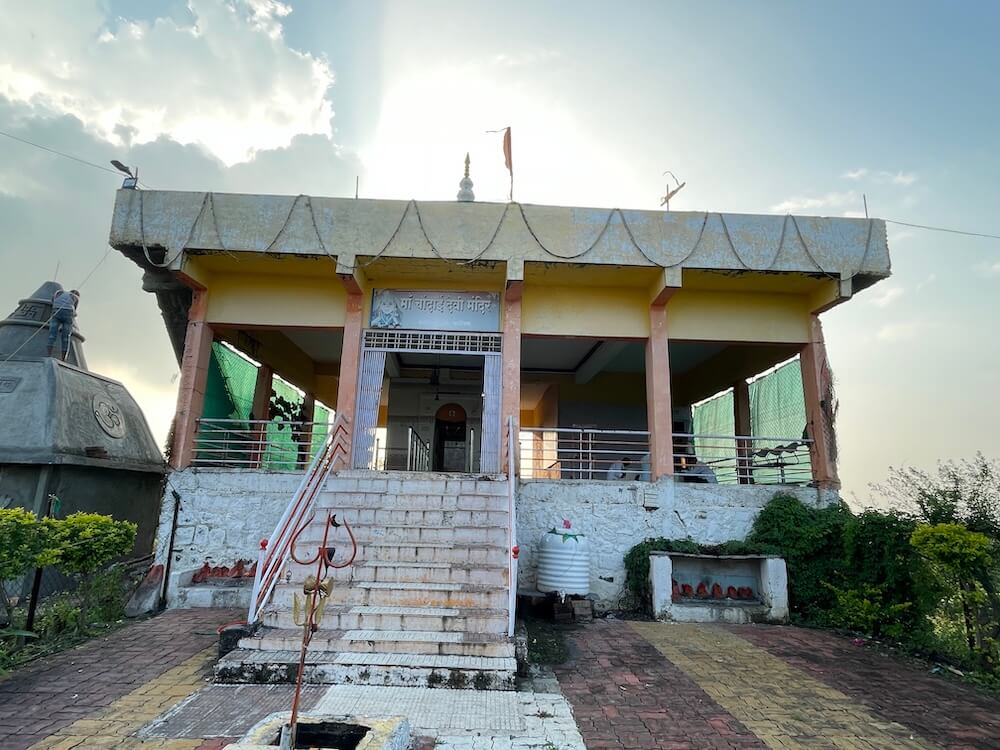
The exact date of establishment of the temple in Kata is unknown, but the current temple has been recently renovated and features modern architectural style. This temple structure is situated on an elevated area from the road and has a large platform in front. On this platform is a Tulsi Vrindavan, while to the left is a small shrine for Ganesha, and to the right is the abode of Hanuman. Here, an open-air idol of Hanuman, smeared with vermillion, is enshrined. Behind the idol is a small wall and a large canopy above its head. Additionally, a minor deity is seen beside the idol.
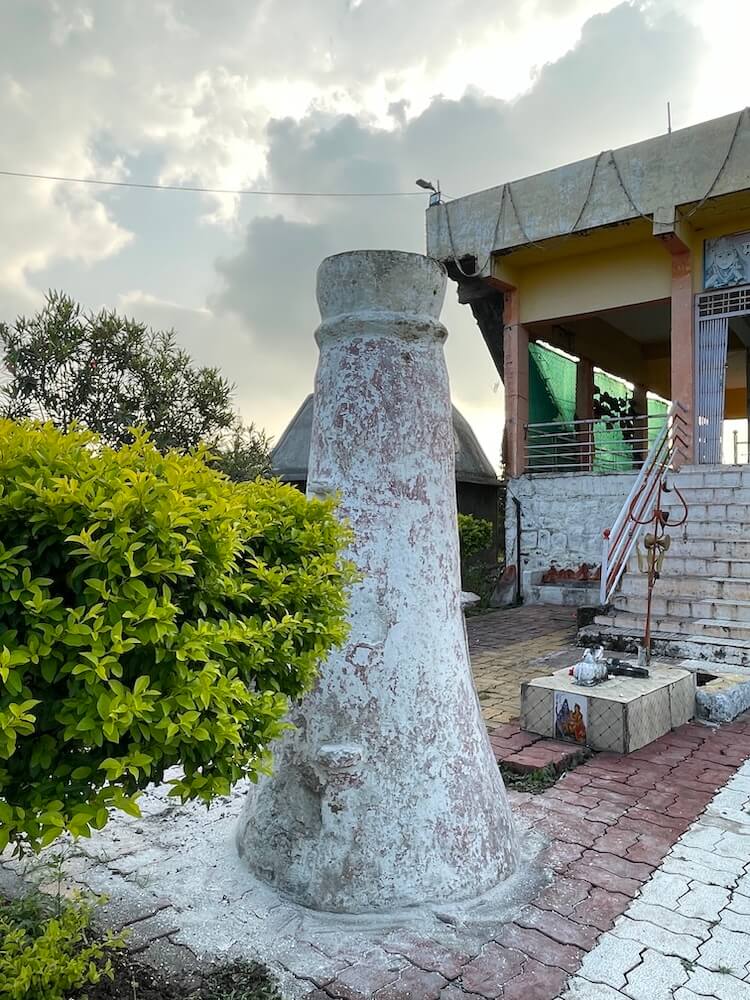
After ascending eight steps from the first platform to enter the upper platform of the temple, one encounters a large Deepstambh (lamp pillar). In front of it, on a small raised platform, are a Shivling, a Nandi idol, and a square Yagyakund (sacrificial fire pit) beyond them. On the left and right sides of this area are shrines for the Asra Matas. From here, one ascends eleven steps to enter the main temple. The temple’s sabhamandap (assembly hall), with its flat cement roof, is spacious and open. Directly in front is the sanctum sanctorum (garbhagriha), adorned with marble tiles, where the mukhmurti (face idol) of Chandai Devi is seated in Vajrasana. The Devi is beautifully adorned with garments and ornaments, featuring finely sculpted eyebrows, expressive eyes, a nose ring (nath), vermillion on her forehead, and a crown on her head. Beside the Devi’s idol is a Trishul, considered important in the Shaiva tradition, with green bangles on its three prongs. In the right corner behind the idol, on a platform, is an image of Mahakali of Chandrapur in a reclining posture. The circumambulatory path (pradakshina marg) of the garbhagriha passes through the sabhamandap itself. The garbhagriha is topped by a tapering circular shikhara (spire) with a two-tiered kalash (finial). Within the spacious temple complex, a play garden with swings and a slide has been created for children.
Daily, in the morning and evening, the Devi is worshipped with proper rituals and Aarti. Here, along with festivals like Ganesh Chaturthi, Hanuman Jayanti, and Ram Navami, other Hindu festivals are also celebrated with enthusiasm. However, Navratri is the biggest festival here. During these nine days, numerous religious programs and homa-havans (fire rituals) are organized.
This sacred temple stands as a testament to deep spiritual devotion, ancient architectural grandeur, and rich local cultural traditions.
The sanctum sanctorum houses the divine idol consecrated according to ancient Vedic traditions, surrounded by serene courtyards and traditional temple architecture.
Navratri, Maha Shivratri, Annual Temple Jatra & Deepotsav
Compare and book flights, secure top-rated local hotels near the temple, hire reliable guides, and rent cars instantly.
Extend your pilgrimage by visiting other highly sacred temples located nearby.


Add ₹999 more to unlock FREE SHIPPING!
Your sacred cart is currently empty.
Shop Photo FramesFill in your delivery details below to place your order.
Add comment