
Add ₹999 more to unlock FREE SHIPPING!
Your sacred cart is currently empty.
Shop Photo FramesThe Vatsa Janapada was one of the sixteen Mahajanapadas that existed in ancient India. This Janapada is what we know today as Washim. The region of Washim, mentioned in many ancient texts as Vatsagulma, was once a part of the Dandakaranya forest. The Sanskrit text ‘Vatsagulma Mahatmya’, which narrates the glory of this ancient and mythological region, provides information about 108 holy sites (Tirthas) located here. Kondeshwar is one of these significant holy sites. The ancient temple of Lord Kondeshwar Mahadev stands in the village of Kondala Zhamre. Scholars estimate that this temple dates back to the 12th century.
There is an interesting story behind the name of the village, Kondala Zhamre. The area where this village is situated was once surrounded by hills on all four sides. Often, a village or region is named after its characteristics or topography. Because this village was nestled in a cluster of hills (Kondala), it came to be known as Kondala, and the Mahadev here began to be addressed as Kondaneshwar or Kondeshwar. The legend of the Kondeshwar temple is associated with the exile period of Lord Shriramchandra. During their exile, Shriram, Lakshman, and Sita visited this part of the Dandakaranya forest. At that time, they visited the Mahadev temple here and offered prayers. They also resided here for some time. As a sacred memory of the touch of Shriramchandra’s feet, a Paduka-sthan (footprint shrine) has been established here.
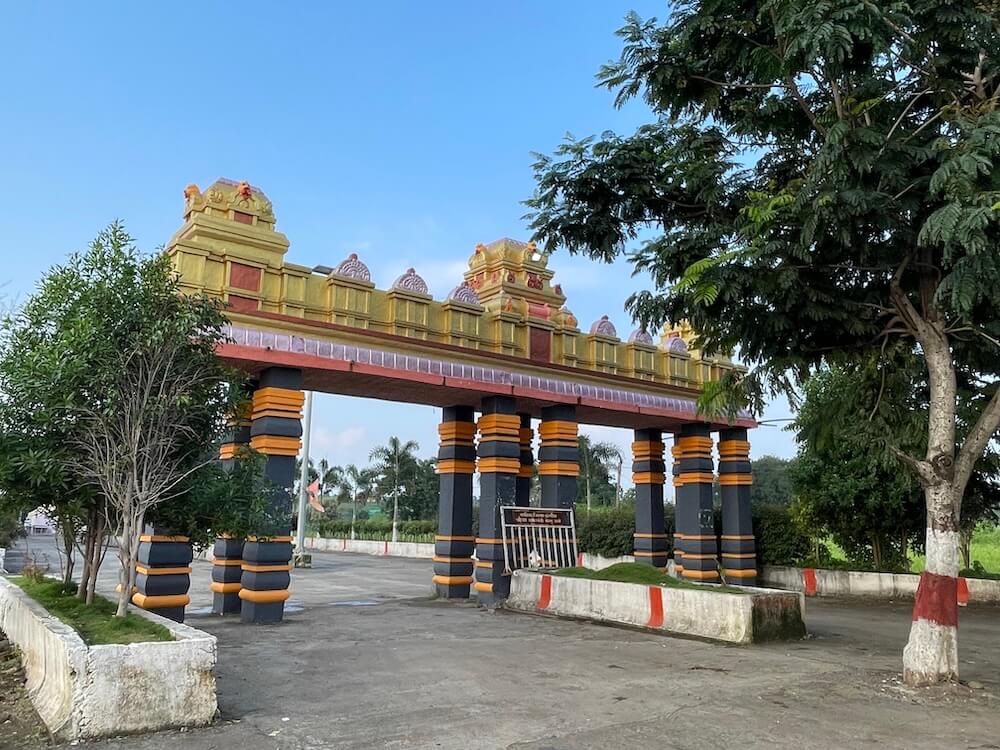
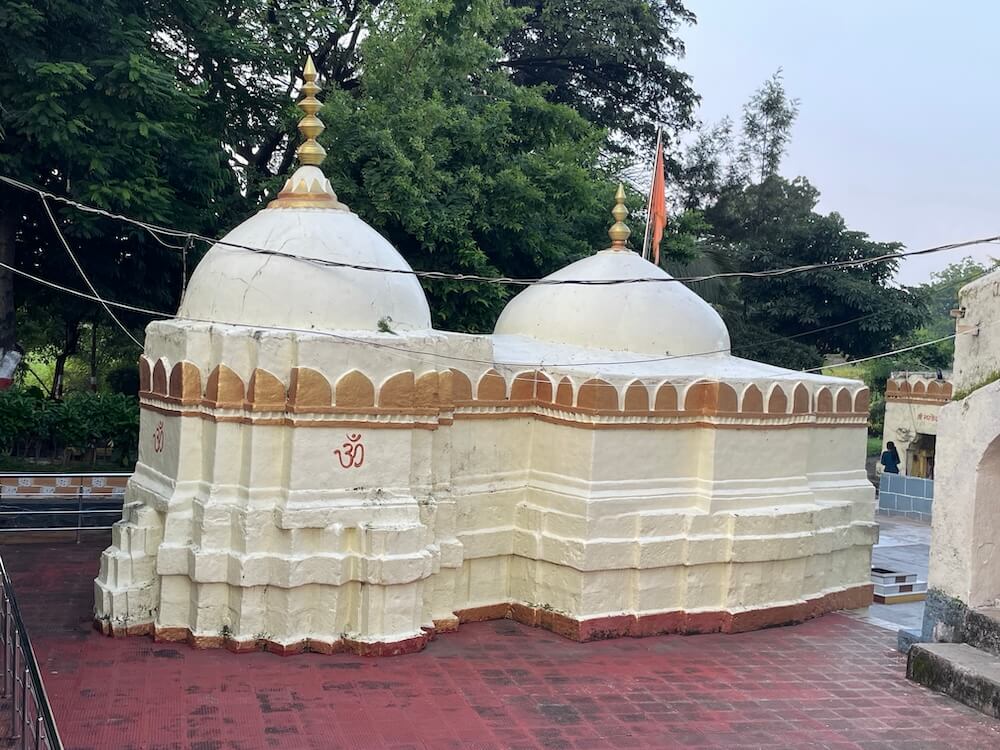
The Kondeshwar temple at Kondala Zhamre is situated in a spacious courtyard. A grand entrance gate has been erected on the wide path leading to the temple. Upon entering through this gate, which is built in the Southern style, one first sees the magnificent Mandapa. This semi-open Mandapa, with its elephant-back (gajapristha) shaped metal roof, features a large assembly platform. A short distance ahead, at a lower level, is the main temple of Kondeshwar. This temple is built in the Hemadpanti style. During renovations, the outer walls were plastered and painted. The structure of the temple consists of a Sabhamandapa (assembly hall), Antarala (vestibule), and Garbhagriha (sanctum sanctorum). The Sabhamandapa and the Garbhagriha have dome-shaped shikhara (spires), which were constructed during the restoration.
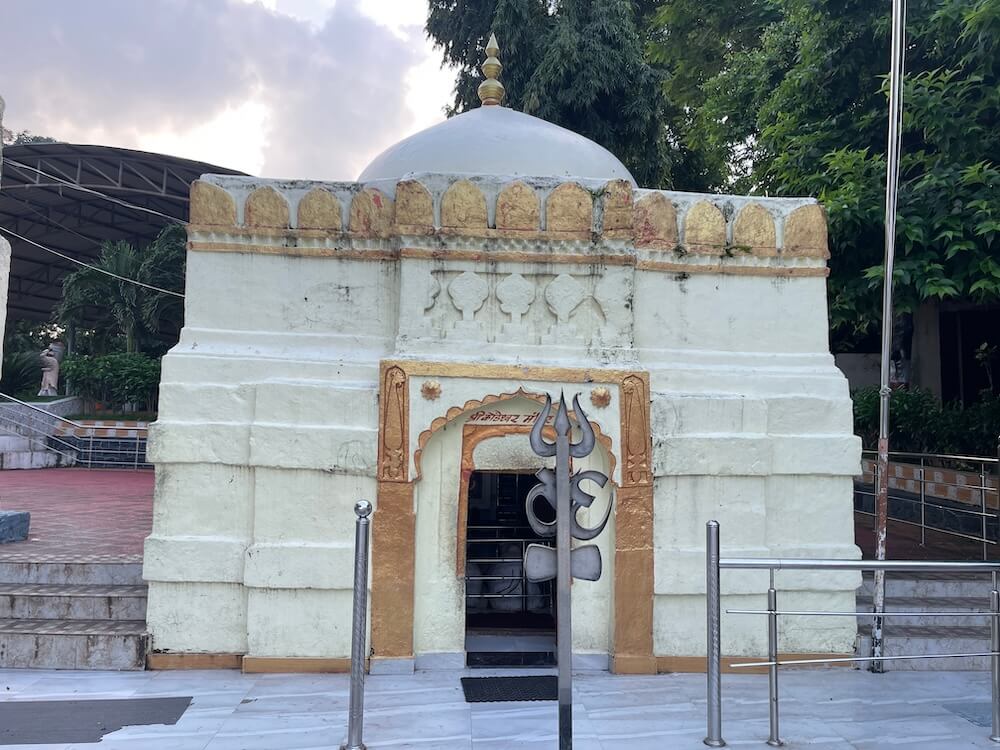
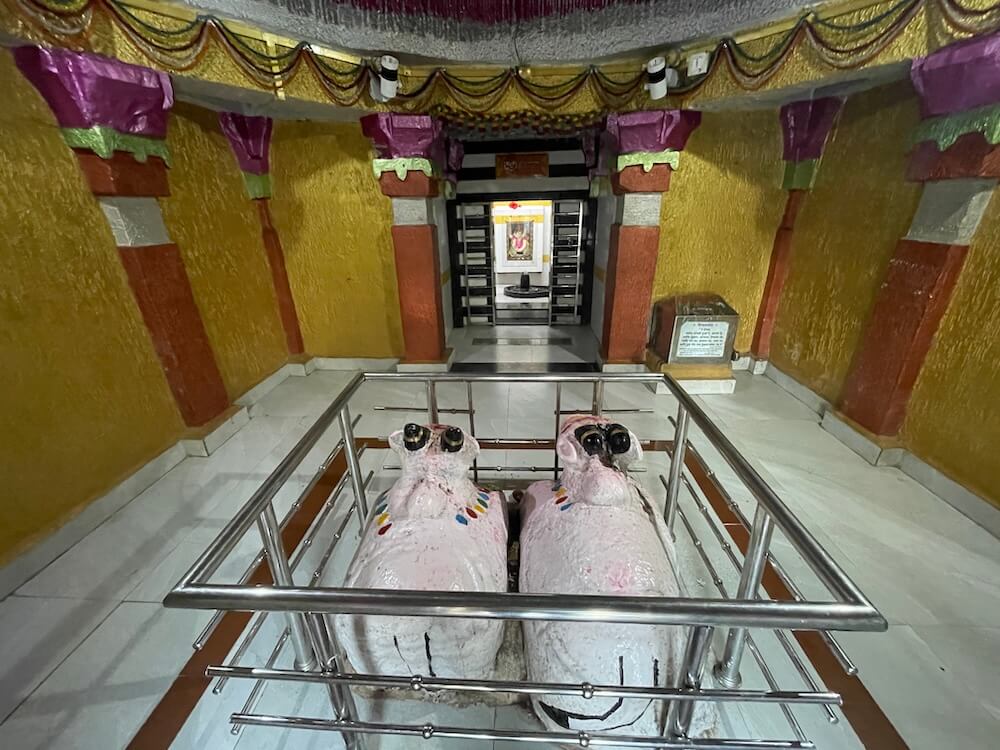
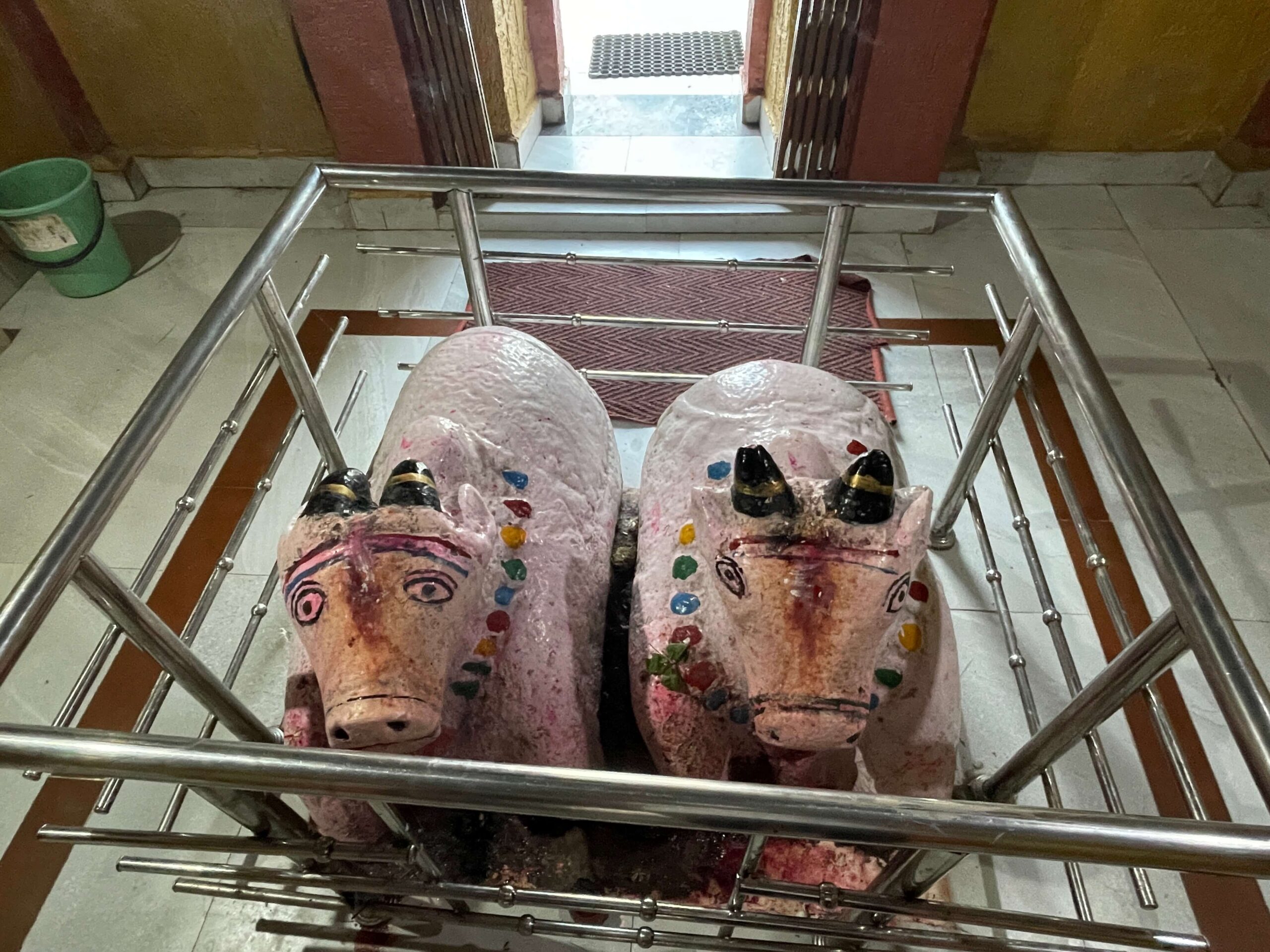
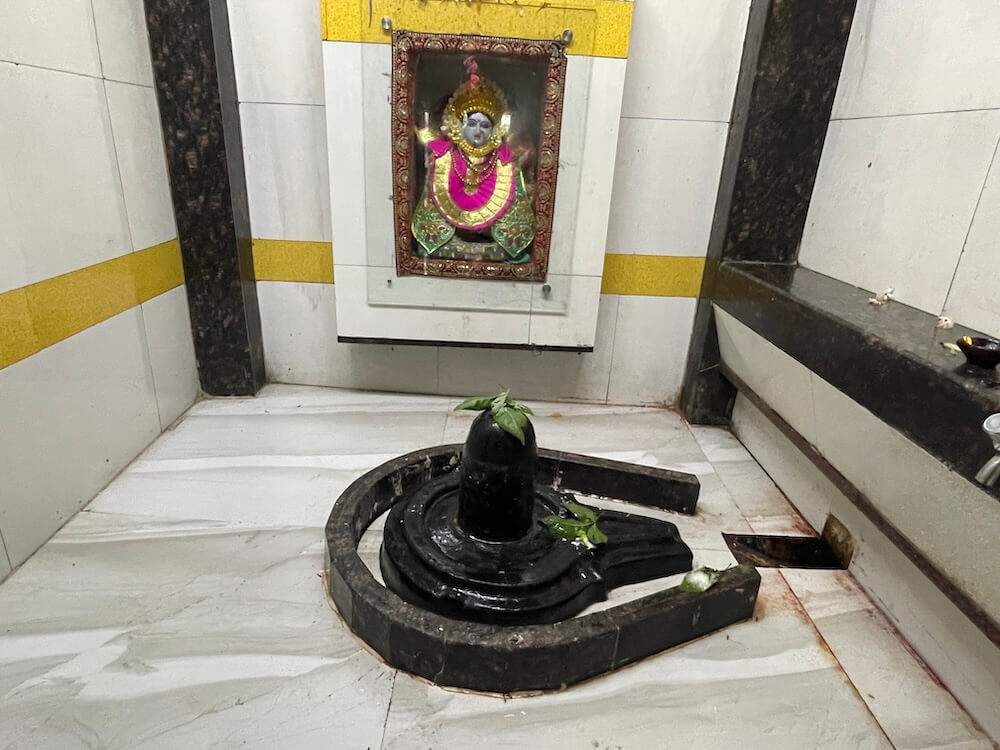
The entrance of the Sabhamandapa is different from that of typical Hemadpanti temples. Here, there are two pillars at a distance from the stone door frame, featuring an arched design. The upper parts of these pillars are carved with simple patterns, while geometric designs can be seen above the entrance. The Sabhamandapa has a coffered ceiling. There are eight pillars embedded in the stone walls of the Sabhamandapa, which are half-hidden; such pillars are known as ‘ardhastambha’ (half-pillars). The floor is laid with marble tiles. In the center, there are two old stone idols of Nandi placed side by side. The Antarala is small, and its ceiling also features carvings. The interior of the Garbhagriha of this Hemadpanti temple has been completely renovated. Marble tiles have been installed on the floor and walls. In the center is the black stone Linga of Kondeshwar Mahadev. The Shalu (base) of the Linga features a tall, cylindrical shaft in the middle. A small railing of the same shape has been built around the Linga. In a niche on the back wall of the Garbhagriha, there is a beautiful marble idol of Goddess Ganga, adorned with clothes and ornaments. The ceiling of this small Garbhagriha features a traditional square-triangular design.
Outside the main temple, there is a Yajna-kunda (sacrificial fire pit) and, beyond it, a large water tank (Kunda). This tank is 60 feet deep. Near the Yajna-kunda is a Hanuman temple, which houses a stone idol of Hanuman. To his left is a stone idol of Ganesha, which is also smeared with vermilion. Next to this temple is an old stepwell (Barav), with stairs built to descend into the water. A short distance from here is the Shriramchandra Paduka-sthan. This structure is shaped like a pavilion with a stone roof supported by four stone pillars. Leaning against the base of the stone pillars in front of the temple are two sculptures. The sculpture on the left depicts a warrior on horseback, a woman sitting behind him, and a dog at the bottom. Experts believe this could be a deity similar to Khandoba. The sculpture on the right is of the village deity. Inside, on a stone pedestal, are the stone footprints (Padukas) of Shriram and a Mahadev Linga beside them.
Nearby, there is also a small temple of Goddess Durga. The entrance to this temple is very low, requiring one to bow down to enter. Above the entrance of the temple, there is a carved idol of Ganesha in a niche, and inside is the idol of Goddess Durga. Near this temple is the ancient temple of Narkeshwar. In its entrance passage, there is a pillar in the middle, while the two side pillars are embedded in the walls and are not visible. Inside, there are two niches on both sides. One niche contains an ancient image of a sage, while the other contains an ancient stone idol of a folk deity. The entrance to the Garbhagriha is ornate, with an idol of Ganesha at the top. The Garbhagriha of this ancient temple is also fitted with marble tiles. The black stone Linga of Narkeshwar is enshrined here. In a niche on the back wall, there is an ancient idol of Goddess Parvati. A modern-style shikhara has been built over this temple as well.
The Kondeshwar Mahadev Sansthan celebrates various festivals and ceremonies, such as Ram Navami, Hanuman Jayanti, Mahashivratri, and Navratri, in a religious manner. A grand festival is held here on Mahashivratri. A large number of devotees visit to seek the blessings of Kondeshwar on Mahashivratri and every Monday during the month of Shravan. Devotees believe that Kondeshwar Mahadev fulfills their vows. Therefore, many devotees come here specifically to make vows for the birth of a child. Many auspicious events, such as weddings, are held in the hall here, which also draws a large number of devotees.
This sacred temple stands as a testament to deep spiritual devotion, ancient architectural grandeur, and rich local cultural traditions.
The sanctum sanctorum houses the divine idol consecrated according to ancient Vedic traditions, surrounded by serene courtyards and traditional temple architecture.
Navratri, Maha Shivratri, Annual Temple Jatra & Deepotsav
Compare and book flights, secure top-rated local hotels near the temple, hire reliable guides, and rent cars instantly.
Extend your pilgrimage by visiting other highly sacred temples located nearby.


Add ₹999 more to unlock FREE SHIPPING!
Your sacred cart is currently empty.
Shop Photo FramesFill in your delivery details below to place your order.
Add comment