
Add ₹999 more to unlock FREE SHIPPING!
Your sacred cart is currently empty.
Shop Photo FramesPersonalities who propagated and spread the Dattatreya tradition, such as Shripad Vallabha, Narasimha Saraswati, Govinda Swami, and Vasudevananda Saraswati (Tembhe Swami), are considered incarnations of Lord Dattatreya. Tembhe Swami authored numerous scriptures and researched and developed various healing methods. He uplifted society on a spiritual level. His disciple, Sitaram Maharaj, continued his work. The Shakti Brahmashram in Hingoli city, established by Sitaram Maharaj’s disciple, Narayan Maharaj, and his disciple, Purushottam Swami, is a place of faith for thousands of devotees. The Samadhi temples of Narayan Maharaj and Purushottam Maharaj are located here.
This twentieth-century ashram was originally situated on a high hill. Later, at the insistence of Hemraj Mundada’s mother and for the convenience of the devotees, Narayan Maharaj relocated it to this site. A devotee of Narayan Maharaj named Bastwar donated this land to the Maharaj for the ashram. Narayan Maharaj, originally named Narsopant Vaidya, hailed from the Konkan region, but his father settled in the village of Vani in Yavatmal district. Narayan Maharaj was born there. He had a natural inclination toward spirituality from a young age.
Initially, he was influenced by Tukdoji Maharaj. He spent many years in his company, serving him. Later, he adopted and researched the Sun-ray healing method and practiced the Gayatri Mantra. He would have sick people sit in the gentle morning sun to perform spiritual practices, thereby curing their ailments. He authored many books. In the year 1978, Narayan Maharaj, and later in 1989, his disciple Purushottam Maharaj, attained Samadhi at this very ashram. The Samadhis of these Guru-Shishya pairs are located here. Most of the ashram’s construction was completed during the time of Purushottam Maharaj.
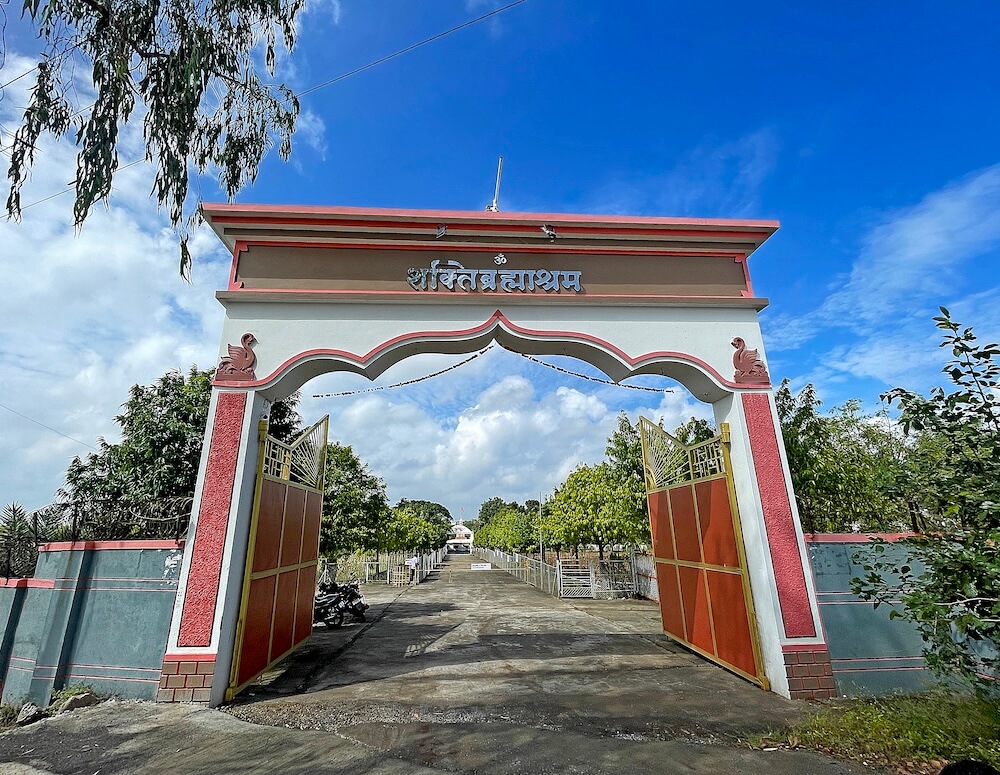
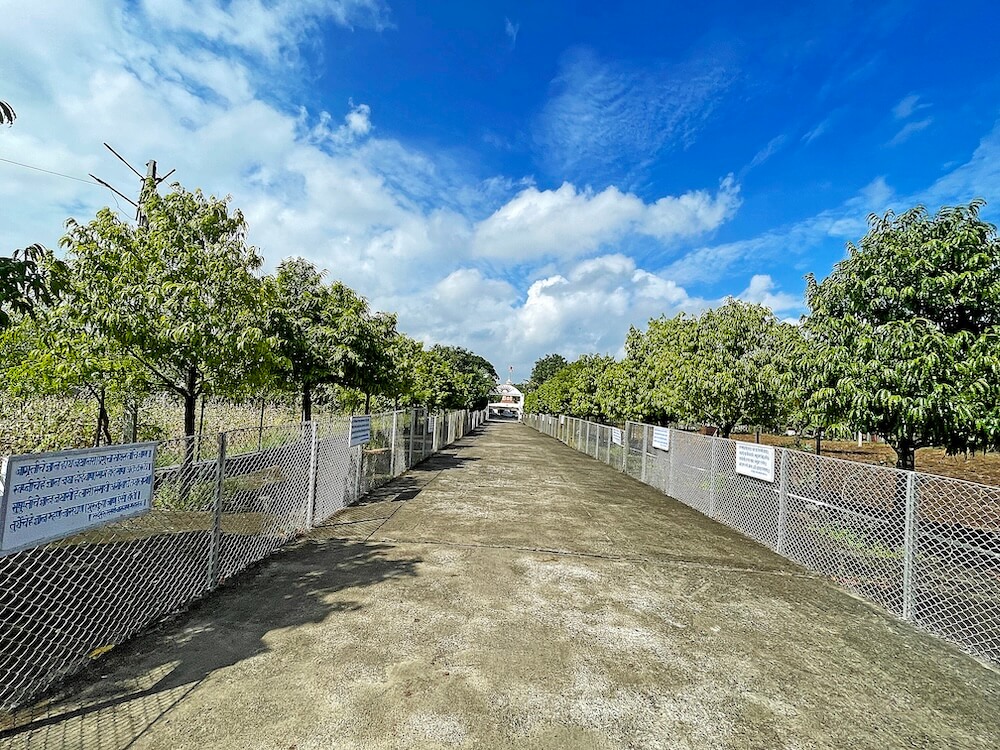
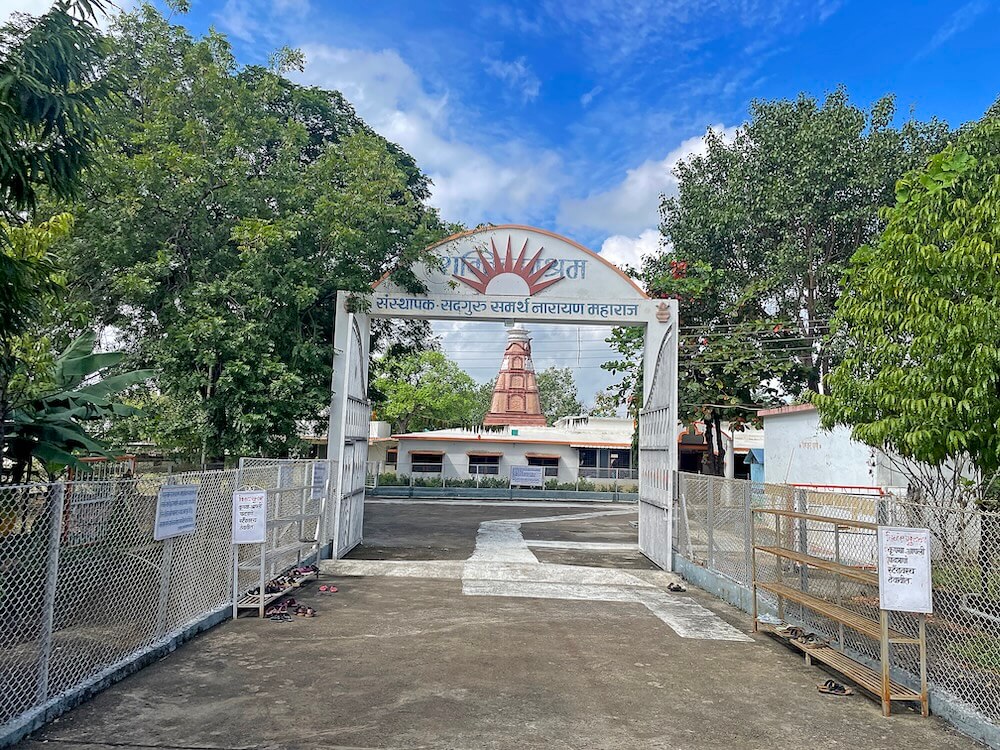
Situated along the Hingoli-Akola road, this Math rests on a spacious site and is spread over a vast area. The Math has double fortifications and grand entrance gates. The entrance gate in the outer fortification is about twenty feet wide and equally high. The pillars on both sides of this gate are connected by an arched top. There is a balcony over the arch. The design of the second entrance gate is similar. Iron mesh fencing has been erected on both sides of the road from the first gate to the second. Private vehicles can be driven directly into the temple courtyard. The spacious courtyard houses a parking area, a garden, a forest grove, a Gurukul, residences for servants and Mahants, a devotee guesthouse, a dining hall, the Math office, and a yoga hall. There is a Tulsi Vrindavan, as well as underground and overhead water tanks in the courtyard.
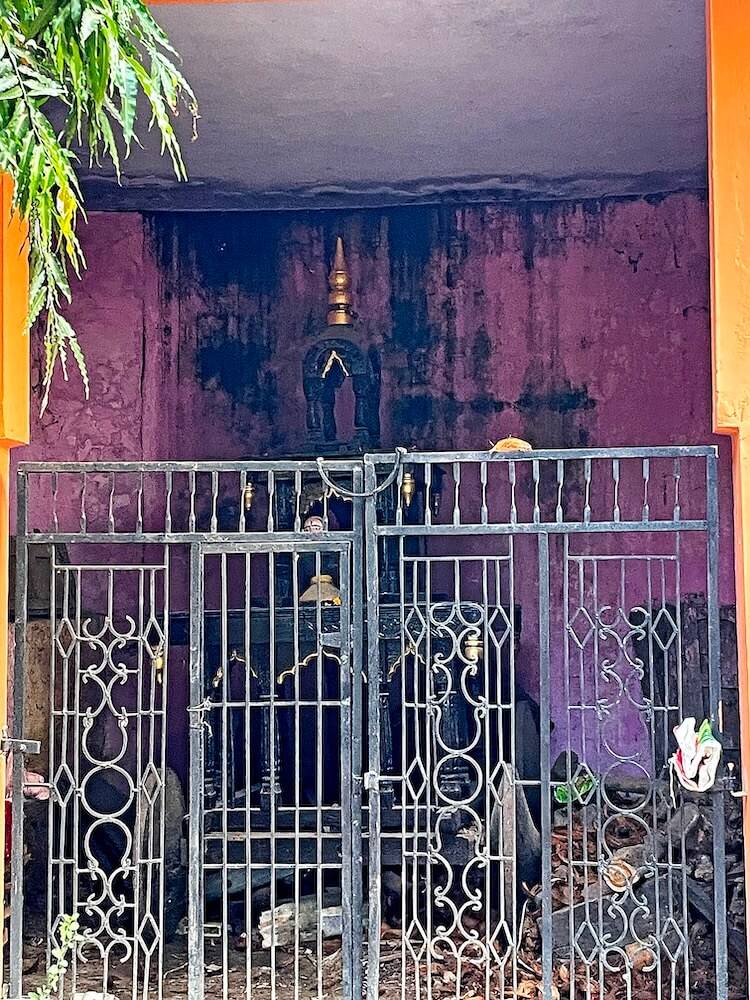
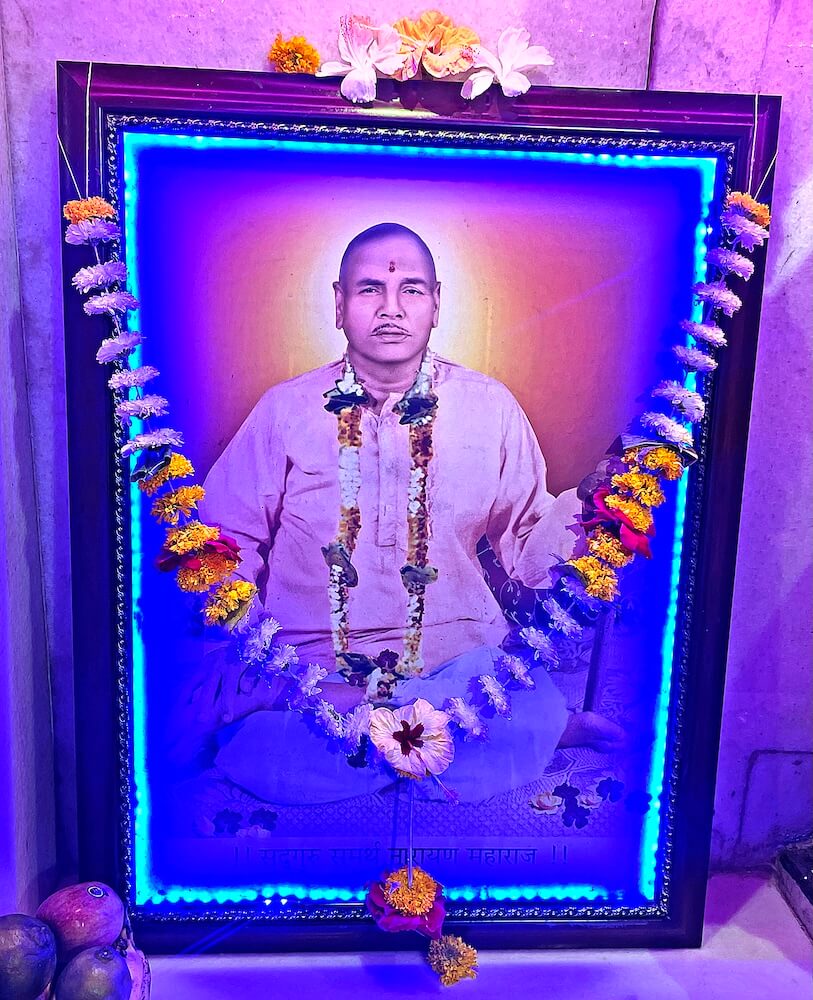
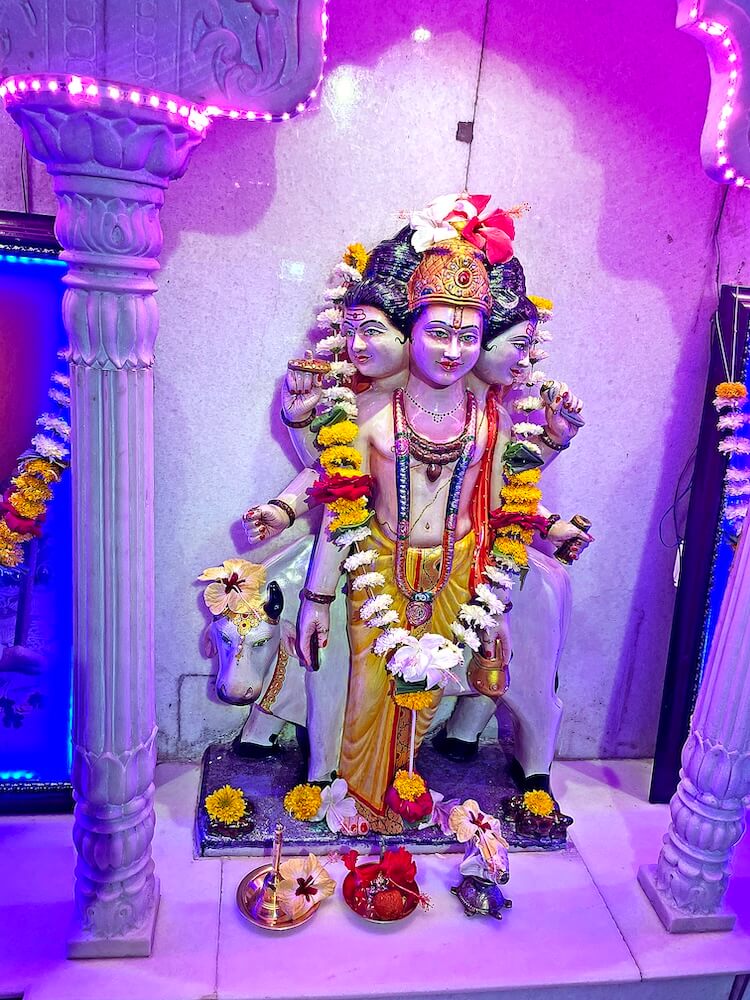
In the center of the courtyard stands the Samadhi temple of Narayan Maharaj and Purushottam Maharaj. The temple is structured with a Mukh-mandapa (front hall), Sabha-mandapa (assembly hall), and Garbhagriha (sanctum sanctorum). This enclosed assembly hall has ventilators for light and air. Beyond the assembly hall is the sanctum. A stainless steel railing has been installed in front of the sanctum entrance to create an inner space. The door frames and the arch of the sanctum are adorned with floral and leaf carvings. Inside the sanctum, there are two separate platforms on the floor for the Samadhis of Narayan Maharaj and Purushottam Maharaj. The stone platforms are covered with ornate silver plating. Against the back wall of the sanctum, there is a marble idol of Lord Dattatreya placed on a throne within a niche. Portraits of Narayan Maharaj and Purushottam Maharaj are placed to the left and right of the idol. There is a circumambulation path around the exterior of the sanctum. The roof of the sanctum features a four-tiered square Shikhara (spire). The first tier of the Shikhara depicts elephants, the second tier features sculptural motifs, the third tier displays pots and peacocks, and the fourth tier features serpent carvings. At the apex of the Shikhara is a stupika, topped with a finial and a flag.
Adjacent to the Samadhi temple is the Yajnashala (sacrificial hall). Inside, there is a sacrificial pit on the floor. Daily Agnihotra is performed here. Offerings made during the sacrifice include medicinal wood sticks from trees like Audumbar, Banyan, Pipal, Rui, Bel, Shami, Khair, Hivar, Bibba, Pomegranate, and Amla, along with sesame seeds, camphor, lotus seeds, Guggul, and incense. Adjoining the assembly hall of the Samadhi temple is the Dhyan Mandir (meditation hall). The Dhyan Mandir consists of a spacious assembly hall leading to a sanctum where the Guru’s seat is placed. Portraits of Narayan Maharaj and Purushottam Maharaj are kept here. The roof of the Dhyan Mandir features a three-tiered Shikhara, topped with a stupika, a finial, and a flag.
Guru Purnima, Datta Jayanti, and the Samadhi anniversary of Narayan Maharaj and Purushottam Maharaj are the main annual festivals celebrated here. During these festivals, programs such as Bhajans, Kirtans, and discourses are organized at the ashram. Thousands of devotees visit the ashram during these times to seek the Guru’s Darshan and blessings. The ashram is crowded with devotees every Thursday.
This sacred temple stands as a testament to deep spiritual devotion, ancient architectural grandeur, and rich local cultural traditions.
The sanctum sanctorum houses the divine idol consecrated according to ancient Vedic traditions, surrounded by serene courtyards and traditional temple architecture.
Navratri, Maha Shivratri, Annual Temple Jatra & Deepotsav
Compare and book flights, secure top-rated local hotels near the temple, hire reliable guides, and rent cars instantly.
Extend your pilgrimage by visiting other highly sacred temples located nearby.


Add ₹999 more to unlock FREE SHIPPING!
Your sacred cart is currently empty.
Shop Photo FramesFill in your delivery details below to place your order.
Add comment