
Add ₹999 more to unlock FREE SHIPPING!
Your sacred cart is currently empty.
Shop Photo FramesThe formless, attribute-less, and omnipresent Mahadeva is known as ‘Bhola Samb’ (the innocent Lord) and is also addressed as ‘Jagdishwar’, the Lord of the world. Mahadeva is worshipped as the presiding deity of a place and as a deity of virtues. He is also addressed by names that denote directions, such as Uttar-eshwar (Lord of the North), Dakshin-eshwar (Lord of the South), and Purv-eshwar (Lord of the East). Mahadeva is often invoked by adding the suffix ‘Ishwar’ to the name of a town or village. In this tradition, an ancient and famous temple of Mahadeva, known as ‘Jaleshwar’ because the Shiva Linga remains submerged under water, is situated in the city of Hingoli.
Scholars estimate that this temple, built in the Hemadpanti architectural style, is approximately four to five hundred years old. However, according to popular local legend, the temple is thousands of years old, dating back to the time of the Pandavas. It is believed that during their exile, the Pandavas arrived in Hingoli, which was then a dense forest. There, they encountered the demon Jangasur. A wrestling match between Bhima and Jangasur lasted for six months. The deep pits formed on the ground due to the wrestling created this lake. When Jangasur was killed in the battle, Bhima installed a Shiva Linga in this lake. It is said that the Shiva Linga in the Jaleshwar temple today is the same one. The text ‘Shivstotra Ratnavali’ mentions the existence of a Jageshwar Shiva temple twenty-five kilometers away from the Aundha Nagnath temple. The Mahants here state that this is indeed that temple. The Puri sect’s tradition of Mahants has been maintained in this temple. Currently, the seventh Mahant of this lineage, Puri Maharaj, oversees the management of the temple.
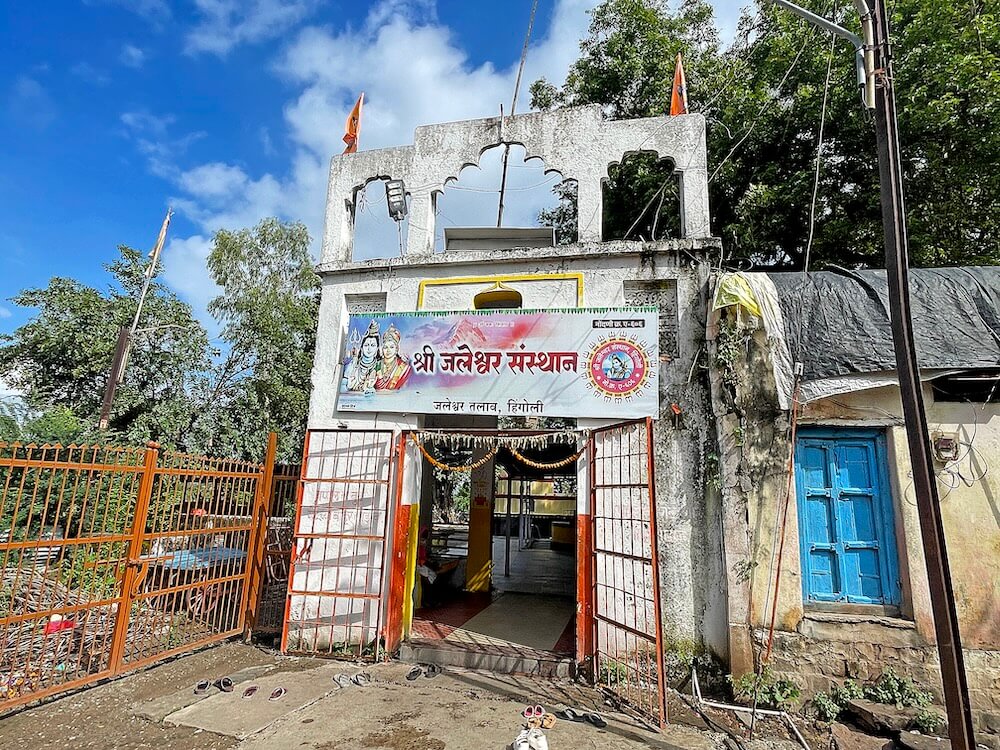
The temple stands on one side of a lake spanning approximately 27 acres. In recent times, the path leading to the temple has been developed. The temple is enclosed by a boundary wall, which features a simple entrance gate with iron mesh. Within the temple premises and surrounding area, there are trees with stone platforms built around them. In front of the temple, there is a Rangamandapa (ceremonial hall) with a cement sheet roof supported by iron pillars.
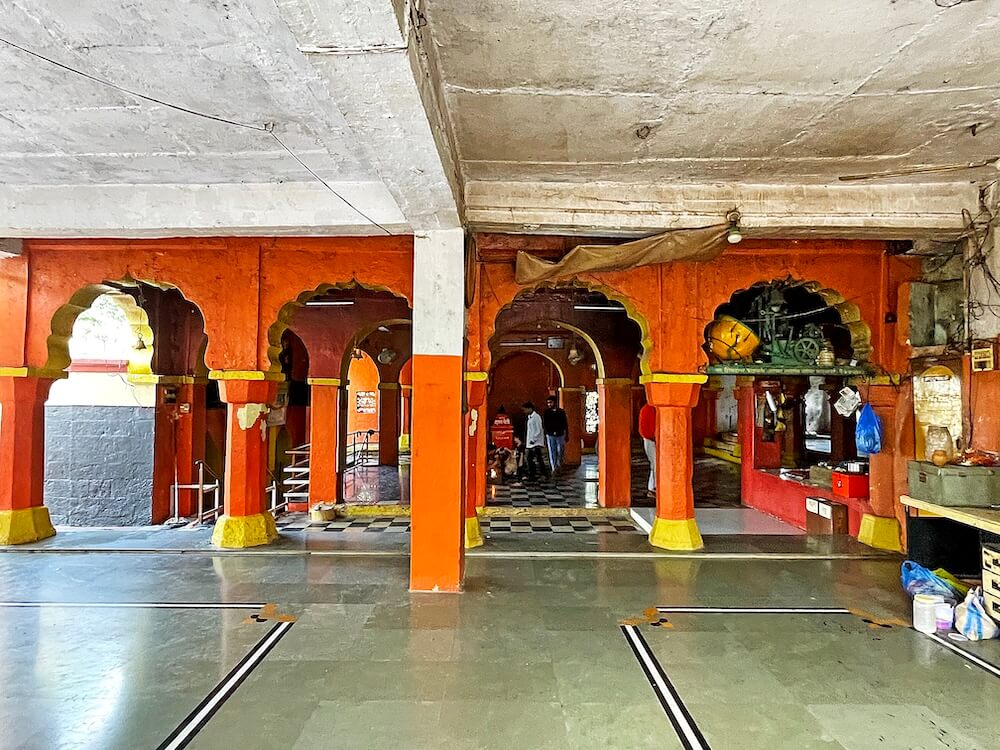
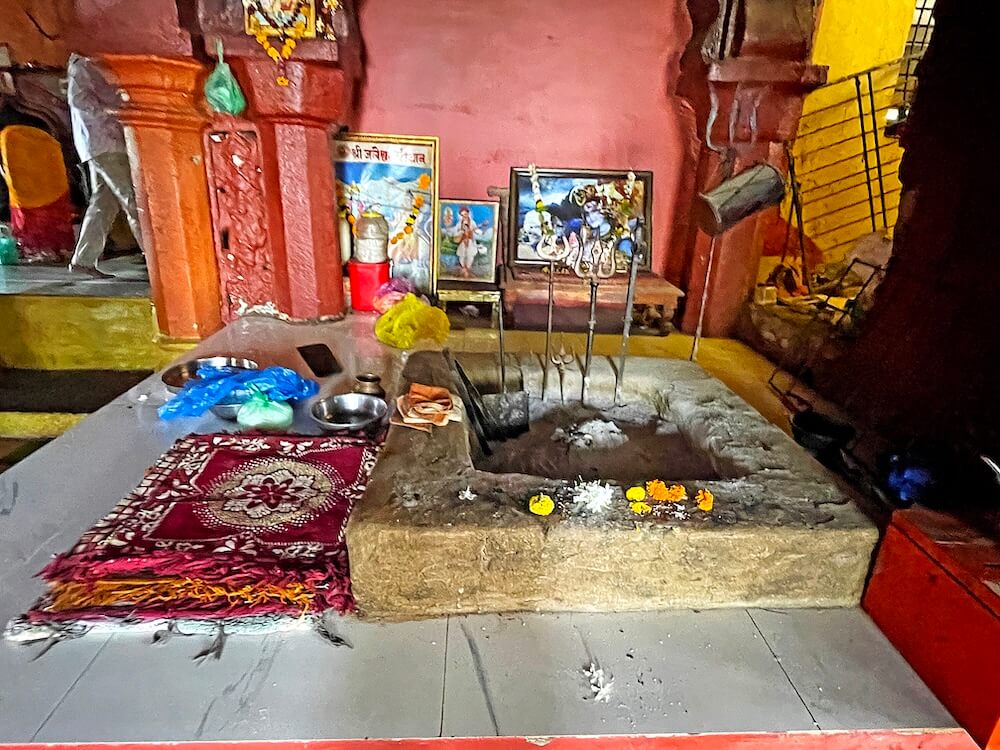
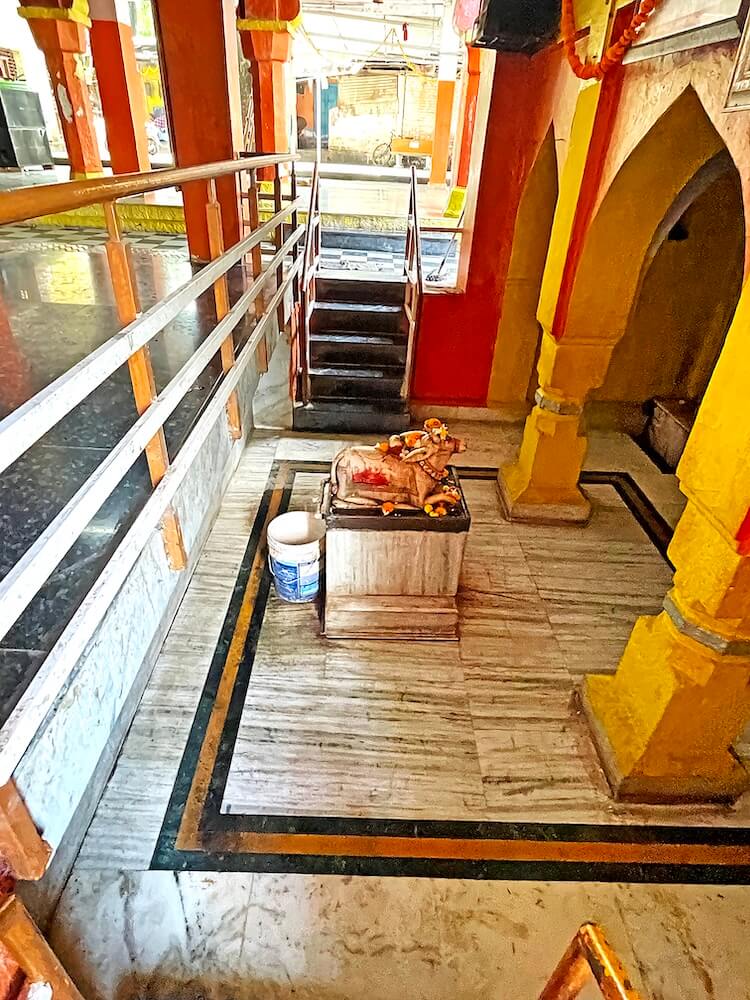
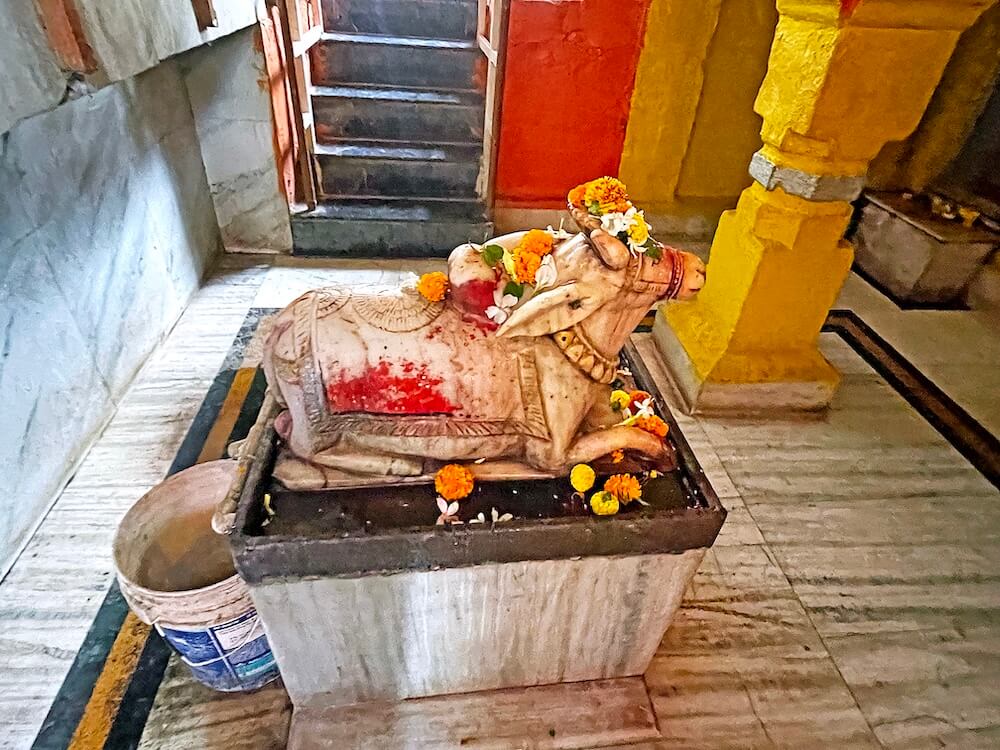
The temple structure consists of a Sabhamandapa (assembly hall), Antarala (vestibule), and Garbhagriha (sanctum sanctorum). The Mahants state that the extension of the Sabhamandapa was constructed in 1940. The semi-open Sabhamandapa has four rows of pillars. Inside the Sabhamandapa, there are several Shiva Lingas and Nandi sculptures for daily worship, where devotees perform daily Abhisheka. Adjacent to the Sabhamandapa, in a closed chamber, is the Yajna-kunda (sacrificial fire pit). Yajnas are organized here during festivals and on auspicious occasions.
Further ahead is the Antarala, which is a few feet deeper than the Sabhamandapa. There are three steps on both the left and right sides to descend into the Antarala. In the Antarala, facing the entrance of the Garbhagriha, is a statue of Nandi on a Vajra-pitha (throne). There are stone pillars on both sides of the Nandi statue. At the entrance of the Garbhagriha, there is a sculpture of Lord Ganesha on the lintel. The Garbhagriha is about twelve feet deeper than the Sabhamandapa, with steps leading down. Inside the Garbhagriha, the Shiva Linga is on the floor. When the water level in the lake rises, this Shiva Linga remains submerged from the month of Shravan to Magh, i.e., for about six months. During that period, worship of this Shiva Linga is suspended, and devotees perform Abhisheka on the Shiva Linga located in the Sabhamandapa.
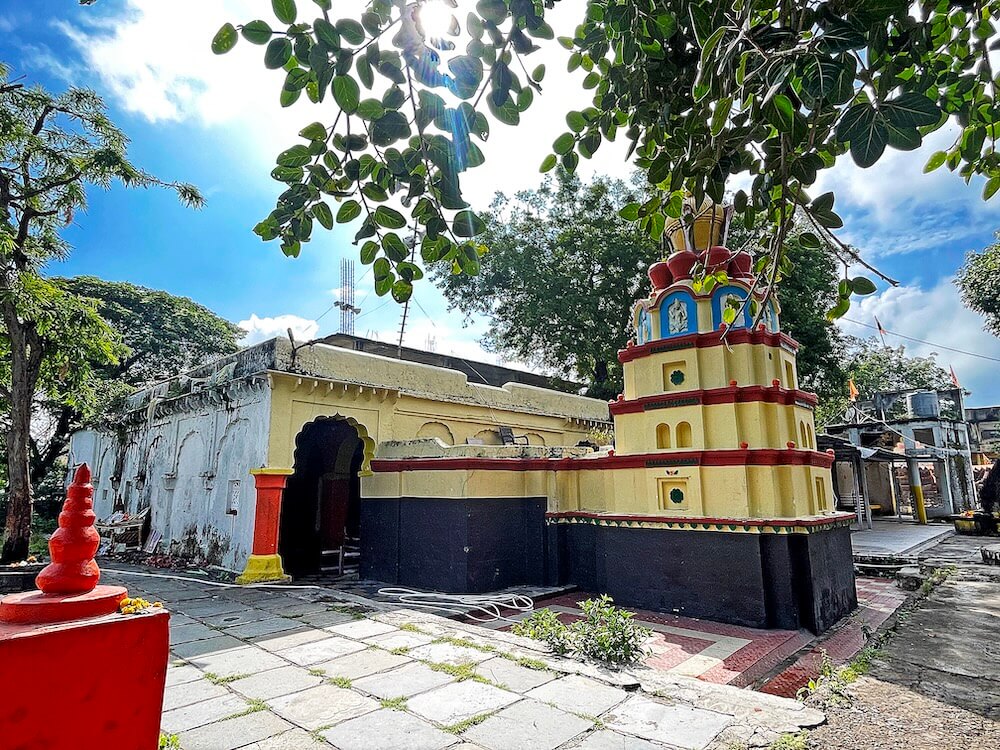
Above the roof of the Jaleshwar temple’s Garbhagriha is a four-tiered square Shikhara (spire). The first tier below the Shikhara has two Devakoshthakas (niches for deities) on each of the four sides, while the second tier has one on each side. The third tier of the Shikhara features sculptures of various gods and goddesses in the niches facing the eight directions. The fourth tier of the Shikhara has eight Amalakas (crowned elements) in the eight directions. The main Amalaka in the center has Naga (serpent) sculptures on all four sides. Atop the main Amalaka are the Kalasha (finial) and the flagstaff.
Beside the temple is the Nrisimha-Lakshmi temple, which has a closed Sabhamandapa and a small Garbhagriha in the center. The statue of Nrisimha-Lakshmi here, made of Gandaki stone, is said to be ancient. In this same temple, there are two separate niches in the Sabhamandapa housing statues of Bhagwati Devi and Ganapati. The temple surroundings are lush green due to the vast lake. Many tourists from Hingoli city and the surrounding areas come here to enjoy the natural beauty. There is a stone-carved ghat with steps to descend into the lake. It is said that seven types of lotuses used to bloom in this lake.
Mahashivratri is the main annual festival celebrated here with great enthusiasm. The festival begins before sunrise with the Laghurudra-Abhisheka of Mahadeva. Throughout the day, thousands of devotees arrive for Darshan and to fulfill their vows. On the occasion of the festival, programs such as Bhajans, Kirtans, discourses, and Mahaprasad are organized in the temple. Community recitation of ‘Shivlilamrit’ and ‘Shivstotra’ is held in the temple. On all Mondays of the month of Shravan, a massive crowd of devotees gathers for Darshan. At this time, as the Shiva Linga in the Garbhagriha is submerged, Abhisheka is performed on the Shiva Linga in the Sabhamandapa. The Lord is offered Abhisheka with Bel leaves, flowers, curd, milk, ghee, honey, Ganga water, and rose water. The number of devotees visiting for Darshan is higher during all festivals throughout the year, as well as on Mondays, full moon (Purnima), and new moon (Amavasya) days.
This sacred temple stands as a testament to deep spiritual devotion, ancient architectural grandeur, and rich local cultural traditions.
The sanctum sanctorum houses the divine idol consecrated according to ancient Vedic traditions, surrounded by serene courtyards and traditional temple architecture.
Navratri, Maha Shivratri, Annual Temple Jatra & Deepotsav
Compare and book flights, secure top-rated local hotels near the temple, hire reliable guides, and rent cars instantly.
Extend your pilgrimage by visiting other highly sacred temples located nearby.


Add ₹999 more to unlock FREE SHIPPING!
Your sacred cart is currently empty.
Shop Photo FramesFill in your delivery details below to place your order.
Add comment